Your ShelfYour Projects

Signs of the Times, Vol. 24, No. 23.

THE RISEN CHRIST

Signs of the Times

Jun 9, 1898

Pacific Press Publishing Company · Oakland, California · Jun 9, 1898

THE RISEN CHRIST.
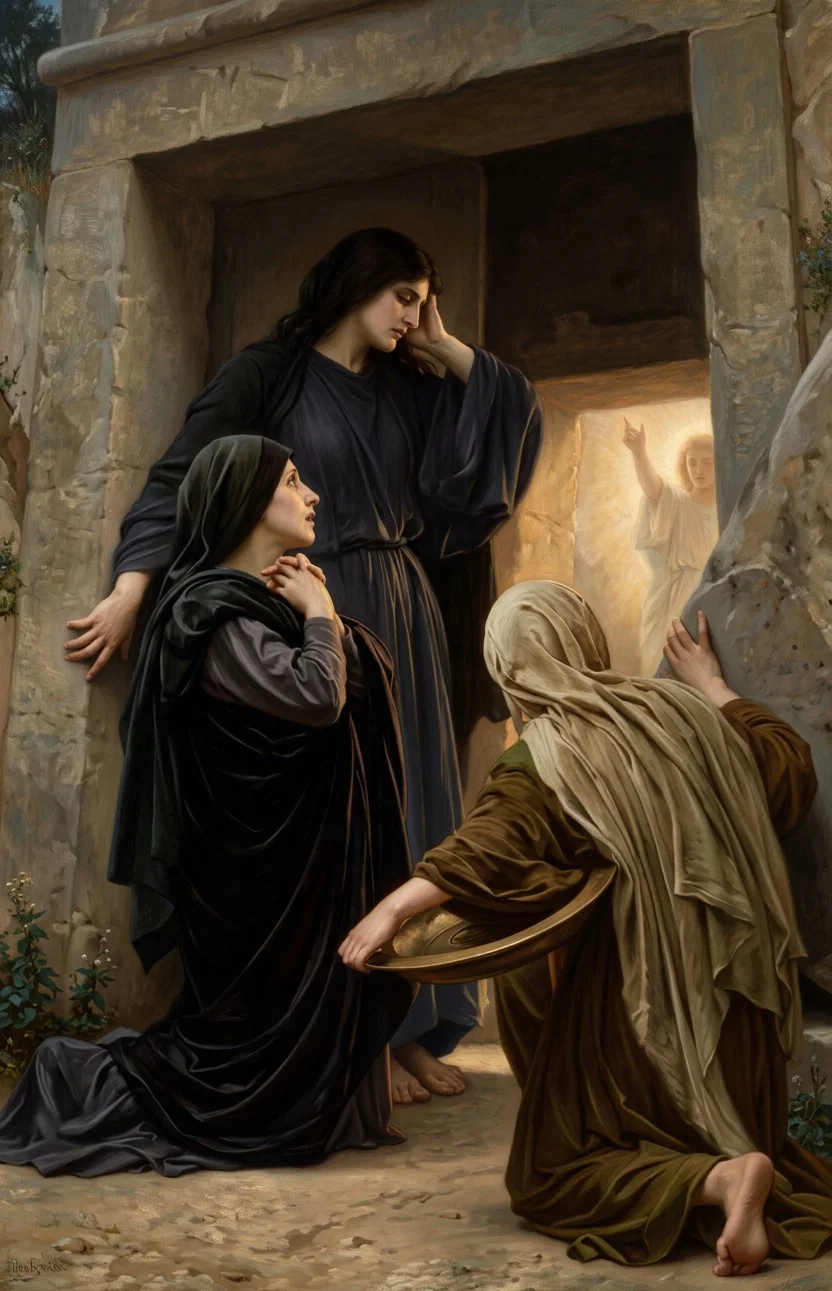
“He is not here; He is risen.”
When our Saviour yielded up His life and was laid in Joseph’s new tomb, was His work of redemption defeated? Was the one perfect life on earth to close in the reproach of the cross and the darkness of the grave? The sad and bewildered disciples seem to have thought thus. They had believed that Jesus was the Christ, the Anointed of God, yet they had not grasped the truth that His kingdom was not of this world. They still cherished the idea of a temporal king under whose glorious reign Israel should throw off the hated Roman yoke and be again, and in a greater degree, the favored nation of God. Now indeed it seemed that all was lost. The “Hope of Israel” had suffered an ignominious death, and lay shrouded in the gloomy sepulcher.
The sorrowful women had prepared spices and ointments for the embalming of the sacred body. They “rested on the Sabbath day according to the commandment” (Luke 23:56), and upon the first day of the week they arose and came very early in the morning to the sepulcher, bringing the spices they had prepared, intending to perform the last sad office for the Lord they loved. Evidently not one of the disciples remembered their Lord’s often reiterated promise that on the third day He would rise again; yet His enemies remembered it well, and besought Pilate to secure the sepulcher, “lest His disciples come by night, and steal Him away, and say unto the people, He is risen from the dead.” Matt. 27:64. So by Pilate’s command the great stone at the entrance of the rock-hewn tomb was sealed with the imperial seal of Rome, which it was death to touch, and a guard of soldiers was appointed to watch the place.
As the two Marys went sadly forth in the gray dawn of that memorable first-day morning, their hearts were oppressed with grief. They sought only a dead Christ. Intent upon their purpose, they questioned, “Who shall roll us away the stone from the door of the sepulcher?” Mark 16:3. Needless anxiety! for already had the angel of the Lord appeared and rolled back the stone. So overpowering was the resplendent glory of his presence that the Roman guard fell back as dead; and as the women approached, they too were amazed and terrified, when the angel addressed to them the startling words, “He is risen; He is not here;” “He goeth before you into Galilee.” Verses 6, 7. They fled, speechless with fear and trembling; for as yet they, in common with all the disciples, understood not the Scriptures, and believed not the words of the Lord that “He must rise again from the dead.” John 20:9.
Peter and John came also and found the empty tomb; there lay the linen grave-clothes and the napkin which bound the head was folded and placed by itself. They returned, wondering, to their homes; but the weeping Mary still lingered, and to her was given the first appearance of the risen Christ. He stood unknown beside her till the well-known voice spoke the familiar name Mary. Verse 16. With eager haste she bore this message to the disciples: “Go to My brethren, and say unto them, I ascend unto My Father, and your Father; and to My God, and your God.” Verse 17.
But when the women told these things to the sad eleven, their words seemed to the disciples like “idle tales;” for they believed not. The evening following the same day, as they were seated at their evening repast, being assembled together for fear of the Jews, the Lord appeared among them, and they were frightened, thinking they saw a spirit. They were not convinced till the Lord had shown them His hands and His side. Thomas was absent on that occasion, and he still doubted. He said to the disciples, “I never will believe unless I see the print of the nails and thrust my hand into the wounded side.” But when after eight days the Lord was again with the eleven in their common abode, and called Thomas to His side, and gave him the desired proof, he exclaimed, “My Lord and my God.” Verse 28.
We wonder at the incredulity of these men of Galilee, but at the same time it adds force to their testimony. These men were expecting no miracles; they were not in a state of mind to be deceived by a false appearance. Yet to them did Christ establish the fact of a bodily resurrection. It was necessary that the glorious fact of the resurrection be established beyond a doubt; for unto these eleven apostles did our Lord commit the sacred trust. “And ye are witnesses of these things.” Luke 24:48.
Under the Levitical law the testimony of two or three witnesses established a matter beyond doubt. How ample, then, is the proof of the resurrection! These eleven apostles proclaimed the truth to the known world, and, with perhaps a single exception, sealed their testimony with their blood. The four evangelists recorded it for future generations, and Paul, writing a quarter of a century later, says: “He [Jesus] was seen of above five hundred brethren at once; of whom the greater part remain unto this present, but some are fallen asleep.” “And last of all He was seen of me also, as of one born out of due time.” 1 Cor. 15:6, 8.
The Lord Jesus was seen of His disciples during forty days after His passion, convincing them “by many infallible proofs” (Acts 1:3) of His identity, and taught them concerning the things of the kingdom of God, then ascended, a risen, living Saviour (Luke 24:51).
The part and power of His resurrection is the foundation of our faith. “If Christ be not raised, your faith is vain; ye are yet in your sins. Then they also which are fallen asleep in Christ are perished.” 1 Cor. 15:17, 18.
What a terrible picture is here presented of a world without a Redeemer! All in vain the faith of patriarchs and prophets who trusted in the Hope of Israel! Every living soul bound in chains of sin, with no door of mercy! Death would end all. Our dear ones who now sleep in Jesus would never wake again, but, locked in the prison-house of the last cruel enemy, they, together with all the countless generations of men, would sleep in the dust of the earth through endless ages of eternity. But, thank God! we have a living Saviour. “But now is Christ risen from the dead, and become the first-fruits of them that slept.” Verse 20.
What is the grand import of Christ’s resurrection to us?—It is to the living the fact of Christ’s power over sin, and the same power in us, if we will but believe, and let Him dwell in us. See Eph. 1:18–22; Col. 1:9–13; Phil. 3:10, 11. It is concerning the dead the truth contained in these precious words, “Because I live, ye shall live also.” John 14:19. There is in this promise a twofold meaning. Christ has opened the portals of the grave, and thus gained “the keys of hell and of death.” Through Him all who have ever lived, or shall live and die in this earth, will live again. All who sleep in the dust will awake at the “voice of the Archangel,” when the “trump of God” shall sound; “but the dead in Christ shall rise first.” 1 Thess. 4:16.
In a higher and ever-abiding sense is the promise given to all who, living or dying, have, through faith in the risen Christ, lived His life. Gal. 2:20. To all such the death and resurrection of our Lord secure a blessed and never-ending existence in the Paradise of God. “I give unto them eternal life; and they shall never perish, neither shall any man pluck them out of My hand.” John 10:28.
May you and I, dear reader, have a blessed part in the first resurrection.
AUGUSTA W. HEALD.
Windham, Vt.

“TEMPTED IN ALL POINTS LIKE AS WE ARE.”

After the fall of man, Satan declared that human beings were proved to be incapable of keeping the law of God, and he sought to carry the universe with him in this belief. Satan’s words appeared to be true, and Christ came to unmask the deceiver. The Majesty of heaven undertook the cause of man, and with the same facilities that man may obtain, withstood the temptations of Satan as man must withstand them. This was the only way in which fallen man could become a partaker of the divine nature. In taking human nature, Christ was fitted to understand man’s trials and sorrows and all the temptations wherewith he is beset. Angels who were unacquainted with sin could not sympathize with man in his peculiar trials. Christ condescended to take man’s nature, and was tempted in all points like as we, that He might know how to succor all who should be tempted.
In assuming humanity Christ took the part of every human being. He was the Head of humanity. A Being divine and human, with His long human arm He could encircle humanity, while with His divine arm He could lay hold of the throne of the Infinite.
What a sight was this for Heaven to look upon! Christ, who knew not the least taint of sin or defilement, took our nature in its deteriorated condition. This was humiliation greater than finite man can comprehend. God was manifest in the flesh. He humbled Himself. What a subject for thought, for deep, earnest contemplation! So infinitely great that He was the Majesty of heaven, and yet He stooped so low, without losing one atom of His dignity and glory! He stooped to poverty and to the deepest abasement among men. For our sake He became poor, that we through His poverty might be made rich. “The foxes have holes,” He said, “and the birds of the air have nests; but the Son of man hath not where to lay His head.”
Christ submitted to insult and mockery, contempt and ridicule. He heard His message, which was fraught with love and goodness and mercy, misstated and misapplied. He heard Himself called the prince of demons, because He testified to His divine Sonship. His birth was supernatural, but by His own nation, those who had blinded their eyes to spiritual things, it was regarded as a blot and a stain. There was not a drop of our bitter woe which He did not taste, not a part of our curse which He did not endure, that He might bring many sons and daughters to God.
The fact that Jesus was on this earth as a man of sorrows and acquainted with grief, that in order to save fallen man from eternal ruin, He left His heavenly home, should lay in the dust all our pride, put to shame all our vanity, and reveal to us the sin of self-sufficiency. Behold Him making the wants, the trials, the griefs and sufferings of sinful men His own. Can we not take home the lesson that God endured these sufferings and bruises of soul in consequence of sin?
Christ came to the earth, taking humanity and standing as man’s representative, to show in the controversy with Satan that man, as God created him, connected with the Father and the Son, could obey every divine requirement. Speaking through His servant He declares, “His commandments are not grievous.” It was sin that separated man from his God, and it is sin that maintains this separation.
The enmity referred to in the prophecy in Eden was not to be confined merely to Satan and the Prince of Life. It was to be universal. Satan and his angels were to feel the enmity of all mankind. “I will put enmity,” said God, “between thee and the woman, between thy seed and her seed; it shall bruise thy head, and thou shalt bruise his heel.”
The enmity put between the seed of the serpent and the seed of the woman was supernatural. With Christ the enmity was in one sense natural; in another sense it was supernatural, as humanity and divinity were combined. And never was the enmity developed to such a marked degree as when Christ became an inhabitant of this earth. Never before had there been a being upon the earth who hated sin with so perfect a hatred as did Christ. He had seen its deceiving, infatuating power upon the holy angels, and all His powers were enlisted against it.
The purity and holiness of Christ, the spotless righteousness of Him who did no sin, was a perpetual reproach upon all sin in a world of sensuality and sin. In His life the light of truth was flashed amid the moral darkness with which Satan had enshrouded the world. Christ exposed Satan’s falsehoods and deceiving character, and in many hearts destroyed his corrupting influence. It was this that stirred Satan with such intense hatred. With his hosts of fallen beings he determined to urge the warfare most vigorously; for there stood in the world One who was a perfect representative of the Father, One whose character and practises refuted Satan’s misrepresentation of God. Satan had charged upon God the attribute he himself possessed. Now in Christ he saw God revealed in His true character,—a compassionate, merciful Father, not willing that any should perish, but that all should come to Him in repentance, and have eternal life.
Intense worldliness has been one of Satan’s most successful temptations. He designs to keep the hearts and minds of men so engrossed with worldly attractions that there will be no room for heavenly things. He controls their minds in their love of the world. Earthly things eclipse the heavenly, and put the Lord out of their sight and understanding. False theories and false gods are cherished in the place of the true. Men are charmed with the glitter and tinsel of the world. They are so attached to the things of the earth that many will commit any sin in order to gain some worldly advantage.
It was on this point that Satan thought to overthrow Christ. He thought that in His humanity he could be easily overcome. “The devil taketh Him up into an exceeding high mountain, and showeth Him all the kingdoms of the world, and the glory of them; and said unto Him, All these things will I give Thee if Thou wilt fall down and worship me.” But Christ was unmoved. He felt the strength of this temptation; but He met it in our behalf, and conquered. And He used only the weapons justifiable for human beings to use,—the word of Him who is mighty in counsel,—“It is written.”
With what intense interest was this controversy watched by the heavenly angels and the unfallen worlds, as the honor of the law was being vindicated. Not merely for this world, but for the universe of heaven, was the controversy to be forever settled. The confederacy of darkness was also watching for the semblance of a chance to triumph over the divine and human Substitute of the human race, that the apostate might shout, “Victory,” and the world and its inhabitants forever become his kingdom.
But Satan reached only the heel; he could not touch the head. At the death of Christ, Satan saw that he was defeated. He saw that his true character was clearly revealed before all Heaven, and that the heavenly beings and the worlds that God had created would be wholly on the side of God. He saw that his prospects of future influence with them would be entirely cut off. Christ’s humanity would demonstrate for eternal ages the question which settled the controversy.
In taking upon himself man’s nature in its fallen condition, Christ did not in the least participate in its sin. He was subject to the infirmities and weaknesses by which man is encompassed, “that it might be fulfilled which was spoken by Esaias the prophet, saying, Himself took our infirmities, and bare our sicknesses.” He was touched with the feeling of our infirmities, and was in all points tempted like as we are. And yet He “knew no sin.” He was the lamb “without blemish and without spot.” Could Satan in the least particular have tempted Christ to sin, he would have bruised the Saviour’s head. As it was, he could only touch His heel. Had the head of Christ been touched, the hope of the human race would have perished. Divine wrath would have come upon Christ as it came upon Adam. Christ and the church would have been without hope.
We should have no misgivings in regard to the perfect sinlessness of the human nature of Christ. Our faith must be an intelligent faith, looking unto Jesus in perfect confidence, in full and entire faith in the atoning Sacrifice. This is essential that the soul may not be enshrouded in darkness. This holy substitute is able to save to the uttermost; for He presented to the wondering universe perfect and complete humility in His human character, and perfect obedience to all the requirements of God. Divine power is placed upon man, that he may become a partaker of the divine nature, having escaped the corruption that is in the world through lust. This is why repenting, believing man can be made the righteousness of God in Christ. MRS. E. G. WHITE.

“REJOICING IN HOPE.”

BRIGHT-WINGÉD Hope, resplendent as the morn, Blest is the human heart when thou art born. As day star thou—vision of sunniest light! Thy gleams light up earth’s children’s darkest night.
Blest gift of Love art thou to erring soul, Yet folded are thy wings when earth’s the goal. Cradled art thou in darkest depths of night Till pain and anguish loose thy wings for flight.
Unheard by mortal ear thy rustling wing. On snowy pinion swift Love’s offering bring. O Hope divine, thou dost lone hearts sustain! Thy touch doth wake the dead to life again.
ELINOR HOPE PALMER.
Los Gatos, Cal.

Development of Babylon

HEATHENISM. No. 2.

Development of Babylon.

Heathen Philosophy.
Another feature, and a natural one too, of heathenism was the philosophers. God gave man a brain with which to think, and he will either think good or bad as long as reason remains. As he rejected God's thoughts by refusing to be led by the Lord, he had no thoughts but his own to think. The philosophy which was professed was but the teachings of men in their natural state—men who were led by their own deceitful hearts. Among other things the philosophers taught much about the soul of man. Those of whom we are now going to speak lived in an age after the true knowledge of God was lost. So we may say that the principles which underlie heathen philosophy were the cause of heathenism, while the philosophy was partially the result of heathenism; for the principles which were the foundation of philosophy were but accepting man's ideas as infallible; but when this principle had been applied, and the entire loss of the knowledge of God was the result, it was but natural for men with reason to ask: Who am I? how came I here? what is the object of my existence ? etc. Of course the only answer that man could give would be very unreliable; for, having lost the knowledge of God, he has no premises to reason from. Their mind might be ever so logical, but reason can not create evidence in anything, it can only weigh it. Therefore the best they could do under the circumstances would be to assume premises and reason from them as assumed. And just in proportion as they were logical, their conclusions were sure to be wrong when reasoning about spiritual things; for as spiritual things can be only spiritually discerned, the premises were sure to be wrong.
The ablest of the philosophers did as said above,—assumed their own premises. We will speak of Plato especially, as he is the “almost Christian” philosopher of antiquity. He tried to fathom the mystery of life. His imagination was the commanding faculty of his brain. His premises were therefore controlled much by this. His major premise and the one from which all others on this subject were drawn, was that the soul of man existed prior to his existence here. If it existed before its stay in the flesh, it certainly could exist after the flesh had passed away. Therefore, it was immortal. From this thought grew that system which in ancient times cursed the world under the name of witchcraft and demon-worship, and is to-day doing its Satanic work under the name of Spiritualism.
As God gave revelations of Himself to man, it was to Satan's advantage to communicate likewise to his children. It never is to his advantage to reveal his true character and give a full account of who he really is; so he put this idea of immortality into those whom he controlled, and then manifested himself to them as departed friends. In no other way could he gain so complete access to minds as this. He could thus speak to them “face to face,” and be sure that they would do his bidding. This was one of the most successful games that Satan ever played. It is like this: The heart is naturally evil, and so will do evil with a hearty good-will, especially if circumstances are favorable. An exceedingly corrupt friend or acquaintance dies. We wonder how it will fare with him. In a few days he appears. He tells what a grand home he has. He says our pious friend John who lately died occupies the same good home. Both are happy beyond the power of language to express. He may tell us no more, but that is enough. It is easier to do wrong than right, and the bad fare as well as the good, so we will act out our nature. Ancient heathenism contained all that was bad, and this one thing of itself would have made her possess all that was bad if no other wrong thing had been contained in her creed. But it is no more so with ancient heathenism than with Modern Spiritualism. Note this; for we will speak of Spiritualism again.
From whatever way we view it, we see that heathenism led downward with mighty strides. How could it be otherwise when it was originated and carried forward by man, with a wicked heart, led by a more wicked devil?
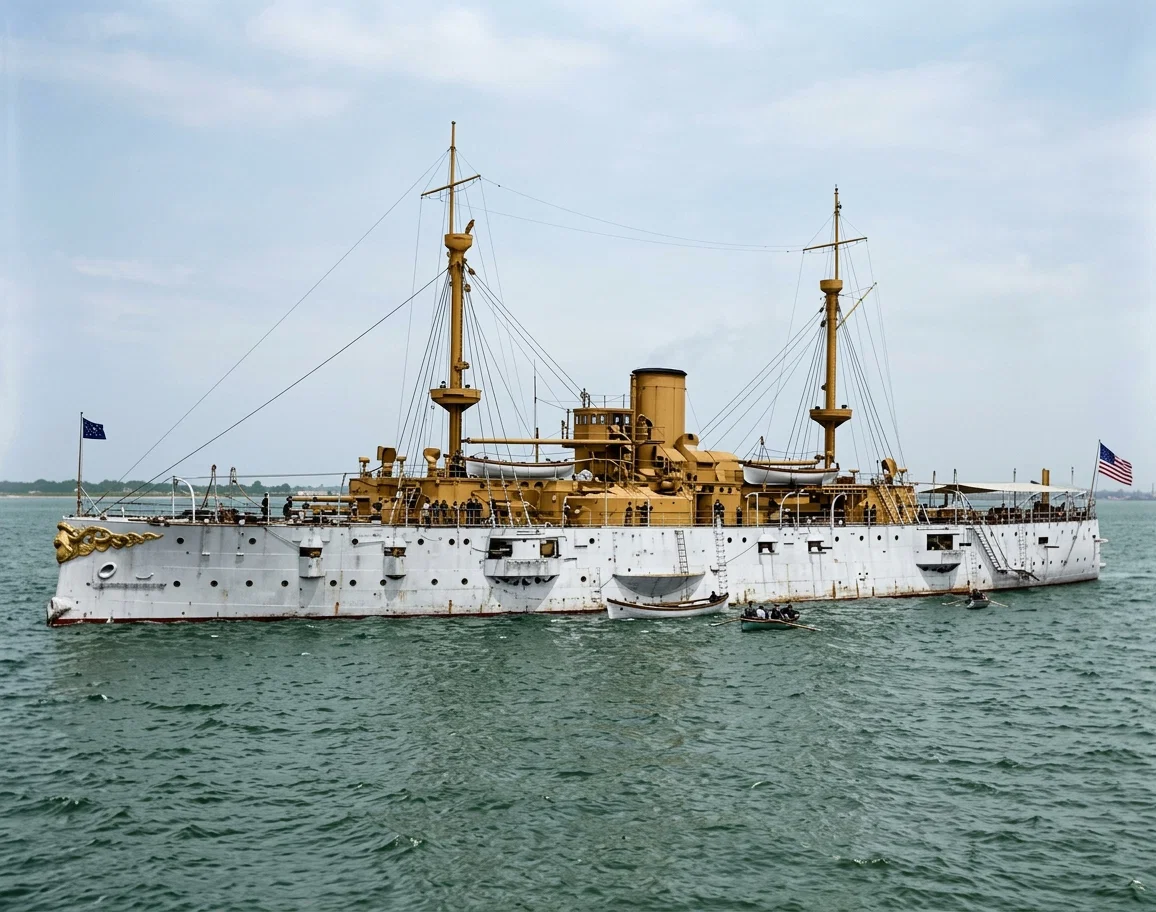
Second-class Battle-ship Texas.—Displacement, 6,315 tons; speed, 17.8 knots. Armor: Belt, 12 inches; deck, 2 inches; turrets, 12 inches; main battery, two 12-inch and six 6-inch slow-fire guns; secondary rapid-fire battery, six 1-pounders, four 37-mm. Hotchkiss, and two Gatling guns. Has two torpedo tubes. Of this class* of vessels England has 24, France 9, Germany 10, Italy 2, Austria 10, Russia 4, Spain 2, Netherlands 3, Turkey 8, Portugal 1, United States 1, Japan 2, Argentine Republic 1, Brazil 2, and Chile 2.
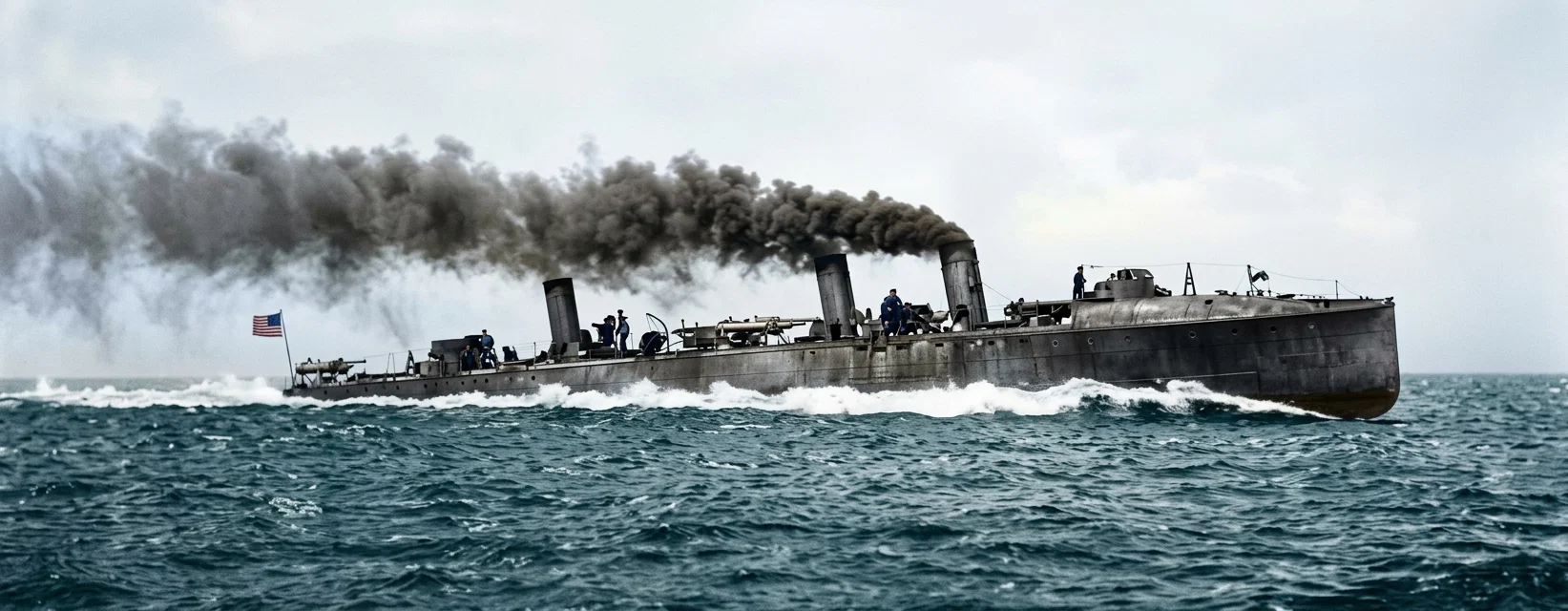
First-class Torpedo-boat Porter.—Displacement, 190 tons; length, 175 feet; beam, 17 feet; speed, 28.63 knots, or 33 miles, per hour; armament, four 1-pounder rapid-fire guns and three torpedo-launching tubes. Of the torpedo-boats of all classes, England has 190, France 249, Germany 174, Italy 191, Austria 76, Russia 191, Spain 48, Denmark 24, Netherlands 63, Turkey 36, Portugal 48, Sweden and Norway 57, United States 21, Japan 147, China 46, Argentine Republic 32, Brazil 33, Chile 13, Mexico 5.
God created man and gave him a pure heart and a happy home. It was His design that man should always remember his Creator, and thus remain pure and happy. That he might do this, God gave him a sign by which to remember. This sign was the Sabbath, Ex. 20:8-11. Man did not remain as he was created, but proved untrue to God. The Lord did not then give him up and cast him away forever, but by an infinite sacrifice to Himself offered him favor. When this favor is accepted by man, it entirely sanctifies him or dedicates him to the service of God. And so, that man might not forget that it is the Lord, the Creator, that sanctifies him, He gives him a sign—the same sign which He gave in the first place, the Sabbath—as a token of remembrance. Thus the Sabbath is a sign of what God is to us, that He is our Creator; and because He is our Creator, He is able to be, and is, our Redeemer. Eze. 20:12.
But Satan had no idea of letting man remember his Creator and Redeemer if it was in his power to hinder him. He could not bring all the fruits of rebellion to maturity in the lives of one generation of men, but he led them as rapidly as they would go. Just in proportion as they were led to forget God, the sign of God fell into disrepute. So just in proportion as they worshiped other gods in His stead, the rival of the Sabbath, the sign of man's way and so of heathenism, “the wild solar holiday of all pagan times,” was exalted.
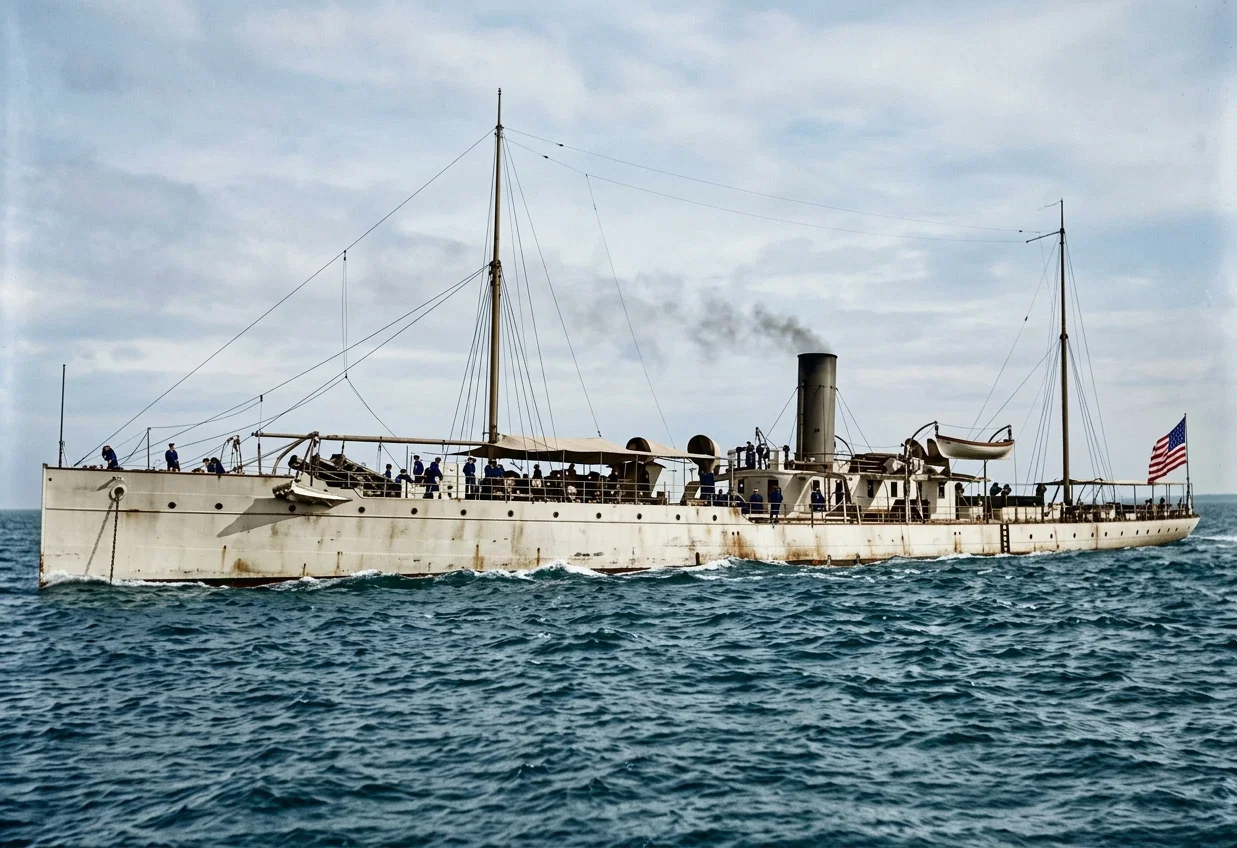
The Dynamite Cruiser Vesuvius.—Displacement, 929 tons; length, 252.3 feet; width, 26.5 feet; speed, 21.4 knots an hour. Has three 15-inch guns for throwing dynamite projectiles. This vessel is an experiment as yet, but; it is designed that a single shot from her will destroy an enemy’s ship.
The Submarine Torpedo-boat Holland.—Displacement, 75 tons; length, 55 feet; diameter, 10¾ feet. Armament is one white-head torpedo discharge tube, one aerial dynamite gun. Another Holland torpedo-boat larger than this one is being built by the United States.
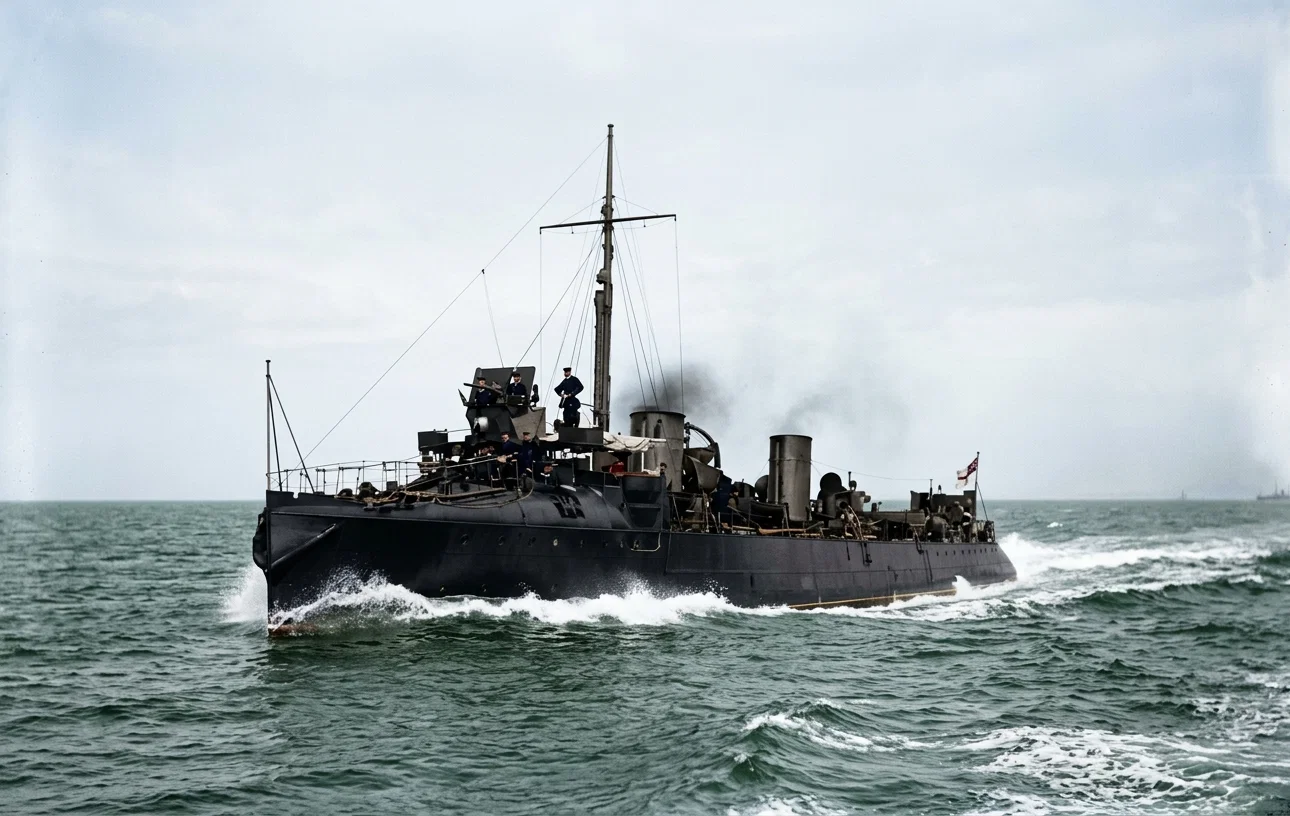
The Torpedo-boat Destroyer Daring, of the English Navy.—Displacement, 220 tons; length, 185 feet; beam, 19 feet; maximum draught, 6 feet 3 inches; speed, 28.6 knots, or about 33 miles.
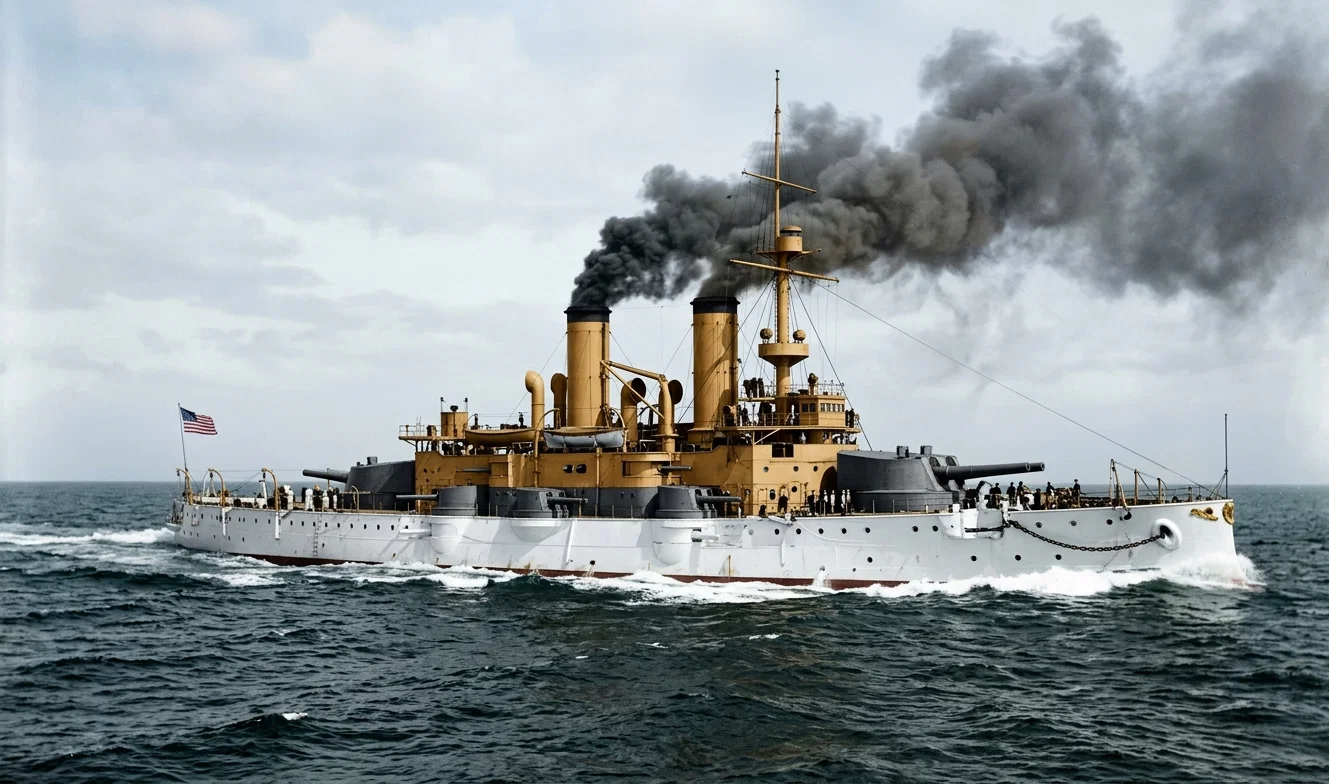
The First-class Battle-ship Massachusetts.—Displacement, 10,288 tons; speed, 16.2 knots. Armor: Belt, 18 inches; deck, 2¾ inches; barbettes, 17 inches; turrets, 15; casements, 6 inches. Main battery consists of four 13-inch, eight 8-inch, and four 6-inch guns; secondary battery has twenty 6-pounders, four 1-pounders, four Gatlings, and two field guns; has three torpedo tubes. Of this class* of vessels England has 29, France 15, Germany 6, Italy 8, Russia 14, Spain 1, Turkey 1, Japan 5, United States 4 completed, 5 being built, and 3 more authorized to be built.
Let none think I have drawn the picture with too lively colors when I say that the “wild solar holiday” was the sign of man's way, and so of heathenism. It is a recognized fact that every nation of antiquity which was idolatrous recognized the Sunday as a day on which to worship the sun. That is what gave it its name, and why it is also called the “wild solar holiday of all pagan times.” It is also noteworthy that in these heathen times every people who worshiped the Lord did it on the day before the heathen worshiped the sun.
In the above we have a faint glimpse of some of the sins of the heathen world, and this should teach us about our own hearts and where they would lead us if we would follow them. Well has the Spirit of truth said, “He that trusteth in his own heart is a fool,” but that “the knowledge of the holy is understanding.” The above is but a faint glimpse of the first Babylon developed. The whole evil thing was in the first step,—in leaving the Word of God. So when any one leaves God's Word, the Lord says Babylon, and may rightly impute all these works to them. C. L. EMERSON.

IN HIS NAME,

It would be a good idea if people would only get in the habit of “doing things” in the name of Jesus Christ. Many things that are now done would be left undone, and many things that are not done would be done. It would be the means of overcoming a great deal of carelessness and indifference.
The Christian should indeed cultivate this spirit. In no other way can the Christian life be made a success. It is the only way in which we can get victory over evil and over self.
By acting in His name we secure power, a power that can come from no other source. This power we must have if we would overcome the evil that is in us and about us.
We read in His Word, “Without Me ye can do nothing.” John 15:5. How many times have we been brought face to face with this truth and made to realize our utter helplessness! On the other hand, it is written, “I can do all things through Christ which strengtheneth me.” Phil. 4:13. That is, indeed, the secret of success,—doing all things through Christ, doing them in His name.
It was in His name that Peter healed the crippled beggar, and it is in His name that we must fight our battles.
In this way we shall ever be successful; for He has said: “And whatsoever ye shall ask in My name, that will I do, that the Father may be glorified in the Son. And if ye shall ask anything in My name, I will do it.” John 14:13, 14.
Did ever soldier enter battle with greater surety of success than the Christian soldier? Our great Captain has issued the command, and with it the promise of success, and He has never lost a battle. It leaves no room for doubt. Let us press forward bravely and firmly, marching onward in His name, knowing that we shall win.
Let our battle cry be this: “I will trust, and not be afraid; for the Lord Jehovah is my strength and my song; He also is become my salvation.” Isa. 22:2.
C. F. LADD, Evangelist.
Jersey City, N. J.

TRUE HEREDITY.

[Whatever may be our inheritance of inborn tendency to sin, the power of God utterly takes it away from the soul that is “born from above.” This thought is beautifully expressed by Lydia A. Cooley in her book “Under the Pines.”]
“Why bowest thou, O soul of mine, Crushed by ancestral sin? Thou hast a noble heritage That bids thee victory win.
“Tho tainted past may bring forth flowers As blossomed Aaron’s rod, No legacy of sin annuls Heredity from God.”
Continue reading: A MARVEL OF THIS MARVELOUS AGE