The Youth’s Instructor, Vol. 66, No. 3.

Miscellaneous News Notes from Wartime America
Earlier text: Music: Its Divine Origin and Perversion

What the Standard of Attainment Is

TWO stanch, new vessels are leaving port together, each on its maiden voyage. They are constructed throughout of the best materials, and one is completely equipped. The other is complete with one slight exception. It lacks a rudder; there is no means of holding to a definite course. Otherwise the vessels are exactly alike, and they carry cargoes of equal value. A rudder is a little thing. Will its absence make any great difference? “Yes,” you say, “all the difference in the world; for without a steering gear the vessel is at the mercy of the winds and the waves and the ocean currents. It will never make a haven. It is sure to be driven on the rocks.”
And you are right. No man in his senses would trust a cargo to a rudderless ship. He might trust it to a ship that had a leaky hull, or weak masts, or was wanting in other particulars; but he would insist upon a good helm, for without this the stanchest vessel would only be sport for the waves.
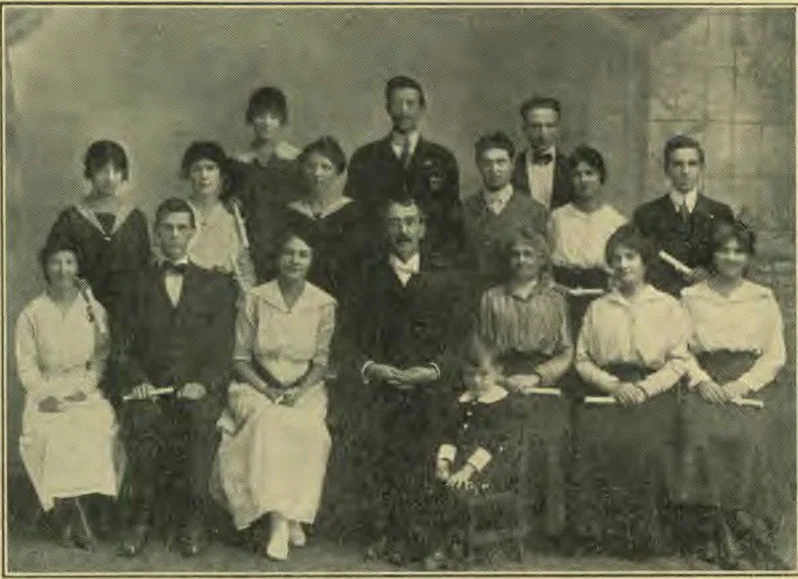
STANDARD OF ATTAINMENT BAND OF THE PATERSON, NEW JERSEY.
MISSIONARY VOLUNTEER SOCIETY
STANDARD OF ATTAINMENT BAND OF THE PATERSON, NEW JERSEY. MISSIONARY VOLUNTEER SOCIETY
So much for the illustration. What is the lesson it should convey? Just this: The ship needs a rudder to make its harbor; so also does the Seventh-day Adventist young man or young woman setting out on the ocean of life. In other words, the Adventist young man needs to have something that will hold him to a definite course. It is not enough that he is bound for a certain harbor; he must have some means of keeping a straight course for that harbor; otherwise he will never arrive.
That which will more than anything else help our young men and women to this oneness of aim, to this definite setting out toward a goal, will be to study the truth, and the history of this people. There is nothing that fortifies the mind against error like filling it with truth. And there is no better way of avoiding those temptations that beset young people than by being so busy with spreading the truth that we have no time for anything else.
But the truth not only keeps out what is false and unprofitable; it fills the mind with peace and joy. There are no young people so happy as those who are spending every moment of their time in studying the truth, and in working for the Lord Jesus. There is no joy like that which comes from self-denial in behalf of God’s cause. The children of worldlings require amusement, because life is so dull without the companionship of a living Saviour; but Seventh-day Adventist young people, having part in such a soul-absorbing work, should find every moment of time occupied with something worth while.
The young people have precious opportunities of speaking a word for the truth, and should always be ready to give a reason for their faith with meekness and fear. They are also continually bearing witness in their lives. People watch the children of believers, and are drawn to the truth when they see them living consistent, God-fearing lives.
In order for our young people to understand the truth in its setting, they need also to study the lives of the great pioneers in the advent movement. Thus they will learn how the principles of self-denial and of willingness to bear hardship are woven into the very fabric of this truth from the beginning, and will come to realize that the same principles are also necessary today.
Finally, a familiarity with the history of the message wonderfully strengthens confidence in the divine providence; for throughout the history of the movement, we see God’s hand at work. This people has been raised up in fulfilment of prophecy. Like John the Baptist, we can point to Scripture as a reason for our existence; and this is a fact with which every young man and young woman in the denomination should be familiar.
Let there be no half-heartedness in the Lord’s work, no indefiniteness of aim, no drifting about at the sport of wind and waves. Rather let every moment of our time and every particle of our strength tell definitely in behalf of God and his truth. Let us gird up the loins of our mind, and be watchful, earnest, and efficient. Is not the Master even at the door?
Now for the question, What is the Standard of Attainment?—It is a systematic plan for getting our young people to study Bible Doctrines and our Denominational History. The young people may study these subjects individually or in groups, and choose their own helps; but only those who pass satisfactorily the test prepared by the General Missionary Volunteer Department receive Standard of Attainment certificates, and become members of Attainment.
M. E. OLSEN.

Have You Read It Today?

“ONE very cold night,” says Mr. Hinckley, “I had retired in a cheerless room. Half an hour later McDonald entered the room quietly; I was supposed to be asleep. He began to prepare for the night. He divested himself of coat, collar, and cuffs, and then opened his valise and took out his Bible. He laid the open book on the dressing case, and, standing with back toward me, this coatless student of the Word remained motionless. He stood there long enough to be chilled through, I thought; it made me shiver to look at him, and so, deciding that he had better know I was awake, I said, ‘What are you doing, Dan?’ “ ‘Been so busy,’ he replied, ‘I haven’t read my chapter for today yet,’ and he remained with his eyes on the Book.”
This little incident happened while Dan was traveling with Mr. Hinckley, and assisting him in giving stereopticon lectures. He was only sixteen, but he had learned that he could not go through the day without the Bible. He was an ambitious lad, popular among his friends, and always ready to do his share. He was dependable; he took delight in sports; he loved his Bible and found time to read it every day.
When only eighteen years old he died. What a tragedy, you say! But death is not the saddest tragedy. To keep God out of our lives; to fail to get acquainted with him,’ that is the saddest of all sad tragedies. What are you doing to keep your life from being a tragedy? What are you doing to get acquainted with God? to make him the supreme Ruler of your life? There are many books that will help you to know God better, but there is only one Book that will lead you to know God as he is—your great God and your tender, loving Father. Have you read that Book today? M. E.

Lesson IV — The Story of Cain and Abel; from Adam to Noah

(January 26, 1918)
LESSON SCRIPTURE: Gen. 4: 1-16; 5.
MEMORY VERSE: “By faith Abel offered unto God a more excellent sacrifice than Cain.” Heb. 11: 4.
STUDY HELPS: “Patriarchs and Prophets,” pp. 71-79; “Bible Lessons,” Book One, McKibbin, pp. 42-47.
“From the same cradle side, From the same mother’s knee, One to long darkness and frozen tide, One to the peaceful sea.”

Questions

  1. What were the names of Adam’s oldest sons? As they grew up, what occupation did they each choose? Gen. 4: 1, 2.
  2. By what service were men to show their faith in the promised Saviour? Note 1.
  3. When they came to worship God, what offering did Cain and Abel each bring? Verses 3, 4. Note 2.
  4. How was each offering regarded by the Lord? Verses 4, 5. Note 3.
  5. What led Abel to make his offering? What did this faith obtain for him? Heb. 11: 4.
  6. When the Lord did not accept his offering, how was Cain affected? Gen. 4: 5.
  7. How did the Lord in kindness reason with Cain? Verses 6, 7.
  8. What did Cain’s wicked feelings lead him to do? Verse 8; 1 John 3: 12.
  9. What did the Lord then ask Cain? What false reply did Cain make? Gen. 4: 9.
  10. What bore witness against Cain? What curse was pronounced because of his sin? Verses 10-12.
  11. What did Cain say to the Lord? How did the Lord yet show mercy to this wicked man? Verses 13-15.
  12. Did Cain try to come nearer to God, or did he depart from him? Verse 16.
  13. After a time what son was given to Adam and Eve? Gen. 5: 3. Note 4.
  14. In the line of patriarchs what special mention is made of Enoch? Verses 21-24; Heb. 11: 5. Note 5.

Find Out

Which was the elder, Cain or Abel. Why God did not kill Cain after Cain had slain his brother. Why life is one long series of tests. How many men lived more than nine hundred years, according to the record in Genesis 5.

Notes

1. “In the wonderful plan that God made to save man even after he had sinned, he gave his Son Jesus Christ to die for man. This was necessary, for some one must die, either man who had sinned, or some one who would take his place and die in his stead. This place Jesus took; but he did not come to the earth to die for us for many hundreds of years after the promise was made. During this long time before he really died, men were to show, by offering sacrifices, that they believed he would die for them, and that his blood would atone for sin. The animal that was slain represented Jesus, who was to be slain for our sins. The sinner confessed his sins over the head of the animal, and then killed it, and burned its body upon an altar. In this way he showed that he knew that he deserved to die, but that he believed that Jesus, who was represented by the animal, would die in his place.”—Bible Lessons, Book One, McKibbin, pp. 43, 44.
2. “These brothers were tested, as Adam had been tested before them, to prove whether they would believe and obey the word of God. They were acquainted with the provision made for the salvation of man, and understood the system of offerings which God had ordained. They knew that in these offerings they were to express faith in the Saviour whom the offerings typified. . . . Without the shedding of blood, there could be no remission of sin; and they were to show their faith in the blood of Christ as the promised atonement, by offering the firstlings of the flock in sacrifice.”—Patriarchs and Prophets, p. 71.
3. “The two brothers erected their altars alike, and each brought an offering. Abel presented a sacrifice from the flock, in accordance with the Lord’s directions. ‘And the Lord had respect unto Abel and to his offering.’ Fire flashed from heaven, and consumed the sacrifice. But Cain, disregarding the Lord’s direct and explicit command, presented only an offering of fruit. There was no token from heaven to show that it was accepted. Abel pleaded with his brother to approach God in the divinely prescribed way; but his entreaties only made Cain the more determined to follow his own will. As the eldest, he felt above being admonished by his brother, and despised the counsel.”—Id., pp. 71, 72.
4. “Cain became the father of a race of wicked men. Seth was the father of a line of men who loved and served God. These men are called patriarchs. Patriarch means a ‘father ruler.’ Each one ruled his own family or tribe as long as he lived, and when he died, his oldest son became the patriarch, the head of the family. The patriarch was also the priest of his family. He offered the sacrifices, and inherited a double portion of his father’s wealth.”—Bible Lessons, Book One, McKibbin, pp. 45, 46.
5. “Enoch’s walk with God was not in a trance or a vision, but in all the duties of his daily life. He did not become a hermit, shutting himself entirely from the world; for he had a work to do for God in the world. In the family and in his intercourse with men, as a husband and father, a friend, a citizen, he was the steadfast, unwavering servant of the Lord. His heart was in harmony with God’s will; for ‘can two walk together, except they be agreed?’ And this holy walk was continued for three hundred years.”—Patriarchs and Prophets, p. 85.

Our Counsel Corner

How can members be transferred from one society to another?
We have a simple transfer card to be used for this purpose. The “Instructions” on the back of the card are as follows:
“To the Missionary Volunteer Secretary.—When a member of your society, in good standing, is about to leave his home church to attend school, or permanently remove to another place, this Transfer Card should be filled in and signed by you, then given to him.
“To the Holder of This Transfer Card.—Take this card with you, and as soon as possible after your arrival at school or at your new home, hand it to the secretary of the Missionary Volunteer Society. It not only serves as a card of introduction, but provides an orderly way of transferring membership from one society to another.”
This transfer card is Blank No. 19, and retails for one cent. Each society should order a few of these at once, and see to it that every member who goes to some other place has this little card of introduction and recommendation to carry with him.
M. E. K.

The Appreciation League

THERE is such a league in existence, though we may be tempted at times to doubt the fact. “Its members are pledged to ignore rudeness and to show appreciation for courtesy.” Mr. William Backus, of Cleveland, Ohio, is the founder of the league. He once pursued the usual course of reporting to headquarters “gross affronts offered by those whose public or semipublic position made it their special duty to be courteous.”
He, however, finally awakened to the fact that this procedure usually resulted in embittering the employee, and bringing hardship to his wife and children without effecting a reformation. Then came the thought of reporting the considerate, courteous person rather than the rude and discourteous one. Upon trial Mr. Backus found this brought marvelously good returns to all concerned.
The first man he reported was a street-car conductor. He says of him:
“He had attracted my attention by his unusual courtesy and affability. He noticed I was taking his number, and said in an embarrassed manner, ‘Are you going to report me for anything?’ When I told him I intended to report him for being polite, he was so happy he almost carried an old lady and her market basket to the sidewalk when the car stopped to let her off.”
Mr. Backus has organized Appreciation Leagues in many cities, and hopes to have one in every city in the Union. The securing of the co-operation of the large business firms is a necessary part of Mr. Backus’s plan. After an employee has been reported to the head of the firm a certain number of times by members of a league, that person is promoted. A spirit of wholesome rivalry for public efficiency is soon apparent among employees, and the reaction upon the league members is helpful. Why not join the Appreciation League, and begin now to “appreciate others, and watch for that fine glow which will filter through your body when you see how ‘the other person’ responds to your word.”

A Personal Experience

A few months ago a Bible school in which I am interested was going through a severe test; one hundred thirty-eight dollars was needed for the rent, and no money was on hand, but they were trusting God to supply the need. The rent was due on Thursday, so two of us prayed very definitely on Tuesday afternoon that God would send the full amount needed before Thursday, that his name might be glorified. The first mail on Wednesday morning brought a check for one hundred fifty dollars for the work of the school from an old lady who knew nothing of the need.—Blanche Kennedy.

Alaska’s National Flower

The Territorial legislature of Alaska passed an act making the wild forget-me-not, “which grows on every hill and in every valley,” the Territorial flower of Alaska. In the bill presented to the legislature was the following stanza:
“So in thinking for an emblem For this empire of the North We will choose this azure flower That the golden days bring forth. For we want men to remember That Alaska came to stay, Though she slept unknown for ages And awakened in a day, So, although they say we’re living In the land that God forgot, We’ll recall Alaska to them With our blue forget-me-not.”

Protected by a Shadow

A TRAVELER in Africa was prostrated by the intense heat. He fell upon the baked earth and slept. As he awakened he noted a sensation of freshness, and found it was due to the thoughtfulness of his attendants who had gathered about him and protected him from the burning rays of the tropical sun.
So will the child of God be protected from the fires of persecution and trouble by the sheltering form of Him who is to his people as “the shadow of a great rock in a weary land.” Well will it be for him who now prays, “Hide me under the shadow of thy wings,” that he may find a sure refuge “under the shadow of the Almighty,” when the final conflict breaks upon a lost world.

Comforts Versus Duty: A Reflection on Luxury
I KNOW it is more agreeable to walk upon carpets than to lie upon dungeon floors; I know it is pleasant to have all the comforts and luxuries of civilization; but he who cares only for these things is worth no more than a butterfly, contented and thoughtless upon a morning flower; and who ever thought of rearing a tombstone to a last summer’s butterfly? — Henry Ward Beecher.
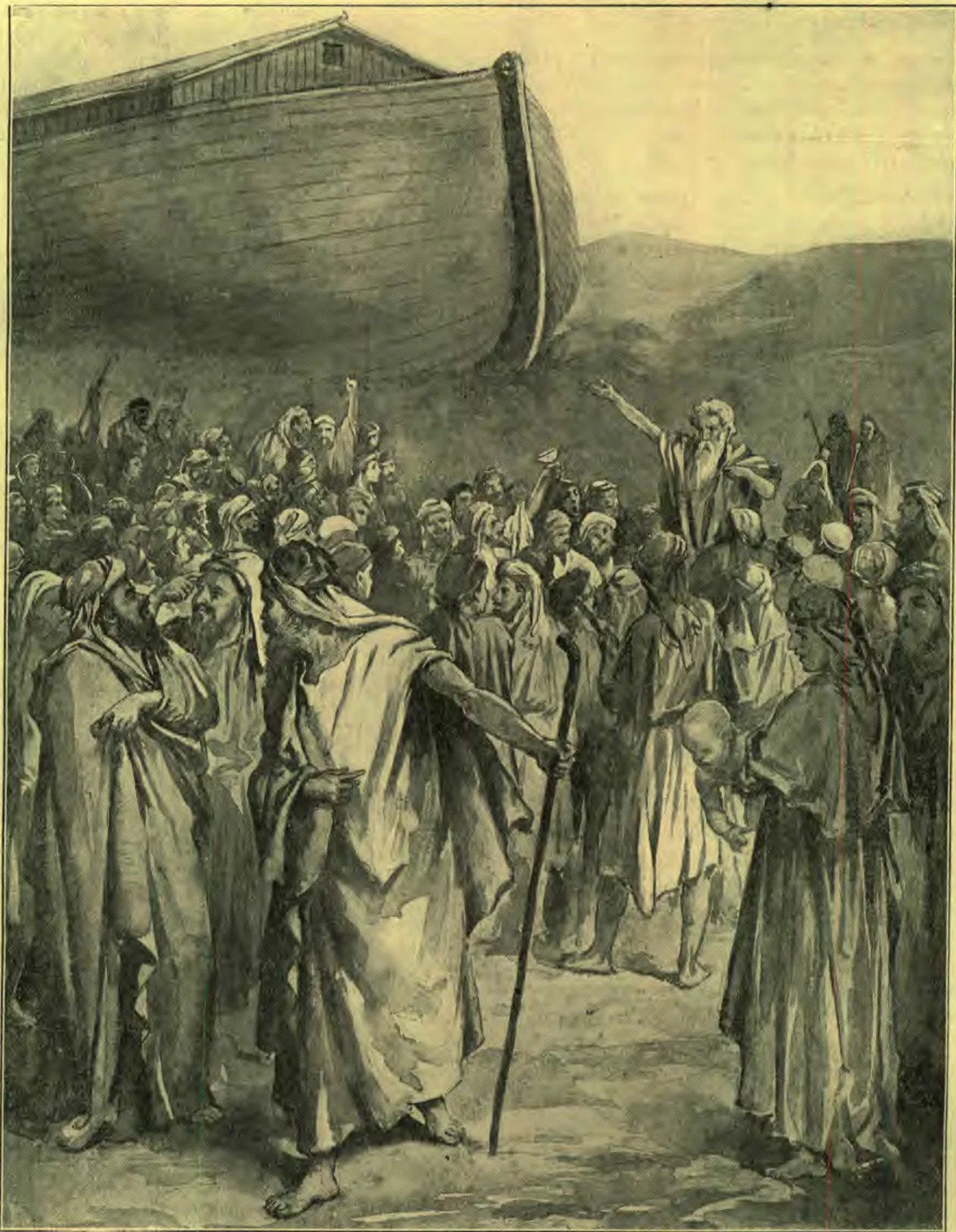
NOAH GIVING HIS MESSAGE OF THE COMING FLOOD

You have reached the end of this edition.

The Youth’s Instructor · Jan 15, 1918