The Youth’s Instructor, Vol. 63, No. 41.

Recitations Corrected by International Correspondence Schools in May
Earlier text: Means and Methods for Carrying the Message

Missionary Volunteer Reading Courses

Senior No. 9 — Lesson 3: “Things as They Are,” Pages 124-187

1. Who was “Treasure”? What mysterious change came to her?
2. Why are the Brahmans spoken of as “the brain of India”? Why is it hard to win the Brahmans for Christ?
3. How will you answer each question asked in chapter 17? How do we prove our love for souls?
4. Why is itinerating missionary work slow and hard?
5. What are some of the difficulties encountered in reaching the women? What methods are used in this work? What are some of the interruptions experienced?
6. Why does the author think we should know more about the reverses in missionary warfare? What kind of reinforcements does India need? What intensifies the call?
7. Who was Pearl-eyes? Why did she come to the missionaries? How does Pearl-eyes’ experience help show India’s great need of the gospel?
8. What characteristic do you find in Elf, Tangles, and Imp, that remind you of American children? What victories did Elf gain? How?
9. Notice the titles of the chapters in this assignment. Read carefully the quotations before the chapters.
NOTE.— Mrs. Anna Besant, referred to on page 129 and in other places, is a famous member of the Theosophical Society, which opposes Christianity, and endeavors to propagate the Eastern philosophy in all parts of the world. She was once a member of the Church of England, and married Rev. Frank Besant, vicar of Sibsey, Lincolnshire. She was divorced from him and renounced Christianity, becoming a “scientific materialist.” Having further changed her view, she later, in 1889, joined the Theosophical Society, of which she was president in 1907. She has traveled extensively in all parts of the world, but has in recent years resided chiefly in India. In 1898 she founded the Central Hindu College at Benares, and in 1904 established the Central Hindu Girls’ School in the same city.

Junior No. 8 — Lesson 3: “Livingstone the Pathfinder,” Pages 73-115

1. Who destroyed Kolobeng? How did Livingstone learn about it and what did he say? What determination did he write to his wife?
2. In Livingstone’s trip north again, how did he finally get his wagons and oxen across the Chobe River? Why did the chief in Linyanti like Livingstone?
3. What expedition did Livingstone make from Linyanti, and who went with him? How did Livingstone save the African hunters from being plundered?
4. What were the Arab traders doing in Africa, and how did Livingstone feel about their business? What great purpose now filled Livingstone’s heart?
5. What did Sekeletu’s picho decide? What is a picho?
6. How was it possible for Livingstone to do so much exploring with so little money? Of what did his baggage for this trip consist?
7. Think over what you would have seen had you spent a day with Livingstone on this trip, and what you would have eaten. Describe the camp.
8. Give experiences showing the great difficulties met on this journey.
9. What did the natives think when they saw the sea?
10. Trace this journey and locate the rivers and places mentioned on the map.
11. What were the experiences of Livingstone and his men at Loanda?
12. Why did Livingstone refuse to return to England with the British ship?
13. Why did Livingstone and his natives stop three months at Pungo Andongo? Do you think Livingstone would ever forget his visit to the valley of Cassange? Why not?
14. Can you tell the story of Pitsane and the canoe? Why do you think Livingstone and his men had such a nice visit at Libonta? Tell about their return to Linyanti.

Junior Society Program for Week Ending October 23

1. REVIEW Morning Watch texts. Have a paper on “Isaiah.”
2. One-minute reports from leaders of working bands.
3. Bible Study: “The First Day of the Week.” See Gazette.
4. Standard of Attainment Quiz: Luke 23: 56.
5. Mission Study: Have a paper or talk on “Our Work Among the Karens of Burma.” See “Notes on the Mission Studies,” in Gazette; and “An Outline of Mission Fields,” page 121.
6. Recitation: “What Are the Children Saying?” See Gazette.

IV — Entering the Kingdom

(October 23)

Daily-Study Outline

Sab. . . . . Read the lesson scripture.
Sun. . . . . “Become as little children.” Read “The Desire of Ages,” page 437. Questions 1-5.
Mon. . . . . True greatness; without offense. Questions 6-9.
Tues. . . . . Remove every hindrance; saving the lost. Read “The Desire of Ages,” pages 438, 439; “Thoughts From the Mount of Blessing,” pages 95-98. Questions 10-14.
Wed. . . . . Not willing that one should perish. Read “The Desire of Ages,” page 440. Questions 15-17.
Thurs. . . . . Winning an erring brother; promises to the few. Read “The Desire of Ages,” pages 441, 442; “Christ’s Object Lessons,” page 248. Questions 18-24.
Fri. . . . . Review the lesson.

LESSON SCRIPTURE: Matt. 18: 1-20.

Questions

  1. What question did the disciples ask Jesus? Matt. 18: 1.
  2. What gave rise to this question? Mark 9: 33, 34.
  3. What general principle did Jesus lay down? Verse 35. 1
  1. What did Jesus do before continuing his instruction? Matt. 18: 2.
  2. What did he then say to the disciples? Verse 3.
  3. Who is greatest in the kingdom of heaven? Verse 4.
  4. When we receive such a child in Jesus’ name, whom do we receive? Verse 5.
  5. What does Jesus say about one who causes a believer in him to stumble? Verse 6. 2
  6. Though offenses must come, what does Jesus say of him who occasions them? Verse 7. 3
  7. What is said concerning a member of the body that causes one to stumble? Verse 8, first part. 4
  8. How is such a course justified? Verse 8, last part.
  9. What is said concerning an eye that offends? Verse 9. What reason is given?
  10. Of what are we to take heed? Verse 10. What reason is given?
  11. Why did the Son of man come? Verse 11.
  12. What question does Jesus ask in illustration of his mission to the world? Verse 12.
  13. What does the shepherd do if he finds the lost sheep? Verse 13.
  14. How does Jesus apply this parable? Verse 14.
  15. How are we to deal with a brother that sins against us? Verse 15. What do we gain if he hears us? 5
  16. What are we to do if he will not hear us? Verse 16.
  17. What is the next step if he will not hear two or three? Verse 17, first part.
  18. If he refuses to hear the church, how is he to be regarded? Verse 17, last part.
  19. If this instruction is followed, how does Heaven look upon the result? Verse 18.
  20. How does the Father regard the petition of two who are agreed? Verse 19.
  21. What promise is given to two or three gathered in the name of Jesus? Verse 20.

Submissive to Gentleness

DR. GEORGE D. BLACK, vice president of Antioch College, Ohio, gives an interesting experience he had with a door which taught him a useful lesson, and it may not be unprofitable to us to read his experience. He says:—
“This particular door had been giving considerable trouble about latching; and so, armed with a screw driver, hammer, and chisel, I proceeded to try to break into the mystery of its capriciousness.
“After working faithfully for an hour, I was satisfied that there was nothing whatsoever in the way of that door’s acting as all well-mannered doors ought to act. I pulled it to with confidence that the latch would catch promptly. But it didn’t. I gave it another bang, with the same result. I tried a variety of slams and jerks, each time putting more vim into my effort. Still it was obdurate.
“After half an hour of experiments that yielded no satisfactory results, I tried shutting the door very quietly and gently; and lo! the end sought was attained. That latch caught and held as if it had never done anything else.
“To this minute I do not know why that door refuses to respond to jerks and slams, and will latch instantly when it is closed with a gentle pressure. Perhaps it is an intelligent, a far-sighted door, and knows that in any well-ordered house doors never should be slammed. However that may be, I know how to deal with that door now; and, whenever I approach it, I quickly remember that no hurried, nervous method will prevail with it. I open it quietly; I close it with a soft, zephyr-like movement; and it latches with a perfection of grace that is a delight to witness.
“And that door is preaching a sermon to me every day, and reminding me of the truth that gentle ways will win where harsh and fretful ones will fail.”

How Did You Fight?

Did you tackle that trouble that came your way, With a resolute heart and cheerful? Or hide your face from the light of day, With a craven heart and fearful?
Oh, a trouble’s a ton, or a trouble’s an ounce, Or a trouble is what you make it; And it isn’t the fact that you’re hurt that counts, But only, How did you take it?
You are beaten to earth? Well, well, what’s that? Come up with a smiling face. It’s nothing against you to fall down flat, But to lie there—that’s disgrace.
The harder you’re thrown, why the higher you bounce; Be proud of your blackened eye! It isn’t the fact that you’re licked that counts; It’s, How did you fight—and why?
—Edmund Vance Cooke.

Willard’s Missionary Barrel

WILLARD was a little fellow, but he had a large interest in filling his missionary barrel that the heathen might hear the story of Jesus. One day a neighbor for whom his mother had performed some service, offered to pay her for the trouble, but Mrs. M refused the money, saying that she did it only as a neighborly kindness, and did not care for the money. She was urged, however, to accept something, but still refused. Willard, true to the oft-repeated saying, “Little pitchers have big ears,” had heard the conversation, and considering it an opportune time for him to speak, made the pertinent suggestion, “Mrs. G, if you do pay my mother, pay her in pennies so that I may have them for my barrel.” And Willard got the pennies.

A Boy Hymn Writer

A PECULIAR interest is attached to the noble old hymn, “Jesus, and shall it ever be,” from the fact that it was written by a boy only ten years old. One cannot but wonder what experience inspired this production. It is not difficult to imagine that the author, like many another boy Christian, sometimes found it hard to stand up for Christ before ungodly companions; and that he wrote the hymn in mingled self-rebuke and self-encouragement. However this may be, no hymn, except, perhaps, “Stand up for Jesus,” has helped more Christians to show their colors in trying places, than has this one. It has in it the very ring of the Master’s words, “Whosoever therefore shall be ashamed of me and of my words in this adulterous and sinful generation; of him also shall the Son of man be ashamed, when he cometh in the glory of his Father with the holy angels.”
Of the author’s life we know but little. We are glad to learn that he entered the ministry, and was for many years a Presbyterian pastor in the city of London. And we are a little disappointed to find that he afterwards, having married a wealthy widow, retired from active service and lived upon his estate. He continued to write, however, and occasionally filled the pulpit of a brother minister for a single Sunday. He died at Walthamstow, near London, in 1768, aged about forty-eight years.
Mr. Grigg wrote a great number of hymns, of which two became famous—the one under consideration, which was originally headed, “Shame of Jesus Conquered by Love; by a Youth of Ten Years,” and the one which begins, “Behold a stranger at the door.”
“Jesus, and shall it ever be” is, perhaps, because of its vigor and intensity, a strong inspiration to musical genius. It is sung in various forms and to various tunes. It has a meaning and a mission, and it will live as long as Christians need it to tell of the “Shame of Jesus Conquered by Love.”—Selected.

Thinkers Scarce as Gold, Diamonds of Thought
THINKERS are scarce as gold; but he whose thoughts embrace all his subject, and who pursues it uninterruptedly and fearless of consequences, is a diamond of enormous size.—Lavater.
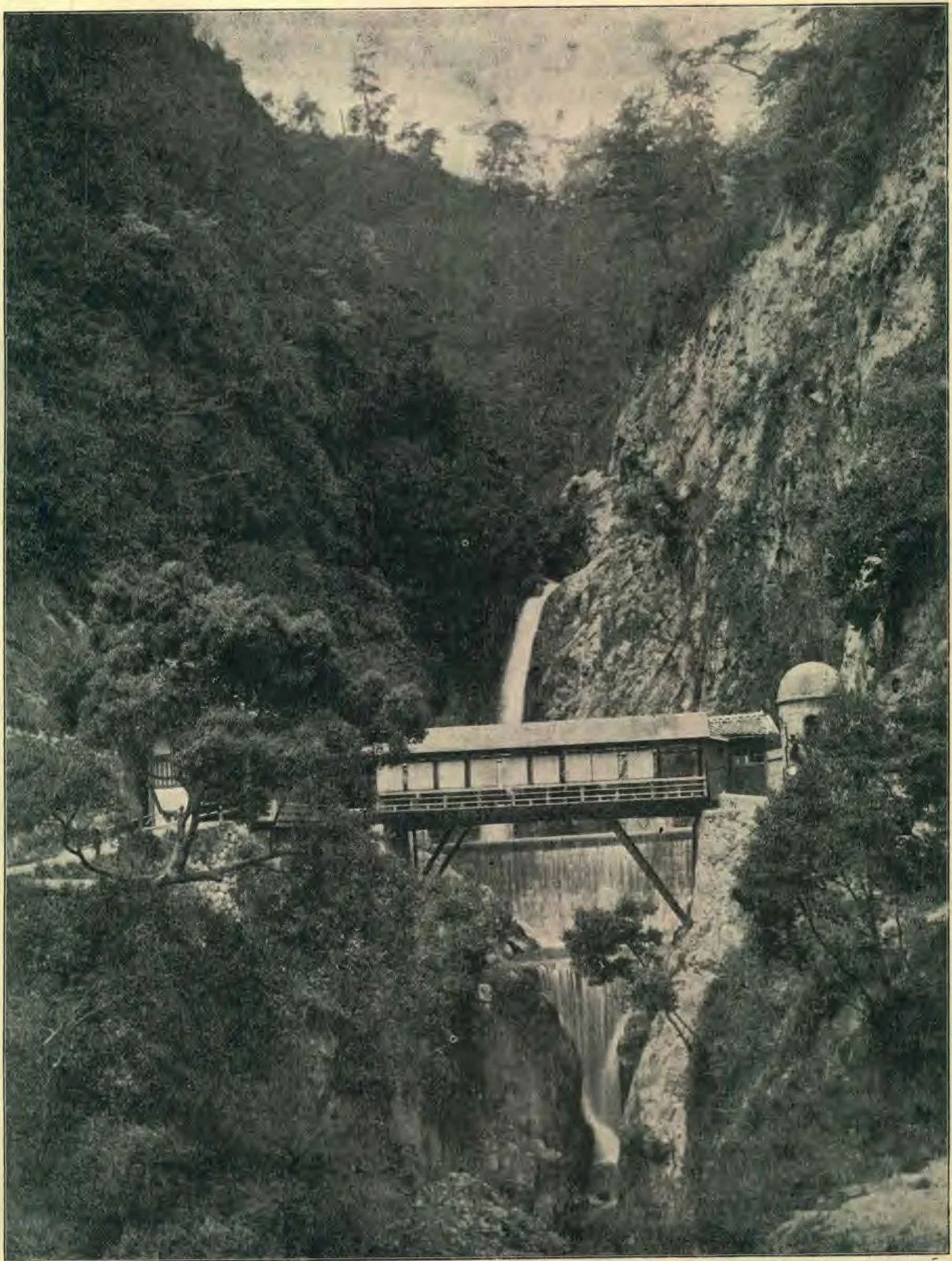
NUNOBIKI WATERFALL, KOBE, JAPAN
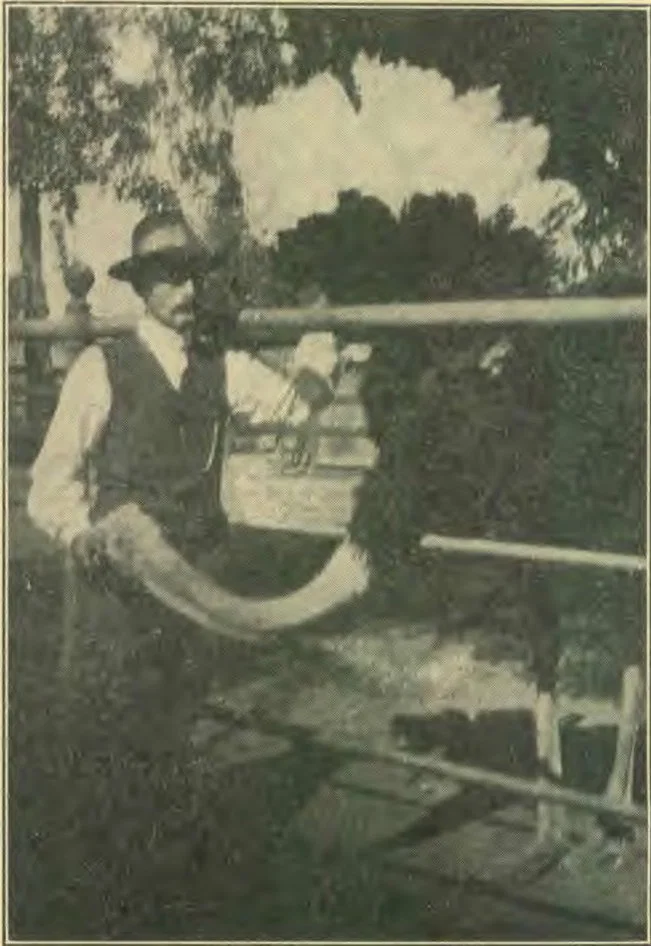
FEEDING A CALIFORNIA OSTRICH
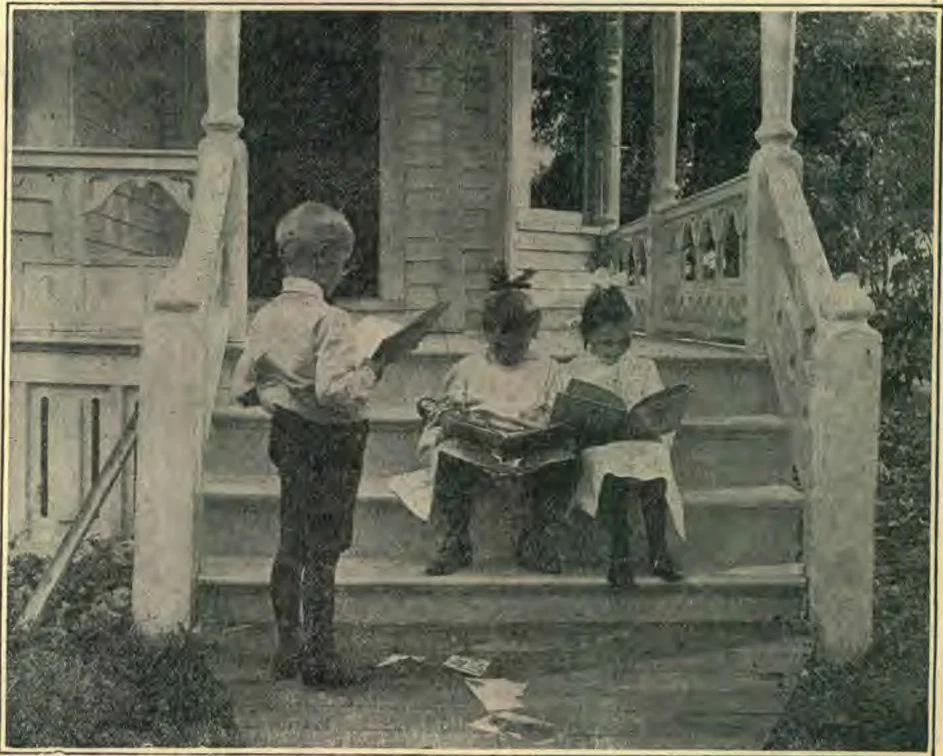
VACATION DAYS ARE PAST, BUT NOT THE PLAY DAYS

You have reached the end of this edition.

The Youth’s Instructor · Oct 12, 1915