Your ShelfYour Projects

Review and Herald, Vol. 68, No. 41.

LABOR VS. CAPITAL
Earlier text: ILLINOIS

COLORADO TRACT SOCIETY.

Report for Quarter Ending June 30, 1891.
No. of letters written ................................ 684
“ received ............................................... 152
“ missionary visits made ............................ 655
“ Bible readings held .................................. 243
“ subscriptions obtained ............................ 593
“ pp. reading-matter distributed ............... 511,268
“ periodicals distributed ............................. 7,073
Amount of sales of subscription books $7,996.10.
LEAH VANDERMARK, Sec.

LESSONS FROM THE GOSPEL OF MARK.

LESSON XVIII.—FEELING AND FAITH.

(Sabbath, Oct. 31.)

FULFILLMENT OF PROPHECY.

1. What was the occasion of Jesus and his disciples going to Jerusalem at this time? John 11:55. (See note 1.)
2. What preparations did Jesus make to enter Jerusalem? Mark 11:1-7.
3. How did the people receive him? Verses 8-10; John 12:15. (See note 2.)
4. In their jealousy what did some of the Pharisees say to Jesus? John 12:19; Luke 19:39.
5. What reply did Jesus make? Luke 19:40.
6. Why was it necessary that they should do this? Luke 24:44.
7. What prophet had predicted this? Zech. 9:9.
8. Did the great majority of those who took part in this demonstration probably believe in Jesus? John 12:37-40. (See note 3.)
9. When Jesus reached Jerusalem, what did he do? Mark 11:11.

CLEANSING THE TEMPLE.

10. What did he do in the temple on the morrow? Verses 15-17.
11. How did the scribes and chief priests regard this? Verse 18.

THE BARREN FIG-TREE.

12. What incident occurred as Jesus came into the city? Verses 12-14.
13. What was the effect of Christ's curse upon the tree? Verses 20, 21.
14. What did this fig-tree represent? (See note 4.)
15. What is said of those whose works deny their profession? Titus 1:16. (See note 4.)

GENUINE FAITH.

16. What lesson did Jesus draw from this for his disciples? Mark 11:21, 22.
17. What did he say of the power and nature of faith? Verses 23, 24.
18. To what did he especially apply this faith? Verse 25.
19. What would effectually hinder the forgiveness of God? Verse 26.
20. What is the most blessed manifestation of faith we could desire? Col. 1:10, 11; Heb. 11:36-38. The faith to live the life of the godly and endure all things, even to the end.

NOTES.

NEW ENGLAND CONFERENCE.

When the writer arrived at South Lancaster, Tuesday, Oct. 6, the annual meeting of the New England Conference had been in session four days, and was consequently well advanced. It was very evident at the first meeting attended that much earnest labor had been put forth, and that the people had been in the meeting for a purpose. From that time forward, the interest rose, and an earnestness on the part of those present to come nearer to God, was more and more apparent.
Till Sabbath, the 10th, business meetings were held in the forenoon and afternoon, and one preaching service each evening. A prayer and social meeting convened each morning at 5:30 o’clock, and inquiry meetings were open between 12 and 1 o’clock, at noon. In all of these there was a deep searching of heart and an earnest inquiry to know more of the requirements of God. As the power of faith was brought before the people, many eyes were seen to light up, and beams of joy were shown in the countenances, while expressions of gratitude were offered to God for the light that came into the meetings.
It is not enough to say that the business meetings were characterized by harmony; but there was something more in them that seemed to lift the people a little higher on each occasion. It is hard to define just what this was; but it seemed that the Spirit of God came into the business sessions, and in the very matter of doing business, words were uttered that seemed helpful to those who were in attendance.
The labors of brother Porter were greatly appreciated, and he was heartily welcomed by the brethren and sisters to the offices made vacant by the contemplated removal of brother Robinson to the mission field of South Africa. The Sabbath was one of the best days ever experienced in New England. The preaching, both forenoon and afternoon, was upon the point of entire consecration to God. The Spirit of the Lord was present, and brought his word home with great effect, and at the close of the afternoon service, the meeting was divided. The youth and those who were burdened on account of their sins—backsliders—were invited to repair to the Academy chapel, while the others remained in the church. Both meetings were deeply interesting. At the close of the social meeting in the church, the opportunity was given for those who had not spoken, and yet had a burden to come to the point where they might consecrate their all to God, and desired prayers, to rise to their feet. A few arose; and when it was decided to ask them forward, nearly the whole congregation arose to their feet as one man, to seek the Lord. Those in the front seats refused to go back, because they wanted the same privilege; and so the people flocked forward and gathered near the edge of the rostrum and wherever they could be near the altar. Prayers were offered, and the Lord came in with mighty power. It was said by some that such a meeting never was seen in that place before. Reports from the meeting held in the Academy chapel showed that the meeting there was of a similar character. Twelve or fifteen in that meeting resolved to give their hearts to the Lord. Most of these were Academy students.
The meetings Sunday were of a similar nature. In the early morning meeting the subject of tithes and offerings was considered from the standpoint of loving service to Christ who has given all for us. The Bible reading on the subject was well received, and the social meeting that followed was very cheering. Following the afternoon discourse, ten were baptized in the beautiful lake south of town. More than half of these were students in attendance at the Academy.
The closing meeting Monday morning was a very affecting one. After a season of prayer, thirty-five minutes were spent in a social meeting, during which time about 100 testimonies were borne. The Spirit of God was specially manifest during this meeting, and all left for their homes full of faith and courage to enter upon the work for the coming year. It was the general feeling that the time had come when we should expect the power of God to attend his work as never before, and we firmly believe that while the work has been very prosperous in the New England Conference in the past, there are still better days and brighter prospects for the future. While the Conference was loth to part with Elder Robinson, who had been so intimately connected with the work in New England for the past few years, they gladly welcomed Elder Porter, and unanimously expressed themselves ready to give him their hearty co-operation and support in carrying on the work. When we see God’s prospering hand thus attending his work, we thank him and take courage. J. O. CORLISS.

Special Notices.

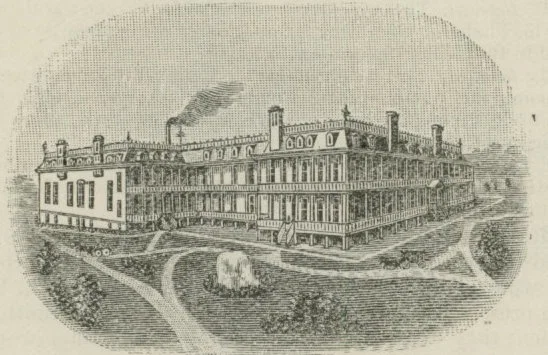
THE MT. VERNON SANITARIUM.
The Sanitarium at Mt. Vernon, Ohio, has been established with a two-fold object in view; viz., to relieve the suffering and to teach the laws of the Creator, which pertain both to moral and physical health. Its basis of operation is philanthropy only. Free beds and means for charity purposes are furnished and supported by several who feel it a privilege to do so.
The institution possesses among others the following advantages: A thorough equipment for medical and surgical treatment of disease based upon modern, rational principles; site, elevated and picturesque; location, near the center of the State of Ohio, on the main line of the Baltimore and Ohio R. R. and the Cleveland, Akron, and Columbus R. R., thus making it easy of access from all points; abundance of soft water from several flowing springs on the grounds; shady groves, with retired walks and pleasant drives; extended bath facilities, with carefully trained attendants; a good gymnasium; retired and quiet, affording special advantage to those who need quiet and rest; a pleasant and practical place for all who may need careful treatment, rest, or recreation.
A descriptive circular will be mailed free on application. Address Mt. Vernon Sanitarium, Mt. Vernon, Ohio, or the writer. O. G. PLACE, M. D.

THE WORK IN PETOSKEY.

A WORD TO OUR BRETHREN IN MICHIGAN.

The Conference Committee, with the exception of Elder Olsen, has recently had the privilege of holding a week’s meeting in this city. During this time the new house of worship was dedicated. The house is 72 x 34 feet, and has eighteen-foot posts. It has a room twelve feet wide, partitioned from one end by sliding doors; this room is also divided by a sliding door, making two rooms for Sabbath-school work. Over these rooms is a small gallery that can be used for the same purpose. The house has a basement, and is heated by a small furnace which does most excellent service at small cost.
The house is plain, but it is a model of neatness. It has no ornamentations whatever, but the general architecture is such that it presents a good appearance. The inside is finished with Michigan pine. The seats are made of basswood. The lot with the house that was on it, cost $2,250. The whole cost, including lot, is some over $6,000. The building committee, appointed by the Conference, has done its work, and we think has done it well. Our brethren will remember how the enterprise was started: that sister White felt a great burden for it, and made an earnest appeal at the General Conference last spring. The appeal was finally written out, and was sent to all our brethren in the State. The appeal stated that we were really ten years behind in this work, and urged that something be done for this place at once. Acting on the strength of the testimony given, the work has been done; but only about $2,000 of the amount has as yet been raised. The rest has been hired from different sources.
We are very anxious that the balance of it be raised as soon as possible. Some of our brethren have already done something; we are thankful for this. How shall we raise the rest? We suggest the following plan: Let pledges be taken to pay a certain amount each month; twenty-five or fifty cents, or one dollar, from now till next July. We would like to have the full amount raised by that time. In this way a large amount can be raised easily, and none be distressed or burdened by it. The ministers, directors, and elders should take a special burden in this matter, and bring it before all our people in the State, in the shortest possible time. We should all act together immediately, and do what we can. Let us take a real interest in this, and with willing minds, take hold together, and raise the amount needed.
MICH. CONF. COM.

MISSOURI SABBATH-SCHOOLS.

I WOULD like to hear from every Sabbath-keeper in the State who is not in regular attendance at a Sabbath-school, and from those schools which have not reported their organization to the State Secretary, and also from those schools which may need help in their work. As I desire to visit every school and family in the State, the coming year, please send in your address at once, and let me know where you live, and what the prospect is in the Sabbath-school work at your place. My address is 1133 Lenard Ave., St. Louis, Mo.
GEO. M. ELLIS, Pres. Mo. S. S. Asso.

News of the Week.

FOR WEEK ENDING OCT. 17.

DOMESTIC.

—Diphtheria is reported to be increasing at Lincoln, Neb.
—There are two inches of snow at Ironwood, Mich., and more is falling.
—Earthquake shocks were felt at San Francisco and Petaluma, Cal., Wednesday.
—Napa, Cal., experienced the heaviest earthquake ever felt there, Sunday night.
—The negroes of the United States now pay taxes on $264,000,000 worth of property.
—The Michigan crop report for October gives the total wheat crop as 30,411,730 bushels.
—A case of leprosy was reported Thursday at the meeting of the Michigan Board of Health.
—It is estimated that about 400 square miles of territory in Wisconsin were devastated by the recent tornado. The loss of pine timber is great.
—Miss Ida Hewitt is said to be the only woman in the United States who is a locomotive engineer. She runs an engine on the Cairo and Kanawha Valley Railroad.
—Eleven machinists were injured, two probably fatally, by the explosion of a locomotive boiler, Wednesday, in a machine-shop at South Park, near St. Paul, Minn.
—The steam-ship “Devonshire,” from Barrow to New York, has been passed at sea abandoned. It is feared that the captain and crew of thirty-six men have been lost.
—A motion is soon to be argued in the United States Supreme Court for the release of the anarchists, Fielden and Schwab, now confined in the Joliet (Ill.) Penitentiary on technical grounds.
—Negotiations have been completed by which the Shoshone and Arapahoe Indians cede to the Government 1,100,000 acres of land in Wind River Reservation, Wyo., for $600,000. The country is well watered, and the soil is rich.
—Passengers on the “Umbria” and “Augusta Victoria,” which arrived at New York, Monday, suffered serious inconvenience during the stormy passage. A number were thrown down and injured so as to require surgical attention.
—A United States flag was unfurled at Chicopee Falls, Mass., several days since, which measured 41 x 71 feet. It was stretched from the tops of two five-story factories, and numerous flowers, which had been gathered into its folds, fell to the ground as it was flung to the breeze. It is probably the largest flag ever made.

FOREIGN.

—Shanghai advices state that a number of French officers and soldiers have been slain by Chinese pirates.
—A dynamite bomb was found on a railroad bridge near Reichenberg, Bohemia, near where the one was placed which recently imperiled the Emperor’s life.
—The horses of the German cavalry regiments are to be entirely shod with paper shoes, recent experiments as to their durability, etc., having proved entirely satisfactory.
—It is reported that the Russian government is negotiating for the purchase of large quantities of breadstuffs in the United States. Fourteen million persons are said to be in need of immediate help.
—Members of a revolutionary club fired on some troops at Montevideo, Monday. The soldiers returned the volley, killing several of the insurrectionists and wounding many more. Later the ring-leaders were arrested, and the contemplated uprising suppressed.
—The gale which raged throughout Great Britain, Tuesday, continued Wednesday, doing much damage in seaports and to shipping. Pedestrians were injured by flying bricks and tiles, traffic of all kinds was suspended, and a theater at Wellingborough was blown down.

RELIGIOUS.

—The first woman ordained in America was a graduate of theology at Oberlin, forty years ago.
—The hymn “Coronation” was written by Oliver Holden, at Charleston, Mass., nearly 100 years ago.
—An annual conference for Japan was created Thursday at Indianapolis, Ind., by the German Evangelical Conference.
—The late William Shaw of Pittsburgh, Pa., gave $30,000 toward the erection of the Pittsburgh Y. M. C. A. Building, and also left $8,000 to the Association in his will.
—The Ecumenical Methodist Conference at Washington Wednesday, offered a resolution asking the authorities of the World’s Fair to close the Exposition on the Sabbath (Sunday).
—Nearly 100 delegates to the W. C. T. U. State Convention at Bradford, Pa., were taken violently ill, Friday, after eating a dinner tendered by the Mc Kean County organization. Six of the victims are in a serious condition.
—At the Methodist Ecumenical Conference at Washington, Thursday, a prolonged scene of disorder followed the introduction of resolutions favoring the federation of the various branches of the Methodist Church. The forenoon was given up to a discussion of Romanism, and the afternoon to temperance.
—When Professor Drummond, author of “The Greatest Thing in the World,” left Japan, the native ministers gave him a message for Europe. It was brief, but pregnant: “Send us no more doctrines; we are tired of them. Send us Christ.” In that sentence, not Japan, but the whole world expressed its deepest need.
—The population of the Fiji Islands is estimated at 123,000. Of these 103,775 attend the services of the Wesleyan churches, and about 10,000 are Catholics. There are 40,000 children in the schools, under the care of 1,095 teachers; and there are 10 European missionaries, 72 native ministers, 49 catechists, 1,838 local preachers.
—The fourteenth meeting of the Episcopal Church Congress, which will meet in Washington, D. C., Nov. 17, will be presided over by ex-Senator Edmunds. Among the topics of discussion are Evolution and Theism, Socialism, Relation of the Clergy to Politics, New and Old Parochial Methods, Catholic and Protestant Tendencies in the Life of the Church, The True Policy of Diocesan Missions, Personal Religion.

Obituary Notices.

“Blessed are the dead which die in the Lord from henceforth.”—Rev. 14:13.
OGBURN.—Died at the home of sister R. F. Ogburn, in Hamilton, Mo., her little grandchild, Thomas H. Ogburn. The bereaved were comforted in the hope of the soon-coming Saviour with power over death and the grave. Funeral services by the writer, from Mark 11:22. N. W. ALLEE.
BISHOP.—Died at Battle Creek, Mich., Sept. 23, 1891, of ailment caused by a hurt received several years ago, sister Bishop, of Hancock, Minn. She was brought home to be buried. Many neighbors and friends were present at the funeral, and manifested great sorrow at her death. She was universally and sincerely lamented. The community and church have met with a great loss, which they feel deeply. She leaves a husband and four children, but they mourn not as those without hope. Words of comfort by the writer, from Isa. 33:24. W. B. HILL.
FRAZIER.—Died at Battle Creek, Mich., Sept. 19, 1891, Mrs. Ida Frazier, aged 37 years, 1 month, and 19 days. Sister Frazier was born in Delaware; she was converted and joined the Methodist Church when about twelve years of age, and had a bright Christian experience during the rest of her life. About two years ago she and her husband accepted the views held by Seventh-day Adventists. For about fifteen months before her death, sister Frazier suffered from that dread disease, consumption, hoping until within a few weeks, that she would recover her health and be able to do some service in the Master’s vineyard. For the last six weeks of her life, however, she looked anxiously forward to the time of release from her suffering, with a peaceful hope in the Saviour whom she had served so faithfully for many years. She leaves a husband and two children to mourn her loss. Although separated from relatives during her sickness, kind friends and neighbors did all that could be done to minister to her wants. The funeral service was conducted by the writer, and words of comfort were spoken from Rev. 21:4. L. C. CHADWICK.

Michigan Central

“The Niagara Falls Route.”
Corrected June 28, 1891.
EAST. †Mail. †Day Express. *N. Shore Limited. *N. Y. Express. *Atl'ntic Express. ‡Eve'g Express. †Kal. Accom'n
STATIONS.
Chicago am 7.05 am 9.00 pm 12.20 pm 3.10 pm 10.10 pm 9.25 pm 4.55
Michigan City 9.10 11.10 2.00 4.48 am 12.25 11.25 7.00
Niles 10.20 pm 12.43 2.53 5.50 1.45 am 12.40 8.25
Kalamazoo 12.00 2.20 3.55 7.04 3.35 2.17 am 6.40
Battle Creek pm 12.55 2.59 4.25 7.37 4.29 3.04 7.27
Jackson 3.05 4.25 5.32 8.52 6.25 4.45 9.05
Ann Arbor 4.42 5.25 6.22 9.45 7.45 6.05 10.19
Detroit 6.15 6.45 7.20 10.45 9.20 7.30 am 11.25
Buffalo am 3.00 am 3.00 am 3.00 6.25 pm 5.05 pm 5.05 pm 7.00
Rochester 5.50 9.52 8.10 10.00
Syracuse 8.00 12.15 10.20 am 1.00
New York pm 3.45 8.50 am 7.00 7.45
Boston 5.40 11.05 10.45 10.45
WEST. †Mail. †Day Express. *N. Shore Limited. *Chicago Express. *Pacific Express. †Kal. Accom'n ‡Eve'g Express.
STATIONS.
Boston am 8.30 pm 2.15 3.00 pm 6.45
New York 10.30 4.50 6.00 9.15
Syracuse pm 7.30 11.55 2.10 7.20
Rochester 9.35 1.45 4.20 9.55
Buffalo pm 11.00 11.00 2.40 5.30 11.50 am 8.45
Suspen. Bridge 3.25 6.25 pm 12.50
Detroit am 8.20 am 7.40 9.25 1.20 9.15 pm 4.45 pm 8.00
Ann Arbor 9.35 8.59 10.19 2.19 10.30 5.52 9.18
Jackson 11.25 9.40 11.18 3.17 11.50 7.15
Battle Creek pm 1.00 1.12 pm 12.22 4.25 am 1.23 8.47 am 12.05
Kalamazoo 2.17 11.55 12.59 5.00 2.17 pm 9.30 1.10
Niles 4.15 pm 1.12 2.08 6.17 4.15 7.40 3.10
Michigan City 5.37 2.14 3.08 7.20 5.45 8.55 4.30
Chicago 7.55 3.55 4.50 9.00 8.05 11.15 6.50
*Daily. †Daily except Sunday. ‡Daily except Saturday. Accommodation train for Jackson and all intermediate points leaves Battle Creek at 6.16 P. M., arriving at Jackson at 7.55 P. M., daily except Sunday. Accommodation train for Niles and all intermediate points, leaves Battle Creek at 7.53 a. m., arriving at Niles at 10.05 a. m., daily except Sunday. Trains on Battle Creek Division depart at 8.03 a. m. and 4.35 p. m., and arrive at 12.40 p. m. and 7.00 p. m., daily except Sunday.
O. W. RUGGLES, General Pass. & Ticket Agent, Chicago. GEO. J. SADLER, Ticket Agent, Battle Creek.

Chicago & Grand Trunk R. R.

Time Table, in Effect May 10, 1891
GOING WEST. STATIONS. GOING EAST.
p. m. 3.0 a. m. 9.00 p. m. 7.00 Boston a. m. 8.30 p. m. 9.50 p. m. 7.30
p. m. 5.00 p. m. 6.00 p. m. 8.00 New York a. m. 8.30 p. m. 9.50 p. m. 5.07 p. m. 10.10
a. m. 6.00 6.00 1.00 Buffalo 8.55 5.00 4.20 8.30
a. m. 7.45 7.35 2.45 Niagara Falls 7.30 3.17 3.10 7.10
p. m. 1.00 Boston 8.30 9.50 7.30
p. m. 8.40 p. m. 11.55 Montreal 8.10 7.45 7.45
p. m. 1.00 Toronto 8.42 5.50 7.40
p. m. 9.50 Detroit 7.45 11.55
Chi. Pass. B. C. Pass. Lmtd Exp. Pacific Exp. Pacific Exp. Mail Exp. Mail. Lmtd Exp. Atl'tic Exp. Day Exp. Prt. H. Pass.
am 5.59 pm 4.14 pm 12.13 pm 8.59 pm 7.24 am 7.16 Dep. Port Huron Arr. pm 10.31 am 12.31 am 7.35 8.21 am 10.45
7.28 5.40 1.20 10.10 8.55 8.31 Lapeer 8.55 11.15 6.17 7.01 9.17
8.05 6.27 1.48 10.43 9.45 9.05 Flint 8.00 10.45 5.40 2.07 8.35
8.48 7.20 2.14 11.28 10.30 9.35 Durand 6.50 10.20 5.05 5.55 7.40
10.00 8.25 3.00 12.33 11.30 10.30 Lansing 5.37 9.30 4.00 5.05 6.35
10.37 8.58 3.25 1.06 12.05 11.00 Charlotte 4.58 9.01 3.25 4.37 6.02
1.00 10.00 4.10 2.00 1.00 11.50 BATTLE CREEK 4.05 8.20 2.35 3.55 5.15
1.48 pm 4.25 2.50 1.48 12.30 Vicksburg 2.55 7.43 1.48
1.58 1.58 Schoolcraft 2.42 1.33
2.52 5.25 3.48 2.45 1.22 Cassopolis 1.50 7.00 2.45 2.35
3.40 6.00 4.25 3.35 2.10 South Bend 1.00 6.20 12.00 1.57
5.15 7.21 5.55 5.10 5.40 Haskell's 11.25 5.00 10.30 12.40
p. m. 9.30 9.30 8.05 7.30 5.50 Valparaiso 8.40 3.00 8.15 10.40
p. m. 9.30 a. m. 8.05 Chicago 8.40 3.00 8.15 10.40
Arr. a. m. p. m. p. m. a. m.
Where no time is given, train does not stop. Trains run by Central Standard Time. Valparaiso Accommodation, Battle Creek Passenger, Port Huron Passenger, and Mail trains, daily except Sunday. Pacific, Limited, Day, and Atlantic Express, daily. Meals served in C. & G. T. Dining Cars on all through trains. W. E. DAVIS,                                                         A. S. PARKER, Gen. Pass. and Ticket Agt., Chicago.                                 Ticket Agt., Battle Creek.

ADDRESSES

Appointments.

“And he said unto them, Go ye into all the world, and preach the gospel to every creature.”—Mark 16:15.
WRIGHT, Mich., Oct. 24 Sparta, “ 31 Will brother Haysmer please meet me at Sparta? H. M. KENYON.

ADDRESSES

My address is now 920 W. 6th Ave., Denver, Colo. J. R. PALMER.
The address of N. W. Allee, President of the Missouri Tract Society, is now Hamilton, Mo.

PERIODICALS WANTED.

Send copies of REVIEW, Instructor, Signs, Sentinel, Good Health, Social Purity tracts, etc., postpaid, for missionary purposes, to W. H. KENNEDY, Lakeview, Montcalm Co., Mich.

TO CALIFORNIA, OREGON, WASHINGTON, AND OTHER WESTERN POINTS.

The constant demand of the traveling public to the far West, for a comfortable and at the same time an economical mode of traveling, has led to the establishment of what is known as Pullman Colonist Sleepers.
Each car is in charge of an experienced uniformed Pullman Porter, who is required to keep the car in good order, and to look after the wants and comfort of passengers.
These Pullman Colonist Sleepers are attached to the daily fast express trains, thus enabling passengers occupying these cars, to make the same time as occupants of first-class Pullman Sleepers.
Passengers holding both first and second class tickets are allowed to ride in these cars.
A charge of $3.00 for a lower or upper double berth is made between Council Bluffs, Omaha, or Kansas City and San Francisco or Portland.
The Pullman Colonist Sleeper is especially commended for the use of the home-seeker who is moving to the West with his family, and who desires comfortable sleeping accommodations en route, but cannot afford to pay the first-class Pullman Sleeping Car fare.
For matter descriptive of any State or Territory through which the Union Pacific runs, or for rates, time of trains, etc., etc., apply to E. L. Lomax, Gen'l Pass. and Ticket Agt. U. P. System, Omaha, Nebr.

CHEAP EXCURSION RATES TO CHICAGO EXPOSITION.

The Chicago & Grand Trunk Railway Co. announce very low excursion rates to Chicago and return for the Exposition. The round trip rate from Battle Creek, including one admission to the Exposition is only $4.50. Tickets will be sold on Tuesdays, Sept. 22, 29, Oct. 6, 13, and 20, good going on date of sale, and good to return up to and including Monday next following date of sale.

Sister White and Party Set Sail for Australia

By word from California, we learn that Nov. 11 has been decided upon as the date for sister White and party to sail for Australia.
One year ago this week (Oct. 20) our schooner “Pitcairn” left San Francisco Bay, on its mission among the islands of the Pacific.
The Holland Christian Reformed church of Michigan puts itself on record by allowing none of its members to belong to unions.
A report from brother L. C. Chadwick has just arrived, but too late for this paper. It was written on a train in the State of Mississippi, and states that he expected to reach the Consul-General’s home at Nueva Laredo, Mexico, Friday, the 16th.
Our readers will be glad to see in the Mission Field department this week, another interesting report from our ship “Pitcairn.” What will be to them of special interest, is the number of books that have been sold in the islands of the Pacific.
The Australian “Monthly Summary” for August, 1891, states that more canvassers are now working in that field than ever before, and that more books are being sold. This is encouraging. Books lay a good foundation, and are the best augury for the stability of the work.
The General Conference Association Board has been in session in Battle Creek the past week, the following-named brethren being present: O. A. Olsen, D. T. Jones, J. N. Loughborough, R. M. Kilgore, W. W. Prescott, R. C. Porter, A. J. Breed, H. W. Decker, G. A. Irwin, A. R. Henry, H. Lindsay, W. A. Spicer, J. N. Nelson.
The time to lift in a good cause is when that cause is endeavoring to rise, and when its own force is still weak. This is now the case with the cause at Potoskey, Mich. Let all read the suggestions by the Michigan Conference Committee in the Special Notice department of this issue, and having read, lift.
A step in the right direction was taken recently in a meeting of the Women’s Press Association in San Francisco, by adopting a resolution strongly deprecating criminal advertising, and the publishing of the details of criminal cases. Could this practice be suppressed, the source of much of the ways and means of criminality would be cut off, as also would the demoralizing influence of the scandal connected therewith. We heartily uphold the association in their resolution.
We call the attention of the reader to the article on Dan. 8: 13, 14, by brother Littlejohn, on p. 643. The subject involves one of the main pillars of that system which we denominate “the present truth,” and is of special interest to all students of prophecy. Many have queried, and been puzzled to explain, how the words “Unto two thousand and three hundred days, then shall the sanctuary be cleansed,” answered the question of the angel, “How long shall the vision concerning the daily and the transgression of desolation, to give both the sanctuary and the host to be trodden underfoot?” The article shows how the language of verse 14, is a direct answer to the question of verse 13, and how wonderfully it has been confirmed by the events of history. Read it.

SUNDAY CLOSING.

The Sabbath Union, and some other Sunday busybodies, in their efforts to induce the managers of the World’s Fair to commit themselves to the decision to close it on Sunday, are stirring up, or bringing to light, sentiments which they did not perhaps anticipate. From present appearances it would seem to be quite safe to leave the question to Sunday observers themselves, and if the managers close the Fair on Sunday, they will do so against the sentiment of the majority of the people at the dictation of the few. For instance, one who signs himself an “Ex-minister,” in the Chicago Tribune of Sept. 5, administers the following well-deserved rebuke to the combined conceit and arrogance of those who would fain compel all men to come to their standard of religious views and practice. After speaking of the bigoted ideas of such, he says:—
“Is such a standard of judgment to be profoundly respected? Are the directors of the World’s Fair expected to yield to the demands of such men who have no broader views of human conduct? They call themselves Christians, and claim to represent the Christian public of America, and speak as if they had special rights in the matter of Sunday closing of the Fair. But are Christians the only citizens of the United States who are to be considered? The tone on this subject of some of these Sabbath Union men is arrogant in the extreme. They forget that the Fair is to be a World’s Fair, and that they (the Christians) do not constitute one fourth of the world’s population, and that the real Christians of America are but a small minority of our citizens. Yet this minority think that they should be heard before all others. But what rights have they which are denied to those who are not Christians? Our laws and institutions recognize only American citizens. In the eye of the law we are neither Jews, Christians, Mohammedans, nor infidels. We are nothing more nor less than American citizens. This parading the fact, therefore, by certain parties that they are Christians, and that the Fair directors shall listen to them as such and be guided by their advice, is in direct conflict with the spirit of our institutions.”

YEA AND NAY.

The New York Christian Advocate of Oct. 1, mentions an incident which shows some confusion of sentiment in the Catholic Church, and how it can adapt itself to contradictions of its own theories when it suits its own interests to do so. If on the subject of heretics, marriage, and divorce, the church has a position, as it claims, clear and well defined, the “Archiepiscopal tribunal of Boston,” in the interest of their boasted unity, ought to have understood it, and so have saved itself the mortification of coming in conflict with the great head of the Church at Rome. The following is the case in question:—

“MARRIAGES BY PROTESTANT MINISTERS RECOGNIZED BY THE HOLY SEE.

“A decision was delivered in Rome on Aug. 16, of importance to many persons. William Grant of Bridgeport, Conn., got a divorce in the courts of that State, from his first wife. They had been married by a Methodist minister, but afterward Grant had joined the Church of Rome, to which his wife belonged. After getting his civil divorce, he applied for an ecclesiastical divorce, claiming that a Methodist marriage was not recognized by the church. In 1887 the local board declared the marriage valid. Grant appealed to the Archiepiscopal tribunal in Boston, which reversed the decision, and it was declared no marriage. The question was appealed to Rome, and there the highest authority declares the marriage binding, and divorce is refused. This places Grant in a peculiar position, as he has been for some years living with a second wife. As the Roman Catholic Church does not recognize the validity of the orders of Methodist ministers, this is equivalent to declaring that civil marriages are binding upon the consciences of Roman Catholics, and that a divorce obtained in the civil courts cannot relieve the Catholic from responsibility to his church; for Rome allows no divorce for any cause.”

O. A. OLSEN

MINISTERIAL INSTITUTE IN DIST. NO. 3.

According to arrangement, this institute will be held at Battle Creek, Mich., beginning Nov. 13, and continuing until Dec. 15. This will be a very important gathering, and we hope that all the laborers in this district will avail themselves of the opportunity of attending. The ministerial institute for Dist. No. 2, held at Austell, Ga., has just closed. We attended a few of the closing days. We are fully satisfied that these institutes will be a great help to increase the efficiency of the laborers. All who attended the institute in Dist. No. 2, were exceedingly gratified over the results, and were so thankful for the blessings they received and the benefits derived from instruction given. We are sure that they will return to their fields much better prepared to act their part in the work, than heretofore. The only regret that many expressed was that the time was too short; they wished that the institute could have continued another four weeks; for they were just beginning to comprehend and take in the value and the blessings of the instruction given.
The Battle Creek church stands ready, as it always does, to do all in its power to accommodate and assist those who may come to the institute. A Committee on Arrangements has been appointed. Each Conference should look after and make arrangements for those that are coming from its field. Some have done so already. Some of these prefer to rent a house and provide for themselves; others prefer to obtain room and board with a family, which they can do for about $2.50 per week. Whatever may be your choice, you can be provided for. We suggest that the President of each Conference look after this matter at once, and see that arrangements are made for those who are coming from his field. Correspondence in regard to this matter should be directed to W. A. Colcord, REVIEW AND HERALD, Battle Creek, Mich.
All should be here at the beginning, so that no time shall be lost in organizing. The time is only four weeks. We hope that all our laborers feel the importance of this move. We feel assured that God has great blessings in store for his servants, and that we shall receive great benefits and encouragement from this opportunity.

O. A. OLSEN

You have reached the end of this edition.

Review and Herald · Oct 20, 1891