The Youth’s Instructor, Vol. 37, No. 38.

BE THOU CONTENT

The Youth’s Instructor

Sep 18, 1889

S. D. A. Publishing Association · Battle Creek, Mich. · Sep 18, 1889

BE THOU CONTENT.

WHY art thou full of anxious fear, How thou shalt be sustained and fed? He who hath made and placed thee here Will give thee needful daily bread. Canst thou not trust His rich and bounteous hand Who feeds all living things on sea and land? Be thou content.
He who doth teach the little birds To find their meat in field and wood, Who gives the countless flocks and herds, Each day, their needful drink and food, Thy hunger, too, will surely satisfy, And all thy wants in his good time supply. Be thou content.
—Paul Gerhardt, 1670.

THE TOWER OF LONDON.

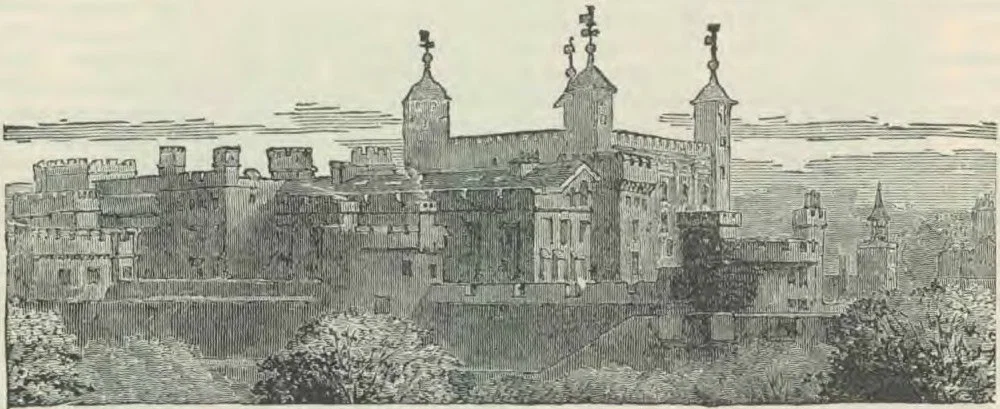
THIS tower is situated on the northern bank of the Thames, in the very heart of London. It was built by William the Conqueror about the year 1079. The tower proper, now called the White Tower, is a grim, square building of gray stone. At each angle is a small watch-tower, or turret; on the top of each is a curious conical roof, with a still more curious flag weather-cock on the top of that, just as you see in the picture. At a distance of about 150 yards all round this central tower, runs an embattled wall, and at a few yards' distance another, and outside of all these is an immense moat. In the first wall, at regular intervals, are twelve other towers, giving the whole the appearance of a confused mass of hoary walls, turrets, and gates. As you enter, and glance around at these towers, you cannot but feel awed to think how many an illustrious captive, how many servants of God, have sighed out a lifetime in those chill and lone lodgings, or had their blood poured out in the courtyard below. The ghoulishness of the whole makes you think of secret passages, torture rooms, and reeking dungeons.
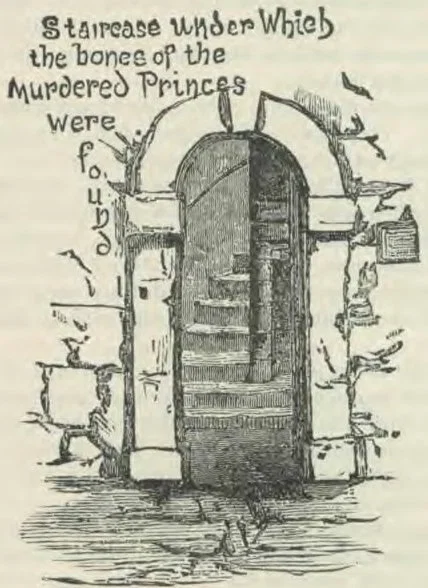
The White Tower demands the first attention. It is about 92 feet high, and has walls of solid stone, 15 feet thick. You see it was built to stand. It has three lofty stories. To get above, one has to climb an ancient spiral staircase of stone in one of the corner towers. The staircase consists of a central column, or newel, and the steps wind around it. It is very narrow and dark. The bottom of the second flight is shown in the illustration.
It was here where the bones of the princes were discovered. Their father was Edward V., of England. He, dying, left his little boys alone in the world, the eldest, of course, being king by right. But their uncle, the duke of Gloucester, also wanted to be king. So he shut them up in the tower, and had them smothered as they lay asleep; then he ascended the throne as Richard III. Their bones were not discovered till many years afterward. Poor little boys! it would have been much better for them if they had been the sons of some poor farmer, and not a king's children. However, it is said they were very good little Christians; so they may have a happy time yet in the new earth.
The tower was used as a royal palace by all the kings up to the reign of Charles II., and the ancient chronicles have many accounts of the gorgeous magnificence of the scenes which occasionally gilded those gloomy walls. One old writer says about an event: “It is vain to attempt to describe the ceremony; so far from being utterable, it was almost inconceivable.”
Happily, it is no longer needful for Britain's sovereigns to live within the walls of a fortress; so now the tower is used as a barrack and also as an armory of curious weapons. The walls and ceilings of the different rooms are now covered with every description of arms, arranged in different patterns. Among others is a rising sun of bayonets; another is a bird catching a butterfly among the corn, made of sword blades. Here are also different instruments of torture,—the thumbscrew, the rack, the scavenger's daughter, etc. Also the headman's block and ax, on which several have been beheaded. The torture room is in the basement.
The most interesting of the smaller towers is the Beauchamp Tower, built about 1200 A. D. This tower has always been used as a prison, and has several rooms and dungeons. The walls are covered with inscriptions and names written by the poor chained inmates, some of whom never left their cells till death released them; others were allowed to take a little air in a small courtyard below. Many of the prisoners were here simply on the caprice of some tyrant; others, for their faith. Among the inscriptions are many interesting ones. Here is one in Latin: “The more suffering for Christ in this world, the more glory with Christ in the next world. Arundell, June 22, 1587.” Another reads thus: “That which is sown by God in tears is reaped in joy. E. Poole. Æ 21. 1562.” In the yard just opposite this tower is the scaffold site, where so many noble persons, including two queens, lost their heads.
The Wakefield is another interesting tower, as it contains the crown jewels. They have been kept here since 1260. The most important is the royal crown, made of purple velvet, surrounded with hoops of silver, and surmounted with a ball and cross, all of which is resplendent with diamonds and the largest of sapphires and other gems. This tower contains also other baubles of royalty, such as the queen's diadem, a thing like a saucepan stuffed with velvet.
The royal scepter, an affair something like a golden kitchen poker, with a bird on the top. Another interesting arrangement is St. Edmund's staff, a long pole which is carried before monarchs at their coronation. To make it of more effect, it is said that the ball on the top contains a piece of the true cross, which of course is not so.
The traitor's gate is of interest. It is a gloomy archway leading into the river, through which prisoners of state were brought. As you look into its horrid maw, you wonder how often nobility, and even royalty, have passed beneath its frowning portal, to exchange the dream of honor and glory for the stern realities of the dungeon, the torture room, and the fatal ax.
To us, the most interesting captives are those who came here under the charge of heresy. At times, Rome kept the cells full. The Protestant queen, Elizabeth, was kept a close prisoner here during her girlhood. During the beginning of the Reformation, the tower was full of learned divines. In 1546, Anne Askew, “a lady of cultivated mind and good family,” was confined and tortured here, and afterward burnt nearby. Cranmer, Ridley, and Latimer were all imprisoned here before martyrdom. How glad we ought to be that we can obey God without imprisonment.
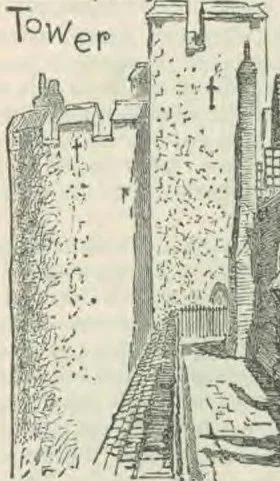
Prisoners' Walk from the Beauchamp Tower
But should the time ever come when my young readers will need to choose between forsaking the right and adhering to it, as these old martyrs did, in the face of suffering and even death, I hope they may have the courage to choose always the side of right; for that is God's side. FRANK HOPE.

HOME MISSIONS AND PEANUTS.

JAMIE STUART was the crossest boy in the village, at least I hope there were none crosser. It was Sabbath, too, which is certainly a poor day in which to be cross.
He was cross to his sister Delia. On the way home from Sabbath-school, he gave her what he called a “piece of his mind.”
“Of all the silly girls I ever heard of, I think you are the silliest.”
This was the way he began.
“What ever possessed you to put such a lot of pennies into the box? I was looking when you dropped them in, and there must have been nine or ten.”
“Seven,” said Delia promptly.
“Well, then, seven. You are rich, seems to me, if you can afford to give so much money at once.”
“Why, it was ‘foreign missionary day,’ you know,” explained Delia, “and we always give as much as we can on that day, to help support Miss Colburn.”
“Pooh!” said Jamie; “as if your seven pennies would do much toward supporting ‘Miss Colburn’! What if mother had to depend on them to help support us; how much would they do?”
“Why, they would help,” said Delia meekly, “and it was all I had, you know.”
“Yes; that’s the silliness of it,” said Jamie, growing more wrathful as he thought of it; “the idea of giving every cent you had to foreign missions! For my part, I think it was downright selfish. What is to become of home missions, if that is the way people do?”
“Why, I give to them when the time comes,” said poor, bewildered Delia, who was two years younger than Jamie, and could not always keep track of his logic.
“The time comes all the time for that,” said Jamie, positively. “There’s always something at home that needs doing; needs it a great deal worse than the heathen do. Just think of poor old Mr. Oswald, poking away in his little store on that back street, trying as hard as he can to support a family. Only yesterday, when I went in there with a lot of boys who didn’t all of them together spend three cents, he said to me, ‘What has become of that nice little sister of yours who used to buy so many peanuts of me? I haven’t seen her in more than a week.’ I wish I had thought, and I’d have told him you were so busy supporting the heathen out in China, or somewhere, you couldn’t think of your neighbors.”
“But, Jamie,” said Delia, much disturbed, “Mr. Oswald surely doesn’t have to support his family on peanuts? he keeps lots of useful things, and men and women buy of him. I guess he only keeps peanuts to accommodate the children.”
“That’s just where you are mistaken, Miss Missionary! He lets that lame Phil Oswald have all the money he can make from peanuts and gum and such things, and he’s trying as hard as ever he can to get money enough to buy him a wheel-chair, so he can get around the streets, and do errands and such things. It is real missionary work to buy peanuts—enough sight more important than the old heathen, I think.”
This was news indeed! Delia was so much interested that she forgot to answer Jamie, and kept on thinking of the lame Oswald boy, and of how nice it would be if he could have a wheel-chair, and how nice it would be if she could help him, until Jamie, finding that she had nothing to say, and having expressed his mind pretty freely, fell back to walk with Dick Watson, and left her to her own thoughts.
Less than a week afterward, Jamie Stuart was cross again—crosser than before, so his sister thought.
“You are the biggest goose in all this world, I do believe!” he said to the gentle little Delia. As well acquainted as the little girl was with her brother, this made her open her eyes; for it seemed to her that in view of his last Sabbath’s talk she certainly must have pleased him.
This is what she had done. There had unexpectedly fallen into her hands a whole ten-cent piece, which she was at liberty to spend just as she pleased. She had pleased to go at once to Mr. Oswald’s store, and had asked for two cents’ worth of peanuts, handing out her ten cents for payment; but the amazing part of it was that when Phil, who was himself waiting on her, turned to the drawer for change, she said sweetly, “Never mind the change, please; I want you to put it with your fund for the wheel-chair. I hope you will very soon get enough.”
How glad she was to tell Jamie the story! He had wanted Phil helped so much. How pleased he would be! His answer had been those words which I told you.
“Why,” said Delia, bewildered, “I don’t know what to think of you, Jamie Stuart. I thought you would like it so much. Don’t you see that he has a great many peanuts left to sell to other people, and eight whole cents to go into his fund? I’d have given him the ten cents without any peanuts, only I thought perhaps he wouldn’t like that.”
“Of course he wouldn’t,” answered Jamie; “he isn’t a beggar. I dare say he did not like it to have you give him the eight cents; he would a great deal rather have given you peanuts for them.”
“Oh! you are mistaken,” declared Delia; “he thanked me beautifully, and said he would remember how kind I had been, and that his fund did not grow very fast; that selling peanuts enough to raise twenty dollars was slow work, and I think it must be. I was as glad as I could be that I could help, and I thought you would like it ever so much.”
“I thought you were a ninny!” said cross Jamie, “and I know you are, and Phil Oswald is another!” Then he flounced off with the two cents’ worth of peanuts in his pocket.
Delia looked after him in grave anxiety. “Jamie must have missed in his arithmetic again, I’m afraid, and that is what makes him so cross,” she said to herself.
But it wasn’t. I, understanding Jamie Stuart better than his sister did, will tell you something. He liked peanuts very much indeed, and Delia liked them very little. So when she bought them, which she often did just for his sake, he was sure to get the most of them, and this was the entire secret of his deep interest in “home missions.”
I have sorrowful reason to think that there are a great many people, some of them older than Jamie Stuart, whose interest in home missions is just about as deep-seated as his.—The Pansy.

THE CHILDREN'S SEA-SIDE HOME.

If one should take a stroll through the east side of lower New York one of these hot nights, he might see roofs covered with forms of sleeping men, women, and children, and in the doorways little ones of five years, holding in their arms puny, sickly babies, who seem scarcely strong enough to cry. There are people sleeping on the sidewalks, too. The desire seems to be to get anywhere out of the hot tenements, in order to get a bit of air that has not already been breathed by a score of lungs.
Some wealthy people that feel a strong sympathy for suffering childhood, have tried to better this state of affairs, or at least to help the children to more strength to endure it.
About fourteen miles out from the city, on the western coast of Coney Island, stands a large, handsome building, surrounded with broad piazzas giving a fine view of the sea, with its white-capped, restless waves, that come rolling in, and break upon the shore a few feet away. Six cottages, three on each side, are connected with the main building by broad walks. The whole cluster of houses, with ten acres of land, forms the Health Home, and was donated to the Children's Aid Society by a few generous persons.
During the hot weather, the Home is filled with mothers and children, who arrive early Monday, and remain six days. Usually one hundred mothers, with from one to four children each, go down at one time.
There are four stations in New York, each in charge of a physician, from whom tickets may be obtained for a week's stay at the sea-side home. If applicants are not afflicted with any contagious disease, they are furnished with a ticket.
As this charity is designed for children, no woman is allowed to go unless she has her children with her. The visitors are not allowed off of the grounds, to go to other parts of the island, without the special permission of the pleasant-faced matron or superintendent; but they have the freedom of the shore near the Home, and there all day the children can play in the white sand, with their little tin pails and shovels; they can gather the many pretty shells that strew the beach, and chase the waves with their bare feet as the tide goes out; or they can just lie in the sand, and watch the big excursion steamers as they go puffing up and down the bay. Everything is novel and refreshing to these little ones, who have spent their lives between brick walls.
Every morning all are treated to a bath in the surf. The day closes by singing hymns, while the matron accompanies them on the organ.
It is wonderful what plenty of simple, nourishing food and the salt air can do for some who go there. Babies who arrive so weak and thin that they cannot hold up their heads, revive under the tonic of the sea breezes, and by the end of the week go home with health and strength sufficient to carry them through the heat of summer.
Last year, more than five thousand mothers and children received the benefit of this charity. In addition to these, three days in every week picnics of poor people, who come down for one day's outing, are entertained at the Home.
MRS. L. E. ORTON.

FEAR GOD.

Count life a stage upon thy way, And follow conscience, come what may; Alike with heaven and earth sincere, With hand and brow and bosom clear; “Fear God”—and know no other fear. —Selected.

A WREN'S NEST.

How many of the little readers of the INSTRUCTOR ever saw a bird build a nest in a hat? I doubt if many of you have, so I am going to tell you about one which is in a shop across the road from where I live; and I feel assured you will all agree with me that the little mother bird is very wise in building her nest in so snug a place.
One beautiful morning, while my husband was busily engaged in the shop, his attention was attracted from his work to the flitting back and forth of a little brown wren, not as large as a snow bird. His curiosity was aroused by watching the wren fly to an old, stiff felt hat, which one of the workmen had left hanging on the wall.
Flying above it, he was surprised to see her vanish from sight. Upon investigation he discovered, piled in confusion within the crown, a handful or more of short sticks and straw, which the bird had carried through a hole at one side.
As the little visitor seemed very friendly, he concluded to hang the hat in a safer place, and see if Mrs. Wren really intended to build her nest in such strange quarters. So climbing upon a high bench, he carefully nailed the rim of the hat securely to the wall, near a large crack at one end of the shop, where the little feathered tenant could go and come undisturbed.
For a few days she was very busy gathering material. Mr. Wren stopped on his travels to help her. First, the sticks and straw were carefully arranged as a foundation. The inside walls were built of hair and fine grass, and lined with feathers, making a very warm and downy nest; for the eggs must be kept warm.
One morning we found a tiny speckled egg in the nest, and in a few days six more nestled beside it, and so nearly alike you could not tell them apart. The wren was quite at home now, and would chirp in a very friendly manner while she hopped a few feet away, watching us closely as we peeped into her sheltered nook.
We did not have long to wait before the frail shells burst, and seven wee birdies opened their mouths in answer to the chirp, chirp, of the faithful little mother, who held in her beak a dainty morsel for her hungry babies.
They are pink, and only a fine down covers their bodies. They are so small that when they open their mouths, you can scarcely see their bodies.
Mrs. Wren called upon me yesterday. She flew in at the kitchen window, resting for a moment upon the sill, with her head turned on one side, looking calmly about the room, as if to see what kind of home I have, as I had inspected hers. She did not stay long, but flitted away into the balmy air, with a glad little song.
The birds are growing very fast, and in a few weeks they will be old enough to leave their pleasant home, so safe from the hands of mischievous boys, who love to tear down the dainty nests, and steal the lovely tinted eggs. And not boys alone; I am sorry to say I have known girls guilty of such acts.
When you are tempted to climb into an old tree in the orchard or elsewhere to tear down and rob the innocent birds' nests of the lovely, tiny eggs which were not put there for you, stop and think of the many hours of toil and care our little feathered friends have spent in building that home you are about to destroy. And they will miss the eggs or helpless birds; for they love their young in their way as fondly as your parents love you.
How lonely the cool, shady woods would be if all the merry, thrilling songs, bursting from the downy throats of the birds, were hushed, and we could not see them hopping and flitting among the green leaves.
Be kind to the birds. God has created them, and he says that not a sparrow shall fall to the ground without him. They are beautiful specimens of his handiwork. They are not ours to destroy, but to admire.
M. L. C.

“I CAN’T.”

Never say, “I can’t,” my dear; Never say it. When such words as those I hear From the lips of boy and girl, Oh they make me doubt and fear; Never say it.
Never mind how hard the task, Never say it. Find some one who knows, and ask, Till you have your lesson learned; Never mind how hard the task, Never say it.
Men who do the noblest deeds Never say it. He who lacks the strength he needs Tries his best, and gets it soon, And at length he will succeed; Never say it.
—Child’s Paper.

WHERE TOM FOUND HIS MANNERS.

TOM'S father was a rich man, and Tom lived in a large house in the country. He had a pony and many other pets, and wore fine clothes. Tom was very proud of all the fine things his father's money bought. He began to think that being rich was better than being good. He grew very rude, and was cross to the servants. Once he kicked Towser; but the dog growled, and Tom was afraid to kick him again.
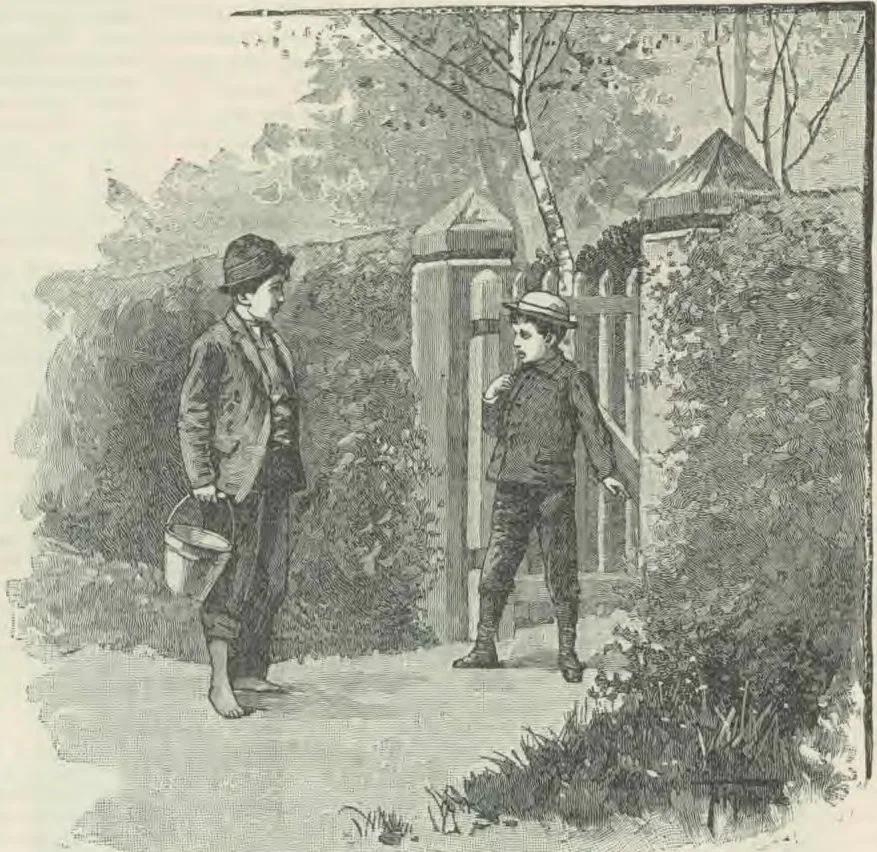
One day when Tom was playing in the yard, he saw a boy standing by the gate. He was ragged and dirty, his hat was torn, and his feet were bare. But he had a pleasant face. In one hand he carried a pail half full of blackberries.
“Go away from here,” said Tom, running to the gate. “We are rich, and we don't want ragged boys around.”
“Please give me a drink,” said the boy. “If you are so rich, you can spare me a dipper of water.”
“We can't spare you anything,” said Tom. “If you don't go away, I will set the dogs on you.”
The boy laughed, and walked away, swinging the half-filled tin pail of berries in his hand.
“I think I will get some blackberries, too,” said Tom to himself. He went out of the gate into a lane leading to a meadow, where there were plenty of berries.
Tom saw some fine large ones growing just over a ditch. He thought he could leap over it very easily. He gave a run and a very big jump. The ditch was wider than he had thought, and instead of going over it, he came down into the middle of it.
The mud was very thick and soft, and Tom sank down into it to his waist. He was very much frightened, and screamed for help. But he had not much hope that help would come; for he was a long way from any house.
He screamed until he was tired. He began to think he would have to spend the night in the ditch, when he heard steps on the grass. Looking up, he saw the ragged boy he had driven from the gate.
“Please help me out,” said Tom, crying. “I'll give you a dollar.”
“I don't want the dollar,” said the boy, lying down flat on the grass. He held out both his hands to Tom, and drew him out of the ditch.
Tom was covered with mud, his hat was gone, and one shoe was lost in the ditch. He looked very miserable.
“Who is dirty now?” asked the boy.
“I am,” said poor Tom; “but I thank you very much for helping me out of the mire. And I am sorry I sent you away from the gate.”
“The next time I come, perhaps you will treat me better,” said the boy. “I am not rich, but I am stronger than you are, and I think I have better manners.”
“I think so, too,” said Tom.
The next day, when Tom saw the boy going by the gate, he called him in, showed him his rabbits, doves, and little ducks, and gave him a ride on his pony.
“You have good manners now,” said the boy.
“Yes,” said Tom, “I found them in the ditch.”—Our Little Ones.

MEMORIAL STONES.

“Wife, why do you allow that boy to litter up the ground with those great stones?” asked Teddy’s father. “They make a most unsightly pile. I’d have him take them away at once.”
“Ah, you don’t understand,” said the mother.
“No; I don’t see why a neat housekeeper like yourself allows it;” and the father looked inquiringly at her.
“I’ll tell you why. His Sabbath-school lessons are taking a firm hold upon him.”
“I hope so; but that has nothing to do with the door-yard.”
“Everything,” replied the wife. “Every one of those stones stands for a blessing—something to be thankful for. And he knows the name of each. I think we won’t have them taken away just yet.”
“As you please; still they look untidy.”
“Mamma!” shouted Teddy, coming in at noon. (Do boys always shout?) “Mamma, I say, memorial pile’s getting so huge, I’ve thought of something else.”
“It is pretty large; papa thinks it is taking up almost too much room. But what have you thought of?”
“Teacher said to-day that we ought to share our blessings with those who don’t have so many; and so those I share I’ll take away from the pile, and those I can’t share I’ll make beautiful.”
“How do you mean?”
“Will you trust me, mamma, and wait till it’s done?”
“Certainly I can trust you, and I’ll try to wait; but I’m very curious,” said mamma, with a smile.
“Well, then, we won’t have any secrets. The big stone for Jesus and the two for you and papa I can’t give away, but the ones for clothes and food and playthings and all the rest I can give to others—share, you know. Those I’ll cart off.”
“Are you going to take away the tall one that means home? Can you share your home?”
“Not very well, can I?”
“I think we’d have to ask papa.”
“Yes. I’ll keep that, and pile the others around it; then I’m going to dig a trench round them, and set out vines, and cover my blessings all over with lovely flowers, so that any one that sees them can enjoy them. That’s sharing.”
“That will be fine. Here comes papa to dinner. We will keep our secret for a little.”
Teddy kept his word. The stones that he had piled up in the yard, like those other stones which the children of Israel brought out of Jordan for a memorial so long ago, reminded him daily of his blessings. And while his heart was full of thankfulness to God for them, he remembered also to share his blessings with all who needed, growing day by day into a noble-hearted, generous boy.
He planted beautiful vines and plants around their bases, and when the summer came, his father said that the unsightly pile of stones was an ornament to the yard. And while his boy had remembered the words, “Forget not all his benefits,” and in a simple, childish way applied them to his daily life, he had learned not only to receive with gratitude, but to share with a generous spirit his gifts with those who possessed less of the good things of life.—Child’s Paper.

THE BEAN AND THE RED APPLE.

“Six, seven, eight, nine; five and four are nine, and—”
Very busily little Prue worked out her puzzling sum, but suddenly the reckoning ceased; there had come a sharp rap on Prue's knuckles, and a great fat bean popped over upon her adding line. Prue flushed, stared a bit at the intruder, and then, straight and angry, she stood up and hurled it at Tom Tyler's head. There was a general titter, in the midst of which Miss Ruth's voice broke in,—
“Prudence Winslow will stay after school to-day.”
Tom's eyes blinked in triumph, while Prue could barely restrain her wrath.
“I won't tell on him,” she said that noon to grandma. “It's too much like him; he's always doing such mean things. But I'll make him sorry some way.”
Grandma smiled. “I know the way,” she answered.
“How?” asked Prue, joyfully.
Grandma took a pretty red apple from the fruit dish, and handed it to her.
“Give this to Tom Tyler, and see what effect—”
But Prue waited to hear no more; out-of-doors and back towards school she ran, in a mood that a glimpse of Tom Tyler just going into the school-house did not at all improve.
“Give him my pretty red apple?—never!” she exclaimed; but even before she reached the school-house, she had begun to think. Somehow things always turned out as grandma said, and she was an impulsive little maiden. So she hurried after Tom Tyler, and slipped the apple into his hand.
The next minute she was sorry she had done it.
“Grandma don't know Tom,” she murmured, vexedly, “or she'd never have told me to do that.” Altogether, it was a miserable afternoon for Prue. Just once she peeped at the boys' row. To her surprise, Tom's head was bent low over his book, while the apple lay untouched upon his desk.
The clock struck three; the children hurried out, leaving Prue to her lonely fate. Sorrowfully, with downcast eyes, she sat listening to the merry voices, when she was startled by a sob. Looking up, she saw Tom Tyler standing at the teacher's desk, and while she stared at him, he said:—
“Please, Miss Ruth, keep me instead of Prue. You ought to; for I threw the bean first.” And he went on to tell about the pretty red apple, and how mean it made him feel. “I'd rather she'd have thrown fifty beans,” he said.
Happy Tom! and happy Prue! For love had worked its wonder, and henceforth love stayed with them.—Child's Paper.

WAS IT FAIR?

We know a little girl who wanted very much to run over to a neighbor's to play, but was not permitted. She teased awhile, until her mamma made her stop, and then what do you think she did?
She knew that whenever baby brother slipped out of the gate, he ran over to that neighbor's the first thing, and often mamma would send her to bring him back. She thought if she were once over there, she could stay and play a little while.
So this is what she did. She slipped to the gate, unlatched it, and left it slightly ajar. Baby, in his rambles, soon found it, and was gone. Then she waited. Pretty soon the rattle of wheels was heard on the street; then some one cried “whoa!” and a woman’s voice screamed, “He’s killed! he’s killed!” All ran out, and there was baby in the dust, almost under the horses’ feet, not killed or hurt, but narrowly escaped. What do you think his sister thought now of her naughty trick? She will unlatch no more gates for baby.—Sel.

Keep Sunshine in the Heart and Home

KEEP sunshine in the heart and in the home.
Continue reading: LETTER TO THE HEBREWS