The Youth’s Instructor, Vol. 27, No. 43.

SOMETHING FOR GIRLS

The Youth’s Instructor

Oct 1879

S. D. A. Publishing Association · Battle Creek, Mich. · Oct 1879

SOMETHING FOR GIRLS.

SUPPOSE you really love those rough, teasing brothers of yours, but don’t you think you might show it a little more pleasantly? I can tell you I know all about boys. I was brought up in a house full of them. I have enough in my own house this very minute to keep things from getting dull and stupid. I know just how rough, and noisy, and heedless they are; how they forget to wipe their feet on muddy days, throw their caps and scarfs on the floor, and leave their books in the queerest places, to be hunted up in the last minute before school-time. I know how they come in with a whoop, and clatter upstairs like so many fire-engines, the moment the baby goes to sleep; and how they are always leaving the door open, and cutting, and burning, and blowing themselves up.
But for all that, we could not spare them from our homes very well, could we? And isn’t there something wrong in the family when sisters call their brothers “nuisances”? Yes, that’s the very word she used, and I’ve remembered it these half-dozen years; for the speaker was a pretty, delicate little girl, and I was a good deal astonished to hear her say,
“A boy in a family of girls is a perfect nuisance.”
The “nuisance” came home from school presently; a hearty, good-natured-looking boy of eleven or twelve, whistling with all his spare breath. He stopped suddenly as he saw me, and came forward awkwardly enough, to speak to me, for he was evidently unaccustomed to meeting company. Unfortunately his foot came in contact with his elder sister’s dress, soiling it slightly.
“You clumsy thing!” was the impatient exclamation, “you ought to be kept in a cage.”
I looked from the crimson face of the “nuisance,” and tried to fancy how sweetly that sister would have assured an older gentleman that it was of no consequence at all, and was entirely her own fault for taking up so much room. In an arm-chair, one of the younger sisters was curled up, examining with great interest a new magazine. An exclamation of delight brought her brother to her side, and he was soon absorbed in the engravings, looking over her shoulder.
“Wait just a second,” he begged, as she was turning a page.
“Oh, you always want to see something,” said the sister, fretfully. “I hate to have any one look over my shoulder.”
So it was from morning until night. There was not a place in that house, so far as I could see, where the boy was wanted, or a person who wanted him; and I wondered if the dear mother knew how it was, and whether it would not make her heart ache to see it. If the sisters walked, or rode, or sang, or played croquet, no one ever said, “Come, Johnny.” And I really suppose they thought he did not care for their laughing, and teasing, and snubbing, just because he was a boy, and was too brave to show that he cared. I found out another thing, too, and that was that the “nuisance” was very convenient when the pony was to be harnessed, the pitcher to be filled with cool water, a big bundle to be carried down town, or a disagreeable errand to be done; yet I never heard any one say,
“Thank you, Johnny; it was kind in you to take the trouble.”
No doubt he would have stared if they had said so, but I think he would have liked it, and I think it would have helped him to be polite himself.
“Why didn’t you thank that boy for bringing your hat?” I asked of a pleasant little girl.
“Why,” she exclaimed, “that’s our Tom!” as if that were reason enough for not being polite to him.
“I wish I had a sister,” said a boy to his companion, in my hearing. “It must be so nice to have sisters of your own.”
“That’s because you don’t know,” said his companion. “I tell you they plague a fellow the worst way, and the bother of it is, you have to take it, because they are girls.”
That made me think of a little fellow whom I once charged with cruelty for pulling out the long legs of a grasshopper.
“Don’t hurt him,” was his defense; “an’t a mite of juice in ’em. An’ he don’t squeal, neiver—course if it hurt him, he’d say somefin ’bout it.”
These brothers of yours will not always say when you hurt them by unkind, careless words, but they feel it all the same, and it hurts in another way, by gradually chilling their love for you, and making them hard-hearted and careless of the comfort of others.
I tell you, girls, you cannot afford to lose your brothers in this way. You need them, and they need you. Many a boy has gone into bad company, and yielded to evil, degrading influences, simply because there were no stronger, purer influences at home to draw him away from it. Make your brothers your companions and friends, and never be afraid or ashamed to show your love for them.—Selected.

THE SHEPHERD'S VOICE.

“Come unto me,” with loving voice at morn I heard the Shepherd call; But narrow seemed the fold, and fair the fields Beyond the frowning wall.
Again, at mid-day, came the gentle voice; But far my feet had strayed, And, weary with the heat, I only longed To find the forest shade.
Once more it came; but cool the shadows lay Across the grassy wold, And resting there, content with present ease, I scorned the sheltering fold.
Soon fell the night, with neither silver star, Nor song of happy bird; And through the gloom no more, with pleadings sweet, The Shepherd's voice I heard.
Affrighted then I turned, and blindly sought To cross the trackless lea, Till, faint with fear, in sorest need, I cried, “O Shepherd, come to me!”
No answering voice the sullen silence cleft, But lo, beside me stood One who with sorrowing brow had followed close, Unseen through wold and wood.
Then all the night grew light, and soft and sweet The stars shone overhead, While homeward by the Shepherd's tender hand The wandering sheep was led. —Miss M. B. Sleight.

From Sea to Sea: Michigan Lands and Resources

FROM SEA TO SEA.—NO. 17.

We have now spent about five weeks in Michigan, among relatives and old friends. Before resuming our eastward journey I must say a little more about this State. Nature has done much for Michigan, making it one of the best States in the Union. Its soil, timber, water, and its adaptation to raising all the fruits, grains, and vegetables of temperate climates, render it a desirable location for rural homes.
The southern portion is dotted with small prairies, having a rich, black soil, and interspersed with what is called opening land, a sandy loam covered with young oaks. Next to this is a broad belt of very heavy timber, stretching across the State from northeast to southwest; then comes a strip, several miles wide, of beautiful, tall pines; then another strip of heavy timber,—maple, ash, etc.,—then pine again, and so on up to the extreme northern border of the State.
Concerning its water advantages we have already stated that it is nearly surrounded by navigable lakes, besides containing thousands of smaller ones. In addition to these, it has its quota of rivers. In the southern part of the State are the Kalamazoo, St. Joseph, and Raisin; farther north are the Grand, Saginaw, Muskegon, and others.
In the southern part of the State, and especially on its western border, the apple, peach, plum, cherry, and other fruits, are produced in abundance. In raising wheat, corn, barley, and oats, Michigan is not inferior to any of the older States. And although it may not, like Missouri, boast of a great mountain of iron, or, like California and Nevada, of gold and silver mines, it has, nevertheless, in the northern or Superior section, some of the richest copper mines in the world; while of late years very valuable coal mines have been developed in the central portion, and in the Saginaw valley are profitable salt-works.
Though these things have not had an exciting effect upon the world at large, to draw people from all parts of the globe, as have the gold and silver mines of the Pacific slope, yet this State has presented substantial inducements to those who desire to secure a permanent home. For this reason, Michigan can, perhaps, next to Connecticut, boast of being the “land of steady habits,” having to a large extent a class of residents who expect their gain in this world to be the result of care and labor. As a rule, the sons of toil and hardship are those who rise in the world to positions of honor and trust, and of this there are many examples in the history of Michigan. Nor have the efforts of the people been confined to securing material prosperity. Great attention has been given to the subject of education. The district schools, graded schools, and colleges of Michigan compare well with those of any other State. Her medical college at Ann Arbor ranks among the best.
The people complain of cold winters and warm summers, the climate not being as mild as when the original belts of timber were all standing, yet it is not unhealthful, especially for persons who are careful of their habits of life. If we violate the physical laws of our being we must expect to pay the penalty, regardless of State or climate. J. N. L.

THE OAKLAND SABBATH-SCHOOL.

On the evening of Oct. 1, the Oakland Sabbath-school, with representatives from the San Francisco school, met and passed a short time in very interesting and instructive exercises, which were conducted by Bro. J. E. White. The citizens of Oakland came in until the house was filled; and they appeared to be as much interested as any of our own people. Everything moved off with promptness and perfect order.
The exercises consisted, (1) in singing, at intervals, by an excellent choir and the children, separately and together, accompanied with the best of instrumental music; (2) speaking by different individuals; (3) election of officers; (4) reports from both the Sabbath-school and the Sabbath-school V. M. Society; (5) the opening of the contribution boxes.
During the quarter each teacher had received contributions from his class and deposited the same in a box. These boxes had not been opened until this evening. The members of each class were full of interest to learn the amount they had contributed; and as this was a new plan, its utility was now to be practically demonstrated. The result showed a collection of sixty-four dollars during the previous quarter. With this means the school was prepared to purchase Song Anchors, and all such appliances as are needed in a prosperous school.
The report showed the number of scholars at the commencement of the quarter to have been one hundred and seven; at the close, one hundred and thirty-seven; also, that four new classes had been organized. One large class of young men, although not professors of religion, manifest as much interest in learning perfect lessons, and in maintaining exemplary deportment, as any class in school. Their contribution was larger than that of any other class, amounting to over thirteen dollars.
The programme consisted of twenty-two parts. The exercises varied in length, but none exceeded ten minutes, the whole occupying but one hour and forty minutes. All present seemed deeply interested, and judging from their appearance and our own feelings at the close, every one felt like saying, God bless the Oakland Sabbath-school, and enable all others in the country to reach the same state of prosperity as is manifest here. S. N. HASKELL.

“TIME ENOUGH YET.”

“You are going the wrong way, Frank,” said an anxious friend, who sought to lead the young man into the narrow path. “Time enough yet,” was the careless reply.
Oh, thought I, how does Frank know that there is yet time for him! True, there may yet be time; but every moment should be treasured, and carefully used in forming a good character. The young are apt to look forward for many years, and think that the preparations for eternity may safely be put off until some future time. From the experience of those who have followed this course, we conclude that it is never safe to put off this work. Many a youth on his death-bed has mourned a harvest past, and a summer ended. Dear young friends, learn wisdom before it is too late!
The Lord says, “Son, give me thy heart,” and no better time can be found than the sunny days of youth, when the heart is fresh and buoyant, and the cares of life rest lightly. We have no promise of time, not for a single hour; but even if we had the assurance of many years, the time would be none too long to prepare for the coming of the Lord. Do not put off the day, but commence the preparation now, and may God help you to make thorough work.
Vesta J. Olsen.

HAVE YOU DONE ANYTHING FOR CHRIST?

The following incident, from an exchange, presents an important question. May it lodge in the heart of every reader of the INSTRUCTOR, and each often ask himself, What have I done for Christ?
A lady was teaching a class of ten bright boys in the Sabbath-school. They were attentive and thoughtful; but none were Christians. The lesson was, “Showing our love for Christ.” At its close the teacher asked her scholars one by one if they had done one single thing for Christ during the week. As she questioned each, some answered sadly, “No,” and others shook their heads in silence.
“Not one deed for Christ!” said the teacher; and she looked sadly at the solemn, earnest faces.
A thoughtful boy of thirteen at her side sat a while in silence. Perhaps he was thinking, “I wonder whether one really loves Christ if one tries to please him.” Suddenly he turned his expressive eyes upon the teacher, and said, respectfully but earnestly, “Miss M——, have you done anything for Christ?” The question was unexpected. Emotion crimsoned her cheek, and brought tears to her eyes. At length she controlled herself, and said in broken accents,—
“I hope so, John; but I know I have not done what I ought to or might have done for him.”
The question followed the teacher home. In her closet, upon her bed, she saw that inquiring gaze, and heard that earnest question, “Have you done anything for Christ?” It seemed as if Christ himself had asked her, “What have you done for me?”
Each day a voice repeated the question; and each Sabbath, as she came before her class, an echo came, “What have you done this week for Christ?”

LESSONS FOR CHILDREN.

LESSON XLIII.—ABSALOM'S REBELLION.

DAVID had many sons, but none of them were so beautiful as Absalom. It is said that in all Israel, “There was none to be so much praised as Absalom for his beauty; from the sole of his foot even to the crown of his head there was no blemish in him.” One of Absalom’s brothers did a very wicked thing, and Absalom was so angry about it that he had his brother killed. For this, Absalom was obliged to flee to a very far country, where he staid three years. Then Joab persuaded David to let Absalom return; but he was compelled to stay in his own house, and was not allowed to see the king’s face for two years.
Afterward, Absalom tried to gain much attention in Israel. He prepared him horses and chariots, and had fifty men to run before him. He had a habit of rising early, and standing by the gate that led into the city, and when any man who had had trouble with another came to the king for judgment, Absalom would call to him at the gate, and say, “Thy matters are good and right; but there is no man deputed of the king to hear thee. Absalom said, moreover, Oh that I were made judge in the land, that every man which hath any suit or cause might come unto me, and I would do him justice! And it was so, that when any man came nigh to him to do him obeisance, he put forth his hand, and took him, and kissed him. And on this manner did Absalom to all Israel that came to the king for judgment; so Absalom stole the hearts of the men of Israel.”
Finally, Absalom asked King David, his father, to let him go to Hebron to pay a vow which he had made to the Lord. “And the king said unto him, Go in peace. So he arose, and went to Hebron. But Absalom sent spies throughout all the tribes of Israel, saying, As soon as ye hear the sound of the trumpet, then ye shall say, Absalom reigneth in Hebron.” And Absalom sent for Ahithophel, David’s counselor. And the conspiracy was strong; for the people increased continually with Absalom.
“And there came a messenger to David, saying, The hearts of the men of Israel are after Absalom. And David said unto all his servants that were with him at Jerusalem, Arise, and let us flee; for we shall not else escape from Absalom: make speed to depart, lest he overtake us suddenly, and bring evil upon us, and smite the city with the edge of the sword. . . . And the king went forth, and all the people after him, and tarried in a place that was far off.”

QUESTIONS.

  1. Which was the most beautiful of all the sons of David?
  2. What is said of him in the Bible? 2 Sam. 14:25.
  3. Why did Absalom have to flee to a far country? 2 Sam. 13:28–34.
  4. How long did he remain there?
  5. Who persuaded David to let Absalom come home? Chap. 14.
  6. Where was he compelled to remain for the next two years?
  7. What was he not allowed to do?
  8. How did Absalom afterward try to attract attention? Chap. 15:1.
  9. Where did he take his place early every morning?
  10. How did he express his pity for those who came to the king for judgment?
  11. What did he wish that he might be?
  12. What reason did he give for wanting to be a judge in the land?
  13. Whenever a man came near to salute Absalom, what did he do?
  14. What did he accomplish by all this?
  15. What favor did he finally ask of his father?
  16. What reply did the king make?
  17. When Absalom came to Hebron, what did he do?
  18. What did he tell the people to say when they should hear the sound of the trumpet?
  19. For whom did Absalom send?
  20. How did his conspiracy succeed?
  21. What word was brought to David?
  22. What advice did David give?
  23. How was this advice carried out?

BIBLE LESSONS FOR YOUTH.

LESSON LXIX.—DAVID'S SIN AND ABSALOM'S DEATH.
1. WHILE in the height of his power and prosperity, whom did David remember? 2 Sam. 9.
2. Who was Mephibosheth?
3. What kindness did David show him?
4. Why did David have such regard for Mephibosheth?
5. Of what wicked act was David guilty? Chap. 11.
6. How did he secure the death of Uriah?
7. How did David afterward regard this sin?
8. Did the Lord forgive him?
9. How did the Lord make him realize the enormity of his sin?
10. Describe the character of Absalom.
11. Why was he obliged to flee to a remote land?
12. To what place did he go? 2 Sam. 13:37.
13. With whom did he dwell?
14. How long did he remain there? Verse 38.
15. At whose request was he permitted to return? Chap. 14.
16. How did he manifest the wickedness of his heart?
17. To what did he finally aspire?
18. By what display did he attempt to impress the people with his greatness? Chap. 15.
19. How did he gain their confidence and affections?
20. What did he finally ask permission to do?
21. By what artifice did he gather to himself men from all the tribes of Israel?
22. By what noted man was he powerfully aided? Verse 12.
23. When David heard what had been done, and how the hearts of the men of Israel were turned after Absalom, what did he do?
24. How were Ahithophel's counsels overthrown? Chap. 17:1–14.
25. Where was the great battle fought between Absalom and David's followers? Chap. 18:6.
26. What was the result of it?
27. Relate the circumstances of Absalom's death.
28. How did Joab reprove David for his excessive grief at the death of Absalom? Chap. 19:1–7.
29. When it was known that Absalom was dead, what course did the people pursue? Verses 40–43.

SYNOPSIS

Although raised to such a pitch of power and prosperity, David did not forget those who had befriended him in his trouble. He sought out Mephibosheth, the son of Jonathan, and restored to him all the lands that had belonged to Saul. To Mephibosheth he said, “Thou shalt eat at my table continually.”
David was a good man, but in one thing he did very wickedly. He was attracted by the beauty of Bathsheba, the wife of Uriah, and took her to himself while her husband was in the army, fighting under the command of Joab against the Ammonites. David then sent word to Joab to have Uriah put in the front of the battle, in order that he might be killed. For this great wickedness, David afterward repented and was forgiven; but the Lord made him pass through bitter experiences that he might realize the enormity of his sin.
David had many sons, and among them was Absalom, who, although very beautiful, was rash and passionate. In his anger, he killed his brother Ammon, and was obliged to flee beyond the Jordan to the region of Argob, where he dwelt with his grandfather Talmai three years. At the urgent request of Joab, David then permitted Absalom to return to Jerusalem. But wickedness was in his heart, and found expression in one act of cruelty after another, till, finally, he aspired to take the kingdom away from his father.
In order to make a display, he prepared him chariots and horses, and fifty men to run before him. He was also very cunning in gaining the confidence and affections of the people. Every morning he arose early, and stood by the gate of the city; and when any man came to ask counsel of the king, Absalom embraced him and kissed him, expressing his regret that the king had not appointed any one to judge the people, and wishing that he might be made judge.
Finally, Absalom asked leave of his father to go to Hebron, at the same time sending spies throughout all Israel, who said to the people, “As soon as ye hear the sound of the trumpet, then ye shall say, Absalom reigneth in Hebron.” In this way, Absalom gathered a great army; even Ahithophel, David's counselor, joined the conspiracy.
When David heard what had been done, and that the hearts of the people were after Absalom, he fled in great haste, accompanied by a few faithful followers, and crossed the Jordan before the dawning of the next day. Absalom soon pursued, and a great battle followed. After losing twenty thousand men, the Israelites fled. Absalom, who was riding a mule, was caught by the head in an oak, and left hanging there till Joab, coming up, thrust him through with a dart.
When David heard of the death of Absalom, he mourned greatly. His grief for Absalom seemed to be so much greater than his joy for the victory gained that day, that Joab was very angry, and said, “I perceive that if Absalom had lived, and all we had died this day, then it had pleased thee well.” So David concealed his grief, and went out to greet the people.
As soon as it was known that Absalom was dead, the people all united in urging David to come back and reign over them, even quarreling over the honor of conducting him back to Jerusalem.
G. H. BELL.

AN ENCOURAGING REFLECTION.

MANY whom we teach, and from whom we receive no present encouragement, may in after life rise up to call us blessed. A pastor was surprised to find a lovely Christian girl in an ungodly family, and inquired of her as he sat by her sick-bed, “How have you learned all this in your condition here?” Her touching reply was as follows: “I had a faithful Sabbath-school teacher,—and though I left her some years ago, and never gave her much satisfaction, yet when I was taken sick, I took my little Bible and went over the lessons she used to teach me,—and God has taught me here alone.”
Our Father in Heaven is not indifferent to the labors of his children. He will see that those who “sow in tears shall reap in joy.” It is not right, then, that we repine because the golden fruit does not appear so soon as we would like. It should be enough for us to know that faithful labor will be rewarded. Why should we be discouraged with such promises, with such a Saviour, and with such an experience of his love?

Ruskin on Toil and the Happiness of Work

RUSKIN never said a truer thing than this: “If you want knowledge, you must toil for it; if food, you must toil for it; and if pleasure, you must toil for it.” Toil is the law. Pleasure comes through toil, and not by self-indulgence and indolence. When one gets to love work, his life is a happy one.

THE CONSTANT DOVE.

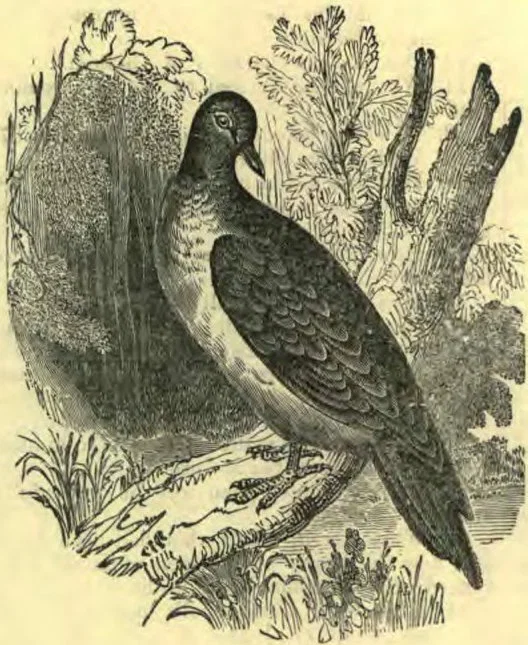
The white dove sat on the sunny eaves, And “What will you do when the winter wind grives?” She said to the busy nut-hatch small, Tapping above in the gable tall.
He probed each crack with his slender beak, And much too busy he was to speak; Spiders that thought themselves safe and sound, And moths and flies and cocoons he found.
Oh, but the white dove, she was fair; Bright she shone in the autumn air, Turning her head from left to right; Only to watch her was such delight!
“Coo,” she murmured, “poor little thing, What will you do when the frost shall sting? Spiders or flies will be hidden or dead, Snow underneath and snow overhead.”
Nut-hatch paused from his busy care; “And what will you do, O white dove fair?” “Oh, kind hands feed me with crumbs and grain, And I wait with patience for spring again.”
He laughed so loud that his laugh I heard; “How can you be such a silly bird? What are your wings for, tell me, pray, But to bear you from tempest and cold away?”
“Merrily off to the South I fly, In search of the summer presently, And warmth and beauty I’ll find anew; Why don’t you follow the summer, too?”
But she cooed content on her sunny eaves, And looked askance at the reddening leaves; And grateful I whispered, “O white dove true, I’ll feed you and love you the winter through.” —Celia Thaxter.

LETTER BUDGET.

Elmore, Vt.
My Dear Instructor: I have been thinking for a long time that I should like to be one of the little girls who write you letters. I have never seen any letters from Vermont, so will try to write one.
My mamma and I went to meeting yesterday, to listen to Eld. C. W. Stone, who spoke to us for the last time, as you will now have him at Battle Creek. I am sure you will all love him as we do here. He organized a Sabbath-school in this place, and we expect that God will answer his prayer, and we shall have a prosperous school. By his request we are going to learn the ten commandments. He gave the little ones the first four for a lesson next Sabbath.
I am not a Sabbath-keeper yet, but feel, like papa and mamma, that Saturday is the holy Sabbath. I am almost ten years old, and this is the first letter that I have ever written. I mean to try to be a good girl, and meet all the INSTRUCTOR family on the earth made new.
MATTIE E. JONES.
Cleburne, Texas.
Dear Editors: I receive the weekly INSTRUCTOR at Sabbath-school. I like it very much. I have been keeping the Sabbath with my ma two years, ever since Eld. R. M. Kilgore lectured in this place. I try to get good Sabbath-school lessons. I have been repeating the synopsis of late. I am thirteen years old. I want to do God’s will, keeping all his commandments, that I may be saved when Jesus comes. Pray for me, that I may be faithful.
Yours truly,
CORNELIA D. TAYLOR.

ABOUT “PROVING.”

“MOTHER,” said George, “the text on my card to-day is, ‘Prove all things;’ doesn’t prove mean to try?”
“Yes, that is one meaning,” said Mrs. Dill. “Why do you ask?”
“They talk so much to us boys in the Temperance Club about never even tasting wine or beer, or any such thing. Now, how are we going to prove it, I’d like to know?”
Mrs. Dill smiled a little. She was used to hearing questions from George.
“I think you have already proved that those things are bad. You know what you told me about Harry Carr’s poor home, and his cold, bare feet. You said it was all because his father drank beer.”
“Yes, but that wasn’t proving it myself. How do I know that it would hurt me?”
“You proved that it made men wild once, I am sure, when a drunken man struck you. You felt it that time in your own person. But, George, you might say the same thing about any poison. You believe that Paris green kills if taken into the stomach, do you not?”
“Why, yes, of course.”
“But why not say, ‘I haven’t proved it for myself. How do I know that it would hurt me?’”
George laughed.
“I see,” said he; “there are some things that we must prove without touching them, if we want to keep out of the fire. I’ll remember that.”—S. S. Advocate.

ANCIENT MOUNDS.

In nearly every part of the United States are to be found traces of those primitive inhabitants of America, the mound-builders. Among the relics which have been discovered are quite a variety of implements of war, curiously fashioned pottery, hatchets, knives, pipes, costly ornaments, etc., which show their individual skill. But the result of their united labor is seen in the deserted mines of gold, silver, and copper, and in the huge embankments of earth known as mounds, the latter being by far the most interesting as well as the most wonderful.
These mounds are found in various parts of the country; they differ in several respects, and were evidently built for different purposes. Some were probably designed for sacrificial mounds, some for sepulchers, others for mounds of observation, while a great number were erected for defensive purposes.
The sepulchral mounds consist of a knoll or group of knolls, not very large, and without definite arrangement. They are to be found near Chicago, Dubuque, and other places. Many of these have been opened; they rarely contain more than one skeleton, yet in some have been found the remains of many persons profusely decked with ornaments common to that day.
The sacrificial mounds are always found inclosed within an embankment, and contain altars of burned clay or stone, on which are deposited various remains, that have in all cases been more or less subjected to the action of fire. These mounds are more abundant in the Scioto Valley than elsewhere. From the remains found, it is supposed that these were used as places on which to burn the bodies of the dead.
The mounds of observation are those on which it is thought that signal fires were lighted, by which in a short time news could be transmitted to a great distance. Near Chillicothe, Ohio, is a mound nearly six hundred feet high, built, as is supposed, for this purpose. A fire upon it is visible fifteen miles.
Temple mounds are quite large and symmetrical. On the top of these were probably built temples of some perishable material.
A good degree of artistic skill was displayed in the construction of some of those ancient mounds. They were made to represent almost all kinds of birds and animals. One mound in Adams' Co., O., has the appearance of a huge serpent one thousand feet in length. The State of Ohio is supposed to contain at least ten thousand of these curiosities. While in the State last winter the writer visited many of them. Those at Newark are intensely interesting, as they are the most complicated of any in the United States.
These relics of the past fill one with awe, wonder, and admiration for a people whose works remain as a monument of their greatness, but whose history is lost.
W. E. CORNELL.

You have reached the end of this edition.

The Youth’s Instructor · Oct 1879