SUNDAY, THE SALOONS, THE PRIESTS, AND THE PREACHERS.
THERE are two bills pending in the Senate of this State and five in the Assembly, the purpose of which is to legalize the sale of intoxicating liquors in New York and Brooklyn on Sunday.
Four of these bills provide for the sale of liquors during certain hours of the day and evening, presumably at such hours as might be supposed to interfere least with attendance at church services; and all of them provide that the front doors must be closed and the blinds drawn.
One of these bills provides that “there shall be no noise or disorder permitted therein calculated to disturb the quiet and peace of the Sabbath day.” And it is such examples of pious cant that should open the eyes of everybody to the impropriety of all Sunday legislation.
Of course the popular preachers are up in arms against all these bills. The churches are almost with one voice demanding the defeat of the proposed measures. And strange as it may seem to some, a large number of Catholic priests are opposed to the contemplated legislation.
But strange as it may seem, it is only what might be expected. Sunday is an institution of the Roman Catholic Church, and of course Rome will honor her own. Sunday evening, February 10, a “Catholic pastors’ meeting” was held in this city to consider this subject. “Rev. A. P. Doyle, of the Paulist Fathers,” presided. “The meeting,” says the World of Monday, “was a remarkable one. Although announced only yesterday, every seat was filled long before the hour of opening, and hundreds of late comers were compelled to stand. It was an enthusiastic audience, too, and heartily applauded the vigorous language used.”
The World, to which we are indebted for the facts, continues:—
Seated on the stage with Father Doyle were the Very Rev. Joseph F. Mooney, Vicar-General; the Very Rev. A. V. Higgins, Provincial of the Dominicans; the Rev. Father Morselli, of the Order of the Pious Missions, pastor of the Italian Church in Harlem; the Rev. P. F. McSweeney and the Rev. Father Drain, of St. Brigid’s; the Rev. John G. McCormick, of St. Monica’s; the Rev. Father Hartigan, of the Dominicans; the Rev. John Hughes, Paulist; the Rev. Father Flood, of St. John the Evangelist’s; the Rev. P. Ennis, of the Franciscans, and Jeremiah Fitzpatrick, the President of the St. Vincent de Paul Society of this city.
Letters and telegrams were also received from the Revs. Cunnion, of St. Raphael’s; Colton, of St. Stephen’s, and Murphy, of old St. Patrick’s, the Fathers of the French Church of St. John the Baptist and of the Mission of Our Lady of the Rosary at Castle Garden, and others, all expressing the heartiest approval of the objects of the meeting.
Vicar-General Mooney was the first speaker. He read from the decrees of the Third Plenary Council of Baltimore, in which Sunday liquor-selling is severely condemned, and then said:—
That is our platform, the platform laid down by the bishops of the church in this country and approved by the holy father himself. We take our stand on the broad grounds of public morality and good citizenship on this most burning and vital question. We care not what political promises or election pledges were made which it is now proposed to redeem; we protest against any scheme for the Sunday opening of the saloons. We want the Lord’s day kept holy, and we want no interference with the laws designed to bring about this most laudable end. We demand this as Catholics, as Christians, and as citizens of this Republic.
The Vicar-General makes no bones about telling just why Roman Catholics are opposed to Sunday liquor-selling; it is because “we want the Lord’s day kept holy.” He is equally explicit as to the real purpose of Sunday laws. Notice the sentence: “We want the Lord’s day kept holy, and we want no interference with laws designed to bring about this most laudable end.” If the so-called Protestant advocates of Sunday laws were as candid we would hear less about “the civil Sabbath.”
“Father” Higgins, Provincial of the Dominicans, declared:—
This Sunday opening means the effacement of the father from the family. It means the effacement of thoughts of God from the hearts of men on his own day. It means more drunkenness, more immorality. Therefore we are performing a duty to Christianity and to the sanctity of the home by this demonstration here to-night. We protest against any legislation that would make Sunday anything else than a day of peace and church-going and rest. Therefore we denounce this most unwise, most immoral and most irreligious movement to open the saloons on the Lord’s day.
After several other speeches of a like character, the following resolutions were adopted:—
Resolved, That as Catholics, we enter our earnest and emphatic protest against the proposed desecration of a day especially consecrated to religious devotion and observances, a day which we are commanded by the law of God to “keep holy,” and that we would be unfaithful to our high and solemn sense of duty as Christian citizens of our free Republic if we failed at such a juncture to give public expression to our utter detestation and abhorrence of legislation that, instead of lessening, must inevitably increase the evils of the Sunday liquor traffic.
Resolved, That, entertaining the highest respect and reverence for the decision of the Third Plenary Council of Baltimore in reference to this particular matter, we earnestly hope, in the language of its decree, “that Sunday laws will not be relaxed, but more rigidly enforced,” and that “those who are engaged in the traffic should abstain entirely from the sale of liquor on Sunday.”
Resolved, That we solemnly protest in the interests of our holy religion and of public morality, in the name of afflicted humanity, for the true welfare of society and the maintenance of law and order, against the proposed violation and desecration of the Christian Sabbath for the benefit of any class and especially for the benefit of a trade that, while it is more exacting in its demands than any legitimate business, is more objectionable and obnoxious than any other on account of its gross abuses and great evils which attend even on its restricted and licensed prosecution.
Resolved, That we are in full and hearty accord with all bodies of our fellow-citizens who are engaged in the truly laudable and timely movement to abate the evils of the liquor traffic and who have publicly and indignantly protested against the iniquitous, unreasonable and intolerable legislation demanded in the interests and for the exclusive promotion of this peculiarly absorbing and exacting business.
Resolved, That a printed copy of these resolutions, signed by the chairman and secretary of this meeting, be sent to each member of the Senate and Assembly of the Legislature of this State.
It is noticeable that the first resolution takes distinctively anti-Roman Catholic grounds upon the question of Sunday sacredness. The Roman Catholic doctrine is that the law of God does not require the keeping of Sunday, but of the seventh day, and that Sunday observance rests entirely upon the authority of the church. A “Doctrinal Catechism,” by Rev. Stephen Keenan, Imprimatur, John Cardinal McCloskey; Excelsior Catholic Publishing House, 5 Barclay Street, New York, 1876, page 174, has this question and answer:—
Q. Have you any other way of proving that the church has power to institute festivals of precept?
A. Had she not such power she could not have done that in which all modern religionists agree with her;—she could not have substituted the observance of Sunday, the first day of the week, for the observance of Saturday, the seventh day, a change for which there is no scriptural authority.
A like testimony is borne by “An Abridgment of the Christian Doctrine,” by Rev. Henry, Tuberville; Imprimatur, the Right Rev. Benedict, Bishop of Boston; Excelsior Catholic Publishing House, 5 Barclay Street, New York, 1833, page 58. This work says:—
Q. How prove you that the church hath power to command feasts and holy days?
A. By the very act of changing the Sabbath into Sunday, which Protestants allow of; and therefore they fondly contradict themselves, by keeping Sunday strictly, and breaking most other feasts commanded by the same church.69
Q. How prove you that?
A. Because by keeping Sunday, they acknowledge the church’s power to ordain feasts, and to command them under sin.
Cardinal Gibbons has also spoken plainly upon this question. In “The Faith of Our Fathers,” page 111, he says:—
You may read the Bible from Genesis to Revelation, and you will not find a single line authorizing the sanctification of Sunday. The Scriptures enforce the religious observance of the Saturday, a day we never sanctify.
Such authorities might be greatly multiplied, but the testimony quoted is sufficient. Rome is changing her tactics upon the Sunday question only to catch Protestants. And it is significant that this turn is taken especially by the Paulist Fathers to whom is specially committed the work of making proselytes of “Protestants.”
Individual Roman Catholics are doubtless opposed to the liquor traffic on general principles. But Rome, as a church, is not opposed to the traffic, except on Sunday. A very large majority of liquor dealers are Catholics. Rome derives a great deal of support from liquor dealers. She dare not excommunicate the traffic and those engaged in it. The saloon may debauch and impoverish people, may beggar children and enslave wives, and murder husbands and fathers six days in the week and Rome is silent; but when it touches Sunday “the church” speaks, demanding that it remain “a day of peace and church-going;” and declaring: “We want the Lord’s day kept holy.” Rome can be trusted to care for her own, and in this thing she is not alone; the so-called Protestant Church is gone after her.
FREEDOM OF CONSCIENCE AND SUNDAY LAWS.
By R. F. C.
[“It is not sufficiently emphasized that the Jew is left absolutely free to observe the seventh day. He can close his shop; he can refuse to work.”—Rev. Wilbur F. Crafts.]
It should be emphasized that all the Jews
Are free to rest whatever day they choose;
A law to guard the Christian day of rest
Leaves conscience free, so none will be oppressed.
Such is the sophistry of those who plead
For Sunday laws—laws to sustain their creed.
In candor now we ask, Is it no crime
To take from man one-sixth part of his time?
Let it be emphasized that all are free
To rest on Sunday, whosoever they be,
If conscience lead them thus, there is no cause
That they should be compelled by statute laws.
For those who've not that conscience 'tis too bad
To be compelled to act as if they had;
For, let this simple truth be understood,
Compelling men by law can't make them good.
If hypocrites are what they wish to make,
No surer way they possibly could take
Than using tests religious as a bait
To office-seeking parties in the State.
When they convert the world by means like these,
Base hypocrites will play their games with ease;
And their millennium, with such a brood,
Will be the vilest era since the flood.
—R. F. C.
SOUND WORDS FROM A TENNESSEE LAWYER.
WHEN considering Sabbatarianism why advocate a divorcement of religious from civil laws, or a relaxation of their enforcement, upon the theory, as Dr. Rylance has done, that the Mosaic Sabbath is obsolete? As long as we discuss in what manner the civil law may compel the keeping of a rest day, so long do we concede that right to the State. Is not keeping holy a certain day in the week a religious ordinance, and as much a matter of faith as baptism, as the eucharist, etc.? Is it not a dangerous example, in our popular government, for Christians to compel the observance of their rest day simply because they are in the majority? The heathen, upon the same principle, would have the right to prohibit the keeping of that day, or to change the day, should they become numerically the stronger. And like “the struck eagle” the Christian pangs would be keen to find that they had “nursed the pinion which impelled the steel.”
In theory, judging from the organic laws, our country is an asylum for all kinds of faith. Here the Chinese may build his joss-house, the Hindoo his temple, the Mohammedan his mosque, and the Buddhist may rock-hew his tope. In practice it is the country where only the Christian may freely worship, and that Christian must keep Sunday, the first day of the week, which day is not mentioned in the Decalogue nor made holy in the Sacred Canon. What right has the State to make the Moslems, the Hebrews, the Seventh-day Baptists, the Seventh-day Adventists observe a rest day other than that which is in harmony with their faith? What right has the State to make atheists, infidels, and pagans observe any day?—Cyrus Simmons, Knoxville, Tenn., in the World, Feb. 12.
WHAT SOME SWISS EDITORS THINK AND SAY.
By W. H. McKee
An item has lately appeared in La Semaine Religieuse, published in Geneva, Switzerland, which is interesting, as containing in condensed shape the thought and expression of several Swiss editors in reference to Seventh-day Adventists and their publications. The article, as it appeared in La Semaine Religieuse, on February 2, is as follows:—
In the month of December, Le Pays, Catholic organ of the Bernese Juras, published an article in which it complained vigorously of the distribution in the Catholic parishes of little sheets for the propagation of Protestantism, which were, it said, “an artful attempt to excite contempt for the confessional.” La Gazette du Valais and Le Courrier de Genève, journals of the same shade of belief, hastened to reproduce the article, enlarging upon it with many comments. Le Pays denounced especially the little journal, entitled, Les Signes des Temps, which is sent, it says, by mail to a multitude of people who do not wish it, and which “calls the eucharist a wafer and the pope anti-christ.” It imagines that the expenses of this “paltry proselytism” are drawn from “the well-filled pastoral coffers of Basler pietism.”
The Catholic organ, then, does not know that the sheet which it denounces is the organ of the Seventh-day Adventists, and that this sect has no better opinion of our Reformed churches, national or independent, than of the Roman Catholic Church. Do they not urge the adherents of all other denominations, Catholic or Protestant, “to come out of their Babylon,” join these new saints of the last days who observe Saturday in the place of Sunday, and are the only Christians who have not apostatized by receiving upon their foreheads the mark of the beast? If the liberty of propagandism was not for us a sacred principle, and if our co-religionists had not been trained to free investigation by three centuries of controversy, we should also have as good reasons as the Catholic papers for deploring the importation into our parishes of these “packages of waste paper” which excite in these editors so peculiar a mixture of fear and scorn.
This article La Tribune de Genève reprinted in its issue of February 4, under the title “Intolerance,” simply crediting it to its source and making no comment other than that contained in the pithily exclamatory title.
The Semaine Religieuse, which has heretofore been aptly called the Semaine “Furieuse,” describes itself, on its title page, as “Organe du Protestantisme Evangelique,” or Organ of Evangelical Protestantism. It makes itself the mouthpiece of the Independent Church of French-speaking Switzerland, and is edited with a pointed pen and keen rhetoric. This article, which it addresses “To the Catholic Papers,”—as originally entitled,—is an interesting example of subtlety and acuteness of method. It masses the expressions of three Catholic editors and calls the attention of all Catholic papers to them. Thoughtful care is taken to cull for the benefit of the citizens of Basel that expressive phrase, “the well-filled pastoral coffers of Basler pietism,” and thus to canker the gold, with which their coffers are unquestionably well filled, with the information of their undesired reputation for evangelical and missionary effort.
But having administered this bitter draught, as an incentive for the further development of Basler antagonism toward Seventh-day Adventists, it proceeds to inform them all, with a graciousness which is almost a reminder of the sweet suavity of Mark Antony with which he stirred the Roman populace to violence, who it is against whom they should direct their attacks.
Thus having stirred them all, at the last, with unexpected and treacherous reverse of its poisonous weapon, upon its comrades of the moment, like the wasp, it leaves its inflammatory sting to rankle in the sudden and unlooked-for thrust of its last sentence.
How many centuries more of controversy would it take to show religious controversialists that controversy with individuals or sects rather than with principles, is itself irreligious, and an unquestionable evidence of failure to comprehend the spirit of true religion?
W. H. McKEE.
Basel, Switzerland.
FATHER CHINIQUY TO ARCHBISHOP FABRE.
By C. Chiniquy
When the venerable Father Chiniquy was ill at his home in Montreal a few months ago, several Roman Catholics, including a Jesuit priest, called to see him for the purpose of bringing him back to the Roman Catholic faith. He firmly but courteously refused to be led back to Rome, and when he had regained his health he wrote a letter to Archbishop Fabre of Montreal, in which he said:—
“MONTREAL, 65 Hutchison Street,
“December 8, 1894.
“ ‘To My Lord Fabre, Roman Catholic Bishop of Montreal:
“My bodily strength is so perfectly restored that I write you this letter without the use of any spectacles, and my hand does not shake more than when I was only thirty years old, though I am in my eighty-sixth year.
“I am cured, perfectly cured, though I have not had a single drop of your waters of Notre Dame de Lourdes, and without going to the good St. Anne of Beaupré! I am cured in spite of the maledictions and excommunications of the bishops and priests of Rome!
“And, what will puzzle you the more, I am cured, perfectly cured, without having accepted any one of your medals or scapularies—without even having bought any of your blessed candles which I might have got from you for five cents!
“But, to prevent you from suspecting that the devil alone, or some witches, could have healed such a bad man as I am, I must give you the secret of that cure. May our merciful God grant that you may have recourse to the same remedy with the multitudes of our dear countrymen you are leading in the perishing ways of Rome.
“From the very day that I broke the chains which were tying me to the feet of the idols of the pope, I put myself under the care of the best physician the world has ever seen. His name is Jesus. He is both the Son of God and the Son of man. He came from heaven more than 1,800 years ago to save us from all our spiritual and even bodily miseries. But his condition was that those who wanted to be cured by him should not invoke any other name but his own. For his Apostle Peter wrote in his Testament these very words: ‘There is no other name under heaven given among men whereby we must be saved.’ Acts 4:12. His Testament is called ‘The Gospel.’
“These last 1,800 years, all the echoes of70heaven and earth are repeating His sweet words: ‘Come unto me, all ye that labor and are heavy laden, and I will give you rest.’ Matt. 11:28:
“ ‘Whatsoever ye shall ask in my name, that will I do, that the Father may be glorified in the Son.’ John 14:13.
“ ‘If ye shall ask anything in my name, I will do it.’ John 14:14.
“ ‘If a man love me, he will keep my words: and my Father will love him, and we will come unto him, and make our abode with him.’ John 14:23.
“ ‘I am the vine, ye are the branches.’ ‘Abide in me, and I in you.’ John 15: 4, 5.
“ ‘And I, if I be lifted up from the earth, will draw all men unto me.’ John 12:32.
“From the day I gave up the pope to follow Christ I have found more and more every day that the greatest joys, the greatest happiness in this world were to love and serve him. I have kept myself, then, united to him with all the faculties of my heart and my soul, as being my only light, my only strength, my only wisdom, and I have always found him true to his promises.
“But when I found that it was good to be united to that mighty and merciful Friend in the days of prosperity, I have found that it was still more my interest to be united to him in the days of trial through which I had to pass. He was my shield when I was attacked by the thousands of assassins whom you, or your priests, have so often sent to take away my life, either with their pistols, or with their murderous sticks, or with their sharp stones.
“When these stones were falling upon me as hail on a stormy day, in the streets of Montreal, Quebec, Halifax, Charlottetown, Antigonish, Ottawa, etc., I was throwing myself into the arms of that mighty and loving Friend, I was pressing myself on his heart—and I felt secure as a little child when in his loving mother’s arms. I was invoking his all mighty name, and it seemed I was seeing his merciful arms around me to protect me. I was hearing his sweet voice telling me, ‘Fear not, for I am with thee!’ And when I was escaping from my would-be murderers’ hands, bruised, wounded, bleeding, I felt happy for having suffered something for the sake of that beloved Saviour who, on the cross, had shed his blood for me.
“But it was when I was attacked by the last terrible sickness that I felt the necessity of having that mighty and merciful Friend near me as my physician. With Peter I cried, ‘Lord, save me.’ And you can come and see with what merciful and mighty hand he has come to my help and cured me!
“You may imagine my surprise and my sadness when, in that very time, I saw your priests and priestesses coming to tell me that I was out of the way of salvation, and that I was to be damned if I would not come back to the church of Rome of which you are a bishop.
“For, what had these priests of Rome to give me to take the place of that divine Friend and Physician, Jesus the Son of God, that I might forget that he was my only hope, my only life, my only Saviour, my only refuge? What did they offer me to prevent me from saying with Paul, ‘I do not want to know any other but Jesus and Him crucified’? They had nothing but a few rags, called scapulars, and some small idols of copper, iron and silver, probably found in the crumbling remains of the temples of Venus, Minerva, Bacchus and Jupiter!
“Yes! what had your priests to give me that I might forget and forsake that dear Saviour Jesus, whose presence in my heart was, very often, making me so happy that I was not only forgetting my terrible sufferings, but was changing those sufferings into feelings of unspeakable joy? They had to offer me a little god, only about an inch in diameter, made with a little flour baked by their servant girls between two heated irons.
“Be not surprised, then, if I have ordered those ambassadors of Rome out of doors with the utmost indignation!
“C. CHINIQUY.”
—Converted Catholic for February.
TO INCREASE THE FINE
The following petition is being circulated in Pennsylvania by the compulsory Sunday observance managers:—
To the Senate and House of Representatives of the State of Pennsylvania:
Your petitioners, whose names are hereunto signed, do most respectfully and earnestly request your honorable bodies to so amend the Sunday law of 1794 as to make the penalty for the violation of the first section of said act for the first conviction $25, for the second conviction $50, and an increase of $10 for each subsequent conviction. We earnestly protest against any modification or amendment of the said law, which will decrease said penalty or make it less effective to secure Sunday observance.
The writer attended the convention at which this petition was adopted, and the only reason why it did not ask for the penalty of imprisonment is because it was feared that it would be asking too much at one time. Imprisonment will come next and after that the whipping post.
The Latest Sunday Bill.
THERE is an epidemic of reform legislation sweeping over the legislatures of the several States. It assumes all the symptoms of a deep-seated malady in some of them and the outcome of it threatens to be the resurrection and rehabilitation of many of the Blue Laws which have made Connecticut a byword and reproach among the enlightened people of the country.
The most virulent outbreak of the epidemic occurred in Missouri last week when a member from one of the lower counties gave notice that he would introduce a bill abolishing tall theater hats, prohibiting barter and sale of every kind and forbidding the playing of baseball, football, and cards on the first day of the week. This aroused a storm among the members of the legislature from St. Louis and Sedalia and they severally noticed as many bills forbidding the playing of marbles, leap-frog, and other nursery games, and proscribing riding, driving, smiling and kissing on Sunday.
One of the members of the upper house, to add to the absurdity of the situation, gave notice of this bill and moved its adoption as a substitute for all pending bills:—
SECTION 1.
It is a sin
To steal a pin,
Or shave a chin,
On Sunday.
SECTION 2.
No one shall smile,
Or think of guile,
Or wicked wile,
On Sunday.
SECTION 3.
No one shall kiss,
A wife or miss,
Or taste of bliss,
On Sunday.
He thinks that this will cover everything desired by the reformers and check the spread of the epidemic.—Detroit Journal, Feb. 13.
Personal Liberty in Chicago.
On the fifteenth day of December, in the year of our Lord eighteen hundred and ninety-four, and of the Independence of the United States the one hundred and nineteenth, there was legally organized in the county of Cook, Illinois, a corporation entitled the “Chicago Personal Liberty Association,” its object being to promote the cause of personal liberty and to defend this cause from attacks from all sources. The management of this association is vested in a board of five directors, to be elected annually.
Is it extraordinary that after one hundred and nineteen years of national independence, five earnest men meet to organize for self-preservation? Is it still more extraordinary that this league is gaining membership so fast as to warrant the belief that in a few months fifty thousand names will be enrolled? The71wheels of progress go round very fast in Chicago when they move at all, and their revolution has begun. No political party can now afford to ignore the uprising against fanaticism and corruption. Non-partisan in politics, Chicago’s Personal Liberty Association welcomes Democrats, Republicans and Independents, demanding no pledge but that of allegiance to the principles upon which the Republic was founded and upon the perpetuity of which our institutions depend.
The founders of this league are profoundly convinced that the world is too much governed; that such government is best as governs least; that a stream cannot rise higher than its source; that a community is no better than the individuals composing it; that the development of individualism is the Republic’s greatest need; that the besetting sin of our people—and more’s the shame—is dishonesty; that the only road to reform in national and municipal affairs is in reform of the individual, not by making laws, but by making character strong enough to resist temptations in which the world abounds.
With all my heart and head I welcome a league for which I have long prayed. Their fight is mine. For eight years I have been preaching their gospel, and have been reviled and rejected by those who mistake their liver for their conscience. It is futile to fly in the face of the Almighty and build a fence around humanity beyond which vision may not range. Freedom in thought and deed, independence of character, are the very bulwarks of a republic. Without such freedom, without individuality, a government of the people, for the people, by the people is a fraud. Let the new league go to the Bible for its inspiration and its watchword: “Son of man, stand on thy feet!”—Kate Field’s Washington, Jan. 5, 1895.
SILENCING THE ECHO OF THE REFORMATION.
THE Protestant bishops seem to be far superior men to the clergy under their charge. A few weeks ago we chronicled the rebuke administered by Bishop Potter, of New York, to the Churchman. In another place in this issue we quote Bishop Hurst’s opinion on immigration. Both of these statements were from Americans, but we notice that in Edinburgh another Protestant bishop has reprimanded one of his diocesans for intemperate statements concerning Catholics. The Rev. Dr. Teape, incumbent of St. Andrew’s Episcopal Church, Edinburgh, a member of the extreme Evangelical Party, at a recent meeting of the Irish Society, assured his hearers that “the Roman Catholic has no Saviour, no Bible, no heaven.” The bishop at once took Dr. Teape to task, and the reverend gentleman in reply made a lame and impotent attempt to defend his assertion, with the result that the bishop again wrote to him as follows: “The words, as they appeared in the report, seemed to me so monstrous an outrage upon truth—not to say charity—that it was impossible for me to pass over in silence such a statement made by a clergyman holding a responsible position as an incumbent in the diocese. Some correspondence has since passed between us, but the upshot (and I deeply regret it) is only that you acknowledge the accuracy of the report, and attempt by argument to justify your words. I cannot enter into discussion but must content myself with simply, as your bishop, severely censuring the employment of such language, and expressing my sorrow that you could have allowed yourself to be betrayed into making a public charge so base and so offensive.” By this manly letter Dr. Dowden not only gives proof of his love of honesty in controversy, but does honor to himself and to his church.—The Monitor (Roman Catholic), February 2.
Good News for Cotton Mather.
Now that the government of the great State of New York has brought its power to bear for the punishment of a wretch who was detected in the heinous crime of selling ear-muffs on Sunday with the thermometer at zero, word ought to be got to Cotton Mather that the millennium is coming at last in what was once Stuyvesant’s ungodly village.—The World, Feb. 13.
France Clings to the Church.
Deputies Reject Measures to Suppress the Public Worship Ministry and Separate Church and State.
PARIS, Feb. 16.—In the Chamber of Deputies this afternoon M. Chauvin offered a resolution to abolish the public worship budget. It was defeated by a vote of 379 to 111. The object of the resolution, of course, was to do away with the Ministry of Public Worship by cutting off the appropriation for its support.
M. Faure then introduced a bill for the separation of Church and State.
M. Ribot, the Premier, declared that the enactment of such a measure would threaten the peace of the country.
The bill was rejected by a vote of 305 to 205—The World, Feb. 17.
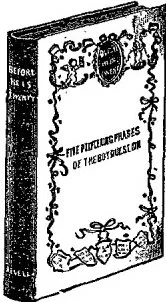
Book Review: Five Chapters on a Boy's Life
It is divided into five chapters, by as many different writers, each treating of a particular phase of a boy's life.
The first chapter, “THE BOY AND HIS FATHER,” by Robert J. Burdette, is alone worth many times the price of the book to any father of a young boy.
The other chapters, “WHEN HE DECIDES,” “THE BOY IN THE OFFICE,” “HIS EVENINGS AND AMUSEMENTS,” and “LOOKING TOWARD A WIFE,” are all important and helpful.
104 pages, bound in cloth, embossed in jet and gold, price, . . . . . 75 cents.
PACIFIC PRESS, 43 BOND STREET,New York City.
Education in Manitoba.
A Series of Judicial Decisions.
PEMBINA, Feb. 12.—The school system of Manitoba, now practically modeled upon that of the United States, has been the subject of bitter and determined contention there since 1890, in which year it was adopted. Formerly the system prevailing in Ontario and Quebec was in force there, providing separate schools for Protestant and Roman Catholic children and giving the Catholics a portion of the school fund. The Catholics rose in arms against the new ordinance and have fought it tooth and nail ever since, being beaten at all points and at last worsted before the authority of final appeal. Their first application in opposition to the new law was to the courts of the province, which pronounced the statute valid. It was carried to an appellate tribunal consisting of one Catholic and two Protestant judges, and the decree of the former court was sustained by the majority, the Catholic judge voting against it. It was then carried to the supreme court at Ottawa, consisting of six judges, three being Protestant and three Catholic, and this high tribunal unanimously reversed the preceding decisions.
The Manitoba government then carried the case before the privy council in London, which reversed the Ottawa decision, restoring the rulings of the previous courts. The Catholics then appealed to the governor-general under a clause in the law providing for remedial legislation in certain cases, and the governor-general referred the matter to the supreme court at Ottawa, a special act being passed by the Dominion Parliament conferring competent authority on the court to render such a decision. It decided that the government had no such power, all the judges, Protestant and Catholics, concurring. From this decision the Catholics again appealed to the privy council with a result as yet undetermined, but it is likely to reaffirm its former decisions. There is little doubt that Manitoba prefers her new school system, and that it will be adhered to notwithstanding all efforts from every quarter against it.—The Sun, Feb. 17.
"I AM SURPRISED"
Says Prof. E. A. Sheldon, President of the New York State Normal School, Oswego, “that so much that is valuable for one to know is brought into so small a compass, and sold for so small a price.” Yes,
The NEW WEBSTER DICTIONARY and COMPLETE VEST-POCKET LIBRARY
is full of happy surprises.
It successfully combines in one small volume of vest-pocket size,
A Dictionary of 45,800 words, A Complete Parliamentary Manual, (Based on Roberts’ and Cushing’s) A Literary Guide, etc.
—FOR THE VEST POCKET OR THE WRITING DESK.—
Simple, - - Handy, - - Reliable.
Just what everybody needs for every-day use. DO NOT DELAY TO ORDER. Sent post-paid as follows:—
FINE SILK CLOTH, Red edges, - - 25 cents.
MOROCCO, Gold edges, - - - 50 cents.
EXTRA MOROCCO, With Perpetual Memorandum, Three-Years’ Calendar, Stamp Holder, etc.. - - - 60 cents.
All three styles are indexed.
—ADDRESS—
PACIFIC PRESS PUB. CO., 43 Bond St., New York City.
For Playing Billiards on Sunday.
“The White Elephant,” Phil Black’s big billiard resort at 532 Sixth Avenue, was raided at 1:15 o’clock this morning and sixty people arrested by the police of the West Thirtieth Street station.—The Sun, Feb. 17.
Christian Education.
By Ellen G. White
By Mrs. E. G. WHITE.
*_THE MOST COMPLETE and . . . . . . COMPREHENSIVE WORK_*
On the subject of CHRISTIAN EDUCATION that has ever been published.
Starting from the period of history, it points out the most successful way of preparing the mind of the child for the work of succeeding years. The importance of proceeding upon Christian principles in the work of education, the nature and kind of studies which are best for children, and the moulding influences of home and associates, are dwelt upon in the most practical and explicit way. Many of the problems that perplex parents are cleared up in this book, and every one who has to deal with children should procure and study it.
256 pages, nicely bound in cloth, — 50c.
PACIFIC PRESS, 43 Bond Street,
Oakland, Cal. New York City.
Kansas City, Mo.
FACTS : FOR : THE : TIMES,
—CONTAINING—
Historical Extracts, Candid Admissions from Authors, ancient and modern, on the live questions of the present hour, political and religious.
A BOOK FOR THE TIMES.
A compilation of facts that are astounding, by Students of Biblical and Historical Research.