The Youth’s Instructor, Vol. 31, No. 26.

The Lilies of the Field

The Youth’s Instructor

Jun 27, 1883

S. D. A. Publishing Association · Battle Creek, Mich. · Jun 27, 1883

The Lilies of the Field.
This world is the Lord’s great kindergarten, where he teaches his children by objects which they can see and handle and examine. Our Saviour, when he preached, made constant reference to the facts in nature around him. The vine and the husbandmen, the shepherd and the sheep, the sower and the seed, the fishes in the sea, the birds in the air, the hen gathering her chickens under her wings, the ravens, and the sparrows, and many other such things, he used to instruct us in the great truths of his kingdom.
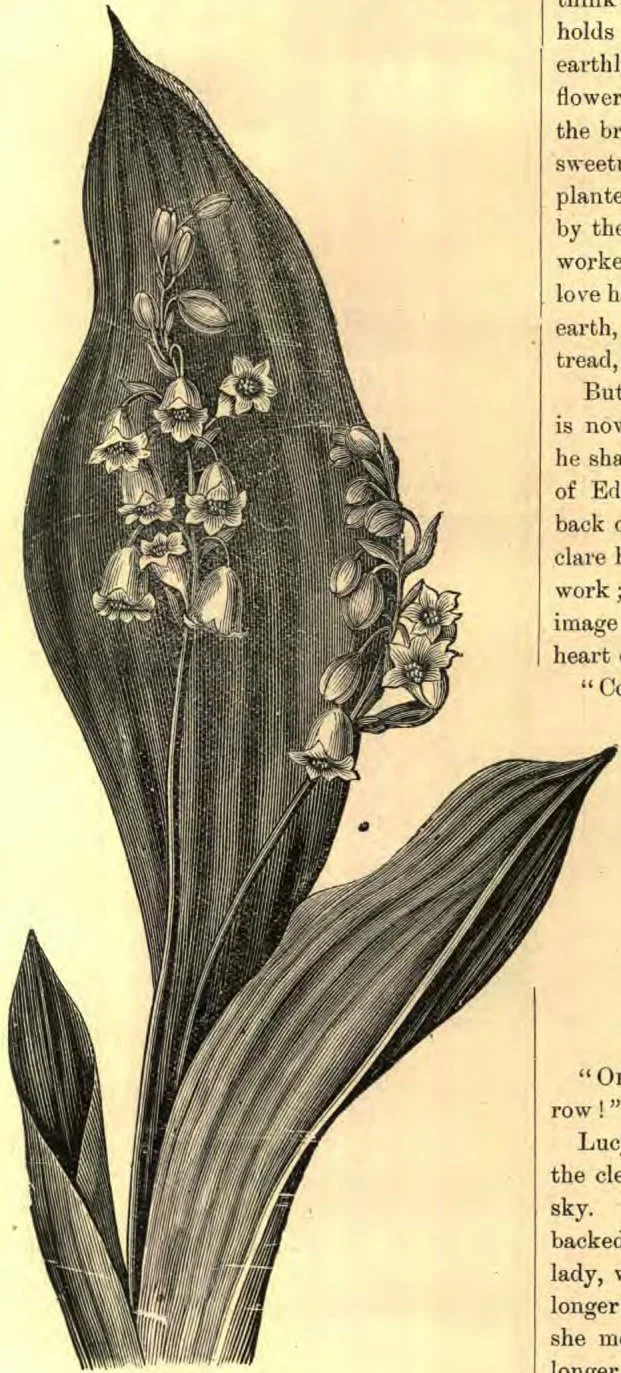
And so, in one of his discourses, he tells us, who are so wearied and worried with thinking what we shall eat, and what we shall drink, and wherewithal we shall be clothed, to “Consider the lilies of the field, how they grow; they toil not, neither do they spin: and yet I say unto you that even Solomon in all his glory was not arrayed like one of these.” Matt. 6 : 28.
There are multitudes of lilies of various kinds, scattered over the world. Many of them are exceedingly beautiful; some of them are of spotless whiteness; and others are clothed in all the glory of purple and crimson, so beautiful that no art can imitate them, and no pencil portray them. And each one of these beautiful flowers stands as our Saviour’s object lesson, before a doubting and anxious generation.
“Consider the lilies, how they grow,”—ye who are so full of doubts and fears. The lilies do not toil, nor do they spin; and yet the richest robes that monarchs ever wore, are shabby and tawdry compared with the beauty that adorns the lilies. And if God so clothes the grass of the field, which blooms to-day, and to-morrow is cut down, how much more shall he clothe you, O ye of little faith?
God has implanted some faint sparks of the love of beauty in the human mind; but what shall we think of that Fount of all beauty, the mind which holds within its grasp all types of heavenly and earthly splendor? Every star that shines, every flower that blooms, every bud that swells beneath the breath of spring, every blossom that casts its sweetness on the summer air,—all these are planted, formed, fashioned, tinted, and perfumed by the hand of the great God, whose wisdom has worked all these wondrous patterns, and whose love has scattered them over the dark and desolate earth, to brighten the paths his weary children tread, and to lead them to himself.
But if this world, cursed and darkened by sin, is now so bright and fair, what will it be when he shall “make all things new;” when the bloom of Eden and the beauty of Paradise shall come back once more; and when the heavens shall declare his glory, and the firmament show his handiwork; and when every creature that breathes, shall image forth the beauty that has its home in the heart of the everlasting God!
“Consider the lilies.” Consider them as recollections of a Paradise that is lost; consider them as promises of a Paradise that is to be restored; consider them as tokens of God’s care over the meanest and feeblest things which he has made; consider them as instances of his love for you. —Little Christian.

GRANDMA'S LESSON.

“They also serve, who only stand and wait.”
“Oh, dear! I do hope it will not rain to-morrow!”
Lucy stood by the parlor window, drumming on the cleanly washed panes, and looking up at the sky. By the open fire, in her broad, straight-backed chair, sat Lucy’s grandmother, a dear old lady, whose hands and feet, once so busy, were no longer shapely, but drawn by rheumatism, so that she moved about with difficulty, and could no longer even knit. But her face, sweet and peaceful, told the story of many a battle fought and won, and of a spirit resigned to God’s will at length, willing even to “sit still” at his call.
“What had you planned for to-morrow, child?” she asked, after watching her a moment in silence.
“Oh! Lily and I were going to walk over to Winter Hill for checkerberries, grandmamma; and you see the rain would spoil it all. I never could see why it didn’t rain nights, when everybody was asleep, and when nobody would be troubled by it, and be always pleasant daytimes.”
“Perhaps because this world isn’t arranged for our happiness alone, Lucy, child. That would be heaven you know,” said her grandmother, softly.
“Then why did God make the world so beautiful, if he didn’t want us to be happy, grandma?”
Lucy looked out through the window at the blue sky and the beds of gay flowers nodding in the passing wind, and thought what a lovely world it was.
“He does want us to be happy, dear, always. Any one who goes about wearing a long face dishonors his goodness and love. Only he wants us to be happy with whatever he sends. When he cuts athwart our plans, it is to teach us the lesson we are so slow to learn, to yield our wills to his. But he always has a reason, Lucy. There is love hidden away in everything, even though it takes us sometimes long years to find and know it.”
“How did you ever learn to be resigned to his will, grandma, dear?” said Lucy, drawing a low stool to her side, with a tender pity in her voice. “It must be the hardest thing in the world to keep still.”
“It was not all done in a moment, be sure, my child.” And the smile of trust upon her beautiful, wrinkled face seemed like the sunshine after rain.
“Perhaps you will laugh, dear, when I tell you that a little dog taught me how to begin to trust God, and to be contented and happy. And, if we once see the way to go, we have only to follow the light, you know.”
“A dog, grandmamma! Do tell me about it!”
“Well, one rainy day, long, long ago, as I sat in my chair by the window, looking out into the street, my gloomy face reflecting my reproachful, dissatisfied heart, I saw across the way a dog belonging to one of the neighbors. He was barking and scratching with his paws upon the door, demanding admittance. But no one seemed to hear him or come to let him in; and at last he stopped crying, and seated himself quietly upon the broad step, holding his head up in the air, saying as plainly as if he had spoken,—
“Well! if I can’t get in, I know what I can do. I can sit down patiently in the rain, and wait until my master comes home.” And there he sat, until, a half-hour later, his master came, when, with joyful barks, his patient vigil over, the door opened, and he bounded in.
“There,” thought I, “God has sent me a message. I have been murmuring and repining because trouble has fallen upon me, fighting against it, until I am, oh, so tired. Now, I mean to try giving up my will, and bearing my burden patiently; and by and by, when my dear Master comes, he will open the door of my heavenly home, and I shall go joyfully in, where there will be ‘no more pain, because the former things are passed away.’”
“That was twenty long years ago, my child; but each day has brought the strength to bear and wait.”
And taking a pencil and paper from her pocket, she drew a small cross upon it.
“See!” she said, “we will call the long piece God’s will, and the short piece man’s will. It is only when a man’s will crosses God’s will, that the cross is made. When it is laid side by side with it, there is no longer any cross.”—Marie Bell.

JUNE

Hail thee, royal month of roses! Every folded bud uncloses, Quickened by a swift desire for the light Minstrel zephyrs haste to woo them, Housewife bees for honey sue them, And the gentle dews renew them every night.
Then the breath of new-mown grasses, Greeting every one that passes By the dusty country road or trodden lane; And the happy whistling rustic, Clad in dingy blue and fustic, Riding, like a charioteer, his lofty wain.
Suddenly the dark clouds lower; Falls the cooling, cleansing shower, With a burst of sunshine through it ere ’t is done; How the bended bushes glisten, How the quails call out and listen, And the barefoot boys go wading one by one.
Comes the southwind as a vandal, Scattering scent like wood of sandal Where the lilacs cast their tiny trumpets down; All the berry vines are fruited, Luscious clusters, scarlet suited, Peeping out from leafy tents of green and brown.
Wild pinks flame along the fences, Fair enough to turn the senses Of the staid Arachne, weaving all the day; In the forest’s dim recesses Lady ferns shake out their tresses And the snowy bell-shaped lilies light the way.
Then the streams that cleave the meadows, Sheeny silver, flecked with shadows, Honeysuckles, red and yellow, at the brink; Farther on, tall willows leaning, Linking hands, as ’t were their meaning Thus to shade the water where the cattle drink.
Revel, Earth, in thy completeness! Drink, O Soul, thy fill of sweetness! For the things we prize the dearest die too soon. Round and round the world keeps turning, Sunrise blushing, sunset burning; Thirty precious, perfect days are all of June.
—Elliot C. True, in Independent.

ON THE ROCKS.

The evening of the sixth of April was one of beautiful starlight. The waters of Portland harbor, Maine, were calm and quiet, while a mild breeze moved across the islands of Casco Bay. On that evening a stately steamship sailed out of her dock in Portland to cross the ocean. She was bound for Liverpool, England. The captain and the pilot were on the bridge of the steamer to give directions about steering the vessel. The lights of the dwellings on the lovely islands and the mainland shone like little stars low down, adding much to the beauty of the scene; and all things seemed to indicate a prosperous voyage to the passengers and crew of the steamer Brooklyn.
The ship had sailed, however, but little more than a mile, when all at once she slid upon a ledge of rocks partly hidden beneath the water, stuck fast, swung around, and came to the end of her voyage. The tide comes and goes, hiding and then uncovering the rocks; but the Brooklyn still lies a wreck on the ledge, near Fort Gorges, in Portland harbor.
She was a handsome ship, but her beauty could not save her when steered upon the rocks. She was a strong ship, but no ship is strong enough to endure running with force upon the rocks. She was well manned, but all the men in the country could not save her when she went upon the rocks.
How many young people are like this ship! They start out to sail the ocean of life with every prospect of success, but for some reason they run upon rocks and become wrecks. The billiard saloon, or club room, or card table, or bad companions, like hidden ledges, become their ruin. They may be handsome, or strong, or well educated; but none of these things avail when once they strike the rocks of intemperance, infidelity, or crime.
It is said that the pilot of this steamer was deceived by the lights. Look out for the lights, young man—young woman. The lights of Portland harbor are very clear, and the pilot need not have been deceived by shore lights. You, also, need not be deceived by the lights along your route. The light of truth in God's word is very clear. Mind it well, steer by it, and you will not be lost on the rocks, but sail safely into the port of heaven at last.—Young Pilgrim.

THE USEFULNESS OF TREES.

ALL trees are useful in some way or other; but then, there are some trees every part of which is useful. The cocoanut tree is one of the most useful trees in the world. Its nuts afford oil, a kind of milk, and fruit. From the shell of the nut are made cups, bowls, and bottles. The bark of the tree is made into twine, and cordage, and cloth, and mats. The young buds are eaten as a vegetable. From the sap, sugar is made. The leaves are used for sails, for boats, for sacks, for baskets, and thatch for cottages; and when burned, their ashes yield potash, which is useful for many things. The wood of the tree is used for water-troughs, canoes, and other purposes.
But the bamboo tree, which grows in China, is more useful even than the cocoanut tree. It grows to the height of about eighty feet, and bears neither blossom nor fruit; the leaves are small and narrow, but many of the stems are thicker than a man's arm. In building, its largest stems are used for pillars, rafters, and planks; its leaves for thatching the roof, and the smaller fibres for matting for the floor. In the homes of the Chinese it is made into bedsteads, tables, chairs, and other articles of furniture; also into umbrellas, hats, musical instruments, baskets, cups, brooms, soles of shoes, pipes, bows and arrows, sedan-chairs, and wicks of candles. Its fine fibres are made into twine. Its shavings serve for stuffing pillows; its leaves are used as a cloak in wet weather, called “a garment of leaves;” and the chopsticks, which the Chinaman uses instead of a knife or a fork, are made out of bamboo stems. The tender shoots of this tree are boiled and used as a vegetable; the pulp is formed into paper, and the pith into pickles and sweetmeats.
It is used on the water as well as on land. Boats, floats, sails, cable, rigging, fishing rods, and fishing-baskets are made of it. It is as useful to the farmer as it is to the sailor. He depends on it for carts, wheel-barrows, plows, water-pipes, wheels, and fences, and many other things. And yet the half is not told about this wonderful tree. It is used everywhere, for everything—in the houses, in the fields, on water and on land, in peace and in war. What a lesson of usefulness this tree teaches us! And so it is true that every tree we see is a preacher to us. It bids us follow its example, and make ourselves useful.—Kindergarten Magazine.

HOW BILLY TOOK HIS LAGER.

The following German story is too good not to be read by American boys and girls, so here it is in English:—
“Boy Billy” was the adopted son of one Christian Zende, who was much shocked one day at seeing the boy in a lager-beer saloon, taking off a foaming glass of beer. He bade the boy go home, but said nothing till evening. After tea, Zende seated himself at the table, and placed before him a variety of queer things. Billy looked on with curiosity.
“Come here, Billy,” said Christian Zende. “Why were you in the beer-shop to-day? Why do you drink beer, my boy?”
“O—O—because it’s good,” said Billy, boldly.
“No, Billy, it is not good to the mouth. I did see never so big faces as you did make. Billy, you think it will taste good by and by, and it looks like a man to drink, and so you drink. Now, Billy, if it is good, have it. I will not hinder you from what is good and manly, but drink it at home, take your drink pure, Billy, and let me pay for it. Come, my boy! You like beer. Well, open your mouth. I have all the beer stuff, pure from the shops. Come, open your mouth, and I will put it in.”
Billy drew near, but kept his mouth close shut. Said Zende, “Don’t you make me mad, Billy. Open your mouth.”
Thus exhorted, Billy opened his mouth, and Zende put a small bit of alum in it. Billy drew up his face. A bit of aloes followed. This was worse. Billy winced. The least morsel of red pepper now, from a knife point, made Billy howl.
“What! not like beer?” said Zende, “Open your mouth.” A knife point dipped in oil of turpentine, made Billy cry.
“Open your mouth; the beer is not half made yet.”
And Billy’s tongue got the least dusting of lime and potash and saleratus. Billy now cried loudly. Then came a grain of liquorice, hop pollen, and saltpetre.
“Look, Billy! Here is some arsenic and some strychnine, these belong to beer. Open your mouth!”
“I can’t, I can’t,” roared Billy. “Arsenic and strychnine are to kill rats! I shall die! O—O—O—do you want to kill me, Father Zende?”
“Kill him! just by a little beer, all good and pure! He tells me he likes beer, and it is manly to drink it, and when I give him some, he cries I kill him. Here is water. There is much water in beer.”
Billy drank the water eagerly. Zende went on.
“There is much alcohol in beer. Here! open your mouth,” and he dropped four drops of raw spirit carefully on his tongue. Billy went dancing about the room, and then ran for more water.
“Come here, the beer is not done, Billy,” and seizing him, he put the cork of an ammonia bottle to his lips, then a drop of honey, a taste of sugar, a drop of molasses, a drop of gall. “There, Billy! here is jalap, copperas, sulphuric acid, acetic acid, and nux vomica. Open your mouth.”
“Oh, no, no!” said Billy, “Let me go! I hate beer. I’ll never drink any more! I’ll never go in that shop again. Oh, let me go! I can’t eat those things. My mouth tastes awful now. Oh, take them away, Father Zende!”
“Take them away! Take away good beer, when I have paid for it. My boy, you drank them fast, to-day.”
“Oh, they make me sick,” said Billy.
“A man drinks all these bad things mixed up in water. He gets red in the face, he gets big in his body, he gets shaky in his hands, he gets weak in his eyes, he gets mean in his manners.”
Billy was satisfied on the beer question.—Little Star.

Virtue Alone Stands Fast

THE finest cloth that man can sell Wears out when years are past; The pitcher oft goes to the well, But it is broke at last; And both alike this moral tell, Virtue alone stands fast. —Selected.

NEW-TESTAMENT HISTORY.

LESSON 141.—PETER AT THE HOUSE OF CORNELIUS.

On the next day after setting out on their journey, Peter and his companions arrived at Cesarea, where they found Cornelius waiting for them, together with his kinsmen and near friends, whom he had called in that they might hear what Peter had to say. As Peter came in, Cornelius met him, and fell down at his feet to worship him; but Peter raised him up, saying, “Stand up; I myself also am a man.”
So Peter and Cornelius, talking as they went, entered the room, where they found many assembled. Then Peter said, “You all know how unlawful it is for a man that is a Jew to associate with those of other nations; but God has showed me that I should not call any man common or unclean. So as soon as I was sent for, I came unto you without gainsaying; and now I would ask for what intent you have sent for me.”
Then Cornelius said, “Four days ago I was fasting until this hour; and at the ninth hour I prayed in my house, and, behold, a man stood before me in bright clothing, and said, Cornelius, thy prayer is heard, and thine alms are had in remembrance in the sight of God. Send therefore to Joppa, and call hither Simon, whose surname is Peter; he is lodged in the house of one Simon a tanner, by the sea-side; who, when he cometh, shall speak unto thee. Immediately, therefore, I sent to thee; and thou hast well done that thou hast come. Now therefore we are all here present before God, to hear all things that are commanded thee of God.”
Then Peter replied, saying, “Of a truth I perceive that God is no respecter of persons; but in every nation he that feareth him, and worketh righteousness, is accepted with him. The word which God sent unto the children of Israel, preaching peace by Jesus Christ (he is Lord of all)—that word, I say, ye know, which was published throughout all Judea, and began from Galilee, after the baptism which John preached; how God anointed Jesus of Nazareth with the Holy Ghost and with power; who went about doing good, and
healing all that were oppressed of the devil; for God was with him.
“And we are witnesses of all things which he did, both in the land of the Jews, and in Jerusalem; whom they slew, and hanged on a tree: him God raised up the third day, and showed him openly; not to all the people, but unto witnesses chosen before of God, even to us, who did eat and drink with him after he rose from the dead. And he commanded us to preach unto the people, and to testify that it is he which was ordained of God to be the judge of quick and dead. To him give all the prophets witness that through his name whosoever believeth in him shall receive remission of sins.”
While Peter was yet speaking, the Holy Spirit came upon all that heard him. Now the believing Jews who came with Peter from Joppa, were greatly amazed at seeing the Holy Spirit poured out upon the Gentiles, whom they heard speaking with tongues and magnifying God. Then Peter said, “Can any man forbid water, that these should not be baptized, who have received the Holy Ghost as well as we?” At the command of Peter, these Gentiles were then baptized in the name of the Lord. So delighted were these happy converts, and so anxious to learn more of the way of righteousness, that they urged Peter to remain for some days with them.
The news of what Peter had done at Cesarea spread abroad, and soon reached the ears of the apostles and other brethren who dwelt in Judea. When Peter went up to Jerusalem, the disciples who had been converted from among the Jews, contended with him, saying, “Thou wentest in to men uncircumcised, and didst eat with them.” But Peter related, from the beginning, all that pertained to the matter, carefully explaining every part in order. When he came to tell them how the Holy Spirit descended on Cornelius and his friends, causing them to speak with tongues, just as the apostles did on the day of Pentecost, he said, “Then remembered I the word of the Lord, how that he said, John indeed baptized with water, but ye shall be baptized with the Holy Ghost. Forasmuch then as God gave them the like gift as he did unto us who believed on the Lord Jesus Christ, what was I, that I could withstand God?”
On hearing this account from Peter, they were all satisfied, and contended no more; but glorified God, saying, “Then hath God also to the Gentiles granted repentance unto life.”

QUESTIONS.

1. How soon did Peter and his companions reach Cesarea? Acts 10:24.
2. Whom did they find waiting for them there?
3. For what purpose had they come together?
4. What happened as Peter was coming into the house? Verse 25.
5. What did Peter say to him?
6. When he had entered the house, how did he address the assembled people?
7. Why had he come to them contrary to the law and custom of his nation?
8. How did Cornelius enter upon the description of the vision which the Lord had given him? Verse 30.
9. What had the angel said to him? Verses 31, 32.
10. How had Cornelius carried out the instructions of the angel?
11. How did he now invite Peter to teach them the way of the Lord?
12. How did Peter open his discourse? Verses 34, 35.
13. What did he say had been preached concerning Christ throughout all Judea?
14. What did he say about the work which Jesus had already performed?
15. On what authority did Peter make these statements? Verse 39.
16. What did he say about the awful crime committed by the Jews against their Lord and Saviour?
17. What did he say about the resurrection of Jesus? Verse 40.
18. By what evidence was his resurrection substantiated?
19. What did he command the apostles to preach?
20. To what do all the prophets witness? Verse 43.
21. While Peter was yet speaking, what evidence of God’s approval was given?
22. What was done by these Gentiles upon whom the Spirit was thus poured out?
23. What effect did these things have upon the believing Jews who came from Joppa with Peter?
24. What question did Peter then ask? Verse 47.
25. What was done at his command?
26. What did these converts urge?
27. Who contended with Peter when he went up to Jerusalem? Acts 11:2.
28. What accusation did they bring against him?
29. What did Peter then relate?
30. What did Peter say came to his mind when he saw the Holy Spirit descend upon the Gentiles? Verse 16.
31. What appeal did Peter then make?
32. How were the brethren affected by his words?
33. What did they say?

NOTES.

Acts 10:25. Fell down at his feet. This was an act of profound regard for him as an ambassador of God. In Oriental countries it was usual for persons to prostrate themselves at length on the ground before men of rank and honor.—Barnes. Worshiped him. This does not mean religious homage, but civil respect,—the homage, or profound regard, which was due to one in honor.—Ibid.
Ver. 26. Stand up, etc. This does not imply that Peter supposed that Cornelius intended to do him religious reverence. It was practically saying to him, “I am nothing more than a man as thou art, and pretend to no right to such profound respects as these, but am ready in civil life to show thee all the respect that is due.”—Doddridge.
Ver. 28. It is an unlawful thing. It was the design of the law of Moses, by forbidding alliances by contract or marriage with the surrounding idolatrous nations, to keep the Israelites a pure and separate people. This law did not forbid all intercourse, but the Jews perverted its meaning, and explained it as referring even to common courtesies and business transactions. Common or unclean. No man, whatever his nationality might be, was to be regarded as unfit for salvation, or despised. The plan of redemption extends to Jew and Gentile alike.
Ver. 29. Without gainsaying. Without saying anything against it; without hesitation or reluctance.—Barnes.
Ver. 30. In bright clothing. The angels bear with them, when they appear, the signs and livery of their purity and sincerity.—Quesnel.
Ver. 33. Before God. The people were all waiting for the preacher, and every heart was filled with expectation; they waited as before God, from whose messenger they were about to hear the words of life.—Clarke.
Ver. 34. Is no respecter of persons. The Jews supposed that they were peculiarly favored by God, and that salvation was not extended to other nations, and that the fact of being a Jew entitled them to this favor. Peter here says that he had learned the error of this doctrine, and that a man is not to be accepted because he is a Jew, nor to be excluded because he is a Gentile.—Barnes.
Ver. 35. Feareth him and worketh righteousness. Two fundamental traits of character secure His approval; namely, (1) a genuine reverence for and allegiance to the divine being, (2) a sincere endeavor to show forth that allegiance and reverence by practical right-doing in daily life.—L. Abbott.
Ver. 40. Showed him openly. Manifestly; so that there could be no deception, no doubt of his resurrection.—Ibid.
Ver. 41. Chosen of God. Appointed by God, or set apart by his authority through Jesus Christ.—Ibid.

The Sun Shines for All Creation

THE sun does not shine for a few trees and flowers, but for the wide world's joy. The lonely pine on the mountain-top waves its somber boughs, and cries, “Thou art my sun!” And the little meadow-violet lifts its cup of blue, and whispers with perfumed breath, “Thou art my sun!” And the grain in a thousand fields rustles in the wind, and makes answer, “Thou art my sun!” So God sits in heaven, not for a favored few, but for the universe of life; and there is no creature so poor or so low that he may not look up with child-like confidence, and say, “My Father, thou art mine.” —Beecher.

Blessing Comes Through Giving, Not Keeping

Heaven’s benediction comes, not upon the receiving, but upon the dispensing. We are not blessed in the act of taking, but in the act of giving out again. Things we take to keep for ourselves alone fade in our hands. Men are good and great before God, not as they gather into their hands and hearts the abundant gifts of God, whether temporal or spiritual, but as their gathering augments their usefulness and makes them greater blessings to others.

Sin Cannot Be Subdued in Our Own Strength

—The Canaanites of sin can never be subdued in our own strength. Let us call in the power of God.

WHALES

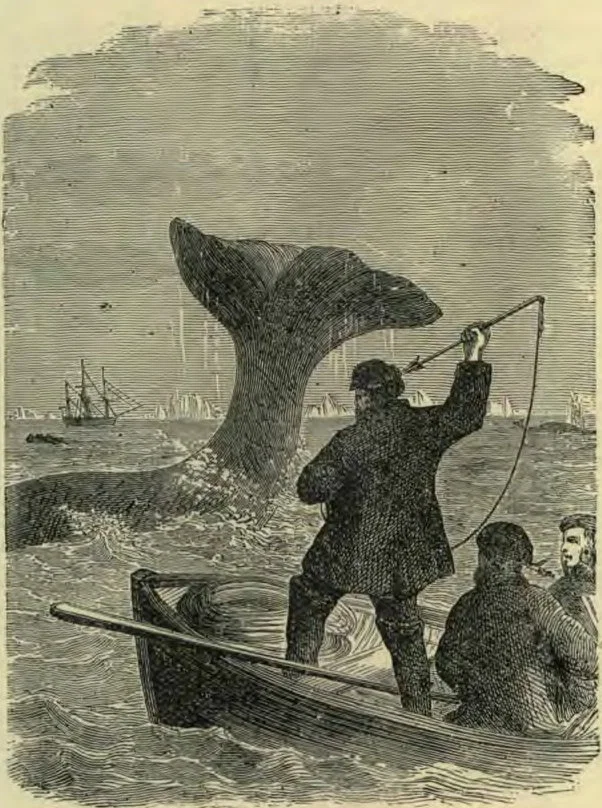
Probably most of the boys and girls who see the picture on this page will say to themselves, “My! what a great fish that is!” If so, they will make a mistake, for the whale is not a fish at all. Though he lives in the water, he cannot, like a fish, breathe under the surface, but has to come up to the top of the water, and there do what the sailors call “spout.” That is, he throws out water he has taken in, and breathes in his lungs full of fresh air. The stream of water which he throws out, goes up a long ways into the air, and makes a loud noise, so it can be heard and seen quite a distance off. Another difference between this animal and a fish is that the whale has legs. They are not of much use, however; for when a whale gets grounded on the shore, he cannot get away until the tide rises again, or some big wave comes rolling in and lifts him back to his proper home. The men seen in the picture are whalers, that is, men who spend their time in catching whales. Their ship is seen in the distance, and also another boatful of men who are coming to help catch the whale. As these ships go sailing through the northern seas, they keep a man on top of one of the masts to look out for whales. When he sees one spouting, he cries out, “There she spouts!” The sailors on deck at once shout back, “Where away?” The man at the masthead tells them which side of the ship the whale is on, and then the boats are lowered into the water, part of the crew leap into them, and off they pull in hot chase. They carry with them in the boat several stout poles pointed at one end with a sharp iron, and with a long rope fastened to the other end. These poles are called “harpoons.” When the men in the boat come up to the whale, one of them stands up and hurls a harpoon into its side. The frightened creature starts off over the water at a furious rate, dragging the boat after it by the rope hitched to the harpoon. It is often so angry with pain that it lashes the water into foam with its huge tail, and sometimes it hits the boat and dashes it in pieces, and then the men are often drowned. Sometimes the whale goes down, down into the deep ocean, hundreds of feet. This the sailors call “sounding.” When it sounds, the men let the rope run over the edge of the boat, knowing that the whale must come up soon to breathe. Every time they get a chance, the men send a new harpoon into the whale, and finally it becomes so weak from loss of blood that it is easily killed.
After the whale is captured, it is put to many uses. From its fat is made whale oil. From its tail, glue is made. And the whalebone, which you have all seen, is taken from the roof and sides of its huge mouth. This bone is boiled, and then colored black, as we see it. So we see that none of God’s creatures are made in vain. C. H. G.

KPANA

Kpana lived on an island situated on the west coast of Africa.
His home was in a pretty, neat white house, that stood facing the sea. The front yard in which Kpana sometimes played was surrounded by a hedge of lime-trees. Kpōnōwento (Little-Branch), Kpana’s sister, often gathered her apron full of this fruit, which had fallen off during the night, and made a cool, delicious drink for breakfast.
There were century trees in the yard. None of them were yet a hundred years old, so that they did not blossom; but their broad, glossy leaves sparkled in the noonday sun.
A bread tree also shaded the east window of the house, the fruit of which was not unlike nice creamy biscuit,
Behind the house, palm-trees waved their graceful branches, the cashen bent beneath its dark, heavy foliage, and the wide-spreading tamarind afforded shade from the burning heat. The luscious pine-apple was there too. These do not grow on trees, as our apples do, but from a plant, whose sharp-pointed leaves spring from the root. From the midst of these leaves, a single spike of flowers is thrown up; and, therefore, a single fruit appears, on the top of which is a cluster of small, green leaves.
The fruit, as you know, is conelike in shape; but, when seen growing, you are not reminded of the pine woods, where you gather lovely, little cones, that have fallen from the trees; for the delicious fragrance of the fruit is as unlike the odor of the piny forest as the sky above is different from our own native sky.
But it is of the sea, in front of the house, to which my story relates. How it shimmered and glowed in the hot tropical sun! How lazily the ripples washed the shore at times! but how delightful it was to this small black boy, Kpana, to wade out into its warm limpid depths, and then rush back to the shore, when a larger wave was approaching!
It was fun to let the wave overtake him, and wash over his head, drenching him in a warm bath. But there was danger lurking in the sea, of which Kpana could not be warned. A little way from the shore was a sand-bank; and, when the tide was out, a massive creature, an inhabitant of this soft, beautiful sea, came out to sun himself. It was at the mouth of a wide river, and the river was the home of the crocodile.
Kpana had been often warned by the missionaries, who lived in the pretty white house. Indeed, he had been forbidden to go there alone; but, like many an older and wiser one, the sea charmed him, and poor Kpana at last found that death itself was the penalty for disobedience. The little boy went down to the shore one sultry afternoon, when lessons were over at the mission, and the temptation for a wade was too much for him.
But, alas! the ugly crocodile was near, perhaps waiting for him. Like a hidden foe who strikes in the dark, the great creature, lurking beneath the water, clutched the boy’s limbs, and drew him down, down into his terrible jaws.
A boy from the shore heard his cry of terror, and ran to him, just as he was disappearing.
When friends gathered, there was only the huge creature, slowly moving out into the river.
There the waves rippled and sparkled as gayly as ever, and the hot African sun grew less fervid as it sank behind the western hills, painting the sky in flaming colors; but the eager, happy face of little Kpana was forevermore missed from the mission school, where he was a favorite pupil.
Children, do you know there is an enemy watching just as slyly and artfully for you as the alligator did for Kpana; and if you disobey the warning of your great Friend, and venture upon the ground of this wily foe, you cannot expect to come off without some hurts, and may be very likely to meet a destruction more terrible than did the little African boy.—The Well-Spring.

SHUT THE DOOR.

Two gentlemen sat near the door of a rail-car on a cold morning. A young man went out leaving the door ajar. One of the gentlemen rose and shut it, and then said: “This makes twice that I have shut this door after that man during the last few minutes. Somebody will probably have to do it for him as long as he lives.”
What an amount of work just in shutting doors will this young man impose on others during his life! Boys, shut the doors after you! It is selfish and mean to take advantage of other people by making them do your work for you.

Letter Budget.

Everett L. Getchell writes from Somerset Mills, Me. He says: “I am twelve years old. I like to go to Sabbath-school. We commenced taking the INSTRUCTOR four years ago, and I like it the best of any paper we take. I am trying to keep the Sabbath. Pray for me.”
Luther O. Vanostrand of Lowe, Chautauqua Co., Kan., says: “I am fourteen years old, but I am very small of my age, on account of a severe burn I received when I was three years old. I am a Sabbath-keeper, and was baptized last fall at our quarterly meeting. We have a good Sabbath-school that I love to go to. I like to read the INSTRUCTOR.”
Continue reading: JUNE