S. D. A. Publishing Association · Battle Creek, Mich. · Jan 29, 1890
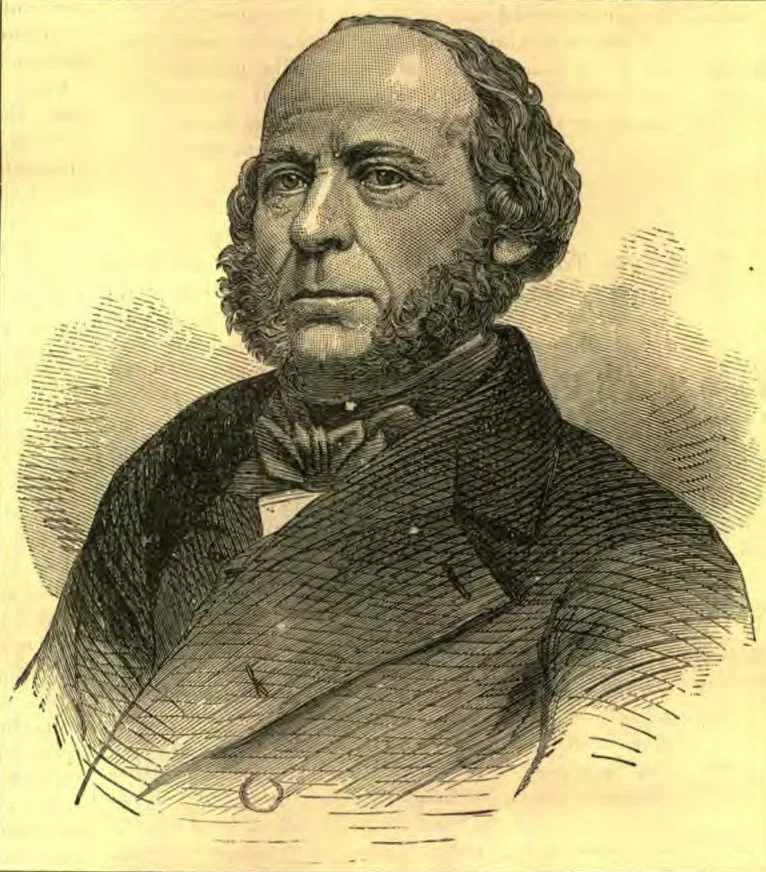
A DISTINGUISHED SWEDISH INVENTOR.
By A. Swedberg
THE readers of the INSTRUCTOR are doubtless familiar with that historical incident of the Rebellion in which the Merrimac came so near destroying our country's fleet. Already two of our best gunboats had been demolished, and the Merrimac was carrying on its deadly work, when a small raft appeared on the scene. It was surmounted by a little round tower, extending only a few feet above the water. This insignificant-looking craft immediately took a position between the unequally-matched antagonists, and began to fire on the astonished Merrimac. The Merrimac returned the fire, but very soon found herself obliged to put off down the bay to escape the destructive cannon balls incessantly pouring forth from a port-hole in the little tower. But wherever the Merrimac turned, the gun in the tower pointed directly toward her, and poured forth its blazing volleys. Finding herself unable to escape in this way, she suddenly swung around, steamed directly toward the little raft, and attempted to run over it; but she only seriously injured her own prow and mail, causing a bad leak, while the raft did not receive the slightest injury. After several futile attempts to conquer her curious antagonist, she was finally compelled to flee in a sinking condition. In this memorable contest the little raft was entirely uninjured, although it was struck by the rebel broadsides twenty-two times. Had it not been for its opportune appearance, the war of the Rebellion would doubtless have terminated in a very different way.
This little craft was the wonderful Monitor, invented by Capt. John Ericsson, the one man to whom, it is said, both Europe and America are more indebted, perhaps, than to any other man. As an inventor he was the pride of America as well as of Sweden, which was his native country; and for all coming time his name will shine as a star of the first magnitude in our constellation of brilliant inventors. Every Swede is justly proud of a countryman who has in so illustrious a manner brought glory to the Swedish name.
The life history of Capt. Ericsson is best and most durably portrayed in the numerous useful inventions which remain as monuments of his inventive skill. His ingenuity revealed itself at an early age. Already at ten he had constructed a pump which attracted much attention from Count von Platen, the first promoter of the Gotha Canal. At twelve he became connected with the corps of engineers employed in the construction of this canal; and from this time on he made rapid advancement. At the age of seventeen he joined the army, and in a few years rose to the distinction of captain. When he was twenty-three years old, he left his fatherland, and went to London to introduce a locomotive of his invention. Three years later he competed with Stephenson for the prize offered for the best locomotive. Although he did not win the prize, his locomotive, "The Novelty," constructed in seven weeks' time, surpassed all others in speed.
Among his many important inventions, we will mention the first steam engine for throwing water, the propeller, the caloric (hot air) engine, and the destroyer, a submarine boat which surpasses anything yet invented for carrying on marine warfare. It carries a dynamite gun, which is capable of blowing up the largest iron-clad in the world.
Capt. Ericsson was in many respects a remarkable man. Born of poor parents, and in his childhood surrounded by adverse circumstances which would have discouraged most young men, he developed an innate energy, courage, and resolution which bore him irresistibly on in the way that leads to wealth and fame. The powerful inventions which are the products of his genius, portray the unusual physical and mental vigor of the man. He attained the mature age of eighty-five years; and during his long and busy life he never saw a sick day. This may be attributed to his strict habits of life. He never allowed any time to run to waste, but was always busily employed during regular hours in the work which he so much enjoyed.
Energy is the soul of every great achievement, and acknowledges nothing but success. Men of feeble action are accustomed to attribute their misfortunes to what they term "ill-luck." They envy the men that climb the ladder of eminence and usefulness, and call them "the favorite children of fortune, lucky men, and men of peculiar opportunity." But this is a mistake. "Luck is a fool; but pluck is a hero." In all the walks of life, energy and industry produce good fortune and success, while enervation breeds misfortune and "bad luck."
Do you, my young reader, aspire to success in life? Then you must diligently cultivate an untiring, persistent energy, like that which secured for Capt. Ericsson his renown. You must bring an irresistible force of character to bear upon every work of life. Resolve to accomplish whatever you undertake; and though you may not discover a new world, like Columbus, nor introduce mankind to the occult mysteries of nature, like Newton, nor invent a Monitor, like Ericsson, nor attain to the wealth of a Rothschild or an Astor, you may do good and thorough work in your profession, attain to a useful and honorable station in life, and transmit to your posterity that most valuable of all bequests—a good name. A. SWEDBERG.
EVEN A WORD.
By Fannie Bolton
“Little ones, little ones, stop and think!
What have you done for Jesus?
Always, you see, for you and me,
There’s something to do for Jesus.
Brave little hearts, you must not delay,
There is so much to do to-day;
Even a word!—it may be heard
Up at the throne of Jesus.”
Fifty children were singing these words. Some were singing them carelessly. They were like the wayside hearers; for the good seed was falling on hardened hearts. Some were singing them with some attention; but the moment the interlude was played, they were whispering to their neighbors. They were like stony-ground hearers, for the seed fell where there was no depth of earth. And others were like the ground full of thorns and thistles, that choked the word; for as soon as Sabbath-school was out, they forgot all about the song, and began to chatter like so many magpies, never thinking at all how even a word was heard up at the throne of Jesus. There were others who were like the good ground. They listened, and the beautiful seeds of faith found a place in their hearts.
Maggie Reynolds was a good-ground hearer. Somehow, the words rang in her heart, and the Sabbath-school seemed bright and sweet. She took her little brother’s hand, and passed out quietly, smiling as though she had found out some precious secret.
“Even a word,” she whispered softly to herself,—“just one single word! How careful I will be to speak just what I want Jesus to hear!”
Maggie was only fourteen, and yet she had many cares; for her mother was an invalid. Maggie had four little brothers and sisters, and she had to be sister-mother to them all. How often they quarrelled! How hard it was to keep them neat! Sometimes her father, who was not a Christian, came home cross and tired; and Maggie felt that she had all she could bear. But she was trying to follow Jesus, though she often made a complete failure of it; for she grew impatient, and spoke angrily to her brothers, when they teased her. Still she sought God for help. Often she went to sleep on her knees, telling Jesus what a failure she had made. But this week she thought her little song would be a help.
She stepped into her mother’s room, where the children were gathered; for Mrs. Reynolds was trying to take care of them while Maggie was at Sabbath-school. They were making a great noise, and her mother’s cheeks were red and feverish.
“Hush! hush! children!” said Maggie; “I am afraid you have made mamma’s head ache. Can’t you keep quiet?”18
The children paid little attention to what Maggie said; for they were quarrelling over their blocks. Maggie wondered what she could do to get them quiet.
“Children,” she said, “we learned a new song in Sabbath-school. Wouldn’t you like to hear it?”
“Yes, yes!” cried the children.
“Well, come right out into the kitchen, and sit down in a row, and I’ll sing it to you.”
Maggie pinned some papers to the window to shut out the light, and kissed her mother as she told her to try to sleep, and she would keep the children quiet.
Mrs. Reynolds’s weary eyelids closed; but she heard Maggie singing softly,—
“Brave little hearts, you must not delay,
There is so much to do to-day;
Even a word, it may be heard
Up at the throne of Jesus.”
Then line by line Maggie taught it to the children, till five sweet voices united in singing. Teddie’s shrill treble sounded above the rest, as he sang,—
“Even a bird, it may be heard
Up at the throne of Jesus.”
“Bless the dear child!” said Mrs. Reynolds. “But I wonder if it is really true. It seems so dark this morning! Why must I be sick so long? Does Jesus really care? Others are well. And my children need my care. Poor Maggie is getting old too fast, bearing such care as she has to; she has had no childhood. And we are so poor! It has seemed as though God had forgotten, or didn’t hear any more.”
Mrs. Reynolds was weak and tired. Her head throbbed with pain, and her heart was heavy. It was vain to try to sleep. By and by she heard Maggie send the children out into the yard. Then the door opened softly, and Maggie came in.
“Poor mamma,” she whispered, putting her cool hands on the throbbing temples. “Couldn’t you go to sleep?”
“No, dear,” said Mrs. Reynolds; “my head pains me so.”
Maggie brought some cold water, and bathed her mother’s head, and darkened the room still more. Her tender, gentle sympathy seemed like a balm to her mother’s aching heart.
“That was a sweet little song you were singing, dear,” said her mother.
“Wasn’t it, mamma? It did me so much good! Why, this morning, when we learned it, it just seemed, when we came to the chorus,—
‘Even a word, it may be heard
Up at the throne of Jesus’—
that a clear, quiet, bright place was opened right up from me to Jesus, and it was so still he could hear everything. And somehow, mamma, that quiet place seems to move right around with me; and it keeps getting wider, and bringing him nearer. I do love him, mamma; and I want to speak sweet words, that will please him to hear; because, you know, he loves us so much, and suffered so much for us. And my teacher says he knows everything about our lives, and makes everything, no matter how hard it is, work together for good to those who love him.”
The tears began to roll down Mrs. Reynolds’s cheeks.
“I know it is so,” she murmured; “but I forgot it all, and it has seemed so dark. But it is getting lighter, and I will trust him.”
“There, mamma, Jesus heard you then, and that will make him glad. Now try to sleep, while I rub your head.”
Mrs. Reynolds did drop asleep under the soothing pressure of Maggie’s gentle hands. And Maggie, as she stole away, offered a whisper-prayer, “Bless mamma, Jesus, and make her well for us.”
When Maggie came out to get lunch, she found Ted and Mabel fighting and crying over a top.
“You can’t have it,” sobbed Mabel.
“’Es I shall,” screamed Ted. “I don’t fink ’ou’re a nice dirl.”
“Well, I hate you, and I’ll give you a slap if you don’t go away.” Mabel had her hand all ready to strike her brother, when Maggie came to the door.
“Oh, oh! my little brother and sister, have you forgotten our song?—
‘Even a word, it may be heard
Up at the throne of Jesus.’
Jesus won’t love to hear these naughty words you are saying. It will make him feel very sad.”
The children both looked ashamed, but Mabel declared that she would not give up the top.
“All wite,” said Teddie. “May be Desus will div me anover.”
“That’s right, little brother. Jesus has everything in the world, and he can give us just what is best for us. If we speak right words, he will give us Heaven by and by, and the new earth, and crowns with beautiful stars in them.”
When Mr. Reynolds came home, he was tired and cross. Supper was not ready, and he scolded Maggie until her heart felt very heavy; but she did not answer a word back. He did not know how she had been trying all day to keep her tongue for Jesus. He didn’t know how sick mamma had been, and how Maggie had had to work to keep the children quiet and pleasant, or maybe he would not have been so cross.
After supper Mr. Reynolds began to feel better natured; and Teddie, who was his father’s favorite, climbed to his lap, and told him of the song they had been learning. As Mr. Reynolds wanted to hear it, Teddie sang, as well as he could,—
“Even a word, it may be heard
Up at de frone of Desus.”
“Desus hears everyfing we say, papa,” said Teddie. “Dat’s what Maddie told us; so we must say pitty words, so Desus will be glad. All of us is doin’ to try to talk pitty. Won’t ’ou too, papa?”
Mr. Reynolds looked right before him, and did not answer.
“Won’t ’ou too, papa?”
“I wish I could, my boy,” said Mr. Reynolds, slowly.
“Desus will help you; Maddie says so.”
“Poor Maggie,” said Mr. Reynolds; “I was cross to her to-night. But she’s worth her weight in gold.”
Maggie heard her father’s words of commendation, and she paused in the hall, shading her eyes with her hands. “Dear Jesus,” she whispered, “bless papa, and make him a Christian too!”
And then, when Maggie put the children to bed, he heard her teaching them their prayers. By and by she came down to get everything ready for morning, still humming,—
“Even a word, it may be heard
Up at the throne of Jesus.”
When Mr. Reynolds bade her good night, he spoke so lovingly that it was hard for her to keep back the tears. Something had touched his hard heart, and Maggie praised Jesus for hearing her prayers.
Who can tell how much good even a little song may do, if it’s sung in faith for Jesus? Who can tell how much good little Christians can do, if they always remember to speak words that will please Jesus?
FANNIE BOLTON.
THE COMMON OFFERING.
By Christina Rossetti
It is not the deed we do,
Though the deed be never so fair,
But the love, that the dear Lord looketh for,
Hidden with holy care—
For the heart of the deed so fair.
The love is the priceless thing,
The treasure our treasure must hold
Or ever the Lord will take the gift,
Or tell the worth of the gold
By the love that cannot be told.
Behold us, the rich and the poor,
Dear Lord, in thy service draw near;
One consecrateth a precious coin,
One droppeth only a tear:
Look, Master! thy love is here!
—Christina Rossetti.
ROUND THE WORLD.—5.
By P. T. M.
CAPE TOWN AND VICINITY.
Cape Town is situated at the head of Table Bay, and is shaped somewhat like a crescent. In front is the sea; and to the rear, in semi-circular form, a high range of mountains. Commencing at the inland end is “Devil’s Peak,” which towers up to a height of nearly 4,000 feet. Next stands “Table Mountain;” it is very steep, and toward the summit the rocks are perpendicular. The top is a perfect plateau, and looks as if the peaks had been shaven off with a sharp knife. Frequently a dense white cloud rests on the top, and is called the “Table Cloth.” Both of these mountains are entirely barren, save for the presence of a few “silver” trees growing in the gorges. Many beautiful rivulets flow down their sides, glistening and sparkling in the sunlight as they dance merrily along. Their banks are covered with beautiful flowers,—geraniums, everlastings, calla lilies, and other plants. It is here that the women belonging to the Malay community come to do their laundry work. At sunrise they may be seen with huge bundles of clothes balanced on their heads, frequently a baby slung Indian fashion on their backs, wending their way to some deep gorge through which a stream is coursing. Here they effect a temporary dam, and then, tucking up their lower garments, wade out into the water to a rock. This serves as a washboard; but instead of rubbing the clothes against it, they slap them. Smaller articles, such as collars and cuffs, it is said are placed in a sack with a number of loose, rounded stones, and the whole shaken up en masse. While the mother is washing, the baby retains its position on her back; and to judge by the manner in which it laughs and crows, it evidently enjoys itself to its heart’s content.
Further round are two more mountains; the most inland and the higher of the two is “Lion’s Head,” and the outer “Devil’s Rump,” or “Signal Hill.” These are to some extent wooded; and between them is a beautiful and picturesque pass, called the “Kloof.” On the top of a precipice is a road running round on the sea side of Signal Hill, commanding a magnificent view of the bay beneath, and of the wild waves, as they come rolling in, striking the rocks with tremendous force, and casting the white spray in every direction. Then they retire, as if frustrated and discouraged in their work; for the rocks are unmoved by their violent assault. This road winds round into the Kloof, where is found some grand scenery. The mountain towers above for hundreds of feet, covered with rocks, trees, and flowers. The works of human hands are few; nature, untampered, is left to praise her God.
There are many pretty walks among these forests and hills. In the Newland’s Gorge, Devil’s Peak, is a beautiful cascade. The water falls in a narrow, foaming stream, over a high precipice, and then flows onward through a deep canon. This is about forty feet wide, and the sides are solid rock, with little irregular ledges, which are covered with maiden-hair and other tropical ferns. Over these the water is continually dripping from above, which in the sunlight lends to these tender works of nature more than an emerald luster. As the eye gazes upon these lovely scenes, the heart ascends to God in silent praise. If the good Creator has such beautiful spots upon this sin-cursed earth, what will there not be when the land is watered by the River of Life, and the soft zephyrs of Paradise blow over it, instead of Africa’s sultry breezes? In some parts of these forests, the undergrowth of briars is so thick that it is impossible to walk through them; besides, the way is rendered very dangerous by the number of puff adders and snakes that frequent them.
The attractions of Cape Town itself are not many. The Houses of Parliament and High Church Cathedral are fine structures. The style of architecture in the former is modern in the extreme, but the latter is more oriental in its appearance. The best part of the city is called the “Gardens,” and nestles beneath the shade of the hills. It is here that most of the aristocracy dwell. The houses are built of stone, usually only one story, with slate or tile roof, and a deep veranda in front, ornamented with rustic wood-work. In the botanical gardens, many excellent specimens of the beautiful flora of this tropical clime are seen. A description of them will be given at a later date. There are a few good streets and imposing-looking stores in Cape Town, but the majority of the streets are narrow and crooked. There are no sidewalks except in the main business blocks, and the roads are very rough. There are 36,000 inhabitants in Cape Town, and sixty per cent of these are colored, while one fifth of the whole number are Malays, and chiefly Mohammedan in their belief.
Cape Town has until comparatively recent years been the sole port of any size in South Africa; but latterly much of the shipping goes round to Natal, on the east coast, which is a very enterprising place. At times there are terrible storms in Table Bay and off the Cape of Good Hope. Only a few weeks ago there was a severe gale, which ruined much of the breakwater, and several ships were driven ashore. The southwest coast is very stormy, and the original name for the Cape was “Cape Torments.” This roughness of the water is accounted for by the meeting of adverse currents in the two oceans, the Atlantic and the Pacific, which come together at this point. Rising abruptly out of the water near the cape, are twelve high peaks, which stand like sentinels, as if to bid the ocean encroach no further on the land. To the sea-captains these are known as the “Twelve Apostles.” At the end of the Cape are three large rocks, which oftentimes cause disaster to passing ships. They are called the “Anvil, Tongs, and Bellows.” The mariners have a legend that it was Satan, and not the Deity, who made South Africa, and that when he had finished the job, he threw his tools over the Cape, so as to wreck all the passing ships that came within reach: thus the name of the rocks. Of course the story is not true, but originated in their fear and hatred of this tempestuous coast.
It is early summer here now; the trees are all green, and the flowers in bloom. The days are growing hot, but the nights are cool and damp. We shall think of our friends in America, sitting around their stoves, while we are trying to keep cool ’neath tropical skies.
October 2, 1889. P. T. M.
“SOMEBODY MUST BE IN.”
The late Archdeacon Hare was once, when tutor of Trinity College, Cambridge, giving a lecture, when a cry of “Fire” was raised. Away rushed his pupils, and forming themselves into a line between the building, which was close at hand, and the river, passed buckets from one to another. The tutor, quickly following, found them thus engaged; at the end of the line one youth was standing up to his waist in the river; he was delicate, consumptive-looking.
“What!” cried Mr. Hare, “you in the water, Sterling? You, so liable to take cold!”
“Somebody must be in,” responded the youth; “why not I, as well as another?”
The spirit of this answer is that of all great and generous doings. Cowardice, and coldness too, says, “Oh, somebody will do it,” and the speaker sits still; he is not the one to do what wants doing. But nobility of character, looking at necessary things, says, “Somebody must do it! why not I?” And the deed is done.
WORK FOR LITTLE FOLLOWERS.
THERE'S always work in plenty
For little hands to do,
Something waiting every day
That none may try but you;
Little burdens you may lift,
Happy steps that you may take,
Heavy hearts that you may comfort
For the blessed Saviour's sake.
There's room for children's service
In this busy world of ours;
We need them as we need the birds,
And need the summer flowers;
And their help at task and toiling
The church of God may claim,
And gather little followers
In Jesus' holy name.
There are words for little lips,—
Sweetest words of hope and cheer;
They may have the spell of music
For many a tired ear.
Don't you wish your gentle words
Might lead some souls to look above,
Finding rest and peace and guidance
In the dear Redeemer's love?
There are orders left for you;
Swift and jubilant they ring.
Oh, the bliss of being trusted
On the errands of the King!
Fearless march in royal service;
Not an evil can befall
Those who do the gracious bidding,
Hasting at the Master's call.
There are songs that children only
Are glad enough to sing—
Songs that are full of sunshine
As the sunniest hours of spring.
Won't you sing them till our sorrows
Seem the easier to bear,
And we feel how safe we're sheltered
In our blessed Saviour's care?
Yes, there's always work in plenty
For the little ones to do—
Something waiting every day,
That none may try but you;
Little burdens you may lift,
Happy steps that you may take,
Heavy hearts that you may comfort,
Doing it for Jesus' sake.
— The Congregationalist.
Dottie's Lesson.
Dottie was playing in the sitting-room as busy as could be when Aunt Helen came in, and after talking very low a few minutes with mamma, they both went upstairs.
Dottie of course thought that she must follow, but mamma sent her back.
“Not now, little girlie, mamma is busy with auntie.”
“But I want to come with you,” pleaded Dottie, beginning to pout.
“No, dear,” said mamma pleasantly but firmly, “you cannot come now, so go back and play like mamma’s good little girl.”
Dottie went slowly to the sitting-room, but her sweet little face was all pouted and wrinkled.
“I just don’t want to play,” she said fretfully, “and I don’t see why I couldn’t go with mamma and auntie.”
She could hear them talking upstairs in the spare chamber, and once auntie laughed out heartily; it was too bad she could not be there!
Presently they came down, and put their things on to go down street.
“Be patient, little Miss Muffit, and perhaps you will know something nice before long,” said Aunt Helen with a laugh, as she kissed Dottie.
ASLEEP OR DEAD?
But Dottie had no smile to give in return, not even to mamma.
“I do just wonder what they were doing upstairs,” she thought. “I’ve a good mind to go up and see.”
Now Dottie knew just as well as could be that she ought not to do any such thing but instead of resisting the temptation to do what she knew mamma did not want her to, she kept thinking and thinking about it.
“She didn’t say one word ’bout my not going up now, it was only just not to go with them.”
“I know,” said Dottie’s Conscience, “but you feel pretty sure that she would not like you to go now.”
“No,” answered Dottie, “I don’t feel real surely sure. I’m just going upstairs to think about it. I can think there just as well as here, and I won’t go in unless I feel pretty sure.”
So Dottie went slowly upstairs, after having looked out of the window to be sure that mamma had not come back after anything.
When she got up there, she found the door closed; now would you not have thought she would have known from that that she ought not to go in?
Well, I think she did, only she was naughty, and would not mind what Conscience told her.
“Most likely she shut the door to keep the flies out, or Rover,” she said. “I’ll just open it and look in quick.”
So she tried the door, but it would not open. She pushed with all her little might, but it did no good; mamma had locked it and taken out the key.
Now of course Dottie ought to have gone right away and thought no more about it, but, no, she sat down on the stairs and kept thinking of nothing but that.
“I do want to go in there perfectly dreffully,” she said; “I couldn’t play a bit if I should try.”
“But you ought to try,” urged Conscience.
“I don’t want to,” answered Dottie, getting up, and wandering about the house. She went into mamma’s room after awhile, and stood looking out of the window, when all at once, as she glanced up, she spied the key lying on the bureau, and then, naughty little Dottie, do you know what she did?
She took the key, and went directly across the hall to the closed door. When she reached it, she hesitated.
Her faithful little Conscience kept saying, “Don’t Dottie, don’t.”
But she would not listen. “I won’t do the least bit of harm. I’ll only open the door and look in,” she said.
“O—h!” she exclaimed in delight when the door opened; for there on the bed lay a beautiful large doll, and day after to-morrow was Dottie’s birthday.
“She’s the beautifulest doll I ever saw,” she said, going up to the bed, and looking at her. “I must just take her in my arms and kiss her once.”
And then, just as she had taken her up, she thought she heard the front door open. It startled her, she jumped and dropped the doll, then she stood still in horrified dismay; the fall had broken dolly’s head.
“I wish and I wish I hadn’t come in,” sobbed poor Dottie. “Oh dear, dear, what shall I do?”
She left the doll just where it fell, and went out, locking the door after her, and putting the key back where she found it.
It was utterly impossible now to play or do anything only wander forlornly about, longing but dreading to have mamma come.
When she finally did come, Dottie slipped outdoors, and waited to see what would be done. But to her surprise the minutes dragged slowly by, and mamma neither came nor called her.
By and by the dinner bell rang, and Dottie crept slowly and very shamefully in.
“Why, what’s the matter, Midget?” asked papa. “You look rather under the weather; are you sick?”
“N—o, sir,” answered Dottie, her eyes filling with tears.
But mamma did not say a word, she only looked so very sad.
You can imagine Dottie did not eat much, and after dinner she curled herself up on the lounge. Mamma busied herself with her sewing, and there was silence between the two till Dottie could stand it no longer.
“Oh, mamma, mamma,” she sobbed broken-heartedly, “won’t you forgive me, and love me again?”
Of course mamma dropped her work instantly, and took the poor, miserable little girl right into her arms, and they talked it all over.
“If I only hadn’t kept thinking about it,” said Dottie between her sobs, “I would have been all right; but the more I thought, the more I wanted to do it. I’ll remember about it, I guess, and the next time Satan tries to make me do something naughty, I’ll think ’bout something else as fast as I can.”
“That is right, dear,” said mamma, “and if you ask God to help you, you will surely come off conqueror.”
Mamma mended the doll the best she could, and Dottie had it her birthday, but you may be sure she never looked at it without remembering how naughty she was, and how dangerous it was to dally with temptation.
“I must always say No, and do something else right off,” she would think, with a regretful look at the unsightly mark on dolly’s beautiful face.—Illustrated Christian Weekly.
A PAPER HOUSE.
By Nina S. Shaw
We often hear men in carts calling, “Rags!” “Old iron!” These men collect all the rags they can find, and send them to buildings called paper-mills, that stand by rivers. The rags are boiled into paste, and spread out very thin. When dry, it is paper.
When we hear wasps humming, perhaps they are getting wood instead of rags; for tiny pieces of wood and bark are what they pick up. Then their jaws put these pieces into little mills in their mouths; there it is made into a paste.
Then the wasps fly under the eaves of a porch or other building, and spread out this paste. As soon as it dries, it looks like paper. That is what a number of wasps did one summer in my porch. Out of this paste they built a paper house. It was the shape of half an egg, and as large as a cabbage.
Inside of this house were three stories, hung together with wax. In each story were dozens of little rooms called cells, in each of which they placed an egg. One day the eggs opened, and in them the wasps saw baby wasps, which were wrapped up in folds of silk.
As they did not have any legs or wings, they remained in the small rooms, while the old wasps went hunting. They killed tiny bugs, and ate part of them; then, after taking a drink of honey from the flowers, and a taste of berries, they returned home,20and fed their babies on the juice of what they had eaten.
The baby wasps did not want to eat at a certain time, so the old wasps placed a white cap over each of their heads, and left them to sleep. While they were sleeping, their legs and wings grew. When they awoke, and took off their caps, they flew out into the sunshine, and drank honey from the flowers.—Nina S. Shaw.
THE ALLIGATOR.
By W. E. L.
“ASLEEP or dead?” That must be what these hunters in the picture are wondering, while they are looking at that huge animal in the grass. It is an alligator that has come up on the river bank to warm himself in the hot sun. Perhaps the men are going to capture him while he lies asleep, and send him away up North to some museum, where, behind safe iron bars, he will amuse the little boys and girls.
It is hard work to capture full-grown alligators, and when caught, they make such good use of their huge jaws that it is not pleasant nor safe to be too near them. If they are captured, as the most of them are, when mere babies, they are not such dangerous pets.
Alligators like to spend most of the day in the sunshine, basking on some low bank or log. When frightened or disturbed in any way, they will slide off down into the water, where they are safe. When the winter months come, the alligator buries himself in the mud on the river bank, and does not wake up until the sun again shines down in summer warmth.
The alligator eats many curious things. He is a good swimmer, and so he can catch the largest fish with no trouble. He is fond of musk-rats, and is always on the look-out for them as they swim across the lagoons of the southern rivers. But he is especially happy to have a dog for supper, and many a hunter has had to go home and leave his pet hound behind in the jaws of a hungry alligator. Stones, bottles, and old boots have also found their way down into his stomach.
The mother alligator lays her eggs in a sandy mound, and leaves them for the sun to hatch them. Tourists often take eggs from these nests, and send them north to be hatched out. But these baby alligators do not take kindly to the cold climate in the North, and very soon die.