No language used by our Saviour in his answer to the disciples, as to what would be the sign of his coming, and of the end of the world, is more impressive than the words, “Verily I say unto you, This generation shall not pass, till all these things be fulfilled.” Matt. 24:34. With interest we read his prophecy of the signs to appear in the sun, moon, and stars; the mighty shaking of the “powers of the heavens,” and the perturbations of the sea. Matt. 24:29; Luke 21:25, 26. But, like a true rhetorician, the Saviour leads us up step by step, each sentence growing more and more interesting and solemn, until the climax is reached in the words, “This generation shall not pass, till all these things be fulfilled.”
The generation addressed was not the generation then upon the stage of action; for they would witness no sign (Luke 11:29; Mark 8:12); but the generation to whom he was prophetically speaking—the last before the Lord should come. When he portrayed the last sign, he warned them that “when ye shall see all these things, know that it [margin, he] is near, even at the doors.” Matt. 24:33. We have seen the signs, and have consequently reached the generation. We cannot contrast the words, “near, even at the door,” with the long period of time elapsing from creation to the present day, or the unnumbered years of eternity; and reason from this that the language is indefinite,—that possibly a hundred or a thousand years may be included in the words, “nigh at hand” (Luke 21:31),—for the words “this generation” circumscribe the time intervening between the appearing of the signs and the coming of Jesus with the retinue of angels. Beyond this line of demarkation, believing speculations dare not venture. No millennium of a thousand years for the tranquil reign of righteousness can be argued. The signs cannot be attributed to occult laws. Faith accepts them as forerunners of the end, and exclaims, “This generation [which has seen these signs] shall not pass, till all these things be fulfilled.”
“The present generation” read the fulfillment of the signs on the historical pages; yea more, they are living witnesses of the closing specifications. Years hasten by, leaving the furrow of age on the generation now living. Already it is bowed with age. The decrepitude of time is visible upon it. With hoary locks it hastens to the tomb. But the words of Jesus are firmer than the foundations of heaven and earth. The coming of our Redeemer cannot be far in the future. The generation now living will see him appear in glory and power. The deliverance of Israel is at hand. In gladness the true people of God lift up their heads. They turn their eyes from the signs, and fix their anxious gaze on Christ, for whose coming they long. This “patience of the saints” will have its reward. Prepared and watching, they will see Jesus come, as a deliverer, and exclaim, “Lo, this is our God; we have waited for him, and he will save us; this is the Lord; we have waited for him, we will be glad and rejoice in his salvation.” Isa. 25:9. In contrast with this cry of exaltation, will be heard the dreadful prayer of the lost, “Mountains and rocks, fall on us, and hide us from the face of him that sitteth on the throne, and from the wrath of the Lamb.” Rev. 6:16. O that we may be guided in wisdom’s ways, and watching when our Lord doth come.
Willow Hill, Ill.
TRUTH COURTS INSPECTION.
By D. F. Ewen
BY D. F. EWEN.
Many lessons are to be learned from the past, but the one most emphasized in my mind is that truth courts inspection, and never suffers by exposure. During the last fifty years, all kinds of truth have been developed. We see this development in politics, in the scholastic world, in science, in religion; and the great lesson taught is that truth bears inspection. In former days, it was considered a very dangerous thing to teach the common people too much. Horace says, “Odi profanum vulgus.” This Roman pagan utterance is fully endorsed by the papacy, in using ignorance to further their ends. Ignorance, with them, is the parent of devotion, and the more the people are steeped in ignorance and servitude, the more devout they are. The school-master is abroad. There is not only Anno Domini, but Anno Dominie. The people are better educated than ever before, and the educators are more respected.
We need not fear that too many people are going to herald the truth of God. He will take care that his own truth is not lost, and we shall not be afraid to uphold and teach what we know to be true, simply because it is unfashionable. The doctrines of the paternity of God, immortality at the resurrection, and the immutability of the law of God,—these have been, and still are, unfashionable truths. But they must be preached and taught, even if men do not like them. The world needs more doctrinal truth.
Music, science, and self-government have been made popular, and have been placed within the reach of all. We look for the happy day when theology in its true sense will be popular, when all the cobwebs of superstition will be swept away from our fair religion, when truth shall be vindicated. Though it may not be immediately, the time will come when righteousness shall cover the earth, “as the waters cover the sea.” “From one new moon to another, and from one Sabbath to another, shall all flesh come to worship before me, saith the Lord.” It is when redemption has done its work, that all flesh shall come to worship before the Lord. Isa. 66:22, 23.
THE PROPHECIES NEVER FAIL.
By F. Peabody
BY ELD. F. PEABODY.
“Fear thou not, O Jacob my servant, saith the Lord: for I am with thee; for I will make a full end of all the nations whither I have driven thee; but I will not make a full end of thee.” Jer 46:28. Every Jew on the earth is a witness to the truthfulness of this prophecy. As Bishop Newton says: “The contempt with which they have been treated, and the hardships they have undergone, in almost all countries, should, one would think, have made them desirous to forget or renounce their original; but they profess it, they glory in it.” How true this is, every one who has ever talked with a Jew knows. Infidels ought to tell us why the Jews are kept from mingling with and being swallowed up by the more powerful nations among which they have been scattered for so many ages. If they cannot do this, they should forever be silent about the reliability of the prophecies of the Bible.
What nation on the globe to-day can trace its pedigree back to the beginning of the world, except the Jews? Bishop Newton again asks: “Where are those great and famous monarchies, which, in their turn, subdued and oppressed the people of God?” “Not only their power, but their very names, are lost in the earth.” The Jews, though not a nation by themselves, governed by their own magistrates, but scattered among all nations, are yet a distinct and separate people. Why do they not come to a full end? Let this prophecy answer.
The Chief Glory of Man
—The chief glory of man does not consist in never falling, but in arising every time he falls.
Principles Stand Fast Where Feelings Come and Go
By Rechter
—Feelings come and go like light troops following the victory of the present; but principles, like troops of the line, are undisturbed and stand fast.—Rechter.
Go Straight to Christ for Acceptance
—Never take a winding path to look for acceptance with God—go straight to Christ; but when you would look at the children of God, look well at Christ first, and then see the saints through him.
LET EVERY ONE SWEEP BEFORE HIS OWN DOOR.
Do you heed the homely adage, handed down from days of yore,
“Ere you sweep your neighbor’s dwelling, clear the rubbish from your door?”
Let no filth or rust there gather—leave no traces of decay;
Pluck up every weed unsightly, brush the fallen leaves away.
If we faithfully have labored, thus to sweep without, within,
Pluck up envy, evil-speaking, malice, each besetting sin,
Weeds that by the sacred precincts of the inner temple grow,—
Poisonous weeds the heart defiling, bearing bitterness and woe,—
Then, perchance, we may have leisure o’er our neighbor watch to keep;
All the work assigned us finished, we before his door may sweep,—
Show him where the mosses clinging—token ever of decay—
Where the thistles, quickly springing, daily must be cleared away.
But alas! our work neglecting, oft we mount the judgment seat,
With his failings, his omissions, we our weary brother greet;
In some sudden nook forgotten, searching with a careful eye,
We the sprinkling weeds discover—some slight blemish there decry.
For his slothfulness, his blindness, we our brother harshly chide;
Glorying in our strength and wisdom, we condemn him in our pride;
Ask not why he has neglected thus before his door to sweep;
Why, grown careless, he has slumbered, and has failed his plot to keep.
On the judgment seat still sitting, we no helping hand extend
To assist our weary brother his short-comings to amend,
For his weariness, his falterings, we no sweet compassion show;
From our store no cordial bring him, no encouragement bestow.
But while busy with our neighbor, urging him to ceaseless care,
Calling to the thoughtless idlers, to their labor to repair,
Lo! unseen the dust has gathered—weeds are growing where of yore
Flow’rs fair and sweet were blooming, when we swept before our door.
Ah! how easy o’er our brother, faithful watch and ward to keep,
But, alas! before our dwelling, hard, indeed, to daily sweep;
Harder than to share the conflict, “by the stuff” at home to stay;
Easier far to sit in judgment, than to humbly watch and pray.
—Sel.
A SUGGESTION FROM DENNIS.
By Marie James
When Dennis mentioned the matter for the first time, I was almost indignant. We were sitting by the fireside one evening—he had been reading the paper, and I was almost dozing over a dull book—when he looked up suddenly, and said, “I have been thinking, Clara, that you and I should begin to give systematically.”
“To give systematically?” I asked, in genuine surprise, and endeavoring to look wide awake and interested.
“Why, to church and missions and so on,” explained Dennis.
“Give what?” I ask again, setting my lips a trifle firmer, and making it as hard for poor Dennis as I could.
“Money, of course,” he answered, “you know what I mean, dear. Suppose we keep a tithe-box. At present we really give nothing worth speaking of. We mean to; but when Sunday comes, there is no small change in the house, or we neglect to take it. Then we have not felt able to pay for sittings in church, and it is beginning to seem easier to stay away, than to ask the ushers for seats every time. If we had the tithe-money, things would be very different with us, I imagine.”
“Whatever are you thinking of, Dennis, said I, “to talk so soberly of giving, when you know we have not nearly enough to live on, as it is? It is more of a problem, every day, with our income, to make ends meet. To be sure, one tenth of it is small enough to be ridiculous; we should not care to have every one know how small; but we could never do without it, that is certain.”
I looked meaningly around the plain little room, with its modest, lonely-looking furniture, and reminded Dennis of the rent which was over-due, and the many things we both needed. I even quoted Scripture to the effect that if any one provide not for his own, he is worse than an infidel; and, being fairly started, soon talked both him and myself into a very dissatisfied frame of mind.
It all ended in Dennis’s saying, “O well, no doubt, as you say, what is impossible is impossible, and that ends it. But I do wish we were able to give something.”
The matter was not again referred to between us, but it came again and again to my mind. It seemed quite out of my power to forget it, for I was conscious that the responsibility of the final decision being mine, the guilt, if guilt there were, was mine, too. But Dennis did not have his salary raised, and expenses increased rather than lessened, economize as I would. It was still true that there frequently was not money enough for the Sunday collections, regular or special, and we attended service less and less frequently, feeling sure our acquaintances remarked our having no sittings in our own church.
In this state of affairs a serious illness came to me; and as I needed care, Dennis, who was very busy in the office, proposed that we send for a young girl in whom we had become interested, as a child, in the orphan’s home. I knew she had experience in attending the sick, and rather reluctantly consented. Maggie was a capable, well-trained girl, and made herself very necessary to me from the first day. She had a peculiarly gentle and pleasing voice, and I loved to hear it so well, that I kept her talking, on one pretext or another, most of the time. In this spirit, I asked her rather languidly one day what she kept in a little paste-board box I had several times noticed in her hands.
“This is my tithe-box,” said Maggie, turning her honest blue eyes full on me. “I was just counting the money over, to see how much I have for missions next Sunday.”
“Why, child,” said I, “come here and sit by me. I want to talk to you. Do you mean to tell me that you give a tenth to the Lord?”
The girl was rather surprised at my vehemence, but she answered simply, “Why yes, ma’am; I am very sorry it is so little I can give, having only my earnings sometimes. I think it would be nearer right if, where the whole is such a trifle, I should give one fifth. There is so much need of money, you know. It is different with rich people; one tenth of their money is a great deal, and so much good can be accomplished with it.”
I winced under Maggie’s ingenious argument, such a decided inversion of mine; but she, sweet child, all unconscious of my thoughts, went on to tell me of the good matron at the house, who had taught her, as a little child, that she had a Father in heaven ready to be more to her than the father and mother she had lost. “She told us,” said Maggie, “that when Jesus left the earth, after his resurrection, he put the missionary work he had been doing for three years—and, for that matter, all his life, the matron said—in our hands to do for him; and he said plainly that every one of us who love him shall show it by what we do of the work he loved. If we cannot preach, or teach, or give up all our time to him, here or over the seas, we can at least give part of our money to him. She liked to give a tenth, because that was God’s own plan for the people he loved; and so it must be the division of one’s money which pleases him best. “It is his right,” the dear matron said one day, “to have a tenth of our all; and after that, if we can spare more, we can call it a gift.” She gave us all a tithe-box, and of the very first money I earned, all my own, I put a tenth in it. Since then, I have a little to give to the Lord’s work, though it grieves me that it is often only a few cents, when hundreds of dollars are needed. But I remember the matron’s saying that it is wicked to fret even about that; we must pray the more for his blessing on the little.”
“But how do you manage to live, Maggie? Do you have anything left for yourself?”
“O yes. I earn money in different ways, saving and helping sick bodies like you; and what is left after I count out the tenth, seems to go so far, bringing what I need, that I always have enough.”
“So your matron thought that every one should give a tenth to the Lord, Maggie?”
“No, ma’am,” was the quiet answer. “She did not say we ought to; she did not think of it in that way. But she said that, like the other plans the good Lord has made for our every-day living, it is really all to make us good and happy. We are so glad when we once begin to give in that way; and the nine tenths which we keep are blessed of him with the one he accepts, so it is lifted above being ordinary money, and does us far more good.”
My mind was busy with those sweet words long after Maggie had left me; and the question came, “If she can give out of her pitiful poverty, what is my excuse?” Yes, I saw clearly now. I had been all in the wrong, and a stumbling-block to my husband. So, in the evening, as we sat cosily by the fire again, both happy in my returning strength, I said to Dennis, “I have learned a lesson which makes my illness a blessing, dear. Shall I tell you of it?” And then I told him of Maggie’s ministering to my soul as well as to my body, and showed him a little box on which was written “Tithes.” Dennis did not speak at first, but a glad look shone in his eyes, and he clasped my hand very tenderly.
“The Lord’s hand is in this, Clara,” he said at last. “We will pledge over this little box, a tithe of whatever God gives us, won’t we?”
The first bit of money went inside the lid that very night, and a new content came into both our hearts. Any day has an added pleasure, when Dennis and I sit side by side, to count out the tithes and put it safely away. There is no more trouble about money for church, or money for missions. We soon found that we could afford a modest seat in the church, and straightway felt at home as never before.
It would be half a truth to say we never miss that money. It has brought us a blessing. Though we are not rich, and probably never will be, we are content, which is far better, and need to fret about matters no more. “O Dennis,” I said the other day, “how well worth heeding that suggestion of yours has proved.”—Marie James.
A KIND WORD.
A kind word costs but little, but it may bless the one to whom it is spoken all day. Nay, have not kind words been spoken to you which have lived in your heart through years, and borne fruit of joy and hope? Let us speak kindly to one another. We have burdens and worries, but let us not therefore rasp and irritate those near us,—those we love, those Christ would have us save. An exchange presents this thought in these impressive words: “Speak kindly in the morning; it lightens the cares of the day, and makes the household and all its affairs move along smoothly. Speak kindly at night, for it may be that before dawn some loved one may finish his space of life for this world, and it will be too late to ask forgiveness.”—Sel.
OUR OWN FAULTS.
By Chrysostom
LET us not be over-anxious about the failings of others, but take account of our own; let us bear in mind the excellencies of other men, while we reckon up our own faults, for then shall we be well-pleasing to God. For he who looks at the faults of others, and at his own excellencies, is injured in two ways; by the latter he is carried up to arrogance, through the former he falls into listlessness. For when he perceives that such an one hath sinned, very easily he will sin himself; when he perceives he hath in aught excelled, very easily he becometh arrogant. He who consigns to oblivion his own excellencies, and looks at his failings only, whilst he is a curious engineer of the excellencies, not the sins of others, is profitable in many ways. And how? I will tell you. When he sees that such an one hath done excellently, he is raised to emulate the same; when he sees that he himself hath sinned, he is rendered humble and modest. If we act thus, if we thus regulate ourselves, we shall be able to obtain the good things which we are promised, through the loving kindness of our Lord Jesus Christ.—Chrysostom.
THE TRUTH IN OTHER LANDS.
By J. O. Collins
SCENERY AND RESOURCES OF NEW ZEALAND.
About 150 miles south of Auckland, on the west coast, is New Plymouth, a town of 2,000 or more inhabitants. It is situated near the ocean beach, and without a harbor of any description.
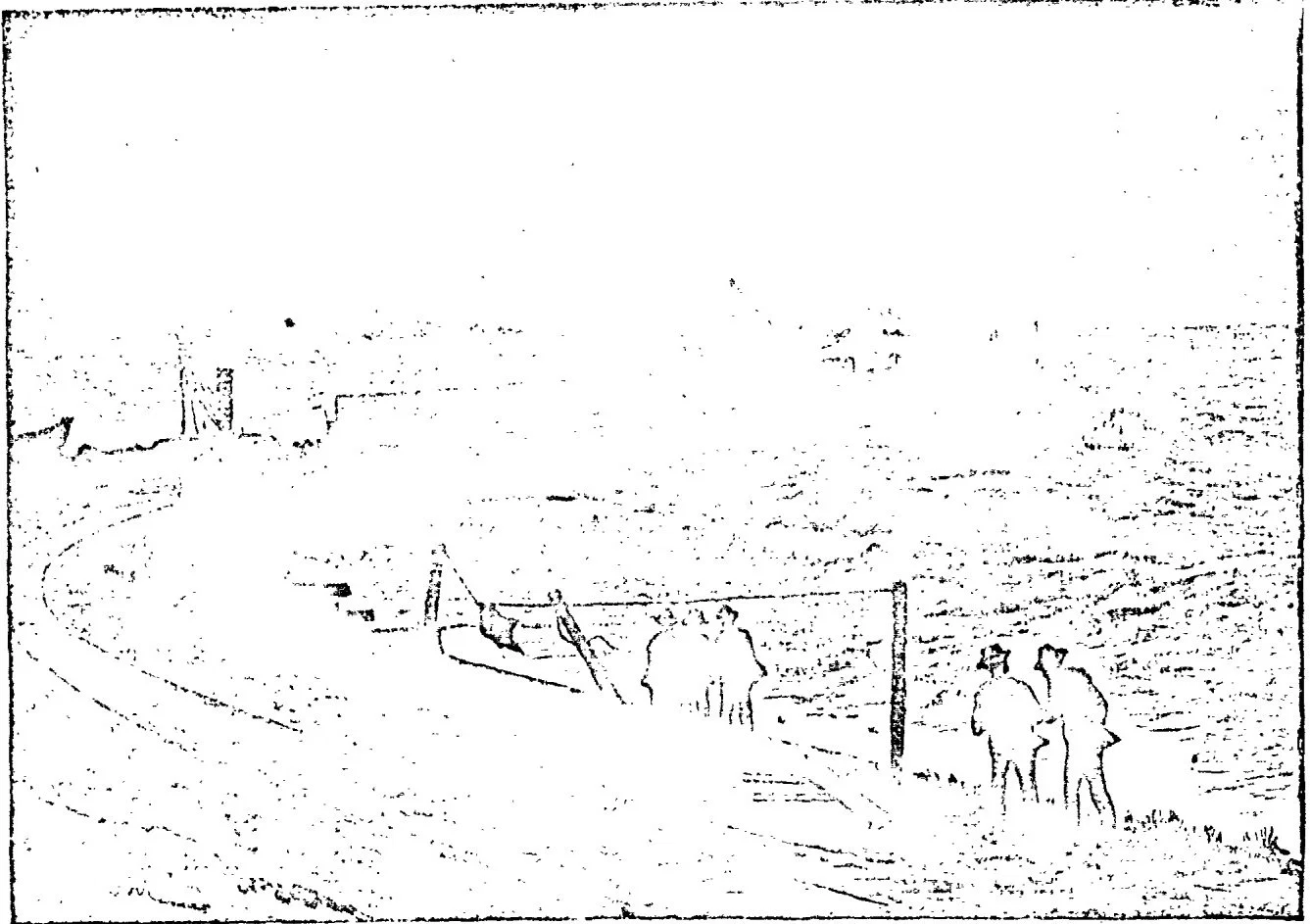
This place was formerly known as Taranaki, and was a frequent battle-ground during the early Maori wars. Until the long pier shown in the engraving was built, steamers were unable to approach nearer than within a quarter of a mile of the shore. Passengers and cargo were brought in surf-boats to within fifty yards or so of the shore, and were taken from there on the backs of strong men, through the surf, to the landing-place.
This was, at best, dangerous work, for the sea is often very rough at that exposed point, and in order to lessen the danger, the surf-boat was drawn out to the steamers and back, by means of a rope stretched from the shore to a strong pile in the ocean. Now, it is altogether different; the steamers land goods and passengers on the pier, which also serves as a breakwater, and they are readily conveyed from there into the town.
On the beach in that vicinity, there are unlimited quantities of iron-sand, from which has been taken the finest quality of iron. When the writer was in Auckland, in 1885, it was reported that a stock company had been formed, and that a large smelting establishment was to be erected, for the manufacture of iron from the sand of that part of the coast. Whether or not the enterprise was pushed forward to completion I have not heard.
Passing down the east coast from Auckland to the Bay of Plenty, and landing in Tauranga harbor, one finds himself amidst the most picturesque scenery of the Southern Hemisphere. A ride of about forty miles over hill and vale to the south and east, brings one to the famous lake of Tarawera, and the scene of the volcanic outbreak of a little more than two years ago. Before the eruption of 1886, another small but beautiful lake, Rotomahana, was in the same district; but it disappeared during the upheaval, and was replaced by a group of active volcanic craters. (In the cut below is represented the volcano of Ruapehu, a short distance south of Tarawera, emitting clouds of smoke and steam, which obscure its summit.)
Before the calamity that spread desolation in this region, it was the resort of pleasure-seekers from far and near. The principal objects of interest, or at least those which elicited the most comment, were the celebrated pink and white terraces. These were on both sides of, and not far from, Lake Rotomahana, the waters of which were kept warm by the numerous boiling springs in various parts of the lake. The white terraces were a whitish-gray hill composed of several steps, each four or five feet high. Each terrace presented a broad and gently sloping surface, over which a thin sheet of water was always flowing. This water came from a boiling pool of about one fourth of an acre in extent, located at the top of the hill. As the water slowly washed down over the several terraces, it left a deposit of silica, so hard and rough that it would cut or tear the boots of those who presumed to walk over it.
A SCENE NEAR NEW PLYMOUTH, NEW ZEALAND.
The pink terraces on the opposite side of the lake were not so large, but they were unanimously voted more attractive than the white terraces. The surface of the pink terraces was soft and smooth, kept so by the deposit of transparent stone from the water that constantly trickled over it. The pools from which this water came were so arranged that the water from the largest, which was hot, flowed into a series of pools, each a little cooler than the preceding until near the bottom, the water was nearly cold. These were largely used for bathing purposes, and were very popular, on account of one's being able to find just the temperature he desired for a bath.
Besides these hot springs, numerous geysers were found in that region, shooting water and mud twenty feet or more in the air. One remarkable one had thrown up the clay around it, until its crater was in the top of a mound about four feet high. In this the soft mud would boil and sputter like a pot of thick oatmeal porridge over a slow fire.
But the beauty of these terraces and the surrounding scenery, was destined to pass away, and be followed by an era of desolation. On the night of the 9th of June, 1886, a half hour after midnight, and when all the inhabitants of that vicinity were wrapped in slumber, Mount Tarawera broke out as an active volcano, hurling ashes and red-hot stones in every direction, for miles around. An hour later Lake Rotomahana, with the surrounding pink and white terraces, was lifted on high, and quickly descended on the surrounding country, burying two native villages, and forcing the third bodily into Lake Tarawera, where it was completely swallowed up, with all its inhabitants. More than a hundred people were destroyed.
Coming as it did, without a single warning, and at a point where nothing of the kind had before been known, all were taken by surprise, and so scarcely any escaped. To the few English tourists and others who were there at the time, the occasion must have been a specially terrible one, as they found themselves hopelessly struggling amid the overwhelming shower of mud and ashes. But the scene has been so vividly described by another, that I will content myself with giving a short extract from his statement:—“Waking from sweet slumber with earth quaking and rumbling, hurriedly dressing while the quakings grow in vigor and the rumblings become more awesome; looking round and seeing the hilltops wrapped in densest clouds belching forth567a storm of vivid lightnings, and a thousand cannon; another crash and a shaking of the earth, that makes the mountains seem to reel from their bases, and up leaps a mighty column of flame just across the pool yonder, to all appearance only a few yards away; and now hurtling through the air and falling in showers on every side are masses of rock thrown by the Titanic hand that has cleft yon mountain as easily as a child would break a bit of clay. The storm grows as the night goes on. The air is thick and black with falling ashes; rock masses come faster and faster; a continuous roar of thunder runs around the mountain tops which encircle the doomed valley; the thunders are answered with still louder roars from the quaking, leaping, cracking, oscillating earth, on which are lying scores of human beings, many dead, and those living trying to avoid being covered with the falling ashes and mud showers, and heaps of falling rock; knowing no place of safety, and trembling in every nerve as the lurid lights flash over them, and the thunders roar above and below them; above them thousands of tons of fiery ashes, meeting with falling torrents of rain in mid air, and the whole coming down as seething, scalding mud, in masses that overwhelm hopelessly the house or group of human beings upon which they fall—how terrible the scene even to think of, and what a change awaits the eyes that live to see the blessed light struggle through the storm-tossed elements, and to become convinced that the night passed was not the end of all things! Where are the living? Who are the dead? Many days must elapse before that question can be answered. Some are swallowed up alive, dropped whole into the lava bed that underlies this beautiful but terrible place. Buildings are buried and all within them slain; roads and landmarks obliterated; creeks turned from their course; no homes; nothing but desolation and wailing, as the shivering few gradually begin to see each other.”
THE VOLCANO OF RUAPEHU, NEW ZEALAND.
Had the country been densely populated, the sacrifice of human life must have been appalling indeed, as but few in the immediate neighborhood of the eruption survived the disaster. To feel the earth trembling beneath one's feet, while in the very shadow of a mountain belching out showers of hot ashes and stones, must give a feeling of utter helplessness that one in ordinary circumstances cannot possibly appreciate. And yet there is a time spoken of in the word of God, when the wicked everywhere will have rained on them fire and brimstone, and a burning tempest. Ps. 11:6. The earth, too, will tremble beneath the feet of men, shaken by the most terrible earthquake ever known; every island will flee away, and the mountains will not be found. That day will be a day of wrath, of trouble, and distress; a day of darkness and gloominess and of desolation. In that day, silver and gold will be powerless to deliver any. All who shall be thus overtaken, must meet the Lord's wrath without any hope whatever.
And yet there are millions to-day, who, unless self-sacrificing believers of the truth can be found to send them the light, must come up to that time unprepared. But how will those feel at that time who knew, or at least had been taught, of that event, and yet did nothing to help others to a knowledge of the same facts? Of how much avail will their hoarded treasures be to them in that day! Those earthly savings, that might at one time have been instrumental in saving people, will then have lost their potency, and have become a cankered rust, to eat their flesh like fire. The gnawings of conscience will then, instead of prompting to noble deeds, only enhance the hopeless terror of those who have let precious opportunities for good pass unimproved. How insignificant then will appear all those earthly ambitions that were permitted to eclipse the occasional desires to assist in the work of God!
Could the rank and file of our people everywhere see the importance of doing something now, while it could be made to count, they would not only have the satisfaction of knowing that they were doing something for others, but they would be lifted above the seeming apathy that is now hovering over so many like a pall cloth. There are many who, unless they soon arise and shake off their indifference, will not be able to scent the danger for themselves, and so when the now smoldering embers of trouble shall suddenly break out, like the poor natives of the desolated district of New Zealand, they will then struggle in vain against their sad fate. But what will make this lot so hard to bear, will be the harrowing thought that it might have been altogether different, had they only yielded to the promptings of God's Spirit, when duty was so plainly pointed out to them.
J. O. COLLINS.
CONSPICUOSITY
By Obadiah Oldschool
This word is not in Webster’s Unabridged, but it ought to be. We have “monstrosity,” from “monstrous,” and why not “conspicuosity,” from “conspicuous?” We have the thing itself, and why not have a name for it? But some one may ask, What is the thing that you mean, and that you propose to baptize into the family of English words? Well, I think it is a disease, a sort of epidemic. No doubt there have been isolated cases in former times, but of late it has spread like the Asiatic cholera. Its symptoms are the persistent desire and endeavor, on the part of its victims, to be prominent, and to keep their persons and their names before the world.
Take the case of John Jones as an illustration. He has never done anything remarkable, yet he always crowds to the front whenever it is possible. He tries to get a seat on the platform at public meetings. He aspires to be one of the twenty or thirty vice-presidents who are appointed to gratify their vanity, and to secure their co-operation whenever there is a popular movement. If he can only get where people will have to see him, or where they are compelled to read his name, he is happy. What cares he if one and another asks, “Who is that seedy old fellow up there beside Judge Johnson?” What cares he if somebody who knows him by sight says, “How did John Jones manage to crowd in among those eminent men?” What cares he if the reader of the report in the morning paper stops at his name and says to himself, “Who is John Jones, anyhow? I never heard of him before.” He has secured the object of his ambition. He is conspicuous.
Now if John Jones had a big show like Phineas T. Barnum, or if he were the inventor and vender of a patent medicine, we would not wonder at his desire for “conspicuosity.” He would advertise his business by making himself prominent. But in most cases the victim of this epidemic has no pecuniary interest in pushing himself before the great eye of the public. It is not with him the result of a business calculation, but of an insane and abnormal impulse. He has nothing to advertise but himself. And he advertises himself, not to acquire popularity, but to gratify a vanity. He wants to be conspicuous for the sake of the “conspicuosity.”
This mania has entered the church. There is Bro. ——, of Smithville, for instance. He is not specially intelligent or spiritual. He can’t quote a passage of Scripture without blundering. But he must pop up like a jack-in-the-box, two or three times every Wednesday evening. As soon as the meeting is opened, he has a word of exhortation that he deems it his duty to give to the brethren and sisters. He knows that they are weary of his platitudes, and yet he must rise and orate. He seems as unable to keep still as if he were afflicted with St. Vitus’s dance. Indeed, this new disease affects the mind very much as that affects the body. People who are afflicted by it, lose control of themselves. They are compelled to act and speak, not because they ought to, or anybody wants them to, or because they hope to accomplish anything, but simply because they can’t help it.
I am sorry to say that this mental St. Vitus’s dance has attacked the sisters as well as the brethren. In some churches we have half a dozen societies, each with ten or a dozen officers, a president, and several vice-presidents, a secretary, a treasurer and a board of directors. They hold meetings, and publish reports. Why? Largely, I fear, because the good ladies think—
“’Tis pleasant sure to see one’s name in print.”
If any Christian or benevolent work is to be done nowadays, there must be a special organization, and a great flourish of trumpets. Paul’s idea of working “with quietness” is obsolete. The modern idea is that publicity is power. There is some truth in that, but a large alloy of error, too. The still river does more good than the brawling torrent. The unostentatious ministrations, in hovel or hospital, of Christians who are animated simply by love for Christ, are more welcome and effective than the heralded visits of formal committees. We need more simplicity, more personal consecration, and less “conspicuosity” in our charities. Organizations are useful; they are indispensable. But there should be no more organization than is necessary to secure united action. The whole business of setting up figure-heads, and parading names merely to conciliate those who must have prominence or they will not help, is wrong. It is trying to make people benevolent by pandering to their selfishness—to induce them to do good by flattering their vanity.
This mania for “conspicuosity” is seen in the personals and the society columns of the daily papers. I am told that many of the paragraphs in both of those departments are paid for, either directly or indirectly. The “mention” is often of those whom nobody ever heard of before, and whose presence or absence is a matter of no special interest to any one but themselves. John Doe goes from some interior city to Chicago. He sends his name, with a box of cigars, to “the local” of some leading newspaper. Next morning there is a two-line item stating that Hon. John Doe, of Springfield, or some other place, is in the city. The reader looking over his paper for news, sees this announcement, but it makes no impression upon him. He is used to such things, and does not even stop to ask or think who this John Doe may be. Meanwhile the man himself reads and re-reads those two lines with pride and pleasure. His name is before the eyes of a hundred thousand people. It is more conspicuous than if it were painted on the walls of the Board of Trade building. His desire for “conspicuosity” is gratified at the cost of a box of cigars, and he buys fifty copies of the paper and mails them, with that local item marked, to his friends at home. He wants them to believe that John Doe is appreciated in Chicago.
The folly of this mania for “conspicuosity” is illustrated very aptly by the familiar fable of the piece of charcoal that aspired to a place beside its crystallized and brilliant brother, the diamond. A fairy came along, and pitying the ambitious bit of carbon, said, “I will grant you one wish, but remember, only one.” The silly thing, instead of wishing to be changed to a diamond, asked at once for a place among the diamonds that adorned the crown of the king. The request was granted. The piece of charcoal was set for one proud moment among the brilliants. But as soon as the king’s attendants saw it, they brushed it away. If it had asked to be crystallized as a diamond, somebody would have seen it shining under foot, and picked it up and placed it in the crown. But aspiring to a position which it could not adorn, it was speedily rejected, and trampled under foot. Let our young people avoid this mania for “conspicuosity.” Let them try to be wise and good and useful. Then, in due time, the world will honor them. But even if it never does, the Lord will say, “They shall shine in the day when I make up my jewels.”—Obadiah Oldschool, in Interior.