The special meetings held at South Lancaster for the past ten days, in connection with the quarterly meeting, were seasons of much encouragement to the church here as well as to those who came from other parts of the Conference. The meetings began Friday evening, Nov. 19, and closed Monday morning, Nov. 29, including nine days and ten evenings. New Hampshire was represented by brethren from Cornish, Washington, Marlow, Amherst, Rindge, New Ipswich, Walpole, and West Wilton; Massachusetts, by brethren from Newburyport, Haverhill, Ipswich, Danvers, Dartmouth, Worcester, Boylston, Oakdale, and Sandisfield; Connecticut, by representatives from Canaan and Norfolk. The church at Curtis Corner, R. I., was also represented. The time was fully occupied, six meetings being held each day, with the exception of Thanksgiving Day, when instead of a sumptuous feast, an extra service—a praise-meeting—was held from 12:30 to 1:30 P. M., during which time fifty-three testimonies were borne. It seemed as though the Lord showed his especial approval of the manner in which the day was spent. At the 6 P. M. meeting, the universal testimony was, “The best Thanksgiving ever enjoyed.” Each day at 5:30 A. M., a prayer-meeting was held for one hour. An hour and a half was spent daily in giving instruction in book-keeping and in the business of the T. and M. work. The Sabbath-school and temperance work received their share of attention. A Bible-class was held each afternoon for two hours.
The subject of the tithing system was thoroughly examined, and although no new features were brought out, yet to those present the matter presented a clearness that they had not seen before. Considerable time was also devoted to an examination of the question of spiritual gifts; a deep interest was manifested in the subject by those present, and the prevailing sentiment seemed to be, “The truth never seemed clearer than now.” Eld. Haskell had great freedom in speaking the truth and giving such instruction as seemed most fitting to the occasion. Twelve discourses were given, besides the regular lessons for the day, the most of which were by Bro. Haskell.
While efforts were put forth to shed light on the manner of doing business connected with the cause, the chief object, seeking God and drawing near to him, was kept before the mind during the entire meeting. The regular attendance was good, and far exceeded the most sanguine expectations.
The meeting coming, as it did, on Thanksgiving week, it was feared this would affect it unfavorably; and no doubt some were detained who would otherwise have attended; but those who were present felt amply repaid for the sacrifice they had made in attending the meeting. A class of forty-three members was formed, principally outside of the Lancaster church. The average attendance throughout was forty-one.
On Friday evening, God came especially near by his Spirit. Just before the meeting closed, Bro. Haskell made some remarks, and called on those who felt that they had lost their connection with God and were anxious to regain it, to manifest the same by rising to their feet. This was promptly responded to by several who had been in the dark for months. An invitation was then given for such to come forward. The body of the house was vacated, and fully two-thirds of an audience of about one hundred came forward. Heartfelt confessions were made, such as had not been witnessed here for years. On the evening after the Sabbath, in a social meeting, the same spirit of confession was present again. The Lord came very near, and it was a time of general weeping. The spirit of murmuring that had taken possession of some was laid aside, and a general desire to earnestly seek God was manifested.
As we witnessed the results of the meetings held, and saw some taking steps toward the light, and beheld the change that had taken place within a few days, we felt like exclaiming in the words of another, “According to this time it shall be said of Jacob and of Israel, What hath God wrought!” and it savors nothing of presumption to say that the carrying out of the vows and promises made at this meeting will result in great good to the cause in New England.
On Sunday evening Eld. Haskell gave an instructive lecture on temperance to a full house, mostly outside of our people. The brethren went home greatly strengthened, and with the feeling that in many respects the meeting was one of the most encouraging ever held in New England. D. A. ROBINSON.
Sleeping in Meeting.
By J. O. M.
SLEEP is a great blessing, but like other blessings it may be turned into a curse. And this is no doubt the case when precious opportunities of nourishing our spiritual natures are lost by sleeping in meeting.
Some people act as though they were determined about the matter. They brace their backs against the wall or corner of the seat, and place their feet on the seat and their elbows over the back of the seat, so as not to be liable to fall down during the operation. Once in awhile they wake up, and what a pitiful face they make! and then again they are wrapped in quiet slumber. The Lord wants to talk with them, but they hear not his voice.
Others always shut their eyes in meeting, that their neighbors may not easily discover whether they sleep or not. And often they themselves do not know. Their consciousness is such a dreamy one, that they cannot discover the line between thinking awake and thinking asleep, or dreaming. How much more encouraging it is to the speaker to see two bright eyes watching him closely all the time. Yes; I would rather see my hearers with both eyes open, and the mouth open too, as though they were ready to swallow everything that was said, than to see them thus shutting and pinching the eyelids.
Others nod and nod until perchance the hymn-book falls to the floor, making a noise and keeping them awake for some time, to the great joy of the preacher. And still others will half shut their eyes, so that only the white of the eyeballs is visible, sometimes rolling them in a manner that causes a ghostly and frightful appearance. If you knew how you embarrass and torment the preacher by these phenomena, and dampen the whole interest of the meeting, you would repent of this sinful act, and when you were converted you would strengthen your brethren. During all the time I stayed in Europe, I do not believe that I saw so many sleepy people in meeting as I have seen during the few weeks since I returned to America.
The remedy: Remove the causes.
The causes may be various. Let me mention some:—
1. A dull and uninteresting speaker. Perhaps he gets a skeleton from others, and has no life to put into it; or he preaches the same old sermons over and over, with no new, additional light or experience; or he neglects study and prayer, and is not himself illuminated by light from Heaven; or he is a slow (not to say lazy) man, with too little electric current to vivify himself, much less to electrify a congregation.
2. Dull hearers who have no interest in spiritual things.
3. An overheated room, with hot stove-pipes over the heads of the speaker and hearers. Let it be known unto all men, that hot pipes over the head are not beneficial to our thinking powers. Most of the meeting-houses are warmed just right, if we could think with our feet. Away with those horizontal pipes. Thoughts are not improved by baking. Let the room rather be too cool than too hot. In many churches in Europe they have no fires at all, be the weather ever so cold. Then the people wrap up, and do not get sleepy. In Norway we never see the people going to the stove to warm their feet, and they would consider it exceedingly out of place if anybody should go to the stove during a sermon.
4. Too much food recently taken into the stomach. In this case, blood which should go to the brain is required for the process of digestion, and the brain stops thinking.
5. Too little sleep during the night or day previous to the meeting. Take your nap before you go to meeting. Do not wait till the sermon is preached. Please notice this, my dear brother or sister disposed to sleep in meeting: Take a nap before the meeting. It is a harmless and splendid remedy.
6. Hard labor during the previous day. The vitality is used up. You have no strength left with which to worship God. It is all used up in the cares of this world. Gather a few less potatoes, and more of the bread of Heaven.
Our Saviour once tried to speak to a sleepy congregation, and it added sorrow to his broken heart, already filled with anguish, as the mysterious cup trembled in his hand, in the garden. May we all awake to righteousness, and watch unto prayer, that we may neither be found sleeping nor sleepy when the Master comes. J. O. M.
FOLLOWING CHRIST.
By Mrs. J. E. Zimmerman
An important part of the eleventh chapter of Matthew is Christ’s emphatic command, “Follow me.” To the disciple to whom it was addressed, it may have involved nothing more than accompanying him in his journey to the wild Gadaren country on the other side of Lake Gennesaret; but to us the command is fraught with the deepest spiritual meaning. Some one has beautifully interpreted our Saviour’s words as applied to ourselves in this manner: “Follow my example; settle all questions of duty by an appeal to that; let my life be a perpetual standard of reference to which your life shall be strictly conformed; let your conduct be habitually compared with mine; make it the great aim of all your efforts to reproduce my character in yours.” In order to follow Christ in the sense which these words imply, it is necessary to study his precepts and his life. His precepts were perfect. “Never man spake like this man,” is the verdict of all ages. But his system does not consist of precepts alone. It is a living, embodied religion. Christ came, not merely to teach, but to illustrate and enforce his teaching by his life. We obey his precepts by imitating his life, by doing as he did. We are to be what he was in character, to have his spirit,—the mind that was in him,—and manifest it in our lives.
If we study the life of Christ, we shall find that it was wholly pure; though “tempted in all points like as we are,” he was “yet without sin.” He was wholly free from self-seeking. He nowhere appears striving after wealth, worldly influence, or power. He might have said, “I will seek the friendship of the great ones of the earth; for their influence is far greater than that of the poor and the lowly. I will seek to win the high priest, the learned scribes, the proud Pharisees. I will thus plant my church where opposition is most to be feared, and gain for myself and my followers immunity from persecution.” But regardless of all such considerations, he planted his church among those who had most need of its comfort382and help; he chose for his followers those who could offer him least. There is, in all the record of Christ’s life, no trace of selfishness to be found.
He was constantly active in the work of doing good to both the bodies and the souls of men. “He went about doing good,” and “came to seek and to save that which was lost.” Whoever would be a follower of Christ must have his spirit of aggressive zeal and self-sacrifice for others. For “if any man have not the spirit of Christ, he is none of his;” and “he that saith he abideth in him, ought himself also so to walk, even as he walked.” Some one has quaintly said, “The Lord’s sheep have three marks: 1. They hear the voice of the Shepherd; 2. They know his voice; 3. They follow it.”
The fact that Christ has commanded us to follow him is of itself sufficient proof that we may do so. Hence it is written, “Let this mind be in you, which was also in Christ Jesus,” and, “Hereunto were ye called, because Christ also suffered for us, leaving us an example that we should follow in his footsteps.” These commands would never have been given, if the thing commanded had been an impossibility. We may be truly conformed to his likeness, and be made partakers of his nature.
How, then, shall this close resemblance to Christ be attained? By a study of his character; by taking his yoke upon ourselves, and learning of him; by taking up whatever work is given to us, and performing it with patience and faithfulness.
“If any man will come after me, let him deny himself and take up his cross daily, and follow me.”—Mrs. J. E. Zimmerman, in S. S. Times.
Notes of News.
—In Spain, Presbyterians are manifesting great activity.
—It has been decided to summon the British Parliament to meet Jan. 6.
—The population of Alaska is estimated at about 30,000, of whom only 300 are whites.
—Since the year 1871, over 700 Buddhist temples in Japan have been diverted to secular uses.
—London, England, is trying to devise ways to rid herself of the dense fogs which so annoy her citizens.
—On Sunday, the 28th, a severe shock of an earthquake was felt at St. Paul's Bay, Province of Quebec.
—A little town in Savoy has been almost destroyed by fire, the public buildings and 30 other houses being burned.
—The Czar, who has been at Livadia with his new wife, on account of the opposition of the royal family to his marriage, has set out for St. Petersburg.
—Fifteen of the 45 collieries of the Philadelphia and Reading Company have suspended for December, throwing about 3,000 men out of employment.
—The revenue of the imperial family of Russia is $12,500,000. About $2,500,000 is set aside for charities, schools, etc., under the direction of the family.
—On the 28th inst., the remaining four of the bodies of the 20 men who perished by the Hudson River tunnel disaster were recovered. Two of them were identified.
—It is said that General Burrows' defeat in Afghanistan, which involved the British government in so much perplexity, was due to the drunkenness of the soldiers.
—An English clergyman who has traveled 800 miles on the tricycle strongly recommends it to his brother ministers. He can ride 50 miles a day, going up hill without difficulty.
—Immense damage has been done by the sudden breaking of the ice in the Volga. Five steamers and 30 barges were destroyed, with large quantities of grain, naphtha, and fish.
—The Peru-Chilian war is not yet over. A dispatch dated Dec. 1 states that a battle is imminent near Pisco, where troops of both nationalities are massing in considerable numbers.
—On the 29th inst., a fire at West Point, Va., destroyed 2,100 feet of the wharves and six large warehouses, the whole covering an area of nearly four acres. The loss is estimated at $250,000.
—A goodly number of the more intelligent and independent of the Mormon girls have formed a monogamic society, each member pledging herself to marry no man who will not be content with one wife.
—It seems that Persia has not yet rid herself of the Kurds, or those savage raiders have again invaded that devoted land. Late dispatches say that the Kurds are close to Urumiah, and there is a prospect of heavy fighting.
—A dispatch from St. Petersburg states that the police at Charkoff have seized several printing presses, together with daggers, revolvers, and copies of the revolutionary organ of the Nihilists, and have arrested two revolutionists.
—It is said that the pope is preparing an allocution condemning the hostile attitude toward the church which France and other nominally Catholic countries are occupying. This looks as though Rev. 17:16, 17 was having its fulfillment.
—The Italian government offers three prizes of $10,000, $6,000, and $4,000 respectively, for designs for a monument to King Victor Emmanuel I., the designs to be sent in before August, 1881. The cost of the monument is not to exceed $1,900,000.
—It seems to be a settled fact that New York is to have a world's fair in 1883. A committee having in charge the important matter of locating it, holds weekly meetings. Brooklyn lays claims to superior facilities for meeting the requirements of the Exhibition.
—The census taken in June showed St. Louis to have a population of 333,000. The people were dissatisfied with this census, believing it too small; so another has been taken, with a result of 338,862, no effort having been spared to swell the enumeration as high as possible.
—England is sending more troops into Ireland. However, the government does not seem disposed to depend on arbitrary measures alone to quell the disturbances in that distracted country. The plan of buying up the land and selling it in small farms to the peasantry, seems to be gaining favor.
—The great volcano of the Sandwich Islands, Mauna Loa, is active. The eruption broke out on the 5th of November, and is one of the grandest ever witnessed. It is sending out two streams of lava, one of which is 30 miles long, 100 to 200 yards wide, and about 20 feet deep. Terrible explosions accompany the eruption.
—The question, What shall be done with our ex-presidents? has of late been agitating the public mind through the press. The New York Times has given the matter a practical turn, and is raising an ex-presidential pension fund. It is said that this fund is in a fair way to be made up, over $100,000 having already been pledged.
—Curious, very, was the way in which a new island recently sprang into existence among the Azores. A large slice of the island of St. George suddenly launched itself into the sea, to a distance of about 300 meters. Some cattle grazing on the island at the time were not in the least discommoded, but were found quietly feeding on the new island.
—The golden tide is rolling in upon the United States in an increasing volume. Steamers arriving at New York in a single day recently, brought $1,292,000 in the precious metal. For the year ending Oct. 31, the imports of gold into this country exceeded the exports by $67,214,821. The steady drain of gold to this country is attracting serious attention at London.
—A few weeks ago, several men were sitting around the fire at a boarding-house in Bardell City, Pa. The fire beginning to burn low, one of the men poured on the coals a cup of oil from a bucket near by. The oil in the cup caught fire, and burned his hand; he threw the burning mass away, and it fell into a bucket nearly full of oil. An explosion followed. The house was burned to the ground, and eight persons lost their lives.
—The Beckwith House at Oshkosh, Wis., one of the finest hotels in the Northwest, was burned Dec. 3. One lady, the wife of a wealthy retired lumberman, perished in the flames. Two or three other persons are missing, and it is feared that they have shared the same fate. It is thought that the fire resulted from the bursting of a kerosene lamp. The loss in building and furniture is estimated at $50,000, less than half of which is covered by insurance.
—Near Chalk Creek, on the Denver and Rio Grande road, 60 laborers were buried in a snow-slide. At about 11 A. M., on the morning of Nov. 25, they noticed the pine trees trembling, and in an instant the slide came with a loud roar, tearing up the track for a distance of a quarter of a mile. One man was killed, 19 were badly injured, and 11 others slightly. The slide carried the track over the heads of the men, and most of the wounds were probably caused by the iron striking them.
—It seems to be a matter of doubt whether Montenegro will be able to hold her newly acquired territory of Dulcigno, when the allied fleet shall leave her to contend alone against Albanian and Turkish influence. Turkey, now that Dulcigno has been surrendered, is assuming a threatening aspect toward Greece; and the attention of the powers is largely directed to the task of keeping peace between these two bellicose nations; for they could hardly settle their differences by an appeal to arms without bringing on a European war.
—The Indians seem to be developing a capacity for civilization. At 40 different agencies, the Interior Department has an Indian police aggregating 815 Indians, of whom 162 rank as officers. In the work-shops of the various agencies, 385 Indian youths are learning trades. During the past year, about 2,000 of them, with their ponies, have been employed by the government, and have done good service. Brick-making by Indian labor has also been begun. It is very much better to put the Indians into these avenues leading toward civilization, than to pursue the old policy of alternately feeding and fighting them.
INSTANT IN PRAYER.
When a pump is frequently used, but little pains are necessary to obtain water; the water pours out at the first stroke, because it is high; but if the pump has not been used for a long time, the water gets low, and when you want it, you have to pump a long while, and the water comes only after great effort. It is so with prayer. If we are instant in prayer, every little circumstance awakens the disposition to pray, and desire and words are always ready. But if we neglect prayer, it is difficult for us to pray; for the water in the pump gets low.
HOW TO INFLUENCE YOUNG MEN.
By Dr. Bevan
WHERE are the young men in respect to moral character? It is upon moral character that the welfare of the country depends. Some people think it does not matter what a young man's character is. He may go through a period of worthlessness, they say, and come out all right in the end. There is no worse devil's lie than this. The chances are that what a man is in his youth, he will be in his manhood, though it may be in part concealed. What is the character of young men in respect to truth? This life is so feverish, we live at such a high pressure, that to be truthful requires not only self-denial but a close watchfulness. There is no real happiness except in truth; there is no safety except in truth. Next to it is honesty. One is subjective, the other is objective. A commerce far and wide, quick methods of trade, and the prevalence of gambling, surround youth, and it needs not only moral strength, but intellectual vigor, to resist temptation.
Another point is purity—not only in deed, but in thought. A young man should retain his original purity. There should be courage in the matter of industry, temperance, and frugality. Another side of the subject is his relations to the unseen. He has capacity for eternal gain or eternal loss. There is a tendency in our age toward a disintegration of belief. What once was accepted with the unquestioning faith of a child, is now submitted to the crucible of criticism. I am not one of those who believe there is much more infidelity now than in former ages. It is because of unbelief in the churches that it appears greater. There is great activity of thought. In some quarters there is materialism, and in others the chief doctrinal teachings are questioned.
Where are our young men in respect to faith? Belief in God is necessary. Destroy it, and ruin is already set in. Religion is the prime force that holds society together. Break it, and catastrophe follows. We should not lose sight of our duty in this regard. There is nothing more powerful than force of example. There are two gospels; the one that is presented, and another that is lived. Look at our churches. Do the young men attend? There are several reasons why they do not. The churches have not done their duty; they are not the social centers they might become. Thousands of young men are in this city without a friend. They often find the church cold and forbidding. A rough word or a cold stare may banish them forever. —From a Sermon by Dr. Bevan.
Living With Honor Through Genuine Virtue
By Socrates
—The shortest and surest way to live with honor in the world is to be in reality what we would appear to be; and if we observe, we shall find that all human virtues increase and strengthen themselves by the practice and experience of them.—Socrates.
Obituary Notices.
“Blessed are the dead which die in the Lord from henceforth.” Rev. 14:13.
McCORMICK.—Died of diphtheria, at Denison, Iowa, Nov. 6, 1880, Alice H., daughter of P. and E. McCormick, aged 3 years, 10 months, and 16 days. Words of comfort were spoken by Eld. Beck (Methodist). P. McCORMICK.
HOLLIDAY.—Died of typhoid and spinal fever, at Cedar Lake, Mich., Oct. 3, 1880, Alden, only son of Wm. H. and Florence A. Holliday, aged 2 years, 3 months, and 7 days. He was a bright boy, and is sadly missed by his parents and friends, who hope for a reunion when the Life-giver comes. L. M. OGDEN.
SMITH.—Died of typho-malarial fever, near Salem, Kan., Nov. 20, 1880, Mary L. Smith, aged 21 years, 2 months, and 3 days. Although she thought it was hard to part with dear friends, yet she felt resigned. She sleeps in Jesus. Words of comfort by the writer. Text, 1 Cor. 15:26. MARSHALL ENOCH.
DICKENSON.—Died near Estella, Mich., Oct. 31, 1880, Lillie A. Dickenson, aged 19 years. She entertained bright hopes of a part in the first resurrection. A husband, an aged father, and other friends, mourn her loss. Words of comfort were spoken by a Baptist minister, from Isa. 30:18, last clause. L. M. HARVEY.
KENDALL.—Died of consumption, in Pleasant Grove, Minn., Oct. 24, 1880, after a long and very painful illness, our beloved brother in Christ, Cephas R. Kendall, aged 39 years. Bro. Kendall suffered much, but bore his pains with Christian fortitude. He was recently from Bristol, Vt., where he leaves many friends, as also here. He leaves a loving wife, two sons, one daughter, a tender mother, brothers, and friends, who mourn their loss, yet not as those who have no hope. Funeral discourse by the writer, from Rev. 14:13. J. M. HOPKINS.
CARPENTER.—Died in Oswego, N. Y., Sept. 9, 1880, Bro. Luman Carpenter, aged 69 years. Bro. C. was stricken with paralysis five years ago, and has been confined to the house ever since. He was one of the first in this city to accept the doctrine of the near coming of the Lord, having become identified with the Adventist people in 1844. When the light on the Sabbath was presented, he was one of the first to accept it, and he became a commandment-keeper as early as 1848. He was a faithful and exemplary Christian, and was respected by all who knew him. M. E. GOODWIN.
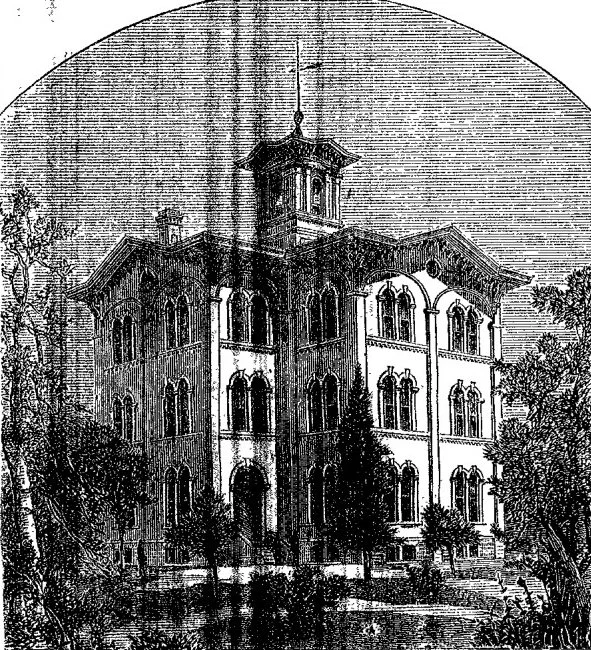
BATTLE CREEK COLLEGE.
This institution, since its establishment in 1874, has gained an en- able reputation, and in many respects its success has been unparal- leled in the history of colleges during the first years of their existence. NEARLY FIVE HUNDRED STUDENTS ENROLLED EACH YEAR.
It is Thoroughly Practical in Its Methods of Instruction and Discipline.
In the various departments young men and women are receiving just what they need as a preparation for the positions in life which they intend to occupy.
THE COLLEGE BUILDING IS NEW, SPACIOUS, AND BEAUTIFUL.
Five Departments of Instruction are open to receive students:— 1. Department of the Arts and Sciences. 2. Normal Department, with its Model School, and Course of Four Years. This includes all the Common Branches. 3. Biblical Department. 4. Commercial Department. 5. Department of Hygiene, with a Course of One Year.
For full Descriptive Catalogue, address,
BATTLE CREEK COLLEGE, Battle Creek, Mich.
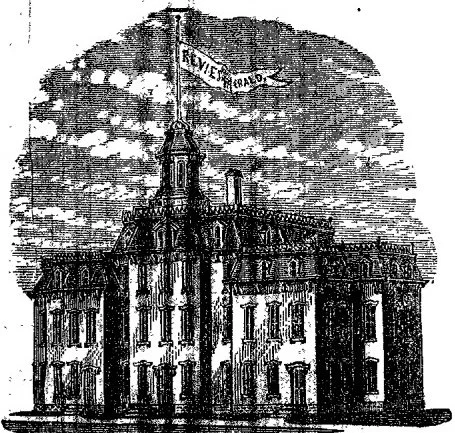
REVIEW AND HERALD PUBLISHING HOUSE.
BOOK AND JOB PRINTING,
BOOK BINDING,
Electrotyping, Stereotyping, Paper Ruling, Blank Book Manufacturing, Etc.
The largest and best equipped printing office in the State. Orders by mail promptly attended to.
Address REVIEW AND HERALD, Battle Creek, Mich.
MEDICAL AND SURGICAL SANITARIUM,
By John Harvey Kellogg
Battle Creek, Michigan.
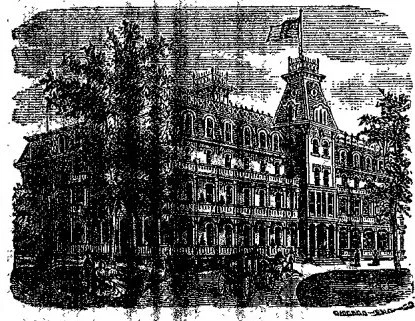
This institution, beautifully located in one of the most healthful cities of Michigan, is everywhere recognized as the
GREAT SANITARIUM OF THE WEST.
More than 4,000 patients successfully treated. The erection of new buildings and the addition of all the most approved remedial appliances known to the profession, have made it The Most Complete Institution of the Kind in America. All modern hotel conveniences furnished. Terms very reasonable.
J. H. KELLOGG, M. D., Medical Superintendent.
Address, SANITARIUM, Battle Creek, Mich.
ADVENT HAROLDEN.
SIXTEEN PAGES.
A SWEDISH RELIGIOUS MONTHLY.—PUBLISHED AT BATTLE CREEK, MICHIGAN, AND CHRISTIANA, NORWAY.
ADVENT HAROLDEN is devoted to the proclamation of the second coming of Christ, the explanation of Prophecy and Bible doctrines in general, and the defense of the commandments of God and the faith of Jesus. Its family department is filled with instructive reading, accompanied with beautiful illustrations, and also gives valuable information with reference to the preservation of health and the treatment of disease.
TERMS, INVARIABLY IN ADVANCE.
TO AMERICAN SUBSCRIBERS.
One copy, one year — 75 cents.
To new subscribers, with Way of Life as premium — $1.00.
Five or more copies to one address, per copy — 50 cents.
Ten or more copies, per copy — 40 cents.
TO EUROPEAN SUBSCRIBERS.
One copy, one year — 90 cents.
Five or more copies, per copy — 60 cents.
Ten or more copies, per copy — 50 cents.
Address REVIEW AND HERALD, or, ADVENT HAROLDEN, Battle Creek, Mich.
THE SIGNS OF THE TIMES.
PUBLISHED WEEKLY AT OAKLAND, CAL., FOR THE
MISSIONARY SOCIETY OF SEVENTH-DAY ADVENTISTS.
TWELVE-PAGE EDITION.—A live Religious Family Paper, containing, in addition to the great variety of original articles, which make it a desirable prophetic journal, Departments devoted to Temperance, The Home Circle, News, The Missionary Work, and the Sabbath-school. Price per Year, $2.00.
In clubs of ten or more copies to one address, to be used for missionary work, each 1.50.
EIGHT-PAGE EDITION.—Condensed from the above. Per Year, 1.25.
In clubs of ten or more, each 1.00.
Address SIGNS OF THE TIMES, Oakland, Cal.,
— OR —
REVIEW AND HERALD, Battle Creek, Mich.
MISS ELIZA THAYER, Secretary N. E. Tract Society, So. Lancaster, Mass.
ELDER J. N. LOUGHBOROUGH, Ravenswood, Shirley Road, Southampton, England.
WM. LEAVITT, Salem, Oregon.
THE YOUTH'S INSTRUCTOR.
WEEKLY AND MONTHLY.
AN ILLUSTRATED PAPER FOR YOUTH AND CHILDREN, DEVOTED TO MORAL, MENTAL, AND RELIGIOUS CULTURE.
This paper is not devoted to insipid stories and religious fiction, but is filled with a great variety of that kind of reading which tends to the healthful development of the youthful mind. Its pages are made bright by the choicest illustrative pictures, and its columns are always full of useful information.
WEEKLY EDITION.—FOUR PAGES, WITH SABBATH-SCHOOL DEPARTMENT.
As a Sabbath-school and Lesson paper, it is suited to the wants of scholars and teachers, and is calculated to increase the interest of all who read it, in thorough Bible study.
The Sabbath-school Department will contain two series of lessons, one for children and one for youth. Lessons on Prophecy for Bible Classes will also be furnished with the Weekly Instructor in the form of a monthly supplement.
SUBSCRIPTION PRICE, 75 CENTS A YEAR.
All new subscribers paying the above price will receive the "Child's Poems" as a premium without extra charge.
TERMS TO CLUBS, PAID IN ADVANCE.
Price per Copy, Post-paid.
5 to 10 copies — 55 cents a year.
10 copies and upwards — 50 cents a year.
10 copies and upwards, without supplement containing Lessons on Prophecy — 45 cents a year.
Subscriptions for 5 to 10 copies will be taken for six months. Larger clubs may be paid for quarterly.
MONTHLY EDITION.—EIGHT PAGES.
SUBSCRIPTION PRICE, 50 CENTS A YEAR.
The publishers are determined to increase their already large subscription list, and therefore offer, as a special inducement to new subscribers,
THE "CHILD'S POEMS" AS A PREMIUM,
at the price of the paper alone (50 cents). This beautifully bound and illustrated little book has 128 pages of choicest poems for children, price 30 cents. Six thousand have been sold during the past year, and the children call it a treasure.