The reason why it is inadvisable to eat white bread is because nutrition is sacrificed to appearance. In the process of milling the flour, the nutritive portion of the grain, which is dark in color, is all screened away, for the purpose of obtaining a white flour, and this consists mainly of starch, which is the hardest thing in the list of foods for the digestive powers to contend with, owing mainly to the fact that few people masticate their food thoroly, and the starch must be acted upon by the saliva in the mouth to convert it into dextrin. A person condemned to an exclusive diet of white bread would inevitably die of starvation. Bread made from whole wheat possesses every element necessary for the sustenance of the body, and, as nearly as possible, in proper proportions. Its principal advantage is that it contains a proper proportion of the inorganic salts (the bone-making element), in which the white bread is totally deficient. Whole-wheat bread is a perfectly balanced food; white bread is a food practically destitute of nutrition.—Omega.
When you go East, take
“The Overland Limited”
Via UNION PACIFIC RAILROAD
Less Than Three Days to Chicago
Four Days to New York
Leaves Oakland Daily at 10:36 A. M.
“The Fast Mail”
Three and One-half Days to Chicago
Both Pullman and Tourist Sleepers through to Denver, Kansas City, Omaha and Chicago Daily without Change. Leaves Oakland at 6:44 P. M.
EVERY DAY IN THE YEAR
PERSONALLY-CONDUCTED TOURIST EXCURSIONS TO THE EAST EVERY WEDNESDAY AND FRIDAY EVENINGS
Steamship Tickets to and from all points in Europe by all trans-Atlantic steamship lines
H. V. BLASDEL, Passenger Agent
1160 Broadway, Oakland, Cal.
SANTA FE ROUTE
ONLY LINE WITH ITS OWN TRACKS
FROM SAN FRANCISCO TO CHICAGO
THE CALIFORNIA LIMITED
The Santa Fe new and sumptuous train, through to Chicago in 75 hours. Leaves every morning at 9 o’clock.
OVERLAND EXPRESS, with through Palace and Tourist Sleepers, to Chicago, every evening at 8 o’clock.
BAKERSFIELD LOCAL leaves every morning at 7.20, and STOCKTON LOCAL every afternoon at 4.20, giving best service through the San Joaquin Valley.
PERSONALLY CONDUCTED Tourist Excursions every Monday, Thursday, and Saturday, in Vestibuled Tourist Cars.
The service on these Personally-Conducted Excursions, is all that counts for comfort and convenience. Clean linen and bedding, the proper lavatory and toilet accommodations are provided. The aisles are carpeted and the windows double, to keep out the dust, and wide to allow an unobstructed view of the scenery en route. Full information regarding the Santa Fe Route, with handsome folder and correct map of the section through which it runs, may be had at the Company’s offices.
CALL OR WRITE
1118 BROADWAY, OAKLAND
641 MARKET ST., SAN FRANCISCO
THE SOCIETY ISLANDS.
By B. J. Cady
A Tahitian Hut.
THESE islands are found in the South Seas, between 155° and 148° west longitude, and between 16° and 18° south latitude. They were named by Captain Cook, who visited Tahiti in 1768 to observe a transit of Venus. The group is composed of thirteen islands, the largest being the island of Tahiti, which is said to contain 412 square miles. Its circumference is about 120 miles. Raiatea lies 120 miles northwest of Tahiti, and is next in size. It has a circumference of 50 miles.
The islands of this group are supposed to be of volcanic formation. They are all high and mountainous in the center, but usually have a level strip of low land along the beach. Each island is surrounded by a coral reef, except in the case of Raiatea and Tahoa, where one reef encloses both islands. These reefs serve as barriers, and are a natural protection to the isles within. The water between the reef and the island is called a lagoon. It affords an excellent harbor, as the force of the ocean is broken by the reef.
The water is so deep that large vessels can enter in safety, and yet not too deep for casting anchor. The vessels find an entrance to these quiet harbors thru natural openings in the reef. Some of the passages are narrow and crooked; for the coral rock is not confined simply to the reef, but often extends out some distance from it, and is found in patches here and there all thru the lagoon. As it usually can not be seen above the surface of the water, it is the more dangerous. For this reason pilots are found at each port, who go out to meet strange vessels and direct their way in and out.
The city of Papeete, Tahiti, is the principal seaport in this part of the island world. It is visited every thirty-three days by a 3,000-ton steamer from San Francisco, belonging to the Oceanic Steamship Company, and every twenty-eight days by a steamer from Auckland, New Zealand. Large sailing vessels from Europe are often found in its harbor, where they come for cargoes of copra and pearl shells. Numerous small vessels are continually plying back and forth between it and the surrounding islands, as it is the center of commerce for the Marquesas, Tuamotu, Gambier, and Austral groups, as well as for the other islands of the same group.
A Scene in Papeete Harbor.
The population of Papeete has been estimated by some at about 5,000; but this estimate includes many transients, natives of the country districts and adjacent islands, who come to spend a few months in the “great” city of Papeete. Papeete is to the natives what London is to the English people. It can not boast of fine edifices, or of grandeur in any form, excepting in nature itself. The buildings are very plain, and not large, and in the suburbs can be seen many primitive Tahitian huts. The streets are narrow,
but are kept clean, and the roads are very good. All garbage and other rubbish is carried away by men with carts. But there is no sewerage; and as one passes along the street on a damp morning, the nose will often detect uncleanliness which is not apparent to the eye.
The luxuriant foliage and the gorgeously tinted flowers add much to the beauty of the scene. Large trees and vines covered with blossoms have an appearance of mammoth flower beds. The scenery is indeed grand, whether we look at the verdure-covered hills, the sparkling ocean, or the blue sky and fleecy clouds above; and I have often thought that the words of the hymn aptly apply to this place as one—
“Where every prospect pleases,
And only man is vile.”
B. J. CADY.
Anti-Tobacco Teaching
There is one mission operating in India which resolutely insists—wisely, as we believe—on total abstinence from alcoholic liquors and tobacco on the part of all its agents, foreign and Indian. In the case of the latter, there is more difficulty in regard to tobacco than to liquor. Very rarely indeed is there any necessity for applying the discipline because of intemperance. It is at once remarkable and a source of much thankfulness that in the large body of native Christians connected with this mission, largely recruited from the lower classes, intemperance is practically unknown.
—Indian Witness.
FAMINE IN RUSSIA AND INDIA.
There is plenty of money in the world for carrying on war, but not sufficient, it seems, for alleviating the horrors and distress of starvation. Here comes the announcement from Lord Curzon that another famine is impending in India, in fact has already begun, and the immediate expenditure of one crore of rupees (about $3,300,000) is necessary; in addition to the remission of large land revenues. Thus India, which has not recovered from the last famine, which covered two-thirds of its territory, is brought face to face with another calamity of the same kind; and with a large part of its population still weakened by the sufferings of last year it must be that the mortality in the regions affected will be unusually great even for that country.
Then there is Russia, from which country comes ominous news. We are told, on authority of the Imperial Government, that in Kherson, Smolensk, and Tomsk there has been an entire failure of crops, and that great distress stares the people in the face. Not only so, but the same conditions prevail in Bessarabia, Kief, Podolia, and Taurida—the whole southwestern corner of European Russia, with an area as large as New York State and a population much greater. There are, therefore, seven semi-destitute provinces, having a population of between eleven and twelve millions, scattered over an area nearly one-third as great as that of the United States. Such is the appalling state of Russia; to which we may doubtless add those usual companions of famine—typhus and typhoid fevers. No wonder the government feels moved to make an appeal for private charity to supplement its aid. Is it academic to say that if there was not so much war there would be less—indeed there might be no—starvation? But preaching now would be in vain. At present it is better to the purpose to point the need of alms, lest millions perish of famine and fever like flies when the frost comes. But the times accent the prayer of the poet, “Give to us peace in Thy time, O Lord.” —Christian Work.
FIREARMS IN THE PACIFIC.
It is high time for the United States Government to take decided action in regard to the traffic in firearms and strong drink in the islands of the Pacific. Dr. John G. Paton, the veteran missionary to the New Hebrides, tho over seventy years of age, has journeyed thousands of miles in order to secure this legislation on the part of our government.
Firearms in the New Hebrides have no legitimate place. There is practically no game of any sort, so that the only use to which firearms can be put is the killing of men by their fellows. “Fire-water” deprives them of their self-control, and the firearms are then used indiscriminately, often with deadly effect. The work of the missionaries is made doubly hard by this criminal traffic of American, German, and French traders.
Dr. Paton only asks that the same prohibition be proclaimed and enforced by the United States as that under which Great Britain has placed her13traders in the group. France has promised to prohibit the traffic if America will do so.
The question is in the hands of the President and Congress, but public opinion may demand that this righteous law be enacted. As in so many other things, the love of money is the root of all evil. No possible reason can be found for allowing the introduction of death-dealing drinks and weapons into these islands of the South Seas.
There is no protectorate over the group; for altho England and France have an eye on them, Dr. Paton has documents to prove that they have no exclusive jurisdiction over them.
Every pressure should be brought to bear upon the President and congressmen to prohibit this traffic. Dr. Paton also says: “Those who have no great influence with temporal lawmakers have influence with the King of kings and Lord of glory. Let every Christian pray for help in this great work.”—Missionary Review.
PRAYER FOR THE INDIAN—AND OURSELVES.
By Denis Wortman
[Dedicated to the Mohawk Indian Conference, by Denis Wortman, D.D.]
FATHER of all the sons of men,
On land or sea, in field or fen,
Behold in our far Western wild
Thy wandering ward, Thy wasting child.
We know not whence his ancestry,
Why he so poor, so favored we,
Why he from peace so long exiled;
We only know he is Thy child.
Forgive us who with polished gun
Have hunted like some beast Thy son,
And to the death have oft beguiled
Thy wandering, trustful, child-like child.
Forgive our weakening of the strong,
Our righting wrongs to make more wrong;
The heartless hurts our crimes have piled—
O, help us lift from off Thy child!
Lord, may we, who have him enticed
To sin, now lead him to the Christ;
If in him we have Him reviled,
In both let us now see Thy child.
With smarting heart and tear sincere,
O wounded God, we would bring near,
In love most tender, might most mild,
Thy lowly to Thy holy Child!
O Lord of hosts, in Thee, in Thee,
Soon may the tribes of men stand free,
All, all forever reconciled
In heaven's and earth's one sovereign Child!
Saugerties, N. Y.
OUR WORK AND WORKERS.
The Minnesota Worker notes the death, March 1, of Brother H. Grant, a pioneer in our work in that State.
Meetings recently held at Cleveland, N. Y., by Brother A. O. Burrill, resulted in adding three members to the church.
It is encouraging to hear that twenty-two veteran canvassers are returning to the work in the single State of Ohio. May it be so in all the States. No work produces better results.
Our laborers in Finland expect to sell half of the 8,000 edition of “Great Controversy,” which has been issued in that language the present season. That is certainly a good prospect.
The place of meeting of the Scandinavian church in Brooklyn, N. Y., has been changed to No. 71, Thirty-ninth Street. Public meetings are held Sunday evenings, as well as on the Sabbath.
Our little work, “Steps to Christ,” by Mrs. E. G. White, has been translated into the Japanese language, and has been placed in the hands of the M. E. Publishing Co. for distribution in Japan.
A brother in Massachusetts who works nine hours a day at his trade, takes the time in going to and from work, the noon hour and evenings, to canvass for “Christ’s Object Lessons,” and in two weeks took thirty-two orders.
We learn from the Atlantic News that as a result of Brother Matthew Hill’s work among the Oneida Indians in Wisconsin, the past season, thirty have accepted the truth. They have purchased an old government school-house for a place of worship.
After three weeks’ labor at Columbus Creek, Wyoming, Brother O. S. Ferren reports the baptism of nine adult candidates, seven others observing the Sabbath who have not yet been baptized, and a Sabbath-school of twenty members. A new house of worship is also under way. To this report (in the Nebraska Reporter) Brother Ferren adds: “This is one of the openings made by the faithful canvasser.” It is interesting to read his account of the preparation for his meeting, which is thus graphically stated: “We first went to every house and told them about the meeting, then got a sack of rags and chinked the little log school-house, hanging gummy sacks up where the glass was broken out. The people brought lamps and wood.”
A new house of worship for the church at Red Bluff, Cal., was dedicated February 16. Provision is made in the building for a church-school. Brother C. N. Martin, who has been laboring in this place, and Brother J. O. Corliss were the officiating ministers.
Reporting to the California Missionary, Brother M. H. Brown notes the proceedings of a general meeting held at Fresno, Cal., March 5–10. Ten were baptized, and donations to the amount of $125 were given for the Scandinavian work. Fresno church has a successful school with two teachers and about fifty pupils.
In connection with meetings held at Wellington, Kansas, March 2, 3, a church of nineteen members was organized. Brother J. W. Westphal, president of the Conference, and Brother R. M. Kilgore, superintendent of General Conference District No. 5, were present, as also visiting brethren and sisters from Argonia and Danville.
Do not think you can not do missionary work with a German neighbor because you can not speak German, or because he can not read English. All this can be overcome by giving him the Christlicher Hausfreund, or inducing him to subscribe for it. Price, $1.00 a year; 50 cents for six months. Address your tract society or Battle Creek, Michigan.
In the Missionary Visitor of March 5 we find this note from Brother H. C. J. Wollaker: “The Lord’s hand is in the work here at Seattle. We have good meetings at the mission and souls are finding God. Twelve have taken their stand for the truth since our mission started last October, for which we are praising God and giving Him all the glory.”
In the Indicator we find this item of labor in Buffalo, N. Y.: “The church here, assisted by D. W. Reavis and Brother Cleveland, have just finished a campaign, placing religious liberty literature in the homes of the people. Thirty-five thousand tracts especially prepared were distributed in the city. This means much work, but we have evidence that it will not be in vain.”
A Baptist minister in Adams County, Ohio, recently gave this testimonial to some of our books that were being sold in his vicinity: “I have examined the books sold by Mr. ——, and find them very helpful. The ‘Steps to Christ,’ if read and meditated upon, will enable any Christian to live a consecrated life. The book ‘Christ’s Object Lesson,’ gives a very good practical exposition of many of the Master’s truths. The little book for children, ‘Best Stories,’ will interest and instruct them about matters which will be as good seed springing up in the young life, leading them in the right direction.”
People go out for business or pleasure in weather that would deter many of them from going to church. It is refreshing to read occasional exceptions. Brother G. B. Thompson, president of New York Conference, tells of a drive to a meeting at South Onondaga when “the mercury was several degrees below zero, and deep snow-drifts were everywhere, but there was a full attendance of the church.” Of this meeting he adds: “I was glad to meet an Indian of the Oneida tribe who has commenced to keep the Sabbath. He gives evidence of true conversion. He has laid aside his tobacco, and is desirous of being baptized. Truly, the Lord has in every nation, kindred, and people, those who fear Him.”
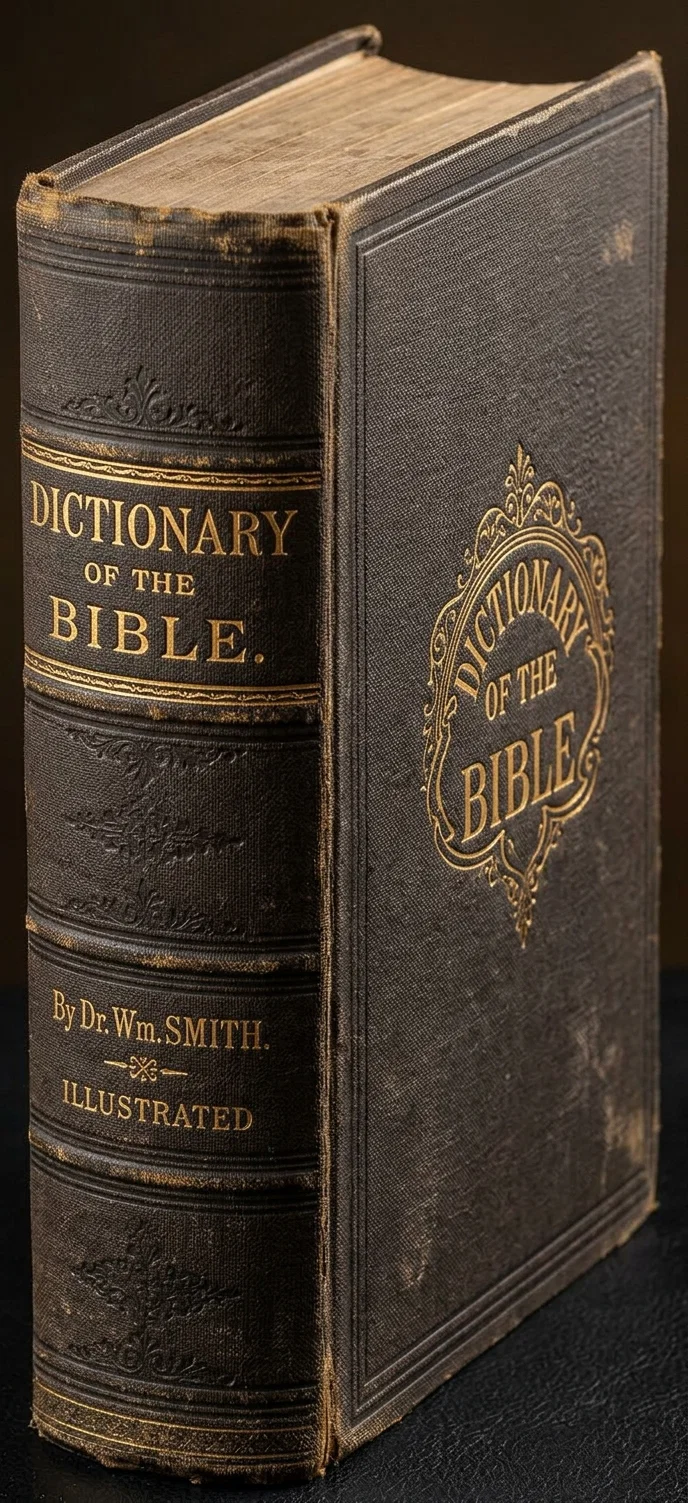
SMITH'S BIBLE DICTIONARY
Size
9¼ x 7 x 2½ in.
A standard book of reference. A necessity to every Bible student. An invaluable help to every Sabbath-school teacher and scholar. 1017 pages. Illustrated. Cloth bound. Size 9¼ × 7½ × 2½ in. PUBLISHER'S PRICE $4.50.
SENT POST-PAID WITH SIGNS ONE YEAR $2.75
Sent free for four new yearly subscriptions at $1.50 each
“A LIFE INDOMITABLE.”
Kasha Oshana, who has lately come down from the mountains, says that while he was at Memiken, in Gawar, there came to him the wife of a Kurdish chief, whom he recognized as Johanna, a Nestorian woman, who, as a girl, was stolen for her beauty and carried away by the Kurds. This was forty years ago, when Mr. Rhea was staying in Memiken, and now she comes begging to be allowed to partake of the Lord’s supper. Think of forty years spent among the Kurds surrounded by utter spiritual darkness! And yet the little light she had has been fed and kept burning. She had taken her little Testament with her when she was abducted, probably one received from Mr. Rhea, and a translation of Spurgeon’s “Morning by Morning,” and she has insisted upon reading in them every day, tho forbidden by her husband. She said to him, “My Testament is my very life; I shall die unless you let me read it.”—Assembly Herald.
PACIFIC PRESS PUBLISHING COMPANY.
By T. A. Kilgore
The annual meeting of the stockholders of the Pacific Press Publishing Company, a corporation organized and existing under and by virtue of the laws of the State of California, will be held at the office of the company, corner of Twelfth and Castro Streets, in the city of Oakland, county of Alameda, State of California, on Monday, the 22d day of April, A.D. 1901, at 9:30 A.M., for the purpose of electing a board of seven directors, and transacting any other business that may properly come before the meeting.
By order of C. H. Jones,
President of Pacific Press Publishing Company.
T. A. KILGORE,
Secretary of Pacific Press Publishing Company.
Jesus and the Resurrection
Important thoughts upon immortality and the resurrection are clearly presented in this tract, showing our dependence on the Saviour for both. A. G. L. No. 42. 50 cents per 100.
PACIFIC PRESS PUBLISHING CO.
New York City Oakland, Cal. Kansas City, Mo.
BAPTISM: Its Significance, Its Nature, and the Necessity for It.
By Ellet Joseph Waggoner
By E. J. Waggoner. Bible Students' Library, No. 79. Pacific Press Pub. Co., Oakland, Cal. 16 pp.; 2 cents.
Self-Pronouncing New Testament
Vest-Pocket Edition
Bound in French Morocco, flexible covers, round corners, red under gold edges
Large, sharp, clear type
All proper names are diacritically marked, which renders their proper pronunciation very easy
Just what is needed by busy people and travelers who wish to make a daily study of the Scriptures
A Minister’s wife says:— “I am just delighted with it, and so are my friends who have seen it.”
Given for one new yearly subscription to the SIGNS OF THE TIMES at $1.50
LESSONS BY MAIL ON MEDICAL ELECTRICITY OR HOW TO USE THE BATTERY
By G. L. Abell
By Prof. G. L. Abell, Member of the Board of Directors of the Electro-Medical Society of San Francisco.
Learn how to use the battery and treat yourself. Many diseases are quickly cured by the proper application of electricity. The course embraces the treatment of every organ and part of the body. The lessons are written in plain language and are illustrated. Course, five dollars. Send for circular. Address.
PROF. G. L. ABELL
School of Chemistry and Electro-Therapeutics
22 Geary St., San Francisco, Cal.
The Winning of Margaret
How Margaret and her skeptical friend Ralph were converted. A well-told story. Price, $1.00 per 100.
1 “But on the first day of the week, at early dawn, they came unto the tomb, bringing the spices which they had prepared. And they found the stone rolled away from the tomb. 2 And they entered in, and found not the body of the Lord Jesus. And it came to pass, while they were perplexed thereabout, behold, two men stood by them in dazzling apparel; 3 and as they were affrighted, and bowed down their faces to the earth, they said unto them, Why seek ye the living among the dead? He is not here, but is risen: remember how He spake 7 unto you when He was yet in Galilee, saying that the Son of man must be delivered up into the hands of sinful men, and be 8 crucified, and the third day rise again. And they remembered His words, and returned from the tomb, and told all these things to the eleven, and to all the rest. Now they were Mary Magdalene, and Joanna, and Mary the mother of James; and the other women with them told these things unto the apostles. 11 And these words appeared in their sight as idle talk; and they disbelieved them. But Peter arose, and ran unto the tomb; and stooping and looking in, he seeth the linen cloths by themselves; and he departed to his home, wondering at that which was come to pass.”
Golden Text: “Now is Christ risen from the dead.” I Cor. 15:20.
(1) What time is mentioned at the beginning of this lesson? Verse 1. Note 1. (2) Who came to the sepulchre at that time? Note 8. (3) What did these women bring with them? and for what purpose? Same verse, and Mark 16:1, 2. (4) What did they find on coming to the tomb? Verse 2. Note 2. (5) In what were they disappointed? Verse 3. (6) Who appeared to the women at this time? Verse 4. Note 3. (7) How were the women affected by this appearance? Verse 5. What did the men say to them? Verses 5-7. Notes 4 and 5. (8) How did these words affect the memory of the women? Verse 8. Note 6. (9) What then did they do? Verse 9. (10) How did the disciples receive the news? Verse 11. Note 7. (11) Then what did Peter do? Verse 12. (12) Who was with Peter? Note 9.
NOTES.
1. “Upon the first day of the week.”—It was a very careful regard for the Sabbath day that held back these earnest women from the performance of a service which lay so near their hearts. Nothing else could have induced them voluntarily to delay. They came at the earliest moment after the Sabbath in which it was possible for them to do the work. They had kept the Sabbath “according to the commandment,” and certainly according to the example of the Lord. Had they received any other teaching from Him, either by precept or example, the influence would have had weight at this time.
2. The Surprise.—On the way the women were concerned about the great stone at the door of the sepulchre. “Who shall roll us away the stone?” was their query among themselves. Mark 16:3. But the seeming difficulty did not deter them from their mission of love. Evidently they did not know that the stone had been officially sealed. If they had known this, they would not have expected that any man would dare attempt to open the tomb. We may imagine, but we can not realize their surprise to find the stone rolled away, and the tomb empty. The surprise was the result of unbelief of the Master’s words, notwithstanding the feelings of love for His person. See Matt. 16:21. There are yet many surprises in store for unbelieving professors, when it will be too late for remedy.
4. The Reproof.—“Why seek ye the living among the dead?” Many times Christians are fearful, and go with their faces bowed down to the earth when a proper appreciation of the Word of God would cause them to rejoice and be glad. Our Saviour is a living Saviour, directly accessible thru faith in this living Word. We do not have to approach Him thru a priest, for He is Himself our priest.
5. The Proof.—The angel offers only the Word of the Lord Himself as proof that Christ was risen: “Remember how He spake unto thee.” To the believer that is always sufficient; to the unbeliever nothing additional could avail. Luke 16:29. “Christ died for our sins according to the Scriptures,” and “He rose again the third day according to the Scriptures.” I Cor. 15:3, 4. The Scriptures are our only proof; the human witnesses are all dead, but the “Word of the Lord endureth forever.” I Peter 1:25.
6. “They remembered,” and believed. Believing the Word inspired confidence, as it always does. Grief was changed to joy; despair was displaced by hope. See Matt. 28:8. “All things are possible to him that believeth.” Mark 9:23.
7. Unbelief was general among the disciples. They treated the story of the women as “idle tales.” They “mourned and wept” (Mark 16:10) because they supposed their cause was lost. Jesus afterward upbraided the eleven with their unbelief, “because they believed not them which had seen Him after He was risen.” Mark 16:14. They did not believe because they did not know the scripture. John 20:9.
8. The women who went to the tomb were recognized as of the company of the disciples (Luke 24:22). From the different Gospels we gather these names: Mary Magdalene, out of whom went seven devils (Mark 16:9), Mary the mother of James the less and of Joses (chapter 15:40), Salome (chapter 16:1), and Joanna the wife of Chuza, Herod’s steward (Luke 24:10). From Matt. 27:55 and Luke 8:2, 3 we learn that these were wont at times to go with the company and minister unto them.
9. Another Disciple.—John states that another disciple “whom Jesus loved” went with Peter, and outran him; but did not go into the tomb until Peter had entered. It is supposed that this disciple was John himself. See John 20:1-10.
EGGS
EACH VARIETY $1.00 AND $2.00 PER 15
Fancy Black Langshans, White Wyandottes and Barred Plymouth Rocks
Illustrated Price-list and Valuable Information free for stamp.