Bible Students' Library one year and Battle Hymn of the Kingdom
By Editor
Slightly Imperfect
for 35 Cents
Until our present stock of imperfect books is gone, we will send a copy of Battle Hymn of the Kingdom to each one subscribing to the Bible Students' Library and sending us 35 cents for same—only 10 cents extra.
The regular price of this booklet is 25 cents, and the imperfection in the lot is so slight that but few will notice it. This price will be given only in the above-mentioned way.
A subscriber to this Library is entitled to six different numbers of the Library. During the past year these six numbers aggregated 79 cents, yet our subscribers have gotten it all for 25 cents. We can not say what will be issued in this series the coming year, but it will be carefully-selected literature that will repay your subscription price.
This offer is good to both old and new subscribers. The booklet will be sent to one address, and the Library to another if desired.
Pacific Press Publishing Company
Oakland, California
A Dictionary for the Pocket
Until phonetic spelling is universally adopted, we are all likely to be driven to a spelling authority more or less often. To meet this need there are dictionaries and dictionaries, but there is only one
Webster Dictionary and Vest Pocket Library
which actually spells and pronounces 45,800 words, and yet weighs less than three ounces and slips easily into the vest (not the overcoat) pocket.
This literary wonder also gives the capital, population and area of all the countries of the world, the population of all large cities, a digest of parliamentary practise, etc., etc., while the 60c style contains a three-year calendar and waxed sheets for the preservation of postage stamps.
Cloth, 25c Leather, 50c Extra Morocco, 60c
Pacific Press Publishing Company
OAKLAND, CALIFORNIA
39 Bond Street, New York City
18 West Fifth Street, Kansas City, Mo.
THE HAND OF GOD IN JAPAN.
By A. D. Gring
WE may, perhaps, be brought into greater sympathy with the Japanese Government by pointing out some of the great difficulties with which they have had to contend. The grounds of their opposition to Christianity are:—
1. Their fear that Christianity will destroy their government.
2. That Christianity which preaches the divinity of Christ will destroy the belief of the people in the divinity of their emperor.
In the light of the Jesuit attempt to interfere with matters political in the work begun by Xavier in 1549, we can have a great deal of sympathy with the Japanese in their fear that Christianity might interfere with the government. So, also, we may be able to sympathize to some extent with their fear that a belief in the divinity of Christ would do much to lessen the faith of the people in their emperor.
But, thanks be to God, the careful avoidance of all political criticism, and the loyal conduct of the native Christians to their emperor, have completely convinced the thinking people of Japan that the missionaries are not there to interfere with their government, and that it is possible for a Japanese to be a devout Christian and still be loyal to his emperor and to his country.
Japan is now in search of a new religion. The faith in the old cults is giving way. The atmosphere of modern Japan is uncongenial to their old religions. Nothing but the Gospel of love, sympathy, liberty, and reason, can meet the demands of the hour.
The door is completely open. We have but to enter in, and, by the lives of the missionaries and native Christians, and deep sympathy for all classes and conditions of men, convince the people of the superiority of the Christian religion. There is here a tremendous responsibility. Let us catch the enthusiasm of this responsibility.—Rev. A. D. Gring.
ARE CHINESE CIVILIZED?
WITHOUT religion, without progress, without aspiration, these people are without civilization. The conflict between the West and the East, between Europe and China, is not a conflict of civilizations; it is a misnomer to call it so. A people who discovered the compass, and are without commerce, discovered movable type and are without a press; a people whose best means of locomotion has been the wheelbarrow, and who have suffered in consequence frequent and devastating famines in a land of plenty; a people with coal-fields in a single province adequate to supply the world with coal for twenty centuries, but without mines because disturbance of the ground might disturb the subterranean dragons, can not be termed civilized. Neither are the Chinese barbarians. They occupy a middle ground between the civilized and the barbaric peoples of the globe; they are embodied conservatism; for twenty centuries they have lived in a state of arrested development, well satisfied so to live.—The Outlook.
The Value of Life
“THE value of life depends on what we are, not on what we possess. Any beast may carry a load of gold, but he is a beast still.”
Living by Faith
"Living by Faith." (Spanish.) A translation of Bible Students' Library No. 75; 16 pp.; price, 2 cents. Address, PACIFIC PRESS PUBLISHING CO., Oakland, Cal.
OUR WORK AND WORKERS
IT is said that Union College, College View, Neb., has more demands for church-school teachers than the institution can supply.
A NEW church building is about completed by the brethren at Harrison, Wash., where Brother A. G. Christianson has been laboring.
EIGHTEEN persons have been baptized as a result of meetings held at Clearfield, Pa., by Brethren W. H. Smith and Charles Baierle.
BROTHER G. F. HAFFNER, of Upper Columbia Conference, has been called to Oklahoma, and the Reaper says he will probably accept.
A REPORT from Brother J. B. Wilson, in Echoes from the Field, notes the organization of a church of sixteen members at Manzanola, Colo.
MEETINGS held at Sturgeon Bay, Wis., by Brother J. N. Anderson, have resulted in eight deciding to "keep the commandments of God and the faith of Jesus."
THE officers elected at the recent session of Atlantic Conference are as follows: President, A. E. Place; secretary, C. H. Keslake; treasurer, L. T. Nicola. Seven candidates were baptized during the conference session. Brethren Jesse C. Stevens and R. G. Patterson were ordained to the Gospel ministry.
IT has been decided that the next General Conference of Seventh-day Adventists will be held in Oakland, Cal., beginning February 10 and closing March 3, 1901. The General Conference has not been held on this coast since the autumn of 1887. Inasmuch as fares are much lower than at that time, a larger attendance may be expected from the other side of the continent.
REPORTING to the Reaper, Brother G. W. Reaser, president of Upper Columbia Conference, says: "We have recently secured a nice new building near the center of Spokane, which will be fitted up at once and used for physician's offices, treatment rooms, and health food store. The address of the new building is South 11th and Stevens Streets. We have also erected a new building on the present sanitarium grounds, for a nurses' dormitory."
THE Industrial Educator says: "The outlook for Keene (Texas) Academy was never so bright for a large attendance and a successful year as at present. Large crops of wheat, with fair prices; an immense yield of cotton at double the price of last year; success among the canvassers; and general prosperity throughout our territory,—all contribute to send us students. Such conditions always affect us favorably. Then, too, the growth of the school has been steady for the past four years." While there have been some changes in the faculty, the oldest three, Professors Lewis, Kunze, and Giddings, remain, the first mentioned as principal.
REPORTS from Missouri Conference are encouraging. The force of laborers has been materially increased. Meetings held in Kansas City by Brother R. C. Porter, of the Conference Committee, are still adding to the ranks. Brother J. M. Rees, the new conference president, has located in that city, his address being 14 West Fifth Street. Brother S. C. Osborne, district canvassing agent, reporting to the Workers' Record, says: "At one of the camp-meetings this year a call was made for all those that had received the truth during the year to stand up, and it would have done your soul good to have heard their cheering testimonials, and to have seen how they rejoiced in the light of the present truth."
A VERY important feature of our work is the Sabbath-school. It is the church, old and young, at study. Sister J. W. Rambo, an experienced worker in the Sabbath-school, says:—
"The teacher must know God, for how can she introduce the children to One whom she does not know? Even among earthly friends we introduce only those whom we know. When should this be done?—Right away, the same as among earthly friends, just as soon as the child is introduced to the teacher. If Christ is "in you the hope of glory," in your sweet smile, calm manner, and loving look, he may read the character of God. He may read your meekness and separation from the world in a plain, modest attire, free from nodding plumes, posies, and heathenish jewelry. Usually the primary children can read only the simplest of reading, and that with difficulty. But they can read the teacher with speed, accuracy, and expression. They might stumble over, or be unable to read, the first Epistle of John; but they can read it in you without the slightest difficulty. Teacher, first of all know God."
24 "THE law hath been our tutor to bring us unto Christ, that 25 we might be justified by faith. But now that faith is come, 26 we are no longer under a tutor. For ye are all sons of God, 27 through faith, in Christ Jesus. For as many of you as were 28 baptized into Christ did put on Christ. There can be neither 29 Jew nor Greek, there can be neither bond nor free, there can be no male and female; for ye are all one man in Christ Jesus. And if ye are Christ's, then are ye Abraham's seed, heirs according to promise."
NOTE.—We now come to the close of this most remarkable chapter, and with the six weeks' study that we put upon it, each student should have a firm grasp of all its statements. Of course no one can expect fully to understand the chapter in that time, but we ought at least to have made so much of its acquaintance that it is no longer a stranger to us. As usual, review thoroughly from the beginning before taking up the new lesson, and then study the verses of the lesson until you could no more forget them than you could forget your own name.
SUGGESTIVE QUESTIONS.
(1) State the relation of the law to the promises. (2) Why was the law given at Sinai? (3) Was the standard of righteousness greater after that than before? (4) In what state does the law hold all who do not believe? (5) To what end? (6) What, then, is the law to those who do not believe? (7) What takes place when faith comes to us? (8) What does belief do for us?—"Ye are all the children of God, through faith, in Christ Jesus." "As many as received Him, to them gave He power to become the sons of God, even to them that believe on His name." John 1:12. Believing Christ is receiving Him. (9) Who have "put on Christ"?—"As many of you as were baptized into Christ." (10) What, then, can there no more be?—"There can be neither Jew nor Greek, there can be neither bond nor free, there can be no male and female." (11) Why not?—"For ye are all one man in Christ Jesus." (12) Since we are one man in Christ, what follows?—"If ye be Christ's, then are ye Abraham's seed." (13) And what then?—"And heirs according to the promise." "If children then heirs; heirs of God, and joint heirs with Christ." Rom. 8:17.
NOTES.
1. THE law has shut us up in prison as transgressors, yet not without hope. The door of mercy was open, and as soon as we believed, we were free; no longer slaves of sin, but sons of God through faith in Christ Jesus.
2. BELIEF in Christ includes baptism into Christ. When the eunuch asked, "What doth hinder me to be baptized?" Philip replied, "If thou believest with all thine heart, thou mayest;" and the eunuch said, "I believe that Jesus Christ is the Son of God," whereupon Philip baptized him. Acts 8:36-38. Jesus said, "He that believeth and is baptized shall be saved." Mark 16:16. It is thus that he put on Christ.
3. BEAR in mind that it is only by being baptized into Christ that we put on Christ. It is not the repetition of a formula, nor the mere application of a water—being buried in it—that constitutes the true baptism—baptism into Christ. "Know ye not, that so many of us as were baptized into Jesus Christ were baptized into His death?" Rom. 6:3. Baptism into Christ means the giving up of our lives, being crucified with Him, that we may live a new life. So it is "no longer I, but Christ liveth in me." This is a new life, the putting on of "the new man, which after God is created in righteousness and true holiness." Eph. 4:24.
4. "ONE in Christ Jesus." "One man in Christ Jesus." There is but one Man, and that is Christ. God created man in His own image in the beginning, male and female, "and called their name Adam,"—man. Gen. 5:2. But they fell, and so became less than men; yes, less than dumb brutes in the knowledge of God's ways; for says God, "The ox knoweth his owner, and the ass his master's crib; but Israel doth not know, My people doth not consider." Isa. 1:3. "Yea, the stork in the heaven knoweth her appointed times; and the turtle and the crane and the swallow observe the time of their coming; but My people know not the judgment of the Lord." Jer. 8:7. By faith, and the knowledge of the Son of God, we come "unto a perfect man, unto the measure of the stature of the fulness of Christ." Eph. 4:13. Christ makes "in Himself of twain one new man," so making peace. Eph. 2:15. Just as it takes the whole of creation to reveal the whole of the glory of God, so it takes all the believers in all the world to reveal the perfect Christ.
5. "IF children, then heirs; heirs of God, and joint heirs with Christ." Compare verse 29 with verse 16. There is but one Seed, and that is Christ. But in Christ all things consist. In Him we are not many, but one, and He is the One. Therefore we also form a part of "the seed to whom the promise was made." The promise is as sure to us as to Christ, and will be ours as soon as it is His, if we abide in Him. So here again we see that the coming of the seed to whom the promise was made, embraces the gathering of all the faithful in the kingdom of God.
19 "Now THERE was a certain rich man, and he was clothed in purple and fine linen, faring sumptuously every day; and a 20 certain beggar named Lazarus was laid at his gate, full of 21 sores, and desiring to be fed with the crumbs that fell from the rich man's table; yea, even the dogs came and licked his 22 sores. And it came to pass, that the beggar died, and that he was carried away by the angels into Abraham's bosom; 23 and the rich man also died, and was buried. And in hades he lifted up his eyes, being in torments, and seeth Abraham 24 afar off, and Lazarus in his bosom. And he cried and said, Father Abraham, have mercy on me, and send Lazarus, that he may dip the tip of his finger in water, and cool my tongue; 25 for I am in anguish in this flame. But Abraham said, Son, remember that thou in thy lifetime receivedest thy good things, 26 and Lazarus in like manner evil things; but now here he is comforted, and thou art in anguish. And beside all this, between us and you there is a great gulf fixed, that they which would pass from hence to you may not be able, and 27 that none may cross over from thence to us. And he said, I pray thee therefore, father, that thou wouldest send him to 28 my father's house; for I have five brethren; that he may testify unto them, lest they also come into this place of tor29 ment. But Abraham saith, They have Moses and the prophets; 30 let them hear them. And he said, Nay, father Abraham; 31 but if one go to them from the dead, they will repent. And he said unto him, If they hear not Moses and the prophets, neither will they be persuaded, if one rise from the dead."
NOTE.—The design in the parable of the rich man and Lazarus is to show that in this life men decide their eternal destiny; that there is no probation after death; and that the Scriptures contain all the instruction and warning necessary for the race. The choice which some have made during life, and the character which they have formed, create between them and the ransomed ones an impassable gulf. In the very nature of things, neither can cross to the other. This parable, or allegory, has been used by many to prove that the wicked will be tormented forever in a burning hell. Such a conception of its teachings is out of harmony with the positive teaching of the Bible, and inconsistent with the parable itself, and weakens its force in the direction of the principles the Saviour intends to teach. Verse 31 shows that, tho represented as speaking, both are dead; and, according to the Scripture, "the dead know not anything;" and there is no "knowledge, nor wisdom, in the grave, whither thou goest." Eccl. 9:5, 6, 10. The Saviour is simply using an allegory in order to teach a truth. Some to whom Christ was talking did believe in a conscious state of the dead between death and the resurrection, and the punishment of the wicked during that time; and the allegory is based upon this preconceived idea of some of His hearers. These remarks also apply to the idea that the true Christians go to heaven immediately after death. See 1 Cor. 15:51-54 and 2 Thess. 4:16, 17.
Golden Text: "Lay up for yourselves treasures in heaven." Matt. 6:20.
SUGGESTIVE QUESTIONS.
(1) What class of persons is introduced in the first verse of to-day's lesson? What is said of their temporal condition? V. 19. (2) Who is the representative of the other class? To what dire straits was he reduced? Vs. 20, 21. (3) What happened to both these men? Compare what follows the statement of each one's death. V. 22. Note 1. (4) What is the rich man represented as doing? Whom is he represented as seeing, and where does he see him? V. 23. Note 2. (5) To whom is the rich man represented as crying in his anguish? What does he request Abraham to do? What service was he willing to receive at the hands of him who had lain at his gate? V. 24. Note 3. (6) How does Abraham address him? What does he call to the remembrance of the rich man? V. 25. (7) How does Christ through this allegory show the impossibility of a change in one's condition after death? V. 26. (8) What other request is the dead rich man represented as seeking of father Abraham? V. 27. (9) What was the purpose of this request? V. 28. (10) What reply does he receive from Abraham? V. 29. (11) What argument does the rich man still make? V. 30. (12) What emphatic declaration does the Saviour then make through the name of Abraham? V. 31. Note 4.
NOTES.
1. The beggar died.—Notice the contrast in what follows the statement of the death of each. The beggar is "carried by the angels." The rich man "was buried." The time when the elect are really "carried by the angels" is shown in Matt. 24:30, 31 and 2 Thess. 4:16, 17. It is at the coming of the Son of man in the clouds of heaven. "And He shall send His angels with a great sound of a trumpet, and they shall gather together His elect from the four winds." Those who are alive at that time will be caught up with the resurrected ones "to meet the Lord in the air." The redeemed will be "carried by the angels" at that time.
2. He lifted up his eyes, being in torments.—The Saviour is carrying to its conclusion the preconceived ideas of a portion of His hearers, in order to convey to their minds an important truth. "He held up before His hearers a mirror wherein they might see themselves in their true relation to God. He used the prevailing opinion to convey the idea He wished to make prominent to all,—that no man is valued for his possessions; for all he has belongs to him only as lent by the Lord. A misuse of these gifts will place him below the poorest and most afflicted man who loves God and trusts in Him."—Christ's Object Lessons.
3. Father Abraham.—The Jews would not accept Christ, or salvation through Him, because they had Abraham as their father. They were placing their trust in their lineal descent from Abraham. Christ shows them in this parable that such reliance could not save them. Jesus shows (Matt. 3:9) that more is required than lineal descent from Abraham. The righteousness of Christ must be imputed to the man who would enter heaven.
4. Neither will they be persuaded if one rise from the dead.—The truth of this statement was illustrated not long afterward, when Christ did actually raise a Lazarus from the dead. The Jews not only rejected the testimony of Lazarus, but they sought to kill him and the One who had brought him back to life. Jesus Himself afterward passed through the grave and bore His testimony; but they rejected it. Note in verses 30 and 31 that the ones represented as talking are dead.
GOLD STANDARD
NO. 27.
This pen is made from the best pen steel by the most experienced workmen. The coating with real gold prevents rusting, gives a smoothness to the points, and can easily be kept clean and bright, as the ink does not adhere to the metal as with plain steel pens.
Sample box, 12 Pens, sent post-paid on receipt of 10 cts. Ask for No. 27.
SPENCERIAN PEN CO.
349 Broadway, New York.
LESSONS BY MAIL ON MEDICAL ELECTRICITY
By Prof. G. L. Abell
OR HOW TO USE THE BATTERY
By Prof. G. L. Abell, Member of the Board of Directors of the Electro-Medical Society of San Francisco
Learn how to use the battery and treat yourself. Many diseases are quickly cured by the proper application of electricity. The course embraces the treatment of every organ and part of the body. The lessons are written in plain language and are illustrated. Course, five dollars. Send for circular. Address,
PROF. G. L. ABELL
School of Chemistry and Electro-Therapeutics
22 Geary St., San Francisco, Cal.
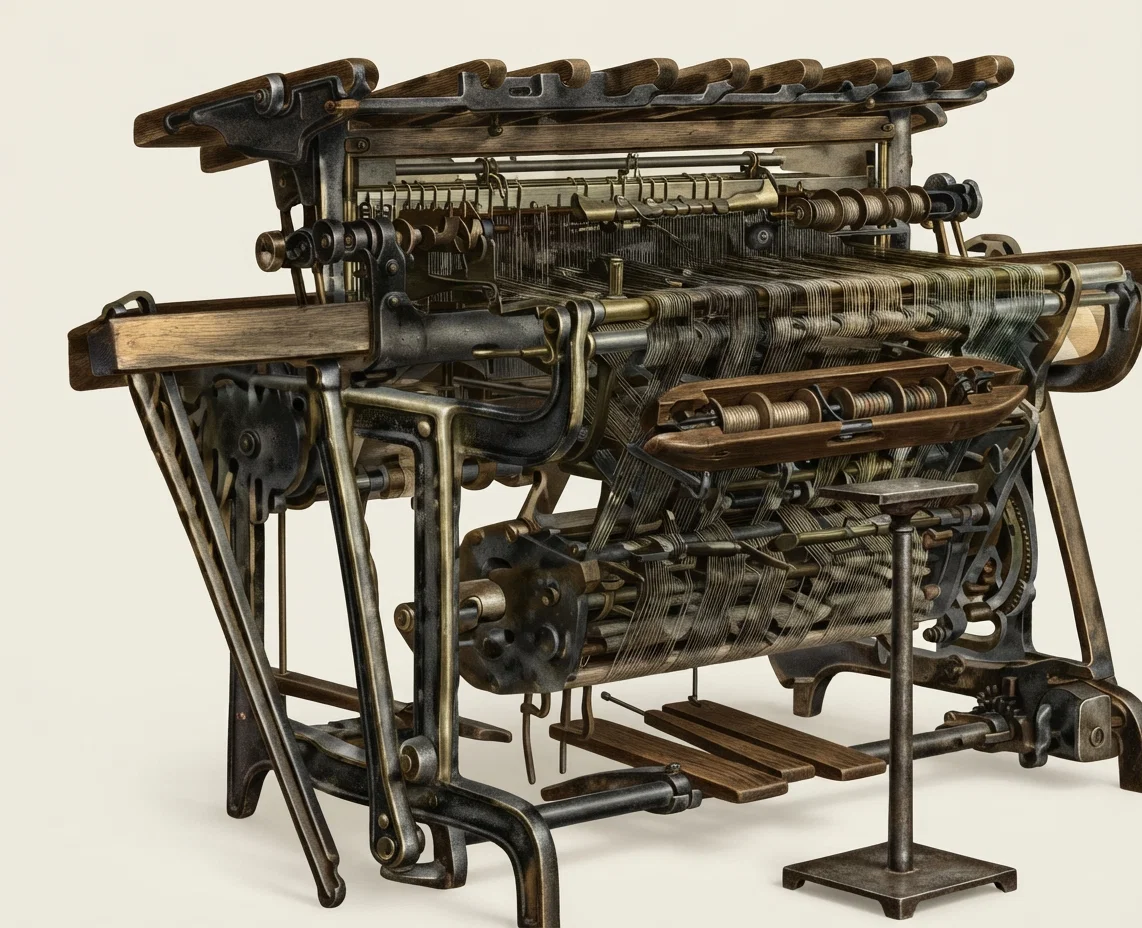
Fly Shuttle Carpet Loom
The best, handiest, easiest running, cheapest, and most durable
FLY SHUTTLE
GARPET LOOM
In the world,—100 yards a day. Catalogue free.
EUREKA LOOM CO.
5018 Main St., Battle Creek, Mich.
Mention the Signs of the Times
By Editor
When you write, please mention the SIGNS OF THE TIMES.
The Effects of Eating Flesh Meat
Dr. Alexander Haig, the eminent specialist, of London, England, says: "The less animal flesh that people take, the better they come out in trials of force production, and especially in endurance;" and medical authorities everywhere are agreed that the eating of flesh meats is a prolific source of cancer, chronic rheumatism, and gout.
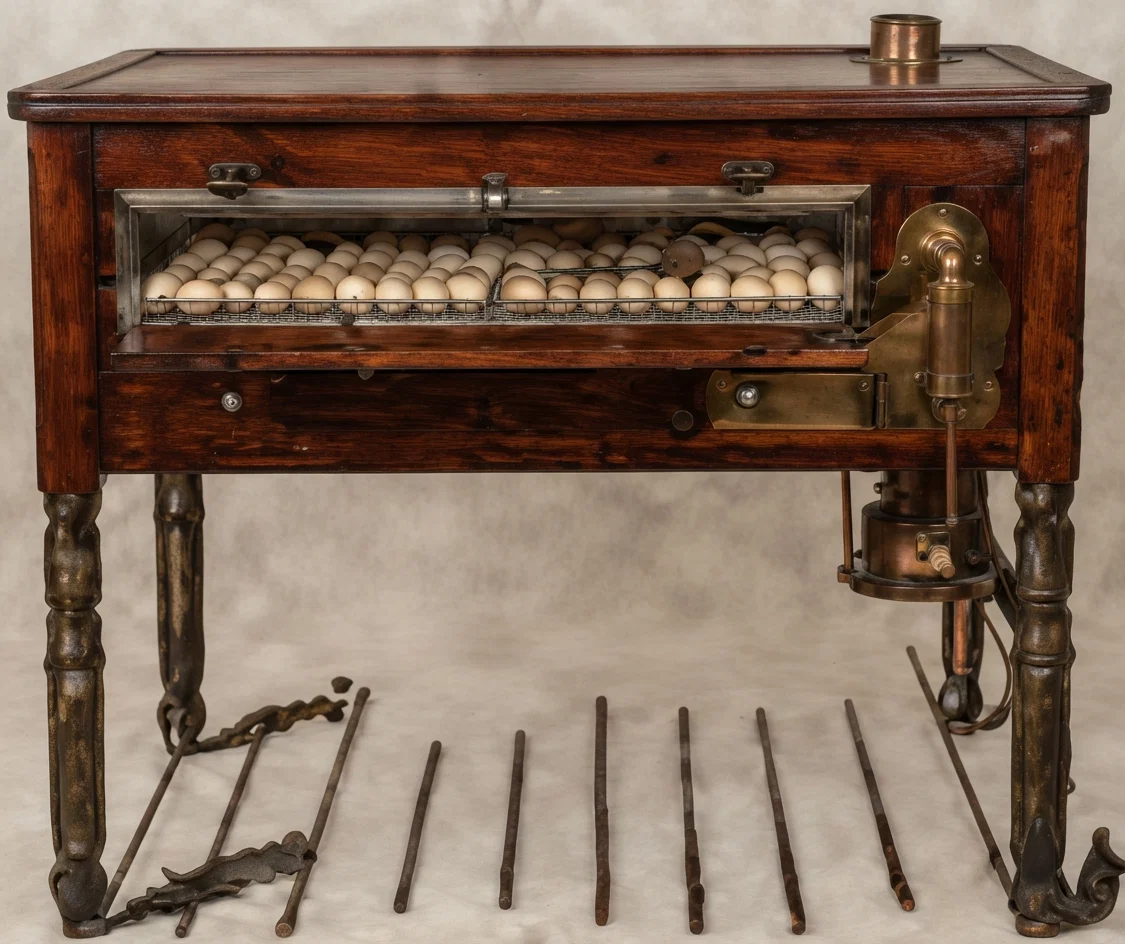
Don't Say
Incubators are a fraud just because you bought a cheap-John machine that was absolutely no good. Ninety per cent. of our customers are dissatisfied users of other makes. We make a specialty of repairing the hurt feelings of those who were afflicted with "Non-Hatchers." The results of the first hatch with a Jubilee will act as a powerful tonic on your system, and you will champion the cause of the best of incubators. The treatment is not as expensive as patent medicine, and you will not regret the expenditure. If you are ailing on the Incubator question and desire a remedy, write for our catalogue.
JUBILEE INCUBATOR CO.
517 Thirty-second Street ┄ ┄ Oakland, Cal.
SANITAS NUT FOODS
The Most Remarkable Dietetic Discoveries of the Century
Do away with the risks incurred by meat-eating. They are not substitutes for anything, but are nature's original foods, imparting vigor, health, and mental activity, and making life worth living. For 10 cents in stamps to pay postage, we will send you free, samples, recipe book, and a copy of the Nut Cracker. Ask your grocer for our foods.
SANITAS NUT FOOD CO., Ltd.
110 WASHINGTON AVE., N. Battle Creek, Mich.
AGENTS FOR THE PACIFIC COAST
St. Helena Sanitarium Health Food Co.
St. Helena, Cal. 1422 Market St., San Francisco, Cal.
Baptism: Its Significance and Necessity
By Ellet Joseph Waggoner
BAPTISM: Its Significance, Its Nature, and the Necessity for It. By E. J. Waggoner. Bible Students' Library, No. 79. Pacific Press Pub. Co., Oakland, Cal. 16 pp.; 2 cents.
C. H. Tyrrell
Barred Plymouth Rocks, Black Langshans, Fancy White Wyandottes—three best breeds, Poultry Extra Quality. Prices reasonable, satisfaction guaranteed, circular free.
C. H. Tyrrell
SIOUX RAPIDS, IOWA
Instructions for Ordering.
By Editor
1. REMIT by P. O. Money Order, Express Order, or Bank Draft on New York, Chicago, or San Francisco.
2. If paper money or silver is sent, register the letter.
3. Orders and Drafts should be made payable to the PACIFIC PRESS PUBLISHING Co., or to SIGNS OF THE TIMES.
Postage-stamps.—Please do not send postage-stamps, as they are liable to stick together, and are useless in this condition.
Foreign Money.—Do not send any.
Receipt.—No formal receipt is sent unless by special request. The address label on your paper will indicate the time to which your subscription is paid. In case of non-receipt of papers, or any other irregularity, please notify us immediately.
Expiration of Subscription.—All papers are discontinued at the expiration of the time paid for. Notification will be sent several weeks before date of expiration, thus enabling you to renew in ample time to secure unbroken files. Please be prompt, as we can not always furnish back numbers.
Change of Address.—When ordering change of address, please give both the old and the new address.
Important.—Use a separate sheet for SIGNS orders, separate for other papers, separate for books, for tracts, etc., and if you address the editor, use a separate sheet. All can be sent in one envelope, and the money all sent in one order, but write each kind of business on a separate sheet. In this way each order can be handed to the proper clerk and filled at once.
Articles Desired.—Those which set forth in the Spirit of Christ the great saving truths of God, short and to the point. It is better to treat one important truth clearly, in a short article, than many points vaguely in a long one. We desire no caustic, critical productions, which might minister to personal pride or pleasure, but can not save souls.
TO CONTRIBUTORS.
THE SIGNS OF THE TIMES is a purely missionary enterprise. For this reason it has felt free to ask for contributions from its friends. It pays nothing for contributions, either prose or poetry, unless solicited by the editor, and then the fact is stated when the articles are asked for. This is a plan rarely followed, but sometimes deemed expedient.