It is positively painful to see the substitutes that are being tried to-day for the power of the Holy Ghost. Miserable substitutes are they all! One church is trying this plan, another that, and not one of them has found a new plan that is a permanent success. They are floundering, and some of them are foundering, and no wonder. It will be no loss to the kingdom of God if churches which ignore the Holy Ghost should founder. Let us get back to Pentecostal methods. The trouble is that the churches have lost their way to that “upper room.”—From “The Spirit-Filled Life.” Copyrighted by Fleming H. Revell Co.
The Fourth Century Compared with the Nineteenth.
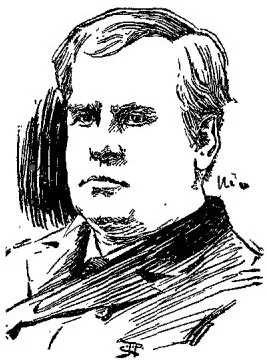
By A. J. Gordon
By the late A. J. Gordon, D. D.
UPON the enthronement of Constantine, the sentiment gradually changed, and the notion grew up that in order to convert the heathen it was necessary to conciliate them by conforming somewhat to their customs. The great Augustine also fell under this delusion, and gave his countenance to the engrafting into Christian worship of usages borrowed from the heathen. He said: “When peace was made (between the emperors of Rome and the church) the crowd of Gentiles who were anxious to embrace Christianity were deterred by this, that whereas they had been accustomed to pass the holidays in drunkenness and feasting before their idols, they could not easily consent to forego these most pernicious yet ancient pleasures. It seemed good then to our leaders to favor this part of their weakness, and for those festivals which they had relinquished, to substitute others in honor of the holy martyrs, which they might celebrate with similar luxury, though not with the same impiety.” Here is the door opened through which the whole troop of abominations entered—saint worship, idol worship, virgin worship—till in an incredibly short time the church, which had gone forth to Christianize the heathen, was found to have become herself completely paganized.
A. J. GORDON, D. D.
The nineteenth century is presenting almost the exact facsimile of the fourth century in this particular. The notion having grown up that we must entertain men in order to win them to Christ, every invention for world-pleasing which human ingenuity can devise has been brought forward till the churches in multitudes of instances have been turned into play-houses, with theater-boards announcing the courses for the gay season, boldly set up at the doors; and there is hardly a carnal amusement that can be named, from billiards to dancing, which does not now find a nesting-place in the Christian sanctuary. Is it then phariseeism or pessimism to sound the note of alarm and to predict that at the present fearful rate of progress, the close of this decade may see the Protestant church as completely assimilated to nineteenth century secularism as the Roman Catholic church was assimilated to fourth century paganism? —From “How Christ Came to Church.” Copyrighted by American Baptist Publication Society.
News, Notes, and Comment.
WHEN Mr. Blackstone wrote his famous “Commentaries,” on English law, the union of Church and State in his country was much closer—much more of a reality, and less of a form—than it is now. The conception of mutual agency as a characteristic of the relation between the two was thoroughly implanted in the minds of the learned, as well as the illiterate. It was, indeed, a postulate of thought, everywhere, something not to be debated, or examined into, but to be accepted, as a matter of course, like the changes of the seasons, or the ebbing and flowing of the tides.
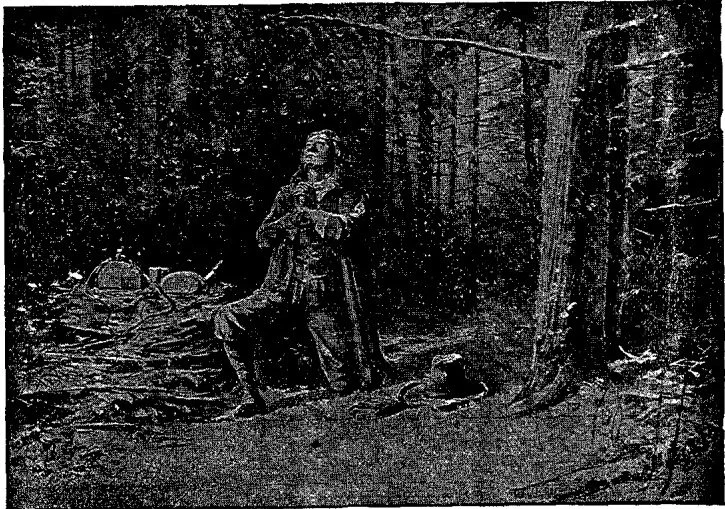
RARE is the mind that rises above the zeitgeist or “time-spirit” of its age. There was once a Man who did this, and they crucified Him. And years afterward, following His teaching and example, there was one Roger Williams, and him they banished into the wilderness, to starve or freeze, as the case might be. Perhaps we should not be too severe on Mr. Justice Blackstone, because to soar into a purer atmosphere of thought and perception than that by which he was immediately surrounded, was a task beyond his powers. None can deny his intellectual brilliancy; but moral strength and independence are by no means the invariable accompaniments of high mental development.
BUT to attack ideas is not to vilify or depreciate men. These last are in themselves but instruments whereby ideas are propagated, and commended to the favor of humanity. Men come and men go; ideas, once enunciated, never die; they may affect fewer persons as the ages roll along; they are modified, threshed over, put into new shapes, as circumstances change; they are sometimes apparently ignored for a while, or supplanted by their own progeny—by other ideas which they have suggested, and brought into effective being; but their essential attribute is immortality, and they breed forever and ever.
AND, as men are but the channels through which ideas are conveyed to other men, there is no real common measure of value between the man and the idea. In the great Republic of Thought, all men are equal, as well as free. Truth, which is the only law of the mind’s domain, is no respecter of persons. Before her august tribunal, every abstract proposition is tried, and stands or falls according to its merits alone. However able and exalted the advocate, however keen and subtle his argument, however clever the disguise in which a fallacious doctrine may be decked out, the remorseless “Roentgen ray” of right reason is turned on, and casuistry is detected and condemned.
THIS is not the teaching of Loyola. The great “Saint” Ignatius was fond of his famous theory of “probability.” He held that there were many cases in which we might safely accept certain things as true, not because they commended themselves to our individual judgment, but merely because of the source from which the assertions came. “You might, yourself, be inclined to doubt this, if it appeared in a book by an unknown author, or if it was told you by a person whose character for discrimination and sincerity you esteemed to be lower than your own, or at least no higher; but you will be fully justified in accepting it, notwithstanding your private doubts, as a matter which is probably true, if you get it from a person whom you concede to be more learned and more intelligent than you are, and whose candor you regard as unimpeachable”—such is the substance of Ignatius Loyola’s doctrine of “probability,” if I apprehend it aright.
Now this doctrine of “probability” pervades our jurisprudence to an amazing extent. It is so rooted in many legal minds that ridicule is the reward of him who questions the conclusions of certain eminent jurists, when he is not visited with the scorn and wrath that “blasphemy” awakens among men of another stripe. “Who are you, to question the verity of a principle indorsed by such a man as Mr. Justice Blackstone? Who are you, that you set yourself up as a critic, and doubter, when Judge Marshall has made his ruling, or the great Story has formulated his theory of the Constitution? Do you suppose it is probable that you are right, and such men as these are wrong? Are you so vain and presumptuous as to imagine that such a thing is even possible?”
I HAVE suffered before now, in my time, from the animus which finds expression in such interrogatories as are here given, and I am afraid I am likely to suffer again. But it cannot be helped. I must insist upon it, that, if the race is to get any profit whatever out of the continuous battle of ideas, it is essential that every proposition shall be analyzed, dissected, weighed, considered, debated, and accepted or rejected per se, and utterly irrespective of the source from which it emanates. There is no quality of intelligence or morals, high or low, about the preacher which affords any final reason for either accepting or rejecting what he says. A scoundrel may evolve a sound moral proposition; a fool may utter a wise thing; a profound philosopher may sometimes chance to drivel.
APPROACHING Mr. Blackstone, then, with all due respect for his extensive learning and his remarkably clear and accurate way of setting out his matter, yet with no awe of his grandeur, and no predisposition whatever to adopt his conclusions simply for the reason that they362happen to be his, rather than somebody else’s, we can see, readily enough, many fallacies in his work, and can appreciate the infinite harm which he has done to the English-speaking race by giving to those fallacies the sanction of his high authority. The fact that his book is still used and recommended in nearly every law-school in this country renders it practically a modern work, and perpetuates its capacity for misleading and mischief-making.
IT IS MR. JUSTICE BLACKSTONE who talks to our boys about law—human law, we must bear in mind—as having “her seat in the bosom of God.” This is nonsense, of course; but in the “Commentaries” it is nonsense of a particularly dangerous and objectionable kind. And it is nonsense which is quoted frequently in our time, and is embodied in a certain legal distinction which has received the indorsement of the highest courts of the United States. It is, in fact, the nonsense of the union of Church and State, which finds expression in the classification of human actions, as taken cognizance of by human criminal law, into the malum prohibitum, and the malum in se. The malum in se is the thing which is wrong in itself—as, for example, stealing, murder, etc.; the malum prohibitum is the thing which is wrong only because the law forbids it—as shooting birds “out of season,” bringing goods into one country from another without paying a government “duty,” or importation tax, etc. In other words, things of the first class are immoral, as well as illegal; things of the second class are illegal—query, also immoral?
A VAST deal of curious erudition has been accumulated around this classification. For example, it is an established general principle that ignorance of the law excuses nobody. This principle, however it may appear to conflict with the actual practice of arguing the law, and taking appeals from courts of inferior jurisdiction, is a principle of absolute necessity; for, as we can never ascertain with any degree of certainty what a man knows or does not know, it is impossible to allow the plea of ignorance to be regarded as a defense against a criminal charge. But it has been said that where an act is only an offense against an express statute, and thus malum prohibitum, without being, at the same time, malum in se, a jury may take into consideration how far actual knowledge of the law ought to be imputed to the offender, and, in this connection, may give their attention to the length of time that the statute had been in force when the offense was committed, and other attendant circumstances of the case.
THE question of malum or bonum in se as a characteristic of a human action is evidently a moral question—in other words, a question of religion. This is a question which is tried under the law which “hath her seat in the bosom of God.” It is investigated and decided by that awful Judge “unto whom all hearts are open, all desires known, and from whom no secrets are hid.” It is utterly beyond the reach of mere man, beyond the jurisdiction of the courts of his establishment, beyond the purview of any statutes that he can frame or enact. For him to undertake to deal with such a matter, in his judicial administration, is to blasphemously set up a union of Church and State, to wickedly intrude on his fellows’ rights of conscience.
MR. JUSTICE BLACKSTONE to the contrary, notwithstanding, human law—at any rate, American human law—knows no such distinction between things as that of malum prohibitum and malum in se. It knows nothing of an act as either malum or bonum. The only distinction it recognizes is between that which is prohibitum and that which is non-prohibitum—in other words, between what it punishes as criminal and what it does not punish, because it does not choose to consider it criminal. It matters not whether an act be forbidden under the “Common Law” of England, where that has been adopted by an American State, or whether it is forbidden by a State statute. The Criminal Court judge simply inquires whether or not the person who is arraigned before him on a certain charge has done something which the “law of the land” says he shall not do, or has left undone something which the same law says he shall do. With the point of malum or bonum—the morality or immorality of either the act or the omission, such a judge has nothing whatever to do.
War Is Barbarism on Every Side
Says the New York Observer, of May 20, in speaking of the Turkish triumph over Greece; “It makes one rage to say it, but barbarism has triumphed through the sheer ineptitude of Christian powers. Its victory is marked by the groans of all Christians in southeastern Europe.”
The Observer is mistaken. There is no more reason why one should “rage” over the triumph of Turkey in the war, than over the triumph of Greece had that been the result of the fighting. The “barbarism” of the affair is in the war itself, and barbarism triumphed when hostilities begun. Going to war is itself a demonstration of the barbarism of any nation that does it. The so-called “Christian powers” are as fair exponents of barbarism in the use of their armies and fleets as is Turkey in her war with Greece.
Christian Endeavor Convention to Focus on Sabbath Rescue
It is announced that the key-note of the coming International Christian Endeavor convention at San Francisco is to be “Rescue of the sabbath.”
American Freedom Not Yet Won.
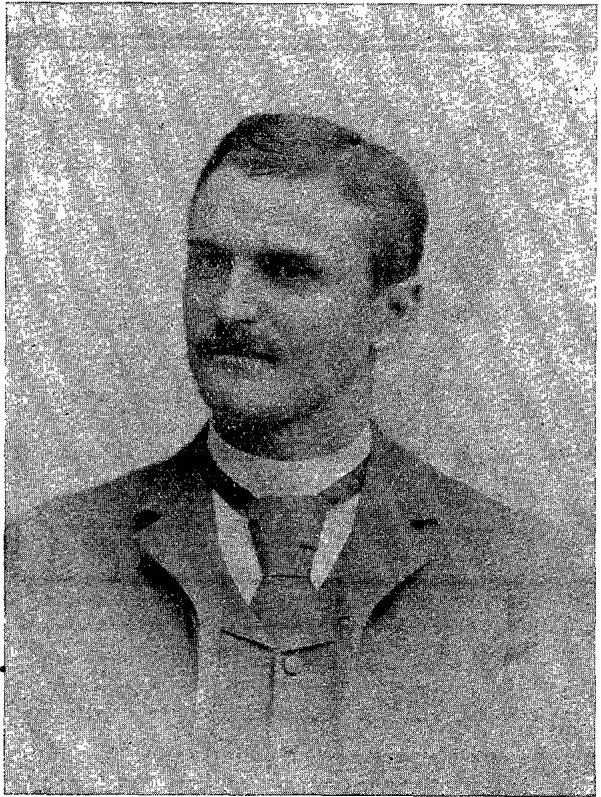
By H. B. Maurer
From a Memorial Day oration delivered in Educational Hall at Point Pleasant, N. J., by Mr. H. B. Maurer.
H. B. MAURER.
If General Grant, upon an occasion like this, could say, “Leave the matter of religion to the family altar, the church and the private school supported entirely by private contribution; keep the Church and State forever separate,” it surely will not be unfit or inappropriate for me to give, in this presence expression to similar sentiments; nor do I with any degree of reluctance go further than did he, when I declare that such an absolute divorce of Church and State, as is the boast of some, is not yet here a reality. As long as there are certain laws upon our statute books, and as long as there are in vogue certain customs, there remains here, so far as those laws and customs savor of it, that unholy alliance which has ever proved, wherever tried, a detriment to religion and a curse to the people.
In justification of them, the advocates of such laws and the champions of such customs, deny that there is here a union of Church and State, and explain the presence of those things among us, of which we, the advocates of religious liberty in its fullest plenitude, complain, as a union of the State and Christianity; but this nation never can be, according to the principles of primitive Christianity, on the one hand, and the principles of the Constitution of the United States on the other, a government of Christians, by Christians and for Christians—the remarkable decision of the U. S. Supreme Court, that this is a Christian nation, notwithstanding—but can only and always be, according to the definition that could emanate only from such a mind as that of the immortal Lincoln, “A government of the people, by the people and for the people.” Therefore any law or custom, that infringes upon the rights of conscience of the humblest citizen, is in contravention of the principles of true religion and sound Americanism, be such a citizen an Adventist or atheist, Baptist or Buddhist, Congregationalist or Confucianist, Methodist or Musselman, Papist or Presbyterian, and so on down the alphabet to Unitarian or Universalist.
I am neither an attitudinarian, a platitudinarian, nor a latitudinarian, but a very decided Baptist, and will not hesitate to make my convictions known as such on all proper occasions—such occasions only however where no one is obliged to listen to my sentiments involuntarily. This being my view of the matter under consideration, I am opposed to the use of the Bible in the public schools, prayers in legislative assemblies and religious features of any kind in institutions of all kinds maintained at public expense, defrayed by the compulsory payment of taxes by men of all faiths and no faith. I am most emphatically opposed to that liberty of conscience which those prate about who favor religious liberty for all so long as the other fellow’s conscience is what they think a conscience ought to be. I resent all definitions of sectarianism which are confined to Christianity only, for there is sectarianism as to religionists outside of Christianity; for as against the Catholic, all Protestantism’s distinctive teachings or interpretations is sectarianism; as against the Jew, the distinctive teachings of both these Christian systems is sectarianism; as against the pagan, all religion, whether revealed in the New or Old Testament or both, is sectarianism; and as against the freethinker, religion from any source is sectarian.
Since Christ’s kingdom is not of this world,—since Jesus expressed such sentiments as these: “If any man hear my words and believe not, I judge him not;” “Render unto Cæsar the things that are Cæsar’s, and to God the things that are God’s;” since a nation is defined to be “a people or community associated together under one civil government; an aggregation of a people of a common stock,”—I must accord to all, as a member of Christ’s kingdom and an individual in a nation, the same religious privileges I enjoy; and if by proper persuasion I cannot win others over to my way of thinking in religious matters, I certainly can never do so by coercion. All history shows that compulsory measures in religion react unfavorably upon those who resort to them; so to say the least, they are as unwise and impolitic as they are unjust and unfair, and therefore unchristian and un American.
Rights of conscience are to-day violated in our country by reason of religious laws, practiced in our land, which must soon demand attention. The question of slavery is settled, thanks to you, old soldiers, and in that Civil War, brought fresh to our memories by these recurring anniversaries, the question of human slavery was364settled for the whole world,—since the emancipation of slaves has gone on in every land, save in some portions of Africa. But, in a higher sense, men are not free, and when I say this, I have not Russia, the land of intolerance, in mind; nor Germany and England, with their union of Church and State, but this Union, the dissolution of which you have prevented and rendered for all time indissoluble, let us hope. Here men are not free, and in connection with this assertion, I shall bring to your attention the burning shame of the nineteenth century.
Do you know that within the last three years men have been imprisoned in our southern States for conscience’ sake—because they could not conform their conduct to certain laws, conformity to which meant to them violation of conscience? I have the reprint of a photograph taken of a chain-gang at work in Tennessee. Seven of its number—fine, stalwart-looking men, with their long flowing beards, gentle countenances and patriarchal appearance—working in the same gang with despicable criminals! It makes my blood boil to think of it. I tremble with excitement; it is a wonder that the inanimate stones do not cry out against these atrocities; and yet, while preachers vehemently denounce prize-fights, and temperance advocates become frenzied in damning the rum-seller, while with telescopic sympathy our hearts bleed for the famine-stricken of India, the massacred of Armenia, the fool-hardy Greeks, and the struggling Cuban patriots; while to-day we pardonably pride ourselves upon having freed 4,000,000 of slaves,—it is only in a few spasmodic instances that voices are heard in exposure and condemnation of the outrages upon those who have their natural, God-given, inalienable rights to freedom in matters of faith trampled upon.
To the disgrace of my own denomination, I must say it—my denomination, the first always in its advocacy of religious liberty—when there was in session in the State of Georgia a convention of its young people, one of our leading and highly honored preachers and authors attempted to have that body pass resolutions condemning those outrages, and failed. Must every prominent religious body, which once fought for religious rights, when such rights are gained, austerely deny them to others? Great combinations are forming for the perpetuation of the laws and for more legislation that will make such outrages still more possible. The Christian Endeavorers, the Woman’s Christian Temperance Union, the American Sabbath Union, the National Reform party and kindred organizations are all clamoring for more legislation to enslave the human conscience.
You cannot have a law without a penalty; and the enforcement of any religious law, and the infliction of its penalty when violated, cannot be anything less than religious persecution. The State must inevitably again lapse to those barbaric times, when it was the all-powerful agency at the beck and call of religious fanatics to carry out their hell-conceived schemes.
Keep the Church and State, even to the last degree, forever separate. Baptists should ever be mindful of the words of our leading organ, The Examiner and National Baptist, which in its issue of Feb. 15, 1894, said:—
“We wonder that the very stones do not cry out against such travesties of justice, that Christian men do not lift up their voices in protest against this wicked perversion of religion, this insult to the name of Christ. And, in particular, why do not Baptists, whose fathers stood against the world for soul liberty, make themselves heard when these relics of medieval bigotry and persecuting intolerance are found in our free country? Sunday laws like those found in Tennessee and Maryland are a disgrace to a Christian commonwealth in this nineteenth century, and should be repealed at the earliest possible moment.”
And they should be mindful of this clarion note of warning of that paragon among our preachers, C. H. Spurgeon:—
“I should be afraid to borrow help from government; it would look to me as if I rested on the arm of flesh, instead of depending on the living God. Let the Lord’s day be respected by all means; and may the day soon come when every shop shall be closed on the Sabbath, but let it be by force of conviction and not by force of policemen; let true religion triumph by the power of God in men’s hearts and not by the power of fines and punishments.” —Quoted in the Australian Sentinel, March, 1895.
Anglican Church Seeks Union With Greek Church
Having failed in her effort for reunion with Rome, the Anglican Church has engaged in a movement for union with the Greek Church, in the interests of which the Archbishop of York has recently made a visit to Russia. Of this the Moscow correspondent of the London Standard says:—
“The visit of Dr. Maclagan has aroused among all classes of society in Moscow an interest amounting to enthusiasm. One of the most popular local papers remarks that, rightly understood, the visit means more for the Orthodox Russians than even the Greco-Turkish war.365The union of the Greek and Anglican churches has been the topic of conversation of late, and whatever be the practical result of such a movement, no doubt such a union has been advanced a step by the cordial reception given everywhere to the Archbishop of York.”
Greece, Turkey, and the Lesson of War
SPEAKING of the humiliation of the Greeks and the rehabilitating of Turkey which has been the result of the war between them, an antichristian journal says: “There is a lesson in this, we hope. After the experience of Greece nobody should be deluded into a belief that the Christian God will help those who fight in His name; no people should depend upon the powers of Europe for defense; none should be misled by the fanatical jingoism of Christians; none should raise the question of religious differences between nations, nor go to war to settle them.”
The Word of the Christian’s God says plainly that His servants must not fight, because His kingdom is not of this world; hence it should not need the experience through which Greece has passed to convince people that God will not help those who fight in His name. The fact that some nations and individuals do fight in His name does not constitute an indictment of God; any more than the many crimes committed in the name of Liberty constitute an indictment of Liberty.
Russia Refuses Passport to Jewish Californian; Congress Resolution
THE Russian government having refused to vise the passport of a Jewish citizen of California who wished to enter Russia for the purpose of visiting relatives, and this refusal having come to public notice, Senator Perkins has introduced in Congress the following resolution:—
“Resolved, That this Government request the Imperial Government of Russia to specifically declare whether American citizens are excluded from Russia on account of their religious faith, and if so, that said Imperial Government of Russia be requested to remove such prohibition and to permit Americans of whatever religious faith to visit Russia, if they are not liable to become a charge upon the Empire by reason of poverty or an inability to support themselves by honest labor.”
Ecuador Expels Jesuits and Permits Bible Distribution
It would seem that at last even Ecuador is to a considerable degree shaking herself free from the incubus and blight of papal priestcraft and Jesuitism. The Jesuits have been banished from the country by a government edict, and the distribution of Bibles is now freely permitted. As a result many of the inhabitants are calling for the Word of God. The weakening of the last strongholds of anti-biblical religion points to the completion of the work of preaching the gospel in all the world for a witness unto all nations, which the Saviour said should immediately precede his second coming.
Judge Righter's Ruling on Public Grants to Denominational Institutions
A RECENT ruling made by Judge Righter, of the District Court of New Orleans, in a case which attacked the right of the city to make grants of public money to denominational institutions, holds that the fact that the grants of money were made to more than one institution renders them non-sectarian. This is on the principle that two wrongs make a right, or that an evil ceases to be an evil by being multiplied.
Political Religion and the Prospect of a New Party
Ex-Postmaster-General Wanamaker, says the Union Signal, predicts the advent of a new political party, as a result of “the low state to which the political religion of the nation was brought by unscrupulous bosses.” It cannot be denied that the “political religion” of the nation is in a “low state;” but the very nature of this “religion” precludes it from attaining to any other plane of activity than a low one; while the “unscrupulous bosses” appear to be a necessary adjunct of every successful political party. A new party can give no permanent relief to the situation, because it is not a remedy that can reach the seat of the difficulty. It is useless to try to lift politics above the level of human nature.
Topeka Saloon Defies State Prohibitory Law
In Topeka, Kans., after twelve years of freedom from open saloons, the State prohibitory law has been defied by the opening of an attractive saloon in the principal street of the city. A mass meeting of citizens called to consider the situation adopted resolutions calling upon the governor to remove the Topeka police commissioners, and demanding the prosecution of all violators of the law. It is public sentiment that determines whether a law shall be enforced or not; and right public sentiment can come only from the education of the public in the principles of self-government.
Bird Slaughter for Fashionable Bonnets Condemned
If there were no other proof for the proposition that this is not a Christian nation, its truth would be amply demonstrated by the prevailing cruel, senseless, revolting worship of the goddess of Fashion in the form of the decoration of ladies’ bonnets with the lifeless bodies of the innocent, beautiful, songsters that do so much for the farmer against injurious insects and contribute so largely to maintain what little natural beauty is still left in this dark old earth.
Decoration Day Number Praised by Readers
By Editor
Our decoration day number (June 3) has been voted by our friends one of our very best issues. We have a few left. First come first served. Usual prices.
TO OUR PATRONS:
By Editor
Write names plainly.
Remit by P. O. Money Order, or Express Order, or by Bank Draft on New York. Personal checks are not desired.
Make all Orders and Drafts payable to Pacific Press Publishing Co., not to the editor or any other individual.
We will receive Postage Stamp in small quantities and any kind of good money. Defaced coins will not be taken. If paper money or coin is sent, register the letter.
Baptist Principles of Religious Liberty Applied to Sunday Laws
An Appeal to Baptists
to be true to their historic principles and practices touching religious freedom.
—PLAIN BUT KIND.—
Of it a leading Baptist minister and editor writes:—
“I have read your pamphlet on ‘Baptist Principles of Religious Liberty’ with great interest and entire sympathy. . . . I hope you will continue your efforts for the promotion of religious liberty.”
Fifty-two Pages. Illustrated
Price 6 Cents.
Usual Discount in Quantities.
PACIFIC PRESS PUBLISHING CO.,
39 Bond Street, New York.
Kansas City, Mo.
Oakland, Cal.
The New Webster Vest-Pocket Dictionary and Library
“I am surprised,” Says PROF. E. A. SHELDON, President of the State Normal School, Oswego, N.Y., “that so much that is valuable for one to know is brought into so small a compass and sold at so small a price.”
THE NEW Webster Dictionary AND Complete Vest-Pocket Library
is full of happy surprises. It successfully combines a Dictionary of 45,500 words; a complete Parliamentary Manual; Literary Guide, etc. Positively the only pocket dictionary giving the full pronunciation of words.
Over 300,000 copies sold.
“I shall give this book a place in my vest pocket, a place that no other book thus far has had.”—C. C. Gaines, Pres. of Eastman Business College.
192 Pages, 5⅝ x 2⅝ in., Weight, 2 ounces.
Should be owned by every Student, Business Man, and Person of Intelligence.
Cloth, 25 cents; Morocco, 50 cents; Extra Quality with Three Years’ Calendar, Perpetual Memorandum, and Safety Postage-Stamp Holder, 60 cents.
Address all orders to
PACIFIC PRESS PUBLISHING CO., 39 Bond St., New York City.