The Youth’s Instructor, Vol. 37, No. 40.

BAYARD TAYLOR

The Youth’s Instructor

Oct 2, 1889

S. D. A. Publishing Association · Battle Creek, Mich. · Oct 2, 1889

BAYARD TAYLOR
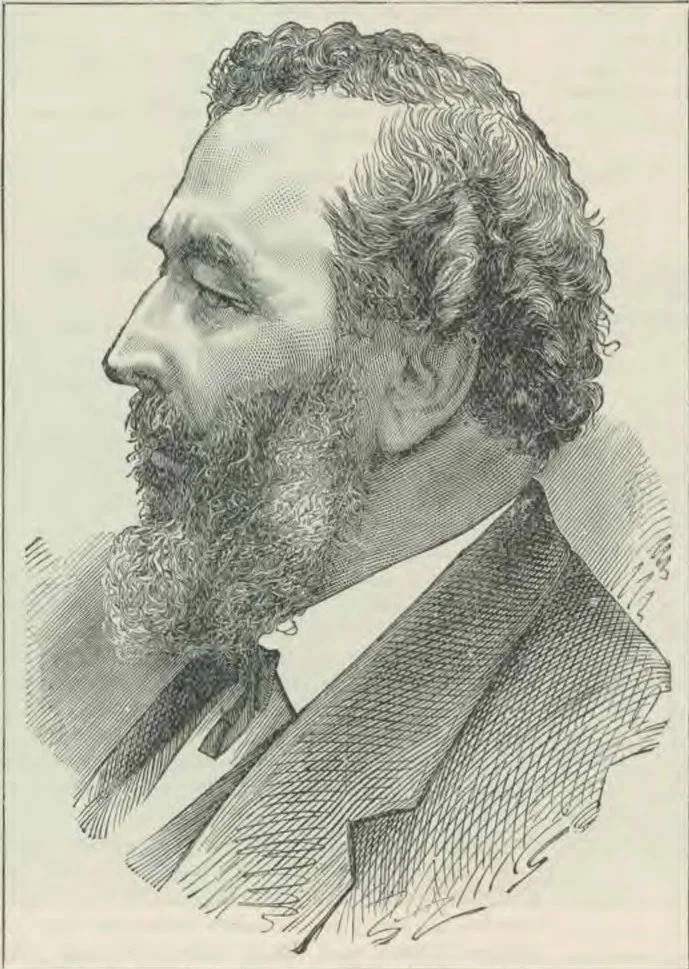
It is pleasant to study the boyhood and early life of a man who has made a name and a place for himself in the world; for useful lessons may be learned from the way in which he has met and overcome those difficulties sure to beset the path of all who would do earnest work. And, too, we like to see whether his boyhood gave any indication of the greatness that was his in after years. The life of the poet and traveler, Bayard Taylor, whose portrait is given on this page, shows how patience, courage, and perseverance may accomplish large results.
Mr. Taylor was brought up in a quiet Quaker community in Pennsylvania. His father was a farmer, and a poor man, and in his humble home the luxuries of life were unknown. But Mr. Taylor seems to have had a fund of enjoyment in himself that no adverse outward circumstances could take away. Very early in life two ruling passions began to manifest themselves. One was an intense love for poetry, and the other a propensity for exploration and adventure.
Writing at one time of those early days, he says: “Almost my first recollection is of a swamp, into which I went, bare-legged, at morning, and out of which I came only when driven by hunger or approaching darkness, with long stockings of black mud, and a mask of the same. If the child was missed from the house, the first thing suggested was for some one to climb upon a mound which overlooked the swamp. Somewhere among the tufts of the rushes and the bladed leaves of the calamus, a little brown ball was sure to be seen moving, now dipping out of sight, now rising again, like a bit of drift on the rippling green. It was my head. The treasures I there collected were black terrapins with orange spots, baby frogs the size of a chestnut, thrushes’ eggs, and purple phlox.”
“In looking back to my childhood, I can recall the intensest desire to climb upward, so that without shifting the circle of my horizon, I could yet extend it, and take in a wider sweep of vision. I envied every bird that sat swinging upon the topmost bough of the century-old cherry-tree; . . . to rise from the earth in a balloon was a bliss which I would almost have given my life to enjoy . . . I remember as distinctly as if it were but yesterday the first time this passion was gratified. Looking out of the garret window one bright May morning, I noticed a row of slats which had been nailed over the shingles for the convenience of the carpenters in roofing the house. Here was, at last, a chance to reach the comb of the steep roof, and take my first look abroad into the world! . . . Unknown forests, new fields and houses, appeared to my triumphant view. The prospect, though it did not extend for more than four miles in any direction, was to me boundless. Away in the northwest, glimmering through the trees, was a white object, probably the front of a distant barn; but I shouted to the astonished servant girl, who had just discovered me from the garden below, ‘I see the falls of Niagara!’”
Books of travel were his special delight; and as he pored over the fascinating pages, he indulged in many bright dreams of visiting those countries for himself sometime. He says: “When a boy of ten years, I read Willis’s ‘Pencillings by the Way,’ as they appeared from week to week in the country newspaper, and those charming pictures of scenery and society filled me with a thousand aspirations. I wandered along the shores of the Mediterranean while hoeing corn or tending my father’s cattle; the geography of Europe and the East was at my tongue’s end, and the confidence with which I spoke of going to London, Paris, and Rome, often subjected me to the ridicule of my school-fellows.” His classmates used to say, “Bayard knows all about his geography without even reading his lesson over.” He was a great favorite, and at school a crowd of boys constantly dogged his heels, soliciting the help in their lessons which he good-naturedly gave them.
But better than he liked books of travel, he liked books of poetry. He read Wordsworth, Milton, Scott, and all the books of the English and American poets that he could get hold of; and at night, after he had gone to bed, his mother would often hear him repeating to his little brother the poems he had read and unconsciously learned. He began at the age of twelve to write poems, and stories, and historical sketches, which, of course, never saw light through the medium of printer’s ink. But it gave relief to the pent-up feelings within him, and helped him to express his thoughts clearly.
Young Bayard did not like to be a farmer. He wanted to live in the world of books; and so, when he was seventeen, he went to learn the printer’s trade.
It did not take him long to master that. He soon grew tired of the drudgery, and longed to be free to see the world. This desire grew so strong that at the end of two years he left the office, determined to see the old world if he had to travel afoot. He had no money; but he had unbounded faith that somehow money would come. He had a cousin Frank, who wanted to go to Europe, too; and together they trudged to Washington afoot to get their passports, even before Bayard knew where the means was coming from for him to go with. He visited office after office in the hope that some paper would want to make an engagement for letters of foreign travel, and would be willing to advance him the money to go. At last he found two men, who, liking the youth’s courage, earnestness, and pleasing address, and perhaps remembering their own early struggles to rise, advanced him some money, and gave him excellent advice. Bayard was grateful for both, and with high hopes set out for Europe with $150 dollars in his pocket. Fancy crossing the ocean, and going into a strange country, among people whose language, even, he did not know, with no possibility of returning to his friends should sickness overtake him, and with only this paltry sum between him and starvation! Yet he seems never to have thought of these things; as the old saying goes, “The ignorance of youth is its courage.” With light hearts, Bayard, his cousin, and another young man took steerage passage in a sailing vessel. O, the utter misery of those seasick days and nights in the crowded emigrant quarters! But it did not discourage them. Together they tramped through English towns and over Scottish hills, through France, among the Alps, in sunny Italy; burnt by fierce suns, or nipped with cold, drenched often to the skin, eating coarse food, sleeping on hard beds, sometimes going for days without regular meals, and with starvation staring them in the face. Yet somehow when all hope seemed lost, relief always came.
Bayard read, studied, thought, imbibing the beauty of every scene, and drinking deeply of the classic art of the old world. He came back, no longer an inexperienced country boy, but a man, ready to do his work in the world. And work was waiting for him. All the while he was gone, he had been writing back letters to the newspapers, for which he had received some pay, just enough to meet his meager expenses. They were such interesting letters, so different from the others that had been written on foreign travel, that people were eager now to read anything he wrote, and editors willing to pay for it. The door to fame, which had been so difficult to open, now swung back to let him enter.
Then followed years of such busy work, writing, traveling—into California, then a newly-opened country, filled with gold-seeking adventurers; through Mexico; again into Europe, Northern Africa, Palestine, China, Japan, the Scandinavian countries; doing editorial work on a popular paper when at home, lecturing, making books. So great confidence did our Government have in his ability, that they sent him once as secretary of the American legation to Russia, and afterwards as the American minister to the German Empire. These offices he filled well, and won many friends among these people.
But there is not space to tell you of all the changes of this eventful life. Some of them you may learn from his books of travel, which will form very entertaining and instructive reading for long winter evenings.
Mr. Taylor did not wish to be remembered as a traveler; he wanted to be thought of as a poet. Poems he had written all his life long; and in his later years he turned his attention toward producing something that would live after he was dead. This ambition was strong in him, even when a boy. When he was only eighteen, he wrote to a friend: “With all the sincerity I possess, I declare that my highest ambition is to do good, to raise the hopes of the desponding, to soothe the sorrows of the afflicted. I believe that poetry owns as its true sphere the happiness of mankind. Its use, as Channing says, ‘is to lift the mind out of the beaten, dusty, weary walks of life, to raise it into a purer element, and to breathe into it a more profound and generous emotion.’ . . . Hence it has thus far been and always shall be my greatest care to write no line that could have an evil influence, but to endeavor as much as possible to exalt and ennoble the soul.” And through all his industrious life, he very well fulfilled his boyish ambition.
But death comes to the busiest, happiest, and most useful lives, and stops their labor. It came to Mr. Taylor when he was in his beloved Germany, working and planning for greater things than he had yet accomplished, and bade him lay down his pen. He was sitting in his library among his beloved books when the end came, and his last words were, “I want, O you know what I mean. I want that stuff of life!”
But a good and industrious life does not end when the body is interred in the churchyard. The influence of example lives, and the work left behind lives, to help and bless those that live afterward.
W. E. L.

“LEARN TO LIVE.”

Learn to live, and live to learn. Ignorance like a fire doth burn. Little tasks make large return.
In thy labors patient be, Afterward, released and free, Nature will be bright to thee.
Toil, when willing, groweth less; “Always play” may seem to bless, Yet the end is weariness.
Live to learn, and learn to live, Only this content can give; Reckless joys are fugitive.
—Bayard Taylor.

NEW ENGLAND "ECONOMIES."

In the Life and Letters of James and Lucretia Mott, prepared by a granddaughter, is an amusing illustration of the economical ways of that sweet and noble woman:—
“A member of the household, going into her room, found her diligently mending a rip in her pillow. She glanced up, and said, ‘Will thee please open that bureau-drawer for me? Right in front in the corner, thee will find a feather that I want.’ The feather was given her; she tucked it into the pillow, and sewed up the hole.”
The granddaughter further says that she used “ravellings in sewing carpet-rags,” wrote her notes on odds and ends of paper, and on the inside of envelopes that had been used; and after her death numbers of these last were found “tucked into larger envelopes and carefully tied up and labeled.” She and her husband (he from Long Island, she from Nantucket) had been “trained to economy in a hard school, where pennies and half-pennies had to be accounted for with conscientious scruple;” and in their mature years, when it was no longer necessary, they continued to save to be able to help others, giving away the larger part of their income.
The incident of Mrs. Mott’s feather recalls another good woman, who, however, saved from mere habit of closeness and hoarding. Her husband, a physician of large practice, kept a man to “carry on” his farm, and a boy of all work. Both were driven by the mistress from morning till night. On rainy days they were made to repair carts and farming implements, or split kindlings, or cut apples to dry, or do something. Even in the evenings they were not allowed to rest. The old lady had some “catch up” work for them of an unheard-of kind. In the plucking of the fowls (and she kept a great flock of them), she had had all the tail-feathers and other stiff and unusual ones gathered up and put by themselves, and she now required this hapless man and boy to strip the feathery part from the stem, to be saved to fill bolsters.
She used her basting-threads twice or three times over, spending her odd moments in tying them together and winding them on spools. Every bit of unavailable ravellings and clippings went into the rag-bag. “Why, my grandmother saved threads and ravelings enough to buy her a silver porringer,” she used to say to her children. In those days white rags were six or seven cents a pound, and the colored ones about half as much, and the country storekeepers took them and paid in goods. One day this woman carried her bag of rags to the village store. The trader dumped them into his scales, and then came to her and called her attention to the fact that a few pieces of “calico” of a white ground with a little colored figure on it were mixed in with the white; and that well-to-do woman was obliged to stand there and cull out the scraps with color in them, before the small-souled man would allow her full price for them. Greek had met Greek.—Wide Awake.

A VISIT TO A SILVER MINE.

The famous Virginia City, of Nevada, is situated on the side of a steep mountain. In and all round the city are over a score of silver mines, which, it is said, have produced more money than all the gold of California. Let us visit one of these mines. First we don a suit of old clothes, and then, in company with a guide, we approach the shaft. It does not look very inviting,—a dark and seemingly bottomless pit, belching forth volumes of steam and sulphurous vapor. But summing up courage, we step into the cage, and down we drop. Down, down, down! The beams in the shaft go whizzing upward, and it seems as if we never would reach anywhere. But suddenly we stop, and find ourselves 1,500 feet below the surface of the earth.
We step out into a spacious passage, surrounded with timbers piled up to the ceiling, or “hanging wall,” as miners call it. Our guide now informs us that we are really in a chamber thirty feet high, four hundred broad, and about four miles long. This immense chamber has been dug with pick and shovel, and all the rock sent above. The space it now takes up was formerly occupied by several mines; but as their claims touch one another, they have run into one. Thus the whole bed, or vein, of silver ore has been taken out, and the city completely undermined.
The whole of this space is filled up solid with timbers laid crossways, one above the other, and all made to fit tight. The pressure on these is sometimes tremendous. I have seen timbers fourteen inches square crushed to a thickness of three inches in a few days. The timbers therefore have to be frequently renewed, and thousands of feet of lumber are thus used. The pressure is not always due to the weight of rock above, as one would naturally suppose, but it often comes from the side, and sometimes from below. In one mine the pressure from below was so great that the floor had to be continually dug away to keep the chamber from being closed up, and in a month they took out forty feet of earth, showing that the ground had risen that much. There is no true theory of the pressure. Many of the mines have been deserted, the timbers are rotting, and it is expected that some day Virginia City may “go below.” In fact, Gold Hill, near by, has already sunk four feet, and not long since a store disappeared, and has not been heard of since.
Most of the mines have several different levels, some at a depth of from 2,000 to 3,000 feet. At the level of 1,775 feet is the celebrated Sutro tunnel. This tunnel runs from the mines under the mountain for four miles, where it reaches the Carson River, thus making a new means of exit, ventilation, and drainage. The mines are made very much cooler by this means. Before this they were so hot in places that a man could work a few moments only, and would then fall back exhausted, to be relieved by others. This heat is, of course, caused by chemical action.
Although the work is very dangerous, and many men get killed, the miners enjoy it, and prefer it to anything else. They work in ten-hour shifts, and thus the mines are going day and night every day of the year. They belong to the Miners’ Union, and get $4 a day, from the mule boy to the most experienced miner; no one is allowed to take less. As a rule, they are Cornish men. Besides the miners, each mine is inhabited by a large number of rats, who appear quite tame and at home. They are put there by the managers to eat the remains of the men’s lunch, and it is against the rules to kill or molest them.
After the ore comes out of the mine, it goes to the stamping mills, where it is crushed very fine, and run with water into large revolving vats. In this, mercury is placed, and the silver is amalgamated. It is then assessed, sorted, and further refined, made into bricks, and sent to the mint to be coined.
FRANK HOPE.

THE PICTURED SHEPHERD.

A MOTHER and child were weeping together When the twilight grew in the west, Weeping over a pictured shepherd, With a little lamb at his breast; And the thorns were thick in the shepherd's pathway, And blood stains were on his vest.
“Why are you weeping together?” I questioned, And the child spoke, sobbing again. “O, I am the naughty, naughty lammie That gave to the Shepherd pain. See, I led him into the thorn-thick pathways, And look at his blood-red stain.
“To-day I told a lie to my mother; I went to the briers of sin, And no one could bring me back but the Shepherd, Who seeketh the lost to win: But O, he had to go through the thick thornways, To find me, and bring me in!
“He came where the little lammie was dying, All torn and bruised and wet: And he gathered it up, and his tears were falling, And he called it his love and pet, And put it into his own warm bosom, Where his poor heart is bleeding yet.
“And every time you go into the briers, Jesus, the Shepherd true, Follows you through the rough, dark pathways, And treads all the briers and rue, And breaks through its thorns, and feels its darkness, All for his love for you.”
The child turned away to his scattered playthings, The mother turned to her quest, And I stooped to look long, long at the Shepherd, With the little lamb at his breast, And I wept there, too, when the house was all quiet, And the mother and child were at rest.
FANNIE BOLTON.

MADE TO LAST.

Benjamin Franklin, in the midst of his labors to establish the Republic on a safe and solid basis, came into his house one day, and found his little daughter sewing.
“Those buttonholes, Sally,” he said, “are good for nothing. They will not wear. If you make a buttonhole, child, make the best buttonhole possible.”
Not content with rebuking the child, he went down the street, and sent up a tailor, who had orders to instruct Miss Sarah in the art of making a buttonhole properly.
A great-granddaughter of the American philosopher, a woman who has a national reputation for her inherited talents and executive ability, told this anecdote lately, adding with pride, “Since then, the women of the Franklin family make buttonholes that will last.”
What great statesman now, employed in the formation of a nation, would observe such a seeming trifle? How many young girls of Sarah Franklin’s age think it worth while, if they make a buttonhole, to make the “best possible”?
Few men of any age have combined, as did Franklin, a broad and lofty grasp of thought with the minute attention to practical detail; but it is this very quality of thoroughness in the most trifling work which falls within one’s duties, that gives to the work and to the character of the worker truth and vitality.
The stone palaces of a great king, if poorly built, will crumble to pieces, but the finely-cut facet of a ring will endure to delight ages.—Selected.

LOOKING PLEASED.

NOT all can take an active part in entertaining, but it is possible for every one to look pleased at the efforts that others are making. An appreciative and pleased audience is a great help to a public speaker, stimulating and encouraging him both mentally and physically. Even the least sensitive person must feel depressed and annoyed when talking to an inattentive listener; and who can tell the sufferings endured by shrinking souls when their best efforts meet with no response?
It is a hard trial to entertain those who will not be entertained. They sit around like graven images, seeing all there is going on, taking everything in, yet giving out nothing in return—not even so much as a smile.
Now it is only right and proper that some return should be made for favors received. None is so poor that he cannot give thanks, and the expression of sincere gratitude, from the heart, is often a greater compensation than gifts of money value. If we have no chance to speak our mind, or to applaud, or to make what we consider a suitable return, we can at least look pleased, and that will go a great way toward canceling an obligation.—S. S. Classmate.

Standing Firm Through Obedience to God

If one is on right terms with God, nothing can stand against him; if he is living in disobedience to God's commands, the weakest foes will put him to flight.

PAUL

WHAT a pity it is that beautiful faces cannot always have beautiful hearts behind them.
Paul Aiken,—named after the Bible Paul,—I want to tell you how he managed one day in Sabbath-school. To begin with, he had ten cents, all his own money, to do as he pleased with. “I'm going to take it to put into the collection,” he said to his mother.
“All of it at once?” she asked him.
“Yes, all of it at once,” said Paul, proudly; “I've made up my mind to give all the money I've got to the heathen.”
His mother said, “Very well,” and thought to herself that Paul was going to be a generous man, and she was glad.
Half an hour afterwards, Paul was seated in his class, and presently came the little class-bank, with a hole in the top, into which to drop the money.
Click, click, click, went the pennies, and when the bank came to Paul, he tried to make his click the loudest.
“I put in ten whole cents,” he whispered, nudging his next neighbor, who opened his eyes wide, and his mouth too, and whispered back,—
“My! did you?”
Then Paul sat back, and smoothed his cap, and looked as large as possible, and added,—
“When I'm a man, I mean to give a hundred dollars at once.”
“Paul mustn't whisper,” said the teacher.
Oh, dear me! You are all ready to say, now, that his heart was all swelled out with pride. Well, that is bad enough, but I have something so sad to tell you! All this time the ten-cent piece nestled quietly in Paul's pocket.
At the last minute, the thought of a beautiful, new-fashioned red top, that stood in the window of the store at the corner was too much for him, and he decided that he must save his money to buy it.
He fumbled in all his other pockets, and found pins, and knives, and marbles, but no pennies; yes, wait, here was one,—no, it was a smooth, white button, about the size of a penny.
Poor Paul, with such a name and such a face as that, to turn into a proud, false-spoken cheater! Yes, it was the white button that clicked so loud, going into the bank.
Afterwards, Paul was ashamed of it, and he felt very glad that nobody knew anything about it, or could possibly know, when the bank was opened, who put in that button.
Foolish Paul! As if the eyes of the great God were not looking at him all the time.—Pansy.

AT EVENING.

The day is gone, the night is come, The night for quiet rest, And every little bird has flown Home to its downy nest.
The robin was the last to go; Upon a leafless bough He sang his evening hymn to God, And he is silent now.
The bee is hushed within the hive; Shut is the daisy’s eye; The stars alone are peeping forth From out the darkened sky.
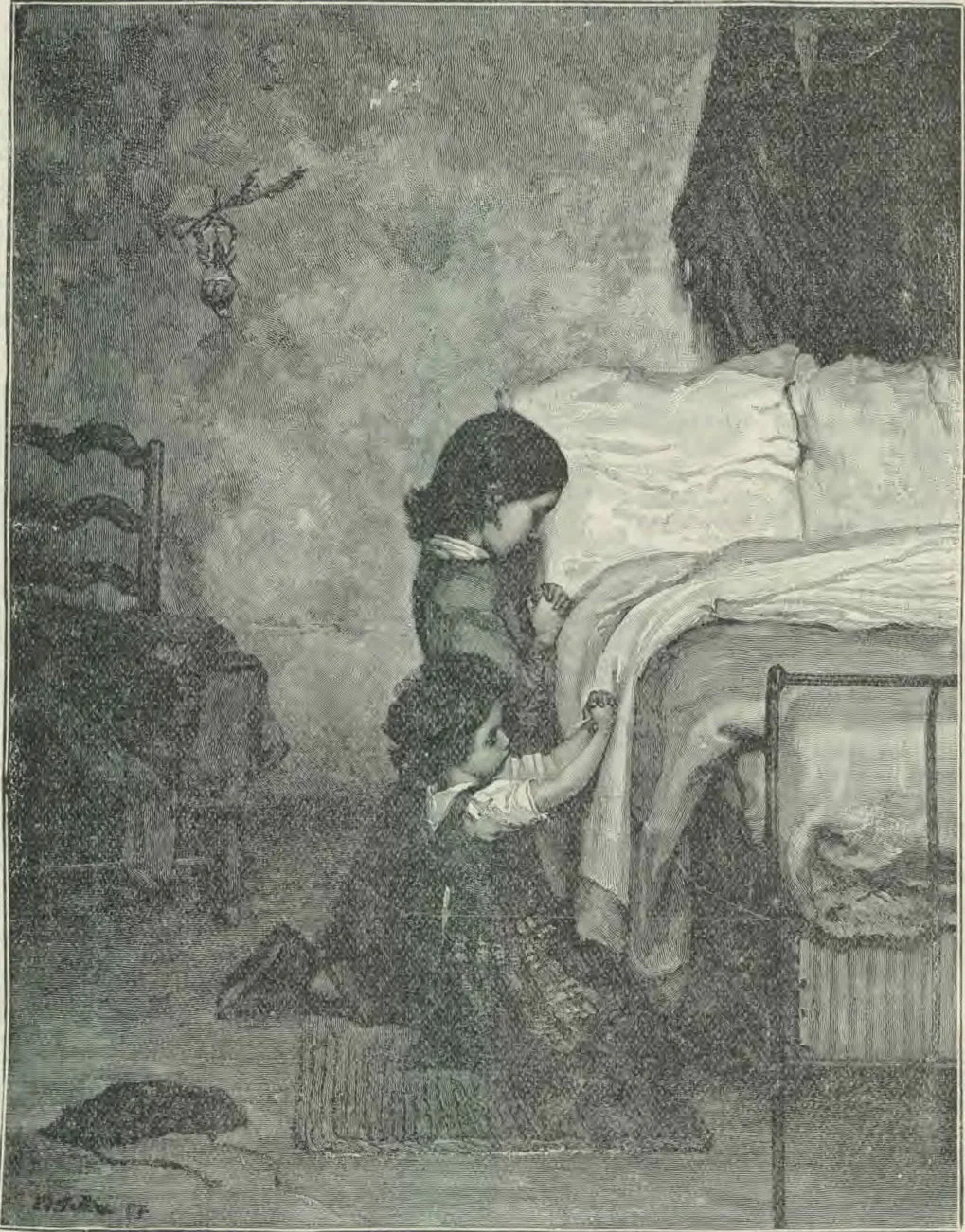
No, not the stars alone; for God Has heard what we have said; His eye looks on us children here, Kneeling beside the bed.
He kindly hears us thank him now For all that he has given, For friends, and books, and clothes, and food; But most of all for heaven,
Where we shall go some future day, If truly we do right; Where we shall meet all those we love As angels pure and bright, —Household Words.

TRUSTY TOMMY.

“TRUSTY TOMMY” is what all the neighbors called him. Do you wish to know why? Because he could always be depended upon. This is not a common virtue, and it had needed a sharp lesson to make Tommy the trustworthy little fellow he was.
Mrs. Terry, Tommy’s mother, was a poor woman, who had a little house with a garden around it, and upon the sale of the fruit of this garden, she depended for a part of her small income. Tommy had for a number of seasons helped to pick the berries, and this summer his mother thought him old and strong enough to carry them to her customers. He was proud and happy enough the first morning he started away with his basket full of pretty red berries, and quite jubilant when he returned in a few hours to report them all sold, and give the money to his mother. At last he was able to help her.
But all work grows monotonous and tiresome after awhile, and it must be confessed that in a few days Tommy began to think it somewhat of a hardship to stand and pick berries for hours, and then trudge away with them over the hot brick sidewalks to the various families to whom they had been promised.
One morning he returned, tired, dusty, and warm, and as he wiped the perspiration from his face, he said, “Mother, I have sold all my berries, and Mrs. Goodwin wants me to bring her three quarts for dinner to-morrow.”
“You have done well,” said his mother, patting him on the head. “Mrs. Goodwin is one of my best customers, and you must try to carry the fruit to her in good time. Now wash your face in a basin of cool water, and drink this nice milk.”
Tommy needed no urging, and was soon seated at the table, drinking the milk, and eating a nice piece of bread and butter.
“Now you may rest till the cool of the day, and then we can pick the berries that have ripened.” Stretched out on the grass under the cherry trees, with his last library book in his hands, eagerly devouring its contents, he thoroughly enjoyed the luxury of his well-earned hours of rest.
“Tommy! Tommy! time to get up.”
It was Mrs. Terry’s voice that conveyed this unpleasant piece of news to Tommy’s ears early next morning. Oh, how good the bed felt! How sleepy he was!
“I don’t want to get up and pick those hateful berries!” muttered the boy petulantly, as he turned over on to his other side.
“Come, Tommy, breakfast is ready, and it’s getting hotter every minute. You must have the berries picked in time for Mrs. Goodwin,” sounded from the foot of the stairs half an hour later.
“I don’t care for Mrs. Goodwin. Oh, if I could only sleep awhile longer!” thought Tommy, more drowsy than ever.
“Tommy, you must get up!” This time a vigorous shaking accompanied his mother’s words. “I am obliged to go down town this morning, and I must trust all the work to you. I’ve left your breakfast ready for you.”
“Yes, mother, I’ll get up; just let me be one minute.”
Mrs. Terry hurried away, not without giving Tommy a last shake, and extorting a promise to rise at once.
Did he get up? Not he, but turned over in bed, and was soon sound asleep again.
Eight—nine—ten—eleven came in clear tones from the sitting-room clock, but fell unheeded on the sleeper’s ear.
Oh, what was that? A door slammed, a step on the stair! Tommy, at last awake, jumped out of bed, and was half dressed when his mother opened the door of his room.
“Tommy Terry! what will Mrs. Goodwin say? Here it is eleven o’clock, and not one berry picked, and you promised them for dinner. Oh, I wish I’d attended to it myself before I left!”
“Never mind, mother,” said Tommy; “like as not she’s given me up, and bought from some one else.”
“Yes, but that is no excuse for you, and she’ll never buy from you again if you treat her in that way. Eat a bite or two quickly, and then go and pick what you can.”
Oh, how the sun beat down on poor Tommy’s head—hot—hotter—hottest! How many times he wished he had risen when first called, and picked the berries in the cool of the morning. It seemed as though he would never get the three quarts filled. It was long after the bells and whistles of the far-away factories announced high noon that his task was finished.
In a distant part of the city, an anxious housekeeper was eagerly watching for the coming of a small boy with fruit for dinner. Company was expected, and this fruit must serve for dessert, and save preparing any other this hot day. But in vain she watched and waited, till it was too late to get any elsewhere, and, thoroughly vexed and chagrined, she had to resort to something else not nearly so good.
An hour after dinner was over, there was a ring at the door-bell, and a small boy presented himself with the berries. Mrs. Goodwin herself met him, and in very decided terms made him understand how much she had been disappointed, and that he could not sell her any more fruit, since she could not trust him.
How ashamed Tommy felt when he walked away from her door! He resolved that he would never again yield to the temptation to sleep when he should be up and at work; and it should not be his fault if any person said to him the second time, “I cannot trust you.”
And Tommy kept his resolution, and became the Trusty Tommy whose promise every one can depend upon.—Child’s Paper.

LETTER TO THE HEBREWS.

LESSON 2.—HEBREWS 2:1-8.

1. To what does the word “therefore” refer? Verse 1. See note.
2. Why should we take more earnest heed?
3. On what condition only can the hearing and reading of the sacred Scriptures be profitable to us?
4. Does the query, “How shall we escape?” imply that there may be found some way to escape? Ans.—No; such a question is the very strongest negative. Escape will be impossible. Verse 3.
5. What relation does the word “neglect” bear to the caution in verse 1? Ans.—To hear without giving earnest heed, and to suffer the truth to slip away from our hearts and minds, is utter neglect.
6. What was it that began to be spoken by the Lord? Verse 3; Matt. 4:17; Mark 1:14, 15.
7. How did God bear witness to the preaching of the gospel? Heb. 2:4.
8. Are these gifts according to the will of man? Ib.; 1 Cor. 12:8-11.
9. Were the gifts to remain longer than for the confirmation of the gospel by the apostles? Eph. 4:11-13.
10. When will they pass away? 1 Cor. 12:9, 10.
11. Were all things ever put under, or in subjection to, man? Gen. 1:26.
12. Did man retain this dominion? Gen. 3:17-19.
13. Are all things now either under man or the Son of God? Heb. 2:8; 10:12, 13.
14. Under whom are they? Luke 4:5, 7.
15. To whom will the dominion be given? Micah 4:8; Gal. 3:16; Rom. 4:13; Gal. 3:29.
16. What title does Paul give to Christ in 1 Cor. 15:45?
17. How did the first Adam lose dominion over the earth? Gen. 3:17-19.
18. What was the consequence of his action? Rom. 5:12.
19. How does the last Adam gain the dominion? Heb. 2:9.
20. Was Jesus ever made lower than the angels? Ib.
21. For what purpose? Ib.

NOTES.

SCHOLARS should be taught, and it should be impressed upon their minds, that in studying the Bible they should pay no attention to the divisions of chapters. They often break the connection in a manner to cause the reader to lose much of the force of the Scriptures.
“Lest at any time we should let them slip.” The margin reads, “run out as leaking vessels.” “Superficial hearers,” says Dr. Clarke, “lose the benefit of the word preached, as the unseasoned vessel does its fluid; nor can any one hear to the saving of his soul, unless he give most earnest heed, which he will not do unless he consider the dignity of the speaker, the importance of the subject, and the absolute necessity of the salvation of his soul.”
“The word spoken by angels.” It is certain that when the law was given on Mount Sinai, there were present myriads of holy ones, as it reads in Deut. 33:2. Ps. 68:17 says: “The chariots of God are twenty thousand, even thousands of angels; the Lord is among them, as in Sinai, in the holy place.” The words of Stephen plainly indicate that the angels had some office to fulfill on the occasion of the giving of the law: “Who have received the law by the disposition of angels.” Acts 7:53. Yet just what part they had to act is not revealed. Professor Stuart, after noticing a number of opinions on this subject, says:—
“We may stand aloof from being thus wise above what is written, and content ourselves simply with what our author teaches us, and what the Scriptures confirm; viz., that angels did assist at the giving of the law, or were in some way employed as ministering spirits by Jehovah on the occasion of its being promulgated. This is all that the text can well be interpreted as meaning, and all that is requisite for the argument of the apostle.”
These words we can adopt, and here we shall have to rest content. In this last dispensation, God has spoken to us by his own Son, the Maker and Upholder of all things; and to turn away from the words of such a Being, or to hear them idly, indifferently, or carelessly, is to become guilty in the highest degree.
“So great salvation.” This salvation, says Barnes, is great (1) because its author is great; (2) because it saves from great sins; (3) from great dangers, as the danger of hell fire; and (4) because it exalts man to infinite honors and happiness in the future kingdom of glory.
“The world to come.” This was a common expression among the Jews, and was understood by them to refer to the days of the Messiah. Christ has been given dominion over the world, and is thus honored above the angels, who are only “ministering spirits.” The apostle here seems to anticipate an objection to Christ which would be likely to arise in the minds of the Jews; namely, that he was only a poor man, inferior to the angels, and without earthly honor such as was shown to Moses; and this objection he proceeds to remove by showing the reason why it was expedient that Christ should take on himself the nature of man.
“But one in a certain place testified.” The quotation which follows is taken from Psalms 8:4-6, which is a statement of the honor and exaltation bestowed upon man at his creation, when he had dominion over all things on the earth,—a dominion which he lost by his transgression of the divine law.
“But now we see not yet all things put under him.” Man has, to a certain extent, control over the earth and over the creatures which exist upon it; but this dominion is very imperfect,—a mere shadow of that which was placed in his hands at creation. Satan now exercises the dominion which man lost (Luke 4:6), and will continue to do so till it is restored to man through Christ (Micah 4:8), by whose blood it has been purchased.
Continue reading: WHATSOEVER THINGS ARE JUST