The Youth’s Instructor, Vol. 32, No. 10.

THE CITY OF DAVID

The Youth’s Instructor

Mar 5, 1884

S. D. A. Publishing Association · Battle Creek, Mich. · Mar 5, 1884

THE CITY OF DAVID.
ABOUT six miles south of Jerusalem stands the village of Bethlehem. It is built on a ridge, that toward the south and east falls in regular and natural terraces down to the plain. These terraces are set out to olive orchards and vineyards, that are carefully cultivated.
This village forms a pleasing contrast to many of the cities of the East, in that it is clean and well kept, and its white domed houses are substantially built. It has one broad main street. At the eastern end of this street, and separated from the other buildings of the town by a broad square, stands a massive convent, belonging to the Latins, Greeks, and Armenians.
The women of Bethlehem, like their sisters at Nazareth, are of a European rather than an Eastern type, and are noted for their beauty. The inhabitants all belong to the poorer class, and depend for their living on the cultivation of the field.
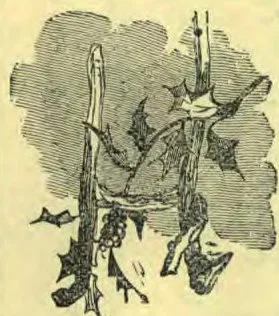
Bethlehem is first mentioned in the Scriptures when Jacob, on his journey back to his father's house, halted here on account of the death of his beloved Rachel. The Record reads, “And Rachel died, and was buried in the way to Ephrath, which is Bethlehem. And Jacob set a pillar upon her grave.” A small domed building about half a mile from the town, without doubt marks the place of Rachel's burial. The right half of the picture shows the outside of this building, with the town in the distance to the right. The left half shows the interior, a plain, square room, in the center of which is the tomb itself. The walls are covered with inscriptions in Hebrew. Once every year the Jews of Jerusalem, led by their Rabbi, journey down the dusty highway to the tomb, to wail over the departed glories of Israel.
Four centuries after Rachel's death, Ruth, the Moabitess, gleaned with the reapers in the wheat fields of Boaz,—just such wheat fields as are to-day seen on the plains of Bethlehem.
Three generations later, David, the great-grandson of Ruth and Boaz, watched his father's flocks on the hills of Bethlehem. Under the hardships of such a life, he developed a character such as would well fit him to undertake the harder task of caring for the sheep of Israel.
But all these events, interesting though they may be, sink into insignificance before that other time when the angelic host, singing the praises of the Highest, proclaimed to the wondering shepherds of Bethlehem that the Saviour of mankind was born. Then “the shepherds came with haste, and found Mary, and Joseph, and the babe lying in the manger;” and they “returned, praising and glorifying God.”
Built in with the convent at the east end of the town, stands the church of the Nativity, over the place that tradition points out as the spot where the Saviour was born. We may not know with certainty if this be the exact place where the Word was made flesh. It is enough that Christ left his home in glory, and took upon himself the frailties of our human nature that he might redeem us unto himself.
Verily, Bethlehem, although a small village, is “not the least among the princes of Judah.”
W. E. L.

A LEAF FROM THE CALENDAR.

Where wood-violets love to grow, Thickly lies the winter snow; Where the streamlet sung and danced, And the summer sunbeam glanced Through the meadow, down the dale, All is hushed, and chill, and pale!
Where the crow-foot's tender green Earliest in the spring is seen; Where the checker-berries hide By the pale arbutus' side; And the cowslips, tipped with gold, By the brooklet's edge unfold;
Where the ferret, soft and brown, Stores his nest with pilfered down; And the field-mouse in the heather Sleeps for days and weeks together; And the squirrel, wise and dumb, Waits for better days to come,—
Lies the winter, bitter, strong, Heaped through freezing nights and long; While the tempest comes and goes, Sliding swift o'er drifted snows: Clouds above and gloom below; Tell me—when will winter go?
When the buds begin to swell; When the streams leap through the dell; When the swallows dip and fly, Wheeling, circling, through the sky; When the violet bids the rose Waken from its long repose;
When the gnats in sunshine dance; When the long, bright hours advance; When the robin by the door Sings as ne'er he sang before,— Then, when heart, and flower, and wing Leap and laugh—then comes the spring.
—Scribner's Magazine.

Stick: The Power of Perseverance

THE shortest letter on record is that of Senator Sumner to Secretary Stanton, when President Johnson was trying to oust the latter from his Cabinet. It was “Stick.” That one word contains a whole philosophy of life for those who are wise enough to read it aright. “Stick and hang, young man,” says Josh Billings in some of his aphorisms: “Don’t forget that it is the last six inches that win the race.”

A MAHOGANY TREE BY THE HUDSON.

“Come, Charlie, let’s help John drive up the cows,” and Fred threw down his mallet, and ran over the lawn to where the farmer was driving the pretty Alderneys.
There was Bessie, the registered cow, and her one-year-old calf, so like her mother, with soft, brown eyes and gentle face. Then there were Dolly, and Bouncer, and Tricksey, and Tricksey’s youngest daughter, Midget. It was great fun for the boys to go up the long hill to the barn, and watch the cows as they stood quietly to be milked, all as patient as could be save Tricksey, who was inclined to be a bit mischievous, and would sometimes slyly kick over the milk-pail if the chance was given her. She had done so more than once, and all were cautious at milking-time, fearing Mrs. Tricksey would play the same prank again.
“Please cut us a stick, John, so we can help you drive,” cried Fred, as he reached the farmer’s side. “Here is a nice little tree—it would make a splendid cane,—do cut it down for me,” and he began pulling at the leaves of a stout-stalked, miniature tree, which grew in the shade of the garden wall.
“Not that one, Master Fred,” said the good-natured farmer. “Your grandfather sets a store by that ’ere tree. He would rather you took any other on the place.”
“I don’t see why. What makes him like it so much, John?” questioned Charlie, who was looking with very wide-open eyes at the sturdy little sapling. “Would he really rather have the big oak cut down, or the chestnut, or that elm at the front gate?”
“Well, I can’t just say, Master Charlie; ye’ll have to ask your grandpa about it. I have heard tell, though, that that little tree came from the Indies, and is the kind of wood they make furniture out of.”
The boys were all curiosity. They were fond of studying about plants and flowers, and often, in the evening, they would bring to their grandfather the strange leaves and blossoms they had found during the day, and ask him to tell them their names, and explain their different uses. They were boys who went about with their eyes open, to see all that was new and strange, and now John’s words made them eager to hear about this wonderful little tree.
“It can’t be black walnut,” said Charlie, “nor ash, though the leaves are just a little alike. I wonder what other furniture woods we have? There are the mahogany sofas and tables—”
“But it isn’t mahogany; that only grows in hot countries,” said Fred.
Fred was a year older than Charlie, and, like a great many other little boys, he thought he knew very much more than his younger brother. They each picked a leaf, and having watched the cows milked and driven into the night pasture, raced swiftly down the hill to see who could first ask grandpa about the tree from the Indies.
“Grandpa,” called Fred, who, all hot and out of breath, reached the piazza ahead of Charlie, “won’t you please tell us about this leaf; it comes from the ‘furniture tree,’ John says, and he would not let us cut it down.”
“I should think not,” said grandpa, laughing. “I would have been sorry enough to have that little tree destroyed. It is a rarity in this part of the world.”
“Did it really come from the Indies?” asked the boys.
“Well, not exactly. I think I shall have time to tell you its history before supper. It is the mahogany tree.”
“There, Fred,” cried Charlie, triumphantly, while Fred looked a little crest-fallen, as he exclaimed,— “I thought mahogany came from the south—from real hot countries.”
“So it does, my boy; but it is a mahogany tree nevertheless, even if it is far away from its native land. The mahogany tree grows in the West Indies and in Central America. I do not think it is ever found much north of these countries. At any rate this, and one or two others springing from the same parent tree, are all I have ever seen in the United States. You know your mother’s Aunt Lucy has a fine old homestead in northern New Jersey. Right in front of the house, and near the road, is standing a great tree which has been growing there these many years. It was a favorite with the whole family, though none knew its name. People often stopped in passing to wonder what it could be. Aunt Lucy had called it the ‘bean tree.’ Just after she was married, her husband received a bag of coffee from St. Domingo—that was the name years ago of the West Indian island now known as Hayti. When the bag was opened, lying right among the coffee berries, was a strange, rough, brown seed-pod. Aunt Lucy, never having seen anything of the kind, thought she would experiment with it, and so she planted it in a box, and carefully tended it, watching and waiting till it came up a tiny sprout. This she transplanted after it was strong and hardy; and as the years went by, it gradually grew taller and broader, until it has become as large as that fine elm yonder. Your aunty was very proud of it, you may be sure, although she did not know what it really was. One day, a few years ago, two gentlemen were walking by Aunt Lucy’s gate. Suddenly they spied the remarkable tree, and stopped, seemingly so much surprised and interested that Aunt Lucy ran out to ask if they could tell her its name. ‘It is the mahogany tree,’ said one, ‘and I am wondering at seeing it here in the north.’ Then Aunt Lucy told how she had found the seed in the bag of coffee, which had come all the way from St. Domingo. My little tree and several others have come from the mother tree, and I prize it very much, too much to have you cut it down, you see.”
“Did the mahogany that made your tables and chairs, grandpa, come from St. Domingo?” asked Fred.
“Yes, some did, and some came from Honduras. There are two kinds of mahogany. That of St. Domingo, and the other West Indian islands, is finer, closer-grained, and better in color and durability than that of Honduras, and is called Spanish mahogany. It is an expensive wood, and often-times to make a little go a great way, cabinet-makers cut it in thin layers, and put it on the outside of pine and other cheap woods. This is called veneering. Rosewood is treated in the same way.”
“Have they always used mahogany for furniture, grandpa?” asked Charlie.
“No, my boy. The story is that in the time of good ‘Queen Bess,’ three hundred years ago, you know, Sir Walter Raleigh, a very great navigator, visited this continent. At the island of Trinidad, one of the West Indies, his ships needed repairing, and mahogany was used for the purpose. That was the first it was known to Englishmen; but it was not until early in 1700 that it was used at all in England for furniture. At that time a number of mahogany planks were brought to England as ballast by a sea captain. His father was building a house, and he gave them to him. They were too hard to be worked by ordinary tools, however, and were thrown aside as useless. They lay unnoticed until a cabinet-maker found them, and used them in making a bureau, which was so rich in color, and so highly polished, that it attracted much attention; and when one of the nobility bought it, the wood became fashionable, and has been employed ever since.”
“Have you seen the tree growing in the South, grandpa?” asked one of the boys.
“Yes, I saw last year, in Jamaica, many mahogany trees. They are very lofty and widely branched, and are beautiful, particularly when covered with the small clusters of white and yellowish blossoms. When you are older, you will enjoy learning from your botany all the different parts of a plant. Each has a peculiar name. Look at this glossy leaf. You see three or four pairs of leaflets growing opposite each other on the one common stalk? Botanists call them pinnate leaves, and for everything else about the tree they have scientific names. Some time you can find out all this for yourselves; but here comes grandma, and we must go to supper.”—Mary Scott Boyd.

Christ's Grace Extended to the Forsaken and Sinful

The Lord takes up none but the forsaken, makes none healthy but the sick, gives sight to none but the blind, makes none alive but the dead, justifies none but sinners; and to all these he is precious. —Luther.

EDITOR'S CORNER.

How can the young work best for the Master, do you ask?—By doing what he requires of you. If he gives you but the little, every-day duties of life, and no more, he wants them done well, as unto himself. If he chooses to place burdens and responsibilities upon you, he claims just as faithful service. The best work you can do for him is to live a “truly beautiful Christian life.” It would not seem very difficult to do this if everything favored such a life; but to live thus in times of temptation and perplexity will require diligence on your part.
It will not do to become careless, and to say, “If I lived somewhere else, if I had different associates, or if I had helps that others have, it would be of some use to try.” You must keep in mind that you are right where God has placed you, and that there he has work for you until he removes you to some other place. As it has been expressed,
“Thou can’st not to thy place by accident, It is the very place God meant for thee.”
He looks upon you in your home, knows your temptations, your sorrows, and your joys, and it is there he wants you to be a shining light, and to live just as he would live were he in your stead. When his home was upon earth, like you he was subject to his parents; like you he was tempted and tried; yet the Record says, He “did no sin, neither was guile found in his mouth.” He humbled himself thus that he might know better how to pity and help you; and he is never better pleased than when you ask and trust him for help to do his work.
In our work of making our own lives beautiful we shall help to make other beautiful lives; for much of the Christian’s work is to help others. A great field of usefulness here lies open before you, and in it there is always opportunity for consecrated helpers. You cannot devote your life to a more noble purpose than that of ministering to others, and helping them to reach the full standard of Christian excellence. If your love for others eclipses the love of self so that, like the Great Teacher, you delight to search out the cause you know not, and ever to do good as you have opportunity, the Master has work for you, and you can make a truly beautiful Christian life.
M. J. C.

WHY A KEROSENE LAMP BURSTS.

GIRLS, as well as boys, need to understand about kerosene explosions. A great many fatal accidents happen from trying to pour a little kerosene on the fire to make it kindle better, and also by pouring oil into a lamp while it is lighted. Most persons suppose that it is the kerosene itself which explodes, and that if they are very careful to keep the oil itself from being touched by the fire or the light, there will be no danger. But this is not so. If a can or a lamp is left about half full of kerosene oil, the oil will dry up, that is, “evaporate,” a little, and will form, by mingling with the air in the upper part, a very explosive gas. You cannot see this gas any more than you can see air. But if it is disturbed and driven out, and a blaze reaches it, there will be a terrible explosion, although the blaze did not touch the oil. There are several other liquids used in houses and workshops, which will produce an explosive vapor in this way. Benzine is one; burning-fluid is another; and naphtha, alcohol, ether, and chloroform may do the same thing.
In a New York workshop lately, there was a can of benzine, or gasoline, standing on the floor. A boy lighted a cigarette, and threw the burning match on the floor close to the can. He did not dream there was any danger, because the liquid was corked up in the can. But there was a great explosion, and he was badly hurt. This seems very mysterious. The probability is that the can had been standing there quite a while, and a good deal of vapor had formed, some of which had leaked out around the stopper, and was hanging in a sort of invisible cloud over and around the can; and this cloud, when the match struck it, exploded.
Suppose a girl tries to fill a kerosene lamp without first blowing it out. Of course the lamp is nearly empty, or she would not care to fill it. This empty space is filled with a cloud of explosive vapor arising from the oil in the lamp. When she pushes the nozzle of the can into the lamp at the top, and begins to pour, the oil, running into the lamp, fills the empty space, and pushes the cloud of explosive vapor up; the vapor is obliged to pour out over the edges of the lamp, at the top, into the room outside. Of course it strikes against the blazing wick, which the girl is holding down by one side. The blaze of the wick sets the invisible cloud of vapor on fire, and there is an explosion which ignites the oil, and scatters it over her clothing and over the furniture of the room. This is the way in which a kerosene lamp bursts. The same thing may happen when a girl pours the oil over the fire in the range or stove, if there is a cloud of explosive vapor in the upper part of the can, or if the stove is hot enough to vaporize quickly some of the oil as it falls. Remember that it is not the oil, but the invisible vapor, which explodes. Taking care of the oil will not protect you. There is no safety except in the rule: Never pour oil on a lighted fire or into a lighted lamp.—A Civil Engineer.

INSIDE THE BONES.

A YOUNG New Englander, whose knowledge was more showy than deep, went, many years ago, to teach a school in Virginia.
Among his pupils was a small, rather dull and insignificant-looking boy, who annoyed him by his questions. No matter what was the subject under discussion, this lad apparently never could get near enough to the bottom of it to be content.
One very warm August morning, the teacher, with no little vanity in a knowledge universal in those days, began to lecture to the boys on the habits and characteristics of a fish which one of them had caught during recess. He finished, and was about to dismiss the school, when his inquisitive pupil asked some questions about the gills and their use.
The question answered, others followed, concerning the scales, skin, and flesh. The poor teacher struggled to reply with all the information at his command; but that was small, and the day grew warmer, and the Saturday afternoon holiday was rapidly slipping away. “The school will now be dismissed,” he said, at last.
“But the bones! You have told us nothing about the bones!” said the anxious boy.
Mr. Dash smothered his annoyance, and gave all the information he could command on the shape, structure, and use of the bones.
“And now the school—” he began.
“What is inside of the bones?” stolidly came from the corner where the quiet boy was sitting.
Mr. Dash never remembered what answer he gave, but the question and his despair fixed themselves in his memory.
Thirty-five years afterward he visited Washington, and entered the room where the Justices of the Supreme Court were sitting. The Chief-Justice, the most learned and venerated jurist of his day, was a man like St. Paul, whose bodily presence was contemptible. The stranger regarded him first with awe, then with amazement.
“It is the boy who went inside of the fish’s bones!” he exclaimed.
If he had not tried to go inside of every “fish’s bones,” he would never have reached the lofty position which he held.
It is the boy who penetrates to the heart of the matter, who is the successful scholar, and afterward lawyer, physician, philosopher, or statesman. It is the man whose ax is laid to the root, not the outer branches, whose religion is a solid foundation for his life, here and beyond.—Selected.

ADVICE TO A BOY.

Get away from the crowd a little while every day, my dear boy. Stand to one side, and let the world run by, while you get acquainted with yourself, and see what kind of a fellow you are. Ask yourself hard questions about yourself; ascertain from original sources if you are the manner of man people say you are; find out if you are always honest; if your life is as good at eleven o'clock at night as it is at noon; if you are as good a boy when you go to Chicago as you are at home; if, in short, you really are the sort of a young man your father hopes you are, and your mother says you are.
Get on intimate terms with yourself, my boy; and believe me, every time you come out from these private interviews, you will be a stronger, better, purer man.
Don't forget this, my friend, and it will do you good.—Burlington Hawkeye.

A BEAUTIFUL ILLUSTRATION.

At one of the anniversaries of a Sabbath-school in London, two little girls presented themselves to receive the prize, one of whom had recited one verse more than the other, both having learned several thousand verses of scripture.
The gentleman who presided, inquired, “And could you not have learned one verse more, and thus have kept up with Martha?”
“Yes, sir,” the blushing child replied; “but I loved Martha, and kept back on purpose.”
“And was there any one of all the verses you have learned,” again inquired the president, “that taught you this lesson?”
“There was, sir,” she answered, blushing more deeply: “In honor preferring one another.”—Sel.

NEW-TESTAMENT HISTORY.

LESSON 177.—REVIEW ON ACTS 16 AND 17: 1-10.

1. After they had taught in Syrian Antioch for some time, what did Paul propose to Barnabas? Acts 15: 36.
2. How did they finally set out on their journey, and in what company? Verses 39, 40.
3. What parts did Paul first visit? Verse 41.
4. What churches did he then visit? Acts 16: 1.
5. What helper did Paul obtain at Lystra?
6. What did Paul have to do because of the Jews who still felt that the ceremonies of the law ought to be kept? Verse 3.
7. Describe their journey from Lystra to Troas. Verses 6-8.
8. How was Paul then guided with reference to future labor? Verse 9.
9. To what city of Macedonia did Paul and his companions first go? Verse 12.
10. What called forth Paul’s first discourse in this place? Verse 13.
11. Who was among the first converts? Verse 14.
12. How did she show her gratitude for the truth she had received? Verse 15.
13. Tell how Paul cast out an evil spirit. Verses 16-18.
14. Into what trouble was he brought by this act? Verse 19.
15. What accusation was brought against the apostles? Verses 20, 21.
16. What did Paul and Silas have to suffer at the hands of their cruel persecutors? Verses 22, 23.
17. What did they do after being cast into prison, and having their feet made fast in the stocks? Verse 25.
18. What happened about midnight? Verse 26.
19. How was the keeper of the prison kept from taking his own life? Verses 27, 28.
20. What did he do when he found that none of the prisoners had escaped? Verses 29, 30.
21. What now seemed to be his greatest anxiety? Verse 30.
22. How did the apostles answer his question? Verse 31.
23. What did they do before baptizing him and his household? Verse 32.
24. What action was taken by the authorities the next morning? Verses 35, 36.
25. How did Paul reply to this? Verse 37.
26. What was there in Paul’s answer that alarmed the magistrates?
27. How did the magistrates humble themselves? Verse 39.
28. Where did the apostles next preach? Acts 17: 1-3.
29. What success attended their labors? Verse 4.
30. How did trouble arise? Verse 5.
31. What was the result of the uproar? Verses 6-9.
32. What action did the brethren immediately take? Verse 10.

Feeling Truth Matters More Than Knowledge in Sabbath School

THE great desideratum in our Sabbath-school work is supposed to be knowledge, and the clamor is constantly for intelligent teachers, and yet we make bold to affirm that this so-called intelligence is not the highest pre-requisite.
In a protracted meeting, held years ago, a bald-headed, hard-featured, and hard-hearted old sinner went forward to be prayed for. He was somewhat timidly approached by the youthful pastor, who undertook to give him some instructions as to the way of life, whereupon the veteran transgressor broke out upon him with, “Young man, you needn’t attempt to tell me anything that’s in the Bible, for I know the larger part of it by heart; the trouble with me is, that while I know it, I don’t feel it.” Aye, the old man was right; it is one thing to know it, and quite another to feel it; and what we do want above all things else in our Sabbath-school work, is men and women who, whether they know little or much, profoundly feel what they do know, and profoundly feel for those whom the Lord has especially committed to their charge.—Selected.

Feeling Truth Matters More Than Knowledge in Sabbath School

The great desideratum in our Sabbath-school work is supposed to be knowledge, and the clamor is constantly for intelligent teachers, and yet we make bold to affirm that this so-called intelligence is not the highest pre-requisite.
In a protracted meeting, held years ago, a bald-headed, hard-featured, and hard-hearted old sinner went forward to be prayed for. He was somewhat timidly approached by the youthful pastor, who undertook to give him some instructions as to the way of life, whereupon the veteran transgressor broke out upon him with, “Young man, you need n’t attempt to tell me anything that’s in the Bible, for I know the larger part of it by heart; the trouble with me is, that while I know it, I don’t feel it.” Aye, the old man was right; it is one thing to know it, and quite another to feel it; and what we do want above all things else in our Sabbath-school work, is men and women who, whether they know little or much, profoundly feel what they do know, and profoundly feel for those whom the Lord has especially committed to their charge.—Selected.

LITTLE STITCHES

It was such a long seam, and stitching was so tiresome, that Minnie thought she would never reach its end. Everything out of doors was tempting, as if coaxing her forth for a frolic. The air came in fresh and clear through the open window, the birds were singing, and the flowers were blooming. Very nearly shaken was Minnie's resolution, when a gay little songster hopped quite close beside her on the window-ledge, and after a merry “peep, peep,” flew quickly down the garden path. How she would have liked to run after him!
Once she threw down the tiresome sewing, and half rose from her seat. And then, with a sigh, she took up her task again. Mamma's face rose before her; and she seemed to hear the kind words come from her lips, “I so much want my little girl to be a good, useful woman, and it would please me very much if she would go cheerfully to her tasks, and strive to make a pleasure of them.”
Minnie was fond of her mother, and anxious to please her; but how to make it a pleasure to push that shining needle in and out of the white cloth, she did not quite understand. And then, as, still thinking, she worked on, she noticed how very neat and tidy one small stitch looked among its fellows. If one small stitch looked so well, how much better would many such look, she thought. So, with dainty care she pushed the needle through, most carefully drew her thread, and soon, like little soldiers well-drilled to their parts, a whole row of little stitches stood bravely side by side; but the best part of it all was that in trying to make each stitch smaller than its mate, Minnie forgot entirely about the time.
The minutes which had seemed so slow when she stopped to count them, slipped gaily by when she gave them no thought; and when the big clock on the mantel chimed the hour, she looked up in astonishment to think that the task-time had passed. Then all in a moment she knew what her mamma meant. She saw now that to do well whatever she had to do, was a pleasure in itself.
“Just look at my little, little stitches, mamma,” she exclaimed in a merry voice, running into the room, work in hand, where her mamma was busy over her task.
“Little stitches, sure enough,” she answered cheerily, looking with pleasure upon Minnie's flushed, happy face. “And to-day my little girl has learned a very important thing. Life is all full of tasks; but they can be made pleasures instead of hardships, if you but know the way. When you come to a hill of difficulty, my child, instead of sitting down discouraged at the bottom, start at once to climb it. Mount it bravely with a song in your heart, and the chances are strong that little by little the path will grow easier, and the flowers of duty well performed will blossom forth to cheer you. But now run away, dear, and have a good play. I hear Willie calling you at the end of the lane.”
And do you know, children, that those little stitches were Minnie's pleasantest companions the live-long day?—Selected.

THE ROOK.

This bird is not very well known in America, because he is an English bird. But he is very much like the crow, which our farmer boys know so well. English farmers say the rook does as much damage to their crops as the crow does to ours; so they put up scare-crows and racket-mills, and try to shoot or catch him; but he is too cunning to be caught or scared very often.
Rooks are very aristocratic birds. They live in colonies, many thousands going off together and building their nests in the tops of neighboring trees. In these bird-towns, or rookeries, there seem to be certain laws which all the birds understand and obey. One of these laws is that no rook shall build a nest within the limits of the town except those born there; and another forbids the young rooks going out of the town to build. If any bird disobeys these laws, the other birds promptly tear down his nest, and drive him back to his native town.
They are also said to hold courts for the trial of offenders. The birds assemble upon a few trees, the guilty one sitting by himself, with drooping head; and after much croaking and flying hither and thither, which we may imagine is their way of examining the witnesses, and hearing the pleas of advocates, the charge of the judge, and the verdict of the jury, the birds fall upon the culprit, and execute the sentence of death, or whatever the penalty may be.
The rook is about nineteen inches long, and is of a blue-black color. He is unlike the crow in that he has a bald place on his forehead, and also one at the back of the neck, where the feathers do not grow again after the first-moulting.

Letter Budget.

LILIAN STEVENS, of Colfax Co., Neb., says: “I am six years old. My parents, three of my sisters, and my brother keep the Sabbath. We have a large Sabbath-school, and I have a good teacher. I like to go to Sabbath-school. I want to be a good girl, that I may be ready to meet Jesus when he comes.”
VIOLA M. PESHEA, of Ontario, Canada, writes: “I am seven years old. I go to school. I keep the Sabbath with my pa and ma, and my brothers and sister. I like to hear the INSTRUCTOR read. I send you the names of two new subscribers. I will try to get one more soon. I want to earn the 96 cards. I am trying to be good. I send love to the editors.”
NORMAN FRANKLIN sends a neatly written letter from Fort Calhoun, Neb. He says: “I have not seen a letter from this part of Nebraska, so I thought I would write one. I am nine years old. We all go to Sabbath-school every Sabbath. I am studying in Book No. 2. There are sixteen in our school. We have kept the Sabbath for over a year. I am trying to be a good boy.”
MAY SMITH writes from Harrison Co., Iowa. She says: “I am twelve years old. I have three sisters, and one little brother. We all go to meeting nearly every Sabbath. We have our lessons pretty well. My oldest sister and I are in Book No. 2. My two youngest sisters are in Book No. 1. My papa takes the INSTRUCTOR. I like to read it. I want to be saved with God’s people.”
C. B. LATSHAW, writes from Vernon Co., Wis. He says: “I have intended for a long time to write a letter for the INSTRUCTOR, but have delayed so doing for fear it would not be worthy of notice. I am fifteen years old, and have taken the paper ever since I was six years old. We have a Sabbath-school in this place, and have just introduced Bible Readings, which are very interesting. Eld. Jordan visited us not long ago, and preached several good sermons.”
ETTIE MILLER writes from Eaton Co., Mich. She says: “I am ten years old. I have two sisters and one brother. I go to Sabbath-school, and study in Question Book No. 4. My teacher will start next Monday for Florida. I attend day-school. I carried a copy of the INSTRUCTOR to school, and at noon went out canvassing and got one subscriber. The people who subscribed are deaf and dumb, but they are very respectable people. They used to live in Battle Creek. My father has just begun to keep the Sabbath. He is trying to overcome the habit of tobacco-using. I want you to remember him in your prayers. My brother does not keep the Sabbath, but we hope he will soon.”
Continue reading: IN THE SNOW