At the last conference held here, the brethren decided that the time had come when the message, which had largely heretofore been confined to the Germans living in the state of Santa Catharina, must now more fully be carried to the Brazilians. Therefore, it has been decided that we locate in Florianopolis, the capital of the state, and learn the Portuguese language as soon as possible.
The city of Florianopolis is very beautifully located on a large island, but a great deal of its beauty vanishes on entering the place. The streets are narrow, the houses mostly old and low, and in the dark evenings a few kerosene lamps are burning in the streets to give light to the wayfarer. There is no water12furnished by the city as yet, and it is being sold by the pail. Transportation as a whole is very poor, there being only about three short railway lines in the state. The city has no railway connections. The colonist brings his products by pack-mules. Sometimes this requires several days. This makes everything he brings rather expensive.
The Catholic Church has full sway, generally. The Presbyterian people have been carrying on missionary effort here for a number of years, and have a church and a good school.
The people live in superstition and darkness. Their religion consists in going to mass and processions. On Good Friday evening a large part of the city was out “burying the Lord.” The streets were well lighted with candles as the long funeral procession advanced, several religious orders at the head, every man carrying a large burning candle. Finally the coffin came, followed by the priest and the bishop of the state. The virgin Mary came next, and a brass band rendered solemn music. Easter morning, early, amid rain and wind, while it was yet dark, the crowd started out “to find Jesus,” who had been stolen.
On the Sabbath between Good Friday and Easter Sunday, Judas was hanged. Effigies were hanging in several parts of the city, and as the clock struck eleven in the forenoon, the boys took them down, and began to drag them through the streets, beating them with sticks, crying aloud, “Judas is hanging on a pole!” O how these poor people need the message, which will bring light, love, and peace to their darkened souls!
As some of the churches and companies had not been visited for more than a year, it was thought best to first make a trip among them. With one of the brethren, I started on the twenty-fifth of May. The road led along the beautiful shore of the south Atlantic, then through beautiful valleys, and over high mountains, where we had to climb nearly on hand and foot, till finally we reached Brusque, where is the oldest church in the state. Here the mission school has been carried on in the past. We are now planning to transfer it to some place near Florianopolis. We had good meetings here. Love and peace were restored to many.
From Brusque we went over the mountainous road seven hours further, to Blumenau. We had to stop en route; for the people had heard of our coming, and met in the house of one of the brethren, and were waiting for us. We stayed long enough to have a good meeting, and then we went on and held two more meetings the same day. The Lord came very near, and several who had studied the message for some time surrendered to God, and determined to walk in his ways.
Luis Alves, where a few of our brethren live, was next visited. From here we proceeded to Massaranduba, where we have a strong company of believers. The enemy had done his work here, so that it had been necessary to disfellowship some. But the good Spirit of God wrought mightily on all present, and many consecrated themselves anew to God, and promised faithfulness in all things. Two were baptized, and six were added to the church. Others are waiting until we come again, to receive the rite.
From Massaranduba we had a one-and-one-half-days’ ride to Joinville, where we had blessed hours, and where many young people consecrated themselves to God. Two and one-half days more of riding along beautiful rivers and long valleys, and around mountains, higher and still higher, until we left the palm forest and the banana and orange trees, for the rolling highland, brought us to Sao Bento, where we have another company. Here the Indian still has his stronghold, for whom nothing has been done as yet to bring him the “glad tidings of a Saviour.”
We had now reached the farthest point of our journey; and, after riding for about half a day down the long, steep grades of the Serra, we found ourselves again among thriving patches of sugar-cane and the golden fruit of the orange tree. Two and one-half days farther homeward, and we were among the brethren at Rio Cunha. And, although it was raining most of the time, the meetings were well attended, and God’s rich blessings were felt by all. We next visited Timbo and Benedito Novo, and from the last-mentioned place we had three and one-half days of hard riding back to Florianopolis.
We find the people not so well-to-do here as in the United States. When we are obliged to stay overnight, we are sometimes glad for a piece of matting made of palm-leaves to sleep on, and pirong — a flour made of a root — with a little something added for our meals. It took us about seven weeks to make the trip; but we improved the time to study the Portuguese language while riding. We hope the time will soon come when we shall be able to do progressive work in the new language.
I am now at home for a short time, and soon shall start on a visit to the churches in the southern part of the state. We are of good courage in the Lord, and are daily praying that he may make us a blessing to the people for whom we labor. We ask an interest in your prayers.
Florianopolis.
My Father's Field
A MAIDEN stood where the fields were ripe,
And gathered the golden wheat:
Gaily she sang as she bound her sheaves,
And laid them about her feet.
One marked her there as she passed her by,
Alone with her hard-earned spoil,
And spoke of rest, for the sun was high,
And the reapers spent with toil.
But the maiden smiled, as her glad voice said,
“Nay, lady, I may not yield;
The work is great, but the work is sweet,
I toil in my father's field.”
Gleaners of Christ, in your lonely toil,
When weary, and fain to yield,
Take comfort here, though the work is great,
Ye toil in your Father's field.
And the Father's house lies over the hill
Where the sun of life goes down:
There shall ye rest, and the Father's smile
Forever your work shall crown.
—Selected.
God’s Plan for Christlike Perfection
By Rev. G. H. Bainbridge
God's plan is that when I came into the world I should be made like Jesus Christ, perfect in character and condition.—Rev. G. H. Bainbridge.
She Bore Me Company
I was the shabbiest girl at the office. It was no one's fault and no one's shame that we were poor—I had intelligence enough to know that. I knew, too, what a sacrifice my mother had made to pay for my tuition at business school. Still the knowledge of my shabby clothes forced itself upon me, particularly my old black skirt.
O, if you knew how I disliked that skirt! Mother had cleaned it and pressed it and cleaned it, but it seemed “bent” with age, and all the office girls looked so fresh and pretty in their trim business suits.
I imagined all the first morning that they were pitying me and felt them looking at my shabbiness, and during noon hour I was so miserable. But when I went back the next morning I noticed that one of the girls had on nearly as old clothes as I did, and she was so nice to me, I fancied she was glad I had come because of our mutual poverty. Not until after I earned enough money to buy some suitable clothes did I realize that the “poor girl,” as I thought her, had drifted back into the prettiest, most tasteful clothes worn by any of the girls. She had only borne me company at a most trying time, and she knew, because her fellow workers all admired her, that the little object-lesson would keep them from hurting my feelings.
The day has come now when new clothes are usual. But in my office when a girl comes in shabby, painfully sensitive, as I was, I “bear her company” until better times shall come.—The Delineator.
Annual Meetings in Russia
By Louis Richard Conradi
L. R. CONRADI
St. Petersburg
AFTER our good meeting in Finland, I spoke, October 11, to a large audience in our chapel at St. Petersburg. We still encounter serious difficulties in obtaining permission to hold our general meetings. Elder J. T. Boettcher and E. Kotz had arrived the day previous, and had spoken to a full house that night. Four of us then waited upon the secretary of the prime minister, to see whether we could not remove the obstacles. He assured us that he would present the matter, which he did. This proved quite a help as we went on. It is encouraging to see what progress the truth is making in the capital of the empire.
After the service, we hurried to our train, and after a long ride of fifty-five hours, reached Zarizyu, which is quite a trading port on the River Volga.
The East Russian field now comprises four governments, with a population of about twelve million. We have four hundred members, mostly Germans. One new church was raised up last year by Elder G. Hetze, at Kamitchin, a considerable town farther up on the Volga. This church now numbers twenty-six members. As our Bible studies and business meetings proceeded, a priest who attended, became more and more interested, and freely acknowledged that he was getting an entirely different idea than he had had from what he had been informed by others.
Our people seemed pleased to have one of our African missionaries present to relate to them how the truth was winning its way even among the heathen, and about fifty dollars was raised for missions. As we presented the needs of a school property, three hundred twenty-five dollars was pledged for that purpose, and a number of our relief books were taken.
Sabbath was a good day, and all freely related their new song of victory, except the priest and the official. But in the evening the priest came forward, and said to me: “Brother Conradi, I am not quite satisfied with you to-day. While others related the new song, you slighted me, as though I was a heathen.” I answered that I had given a general invitation, which he admitted, saying, “I would have also gladly taken part, were there no other considerations”—referring to his own church. Elder Boettcher then showed him the “Ministry of Healing” and “Christ’s Object Lessons” in German; he bought both books, expecting that his son, who is studying German, would read them to him.
By Sunday the official became so friendly that quite a number of strangers, attracted by the short, favorable editorials in the only city paper remaining, were freely admitted.
The Caucasian Conference
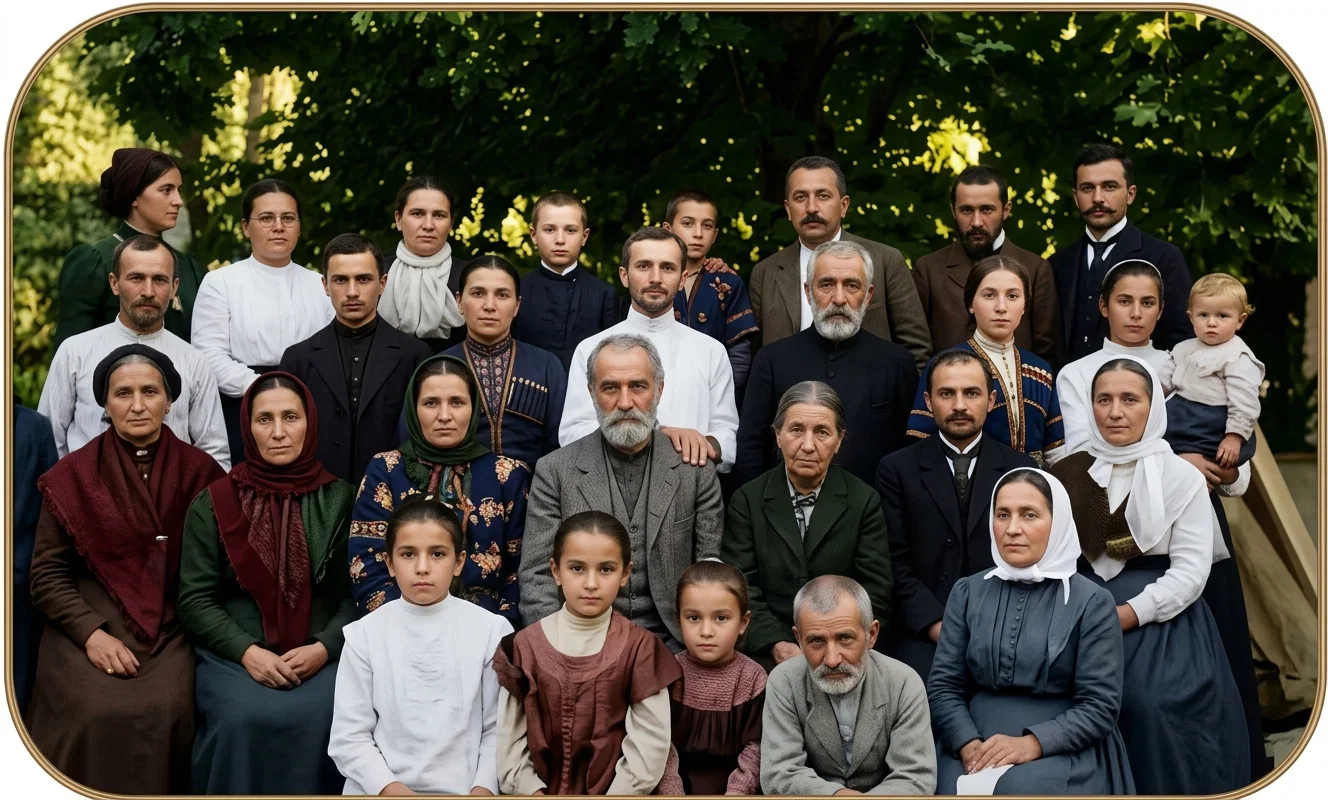
Of the three Russian conferences, the Caucasian is the largest and oldest, though the Baltic is already stronger in finance. Separated by a mighty mountain range, which towers between the northeast corner of the Black Sea and the southwest corner of the Caspian Sea, the field consists of two parts. The work first began in the German and Russian colonies this side of the mountains. But as some of our Russian brethren were exiled to the very border of Persia, the seed of truth was also sown there, and it is fast springing up also in the southern Caucasus. Our annual meeting was appointed13for Noworossiisk, a thriving port on the Black Sea, well shielded by the foothills of the Caucasian range. This conference now numbers eight hundred thirty-two members, and we were pleased to see our churches so well represented, a number of individuals coming from the very border of Persia. Two new companies were admitted—Noworossiisk, with eleven, and Tiflis, with twenty-three members. The accompanying cut shows the company at Tiflis, the leading city of the Caucasus. Brother Heyde, a German merchant, who has spent the last twenty years in different parts of Russia and Siberia, is the leader of the new company, and gives us a valuable member on the new conference committee.
THE TIFLIS CHURCH IN CAUCASIAN CONFERENCE
Our local company had put forth special efforts to train a good choir to sing their beautiful Russian psalms. As we had a good translator in Brother Suiridow, who has been educated at Friedensau, we could speak freely to the large audience. Our translator was called up to the police station, and was closely questioned. But the Lord helped him in giving the right answers. Sabbath was a good day for our own people. And as the hall could not be obtained, we were the freer to go to our own hall and ordain Brother Guadjin, one of our promising workers. Our brethren also enjoyed there the privilege of giving, unrestricted by earthly power, to the cause they so dearly love. So few of us prize the glorious privilege of giving freely to God’s cause, until we are deprived of it.
Brother Schlegel, who came here from Switzerland, and has labored acceptably, arrived in bad health, and had to put himself under the care of physicians. Dr. Pampaian, who has labored among the Armenians, was at this time transferred to the Turkish field.
The South Russian Conference
Quite a company of us took the steamer at Noworossiisk, October 25, for Odessa—Brethren Boettcher, Kotz, Pampaian, Suiridow, a Russian sister, and the writer. A crowd of our people assembled at the dock to bid us farewell. Gradually the Caucasus faded out of sight, and the coast of Crimea appeared in the distance. By evening our boat touched at Feodosia, and by sunrise our steamer dropped anchor in the harbor of Yalta. As seeming continuation of the Caucasus, there towers up another small range across southern Crimea, attaining the height of six thousand feet. This solid wall protects the narrow coast for about twenty-five miles, against the northern winds, and a Russian “Riviera” has been built up here. The narrow strip of land is covered with towns and villas, and at Yalta and Livadia are the beautiful palaces where the imperial family generally spend the winters. The fruit here equals that of California. The few hours our steamer stopped were spent ashore. It is a grand sight to see the big waves rush in over the breakers, and often leap over the high wall of the harbor, now and then dealing out free shower-baths to those unfortunate enough to be within reach.
In the afternoon Sebastopol was reached—the noted fortress of the Crimean War. Since that time the fortifications have been increased, and there are many men-of-war and torpedoes in port. But for us, what is the most interesting, we have here a good Russian church of eighty members.
The next morning we arrived at Odessa, where our brethren met us and conducted us to our lodging. Odessa is Russia’s chief harbor. With its six hundred thousand inhabitants, it is the fourth city of the empire. It was with considerable difficulty that Elder Schamhoy had obtained permission for his local meetings. As the interest grew, he had to secure a larger hall, and now is obliged to move for the third time. Their present hall consists of two large rooms and an anteroom; and as the Russians and Germans were almost equally divided, the speaker had to place himself near the door between, Four new companies were admitted, with over sixty members, among them Odessa with eleven. The present membership is now six hundred seven.
Five hundred dollars was pledged toward the school enterprise, and this the more willingly when they learned that it would probably be located in their conference. Southern Russia would present many advantages. The climate is milder, the soil better, there is fruit; but land is from fifty to one hundred dollars an acre, and it is difficult to find something answering for both a school and sanitarium sufficiently near a railway. While we look about, the money is being secured; but, even with the five thousand dollars from the United States, there will be only about ten thousand dollars to begin with, and many obstacles undreamed of in the United States will probably have to be surmounted.
Our brethren in all these fields appreciate the help furnished them by the General Conference, and we were happy to speak to them the word of life. May the Lord richly bless the work in this great empire.
The Natal-Transvaal Camp-Meeting and Conference
By W. S. Hyatt
W. S. HYATT
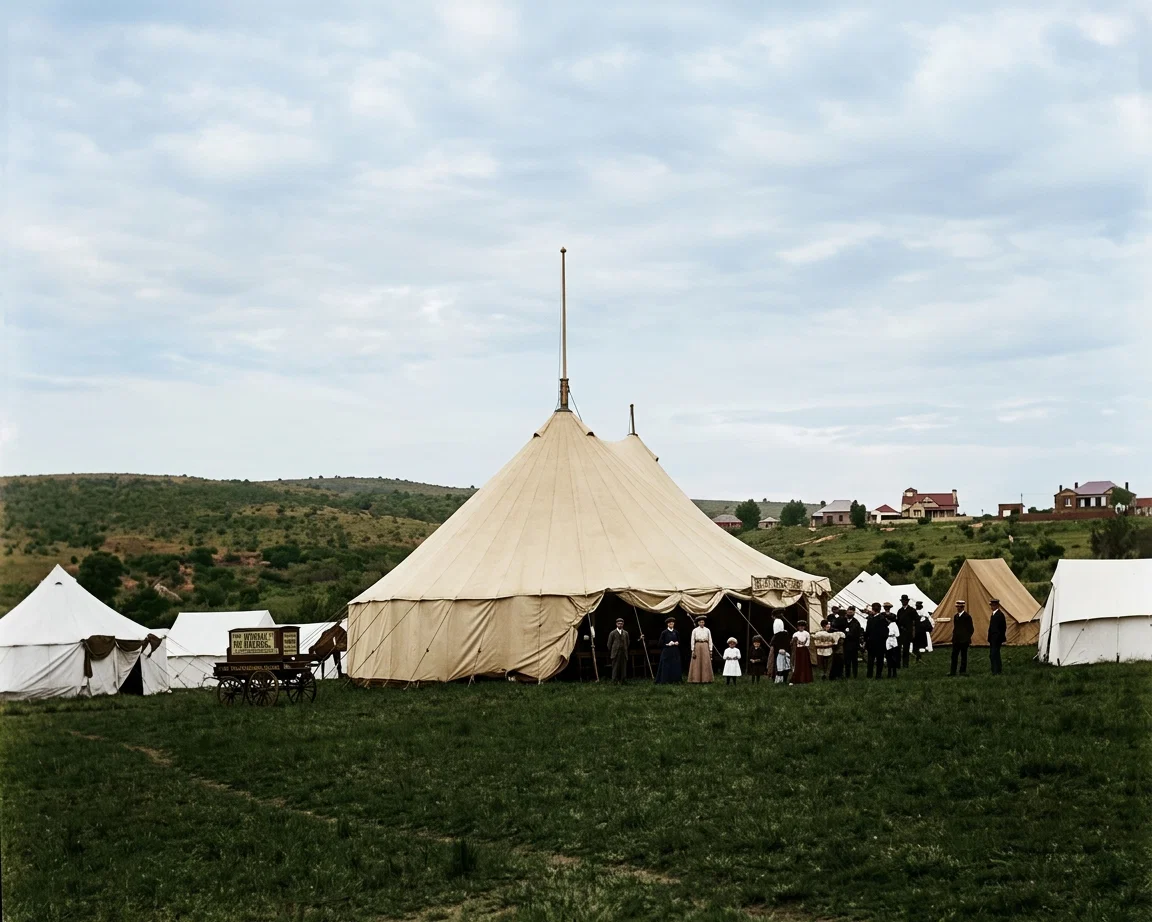
The Natal-Transvaal Conference held its annual session October 15-25, in connection with the camp-meeting at Troyeville, a suburb of Johannesburg. There was a good representation of the brethren and sisters from all parts of the field. Elder R. C. Porter called a meeting of the union conference committee to be held at the same time and place, and all were present except Dr. Geo. Thomason, who could not leave the sanitarium for so long a time. Thus a large number of laborers were in attendance to assist in the meetings. Brother G. H. Clark, who has recently arrived to take charge of the canvassing work, was also present, and his labors were greatly appreciated.
THE NATAL-TRANSVAAL CAMP
Elder Porter opened the meetings with a clear and decided message, calling upon both ministers and people to seek for the unity of the Spirit, and to put away everything that savored of condemnation. It was clearly shown that the old covenant was condemnation, but the new is joy and peace in the Holy Ghost, and that the angelic message sent to man is still, “Peace on earth.” There was a general response on the part of all present, and many heartfelt confessions were made. Even the children caught the spirit, and they confessed their wrongs one to the other, and prayed together that God would forgive them. In the public service some touching testimonies were borne by the lambs of the flock, which brought great rejoicing to all present. Thus the King’s14highway was cleared, and the way opened for the operation of the Holy Spirit with power.
All departments of our work—conference, canvassing, tract and missionary, medical missionary, native missions, and educational—received consideration, and plans were laid for an aggressive campaign. The conference planned for Elder H. J. Edmed to take a company of workers and open mission work in Johannesburg, the golden city of South Africa. Elder Porter is to remain until about the close of the year, and assist in holding a tent-meeting. Brother Clark is to hold a two-weeks’ institute with several persons who have decided to enter the canvassing field. As the funds of the tract society were low, the brethren voluntarily raised a fund for its assistance. The prospects for the book work are good, and courage fills the hearts of all connected with it.
In response to a call from our people, the union conference committee decided to print a quarterly magazine called the South African Signs of the Times. This is to be sold for sixpence a copy. It is hoped that many of our young people will be able to secure scholarships by the sale of the paper, and thus it may become a blessing to our youth, as well as to those who purchase it.
One day of the meeting was spent as “field day,” and a large number of the camp went out selling the Bible Training School. There was considerable enthusiasm on the part of all thus engaged. Although many of these people had never sold a paper before, there were over one thousand copies sold that day, and many rich experiences were related upon their return.
Considerable time was devoted to the medical missionary work of the conference. Several of our brethren have opened private treatment-rooms, and a measure of prosperity is attending their efforts. The conference institution at Maritzburg is also prospering, but the lack of capital to place the work on a good basis has crippled it. When our brethren and sisters learned this, they were again moved upon by the Holy Spirit and voluntary offerings were made for the cause of the Lord. The offerings to this institution and the tract society amounted to $1,190.70. But the good work did not stop here. A brother who owned two houses in Maritzburg donated these to the conference, free from debt. This property is valued at about six thousand dollars. This caused great rejoicing among the brethren, and it seemed evident to all that as the King’s highway was being cleared, the Holy Spirit was coming in and causing individuals to give themselves and their means to the forwarding of the message.
The conference secretary reported a gain of seventy-five Sabbath-keepers during the past conference year, and two churches were added to the conference. The treasurer’s report showed a gain of $506.76 tithe during the year over the preceding year. This is $26.97 per capita, which is encouraging. The Sabbath-school offerings for this little conference amounted to $443.18, all of which was donated to missions. The tract society sales for the year amounted to $2,706.70, which is a gain of $704.56 over the preceding year. Thus it may be seen that there was a substantial gain in all branches of the work.
The last Sabbath, the last great day of the feast, Elder Porter preached a very impressive sermon, after which Brethren W. H. Haupt and M. E. Emmerson were ordained to the gospel ministry. The Lord came near and witnessed to his acceptance of these brethren for the work to which he has called them. Brother Haupt is to labor principally for the Dutch people, and Brother Emmerson for the natives. The business of the conference was transacted harmoniously, not a dissenting voice being heard. Elder Edmed was again re-elected president of the conference. God greatly blessed his people who attended this meeting, and backsliders were reclaimed. Word was received that others who had taken part in the work many years ago, but who had dropped out by the way, had decided to return. Many felt that this was in direct answer to prayer, and again there was great rejoicing in the camp. Many earnest prayers were offered to God that the work that had started so well might spread to all parts of this field, and many wanderers be led to return to the fold; and that the Spirit of God might bind the hearts of his children together as one, that they might stand shoulder to shoulder and with a united front give the last message to South Africa through the power of the Holy Spirit.
Kenilworth, Cape.
Spain
SPAIN is in a sad condition spiritually, as well as financially and commercially. “Work and trade generally is in such a bad state,” one writer says, “that during the last two or three years thousands have emigrated to South America.” The government seems indifferent to the ruin which is facing the people. With unprincipled officials on the one hand, and a grasping priesthood on the other, the people are in a bad state. Their minds are darkened, and their consciences seared with superstition and error. Some, however, are showing interest in spiritual things, and a colporteur writes that when the priest tried to persuade the people to burn the Bibles, telling them the books taught heresy, the people would not give them up, and many who had not bought before then came forward for them. In the last eighteen months, the Bible house of Los Angeles has printed in Spanish, for distribution in that land, more than three hundred ninety thousand New Testaments and other portions of the Bible. It is through the Word of God alone that their minds can be freed from the superstition and bondage under which Spain for so many years has suffered. Let us pray that God may thus lead them into the light of life.
Blessings Won with Prayer
“GREAT blessings that are won with prayer are worn with thankfulness.”
In the Balkan Mission
By Guy Dail
GUY DAIL
THIS evening (November 13) we close our three-days' conference here in Constantza, Rumania, on the western shores of the Black Sea. In this small but rapidly developing country, with its five million inhabitants, a beginning was made in our work by the immigration of German-Russian brethren, who brought the truth with them, and formed the nucleus of a developing and increasing effort among Germans and Rumanians, in spite of the petty persecutions and inconveniences to which our laborers are subjected in their endeavors to present the message. We now have a membership of one hundred sixty-two against one hundred thirty-nine a year ago. By far the largest church is in Bucharest, a modern city of about three hundred thousand inhabitants. We are getting a start in Galatz and in Buzeu. Bulgaria is also a part of the Balkan Mission territory, and we have workers spreading the truth in Sofia, and Elder O. Schwenecke, the superintendent, will settle in Rustchuk, where he will be assisted by a native Bulgarian Bible worker. Brother Schwenecke is our only ordained minister in the Balkan Mission. He is to have the help of one canvasser, two licentiates, and three Bible workers.
Through the active part the brethren here at the conference took yesterday in ordering Rumanian literature to circulate among their friends; by their whole-hearted response to the appeals for deeper consecration and more faithfulness in performing their every Christian duty; and in their liberality, donating over six hundred francs toward a special fund for the support of a German laborer for the twenty-five German settlements or villages in the Dobruzen, this small number of earnest, hard-working farmers (for most of the forty-five present belong to the rural district) have shown their devotion to the third angel's message.
We would call special attention to a matter of great importance to any of our readers who may have Rumanian neighbors; viz., our Rumanian paper, Semnele Timpului, or Signs of the Times. It is issued monthly by the Hamburg Publishing House, Grindelberg 15a. This is to be a great help in spreading the truth among those who know this language. We believe that the ardent lover of the soon-coming Saviour will be glad to speed on the truth to all nations, tongues, and peoples, that so we may assist in hastening his appearing.
We expect that in the future there will be granted a still greater measure of success to our Balkan missionaries, and that soon this part of the vineyard will have been warned. Let us remember this mission in our sympathies and in our prayers.
Constantza.
The Work in Greater New York
By Ole Andres Olsen
On Nov. 10, 1909, I came to New York for the purpose of acquainting myself as much as possible with the situation here from the standpoint of the giving of the message among the great foreign population of this large metropolis. During the short time of a fortnight, one can obtain only the most meager, superficial idea of the true condition. Still, I confess that even this limited view has made a profound impression on my mind.
The day following my arrival, the president and members of the New Jersey Conference met me, to counsel over some matters relating to that conference. The next day I had the pleasure of attending a gathering of our representatives among the various nationalities of New York and Brooklyn — Italians, Hungarians, Slavonians, Bohemians, Spaniards, Germans, Swedes, and Danish-Norwegians. The object was that I might become acquainted with these workers, and learn all I could concerning what they are doing. There were fifteen present, and it was a very interesting occasion. Each related, first, very briefly, his own experience in coming into the truth, and then gave a presentation of what was being accomplished for the people he represented. All this was very helpful to me in understanding the situation.
The next step taken was to visit these various people in their own services, and, as far as possible, become acquainted with the conditions and surroundings, as this is necessary in order to plan wisely and be a real help to this work. I have thus visited the Slavonians, Bohemians, Italians, and Hungarians, both in Newark, N. J., and in New York City; the Germans in Brooklyn, the Bronx, and Jersey City; and the Scandinavians in Perth Amboy, N. J.
The meeting with the Slavic-Bohemian church at Newark was very interesting. We found the believers both intelligent and whole-hearted, and they seemed earnest in their missionary efforts. The expense for halls and meeting-places is great in these cities, and the membership not being large, the burden is a heavy one. I was informed that one brother of this church, from a weekly wage of nine dollars, contributes two dollars every week to this expense. Such an effort certainly gives evidence of real interest and devotion.
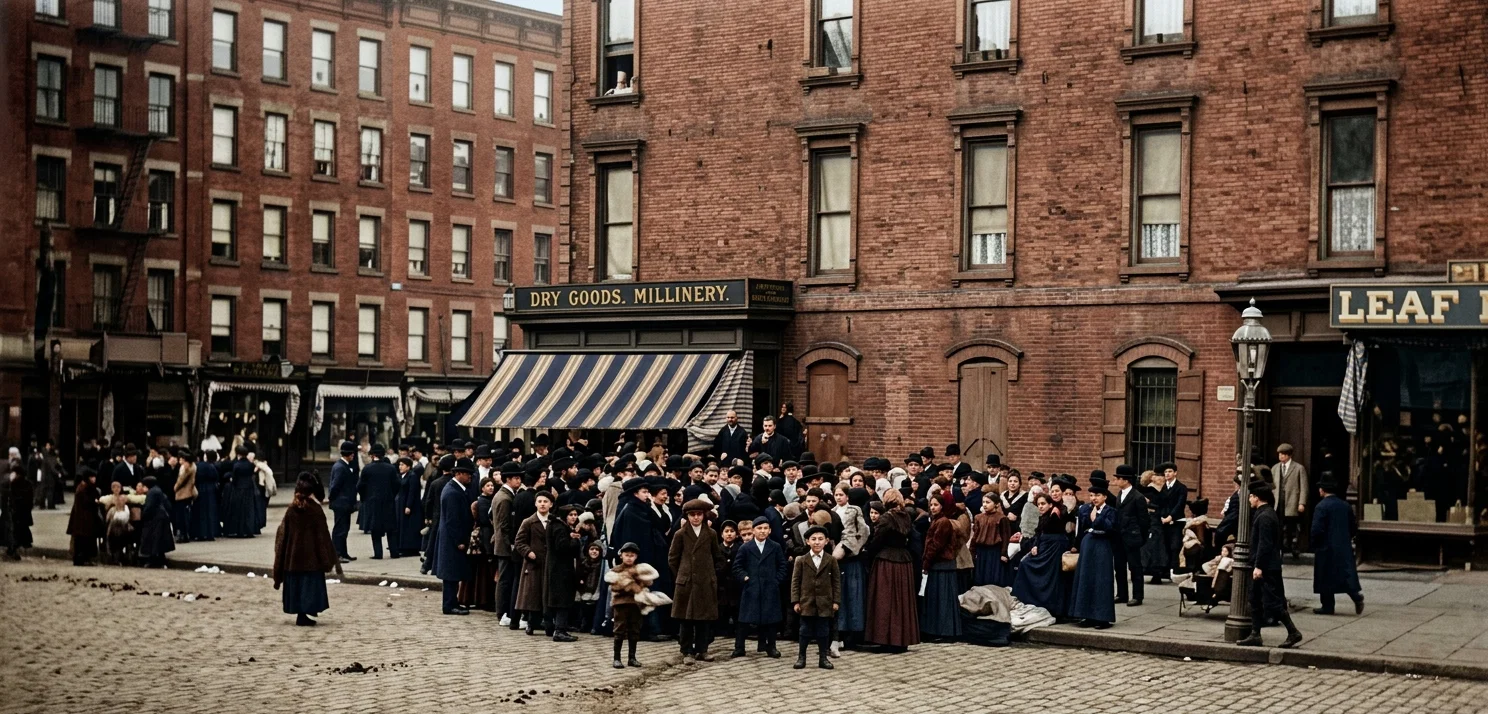
BROTHER S. HALUSIC, HOLDING A STREET MEETING AMONG THE SLAVIC-BOHEMIANS, IN NEW YORK CITY
In New York the Slavonians are in a still more trying position, as they have nowhere to invite the public to hear the truth, except the street. One day I attended one of these street meetings, held in the Slavonian community. The speaker, Brother Halusic, stood on the curbstone, and there was a large crowd around him. Those on the outer edge were more or less indifferent, while those near him listened with marked attention. A place is needed where those who are interested can hear and study the truth under more favorable conditions. You will say, “Why do you not have a hall, or some such place?” The answer is, Means has been lacking.
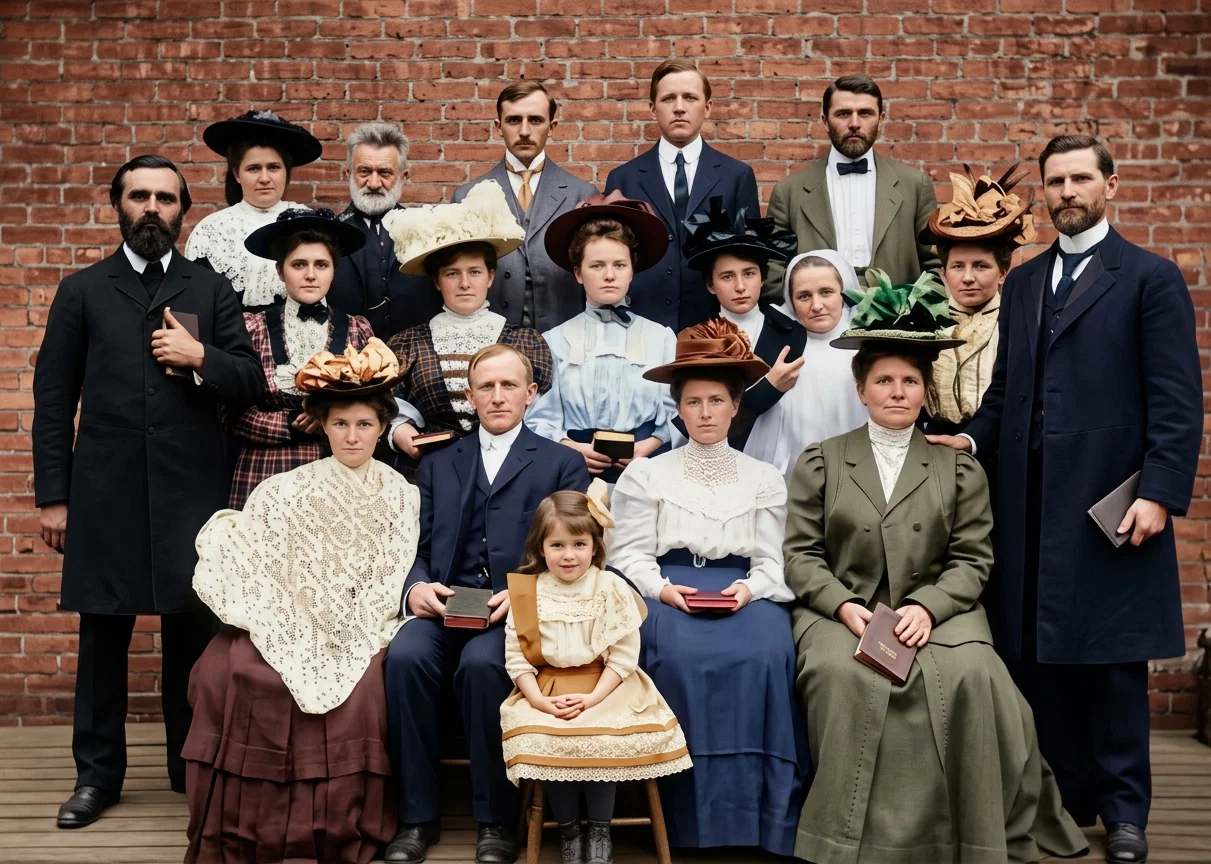
AT THE RIGHT, BESIDE HIS WIFE, STANDS BROTHER S. HALUSIC, THE SLAVIC-BOHEMIAN, WITH THE COMPANY OF SABBATH-KEEPERS GATHERED OUT OF NEW YORK THROUGH HIS LABORS
I confess that while I stood there on the street, viewing the multitude moving in every direction, and seeing our brother standing in the midst of an eager, listening crowd, I felt deeply touched. I said to myself, “These people must have a meeting-place. It must not be that for the lack of a few dollars they shall be deprived of hearing the message.”
Again, I thought that if our brethren and sisters could be present on one of these occasions, and see the condition for themselves, there would be those among them who would feel it a privilege to make a contribution to help secure a meeting-place. Yes, I know they would be glad to do it.
The Hungarians are situated much like the Slavonians. We have laborers in both these tongues, but have no place where they can meet. I feel that we should not rest until this matter is changed. What do you say, dear reader?
I met with the Italians both at mid-week Bible study and on the Sabbath. I was glad to find that they have a place at their disposal for their services. I greatly enjoyed these opportunities.
As yet, I can say that I have received only my first lesson; but even with this limited knowledge, I am profoundly impressed with the greatness of the work of the North American Foreign Department. It is by no means forbidding in its nature; on the contrary, it is intensely interesting. And, while there are serious difficulties to be mastered, yet the outlook is encouraging, and promises an abundant harvest. But laborers and funds are needed, and they must be forthcoming — yes, they will be forthcoming; for God's care is over this department of the cause. We hope it will be remembered in prayer, and by such donations of means as the Spirit of God may direct.