The Youth’s Instructor, Vol. 28, No. 10.

THE ABORIGINES OF AMERICA

The Youth’s Instructor

Mar 3, 1880

S. D. A. Publishing Association · Battle Creek, Mich. · Mar 3, 1880

THE ABORIGINES OF AMERICA.
Our forefathers who first came to America, called the people that they found here Indians, because they thought that they had sailed around the world and had arrived at what is now called the East Indies, not knowing that they had discovered a new continent. At first the Indians were inclined to be friendly; but as they saw the forest trees disappear before the ax of the white man, and their broad hunting grounds converted into farms for his benefit, a feeling of hatred was kindled toward the “pale face,” and they resolved to drive him from their country.
Failing in this, the white man has ever since been regarded by them as a common enemy, and every effort of his toward their civilization, they have steadily resisted, choosing to retire before his advancing strides rather than witness in their midst the trophies of his enterprising spirit, until now their once powerful nations have dwindled to a few small tribes, which are mostly confined to the Rocky Mountains and the Indian Territory. Those in the Rocky Mountains, especially, are veritable Indians, still following the same habits of life as did their ancestors before the persevering industries of the white man confined them to their present limits.
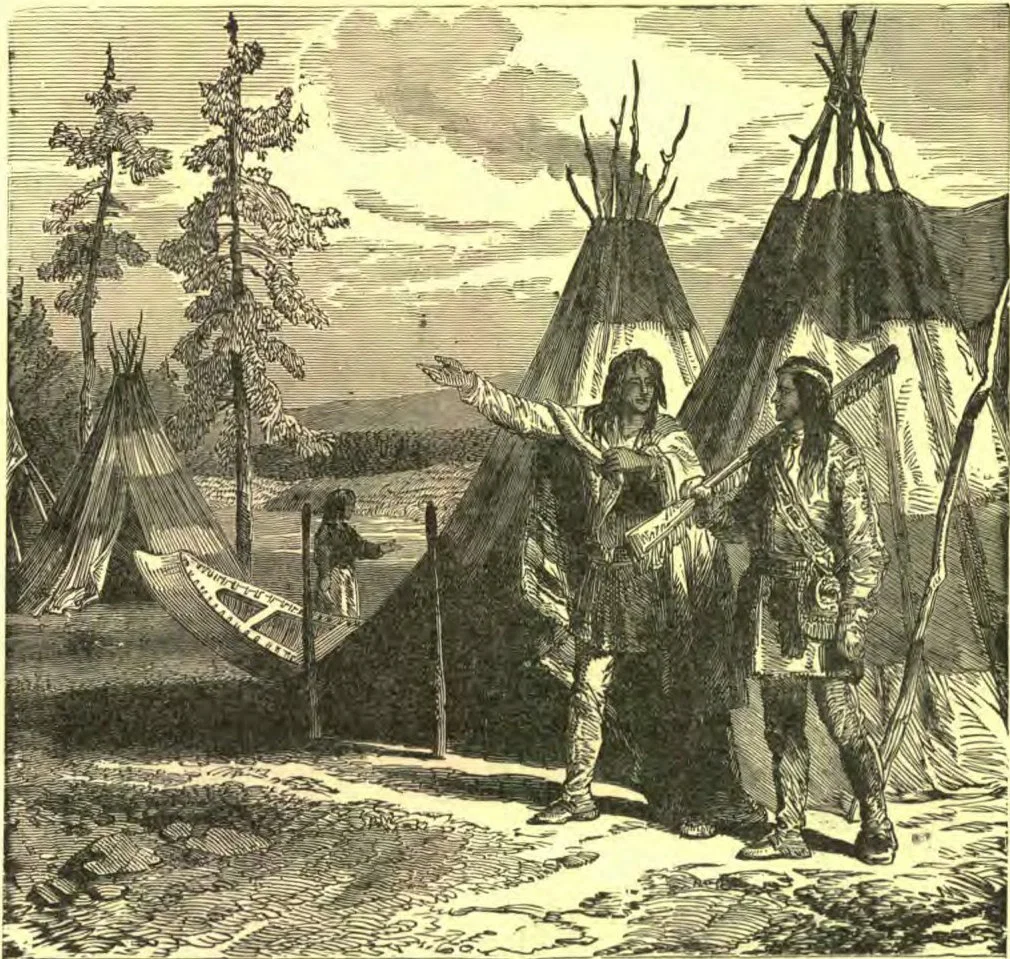
At an elevation of 11,000 feet above the level of the sea, on the western slope of the Rocky Mountains, is a large tract of country reserved by the government as the exclusive possession of the Indians. This is the hunting ground of the Ute nation. The accompanying cut represents one of their encampments on White River, Colorado. A portion of this warlike nation still dress in the primitive style, and live in rudely constructed huts. Although surrounded by civilization, its hand has scarcely relieved their hair of one feather, or diminished the quantity of paint used in decorating their faces. In this mountain fastness, the indolence of the red man remained undisturbed until the desire for gold led the miners to enter their country, notwithstanding the danger from their threatening enemies, and the warnings of the government.
In his onward march in search of the precious metal, the gold-hunter has deliberately pressed his way into the reservation, and invaded the home of the savage, who in turn has stubbornly resisted what he considers an encroachment of his rights, until within the past year his mountain haunts have presented the same cruel scenes of war and bloodshed that have ever followed him in his westward retreat across the continent.
And now, the great question agitating the minds of all in the surrounding country is, How shall the Indian be disposed of; in what way can he most successfully be driven from his hunting grounds—for the general decision is that he must go—and thus provide a way to satisfy the growing avarice of the incoming white man?
Although some have been willing to attribute the late Indian troubles to the turbulent spirit of the original natives, yet we are inclined to think the secret will be found in the words of the great apostle: “The love of money is the root of all evil.”
As long as there is a foot of territory that “hath dust of gold” beneath its surface, the steady, persevering industry of the white man will search it out; and the onward march of civilization will continue till all traces of the red man will be obliterated from American soil. J. O. C.

Bible Prices and Wages in 1720

IN 1720 a copy of the Latin Bible was valued at $150, and wages were so low that it took a common laborer fifteen years to earn one.

“SEEING THE SPRINKLED BLOOD.”

Founded on a Jewish legend.
Father, I cannot sleep; the prophet’s words Ring in my ears; they fill my heart with fear; For am I not the first-born, and the one On whom the destroying angel’s shaft would fall, Were not the token on the lintel found? Thrice have I named the patriarchs, and once The creatures great and small that Noah drove Before him in the ark; but all in vain. I cannot sleep. O father, art thou sure The blood is sprinkled as God gave command?”
“Peace, peace, my child; just as the evening fell The fairest lamb of all the flock was slain, And roasted then with purifying fire; With bitter herbs, and bread devoid of leaven, In haste we ate the Lord’s appointed feast. Nor were the means of saving thee forgot; Scarcely was the yearling slain ere I gave word For sprinkling of the blood upon the door; Sleep, then, my first-born, God’s avenging one Will see the signal, and pass over thee.”
Thus on that dark night which God had chosen For passing throughout all fair Egypt’s land, To smite on every side the loved first-born, Sparing not e’en the firstlings of the flock, A Hebrew father soothed his restless child; Restless himself, as now with girded loins, Sandals upon his feet, and staff in hand, He waited for the solemn midnight hour When God’s almighty arm should break the chain That bound his people to proud Pharaoh’s throne. The bread unbaked was in the kneading trough, The scattered flocks were gathered in the fold, And all betokened plans for hasty flight. There was a thrilling silence in the air; A quiet joy burned in the Rabbi’s breast, Joy that was not unmingled with regret At leaving thus his birthplace, though it was A house of bondage, for the promised land.
The night wore on, And yet again the pleading voice was heard: “Father, sleep will not come; before my eyes I see the angel pass, and at our door Pause sadly, as though he wept to enter, Yet dared not hasten unavenging by. O father, if the blood has been removed, Or if the Hebrew heeded not thy voice, Then never shall my weary eyes behold The land of Canaan with its waving fields.”
“Rest, little one, faithful our Jared is. Not only on the side-posts of the door Should be the stain, but on the one above; So if some hungry dog should from its place One token lick, the others would remain. Sleep, my sweet child, for thou hast need of rest; The journey will be rough for little feet.”
The anxious voice was silent; in that home Obedience reigned supreme, though not as yet The law had sounded forth from Sinai’s top; With patience dutiful she sought to woo Soft slumber to her long unclosed eyes; Sleep came at last, but with it dreams of fright, Wherein she tossed, and moaned, and oft cried out.
The midnight hour drew nigh; unbroken still The darkness’ solemn hush; the child awoke With a loud cry, “Father, I thought I heard The cock’s shrill crow to greet approaching morn. My heart is beating with a sick’ning dread Of danger near. Oh! take me to the door And let me see the red blood sprinkled there.”
Lighting a torch, the father gently took His first-born in his arms, and bore her forth— Started and paled to see no paschal sign, No warning that their door should be passed by! With trembling hand he snatched the hyssop then, Himself applied the blood in eager haste. A long sigh of relief escaped the child; Almost before he placed her on the couch Sweet sleep had fallen on her heavy lids, Nor when the “great cry” rose did she awake. That agonizing wail of man and beast Reached not her ears, with drowsy slumber sealed, And at the dawn they bore her sleeping still, Away from Egypt’s darkness and despair.
  • *
Christ, our blest Passover, is slain for us; The “blood of sprinkling” for our sins is shed; Have we the atoning sacrifice applied, Made sure our entrance to the promised land? —L. W. Herrick.

J. N. L

FROM SEA TO SEA.—NO. 23.

STANDING by the falls of Niagara on the American side, we notice that the waters of the river just below the falls are as smooth and placid as those of a small inland lake, so much so that we see men in small skiffs fishing with hook and line, and passing within a few rods of the sheet of water. Objects in the river, as bits of wood or bark, are moving slowly toward the falls instead of down the stream. This indicates that the vast body of water pouring over the falls goes down to a great depth, and we have still further proof of this as we pass on to a point below the Suspension Bridge where the water first begins to come to the surface.
If you will again look at the picture of the bridge in the INSTRUCTOR of January 1, you will see that the water appears smooth until we get to this point below the bridge. You will also see that in the edge of the picture nearest to us, the water looks very rough. This is where the water comes up boiling, seething, and foaming to the surface. As far as the eye can reach, the water thunders down in heaving masses of foam, throwing up streams of water covered with spray, and in places whirling it up into angry billows twenty or thirty feet above the heads of the spectators standing on the shore. It is deafening in its roar, and here at the rapids, even more than at the brink of the falls, can we have a realization of the terrific force of Niagara.
Having tarried so long near this river we now resume our journey. We have here been impressed with the majesty and greatness of God’s wonders in the earth, and have admired the skill of man in seeking out such inventions as this ponderous bridge which we now leave.
A short ride of an hour by rail brings us to Buffalo, which is the eastern point of commerce on Lake Erie. For many years, before the railroads to the West were constructed, this was a point from which more ships set sail than from any other internal harbor in the United States, being the port from which embarked most of the passengers for the “great lakes” and the then “far West.”
Before continuing our direct journey to the Atlantic Ocean, our duties call us to visit Hornellsville, over one hundred miles south of Buffalo, after which we will return to this point to resume our eastward journey.

J. N. L

TELLING THE LORD.

“As one whom his mother comforteth, so will I comfort you,” saith the Lord. Did you ever think what a beautiful promise this is? Doubtless most of our readers know by blest experience what it is to be comforted by their mothers—know how ready and willing she is to sympathize with them in all their griefs.
I heard of a little girl who was saying, “Our Father,” kneeling by her mother’s side, and when she came to “forgive us our debts as we forgive our debtors,” she suddenly stopped, and burst into tears. Her mother tenderly inquired the reason. She said she could not say that—she couldn’t forgive that little girl who broke her beautiful dolly. “Well,” said the mother, “God can help you, my child; I’ll ask him.” And as soon as the mother closed her fervent petition that her little girl might have grace to forgive, the child looked up, smiled, and, clasping her little hands together, slowly and solemnly finished her prayer, commencing with “forgive,” and was comforted.
Now, dear children, if you ever feel unhappy concerning the treatment of your playmates, instead of cherishing angry, resentful feelings, and saying bad, naughty words to those around you, get in the habit of telling the Lord about it, and ask him to help you to forgive even as you want to be forgiven. Little children are not apt to keep their troubles to themselves if they have a kind, sympathetic mother. Neither let us who are older, when we have such a kind Father in Heaven, who has promised to comfort us as a mother comforteth her child.

WRECKERS

“LUKEWARM” professors are like the wreckers on the Florida reefs, who kindle false lights to lure vessels to destruction. A ship is coming in after nightfall. The night is dark and stormy. The sea runs high. The ship labors. The tempest howls through her rigging. The great waves smite her. The master paces the quarter-deck, anxious and watchful. Oh, if he could see the harbor-light to guide him in the safe channel! He hails the “look-out” in the main top, “Hallo, aloft!” “Ay, ay, sir.” “Do you see the light?” “No light.” And again keen eyes peer through the darkness. The vessel rushes blindly on her course. Ah! is that the coming of a breaker? “Hallo, aloft! do you see the light?” “No-o-o!” The storm increases. The vessel groans and strains in every timber. The sea rages. And now the shout comes down, “On deck, there! I see the light.” “Where away?” “Two points off the lee bow.” “Steady, quarter-master; keep her full.” And on she plows her way, cheered by the guiding light. Ah! what is this? She is in the midst of breakers, and now strikes on the reef; the masts “go by the board,” and the wreckers come tumbling in over her bulwarks; their knives are red, and their hands filled with plunder. Their false light has cast away the ship. So a treacherous Christian says to the souls of his fellow-men, “Follow me! I am going into port—I will guide you safely,” and following, they come upon the rocks of perdition, and are lost.—President Finney.

LESSONS FOR CHILDREN.

LESSON LXII.—ELIJAH BRINGS FIRE FROM HEAVEN.

“And Elijah said unto the prophets of Baal, Choose you one bullock for yourselves, and dress it first; for ye are many; and call on the name of your gods, but put no fire under. And they took the bullock which was given them, and they dressed it, and called on the name of Baal from morning even until noon, saying, O Baal, hear us. But there was no voice, nor any that answered. And they leaped upon the altar which was made.”
“And it came to pass at noon, that Elijah mocked them, and said, Cry aloud; for he is a god; either he is talking, or he is pursuing, or he is in a journey, or peradventure he sleepeth, and must be awaked. And they cried aloud, and cut themselves after their manner with knives and lancets, till the blood gushed out upon them.”
“And it came to pass, when midday was past, and they prophesied until the time of the offering of the evening sacrifice, that there was neither voice, nor any to answer, nor any that regarded.”
“And Elijah said unto all the people, Come near unto me. And all the people came near unto him. And he repaired the altar of the Lord that was broken down. And Elijah took twelve stones, according to the number of the tribes of the sons of Jacob, unto whom the word of the Lord came, saying, Israel shall be thy name; and with the stones he built an altar in the name of the Lord; and he made a trench about the altar, as great as would contain two measures of seed. And he put the wood in order, and cut the bullock in pieces, and laid him on the wood, and said, Fill four barrels with water, and pour it on the burnt sacrifice, and on the wood. And he said, Do it the second time. And they did it the second time. And he said, Do it the third time. And they did it the third time. And the water ran round about the altar; and he filled the trench also with water.”
“And it came to pass at the time of the offering of the evening sacrifice, that Elijah the prophet came near, and said, Lord God of Abraham, Isaac, and of Israel, let it be known this day that thou art God in Israel, and that I am thy servant, and that I have done all these things at thy word. Hear me, O Lord, hear me, that this people may know that thou art the Lord God, and that thou hast turned their heart back again.”
“Then the fire of the Lord fell, and consumed the burnt sacrifice, and the wood, and the stones, and the dust, and licked up the water that was in the trench.”

QUESTIONS.

  1. What did Elijah say to the prophets of Baal? 1 Kings 18:25.
  2. When the prophets of Baal had prepared their sacrifice, how long did they call upon Baal to send fire to consume it?
  3. How did they plead with him?
  4. When they had called upon their god until noon, what did Elijah say to them?
  5. In what other ways did they try to get their god to answer them?
  6. How long did Elijah let them go on in this way?
  7. What success did they have?
  8. What did Elijah then ask the people to do?
  9. Tell how he built an altar unto the Lord.
  10. How did he prepare the sacrifice?
  11. When all was ready, what did he pour upon the sacrifice and upon the wood?
  12. How much water was poured on?
  13. What did Elijah say, when he called upon the Lord?
  14. How was his prayer answered?

BIBLE LESSONS FOR YOUTH.

LESSON LXXXVIII.—JOSIAH'S GOOD REIGN.

  1. How old was Josiah when he began to reign? 2 Chron. 34:1.
  2. How long did he reign?
  3. How did he conduct himself? Verse 2.
  4. What did he do when he was sixteen years old? Verse 3.
  5. What work did he commence when he was twenty?
  6. What did he do with the images that the people had been worshiping?
  7. What did he burn upon the altars where this false worship had been carried on? Verse 5.
  8. How far did he extend this work? Verse 6.
  9. What did he accomplish before returning to Jerusalem? Verse 7.
  10. What did he undertake in the eighteenth year of his reign?
  11. What was found when they brought out the money that had been laid up in the house of the Lord?
  12. Why was Josiah distressed when he heard this book read? Verse 14.
  13. Of whom did he inquire?
  14. What answer did the Lord give through the prophetess? Verses 24, 25.
  15. What special favor did he promise to show Josiah? Verse 28.
  16. Why was the Lord so merciful to him? Verse 27.
  17. What did the king then do? Verses 29, 30.
  18. What covenant did he make before the Lord? Verse 31.
  19. What did he require the people of his kingdom to do?
  20. What solemn feast did he appoint? 2 Chron. 35:1.
  21. What generosity did he manifest toward the people? Verse 7.
  22. Who followed his example? Verses 8, 9.
  23. Why was this necessary?
  24. What is said of this passover? Verse 18.

SYNOPSIS.

“Josiah was eight years old when he began to reign, and he reigned in Jerusalem one and thirty years. And he did that which was right in the sight of the Lord, and walked in the ways of David his father, and declined neither to the right hand, nor to the left.”
“For in the eighth year of his reign, while he was yet young, he began to seek after the God of David his father; and in the twelfth year he began to purge Judah and Jerusalem from the high places, and the groves, and the carved images, and the molten images. And they brake down the altars of Baalim in his presence; and the images, that were on high above them, he cut down; and the groves, and the carved images, and the molten images, he brake in pieces, and made dust of them, and strewed it upon the graves of them that had sacrificed unto them. And he burnt the bones of the priests upon their altars, and cleansed Judah and Jerusalem.”
“And so did he in the cities of Manasseh, and Ephraim, and Simeon, even unto Naphtali, with their mattocks round about. And when he had broken down the altars and the groves, and had beaten the graven images into powder, and cut down all the idols throughout all the land of Israel, he returned to Jerusalem.”
In the eighteenth year of the reign of Josiah, when he had made an end of purging the land and the house, he set to work to repair the house of the Lord his God; and when they brought out the money that had been laid up in the house of the Lord, Hilkiah the priest found a book of the law of the Lord given by Moses.
On hearing this book read, Josiah was greatly distressed; for he knew that his people had transgressed the law written in the book, and that terrible curses were pronounced upon those who should do as they had done.
So he sent men to inquire of Huldah the prophetess in regard to their fate. In answer to their inquiry she said that these judgments would certainly fall upon Jerusalem, and upon the people who worshiped false gods; but that they should be withheld until after the death of Josiah, because his heart was tender, and he was willing to humble himself before God.
Then the king had all the people called together, and read the book of the law in their hearing. After this, he made a covenant before the Lord, promising to keep his commandments with all his heart, and to obey all that was written in the book. “And he caused all that were present in Jerusalem and Benjamin to stand to it.”
Then Josiah kept the passover. To the poor people who were present, he gave thirty thousand lambs and kids, and three thousand bullocks. The princes, following the example of the king, also gave liberally, so that all the people were supplied with animals for sacrifices. “And there was no passover like to that kept in Israel, from the days of Samuel the prophet; neither did all the kings of Israel keep such a passover as Josiah kept.”

From Texas: Sabbath School Teachers' Meeting and Home School

FROM TEXAS.

To show that the Seventh-day Adventists in Texas are in harmony with the body, and that we wish to profit by the suggestions and advice given, I send you a note of the meeting of S. S. teachers held in Cleburne, Jan. 17. Eld. R. M. Kilgore was present and made some excellent remarks, as did also several others.
Our brethren and sisters seem by their words to be willing to do all in their power to advance the S. S. work, and it is to be hoped that this willingness will be made manifest by their works. The S. S. work is a part of “present truth;” therefore let us, brethren and sisters of Texas, be alive to its wants. Let us thoroughly master our lessons week by week; for they will furnish us with reasons for our hope. We should not be satisfied with merely reading over the lessons, but we should learn to answer all the questions fully, and give the reason for every step taken. Let us, dear sisters, seek to adorn ourselves with modest apparel, and a meek and quiet spirit, and spend more time in storing our minds with Bible knowledge.
We still continue to have a Sabbath-school at home. I did not send a report of it in the quarterly report, since it is not an organized school. Occasionally we go to Cleburne or Peoria, but we do not fail to have a school when we are at home, even though there are none but our own family to recite. Our Sabbath-keeping neighbors join us unless the weather is too bad for them to come out.
ROSA CHRISMAN, Sec. Texas S. S. Asso.

A STARTLING QUESTION.

A poor child, straying into a Sabbath-school one day, asked simply, “Is this the way to Heaven?” The superintendent was for a moment startled. Was his school indeed the way to Heaven? Was he trying to make it so? Were his teachers intent upon the same object? The artless question struck home. From desk to class the question went around with a thrill. What were they all doing? Whether were they all tending? The question was like an angel suddenly come into their midst to make a record of all that transpired in that school. Oh! superintendents, teachers, make sure of this one thing: With all your efforts to impart knowledge, make the salvation of the soul of paramount interest. Whether your school be a model, or be struggling up to perfection, be sure that every scholar shall feel that it is in the road to Heaven.—S. S. Times.

BE PROMPT.

“Why is Fred like the cat's tail?”
The whole family—father and mother, brother and sisters, all except Fred—stood waiting, muffled and gloved, for him to get ready to go with them to the lecture. Tardy Fred had been loitering about, doing nothing in particular, in a dreamy, aimless fashion, and had yet to brush his hair, don his boots, overcoat, cap, muffler, and mittens, when roguish sister Mary proposed this conundrum, as the sedate old family cat walked across the floor, and jumped up into the cushioned chair.
“Don’t you see? Because he is always behind.” Fred turned from the glass with cheeks a little flushed by the laugh which Mary had raised, hurried into his outer clothes, and by the time the rest had waited for him full five minutes, he was ready.
“Always behind.” Yes, that is his great failing. He is as quick motioned as other boys; can run as fast, jump as far, and skate as well; but he is always the late one. He is seldom ever ready to sit down at meals when the rest are; perhaps will get absorbed in a book, and forget to wash, or brush his hair, till the rest are taking their seats. I should be sorry to tell you how often tardy-marks stand against his name on the school-register, such a habit he has fallen into of waiting till the last minute before he starts. And on Sabbath morning he will sit reading, or dreaming over something, and never seem to think of getting ready for Sabbath-school till it is almost time to go. Then he is in a great flutter, and can’t find this, that, and the other thing; the whole family have to help him; and he generally brings up in the rear, after all.
Well, it is only a habit; but it is a very bad one. Fred must leave off dreaming, and fall to doing, instead. Promptness in action has done untold good, and saved many lives; while tardiness has destroyed great numbers. In temporal things, as well as in spiritual, “Now is the accepted time.” S. E. L.

LETTER BUDGET.

Richford, Wis.
Dear Editors: I have taken the INSTRUCTOR for several years, and am much interested in it,—would miss it much should I be deprived of it. It is entitled to the name it bears,—the YOUTH'S INSTRUCTOR. I hope I shall heed its teachings. I keep the Sabbath with my parents; have always tried to keep the Sabbath. We have a very interesting Sabbath-school, which I attend every week. I am trying to follow in the humble, self-denying footsteps of Jesus. I want to live so that I may have an inheritance in the earth when it shall be redeemed from the curse and brought back to its Eden beauty. Pray for me. Yours truly, Flora Farrar.
We are pleased to learn that you like the INSTRUCTOR so much, and that you are trying to follow its teachings. If you walk in the footsteps of the Master, you will certainly dwell on the earth when it is made new.

SPARROWS IN THE WEST.

A LETTER.

MY DEAR HALA: Some time ago I wrote you about the little prairie dogs that live in the West, of their towns, their dwellings, and the strange associates that live in the same hole with them. I thought that to-day I would tell you about the sparrows, and Sparrowville. But as I took my pen to write, I thought of your two little brothers, who have no mother to tell them stories, and that they, too, would like to hear about the sparrows. I presume they read the YOUTH’S INSTRUCTOR, so I will send this to the Office, and it may be that you and they will see it printed.
“Are not five sparrows sold for two farthings, and not one of them is forgotten before God?” The Saviour taught that God cares for all his creatures, and although the fowls of the air “sow not, neither do they reap, nor gather into barns, yet your Heavenly Father feedeth them.” And he not only furnishes them food, but a shelter from the storm, a place of safety, where they can build their nests and raise their young.
Where you live, and far away eastward, the sparrows build their nests in barns or under the roofs of dwellings; but what do you suppose they do upon the boundless prairie—known until recently as the great American desert—where houses and barns are but few, and where many people live in covered wagons? Surely, you would say, there can be no place for the sparrow. But the Saviour says that they are not forgotten before God. About three miles from where I am writing is a place which we will call Sparrowville. There is a bank thirty or forty feet high with a ledge of rocks extending out over the bed of a stream; under this ledge thousands of sparrows live. They make their nests of mud and dry grass, and fasten them on to the rock. There are also other places where they live, but this one seems to be their largest town, and it is well chosen; for it fronts the east, and as we have fewer storms from that direction, it furnishes a very safe retreat. The bed of the stream under the ledge is usually dry, so if by accident the little birds should fall out of the nest they would be likely to fall on the soft sand, where they would receive no serious injury, and where the parent bird could care for them.
The same God who provides for the sparrows will also regard us in mercy. He suffers little children to come unto him, and if they love him and obey his voice he will shelter them in his arms. Your uncle, J. L. R.

Patches Are No Disgrace for a Boy

Do not be ashamed, my lad, if you have a patch on your elbow. It is no mark of disgrace. It speaks well for your industrious mother. For our part, we would rather see a dozen patches on your jacket than hear one profane or vulgar word escape from your lips, or smell the fumes of tobacco in your breath. No good boy will shun you because you cannot dress as well as your companions; and if a bad boy sometimes laughs at your appearance, say nothing, but walk on. Fear God, my boy; and if you are poor but honest, you will be respected a great deal more than if you were the son of a rich man, and were addicted to bad habits.

TO-MORROW IS THE SABBATH DAY.

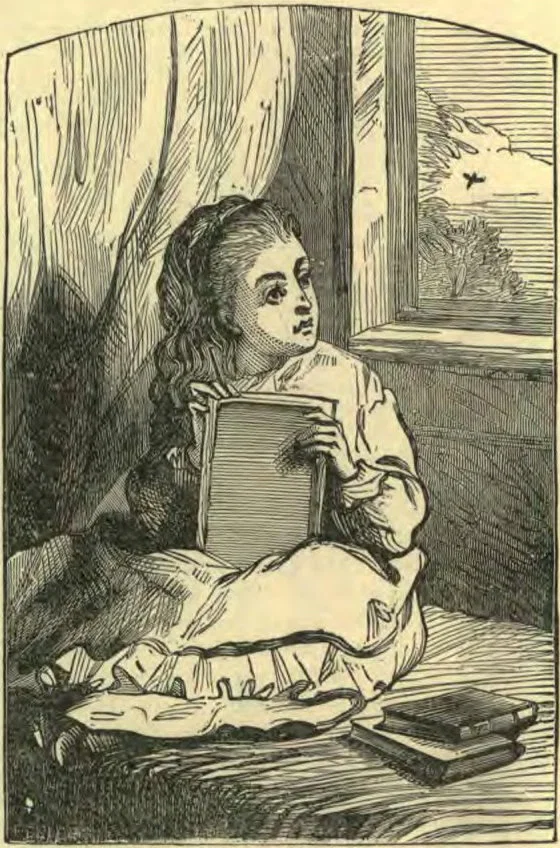
I'll put away my pretty toys, And lay my slate aside, My picture-books upon the shelf, Quite neatly, side by side. I wish to put them all away: To-morrow is the Sabbath day.
I'll try, God helping me, to spend The Sabbath as I ought, And pray that I be kept from sin In deed and word and thought. I'll put my playthings all away: To-morrow is the Sabbath day.
I'll ask the Lord to bless me, when Up to his house I come; To help me in the Sabbath-school; To bless me in my home; To put all sinful thoughts away Upon his holy Sabbath day.
Lord, keep a little sinful child Under thy watchful care; Forgive her many, many sins, And guard her everywhere; And let her love to praise and pray Upon thy blessed Sabbath day.
—Children's Friend.

You have reached the end of this edition.

The Youth’s Instructor · Mar 3, 1880