The Youth’s Instructor, Vol. 28, No. 15.

SIX MONTHS ON A CAKE OF ICE

The Youth’s Instructor

Apr 7, 1880

S. D. A. Publishing Association · Battle Creek, Mich. · Apr 7, 1880

SIX MONTHS ON A CAKE OF ICE.

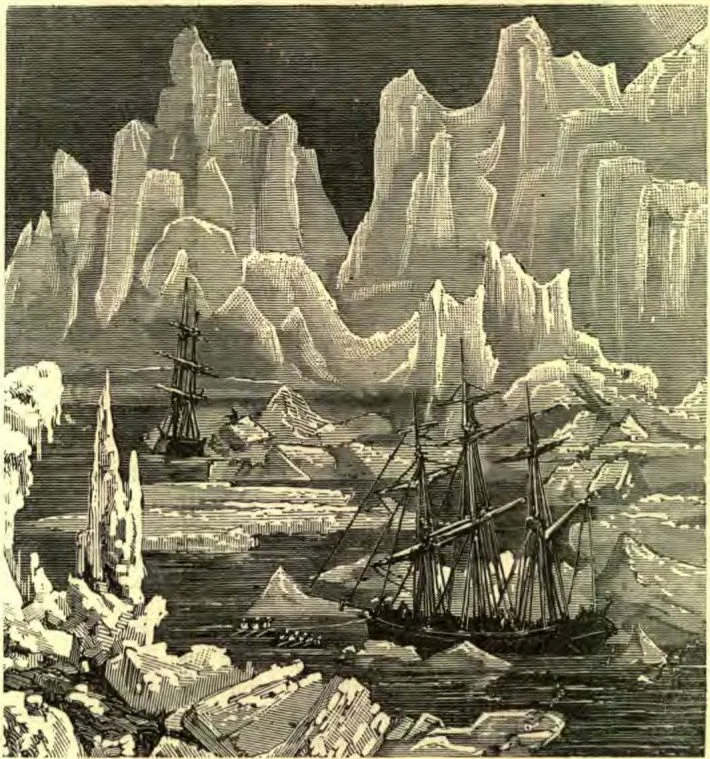
The following is one of the most thrilling narratives on record. As a well-known writer has said, “There is nothing in all the records of peril and adventure which exceeds this.” It is the history of nineteen persons,—men, women, and children,—who lived one hundred and ninety-five days, just six months and a half, upon cakes of ice in the Arctic Ocean, and were at last all saved: so wonderful are the mercies of God.
These poor ice-bound prisoners were a part of the crew of the United States Exploring Ship, Polaris, which was locked in the ice, in Smith’s Straits, on the north-western coast of Greenland. It was at the head of Baffin’s Bay, away up in latitude 77° 35' north. The particulars of this narrative are as follows:—
As there were alarming reasons for expecting that the Polaris would soon be crushed by the masses of ice, a large quantity of stores and provisions, with boats, instruments, etc., had been landed on the floe, and a canvas hut built for protection. But scarcely had these measures for safety been taken, when the fury of a tempest suddenly broke up the ice, snapped the ship’s cables, and rapidly bore her away from the floe.
This was in the night, and a blinding snow-storm was upon them. When the vessel thus suddenly disappeared, the men and stores floated off in various directions, and it was only after the most perilous exertions, occupying several hours’ labor with the boats, that the people were finally collected on the main floe. About midnight, thankful that Heaven had spared them thus far, they all huddled together under the scanty protection of some musk-ox skins. This was Oct. 15, 1872.
In the morning after the separation, it was discovered that they were upon an ice-floe about a mile and a half in diameter. The party consisted of ten seamen, among them one of the ship’s officers, two Esquimaux men, with their wives, and five small children,—one of them being a babe only two months old! His name was called Charles Polaris, after the ship upon which he was born. For their subsistence, they had a quantity of canned meat, a few bags of bread, some dried apples, and a sack of chocolate. They had also guns and ammunition, two ship’s boats, kyacks, various instruments of navigation, a tent, and several Esquimaux dogs.
After taking some nourishment, the sailors took their boats and attempted to reach the shore near by, intending soon to return and get their stores; but the continued tempest and moving ice stopped them, and they were obliged to haul up their boats on a floe. To add to their distress, the Polaris was now seen under steam and sail several miles away.
A gale came sweeping down upon them, breaking up the floe, and separating them from one of their boats. They were now left upon a piece of ice only twenty or thirty rods across. Having abandoned all hope of reaching the vessel, they made back to the main floe, and began to prepare for the trials before them. Soon the ice, which had hitherto remained stationary among the bergs, began to drift, drift away, with its living freight upon it.
Several snow huts were now built by the sailors, one of which was warmed by a lamp made out of a meat can, with a piece of canvas for wicking. Through a kind Providence, several seals were caught, which supplied them with both fuel and food. By the first of November the sun had completely disappeared, and they only had twilight, with the moon and stars, for many weeks. The floe party was soon reduced to very scanty rations of food; but they always managed to catch seals or other Arctic game, which saved them from actual starvation. Most of the dogs were shot, as they were too weak to be of use.
The 28th of November, Thanksgiving Day, was duly celebrated by the ship-wrecked company. Their dinner was as follows: Six biscuits, a pound of canned meat, a little soup, and some preserved corn. Thus they feasted, thanking the Giver of all mercies.
Life upon the floe was very simple. Most of the time was spent in the snow huts, it being too dark to move about, even if there had been any motive. Thus the dreary month of December passed by with few events of interest. Christmas was celebrated by the extra allowance of an ounce of bread to each person to make the seal broth thicker.
New Year’s day was the coldest that the party had experienced thus far. The thermometer was very low, not rising above 25°, and sometimes descending to 40° below zero. It was ice, ice, ice, in all directions,—bergs, hummocks, floes, and packs; but still they drifted south along the eastern coast of Prince William’s Land. They were now about half-way down Baffin’s Bay.
About the middle of January two polar bears came to the huts, and attacked the dogs, but as might be expected, the dogs were so weak that they were quickly worsted in the contest. All this time the party were drifting slowly along, in sight of the western coast, which they judged to be from forty to seventy miles distant. The cold month of February was dismal indeed, but they occasionally caught a seal, which saved them from perishing. At this time they were drifting through Davis’ Straits.
But we have already exceeded our limits, and so defer the remainder of this narrative till next week.
G. W. Amadon.

TEMPTATION

TRUE Christians cannot live in this world without being tempted. Temptation will meet them at every turn of life, and they must therefore learn to be ever on their guard to resist it.
We learn from the Scriptures that there is no sin in being tempted. Our Saviour was tempted, yet without sin. In the wilderness, Satan came with his temptations: “If thou be the Son of God, command that these stones be made bread.” “If thou be the Son of God, cast thyself down,” etc.; and again, “All these things will I give thee, if thou wilt fall down and worship me.” The “all things” were the kingdoms of the world and the glory of them.
In resisting these temptations, each time Jesus answers, “It is written.” If the word of God is in the heart, it will be ready upon the tongue when needed. The “written” word is a good weapon with which to defend ourselves from the wily foe. This weapon is called the “Sword of the Spirit;” and because so many do not use this “sword,” but undertake to resist temptation in their own strength, is the secret of their failure and downfall.
Temptation tests our union with God; if we are inseparably joined to him through Christ, nothing will be able to separate us from him. The apostle Paul says that “neither death, nor life, nor angels, nor principalities, nor powers, nor things present, nor things to come, nor height, nor depth, nor any other creature, shall be able to separate us from the love of God which is in Christ Jesus our Lord.”
The enemy may tempt us to doubt, to fear, to pride, but if our trust is in God, his temptations will be powerless. He may try to stop up our pathway to Heaven, but his oppositions can never be so strong, but that with God’s help we can surmount them.
V. A. M.

FOR BOYS.

To whatever occupation you may be called as a means of obtaining a livelihood, determine to understand it thoroughly and to work heartily at it.
If you constantly look upon your employment as a mere drudgery,—as something, which, while it must be done, may be done anyhow,—depend upon it, you will always be but a mere drudge. There are two classes of young men,—those who work without thought and without energy, and those who throw both thought and energy into their work. The first do their best to keep themselves down; the others do their best to raise themselves up; and both in the end will reap as they have sown.
Let your conduct be such as to insure the approval of those above you; resolve to learn everything that can be of service to you; let “well and quickly” be the mark at which you aim in relation to every business matter with which you are intrusted; and never forget that upon your diligence in youth will depend your success as a man.
Be careful as to who are your companions. “Tell me your company, and I'll tell you what you are.” Many a lad who has bid fair to grow up a respectable man, has been wholly ruined by mixing with evil companions.
The habits that some lads contract of resorting to public houses and frittering away their golden opportunities in smoking and drinking, have in thousands of instances laid the foundation for a disgraceful life and a wretched death. Choose associates of a different character. If you would not only respect yourself, but have the respect of others, you must shun the very presence of those who, having no regard for their own character, would soon destroy yours, and drag you down to their own level. Do not vainly hope that your presence and your influence will overcome theirs, and save them; for evil influences are more potent than good ones. Therefore, boys, keep good hours, good books, and good companions, thereby assuring yourselves of a good conscience and a good character.

EASTER MORNING.

WE went alone by the fields of rye Just as the day was dawning, The Marys, Salome, and I, For it was Easter morning! And each one carried with silent care Jars of spices rich and rare, Frankincense, and aloes, and nard, Spices our faint hands had prepared For our dear Lord’s embalming. When he walked by my side in happy days, Through sunny Juda’s rose-hedged ways, Where myrrhs drop gum, and spikenards weep, I gathered none then for his weary feet. Now I come to his death’s adorning! Through the dreadful day that was dark at noon, Through that night when he hung between us and the moon, When the captains were mad and the priests were in error, And the weak earth shaken with earthquake and terror, With tears we had sought them here and there, The gums so precious, the spices rare. While the face of our Christ, so deadly white, Came ever between us and the moon; The face of our Christ, so deadly white, That lay in the dark and dreadful tomb! And it was Easter morning!
“Who will roll us away the stone?” We said ere day was dawning, As we women went our way alone. All on that Easter morning! For the stone was sealed and very great, Hard as iron and heavy as fate; Stark it lay on the grave’s dumb mouth Where the white sepulcher faced the south In Joseph’s costly garden. The shadowy garden that lapped it in, Fair as pleasure and sweet as sin, Where bulbuls sang through the slumberous air— Now who should look for a sepulcher there! In the midst of Joseph’s garden!
We said, “Who shall roll us away the stone?” But save that word we uttered none; While each, in fancy, looked in at the tomb,— Messiah’s grave, by mortals hewn! By human hands carved from the rock That rose all white in the spectral light, The bare, unyielding, flinty rock That held in its hollow weird midnight— In the midst of Joseph’s garden.
So, to the place where our dead Christ lay, We came as the day was dawning; And lo! the stone was rolled away! For this was Easter morning. But who dare stoop and look into the tomb? That awful home of silence and gloom! (Messiah’s grave, by mortals hewn!) Who dares to turn from the garden gay, And search where the murdered Messiah lay In the tomb of man’s adorning! Ah! well for Mary Magdalene, From her seven-fold sins washed pure and clean! That she had brought to her living Lord, While yet she joyed in his spoken word, The spices for his embalming.
And well for us all if we dare, with her, Stoop down and look in at the sepulcher; And well for us all if we find within— Not the fleshless bones of treasured sin, Not the foul uncleanness of lust and pride, But the angel form of One glorified! And the grave-clothes cursed—the guilt we loved— In a little heap, and their power removed. While from the whitest sepulcher ’Whose darkness hid our Crucified, Up from the moaning sepulcher Messiah riseth glorified, And it is Easter morning! —Emma E. Brewster.

Watch for Opportunities of Doing Good

WATCH for opportunities of doing good.

PATMOS

PATMOS is a small island off the south-western coast of Asia Minor, about twenty miles south of Samos. It is a continuous rock, fifteen miles in circumference, for the most part rugged and barren; the coast is lofty, with many capes, and several good harbors. The only town stands on a high, rocky eminence rising abruptly from the sea, and contains about 400 houses, which with fifty more at La Scala, the landing-place, may be said to be the only habitations in the island. In the middle of the town is the monastery of St. John, a massive building, erected by the emperor Alexius Commenes. About half way up the mountain, between La Scala and the town, is a natural grotto, where it is said St. John had his apocalyptic visions. A small church is built over it. Patmos was a place to which persons were banished; and here St. John was exiled (Rev. 1:9), most probably in Domitian’s reign. It is now called Patino.

BIBLE LESSONS FOR YOUTH.

LESSON XCIII.—NEBUCHADNEZZAR'S HUMILIATION.

  1. How did Nebuchadnezzar busy himself after having subdued all the nations around him?
  2. What other astonishing work of art is supposed to have been reared by his hand?
  3. For what purpose were these gardens built?
  4. Of what did they consist?
  5. What effect did such unparalleled power and prosperity have upon Nebuchadnezzar?
  6. What warning did the Lord give him in order to check his pride and arrogance? Dan. 4.
  7. What did Nebuchadnezzar see in his dream?
  8. Describe the tree.
  9. What command was heard from Heaven? Verses 14-16.
  10. What vain attempt was made to secure an interpretation of this dream? Verses 6, 7.
  11. Who finally explained it?
  12. What did he say the tree denoted? Verses 20-22.
  13. How did he interpret the command for hewing down the tree and cutting off its branches? Verses 23-26.
  14. How long was this humiliation to continue?
  15. What effect was to be produced by it?
  16. What good counsel did Daniel give the king? Verse 27.
  17. Was it heeded?
  18. How did Nebuchadnezzar give expression to his pride about a year after having this dream? Verses 29, 30.
  19. What was heard while these words were yet in the mouth of the king?
  20. What words did the voice utter?
  21. What befell Nebuchadnezzar that same hour?
  22. What were his companions during this long period of insanity?
  23. What does he himself say in regard to the return of his reason?
  24. What does this humiliation seem to have done for the great conqueror?
  25. In what words does he manifest the submissive tenderness of a chastened spirit? Verse 37.

SYNOPSIS.

Having subdued all the nations around him, Nebuchadnezzar busied himself in strengthening and adorning Babylon. The ruins of the tower of Belus still remain; and the hanging gardens, built to please his Median wife, were one of the most astonishing works of art which the world has ever produced. They consisted of artificial mountains, on which forests waved, streams flowed, and cataracts leaped, in imitation of the queen's native land.
Even Nebuchadnezzar, with all his magnanimity of character, could not enjoy such unparalleled power and prosperity, without being puffed up by pride. So the Lord sent him a dream, in which he saw a great tree, reaching to heaven, visible from all parts of the earth, and affording sustenance and protection to all creatures. He heard a command from Heaven, saying, “Hew down the tree and cut off his branches, shake off his leaves and scatter his fruit; let the beasts get away from under it, and the fowls from his branches;” etc.
It was in vain that Nebuchadnezzar called on the wise men of his kingdom for an interpretation of the dream. At last Daniel came in, and explained its meaning. Of the tree, he said, “It is thou, O king, that art grown and become strong; for thy greatness is grown, and reacheth unto heaven, and thy dominion to the end of the earth.” Of the command to hew down the tree and cut off its branches, he said, “This is the interpretation, O king, and this is the decree of the Most High, which is come upon my lord the king: that they shall drive thee from men, and thy dwelling shall be with the beasts of the field, and they shall make thee to eat grass as oxen, and they shall wet thee with the dew of heaven, and seven times shall pass over thee, till thou know that the Most High ruleth in the kingdom of men, and giveth it to whomsoever he will.”
Daniel accompanied his interpretation with the following advice: “Wherefore, O king, let my counsel be acceptable unto thee, and break off thy sins by righteousness, and thine iniquities by showing mercy to the poor; if it may be a lengthening of thy tranquility.”
This excellent counsel, however, was not followed; for about a year after this, while walking in his palace, the king said, “Is not this great Babylon, that I have built for the house of the kingdom by the might of my power, and for the honor of my majesty?”
While these words were yet in the king's mouth, there was a voice heard from Heaven, saying, “O King Nebuchadnezzar, to thee it is spoken; the kingdom is departed from thee.” That same hour Nebuchadnezzar became insane, and so remained for seven years, in fulfillment of the dream interpreted by Daniel.
During this long period the beasts were his companions, and like them he fed upon the grass of the field. Of the return of his reason he thus speaks: “And at the end of the days I Nebuchadnezzar lifted up mine eyes unto Heaven, and mine understanding returned unto me, and I blessed the Most High, and I praised and honored him that liveth forever, whose dominion is an everlasting dominion, and his kingdom is from generation to generation.”
This humiliation seems to have effectually subdued the haughty spirit of the great conqueror. The submissive tenderness of a chastened spirit is manifest in these words: “Now I Nebuchadnezzar praise and extol and honor the King of Heaven, all whose works are truth, and his ways judgment; and those that walk in pride he is able to abase.”
G. H. BELL.

LESSONS FOR CHILDREN.

LESSON LXVII.—THE CAPTAINS SLAIN BY FIRE.

A FEW years after Ahab took Naboth’s vineyard from him, he went out, contrary to the counsel of the Lord, to make war with the Syrians. While engaged in battle, he was shot with an arrow, and carried off the field in a chariot. At evening he died, and his body was brought to Samaria. Now the king’s blood ran out into the chariot, and when a man went to wash the chariot in the pool of Samaria, the dogs licked up the blood of Ahab, just as the Lord had said they should.
After the death of Ahab, his son Ahaziah reigned in his stead. He was a very bad man. He not only worshiped the golden calves which Jeroboam had set up, but he worshiped Baal also, and led the people into idolatry.
One day King Ahaziah fell down through a lattice in his upper chamber, and was sick. And he sent messengers to Baal-zebub, the god of Ekron, to inquire whether he should recover from his sickness. “But the angel of the Lord said to Elijah the Tishbite, Arise, go up to meet the messengers of the king of Samaria, and say unto them, Is it not because there is not a God in Israel, that ye go to inquire of Baal-zebub, the god of Ekron? Now, therefore, thus saith the Lord, Thou shalt not come down from that bed on which thou art gone up, but shalt surely die.”
Then the messengers went back and told the king what had happened, and the king asked how the man looked. “And they answered him, He was an hairy man, and girt with a girdle of leather about his loins.” And the king said, “It is Elijah the Tishbite.”
Then the king sent a captain, with a company of fifty men, to take Elijah, and bring him to Samaria. When the captain and his men came to Elijah, they found him sitting on a hill; and the captain said, “Thou man of God, the king hath said, Come down. And Elijah answered and said to the captain of fifty, If I be a man of God, then let fire come down from heaven, and consume thee and thy fifty. And there came down fire from heaven, and consumed him and his fifty. Again also he sent unto him another captain of fifty with his fifty. And he answered and said unto him, O man of God, thus hath the king said, Come down quickly. And Elijah answered and said unto them, If I be a man of God, let fire come down from heaven, and consume thee and thy fifty. And the fire of God came down from heaven, and consumed him and his fifty.”
After this, the king sent another captain with his fifty, and when he came near to Elijah, he fell on his knees, and said, “O man of God, I pray thee, let my life, and the lives of these fifty thy servants, be precious in thy sight. . . . And the angel of the Lord said unto Elijah, Go down with him; be not afraid of him.” Then Elijah went down to the king, and told him that the Lord had said that he must surely die. So he died according to the word of the Lord, and Jehoram reigned in his stead.

QUESTIONS.

1. With whom did Ahab make war a few years after he had taken Naboth’s vineyard from him?
2. What counsel did the Lord give him in regard to going out to fight the Syrians? 1 Kings 22.
3. What happened to Ahab when he went out to battle?
4. How was he brought off the field of battle?
5. At what time did he die?
6. What was done with his body?
7. How was the prophecy fulfilled which Elijah had spoken, saying, “In the place where dogs licked the blood of Naboth, shall dogs lick thy blood”?
8. After Ahab’s death who reigned in his stead?
9. What kind of man was Ahaziah? Verses 52, 53.
10. Mention some of the wicked things which he did.
11. By what accident was he made sick? 2 Kings 1: 2.
12. To whom did he send messengers?
13. What did he want the god of Ekron to tell him?
14. Who met the messengers on the way?
15. Who sent Elijah to meet them?
16. What did the Lord tell Elijah to say to the messengers?
17. What did they do when they heard these words?
18. How did they describe the man who had told them these things?
19. Did the king know who it was from this description?
20. Whom did he send to bring the prophet to Samaria?
21. Where did they find Elijah?
22. What did the captain say to him?
23. What reply did Elijah make?
24. How were the prophet’s words fulfilled?
25. What did the king then do?
26. How did this captain address the prophet?
27. What became of him and his men?
28. How did the third captain come before Elijah?
29. What did he say?
30. What did the Lord then tell Elijah to do?
31. What was the fate of the king?

TRAINING

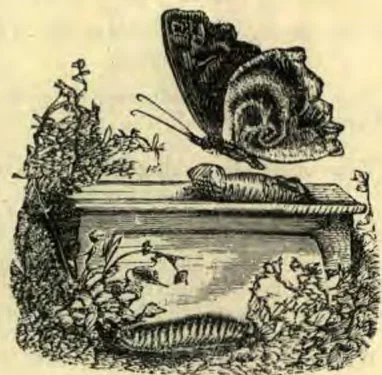
“And is this all my mother could do for me?” grumbled the woolly-bear caterpillar, as he crossed the gravel path where the little golden beetles shrank from him in something like disgust. “Frightful, of course frightful; very humiliating!” he exclaimed, as he began to make his dinner of the dead nettle to which he had crawled.
“Patience!” said the dead nettle; “you won’t always be a woolly-bear.”
A little time and the woolly-bear became a pupa, that is, an insect-mummy.
“Is this change for the better? am I any nearer beauty now?” he asked despairingly of the nettle. “Surely, I was better off when I could at least show life and move about, than I am in this living tomb!”
“Patience; when things come to the worst they mend,” said the nettle; “you won’t always be a mummy.”
One morning the sun shone on the glorious wings of a tiger-moth, as it balanced itself on the hedge, trembling with delight.
“Ah,” cried the nettle, “I told you so; the training wasn’t pleasant, but see what has come of it!”

ORIGIN OF CARPETS.

Carpets came from the East, and were manufactured by the Babylonians away back in remote antiquity. Turkey and Persia had them long before they were known in England. These Orientals needed them because they knelt many times a day in prayer, and sat cross-legged upon the floor. Necessity is the mother of invention, and hence rugs were manufactured.
The custom in Oriental countries, copied largely by France, is to have carpets in one piece, and to only partially cover the floor, or to use rugs merely before the principal pieces of furniture. It is only in the United States, England, and Germany at the present day that carpets are universally used covering the entire floor, and where the plan of waxing floors, as in France, is almost entirely unknown.
Those who have painfully walked through some of the palaces in Europe, shuffling along in felt slippers, or endeavoring to stand upright without them, realize the comforts of a well-covered floor, as well as the great addition to the beauty of a well-furnished house.
It is somewhat singular that the English should have been so late as they were in discovering the utility of carpets, for while they did not need them for the act of worship, the climate would naturally suggest such an addition to warmth.
Yet we learn from history that as late as the reigns of Queens Mary and Elizabeth rushes were used, even in the palaces, though carpets had been imported to some extent from the East.—Youth’s Companion.

MAKING GOLD-LACE.

ONE of the most singular mechanical operations imaginable is the making of gold wire for what is known as gold-lace. The refiner first prepares a solid rod of silver about an inch in thickness; he beats this rod, applies upon the surface a sheet of gold-leaf, burnishes this down, and so on, until the gold is about one-hundredth part the thickness of the silver. The rod is then subjected to a train of processes which brings it down to the state of fine wire, when it is passed through holes in a steel plate lessening step by step in diameter. The gold never deserts the silver, but adheres closely to it, and shares all its mutations; it is one-hundredth part the thickness of the silver at the beginning, and it maintains the same ratio to the end. As to the thinness to which the gold-coated rod of silver can be brought, the limit depends on the delicacy of human skill. It has been calculated, however, that the gold actually placed on the very finest silver wire for gold-lace is not more than one-third of one-millionth of an inch in thickness; that is, not above one-tenth the thickness of ordinary gold-leaf.

The Arrow and the Unreturning Word

It is with a word as an arrow—the arrow once loosed does not return to the bow; nor the word to the lips.

A TRUE STORY OF A STORM.

TOLD BY A LITTLE BOY.
Things floated away, and the day turned dark, And papa wasn't at home, you know; And we didn't have any dove and ark, Or mountain where we could go, Like they used to have some other year— That time when the great flood was here.
“The wind blew the oak-tree down: (I guess The Lord didn't know about the nest) And I thought this world was going to drown, —Did Lewis tell you the rest? Well, if he didn't—well then—well, I guess—somebody will have to tell.
“Now this was the way: One other night (I wish that Louis had told you then) When the moon was up—we had a quarrel About one of papa's men— (That is the reason we didn't speak) He said that Jerry wasn't a Greek,
“But a Jew; so when the storm came up I thought I must speak one little word To Louis before I should die! So I told him about the bird, And the other birds out there in the nest That their mother hadn't even dressed!
“If it hadn't been for the rain, you see, We never could have been friends again; And who would I have to play with me, If it hadn't been for the rain? And Louis said he was glad to speak, But he thought that Jerry wasn't a Greek.”
—Sel.

LETTER BUDGET.

CHELSEA, MASS.
DEAR EDITORS: I began to take the INSTRUCTOR when I was about three years old. I could not read it, but mother read it to me. Now I am twelve years old and am ready to read it as soon as it comes every week. I like it very much. I go to meeting and Sabbath-school every Sabbath. There are five scholars in our class. We study from the lesson sheet. I want to get my lessons perfectly, and I want to overcome all my sins and be saved when Jesus comes. GEORGIE B. MURPHY.
If we really want to do anything, we are pretty apt to do it; so we think that Georgie will have his Sabbath-school lesson; that he will overcome his sins; and we know that Jesus will save all the overcomers.
SUMMER SHADE, KY.
DEAR EDITORS, and all the INSTRUCTOR family: I will write to you again, as another year is out, and I want to renew my subscription for this good little paper. We cannot afford to do without it. I have been a reader of its pages for two years, and I like it better now than I did at first. I love to read the new editors’ pieces, but I would love to hear from sister Chapman and sister Davis. I wish they would write for us too. I am now eight years old. I have three brothers, but one of them sleeps in the grave. We hope he will soon awake. I can’t write good yet, so I got ma to help me. Yours in love, FANNIE H. BRANSTETTER.
We join with you in wishing to hear from the former editors. We have a promise that they will write whenever they can; we hope that it will be soon.
BURNHAMSVILLE, MINN.
DEAR EDITORS: I am ten years old. I go to Sabbath-school every Sabbath. I get my lessons in the INSTRUCTOR, and my brother and sisters learn theirs in Bible Lessons for Little Ones. I go to school every day during the week. I like my teacher very much. She is very good to me, and I try to please her and do as she bids me. I read in the Third Reader, but will soon be in the Fourth Reader. I am going to try to get up a club for the INSTRUCTOR. I like it very much, and I like to read the letters. I want to be a good girl and meet all the INSTRUCTOR family in the new earth. Please pray for me. MARTHA A. PEASE.

You have reached the end of this edition.

The Youth’s Instructor · Apr 7, 1880