The Youth’s Instructor, Vol. 29, No. 26.

MY GRACE IS SUFFICIENT

The Youth’s Instructor

Jun 29, 1881

S. D. A. Publishing Association · Battle Creek, Mich. · Jun 29, 1881

“MY GRACE IS SUFFICIENT.”
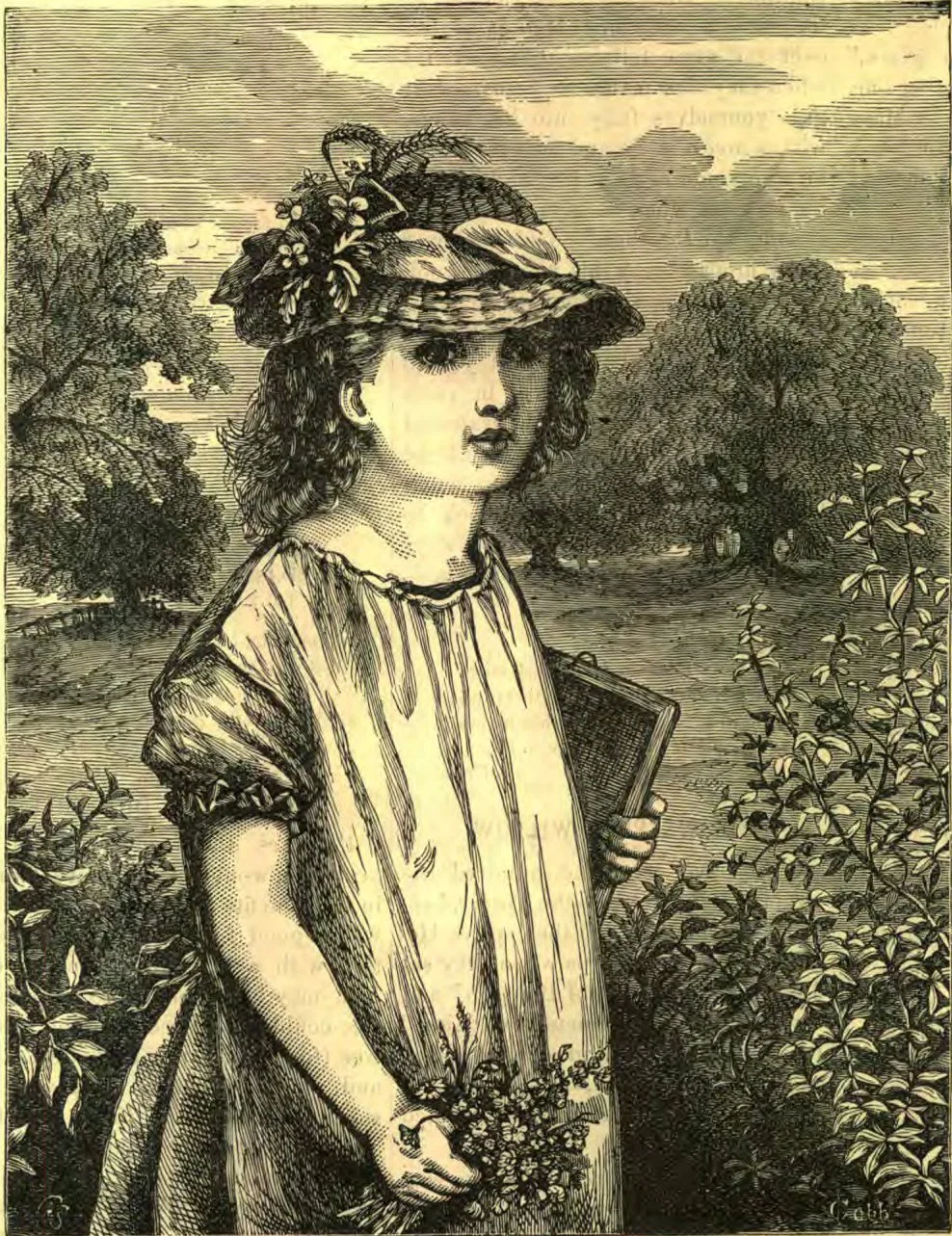
“No, it’s of no use; I’ve tried and tried, and I can’t help it. I mean to be a good boy, and I want to please Jesus when I’m praying or reading the Bible or in Sabbath-school; but the moment I get among the boys, and one of them is saucy to me, my temper gets up, and I can’t help knocking him down; and then I get punished, and all the other boys think, if they don’t say so, ‘That’s the good of being a Christian.’”
“And it’s just the same at home. Father tells me to go of an errand, or mother wants me to mind baby when I want to play. I mean to do everything they tell me, but somehow, before I know it, I have said something impertinent, and father scolds me, and mother just looks sadly out of her large eyes, and says, ‘I thought Ernest was trying to be a better boy.’ And so I am trying, ever so hard; but the harder I try, the more I don’t succeed, till, really, I get so discouraged I am almost inclined to give up trying. I didn’t think I ever should tell another lie after I found Jesus; but, O dear! I can hardly sleep for thinking how I told Mr. Ponsonby the other day that I didn’t hear Jim Ford prompt me in the geography class, when I heard him say ‘Skager Rack’ quite distinctly; and then I was afraid to confess, and it has made me wretched ever since. I don’t seem to get one bit better, and yet I do try. This must be what the people at prayer-meeting mean by talking about their being such ‘miserable sinners,’ and always ‘doing the things they ought not to do,’ and ‘leaving undone the things they ought to do’; and if all the grown-up people feel so, I suppose it must be so, though I wish it could be different. The Lord Jesus has promised to forgive me, anyhow, and that is a great comfort.”
Yes, it is always a great comfort; and Ernest was quite right in his long soliloquy, except in thinking that it must be so. He had given his heart to Jesus about a year before, and though he still loved him very much, he was beginning to realize something of what St. Paul meant when he said, “O, wretched man that I am, who shall deliver me?”
But just before he went to bed, Ernest opened the little Bible, which was becoming so dear to him, and read, “My grace is sufficient for thee, for my strength is made perfect in weakness.” And as he fell asleep, the sweet words kept floating through his mind, till thoughts and feelings took possession of him such as he had never known before.
When he awoke, the first thing he did was to kneel down, and say: “Dear Lord Jesus, I am all weakness; I do everything bad and I yield to every temptation, but thou knowest that I desire above all things to be holy, and live according to thy will; and thou art strong, and thou hast promised that thy grace shall be sufficient for me: give me faith to believe it, since thou sayest so, and may I find it sufficient all this day.”
“Ernest,” said his father, “step round to Lawson’s on your way to school, and tell him to send up a load of wood.”
“Yes, sir,” said Ernest, promptly, with his mind still full of his morning prayer.
Lawson’s was full half a mile out of his way and in quite a different direction. The morning was very cold, and as Ernest trudged briskly along, he met a companion, who shouted:—
“Hullo, truant, so you’re going off over Cedar Hill to try the coasting! You know this isn’t the way to school. But that’s always the way with you pious chaps—always sneaking off and getting a little fun on the sly, if you can. But I’ll stop and tell your father on the way, that’s what I’ll do.”
How poor Ernest’s face flushed, and how he felt his hands clench inside of his mittens! Yesterday he would have knocked Sam down, or at least tried to; but now he said in his heart, “Thy grace is sufficient; I believe it; let me find it so,” and after a moment said aloud: “Don’t keep me, Sam, or I shall be late for school. Here’s an apple for lunch if you’d like it; I’ve got two.”
Flushed and breathless with running, Ernest took his place in school only just in time, and soon after the geography class was called.
“Number one, take your place,” said Mr. Ponsonby; but number one, who was Ernest, did not stir. “Make haste, or the next boy will be head, and you will lose the prize you have been trying for so long.”
“Let him,” said Ernest, and quietly walked to the foot.
The boys all stared, and the teacher said nothing till the recitation was over, and then he called Ernest up and demanded an explanation of this strange conduct.
“I had no right to the place, sir. I should have lost it last week only I heard Jim Ford say ‘Skager Rack.’”
“I remember; but why did you tell a lie when I asked you?”
“Because the temptation came suddenly, and I just said the first thing that came into my head. I hope God has forgiven me.”
“I hope he has,” said Mr. Ponsonby; “but how is it that after keeping this to yourself a whole week, you tell me about it now.”
“I tried to tell you before, and somehow I couldn’t; but to-day I asked God to help me. I believed he would, and he has. Please, may I go to my seat, sir?” said Ernest, who saw that all the boys were looking at him, though no one could hear what was said. The teacher dismissed him with a smile, instead of the reprimand which he expected, and said, “I wish we had more boys like you.”
Ernest went home to dinner very happy, and thinking that he really would try some of that coasting in the hour that intervened; but his mother met him at the door with his little sister all cloaked and hooded in her arms.”
“I am so glad you have come,” she said; “baby has been so fretful, and I promised her you would take her on your sled. There will be just time for a nice ride before dinner.”
“O mother,” said Ernest, and he was just going to tell her that he couldn’t, for all the boys were going to slide down Cedar Hill, and he wanted to go ever so much, when he remembered, accidentally it seemed to him (really the Spirit of God reminded him), and said, almost aloud, “His grace is sufficient.” God gave him the victory, and he seated baby comfortably on the sled and dragged her quietly up and down the sunny village street, taking no notice of another of the tormentors who followed him, shouting, “There goes the little saint; before I would be made a nursery maid of like that.”
We have no time to follow the rest of Ernest’s day, but his prayers that night were very different from those of the night before. It did not seem to him that he had “tried” as hard as usual, and yet God’s word had proved itself true, and his grace had been sufficient in every time of temptation and danger. Why? Just because he had for the first time believed that it could and would.
Do you see what I mean, children? It is not true when you say that you can’t help it. It is not necessary that Christians, old or young, should go on committing the same sins, yielding to the same temptations, and mourning over the same failures that they did when they first came to Jesus. Just give yourselves fully into his hands, with a mean to do and be everything he wants you to do or be; and believe his promise when he says, “My grace is sufficient for thee.” Did you ever know him to break his word? Look to him just when the temptation comes, and according to your faith it will be unto you. Not that I expect you to be perfect at once, or ever in yourself. You will forget to be watchful sometimes, sometimes you will be willful, and sometimes you won’t know; but whenever you look to Jesus in full faith, you will always find his grace sufficient for you.—Methodist.

SUMMER

Ne'er soft descending showers Hath April poured upon the smiling plains, And leafy June leads on the sultry hours; For May hath gone, And summer marches on, To take possession of her wide domains.
The skies are bright and blue, Save where the silver clouds sail slowly by, In every form and ever-varying hue. Soft breathes the gale Through each sequestered vale, And high o'erhung with forests waving high.
Now, in the meadows green, The fragrant odor of the new-mown hay Rises like incense where the scythe hath been. And all the air Re-echoes everywhere With sounds of labor till the close of day.
Now, hurried from the fold, The bleating flocks dash through the cleansing stream And issue, dripping, from the waters cold; Till, warm and dry, They all contented lie, Shorn of their fleeces, in the sunlight's gleam.
Hushed are the warbled strains Of earth's glad minstrels; for, with busy care, On restless wing they seek the fertile plains, And to their brood Swift bear their insect food, And with low chirpings fill the silent air.
But now, in bright array, A thousand blossoms glitter on the sward, Like us they linger but to pass away; Yet, bright and fair, They scent the morning air, And waft their odors on the winds abroad.
Amid the hedge-rows green The sweet-brier bids her crimson buds expand, Within whose folds the wild bee lurks unseen; Low on the ground The strawberry is found, Within the woods that flourish o'er our land.
Throned on the placid tide Of some clear stream the lily lies at rest, Sleeping in peace where the still waters glide; And, tired of flight, The dragon-fly may light, And fold its wings above her snowy crest.
For now the glorious days Of early summer shed their brightness here, And all creation sings its Maker's praise; While every flower That blossoms for an hour Marks the swift progress of the rolling year. —Kind Words.

Happiness Is Like Manna

Happiness is like manna. It is to be gathered in the grains and enjoyed every day; it will not keep; it cannot be accumulated; nor need we go out of ourselves, nor into remote places to gather it, since it has rained down from Heaven at our very doors, or rather within them.

THE WEEPING WILLOW.

You have seen and admired the weeping-willow tree—the Salix babylonica—upon which the captive Hebrews hung their harps when they sat down “by the rivers of Babylon” and “wept when they remembered Zion.” It is a native of the garden of Eden, and not of America, and I will tell you how it is said to have emigrated to this country.
More than a hundred and fifty years ago a London merchant lost his fortune. He went to Smyrna, a sea-side town in Asia Minor, to recover it. Alexander Pope, one of the great poets of England, was the merchant’s warm friend, and sympathized with him in his misfortunes.
Soon after the merchant arrived in Smyrna, he sent to Pope, as a present, a box of dried figs. At that time the poet had built a beautiful villa at Twickenham, on the bank of the river Thames, and was adorning it with trees, shrubbery, and flowering plants.
On opening the box of figs, Pope discovered in it a small twig of a tree. It was a stranger to him. As it came from the East, he planted the twig in the ground near the edge of the river, close by his villa. The spot accidentally chosen for the planting was favorable to its growth, for the twig was from the weeping willow tree—possibly from the bank of one of “the rivers of Babylon”—which flourishes best along the borders of the water-courses.
This little twig grew vigorously, and in a few years it became a large tree, spreading wide its branches and drooping, graceful sprays, and winning the admiration of the poet’s friends as well as of strangers. It became the ancestor of all the weeping-willows in England.—Myrtle.

THE LITTLE DRY TREE.

PERHAPS the readers of the INSTRUCTOR would like to share with me in the benefits I received, in company with a good friend, from a conversation with a little dry hemlock tree. You may be surprised to hear that a tree could talk, especially such a little tree (for it was only three feet high) and more especially, when you consider that it was a little dry tree. You will naturally inquire, What did you talk about? How did the little tree converse? What did it say? and what were the lessons of instruction taught? Well, I shall endeavor to tell you as briefly as possible.
We walked out one beautiful June morning into the edge of a grove of timber. We seated ourselves upon a large oak that had fallen down. Not far from us stood the little dry tree in question. We went to it, pulled it up by the roots, and having re-seated ourselves, we began thus: Little tree, what was the cause of thy premature death? The tree answered by its profound silence. We went to the spot and found a flat stone near the surface, which told the secret: Because it had no depth of earth; when the long drought came, it withered and died for want of moisture. Ah! we thought, little tree, how similar thy fate to those who make hollow professions of religion, but have no heart in the cause of truth, so that when temptation arises because of the word, they wither and die.
Again, we inquire, Little tree, have you not a large number of branches for so small a tree? And again the same answer! And then we thought how sadly true it is, that the God-given powers of many are suffered to shrivel and decay for want of nourishment, and all because their possessors are so superficial in their knowledge and attainments in divine things.
Again, we said to the little skeleton, We think that if some of these dry branches should be removed, you would be more companionable. But the tree said not a word. So we took out a handkerchief and attempted to wipe off the limbs, but the little fellows were so stubborn that we could make no impression.
Then we thought within ourselves, it is no easy matter to get rid of bad habits when they have once become settled. We then took out a jackknife and whittled them all off even with the trunk of the tree, and we found that the tree was much easier handled and more agreeable to the touch. So we thought, How pleasant is the companionship of those who are free from those habits that render so many obnoxious to persons of refinement and good taste.
But, while we found that the society of our mute yet eloquent little companion was rendered more agreeable by the removal of the branches, yet we found we were by no means clear of them; and this last lesson from our little companion of the wood was the most important of all. We found that although we had cut off all the branches, there still remained the knots. So we took the knife and began to take off one layer after another, till we got down to a little central pith, called the heart; and there, to our astonishment, we found that the knots all started from the heart! Ah! thought we, surely this is a lesson to us! We may leave off bad habits by reformation, but the grace of God must change the heart; the blood of Christ must be applied to cleanse the heart from the evil propensities that culminate eventually in sinful habits. So we returned to our home, feeling grateful to our Heavenly Father, who has made the humblest of his creatures capable of imparting such useful lessons of instruction. A. McL.

Forever from the Hand That Takes

FOREVER from the Hand that takes Our blessings from us, others fall; And soon or late, our Father makes His perfect recompense to all. —Whittier.

THE SILENT POWER.

Huge and strong are the blocks of stone in the old castle of Banias, in Syria, defying the shocks of earthquakes for centuries, but now the masonry is loosening. Can you imagine how? Little seeds fell into the crevices between these rocks; there they sprouted, and now their stout, hard growth is forcing the stones apart. Even so will little sins rupture a strong character.

THE HAPPY BUD.

A BUD droops low on a grassy lea,— She does not know what her fate will be; So she waits, and longs, and sips the dew, And sings the song that I sing to you:
“I am so small, And the world so wide,— The trees are so tall That whisper and call By the brooklet’s side, That I could not see, Should I open my eyes, The sunny lea, Or the waters free, Or the beautiful skies.
“So foolish I seem, And the world so wise, That I cannot dream What flowers will gleam When I greet the skies.
“But though I’m so small, And the world is so wide,— Though the trees are so tall That whisper and call By the brooklet’s side,— I’ll do my best To be sweet and bright! And I’ll work and wait For a worthy fate, Till I find the light.”
O happy bud on the grassy lea! Filled with the beauty that is to be; Well may she trust to the sun and dew, As she sings the song that I sing to you. —St. Nicholas.

SCENES IN THE LIFE OF CHRIST.

LESSON 23.—JESUS TEACHES THROUGHOUT GALILEE.

One morning Jesus rose a great while before day, and as soon as it was light, went away into a solitary place, and there prayed. But Simon and some others followed him, and when they had found him, they said unto him, “All men seek for thee.” Now the people feared that Jesus was going to some other place, so they urged him to remain with them; but he said, “I must preach the kingdom of God to other cities also; for therefore was I sent.” So he traveled throughout Galilee, preaching in their synagogues, and healing the sick and casting out devils wherever he went.
As he was thus journeying, there came to him one day a leper, who kneeled before him, and said, “If thou wilt, thou canst make me clean.” Jesus pitied the poor man, and putting forth his hand, touched him, saying, “I will; be thou clean.” When Jesus had said this, the leprosy immediately departed from the man, and he was entirely well.
Then Jesus sent him away, telling him to say nothing to any man, but to show himself to the priest, and offer for his cleansing those things commanded in the law of Moses. But the man was so rejoiced that he told his story everywhere he went, and in a little while such a multitude gathered around Jesus from every quarter that he was obliged to leave the city and teach in desert places.
What a sight it must have been to see such crowds of people coming from all directions, and gathering about the Saviour in his lonely retreat, to learn of him how they might enter into the kingdom of heaven! There Jesus stood and taught all through the weary day, and when night came on, and the crowd withdrew, he went by himself and prayed.
How many sad hearts were made to rejoice by seeing their sick and crippled friends restored to perfect health! and how many were made glad by the words of Jesus, which gave them a hope of eternal joy in the world to come.
That same Jesus is now in Heaven, but his angels, though unseen by us, are constantly about us, and he knows all we do and all we suffer. He is just as pitiful and kind as when he was upon the earth, and he can hear us when we ask him for help just as well and as certainly as he heard the leper. He is just as powerful to help now as he was then, and just as willing to relieve those who suffer. We cannot hear him speak, but we can read his words, and know that they are meant for us as well as for those to whom they were directly spoken.
How we ought to love such a Saviour, and how gladly we ought to do all that he requires of us!

QUESTIONS.

  1. Of what miracles did we learn in our last lesson?
  2. Where were they performed?
  3. Describe them.
  4. What do we learn in this lesson about our Lord’s habits of early rising? Mark 1:35.
  5. What did he do as soon as it was light?
  6. Who followed him?
  7. What did they say to him?
  8. What did the people fear?
  9. What did they want him to do?
  10. What did he say to them?
  11. On what journey did he set out that day?
  12. What did he do as he was traveling throughout Galilee?
  13. Who kneeled before him one day and cried out for help? Verse 40.
  14. What did the leper say?
  15. What were the feelings of Jesus when he saw this unfortunate man kneeling before him?
  16. What did the Saviour do for him?
  17. What was the effect of his words?
  18. Did Jesus allow the man to remain with him?
  19. What did he tell him to do?
  20. What did this law require? Lev. 14:1–32.
  21. Did the man succeed in keeping the good news to himself?
  22. When the people heard of this miracle, what did they do?
  23. Where was Jesus obliged to go in order to find room for the people?
  24. What did he do at night, after having taught the people all through the day?
  25. What must have made many sad hearts rejoice?
  26. What must have made many people glad?
  27. Where is that same Jesus now?
  28. Whom does he send to watch over his children now?
  29. What does he know about us?
  30. What are his feelings toward his people?
  31. How may we feel in regard to his hearing and helping us?
  32. How does he speak to us now?
  33. How ought we to feel toward such a friend and Saviour?

NEW-TESTAMENT HISTORY.

LESSON 26.—STILLING THE TEMPEST, AND HEALING THE DEMONIAC FROM THE TOMBS.

“Now when Jesus saw great multitudes about him, he gave commandment to depart unto the other side. And when he was entered into a ship, his disciples followed him. And, behold, there arose a great tempest in the sea, insomuch that the ship was covered with the waves: but he was asleep. And his disciples came to him, and awoke him, saying, Lord, save us; we perish. And he saith unto them, Why are ye fearful, O ye of little faith? Then he arose, and rebuked the winds and the sea; and there was a great calm. But the men marveled, saying, What manner of man is this, that even the winds and the sea obey him!”
“And when he was come to the other side into the country of the Gergesenes, there met him two possessed with devils, coming out of the tombs, exceeding fierce, so that no man might pass by that way.” Mark and Luke, in narrating the same, speak of only one man. Luke says, “There met him out of the city a certain man, which had devils long time, and ware no clothes, neither abode in any house, but in the tombs. When he saw Jesus, he cried out, and fell down before him, and with a loud voice said, What have I to do with thee, Jesus, thou Son of God most high? I beseech thee, torment me not. (For he had commanded the unclean spirit to come out of the man. For oftentimes it had caught him: and he was kept bound with chains and in fetters; and he brake the bands, and was driven of the devil into the wilderness.) And Jesus asked him, saying, What is thy name? And he said, Legion; because many devils were entered into him. And they besought him that he would not command them to go out into the deep. And there was there an herd of many swine feeding on the mountain; and they besought him that he would suffer them to enter into them. And he suffered them. Then went the devils out of the man, and entered into the swine; and the herd ran violently down a steep place into the lake, and were choked. When they that fed them saw what was done, they fled, and went and told it in the city and in the country. Then they went out to see what was done; and came to Jesus, and found the man, out of whom the devils were departed, sitting at the feet of Jesus, clothed, and in his right mind: and they were afraid. They also which saw it told them by what means he that was possessed of the devils was healed. Then the whole multitude of the country of the Gadarenes round about besought him to depart from them; for they were taken with great fear: and he went up into the ship, and returned back again.”
“Now the man out of whom the devils were departed besought him that he might be with him; but Jesus sent him away, saying, Return to thine own house, and show how great things God hath done unto thee. And he went his way, and published throughout the whole city how great things Jesus had done unto him.”
The astonishing miracles recorded in this lesson give the most positive proof of the divine power of Jesus; yet the people besought him to leave them. It seems that they did not regard the deliverance of the demoniac from the power of Satan, or his restoration to his family and friends, as a sufficient compensation for the loss of the swine that had been drowned in the lake. And is it not true that people do now bid their Lord depart, lest the service he requires should cause the loss of property or friends?

QUESTIONS.

  1. What commandment did Jesus give when he saw great multitudes about him? Matt. 8 : 18.
  2. What seems to be the probable cause of his leaving the people who had come out to see and hear him?—It may have been because both the multitude and the disciples were in great need of rest; or it may have been for the sake of performing the miracles that followed.
  3. What caused the disciples to cry out to their Lord as they were crossing the sea? Verse 24.
  4. What did they say?
  5. When Jesus awoke, and saw their fear and their great danger, what did he say?
  6. What did he then do?
  7. Who witnessed this miracle besides those that were with him in the boat? Mark 4 : 36.
  8. How were all these men affected at beholding such a display of power? Matt. 8 : 27.
  9. What did they say?
  10. Into what country did he come after he had reached the eastern side of the lake?
  11. Who met him just as he was landing from the boat? Matt. 8 : 28; Mark 5 : 2, 3; Luke 8 : 27.
  12. Describe the condition and habits of this man.
  13. What did he do when he saw Jesus? Luke 8 : 28.
  14. What did he say?
  15. Why did the evil spirit complain of being tormented? Verse 29.
  16. How had the poor man suffered from the evil spirit?
  17. How did he answer when Jesus asked his name?
  18. What favor did Jesus grant the devils at their request?
  19. What was the result?
  20. What did the men do who had been tending the swine?
  21. When the multitude came out to see what had been done, in what condition did they find the man?
  22. Who told them by what means the demoniac had been healed?
  23. What did the people urge Jesus to do?
  24. As the man out of whom the devils had departed saw Jesus entering a boat to return to the other side of the lake, what petition did he urge?
  25. What did Jesus say to him?
  26. How did the man follow the instruction given him?
  27. Of what did these astonishing miracles give positive proof?
  28. Of what inconsistency were the people guilty?
  29. What value did they seem to put upon the restoration of the afflicted man to his family and friends?
  30. What causes some at the present time to bid their Lord depart?

IN THE SUNSHINE.

SUNSHINE is good for health. The flowers are all brighter for it, and fruits ripen because of it. It brings warmth, and light, and life. How gloomy it must be to live in the distant northern regions where there is no sun to be seen for six months! But, on the other hand, how bright and beautiful it must be there when the sun shines for the next six months! So if there is a long night, there is sure to be a long day to follow.
It is well to get all the sunshine you can. Even in the hottest days of summer, the sunshine is good, because it makes the grain grow, and ripens vegetables and fruits. What a blessing it is, giving light, and color, and brightness to everything! The sun is a wonderful painter. In the dark night every object looks black; but when the sun rises, he touches the earth with his bright beams as a painter touches the canvas with his brush, and see how quickly and how beautifully the colors come.
Sunshine in the face is also very beautiful. This can come only from a sunny heart. We like to see boys and girls with bright, sunny faces, looking as though they felt happy. It is not pleasant to see a child with a dark frown like a cloud on its face. We have seen such children, who would make a warm room seem chilly. Ugh! how everybody shivers when they come near. They are so cross, ill-natured, selfish, and gloomy, that nobody is pleased with them. On the other hand, there are children whose faces are always smiling and bright, and they make every one happy who sees them.
Remember, then, to have the heart full of light, and joy, and peace; and the face will be sure to show it. If the blessed Saviour dwells in the heart, he will surely bring the sunshine, and not only our faces, but our daily lives, will show it. It will be seen in our treatment of parents, and brothers and sisters, and friends. Keep in the sunshine!—S. S. Advocate.

Let Scripture Interpret Scripture

THERE is no better way to study the Bible than to make the Bible its own interpreter. Let one part of the book explain another.

WORK

Down and up, and up and down, Over and over and over; Turn in the little seed dry and brown, Turn out the bright red clover. Work, and the sun your work will share, And the rain in its time will fall; For Nature, she worketh everywhere, And the grace of God through all.
With hand on the spade and heart in the sky, Dress the ground, and till it; Turn in the little seed brown and dry, Turn out the golden millet. Work, and your house shall be duly fed; Work, and rest shall be won; I hold that a man had better be dead Than alive when his work is done!
Down and up, and up and down, On the hill-top, low in the valley, Turn in the little seed dry and brown, Turn out the rose and lily. Work with a plan or without a plan, And your ends they shall be shaped true; Work, and learn at first hand, like a man,— The best way to know is to do!
Down and up till life shall close, Ceasing not your praises; Turn in the wild, white winter snows, Turn out the sweet spring daisies. Work, and the sun your work will share, And the rain in its time will fall, For Nature, she worketh everywhere, And the grace of God through all. —Alice Cary.

THE GRAPE-GATHERERS.

You have all eaten grapes, and most of you have doubtless gathered them from the vines. And what prettier sight is there than to go into a vineyard, on a still, sunny, autumn day, and see the luscious clusters of juicy grapes, purple and pink, peeping from under the green leaves. Then perhaps some of you have been to the woods to gather wild grapes, and, bareheaded and barefooted, have climbed the trees where the vines ran in and out among the branches. You probably did not carry home many, but you had the fun, and, under the waving old trees, heartily enjoyed the lunch which mother was thoughtful enough to give you in the morning. A few years ago, when garden grapes were not so plenty as now, the country children used to think they must go every fall and gather wild grapes in this way.
Although very nice grapes are now raised in our country, still choicer ones are raised across the sea. In France, Portugal, Spain, and other countries of Southern Europe, they have very large vineyards, and great quantities of grapes are raised. Many boys and girls, as well as men and women, are employed in these vineyards, gathering the ripened fruit, much of which is made into wine and shipped to all parts of the world. The choicest, sweetest grapes are carefully dried on the stems, and thus we get our raisins. The grapes in this country are not sweet enough to make raisins; and so when you eat your nice bunches of raisins, you can think how they were perhaps gathered by some poor little peasant child far over the seas.
In our picture we have some grape-gatherers; but either the men are very small or the bunch of grapes is very large, for it seems to take two of them to carry one bunch of grapes. Do you think this is a scene in our country? It can hardly be, for do you not see how strangely the men are dressed? And the trees too do not seem like those that grow in our country. Well, many years ago, in a great wilderness, far across the ocean, a large army of people were traveling. They had come from a country called Egypt, and were on their way to a land which the Lord had promised them,—a very fruitful land, “flowing with wine, milk, and honey.” They had been in the wilderness about two years; they had camped at one place for about a year, and there they had made them a kind of tent, or tabernacle, in which to worship God. But now they had come up to the borders of the “promised land,” and the Lord, by the mouth of his servant Moses, who was their leader, had told them to send men to search the land whither they were going, and see what kind of land it was, whether it were good or bad. So they chose twelve men, and told them to be of good courage, and go up and search the land, and to bring back some of its fruit.
These men did as they were bidden; and after forty days they returned, bringing with them a bunch of grapes which they had cut down by the brook Eschol, in the valley of Eschol, where for so many, many years ago Hebron has stood; a bunch so large that they had to carry it upon a staff between two men. And they brought also pomegranates and figs, and other fruits of the land, that those who had sent them might see what a goodly land it was. The rest of the story—what the people said and did when they heard this report, and so on—we have not time to tell; but you will find it by reading the 13th and 14th Chapters of Numbers; and then, if not now, you will guess who these men in the picture are, where they have been, and where they are going. E. B.

CROSS LOOKS.

“What are you doing, Esther and Ruth, so close to the river’s brink?” “It is mamma’s birthday,” said Esther. “I have come with my basket to gather water-lilies.”
“So have I,” said Ruth. “I will climb the high rock and reach them with my arm.”
“Nonsense, Ruth! The rock is too steep, and your arm is too short for such a task! You will fall over. Run back, darling, and get some wild flowers from under the trees; mamma will like them.”
“No, no!” said Ruth, who wished her own way. She shook her head, and looked down into the water with a frown. “What cross little girl is that?” she cried.
“Why, Ruth, it is your own shadow.”
Then Ruth got up and ran away.
“I won’t have such a cross shadow,” she said.
“Then you must not feel cross, my darling. Your soul will be sure to cast a shadow on your face.”—Sunbeam.

JOHN'S OBJECT LESSON.

John had been to church and heard an eloquent sermon from the text, “He that soweth in tears shall reap in joy;” but somehow the discourse made very little impression on him.
But on Monday, John fell from the top rail of a fence and broke his leg, and was taken home crying and writhing with pain, and sat down in a chair to wait for the doctor. While he sat there, it came to him as if it had been written upon the wall in letters of fire, “John, don't be a coward!”
The doctor came, and in the tedious old-fashioned way, pulled and pinched and wrenched and worried himself into a great sweat, setting the poor little fellow's leg. But he, the owner of the broken leg, sat there,—like Wellington at Waterloo,—pale and faint, but like a rock; making no noise, holding the quivering and throbbing leg firmly up to the old doctor's trembling hands. And as the trial went on, he saw his father's eye kindle with a look of pride, and his mother turned her face to brush the tears from her cheeks, and his two sisters nestled up to him, as if to say, “Here is a brother fit to be a hero.”
And when he lay on his bed week after week, while the broken leg was getting well, he noticed how everybody treated him with a sort of respect, as if he were a grown man; and when he went back to school, the teacher took his hand with a peculiar grip; and the whole world was different, after that day, from the world before the doctor came to set the broken leg. John didn't understand it all then, but now he understands what it all meant,—that the hardest path in this world, if followed resolutely to the end, will lead a boy or a man to the noble things of life.
But it does not require a broken limb to make a hero of any boy or girl. Only meet bravely the obstacles and little fretting things that come in your way every day, and be not ruled by them; and you may be a hero as well as John!

A QUEER WAY OF BUILDING HOUSES.

There are in the world many queer ways of making houses, and one of the queerest is found in the city of Palembang, in Sumatra. The town extends for three or four miles on both sides of a rather wide river; and both shores are lined with houses. First comes a row built upon piles which are driven into the bottom of the river, and outside of that, another row resting on great bamboo rafts, which are held by cables of rattan to the piles of the next houses. Of course these rafts rise and fall with the tide, and the doors open upon the water, so that they are reached by boats. The thresholds are not more than a foot above water, and one steps directly from the boat into the house. One can buy anything there is for sale in this town without getting out of his boat. The people are Malays, and it is said that they never build a house on dry land if they can find water to set it in, and never go anywhere on foot if they can reach the place in a boat.

SING ON.

A DEAR little maid came skipping out In the glad new day with a merry shout; With dancing feet and with flying hair, She sang with joy in the morning air.
“Don’t sing before breakfast,—you’ll cry before night!” What a freak, to darken the child’s delight! And the stupid old nurse, again and again, Repeated the ancient, dull refrain.
The child paused, trying to understand; But her eyes saw the great world rainbow-spanned: Her light little feet hardly touched the earth, And her soul brimmed over with innocent mirth.
“Never mind—don’t listen—O sweet little maid! Make sure of your morning song,” I said; “And if pain must meet you, why, all the more Be glad of the rapture that came before.
“Oh, tears and sorrow are plenty enough, Storms may be bitter and paths be rough, But our tears should fall like the dear earth’s showers, That help to ripen the fruits and flowers.
“So gladden the day with your blissful song, Sing on while you may, dear, sweet and strong! Make sure of your moment of pure delight, No matter what trials may come before night.”
—Celia Thaxter.

GOD'S WATCH-CARE.

In the June boughs Lies a dear little nest; Where five baby sparrows Find shelter and rest.
The mother sings songs, And the father brings food, And both teach the baby-birds How to be good.
The winds rock the cradle, The leaves warm the bed, And the little birds never Have wanted for bread.
For God who is over, And cares for us all, Keeps guard o'er the sparrows That they should not fall. —Myrtle.
Continue reading: THE MONKEY AT HOME