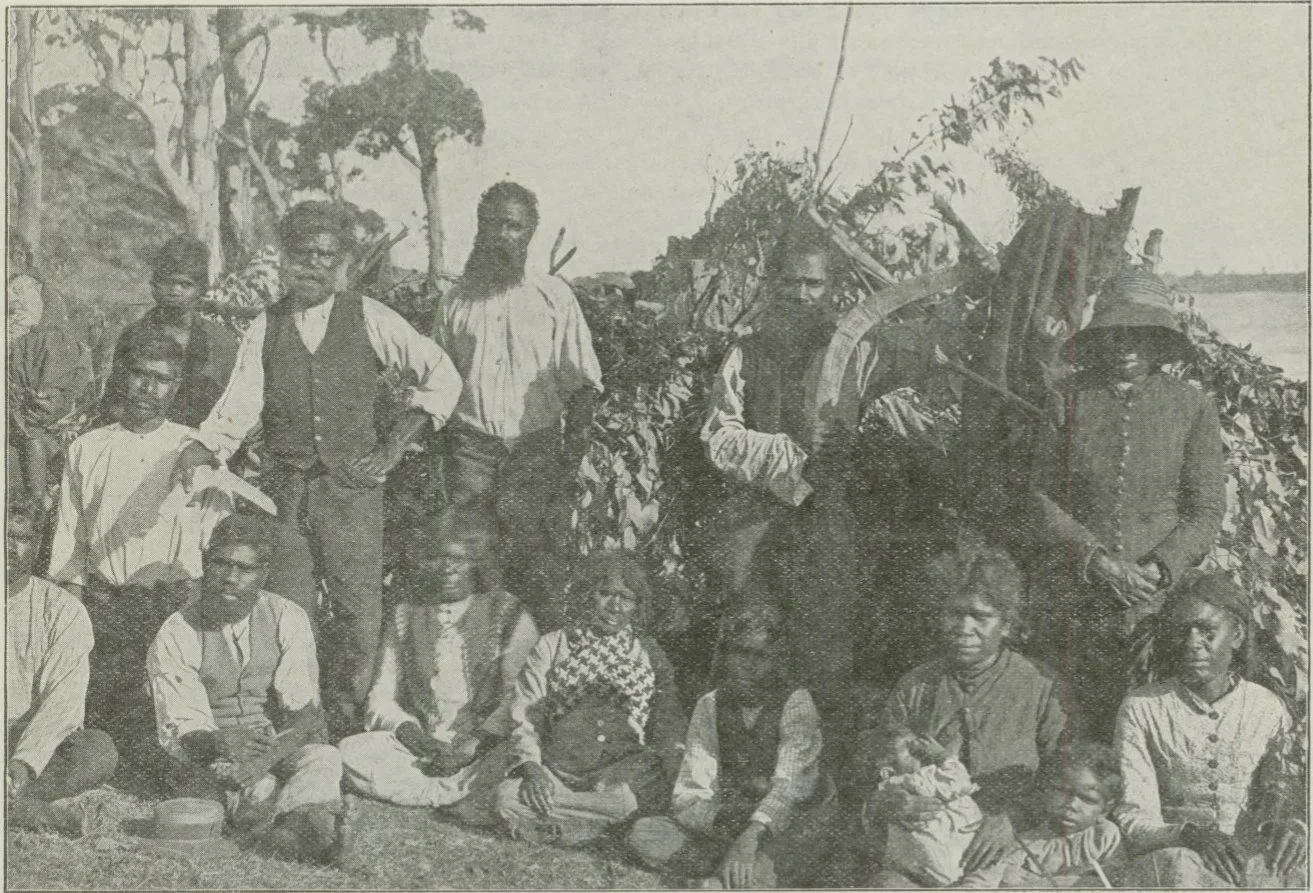
The colony of Queensland, as many of the readers of the REVIEW are probably aware, has, after considerable delay, come under direct operation as a field of labor. At present it is under the Australian Union Conference, subject to the control of the General Conference, the expenses of working being borne by the latter. As a field, Australia presents one unavoidable difficulty. It is large and unwieldy, from the fact that its population is sparse and scattered, thus making it expensive to work. Communication by rail and by water is frequent and regular; but the long distances, although fares are reasonably cheap, make traveling expensive. The Australian conferences, therefore, do not include Queensland, which is the most northern colony of them all. It has been left as a mission field in the hands of the General Conference. No doubt when further developments warrant it, it will be included in one of the Australian conferences. There is no immediate prospect of this, however, as the field has been left with only one laborer, owing to urgent calls for the services of the other workers elsewhere. Here, as in other places, the harvest is great and the laborers few.
AUSTRALIAN NATIVES. By permission from “Land and Sea,” by G. C. T.
Perhaps a description of some of the principal features of the colony, and a brief history of the progress of the message within its borders, may prove interesting. A glance at the map will show that the colony has a large territory under its control, its extreme northern point extending right up into the tropic of Capricorn. The tropical line divides it about midway, near the town of Rockhampton, where a church of over sixty members has been organized. Queensland has thus a great advantage over all the other colonies, in that it has a temperate and a tropical climate, and a population extending through both.
In the way of tropical productions the people in the northern districts have turned their attention to the growing of sugar-cane and bananas. Large quantities of the cane are grown, a system being followed which enables farmers with small capital to grow patches and turn it into cash without difficulty. Upon a guaranty that a certain area will be put under crops in a district, a company will erect crushing-mills, and pay the farmers so much a ton for cane delivered at the mill. Large planters erect their own machinery.
The sugar industry has given rise to a question which has long agitated the working population of Queensland,—the question of black labor. North Australia is surrounded with islands teeming with a dark-skinned population, the general term for the natives being “Kanaka.” The nature of the climate where the sugar plantations are situated is a natural drawback to white labor, as a white man demands good pay for a short day’s work. This led to recruiting among the islands for cheap labor. When this was first done, great injustices were perpetrated upon the islanders, who were kidnapped wholesale, many being shot down when resistance was offered. This evil has been remedied under government supervision, and now every black boy has his agreement and fixed wage.
The question rankles deep in the mind of the white worker, who looks upon the planter as his natural enemy, and therefore makes the most of his grievance. The Kanakas themselves, of whom there are some thousands in the colony, are a simple, docile people naturally, until depraved by the white man’s vices. Most of them are professed Christians, and have the Bible in their own tongue. They are regular attendants at church and Sunday-school, and their dark faces form quite a feature in the worship. Nothing so far has been done among them in regard to present truth; and when any work is attempted, it will no doubt be resented by their spiritual leaders, who look upon them very much in the light of protégés.
Banana-growing is limited to a tract of country lying north of the sugar districts. Bananas are principally grown by Chinamen, who figure very largely in the trade and commerce of North Queensland. They export large quantities to the southern colonies, one steamer on which the writer traveled taking on 7000 bunches of bananas at one port alone. They are picked when green and hard, and are simply dropped into the hold of the ship, and are afterward ripened artificially, a process which destroys their peculiar delicate flavor. Besides sugar and bananas, Queensland has in the past derived considerable revenue from the pearling industry. The northern waters abound with an oyster the shell of which is marketable at from £100 to £120 a ton, besides the pearls they may happen to contain. Many fortunes have been made, and many lives have been lost, in the hazardous calling of pearl-diving; but the beds are nearly worked out now, and what trade remains has fallen into the hands of the Japanese. Their headquarters is on Thursday Island, a small island just off the point of Cape York, the most northern point of Australia.
Queensland also abounds in minerals, almost every kind being found in payable quantities, the only thing lacking being the capital to work the deposits. The colony was somewhat unfortunate in this direction from the fact that just when its mineral wealth was beginning to be realized, the great Johannesburg mines of Africa attracted the attention of English capitalists, and thus diverted the stream of capital in that direction. Notwithstanding this there are a number of rich mines working, supporting a population of nearly fifty thousand people. In consequence of the variety of resources possessed by Queensland, which includes, besides those mentioned, wool, hides, frozen meat, preserved-meat, etc., the colony possesses an elasticity which has enabled it to recover from the late severe depression more readily than any of the other colonies, and its present financial condition is comparatively good.
THOS. WHITTLE.
NEW MEXICO.
By Volney H. Lucas
During the past year comparatively little has been said in the REVIEW concerning the work of God in the New Mexico and Arizona mission field. This has been due to a lack on the part of the laborer, rather than to there being nothing to report; for we feel that we can report hope, since “experience worketh hope.” Our work began early in last May at East Las Vegas, N. M., where there were two or three earnest souls who had accepted the truth several years ago. It was refreshing to the lonely Sabbath-keepers, as it was to the laborer, to meet with those of like faith, whose interests and purposes in life were one and the same. At this place a Sabbath-school of thirteen members was organized, which has since grown to a membership of twenty-three, the increase being due to immigration from other parts. Having just closed a week’s meeting at Las Vegas, we are rejoiced to see the advancement the company has made in spiritual growth during the last few months. A missionary society was recently organized in the company.
At Catskill we found nine Sabbath-keepers, who, with four others who moved with us to that place, made a nucleus for the first church organization of Seventh-day Adventists in New Mexico. Much labor and missionary effort have been spent at this point, and although there is not seen all that could be desired, faith furnishes hope that in God’s own time the seed sown will bring forth acceptable fruit. Besides the usual Sabbath exercises, regular weekly prayer and missionary meetings are held there.
At Raton and Albuquerque Elder Larson and the writer conducted tent-meetings during the favorable season. A report of these efforts has been given by Brother Larson heretofore.
Some time and effort have been spent in the interests of the Mexican population, studying their social and religious customs. Here we can study not only the slow growth of the social, but the slower and more unequal development of the native Mexican’s mental and spiritual nature. His life, manner, and home show, with rare exceptions, the reverse of enterprise. However, as a class, the people are courteous in their way, kindly and intelligent for their circumstances, and they show an earnest desire to read Spanish religious literature. They prefer to perform life’s functions after the manner of their primitive fathers, notwithstanding the modern methods of a more progressive race are fast taking root about them. They are still numerically in the ascendant, and stubbornly cling to the old life of the Castilian peasant, as poor, as happy, and as quaint here in the United States, as ever in the home of their nativity.
We find the language of the Mexican more simple than we expected and the earnest desire of our hearts is to know how we can best serve the purpose of God, for which we are called to this field. We know the Lord has a people in every nation, kindred, and tongue, and our faith in the complete success of the last testing message of truth for the Mexican race, makes our labor for this people joyous. The prospects for the advancement of a spiritual work are growing brighter with experience, and when the warfare is over, we expect to meet many precious souls from this southern mission field. May we have the prayers of the readers of this paper for the work here.
VOLNEY H. LUCAS.
Watrous, March 1.
A WORD FROM ONTARIO.
By S. W. Hickok
For nearly forty years the coming of the Lord and kindred truths have been dear to me, and for the last ten years or more, I have longed to bear some part in the spreading of this saving light. When the canvassing work was placed before our people, it seemed that I might do something in that line; but many thought me too old for such work. About six years ago Brother F. L. Mead asked me if I did not want to try the work. With beating heart and tears of joy I said, Yes! and I soon began to prepare. Five years ago the coming spring I was invited to Canada, where I soon began work. I cannot say that I proved a successful canvasser in every sense of the term, but this I can say, I learned to love the work; for it was giving the solemn message to the people. O how I pleaded with the Lord to let it prove salvation to at least a few. In recanvassing I found some keeping the Sabbath. This gave me courage.
Nearly a year ago I made a canvass of Gravenhurst and that vicinity. It is a rocky region, once densely covered with pine; but the lumberman's ax and forest fires have changed the forest to black stumps and dead timber. It borders on a beautiful lake, and many of the people gain a livelihood by fishing and lumbering jobs. So far as education goes, they are little in advance of heathen nations. They seem abandoned by Christian people and ministers, yet they are anxious for some one to preach to them, though there is not one professor of religion in the community. They wanted to know if I would not begin to hold meetings and Sunday-school among them. I was somewhat surprised, being a stranger. But it seemed a call to do what I could for them, and I dared not refuse. So I made an appointment, and they came together. But what could I do? I had never attempted to speak in public, and as I said, none made a profession. But as best I could, I prepared a subject. The Lord stood by me, his word came with freedom to my mind, their hearts seemed moved by it, and they wanted me to come again, and I could not refuse. I have continued to present different subjects to them, visiting them at their homes, reading the Scriptures and praying with them. Where they were able to read, I have given them reading-matter. They are very anxious for me to continue to labor among them, and do what I can for their families. I have spoken twenty-seven times in all. I drew up a covenant according to our faith, and fourteen have signed it. We have regular Sabbath meetings appointed. I have decided to locate among the people here, and do what I can for them. If the Lord continues to bless, the work will require a minister the coming season to administer baptism and complete an organization. S. W. Hickok.
THE ATLANTA INSTITUTE.
By George E. Fifield
By request of the superintendent of the district, I write a brief report of the institute held at Atlanta, Ga., January 3 to February 12. The meetings were held in our beautiful new chapel, recently built by the church in Atlanta, while the basement of this chapel neatly fitted up for the purpose, was used for a boarding-hall by those in attendance. Nearly all the workers in the Southern field were present, and a large proportion of them were there at the beginning and remained until the close. These, together with the Atlanta church and those who came in from without, often taxed the utmost capacity of the building, necessitating the opening of the folding doors between the two apartments, and bringing up chairs from below.
The daily program was as follows: Breakfast, 7:30; prayer-meeting, 9; Bible study, 9:30—10:30; another study, 10:45—11:45. Recess. Dinner, 1:30; Bible study, 2:45; and still another study from 4-5. This, with the services in the evening from 7-9, filled the day pretty full. Elder G. A. Irwin conducted a series of daily studies on the book of Acts; Elder Brunson carried on another series on the epistles of Paul to Timothy; and the writer occupied nearly two hours each night on the subject of the relation of the kingdom of Christ to the kingdoms of this world. These lines, together with the health talks by Dr. Paulson, and the helpful practical work of Elder Olsen during the few days he could be present, occupied most of the time. Some hours were devoted to plans of work, etc. Much help was experienced from the physical exercise conducted during the intermission by Miss Tabor, from the Sanitarium.
God’s blessing was with us from the very start. This was manifest in a spirit of unity and brotherly love, and in an earnest desire for truth. Personally, I can say I never enjoyed work more than among these people, all of whom I learned to love most tenderly. The institute157closed with a climax, although many feared that if it continued into the week, after Sunday night the interest would dwindle away. This fear was proved to be without foundation, for the last two evenings,—Monday and Tuesday evenings,—the chapel could hardly accommodate the people. It was the universal testimony of those present that it was the best institute they had ever attended; that God had come very near; and that the wonders of his love and his word had been opened by the divine Spirit of truth, to their hearts and minds.
A pleasant feature of the institute was the dedication of the chapel in which it was held. This took place with appropriate services on Sunday, February 2. It had been a very rainy day, but just as the dedicatory address was closing, the sun burst out in the western horizon, and painted in heavenly colors, on the brow of the storm-cloud, the bow of promise. All looked upon this with joy, seeming to see in it an omen of a more glorious future for the Southern work. While they dedicated the house to the worship of God, they felt that in a far truer sense they themselves were, by the blessings there received, dedicated anew to truer, loftier work, and more loving service.
Those of our people who visited the schools and orphanages in Atlanta for the colored people, were greatly impressed by the fact that there is grand, unselfish, loving Christian work being done there by other denominations. This, too, makes us feel the need of such helps in our work. With the new school to be established in the South for the colored people, we believe the work will gain new power. All we can say is, Our hearts and prayers are with all those faithful workers, and we are sure God’s blessing will be theirs.
G. E. FIFIELD.
LETTER FROM LEVUKA, FIJI.
By J. M. Cole
[The following letter from Brother Cole was not intended for publication, but it will interest our readers, we are sure.—Ed.]
I just want to write a note to you, expressing our gratitude for our good paper, the REVIEW. For some reason we did not receive it for months, but the last two boats brought it to us. It is lonesome enough in these quiet little islands, but ever so much more so when the REVIEW does not come. I wonder if you ever think that the sun never sets on the readers of the REVIEW? Some of our neighbors say they like the News Notes because they do not have to read over so much ground to get a little.
Some time ago our good paper fell into the hands of a white man in this group of islands, and now the whole island is keeping the Sabbath. But let me tell you the rest. This man and his wife are all the human beings on the island. They have been there alone for years. The name of the island is “Vatu Vara” (meaning stony cocoanuts); it is a small but very high island. A young man has promised to give me a ride in his cutter when he goes to buy “cobra” (dry cocoanuts); then I shall call at this island. But it will not be safe to go until after the hurricane months are past, which will be about April.
We have just started a small school for the natives, held in our house. We cannot encourage many to come, because we have not room. We teach them to speak English, and they help us by telling us how to pronounce the native words. Just the other day we learned that the natives have no toes, they are the fingers of the feet. Some of the native words are very long, but we find it easier to remember the long words than the short ones. The word “thumb” has twenty one letters in it, aiqaqalolevunilingana; and the word for “to reconcile” is vakayalovinakatakaveivenakatitata. It is a very common thing to find words with from eighteen to twenty-four letters in them, yet the natives can roll them out so fast that they do not seem to be so long.
J. M. COLE.
MAINE
By M. G. Huffman
AUGUSTA AND HALLOWELL.—I am grateful to the Lord that I can report that the work is onward in these two cities. Since my last report, four more have taken their stand with us to walk in all the precepts of God. Thus we now have some twelve new Sabbath-keepers here; many others are deeply interested, and some of these we have reason to believe will soon be found walking in the light of the truth. I am holding two meetings each week in Gardner, and quite an interest has been awakened there as the result of our labors. The Disciples there have kindly opened their chapel for the meetings. I am fully persuaded that a great and good work could be accomplished in these cities, if we only had more means and workers at our command. The Lord hasten the day when all who profess to believe that his coming is near at hand will be brought to see and fully realize the importance of laying themselves and the means which God has placed in their hands, wholly upon the altar, to be used in spreading far and wide the glorious tidings of the soon advent of our Lord to take his people home. If each one who professes present truth was fully consecrated to God, and was doing his duty in giving of the means in his hands to help spread the third angel’s message, there would not be so many earnest pleas coming in from every direction for help and means; on the other hand, there would be plenty of each, and soon the work would be completed, and we could go home to our Father’s house, to enjoy the marriage supper of the Lamb.
Elder Basney and I contemplate beginning a series of meetings in the union hall at Hallowell next Thursday evening, and we cannot but believe that they will result in much good. We ask an interest in the prayers of all for our success, that souls may be brought to see and accept the truth.
M. G. HUFFMAN.
February 24.
REPORT FROM CLEVELAND MISSION.
By Willard H. Saxby
I AM glad to report that the work is onward in this city. We have been blessed in making several changes in the methods of our work, one in particular: Our Sunday evening sermon was changed to a Bible study, granting the privilege of asking questions on the subject under consideration, and opening each study with a brief review of the previous lesson from the texts on the blackboard. Our object was to educate, especially those who wished to hold Bible readings. It seems to me the articles from the pen of Mrs. E. G. White in the REVIEW last June and July, Nos. 24-30, should be most carefully studied by all who are interested in city mission work.
About a month ago we opened a place for gospel meetings, Sabbath-school work, providing food and clothing for the poor, etc., in a destitute part of the city. A brother and a sister who were active workers in the Salvation Army a few months ago are especially interested in this phase of the work. From the beginning all the members of the church have taken a lively interest in this new enterprise. We were recently favored with two good talks from Dr. Kellogg, which were highly appreciated. Sister Anna Tabor, of the Sanitarium, spent three or four days in public and private instruction in the interests of healthful dress. There is a desire with many to be “up to date” in the light on these lines of reform.
Just following the articles in the REVIEW on the wants of the Southern field, Sister A. S. Steele, of the Steele Home, Chattanooga, Tenn., gave us a stirring talk from her rich experience in working for the colored people during the last seventeen years. The good Spirit of God was present in a marked manner. Truly, whole-hearted, unselfish work along this line will bring a precious reward, even in this life.
Several of the church-members are holding Bible readings. Eight new believers were baptized and united with the church two weeks ago. One brother was brought up a Catholic. He was an active business man until five or six years ago, when he lost his hearing. He was reading and studying for nearly two years and a half. Another brother from the Friends’ Church has had a bright experience after fighting the truth for seven or eight years. A sister finally gained a precious victory, and is now united with her husband, who was a captain in the Salvation Army less than a year ago. Some ten or twelve of our readers have recently begun the observance of the Sabbath.
Since last May our missionary society has been taking 150 Signs and 100 American Sentinels each week for sale and distribution. Our Sabbath-school is growing in numbers and interest. One of the leading physicians of the city, a Methodist, has been studying most carefully the subject of the soul, with the result that he will soon have ready for publication a valuable work on that subject. He was at the beginning favorably and deeply impressed by a study of a work on the “Doctrine of the Soul,” by Dr. C. L. Ives, of Yale College, which I loaned him two years ago.
WILLARD H. SAXBY.
DOINGS AT THE CAPITAL.
By A. M.
The Committee on the District of Columbia of the House of Representatives, on Monday, March 2, granted a hearing on the District Sunday bill. The friends of the bill had urged the matter of the hearing, but although the notice had been published more than a week, the promoters of the Sunday law were conspicuous by their absence. The representatives of the International Religious Liberty Association, with those of other associations, were recognized for the purpose of presenting arguments against the passage of the bill.
The following is a synopsis of the arguments made:—
House Bill 167 is a bill to protect the first day of the week, commonly called Sunday, as a day of rest and worship in the District of Columbia. This bill provides “that on the first day of the week, known as the Lord’s day, set apart by common consent in accordance with divine appointment as a day of rest and worship, it shall be unlawful to perform labor,” etc. If the claim herein set forth is well founded, this is the best reason in the world why the Congress of the United States should have nothing whatever to do with it. Man can add nothing to that which is divinely appointed. Should not we be content with absolute liberty, such as all enjoy who choose to observe Sunday? If the day is divinely appointed, God is able to protect his own day, and the government may go on with the business of regulating civil things. It was to keep the legislature within its own sphere, that the wise men who laid the foundation of this republic put in the first amendment this prohibition: “Congress shall make no law respecting the establishment of religion, or prohibiting the free exercise thereof.” The bill under consideration is clearly a violation of this first amendment, in that it both proposes a religious establishment and prohibits the free exercise of religion. It proposes to establish a day of rest and divine worship for one class, and to prohibit the free exercise of the God-given right to worship, according to their conscientious convictions, of all who dissent from this establishment. If this bill is enacted into law, the proscribed class will be completely at the mercy of the believers in the established Sunday, and to the minority they may deal out in such measure158as they see fit that which God designed all men should have an equal right to enjoy.
If the declarations of the Constitution and the first amendment mean anything to the American people and the world, they are a guaranty of absolute freedom in matters of religion, so long as that freedom does not lead to incivility. The bill under consideration is essentially a violation of this principle. It proposes to place in the hands of one religious element the power to determine just how much or how little labor may be performed by another religious element on a day regarded as sacred by the one and not by the other, although the labor, or acts, are not crimes in themselves. It proposes also to place it within the power of the favored class and the courts to judge of the religious character of the person to be exempted, thus giving to this favored class a complete monopoly in religious matters. Dr. Schaff, in his book entitled “Progress of Religious Freedom,” wisely says: “There is a wide difference between toleration and liberty. The one is a concession, and the other is a right; the one is a matter of expediency, and the other is a principle; the one is the gift of man, the other the gift of God.” In a free country nobody wants to be tolerated for his religious opinions or sacred convictions. “Toleration is an intermediate state between religious persecution and religious liberty.” “Religious liberty is founded in the sacredness of conscience, which is the voice of God. Liberty of conscience requires liberty of worship as its manifestation.”
Since the United States declared for absolute religious freedom, it has exerted an influence upon all the nations of the earth, and the tendency has been toward that high and exalted principle. But if this greatest of all nations shall relinquish that which above all has made her great, then she will lose her moral power over the nations, and, like the states of South America, will descend to the level of other church-and-state governments. “The American system is a free church in a free state. This is the American solution of the problem of ages.” Not one of the governments of the Old World ever rose higher than the theory of toleration. De Tocqueville, the French statesman, said of America, “There is no country in the whole world in which the Christian religion retains a greater influence over the souls of men than in America.” All this is the result of the fact that religion is free and not forced. “The church needs, and should ask, nothing from the state. . . . She commends herself best to the world by attending to her proper spiritual duties, and keeping aloof from political and secular complications.” “She can only lose by force and violence; she can only gain and succeed by spiritual weapons of truth and love.” He is no true friend of his country, who would wish to see the religious freedom guaranteed by the Constitution narrowed in its operations, or who would favor any measure tending to such result.
A. M.
WISCONSIN
By George H. Kisner
NORTH LA CROSSE.—We came to this city one year ago last April, to engage in mission work, and we are still engaged in this work in connection with two young people. The work is progressing slowly. There have been fifteen added to the little church since our coming here, making a membership of forty-three, and quite a number of very interesting cases are among those for whom we are laboring. This is a very hard field in which to labor. While it is comparatively easy to convince the people of the truth, it is very difficult for them to decide to obey, especially those who are engaged in work in the car shops and the mills. As they cannot get work and keep the Sabbath, they do not know how they can support their families. But we are hoping and praying for them, that the Lord will open the way for them so that they may obey.
GEORGE H. KISNER.
ILLINOIS
By E. A. CURTIS
From December 18 to January 13 I visited seven churches in Southern Illinois. At each place the ordinances were celebrated, and the business of the annual meeting was transacted. At three of the places I was present during part of the week of prayer. At every place an encouraging and profitable season was enjoyed. February 1, 2, I held meetings at Mattoon, and organized a church and a tract society. A church building is very much needed. February 13 to 17 I was at Charleston. Brother A. W. Walker and his wife have been doing a good work there. Several have embraced the truth, and others are interested. They hold a Sabbath-school in their house, and have gathered in quite a company of children who are much benefited. Some of the older ones are getting a good knowledge of the truth, and are giving their hearts to the Lord. I had some interesting visits with two families of intelligent people who are investigating our publications, seeking for light. I came to Willow Hill, February 20, and am holding daily meetings with a good attendance and an increasing interest. I hope for good results. E. A. CURTIS.
S. D. A. EDUCATIONAL SOCIETY.
By G. C. Tenney
The nineteenth annual meeting of the above society was held pursuant to published notice, the first meeting convening February 24. Four meetings were held, at which matters of interest to the College and the educational work in general were freely discussed. The president of the Board of Directors, W. C. Sisley, occupied the chair. Resolutions were discussed and adopted on the following points: Recommending the adoption of a strictly cash plan in the payment of tuitions; making such discounts as will encourage prepayment of yearly dues; approving of the steps taken to furnish work by which some students have been enabled partly to pay their way in school, and encouraging an extension of that plan.
Some time was occupied in considering a change of the by-laws relative to the formation of the Board of Trustees, but no changes were made.
In his remarks the president of the faculty, G. W. Caviness, spoke encouragingly of the work of the College. The attendance has been larger than last year; and the religious interests of the school have been well sustained.
The treasurer, A. R. Henry, presented his report, of which we give a summary:—
RESOURCES AND LIABILITIES, JAN. 31, 1896.
Resources.
Philosophical apparatus,
$ 2,132 37
Museum,
1,319 40
Printing department,
3,094 50
Carpenter "
144 85
Sewing "
100 00
Laundry,
320 00
Ice,
75 00
Bills receivable,
575 74
Library,
4,172 62
Bookstand,
1,600 00
Personal property,
4,039 50
Coal and wood,
400 00
Broom department,
614 55
Furniture, etc.,
6,597 08
Laboratory,
34 00
Old accounts,
4,493 09
Gymnasium apparatus,
188 24
Real estate,
111,346 30
Current accounts uncollected,
1,500 00
Deposited in bank,
800 00
Provisions,
910 00
Total resources,
$144,457 24
Liabilities.
Bills payable,
$26,781 18
REVIEW AND HERALD,
36,274 74
Due for coal,
400 00
Interest,
900 00
Salaries, etc.,
2,012 00
Total liabilities,
$66,367 92
Present worth,
$78,089 32
Cash liabilities this date as above,
$66,367 92
Cash liabilities June 30, 1895, as follows:—
Bills payable,
$31,723 54
REVIEW AND HERALD,
20,814 61
New building account,
10,942 22
$63,480 37
Total deficit to date,
$2,887 55
To offset which we have the following cash items:—
Stock, machinery, and monies due broom department,
$ 600 00
Uncollected from students in the Home,
1,200 00
Uncollected from students outside the Home,
300 00
Total,
$2,100 00
Cash in bank,
800 00
$2,900 00
The following is the Board of Trustees elected for the ensuing year: S. H. Lane, J. H. Morrison, I. H. Evans, A. R. Henry, J. H. Kellogg, W. C. Sisley, G. C. Tenney. At its first meeting the Board was organized by choosing the following officers: President, W. C. Sisley; Secretary, G. C. Tenney; Treasurer, A. R. Henry; Auditor, I. H. Evans.