The Youth’s Instructor, Vol. 37, No. 23.

LOUIS AGASSIZ

The Youth’s Instructor

Jun 5, 1889

S. D. A. Publishing Association · Battle Creek, Mich. · Jun 5, 1889

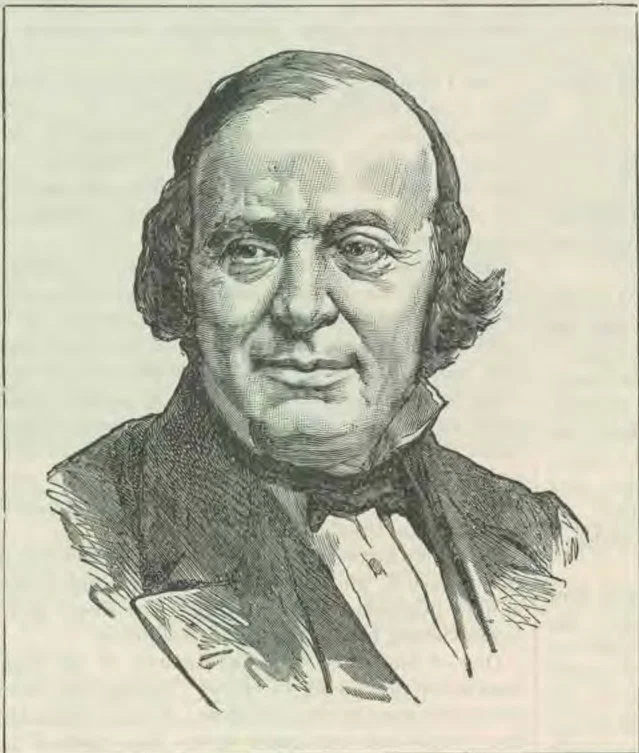
LOUIS AGASSIZ.
Among the buildings around Harvard College, in Cambridge, is one which all would be delighted to visit. It is a museum, where one may see a specimen of almost everything. One visitor said: “It would be of little use to try to enumerate even a small part of the specimens of animals, of both living and extinct species, which meet our eyes as we wander through the spacious halls and galleries. There is the long-necked black alpaca and his brown brother; the tall giraffe; the queer black seals; the bison, with his immense head and thick brown fur; the Rocky Mountain goat, with long, yellowish-white fur; the rough, ancient-looking rhinoceros; the giant squid, from Newfoundland; and the skeleton of the finback whale, extending the whole length of the building. Then there are beautiful birds of all sizes, from the delicate little humming-bird to the gay flamingo. Perhaps the oddest is a jet-black bird with feathers projecting from the top of his head in the form of a little umbrella. Then you should see the actinoid polyps, so much like flowers,—some pink, some yellow, some brilliant green,—growing up, and radiating from the center; and the acalephs, which we can hardly believe are not made of glass. These are very beautiful, and of all shapes and colors; some like toadstools; some like plants with flowers; some with fine threads like fringe hanging gracefully around them.”
This building and its valuable contents are due to the untiring industry and zeal of one of the greatest modern naturalists, Louis Agassiz, and it is appropriately called the Agassiz Museum. In the entrance-hall is a fine bust of Mr. Agassiz. Even the cold marble cannot hide the warmth of heart which molded all his features. Mr. Agassiz is said to have been a very genial and delightful companion, and to have possessed to a remarkable degree that faculty of making every one who came in contact with him feel at ease and at home. His students enthusiastically hunted specimens, and for him laborers would dig and delve, every one catching his spirit, and feeling for the time being that the study of nature was the only thing of any account. As one writer said, “To do something for Agassiz was a pleasing addition to the Whole Duty of Man in the region where he lived.”
Now Mr. Agassiz never could have gained this magnetic influence over those who placed themselves under his teaching, just by wanting to influence them; he could not have done it if he had had a desire to make himself famous and respected on account of the amount of learning he possessed; for such shams are very quickly seen through. But he did find in nature wonderful truths which so delighted him that he wanted other people to see them too. So forgetting Self in the great fields of truth that lay before him, he could, by his sympathy and geniality, lead many to find delight in this wonderful book of nature. It sometimes seemed that even the animals understood that he had only the kindest intentions toward their species, and that when he killed any of their number for specimens, it was only that he might introduce them to human kind, in order to benefit the lower part of creation.
The spirit in which Mr. Agassiz worked is shown by one little incident. When urged to give a lecture which would bring him in large returns, he refused, saying that he could not waste his time in making money. The man who could refuse to make money and advance his own interests because he had other work to do which would benefit his fellow-men, could not fail to influence those with whom he came in contact. Genuine unselfishness is sure to meet a response; and it is a good thing for every boy to remember that the best way to serve Number One is to forget about Number One.
Mr. Agassiz was born in Switzerland, near Lake Neufchatel, May 28, 1807. “He was liberally educated, studying at Bienne, Zurich, Heidelberg, and Munich, and received several degrees. . . . For seven years he studied fossil fishes, which he made the subject of one of his greatest works. He also wrote a Natural History of the Fresh Water Fishes of Europe. For a time he was professor of natural history in the university at Neufchatel.”
In 1846 he came to Boston, and made America his home. He lectured for a time, and was finally appointed professor of zoology and geology at Harvard. He made journeys to other parts of the world in the interests of his work; and one of these journeys, to Brazil, is told in an interesting book written by Elizabeth Agassiz, his wife, who went with him. Mr. Agassiz wrote many works telling of his theories and discoveries in nature.
He found a warm friend in the poet Longfellow, who was also a lover of nature; and on this page we give you a beautiful poem which Mr. Longfellow wrote for Mr. Agassiz when the latter had reached his fiftieth birthday.
Mr. Agassiz died at Cambridge in 1873. He lies buried in Mount Auburn Cemetery, and his grave is marked by a boulder from his native land. But the best monument to his memory is the fine museum, for which he worked so hard. W. E. L.

ELLA'S MISSIONARY BANK.

“O MAMMA, a week from to-morrow is the quarterly meeting of the Mission Band, and I haven't a cent in my bank!” exclaimed Ella Brown one afternoon, as she came in from school.
Now, to belong to the Mission Band and attend the quarterly meetings, taking tea in the church parlors, listening to the dialogues, recitations, and music, and seeing the banks opened, was a great privilege, and one Ella wouldn't miss for anything; and though she could go without taking her bank, she had too fine a sense of honor to do anything of the kind. Her mother looked up quite surprised, saying:—
“Why, how does that happen?”
“I don't know, I'm sure. I forgot all about it till to-day.”
“Where is your bank?”
“Upstairs, in my bureau drawer.”
“Ah!” said Mrs. Brown, with a peculiar accent, “that explains it all. ‘Out of sight, out of mind,’ you know. If the bank had been where members of the family could see it occasionally, a little girl's bad memory might have been helped, and the Mission Band also.”
“I'll go and get it this minute,” said Ella, and off she ran.
Then Anna, her older sister, and confidential adviser of her mother, said,—
“It would be serving Ella just right not to help her at all this quarter, and see how her money comes out. She is so thoughtless and careless. Last quarter I had to put in seventy-five cents just before she started for the meeting, to make out a dollar. I knew that was about what she ought to give, if the Mission Band is to raise one hundred dollars this year.”
“Well, well! We must see about that,” replied the mother. “Ella must learn to plan better, and to practice some self-denial; and at the same time we must see that the missionary society does not suffer through her neglect.”
At this moment the little girl returned with her missionary bank, which she placed on the mantle.
“How much money ought your bank to contain?” asked her mother.
“Why, not less than a dollar. Miss Maxfield says we are very much behind, and she is afraid we cannot raise the hundred dollars needed this year.”
“To what use is this money put?”
—“We are supporting two Armenian girls in the school at Harpoot.”
“What if you fail to raise the required amount?”
“Why—I suppose they will have to leave school.”
“O Ella, think what it means for a little girl in Turkey to leave school and go back to her home—not such a one as yours, a palace in comparison with hers—but a poor little maid in some village, where a girl is considered of no consequence, but a burden and a drudge all her life; to be married while still a girl to a man she may never have seen, and become the servant of his mother, and be unhappy for life. Still more. Having just caught a glimpse of the way of salvation, and begun the study of the Bible, she must give up the counsel and prayers of her beloved teacher, the sweet songs of praise, the precious Bible lessons, the Christian education which would put a new light into her dull eyes and enrich her mind, and go back to a prayerless, wretched home, to mental and spiritual darkness, all because girls and boys in a Christian land, with free schools, and homes filled with every comfort, are too careless, too forgetful, yes, too selfish, to lay aside a little money every week, that these may be helped.”
As Mrs. Brown waited a moment, and Ella said nothing, but looked very thoughtful, she continued: “Now, my dear, that you may feel your responsibility in this matter, you must not ask any one for money for your bank this time, but see what you can do yourself to make up for this carelessness.”
The next morning at breakfast Ella exclaimed: “Oh, I'm so glad it's a holiday! Papa, can I have fifteen cents, to go to the museum?”
“Yes, and here are five cents for candy,” replied her indulgent father. As she was passing through the parlor, she spied the neglected bank, which seemed to be reproaching her by its presence. For a few moments she stood fingering the two dimes she had just received, then slowly walked to the mantle, dropped them in, and went upstairs. The mother's heart rejoiced as she noticed it; but she wisely refrained from saying anything, and waited to see if this spirit would last.
On Sunday the bank was observed by her brother Charlie, who put in a quarter, saying, “Wish I had more, sis, but that will help a little.”
On Monday, Mrs. Brown, wishing an errand done in another part of the city, gave Ella two car tickets, as the walking was muddy.
“Please give me two five-cent pieces instead,” said the little girl. Her mother smiled, and gave her the change. “I can ride one way and walk the other,” thought the child. But just at dark, when the family were beginning to feel anxious, a couple of very muddy rubbers were taken off at the back door, the clink of two pieces of money was heard in the bank, and a rosy-cheeked girl, with unusually bright eyes and a very good appetite, sat down at the table.
Tuesday and Wednesday passed with no additions to the bank.
“Dear me!” sighed Ella, “only fifty-five cents, and I mustn't ask for any money.” Thursday she watched anxiously all day for a chance to save or earn a penny, but all in vain. “Oh, how hard it is to get a dollar!” she said, as she went to bed, to lie thinking of the little Armenian girls having to go back to their wretched homes, just as they had caught a glimpse of better things, and might have become teachers or Bible readers. Friday morning she chanced to wake earlier than usual, and looking out of the window, saw that the snow had fallen during the night. Hastily dressing, she took a broom, and began to clean the paths. Being unaccustomed to such work, her arms and back began to ache and her hands to smart, and when it was done, large blisters were visible on the inside of her hands; but she bravely determined not to complain, but ask her father for ten cents for the job. The hired girl told the story, however, to her parents before she appeared at breakfast; and when, a few minutes later, her father called her to him, looked at her hands, gave her twenty-five cents and a hearty kiss, her heart was very light.
When she returned from school Friday afternoon, her mother said:—
“Bennie wants to go to the Mission Band with you, and I have told him he might if he would put half his money into your bank. He has forty-four cents.”
As Bennie finished putting in his money, and the grand total of one dollar and two cents was announced by the joyful little girl, her mother asked:—
“What lesson have you learned this last week, Ella?” and the answer came quickly:—
“Never to put off my missionary money till the last of the quarter, but to think of it all the time, and lay aside a little every week.”—Advance.

THE FIFTIETH BIRTHDAY OF AGASSIZ.

It was fifty years ago, In the pleasant month of May, In the beautiful Pays de Vaud, A child in its cradle lay.
And Nature, the old nurse, took The child upon her knee, Saying, "Here is a story-book Thy Father has written for thee."
"Come, wander with me," she said, "Into regions yet untrod; And read what is still unread In the manuscripts of God."
And he wandered away and away With Nature, the dear old nurse, Who sang to him night and day The rhymes of the universe.
And whenever the way seemed long, Or his heart began to fail, She would sing a more wonderful song, Or tell a more marvelous tale.
So she keeps him still a child, And will not let him go, Though at times his heart beats wild, For the beautiful Pays de Vaud;
Though at times he hears in his dreams The Ranz des Vaches of old, And the rush of mountain streams From glaciers clear and cold.
And the mother at home says, "Hark! For his voice I listen and yearn; It is growing late and dark, And my boy does not return!"
—Longfellow.

THE STOLEN BOY.

SOMETHING like twenty-five years ago, a little boy was walking through the bush in Africa, and was overtaken by a few men on horseback. He was carrying on his head a pot of fire. These men called the little boy, and one said, “Bring me a light for my pipe.”
The boy went toward them; they seized him, threw him across a horse, galloped away with him, and sold him in the slave market not far away. He was resold, and brought to Lagos. It so happened that the cook who was in the employment of a missionary at Lagos bought the lad.
By and by the man died, and the lad took his master’s place; and being in an English colony, he claimed his freedom. He proved an exceedingly sharp boy. He was put into school, trained, became afterwards a teacher, and eventually a minister.
God had been training this lad and keeping him for the purpose of extending Christian missions toward Lake Tchad. The lad to-day occupies the most advanced post of one of our missions in Western Africa; and his eyes are to-day fixed upon Lake Tchad; for he is hoping, as he has the mastery of the language of that particular district, to reach his home by and by, and carry to his own people the gospel which has saved him.—Rev. J. Milum.

Thinking Well and Acting Well

“It is well to think well; it is divine to act well.”

EVER A SONG SOMEWHERE.

THERE is ever a song somewhere, my dear; There is ever a something sings away; There's the song of the lark when the sky is clear, And the song of the thrush when the sky is gray.
The sunshine showers across the grain, And the bluebird trills in the orchard tree; And in and out, when the eaves drip rain, The swallows are twittering ceaselessly.
There is ever a song somewhere, my dear, In the midnight black, or the midday blue; The robin pipes when the sun is here, And the cricket chirrups the whole night through.
The buds may blow, and the fruits may grow, And the autumn leaves drop crisp and sere; But whether the sun, or the rain, or the snow, There's ever a song somewhere, my dear.
—James Whitcomb Riley.

A LONDON FOG.

In the streets of London the extraordinary sight was lately seen, so far as the people were able to see it at all, of herds of cattle and flocks of sheep lost and scattered, the cattle bursting into the doors of stores and shops, and the frightened sheep being crushed beneath the wheels of vehicles. They were the victims of one of those remarkable visitations never seen elsewhere, a “genuine London fog.”
The great fog in which these poor animals became separated from their drivers and went astray is said to have been the most dense of any in fifteen years. In the thick darkness, which was so dense that drivers could not see their horses, and in which the street-lights are said to have looked like “the ends of matches which have just been blown out,” the omnibuses even got lost and went astray, and the street-cars were obliged to cease running altogether. On the steam railways there were several collisions, in one of which several passengers were seriously injured.
The London fog is not white, like those to which we are accustomed in this country, but of a yellowish gray in color. The Londoners themselves call it “pea soup.” It is the product of the thick vapors which prevail on the banks of the Thames, and of the great pall of dust and smoke which overhangs the greatest city of the world.
When this visitation overtakes London in its greatest density, as in the case of the recent fog just alluded to, all the street-lamps are lighted, and the police force is sent out armed with torches, to assist the people, while boys with lanterns offer their services to foot-passengers. Generally wagon traffic is soon completely suspended. The places of amusement are closed, for neither the performers nor the public are able to reach them. Merchants put up their shutters, and all who can get home remain there until the fog breaks.
Such fogs have been known to last for several days in succession, and the consequent prolonged suspension of business results in very great loss. At other times the fog breaks away in a few hours.
One of the most dreadful features of the London fogs is the prevalence of crime. During the darkness the police are almost powerless. Even in their houses the people are not quite safe. The chief of police lately issued a proclamation to the people, cautioning them to see to it, during the fog, that their doors and windows were securely fastened, that no jewels or valuable articles be left about tables or in sight, but placed in safes or in some other secure place.
When it is borne in mind that the average consumption of coal in London throughout the year is twenty-seven thousand tons a day, and in winter at least forty thousand tons, and that this coal is bituminous, or “soft,” the density of the pall that lies over the city in a great fog is not hard to understand.
Much of this smoke is poisonous, and during the prevalence of great fogs, the death-rate of the city rises rapidly.—Youth’s Companion.

THE TOAD AND ITS PREY.

The accuracy of aim in the young toad is similar to the accuracy with which the young quail or chicken picks up a grain. A young chicken having only its head out of the shell, picked up a fly that lighted near it. And, said Mr. Calthrop, when you consider the nice co-operation of nervous and muscular movements necessary to this feat, you will perceive that the chicken must have been practicing fly catching in the person of its ancestry for thousands of years. But I once had curious proof that the toad is capable of improvement by practice.
Under a beehive I observed for several successive summers a toad watching for overloaded bees that failed to reach the threshold of the hive. No sooner did they fall on to the ground than he snapped them up. But one day I saw that he had lost by some accident his right eye, and that when he struck at a bee, he lost his aim, and picked up dirt from one side of the bee. He wiped his mouth with his forepaw, and tried again and again. The bee generally managed to climb to the top of some little prominence on the ground and fly away before the toad succeeded. The poor fellow was half starved, and grew thin; but I observed before the summer was ended, that he had learned to aim as correctly with one eye as he used to with two, and had again recovered his plumpness,—Nature.

ITEMS OF INTEREST.

In Bremen, in a very old cellar, where wine has been stored for many years, lie twelve casks of wine called Rosenwein, which was made in 1624. A cask contains 204 bottles, and as the original cost of a cask of this wine was 500 rix dollars (60 cents each), that sum, together with the expense of storage, etc., at compound interest, would amount to $300,000, or about $300 as the present value of each drop of wine.
There is a train of freight cars running into the City of Mexico daily, loaded with barrels and bottles of “pulque,” the national drink, just as milk trains run into our cities, carrying milk. The bottles are skins of hogs. The animal is slaughtered, the skin turned inside out, the legs, tail, and throat tied up, and then filled with the liquor. At a distance, the pile of bottles look like a load of hogs. At each station the people turn out with bottles, pails, and demijohns, and have them filled. In the cities the pulque shops are numerous, and always crowded with Mexicans drinking the liquor from glasses holding about a quart. When fresh, the drink tastes like honey, but soon ferments and sours.
On the Clerk’s desk, in the Supreme Court room at Washington lies a little old Bible, printed in 1799, looking nearly as fresh and good as when placed there eighty years ago. On it every Chief Justice and Associate Justice of the United States has placed his hand in taking the oath of office, and thousands of illustrious men have touched it in administering an oath, or for other purposes, whose names, if collected in print, would fill many volumes.
In the great city of Paris there are only six places where the Bible is kept for sale. Inquiry will elicit the reply, “There is no demand for it, and we do not keep it in stock.”
In Clifton, Tenn., lives an old African slave woman 126 years of age, who is thought to be the oldest of living people. She was kidnapped from Africa when a child, and was a slave until freed, before the War, on account of old age. Her face and hands were heavily tattooed, and the marks still remain. It is thought she was a cannibal in her native country, and once delighted in frightening children with stories of cannibalistic orgies.
The first vessel that was rigged as a schooner was launched at Gloucester, Maine, about 1713. As she glided off the stocks, into the water, some one shouted, “Oh, how she scoons!” The owner at once replied, “A schooner let her be then,” and so the name originated. In New England to “scoon” is to take a flat stone and fling it over the water so that it skips and skims over the surface. W. S. C.

TELL HIM FIRST.

There were four feet trotting along under merry June sunshine, two heads peeping over a low garden fence, and four eyes admiring and coveting the pretty flowers.
“I say, look at the roses,” said Tom to Ethel.
“The gate is open,” whispers Ethel, the tempter.
“No, come away. Mother said we weren’t to go into Mr. Giles’s garden at all,” said Tom, at the same time looking toward the garden gate with longing eyes.
“Mr. Giles is out,” said Ethel; “I saw him go down the street. Let us go and just smell them; it’s no harm to do that.”
Finally the looking over the fence ended in going into the garden and smelling, and the smelling in picking. Soon the children started homeward, with hands full of flowers, but with hearts a wee bit heavy. “We’ve been awful naughty,” said Tom.
“We needn’t tell mother. Anyhow, I don’t mean to now,” adds Ethel hastily. “We can be real good for a week, and then tell her, and maybe she won’t mind it so much.”
“That don’t seem right to me,” said Tom slowly. “And I don’t think I could keep good unless I told her. Let us tell first, and be good afterward.”
Dear readers, will you not learn a lesson from this little story? May be some of you have been “awful naughty,” by disobeying God. You want the Saviour for your friend, but you dare not come to him, because you think of so many wicked things you have done.
Finally you think you will try to be good a week or more, and then you will not be afraid to ask him to be your friend. You think if he sees you are trying to be good, he will not mind the naughty things you did.
But, little ones, sin is a dreadful thing; for it is breaking God’s holy law. You cannot be good, until you have told him about your sins, and how sorry you are for them, and that if he will forgive you and help you, you will try to be good.
You can’t be good first; for you can be good only as he helps you. And you cannot have his help unless you confess your sins, and try ever after to please him. Forgiveness is offered you through the Saviour’s name.
“Then come to His feet, and lay open your story Of suffering and sorrow, of guilt and of shame; For the pardon of sin is the crown of his glory, And the joy of our Lord to be true to his name.” —Adapted.

THE LONG SLEEP OF SOME CREATURES.

All animals have their time for sleeping. We sleep at night; so do most of the insects and birds. But there are some little creatures that take such very long sleeps! When they are all through their summer work, they crawl into winter quarters. There they stay until the cold weather is over. Large numbers of frogs, bats, flies, and spiders do this.
If they were only to sleep for the night, the blood would keep moving in their veins, and they would breathe. But in this winter sleep they do not appear to breathe, or the blood to move. Yet they are alive, only in such a “dead sleep.”
But wait until the spring-time. The warm sun will wake them all up again. They will come out, one by one, from their hiding-places.
However there are some kinds of animals that hide away in the winter, that are not wholly asleep all the time. The blood moves a little, and once in a while they take a breath. If the weather is at all mild, they wake up enough to eat.
Now isn’t it curious that they know all this beforehand? Such animals always lay up something to eat, just by their side, when they go into their winter sleeping-places. But those that do not wake up, never lay up any food; for it would not be used if they did.
The little field-mouse lays up nuts and grain. It eats some when it is partly awake of a warm day.
The bat does not need to do this; for the same warmth that wakes him, wakes all the insects on which he feeds. He catches some, and then eats. When he is going to sleep again, he hangs himself up by his hind claws.
The woodchuck, a kind of marmot, does not wake, yet he lays up dried grass near his hole. What is it for, do you think? On purpose to have it ready the first moment he wakes in the spring. Then he can eat and be strong before he comes out of his hole.
I have told you that this sleep lasts all winter. But with some animals it often lasts much longer than that. Frogs have been known to sleep several years! When they were brought into the warm air, they came to life, and hopped about as lively as ever.
I have read of a toad that was found in the middle of a tree, fast asleep. No one knew how he came there. The tree had kept on growing until there were over sixty rings in the trunk. As a tree adds a ring every year, the poor creature had been there all that time! What do you think of that for a long sleep? And yet he woke up all right, and acted just like any other toad!
How many things are sleeping in the winter! Plants, too, as well as animals. What a busy time they do have in waking up, and how little we think about it!—Mrs. G. Hall.

DOTTIE'S DRESS.

There was one thing that little Dottie Drake wanted very much. It wasn't a doll's furniture set, or play dishes, or any such thing. She wanted a red dress, with a long silk sash, to match it. Finally, mamma promised to get her one on her fourth birthday.
Two days before her birthday, papa and mamma went to the station to meet Uncle Richard, Aunt Eva, and three little cousins. Dottie was left to amuse herself for an hour.
“You may take Miss Arabella out under the trees, and draw her in her cart, only be sure not to bother Huldah; she is very busy,” said Dottie's mamma.
Dottie took Miss Arabella out for a ride, but it wasn't much fun. She had such a way of sliding out of her cart when Dottie lifted up the handle. Dottie picked her up, all out of patience, after putting her into her cart a dozen times, and carried her into the house.
“I'll look at my picture-book,” she thought; but that wasn't very nice either, without mamma to tell stories about the pictures.
Then she went into the dining-room, where Huldah was setting the table. The table looked very nice, with its snowy spread, shining dishes, and pyramids of fruit and cake.
Dottie wanted a peach, and asked Huldah if she couldn't have just one; but Huldah said “no” in a way that Dottie knew meant “no.”
She sat down by the window, and began to ask questions. Did Huldah have any aunts? Did she like them? Was she ever a little girl? How old was she? What made oranges yellow? “And O Huldah, say, what kind of a—”
“Dottie Drake, you'll drive me crazy,” cried Huldah. “Now run into the other room. I've no time to spend answering any more foolish questions.” She knew that Dottie's questions would never end. Each one answered seemed to make room for another.
Dottie didn't mind. She stood still, thinking, “What a horrid, cross old thing Huldah is. I don't like her at all.”
Then a very naughty thought came into her head. “I'll just pay her back for being so cross,” she thought, and catching one end of the table-cloth in her hands, she pulled with all her might. In an instant all the dishes, fruits, and pastry lay in a heap on the floor, with plenty of broken dishes.
Dottie turned to run. There were papa, mamma, uncle and auntie, and the three cousins, standing in the door!
“Dottie Drake!” exclaimed papa.
“The idea!” said Uncle Richard.
“Why, Dottie!” cried aunty.
“O-o-o-o!” said the three little cousins.
Mamma didn't say anything. She took Dottie's hand, and led her to her own room. “Stay here till I come back,” she said; “I'm going to help Huldah just a few minutes.”
When mamma came back, she took a damp towel and washed the little flushed, angry face. Then she brushed the brown curls, and put on a clean white apron.
“Haven't I got to go to bed?” asked Dottie. That was the worst punishment she could think of, and she knew she deserved to be punished.
“No, Dottie,” said mamma, lifting the little girl into her lap. Then mamma and Dottie had a talk. Mamma explained to the little girl how it grieved the kind Father and the good angels when she gave way to her naughty temper; how she was keeping the hungry visitors waiting for dinner, and then how much she had destroyed by just one naughty act.
“Of course I shall have to punish you, Dottie,” she said. “I will take the money that was to buy the new dress, to buy some new dishes.”
“O-o-o-o! I'd rather stay in bed a whole week,” sobbed Dottie.
But staying in bed would not mend broken dishes or buy new ones, and mamma was firm.
Dottie took Miss Arabella, and went out under the pear tree in the back yard. She thought it over for a long time,—almost half an hour,—and decided in her own little head that another time when Huldah was busy, she wouldn't bother her, and that no matter what happened, she would never pull the table-cloth off when the table was set. And she never did.—Sabbath Visitor.

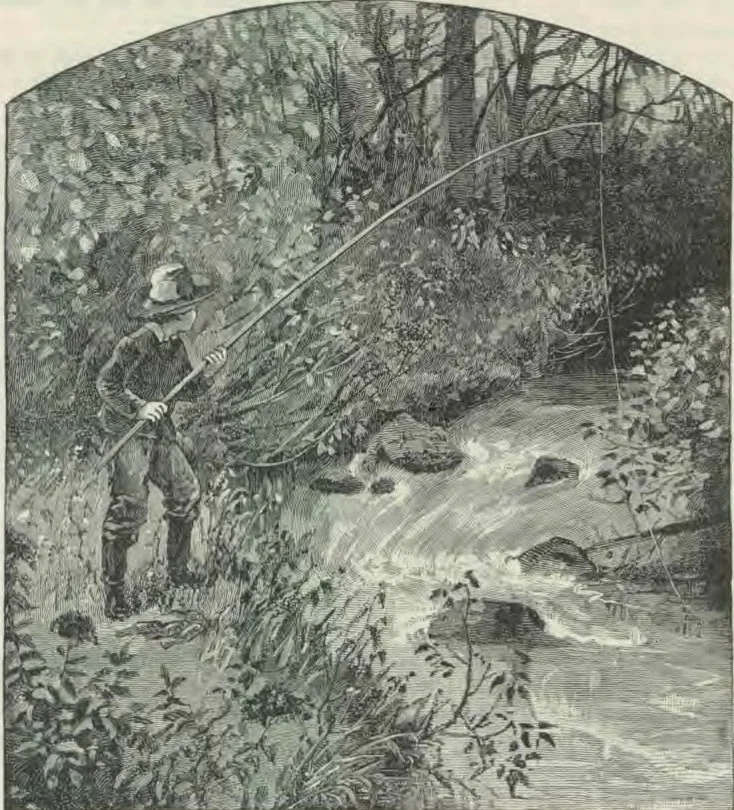
THE YOUNG FISHERMAN.

IN the glowing morning, With his baited hook, Johnnie tries his fortune By the dashing brook.
Through the crystal water, Darting in and out Of their tiny caverns, See the speckled trout.
Lucky day for fishing; One, two, three, and more;— Oh, the shining beauties Lying on the shore!
Home our Johnnie trudges, With his spotted prize, With his rod and fish-line, Looking wondrous wise.
Little brother Charlie Sees how it is done; Says, “When I am bigger, Won’t I have such fun!”
Fish steam on the table, Boys are in their chairs; What a savory breakfast This young fisher shares!
—Julia A. Melvin.

QUEER CONVEYANCES.

Our little ones in the country may have smiled to see a chicken mounted on the old hen's back while she sat sunning herself in the yard. Perhaps the young thing with few feathers sang a soft “Cree-cree,” to tell that he enjoyed his position. At night he would better like to be brooded under the mother wings.
When Biddy got up on her feet, and went marching on, off tumbled chick. Now he must use his own legs or be left behind. Those bits of legs may well be weary sometimes with long journeys about the farm.
One or two species of birds are known to fly long distances, carrying their young on their backs.
Small birds take passage across the Mediterranean Sea, on the backs of large and stronger ones. They could not fly so far. Their strength would give out, and they would drop into the water and drown.
Along the northern shore of the sea, in autumn, these little birds assemble, to wait the coming of cranes from the North, as people wait for the train at a railroad station.
With the first cold blast the cranes arrive, flock after flock. They fly low over the cultivated fields. They utter a peculiar cry, as of warning, or calling. It answers the same purpose as the ringing of the bell when the train is about to start.
The small birds understand it so. They get excited. They hasten aboard, scrambling for places. The first to come get the best seats. If the passengers are too many, some will have to flit back to the hedges till the next train. How they chatter good-byes,—those who go, and those who stay.
No tickets have they, but all the same they are conveyed safely. Doubtless the great birds like this warm covering for their backs. In this way the small birds pay their fare. And it is these last who must be out in the wet if it storms.
The little passengers are of different species, like Americans, Irish, Germans, and Chinese traveling together in cars or steamships. Their journey takes them through the air, high above the wide sweep of waters. They are close companions on the way.
By and by they reach the beautiful South country. There they build nests and sing sweetly, as they build here and sing for us in our happy summer-time.
Indeed, God cares for the sparrows.—Lavinia S. Goodwin.
Continue reading: LESSON 25.—THE WAGES OF UNRIGHTEOUSNESS