The Youth’s Instructor, Vol. 65, No. 26.

This Time

The Youth’s Instructor

Jun 26, 1917

Review and Herald Publishing Assn. · Takoma Park Station, Washington, D. C. · Jun 26, 1917

This Time

This is a thrilling time: Far-reaching questions, mighty in portent, Concern the mind of statesman and of sage; The issues of the ages by consent Focus their climax on this last-day page.
This is an awful time: Of blood and war and strife and secret shame; The truth of God is turned into a lie; In wrathful tones men despite do his name; As rebels bold his government defy.
This is a needy time: Brave men are needed, loyal for the right, To stand for God and truth 'gainst sin and wrong, With courage bold to battle with their might, Till conflict fierce shall end in victor's song.
This is a weary time: Sad hearts are loaded down with pain and care, The toils of earth in never-ceasing round Banish fond hope, the joys of life outwear; In this old world but little rest is found.
This is a solemn time: For now the Judge of earth and sea and sky, Upon his heavenly throne in lofty state, Holds solemn court, the sons of men to try; On its decisions hangs their every fate.
This is a cheering time: The signs of God point to the glorious day When he shall come whose right it is to reign; Bright hope lights up the rugged, darkened way, That leads to morn from night, to joy from pain.
— Francis M. Wilcox.

Why the Difference?

In a very successful gas-lighting plant in the Middle West a lathe worker started to work in 1912. At the same job for several years he took no further pains than to be known as an accurate and steady workman. His spare time was spent at billiard-rooms, baseball games, dances, or in playing cards.
Another young man who started in the foundry at the same time studied the organization of the business, and decided at length that all brass castings, which were bought mostly from other manufacturers, could be made at home. He made himself familiar with brass work through a correspondence course, and spent several weeks, during a slack time, in brass foundries, getting practical ideas. After he had his subject thoroughly in hand, he made it his business to lay his plans before the directors, who were contemplating building a larger foundry. He talked foundry costs and charges with them.
When the new foundry was built, this workman was made foreman in charge of casting work. His companion, who had wasted his spare moments, was bemoaning at the same time the coming installation of new automatic machines of a type of which he knew nothing, and was fearful lest he might lose his job.
In this case—as in most others—the fault lies with the man, not that age is against him. Old age need have no commercial terrors for the man who has had the sense to prepare.—The American Magazine.

Zulu Traits

It is said that the Zulu people make up one of the finest tribes in South Africa. The Zulu has a sturdy frame, a strong chest, wonderful digestion, magnificent teeth, and fine muscles. He can stand hunger, fatigue, and exposure. While he is slow to adopt modern methods of tillage, irrigation, and fertilization, he is beginning to recognize their advantages.
The Zulu hospitality, sense of humor, good temper, love of children, and trustworthiness are all good traits in his character. In general he is law-abiding and not purposely cruel. He has a strong musical sense and a remarkable knowledge of time and rhythm.—Young People's Weekly.

Japan Introduces Silk-Raising Into Korea

Japan is trying to introduce silk-raising into Korea. More than a million cocoons have been purchased in China and a number of experts in silk culture sent to Korea.

Rising Cost of Feeding Soldiers Since 1898

It costs almost three times as much now to feed a soldier as it did during the Spanish-American War of 1898.

Miscellaneous News Items from Around the World

There are 263,315 women stenographers and typewriters, according to recently compiled statistics, employed in this country.
More than a thousand women are employed in cleaning the streets of Vienna, Austria. They receive the same rates of pay that the men have been accustomed to—from fifty-five to sixty cents a day. It is said that the streets were never kept in better condition.
In China a newspaper is sold three times in succession. After the first readers of the papers are through with them, collectors gather them up and redistribute them among the lower classes. Later, the papers are again collected and sent to the villages and country sections where they are sold at a much reduced rate.
The best spellers in the whole country are to be found in the Forest Park School, Springfield, Massachusetts, according to an investigation conducted by the Russell Sage Foundation. The second rank is accorded the schools of Butte, Montana, with Salt Lake City third, Cleveland fourth, and Springfield, Illinois, fifth.
Japanese dentists in some parts of the interior of the country are primitive and peculiar in their methods. They refuse to use anything except their fingers in pulling teeth. When a young man wishes to become a dentist, he first acquires strength by pulling out, with the finger and thumb of his right hand, a number of wooden pegs which have been inserted in the holes of a plank. Then a tougher log with tougher pegs is tried, and he is kept at this for a year. After this, he operates on a slab of marble, which contains pegs of the hardest wood deeply driven in. He is then considered qualified to enter his profession.
The expression, “It runs off like water on a duck’s back,” is a very, very old one. One reason why the water always does run off, and never “soaks in” to a duck’s back, is because the feathers on his body are so extremely thick that it would take some time for the water to soak in; but the chief reason is that the feathers are covered with oil, and that is why the water runs off. The duck’s oil gland is constantly at work manufacturing this oil, or grease, and the feathers are kept lightly coated with it continually, so the water can only roll away, for water and oil cannot mix. Nearly all birds which live in the water mostly, have this same power of making oil, and for the same reason.
China needs trees. Because of the lack of them she has floods and famines and cholera and other plagues. She doesn’t even appreciate the value of a tree. Every year at the beginning of the fourth month comes the Ching-ming Festival, when the Chinese goes back home to worship at the tombs of his ancestors. He has been in the habit of breaking off branches of the few precious trees which remain, to use as decorations. Joseph Bailie, the missionary agriculturist of Nanking University, seized on the idea of converting the Ching-ming Festival into a National Arbor Day for the planting rather than the destruction of trees. The proposition was passed on up to the president of the republic, and so ordered.—World Outlook.

How Religious Liberty Came to Peru

W. W. PRESCOTT

The Bishop and His “Cavalcade”

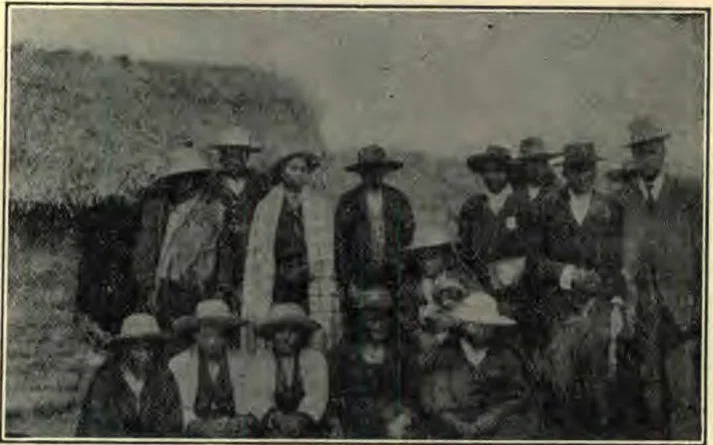
On the third day of March, 1913, Bishop Ampuero, the Roman Catholic bishop of Puno, Peru, led a company along the road or trail connecting Puno with La Paz, Bolivia. For about twenty miles or more out from Puno this road follows the shore of the famous Lake Titicaca to the department of Plateria, where is located the headquarters of our Lake Titicaca Mission to the Aymara Indians.
GROUP OF SOUTH AMERICAN INDIANS. MR. STAHL AT THE RIGHT
What kind of company was the bishop leading? And what was the purpose of his visit to our mission station? It might be expected that a high church official would certainly be on a peaceful errand, and that he would be accompanied by well-disposed persons. Perhaps he was planning to pay a congratulatory visit to the superintendent of this mission, Brother F. A. Stahl, and to offer to coöperate with him in the good work which he is carrying on. Not so, however. The bishop was on an entirely different errand. A Puno paper reports him as “accompanied by a band of poor devils from the town of Chucuito, in an infernal cavalcade, like a new Attila,” swooping down upon the Indians of Plateria. The homes of the Indians were forcibly entered. They looted the house of Brother Stahl. They bound eight of the Indians who had professed the Protestant religion, lodged them in the jail at Chucuito, and later they were brought to the public prison in Puno. After being held some days as common criminals, they were released through the efforts of Brother Stahl, the superintendent of our Plateria mission.
The explanation of this remarkable occurrence can be made in a few paragraphs. The constitution of Peru at that time contained this article: “The nation professes the Catholic religion, apostolic and Roman, and the state protects it, and does not permit the public exercise of any other.” The Roman Catholic bishop was taking matters into his own hands, and seeking to enforce this article of the constitution.
The provision making Roman Catholicism the exclusive religion of Peru had become a dead letter, to a large extent, as with the growth of more liberal ideas public sentiment would not sustain an enforcement of this restrictive article.
By working upon the superstition of the lower class of Peruvians, and of the Indians who still profess the Roman Catholic faith, the Bishop of Puno was able to lead a mob, ready to commit any lawless deeds in the supposed interest of the Roman Catholic Church.

The Real Nature of the Mission Work at Plateria

What was the real nature of the work which aroused this attack upon the mission at Plateria? In its issue of March 10, 1913, La Union, a paper published in Puno, contained an editorial in which the work of the mission is thus described:
“It is well known that through the benevolence of a Yankee there has been established a center of evangelistic propaganda in the department of Plateria, six miles from this capital, with such marked results that in three years of beneficent labor the Indians have been transformed into useful citizens, exempt from the vices which are such a strong characteristic of this race. The Indian who has been evangelized does not drink alcohol; does not chew coca. He is clean, is moral; he knows how to read; he has habits of order and industry; he is also sociable and charitable. There has been erected among these Indians a commodious lodging place for travelers.”
In his effort to break up the mission work at Plateria, the bishop of Puno overreached himself, and his expedition of March 3, 1913, was the first step toward such a change in the constitution of Peru as brought religious liberty to that republic. The story of this movement is an interesting one.

A Report from the “New York Christian Advocate”
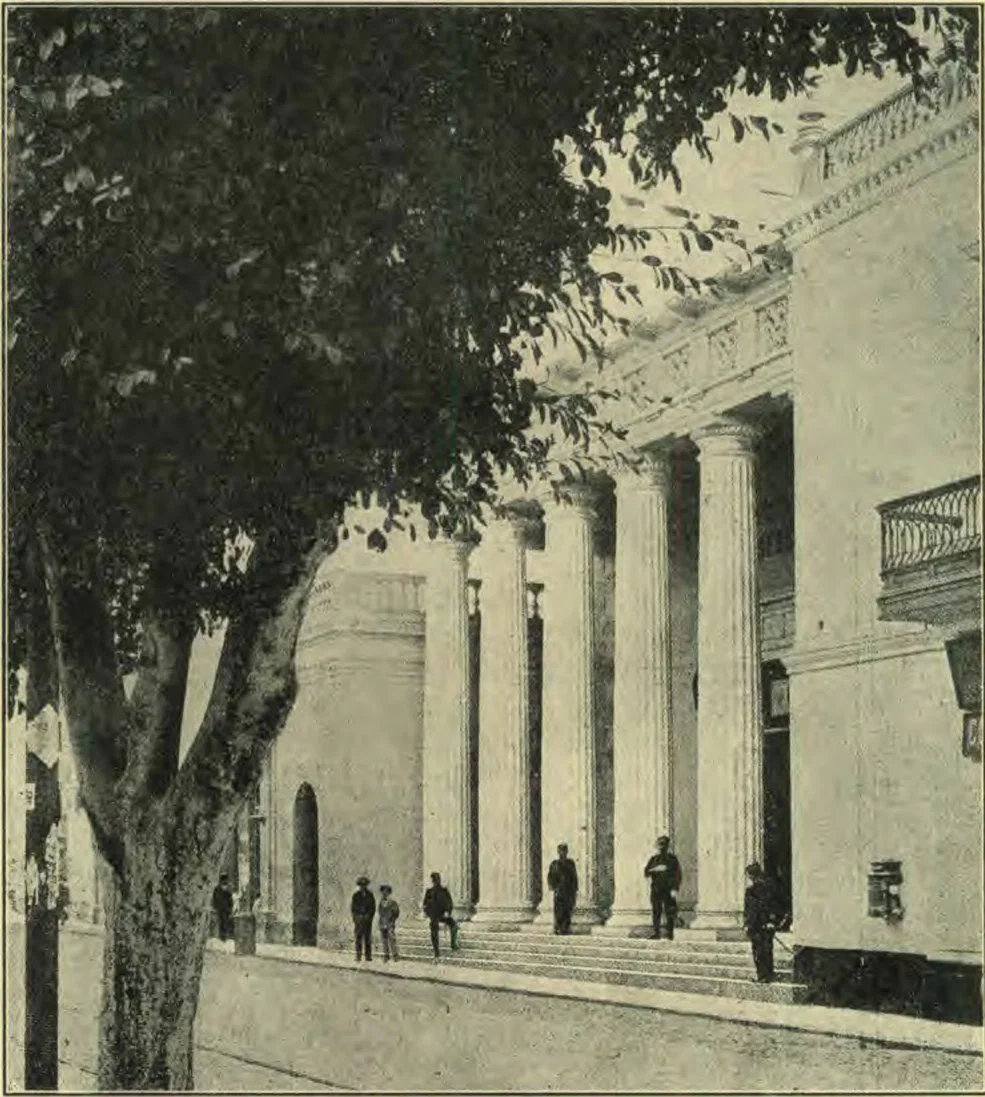
Soon after the release of the Indians from the prison at Puno, our Brother Comacho, through whose agency the mission work at Plateria was started, was sent to Lima, the capital of the republic, by his Indian brethren, to give the government information concerning the persecution to which he and his associates had been subjected. His plea received attention. Public sentiment had been so far aroused by the outrageous conduct of the Roman Catholic bishop and his band of looters, that the way was prepared for decided action. The following report of the matter is taken from the New York Christian Advocate (Methodist):
“A man of ordinary intelligence should have recognized that public opinion, even in Peru, would not forgive him, though thrice a bishop, for binding men and women with a common rope, and personally forcing them to walk over miserable roads to jail for the crime (?) of being helped in times of sickness by a Protestant physician! The hue and cry which compelled their release was local. But when the papers in the case reached the civil authorities in Lima, public indignation burned to white heat. Senator Bezada, from the district of Puno, immediately introduced a bill in the upper house calling for the suppression of the much-debated last clause of Article IV, and the battle was on.
“Our Peruvian pastor in Lima, the Rev. Ruperto Algorta, and John Ritchie, of the Evangelical Union, both saw the brief mention which the Commercial, the chief Peru daily paper, made of this bill, and they at once sought Senator Bezada. To their amazement, they found that he appeared to have no interest in the success of this bill, being a Catholic, and having been pushed into presenting the bill by his Puno constituents , who were up in arms over the two cases mentioned and other equally exasperating experiences at the hands of their intolerant bishop. When these Protestants offered to help him, he was frightened, and begged them not to say a word—‘not one word.’”
“But they had learned the name of the chairman of the committee to which the bill had gone in regular course of congressional business, Senator Mariano Cornejo, one of the most eminent members of the Peruvian bar, and a sociologist of international repute. Within a few minutes after quitting the timorous, trimming author of the bill, they were being heartily welcomed by Senator Cornejo, and assured that he had every confidence that the bill could be put through.”
SENATE BUILDING, ON THE PLAZA OF THE INQUISITION, LIMA, PERU
“His plan was to avoid debate and get action before opposition could do its worst. Within a day or so, he had secured the signatures of all the members of his committee, as he passed the report to each member in the senate chamber. The signed report was then placed upon the speaker’s table for consideration before the opposition knew that it had been reported. By prompt action and good parliamentary tactics, Senator Cornejo not only secured an early order of the day for his report, but what is called ‘preferential consideration.’ Though he is one of the most eloquent members of the senate, he piloted the bill through to the voting stage with the least possible debate.
“The bill passed with but three dissentient votes, two of these having been cast by the only two priests present and voting!
“So sudden and so complete a victory astonished the nation. Catholic leaders bestirred themselves to secure the defeat of the measure in the lower house,—the chamber of deputies,—and Liberals united with the missionary forces of the country to carry the fight to victory.
“During the two weeks which elapsed before securing the vote in the chamber of deputies, the Inca Press (evangelical) was not long idle, and mails were heavy with blank petitions going out and signed petitions coming to deputies urging that Peru fall into line with the modern world in granting freedom of worship to all her citizens.
“The students in the universities and colleges, together with the independent papers of Lima and Callao, used all their influence in favor of the reform.
“Roman Catholic opposition took many forms. . . .”
“At last it became evident that the bill would have enough votes in the lower house to insure its passage, and every device of Jesuitism was exhausted to prevent a quorum. The speaker of deputies was in favor of the bill, and when he saw that he had a quorum with a margin of two members, he had the measure brought up. There was no debate, and the bill passed—66 to 4. And two of the four dissentients were priests!”

When the Constitution Was Changed

In order to amend the constitution of Peru, it is necessary that the proposed change should be adopted by two successive congresses. This gave a full year for further agitation of the subject, and during that time every effort was made on the part of representatives of the Roman Catholic Church in Peru to defeat the measure granting religious liberty by striking off the last clause of the article already quoted. All this opposition, however, was in vain, and the congress of 1914 adopted the proposed amendment by a very large majority.
The public promulgation of this change was attended by a remarkable scene. This is described by Bishop Stuntz, in the Christian Advocate of Jan. 6, 1916:
“When the leader of the reform movement, Señor Quimper, entered, he was greeted by the Roman Catholic women with shouts of ‘Renegade!’ ‘Death to the child!’ ‘Death to Quimper!’ ‘Death to the heretics!’ ‘Death to religious liberty!’ ‘Traitors!’ ‘Down with Pilate!’ ‘He’s bought by the Protestants!’ ‘Away with him!’ ‘Away with him!’”
“A few university students had slipped into the center of the crowd of Roman Catholic women, and so occasionally one heard among the shrill voices of the women the husky shouts of these men in behalf of religious freedom. The president of the deputies had hunted up an excuse to stay at home that day, so the duty of presiding fell to the vice president of the deputies, Dr. Peña Murietta. His arrival called forth a storm of protests, and amid the noise of fire-crackers he was showered with crowns of alfalfa. When the senators arrived in a body, they were greeted with ‘Traitors!’ ‘Death to the representatives!’ ‘Death to the reformers!’ ‘Death to liberty!’ and when the meeting was finally called to order, the tumult of the galleries was such that the presiding officer had to order that one of the balconies should be emptied.”
“In the meantime, the priest Sancho Diaz, the leader of the Roman Catholic forces, and a half dozen others were drinking tea and beer in the barroom adjoining, in the hope of preventing a quorum, but finally hearing Dr. Peña Murietta proceed with the business of the day, they rushed in shouting, ‘There is no quorum! There is no quorum!’ The other congressmen laughed, and said that it would have been their fault if there were not. And so it happened that the very enemies of the bill were present and helped to swell the quorum that made possible the formal announcement of the law.”
“By this time the noise in the galleries was enormous. Women prayed and yelled at the same time, firecrackers were set off, and more alfalfa crowns were hurled at Dr. Peña Murietta as he arose and with his bell in one hand (to call for order) and the official document in the other, shouted out, ‘The honorable congress being in session in order to formally announce the reform of Article IV of the constitution, I shall announce it.’ Like a tiger, Sr. Sancho Diaz sprang from his seat, ran to the table, seized the document, and tore it to pieces. Some of the congressmen tried to stop him, but were unable to do so. Dr. Peña Murietta, having ordered the offender to be detained, announced the adjournment of the day’s session. (A few moments later the priest formally apologized for tearing up the document.) And so closed one of the most extraordinary sessions of the Peruvian congress.”
This is the outline of the story of the triumph of religious liberty in Peru. While since the promulgation of this amendment to the constitution the public exercise of the Protestant religion has been legally established, it is yet true that in some parts of the republic, away from the centers of population, the same reprehensible methods have been employed by Roman Catholic priests in their efforts to interfere with freedom of worship. On one such occasion, while Brother Stahl was visiting a district at some distance from Plateria, a mob, led by two Roman Catholic priests, attacked the house where he and his helpers were staying. An effort was made to set the house on fire, but, after frightening the mob away, Brother Stahl and his associates escaped under cover of darkness.
For nearly four centuries Peru has been under the almost absolute control of representatives of the Roman Catholic Church. Their rule has been a blight upon the country, both spiritually and industrially. With every opportunity to work for the uplift of the people, they have signally failed to bring forth such fruits as might properly be expected. And when Protestant missionaries have attempted to meet the demands of the situation, they have been persecuted, and vigorous efforts have been made to blot out their work.
The character of the work carried on at our Plateria mission is well described in another paper of Peru, in these words:
“The Protestants who are working among the Aymaras in these regions do not occupy themselves with politics, but seek to teach men how to be good and to civilize them. They are not thinking of how they can combat or become heads of the government. Their mission is more holy, more noble, and more elevated.
“One cannot help but admire the consecration and energy that these missionaries in Plateria have displayed in trying to transform the Indians, who were dirty, drunkards, hypocrites, shiftless, and savage, into beings of sound judgment, temperate and industrious. We cannot do less than to send to Mr. Stahl, the head of the mission, our most sincere congratulations, and offer to him the modest columns of our periodical to be used for the benefit of this great work which they have begun, the good results of which we have had occasion to witness personally.”
The writer of this article has seen for himself the nature of the mission work done on the shores of Lake Titicaca for the benefit of the Aymara Indians. It was his privilege to meet with the mission workers and their converts in their religious services, and to speak to the Indians through interpreters. He is, therefore, able to bear personal testimony to the character of the work being carried forward by this mission. In spite of all this, however, there are enemies of this good work who are seeking to overthrow it. At the time of the writer’s visit to the mission, in 1916, charges were lodged with the government authorities for the purpose of securing, if possible, an action to interfere with the further progress of the work. One of the charges was to the effect that the leaders at this mission station were defrauding the judges and attorneys of their legitimate fees, by teaching the Indians to settle their difficulties out of court. A few testimonies of this kind ought to give the mission such a reputation as would establish it firmly in the good graces of the authorities of Peru.
Those who are familiar with the whole history of this successful effort to secure religious liberty in Peru are free to give credit to the experiences in connection with this mission station for starting this movement which ended so auspiciously.

Are You Contented?

PAUL, that great evangelist who probably suffered more and accomplished more for God than any other man since Jesus Christ, has left this testimony with us: “I have learned in whatsoever state I am, therewith to be content.” Phil. 4:11. What a simple expression of perfect resignation and childlike faith! Wherever he was, in the prison of Rome, in the tumultuous heathen cities witnessing for his Redeemer, in the Jewish synagogue with the haughty rabbis, or at his humble trade of tent making, he was content.
Contentment is defined as a state of quietude and pleasure, of mental satisfaction. In all the troubles which confronted Paul, in his misunderstandings with the Jews, “in perils of waters, . . . in perils by the heathen, in perils in the city, in perils in the wilderness, . . . in perils among false brethren; in weariness and painfulness, in watchings often, in hunger and thirst, in fastings often, in cold and nakedness,” he was calm and happy. He realized continually that the Lord was leading him, and his faith grasped the hand of the great Guide so firmly that no earthly perplexities could dissuade him from perfect confidence and trust.
How clear is the lesson for us! In this free country, where we enjoy liberty of conscience, we have many privileges and blessings that were never Paul’s. Few can sympathize with him in his great trials. But who of us, at all times, in whatsoever state he finds himself, is content? We are dissatisfied, always; and strive by our own ways and powers to make ourselves more happy. We forget that just where we are, there we should work for Christ, and gain from loving service the blessing of the Holy Spirit. The example of Paul encourages us to believe that God is fulfilling in each of us his divine plan for our lives. Let it inspire us to greater faith and more humble trust in his will, and God will bless us with sweet content.
RACHEL SALISBURY.

The Poetry of the Bible

ONE of the oldest poems of which we have any idea as to the time of its writing, is in the Bible. It is the “thanksgiving” song of Moses and the children of Israel, when they found themselves on the other side of the Red Sea, safe from their enemies.
The idea that the Bible is a book of poems may be a new one, but this is not strange when we consider that poetry is one of the most beautiful ways of expressing thought. It has been said by some one that poetry originated in heaven, and that the climax will be reached there. It is therefore not surprising that in the Holy Book we find some of the most beautiful poetry ever written.
When we study the literature of the Hebrew people, we cannot help being impressed with their poetry. It is in the reign of King David that we find the golden age of Hebrew lyric poetry. The name “lyric” has been applied because the lyre, one of the Hebrew musical instruments, was used to accompany the verse of that name. In the book of Chronicles we learn that David appointed four thousand singers or musicians from the tribe of Levi. Poetry rendered in song, in connection with the divine service, was one of the crowning features of that golden age. Very often these songs took the form of a national anthem, voicing the praises of God, and at the same time reviewing the history of the children of Israel. An example of this is found in the seventy-eighth psalm
“Give ear, O my people, to my law: Incline your ears to the words of my mouth. I will open my mouth in a parable; I will utter dark sayings of old, Which we have heard and known, And our fathers have told us. We will not hide them from their children, Telling to the generation to come the praises of Jehovah, And his strength, and his wondrous works that he hath done.”
This anthem differs somewhat from our modern idea of an anthem, but it is a difference only with regard to circumstances and manner of expression.
The sweetness of the Hebrew ode, one of the most common forms of their poetry, remains unsurpassed today by any secular masterpiece. The nearest approach to pure music that we find is in the following ode. It is a song par excellence:

PRELUDE

“Hear, O ye kings; Give ear, O ye princes; I, even I, will sing unto Jehovah; I will sing praise to Jehovah, the God of Israel.

APOSTROPHE

“Jehovah, when thou wentest forth out of Seir, When thou marchedst out of the field of Edom, The earth trembled, the heavens also dropped, Yea, the clouds dropped water. The mountains flowed down at the presence of Jehovah, Even yon Sinai at the presence of Jehovah, the God of Israel.”
This is a portion of Deborah’s ode, which was sung upon the deliverance of Israel from the hand of Sisera. It is one of the most elaborate of Biblical odes, and exercised considerable influence upon succeeding poetry.
But perhaps nothing in the Bible is more beautiful, or is more widely known, than the poetic description of God as a shepherd:
“The Lord is my shepherd; I shall not want. He maketh me to lie down in green pastures: He leadeth me beside the still waters.”
The account is concise, yet simple; and every time we read it we feel a stronger determination to make the Lord our shepherd.
In the study of Biblical poetry, two observations are worthy of mention. The first is that a poem translated literally from the Hebrew into the prose of any other language will still retain much of its native dignity, and a faint appearance of versification. But if the Hebrew poem is translated into the idiom of foreign verse, the original beauty will be confused and mutilated. We are also reminded that the imagery and figurative language of Bible poetry is drawn from the common life of the Hebrew. The flora and fauna of the land of Palestine are so varied that the terms used in description are such that no matter where the Bible may be read they are understood and are easily translated.
In this, the greatest book of literature, we find illustrations of almost every literary form. The book of Job is an example of gnomic poetry, while epic and lyric poetry can be found in many of the other books, especially the Psalms. Every lover of beautiful language and lofty thought can satisfy his needs in the study of the Bible.
FLORENCE R. KNEELAND.

Out in the Fields with God

THE little cares that fretted me, I lost them yesterday Among the fields above the sea, Among the winds at play, Among the lowing of the herds, The rustling of the trees, Among the singing of the birds, The humming of the bees.
The foolish fears of what may happen I cast them all away Among the clover-scented grass, Among the new-mown hay, Among the husking of the corn Where drowsy poppies nod, Where ill thoughts die and good are born, Out in the fields with God.
— Elizabeth Barrett Browning.
Continue reading: When Success Hung in the Balance