The Youth’s Instructor, Vol. 43, No. 11.

POONA TO GOA

The Youth’s Instructor

Mar 14, 1895

S. D. A. Publishing Association · Battle Creek, Mich. · Mar 14, 1895

POONA TO GOA.
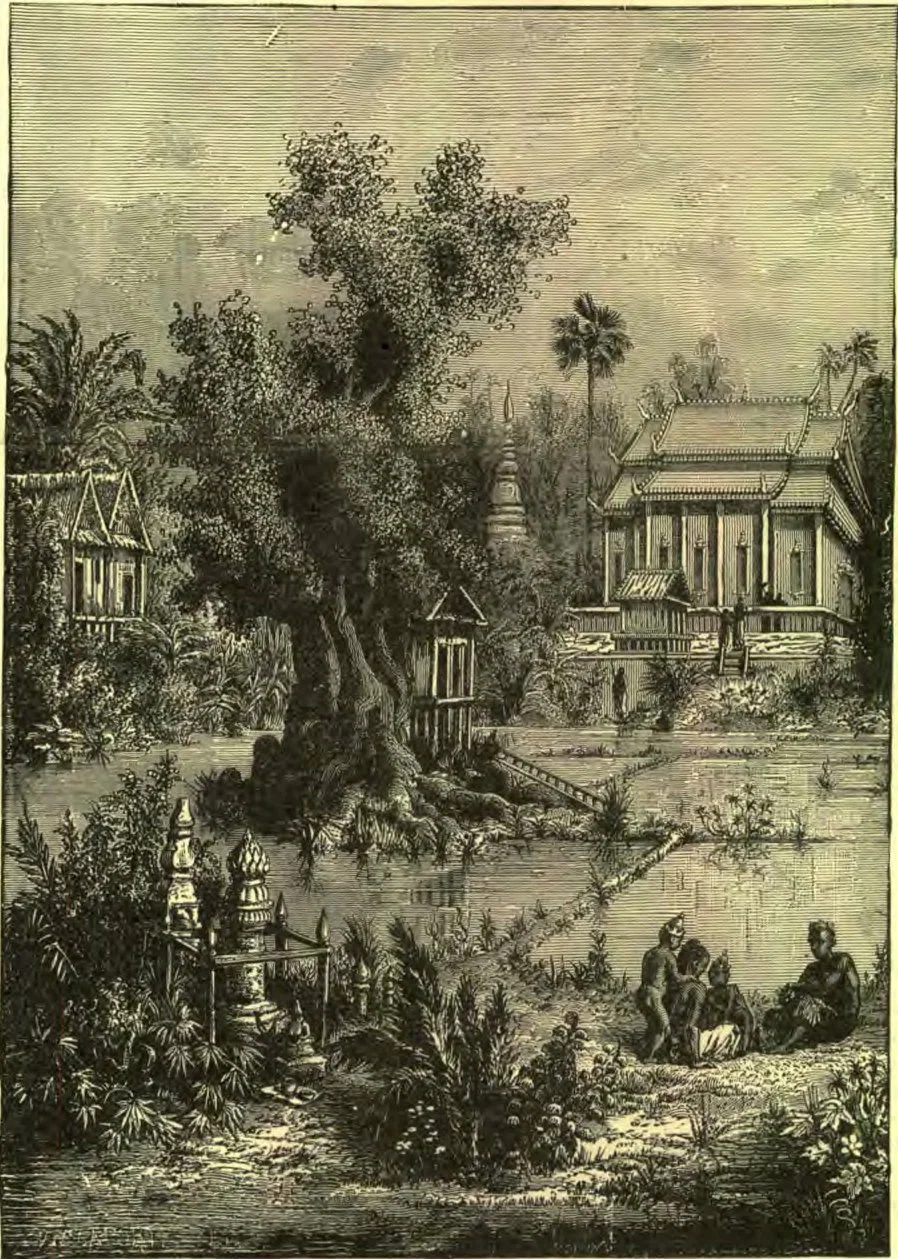
Poona, the capital of the Decan and seat of the Bombay government during the monsoon season, is located on the mountains one hundred and nineteen miles east of Bombay. Goa, the capital of the Portuguese territory of the same name, is located on the western coast of India, three hundred miles south of Bombay.
A GARDEN IN INDIA.
A GARDEN IN INDIA.
On the twenty-fifth of November, I left Poona en route for Goa, traveling via the Southern Maharatta Railway, which is a narrow-gage road with accommodations such as would not be recommended by a western traveler, and it would really be better for him to make sure of a well-filled lunch basket before starting on this journey. Our iron horse, fed on a poor quality of wood, went slowly puffing over a tortuous road, which wound and twisted through a great variety of landscape,—verdant fields, desert wastes, and jungle. We also passed several abrupt, rugged, and curiously-shaped mountains. The large fields of sugar-cane, red pepper, and chillies gave unmistakable evidence of the fertility of the soil. Sweets of all kinds and peppers of several varieties are favorite articles of diet with the East Indians. The Indian is so fond of his pepper that I dare say, should any of the readers of this ever dine with a native East Indian, they would think their mouths on fire at the very first mouthful of food.
Every few miles our cheval de fer, as if to take a rest, stopped at some one or other of the numerous small native villages on our way, which have the appearance of being built of mud. At times a substantial stone building greeted the eye, only to make the contrast between it and its neighbors more lastingly impressive for the beholder. In these mud villages are many little wild boys and girls. I call them “wild”; for they are as a rule wholly nude, and should they see you approaching, they would run away as fast as they could, and hide in their mud huts. I have been told by missionaries that should I go far into the jungle, the grown-up people even would run and hide in like manner. A missionary who has spent much time laboring for these inhabitants of the jungles, told me that for about four dollars a year a person could feed, clothe, and school one of these wild children, and that should a small farm or garden be connected with the school, the cost would be much less still. He said that though for months at a time he never saw a white man, he loved his work.
Are there not some of our young readers who will prepare to give their lives to this much-needed labor? Who will carry the blessings of the gospel to these children of the jungle, who have not been blessed with Christian parents and school privileges? “They shall all be taught of God,” and what is our duty during these last days of the world’s history? The gospel will be carried to them, and the question to each of us is, Shall I have a part in carrying it?
After a journey of twenty-four hours, we arrived at what are called the Ghauts, or Ghats (mountain-ranges). Just then the approaching king of day was flooding the landscape with a halo of crimson light, making the view very beautiful. The ascent of the Ghauts at all times is interesting; but during the monsoon season it is most beautiful, as the hills and valleys are then running with miniature waterfalls and rivers. The road through the Ghauts, nearly twenty miles in length, contains twenty-one tunnels and a number of viaducts. After passing through the second tunnel of the Ghauts, we came in sight of a group of large gray monkeys with black heads and faces, which had collected on the trees near by. As we passed them, they set up a shrill and lively chatter, which was plainly heard above the rumbling of the cars.
Some of the tunnels through which we had to pass are very long, and the slow speed of the train made us wish for the light of day. One of the viaducts, nearly eighty rods long, not far from Castle Rock, is deserving of special mention. After passing Castle Rock, an immense block of stone, having the appearance of a beautiful castle when viewed from the opposite side of an intervening chasm, and before reaching this viaduct, one of the waterfalls of no small volume greatly enhanced the charm of the surroundings. This volume of water rushes over the side of the mountain, and with one bound, the wind being favorable, makes a leap into the chasm hundreds of feet below, clearing the train, which is sheltered behind this continually falling curtain from the burning rays of the sun. The mild beams of light piercing this translucent volume, the roaring of the falling waters, more or less broken up into a silvery spray, together with the knowledge of the fact that we are, as it were, in a niche cut out of the side of the mountain with hundreds of feet of stone above and an abyss hundreds of feet below, gives a sensation not soon to be forgotten.
Passing slowly over this crescent-shaped viaduct, which at one time, when we looked out of the windows on either side, seemed to suspend us in mid-heaven, we were soon opposite Castle Rock, where we had a most beautiful view.
On arriving at Calém, the border village of the Portuguese territory, the customs officials, all dressed as soldiers and heavily armed, greatly to the annoyance of the passengers entered the cars, and examined all of their luggage, charging duty on everything they possessed, from the smallest and most worthless toy to articles of greatest value. The officials seemed to be so glad to have an American visit their country that their hospitality let me pass with my luggage unexamined, and no duty to pay.
Upon my arrival at Marmagoa I was informed that I could not cross the bay to Goa until the next morning, as there were but few boats that ventured to cross during the monsoon season. That night I spent at the Dak bungalow, and I shall never forget it. The rain fell in torrents, and the roaring of the sea, as the waves dashed upon the shoals and rocks, was something that would drive sleep from the most weary. Next morning, in a boat seemingly very unseaworthy for such a high sea, I was taken across the bay, and felt no little relief when I set foot on land once more.
WILLIAM LENKER.

LIGHT-BEARING TREES AND BUSHES.

ONE of the early naturalists, Madame Merian, I think, describes an extraordinary spectacle which she observed in Asia. Her party was moving through a forest at night when without warning a large light appeared. At first dim, it increased in size, growing larger and larger until finally a tree was outlined in a soft, pulsating light.
The natives were demoralized, and refused to approach it, saying it was the sacred tree of fire. But the naturalist had little faith in trees of fire, and investigated it, finding that the light was due to certain insects, which, by the way, have never been observed since.
That a tree or plant could give light was deemed a figure of the imagination, yet to-day it is known that light-giving plants are not uncommon, though among the most striking and remarkable of natural phenomena. Once in returning from a day's hunt through a deep forest in the heart of the Adirondack region, I stumbled against a dead limb of a tree, when to my amazement I was at once surrounded by a silvery light that flew in all directions, like darts and arrows of fire, each piece burning where it lay. This was an unusually brilliant display of the best known of luminous plants, the “fox fire,” or “witches’ glow,” of childhood days.
To the layman it is often mysterious, as investigation shows nothing but the decayed wood, and sometimes a soft, pulpy mass. The botanist will soon point out the light-giver in the mycelium of some fungus that has permeated the old branch, and fairly taken possession of it, converting it into a glorious spectacle when disturbed. The vividness of the light may be estimated when it is known that print can often be read by it, and the light of some has been known to penetrate through several thicknesses of paper.
Singular to say, the smallest plant is often the means of producing the greatest luminous effects. This is the diatom, which the naturalists of the “Challenger” found floating in the ocean in vast numbers; and as the nucleus of the diatom is often brilliantly phosphorescent, some of the most remarkable displays of light observed by the naturalists were occasioned by these little plants. But what shall we say to a sight observed by a Norwegian bark in the Bay of Funchal? The waters here are fairly alive with these little luminous plants the year round, and on the occasion referred to a waterspout formed among them. During the day it would have attracted little attention, as the phenomenon is a common one; but the crew of the ship were suddenly confronted at night by a literal pillar of fire or light that extended upward to a distance seemingly of one thousand feet, and moved along with a decided bend. It emitted a pale yellow light that stood out in strong relief against the black night,—a weird and formidable spectacle, rushing on before the wind.
An English naturalist, wishing to astonish some natives in a wild part of Asia in which he was traveling, and impress them with his supernatural powers, secured a certain vine known as Euphorbia phosphorea, and rubbing it upon a big rock, caused the latter to gleam with flame, and present so remarkable a spectacle that the natives ran, believing that he had set the rock afire by simply touching it. The naturalist was aware that the milky juice of this plant, that resembled the dandelion, was brilliantly phosphorescent.
In the Harz Mountains there has been for ages a cave known as the haunted cavern. An Englishman, traveling in the vicinity and hearing of it, determined to investigate the mystery. After a long climb he reached the cave. No sooner did complete darkness set in than the phantom of the cave appeared—a remarkable semblance to a human form, with arms outspread, outlined against the gloom. Making his way to the figure that had alarmed so many wayfarers, he found that it was a plant that grew upon the wall. It was the well-known phosphorescent fungus, Rhizomorpha subterranea, frequently found in caves, and familiar to miners. Its light is often so vivid that people have read by it.
These curious lights are not found in the tropics alone. Some years ago Mr. Morrell, editor of the Gardiner (Me.) Journal, wrote me that he had observed a brilliant steady light in his garden at times, totally unaccounted for by mechanical contrivance, and which, upon investigation, proved to be the phosphorescent light emitted by the young of the plant Tianus stylaticus.
Perhaps the most startling exhibition was observed several years ago by an English traveler in Borneo. Belated, he was overtaken by night; and there being no moon, he was fearful of losing his way, when, as the darkness came on, singular lights appeared here and there in the bushes and by the roadside. Some were yellow; others burned, or seemed to, with a bright greenish hue. As it grew darker, the blaze of light increased, and finally the traveler was amazed to find that he was passing through lines of luminous bush which emitted light so brilliant that he could read by it.—Pittsburg Dispatch.

THE GREAT FALLS OF LABRADOR.

THE Toronto Daily Mail gives a dispatch containing the following interesting information:—
“Sixty thousand square miles of an iron-bearing formation, a new lake larger than Grande Lac Mistassini, and the proof of the fact that the big falls of the Hamilton River are the largest in America, if not in the world, are among some of the many discoveries of value made by Messrs. Low and Eaton on their sixteen months’ exploration of the interior of the great Labrador peninsula, which has terminated by the return of the explorers to Quebec and their disbandment here. After traversing Labrador last year from south to north, and sailing from Ungava Bay to Hamilton Inlet, where they spent the winter, Messrs. Low and Eaton ascended the Hamilton River to the grand falls on ice, and succeeded in taking a splendid lot of photographs of it with ice cones and other surroundings. The remains of the burned boat belonging to the Bowdoin College expedition were found below the falls, and, further on, the bottle containing a record of their trip to that point.
“The river falls eight hundred feet in less than six miles, with one clear steep fall of more than three hundred feet. The stream above the falls is as large as the Ottawa. Below the falls it narrows into a canyon only thirty or forty feet wide, with steep walls on either side, hundreds of feet high. Mr. Low brought back beautiful specimens of labradorite of the most valuable kind of the gem. It exists in large quantities.
“The iron ore deposits to which reference has been made extend from latitude fifty to Ungava, and are very rich. Whole mountains of the ore were found corresponding with the ore of Marquette, Michigan, and containing millions of tons. The large Lake Michikamaw, in the northeast, is more than one hundred miles long, not narrow and full of islands like Mistassini, but from thirty to fifty miles wide. Several lakes larger than Lake St. John were seen by the party. The country to the north is a perfect network of waterways, and these contain such fish in abundance as brook and lake trout, white-fish, etc.”

Bacteria and Yeast: Analogous Fermentation Actions

THE London Hospital says that the members of the Epidemiological Society were told by Dr. Klein at their last meeting that all the forms of bacteria produce an action upon the organic fluids in which they grow which is strictly analogous to that produced by the yeast fungus on saccharine solutions. Just as the action of yeast in saccharine solutions always results in the evolution of the same definite products, so all bacteria, in known media, produce bodies of definite chemical composition.

Statistics of Foreign Missionaries for 1892

Dean Vahl’s statistics of foreign missionaries for 1892 has been issued. The income of all Christian missionary societies was £2,695,188, of which £1,411,240 was contributed in this country. The number of male foreign missionaries was five thousand five hundred and two, and of unmarried female missionaries, two thousand seven hundred and seventy-one. With the wives of married missionaries, there may be about twelve thousand from Europe and America in the field. The number of communicants was above a million. Under all headings there is said to be a marked advance on the previous year.—The Missionary Review.

Labor at High Altitudes on the Peruvian Railroad

SOME curious facts were brought to light on the capabilities of men to labor at high altitudes during the construction of the Peruvian Central Railroad. This line starts at Lima, and proceeding inland, reaches its highest point at the tunnel of Galeria, fifteen thousand six hundred and forty-five feet above sea level. It is stated that men were able to do a fair “sea level” day’s work as long as the altitude did not exceed eight or ten thousand feet above sea level; but beyond this there was a sudden falling off in the work of one fourth to one third up to heights of twelve thousand feet, and at still higher elevations one hundred men were required to do work easily done by fifty at sea level.

JOHN HUSS.

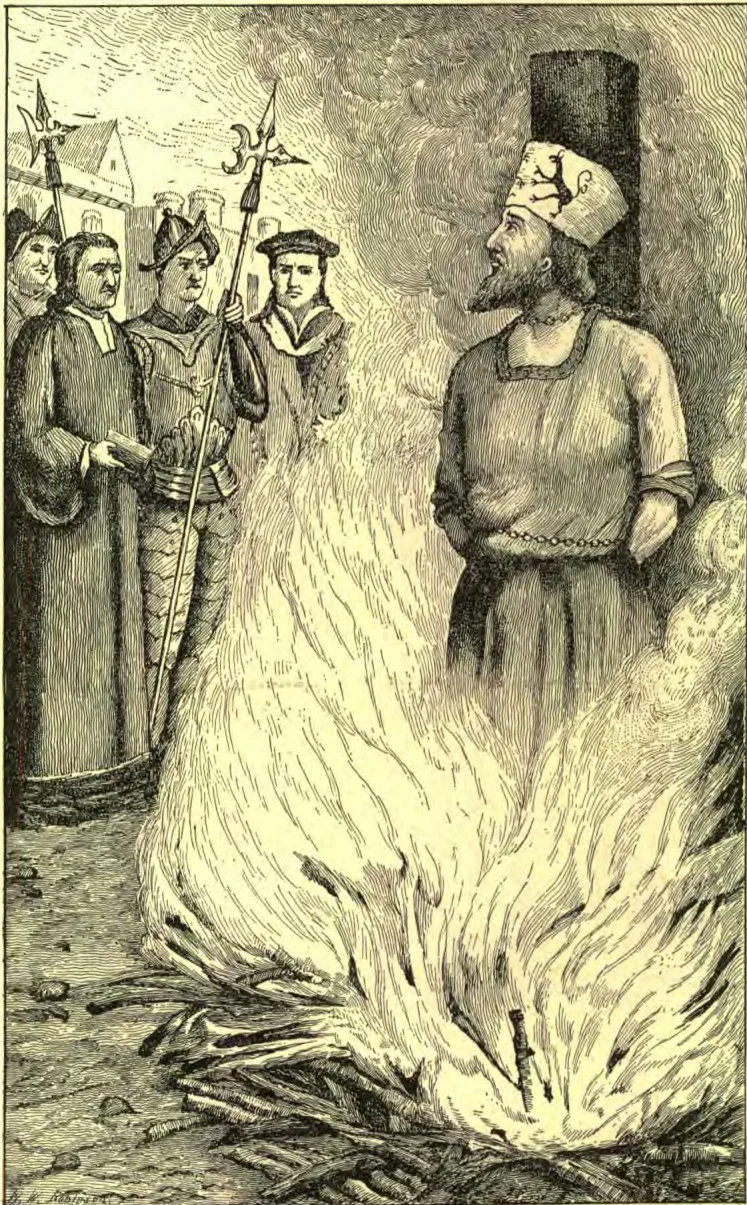
John Huss, the Bohemian reformer and martyr, was born at Hussinetz, a market-village not far from the Bavarian frontier, in the year 1378. His parents were well-to-do peasants. Of his early life nothing is recorded except that he obtained a good elementary education. He entered the University of Prague, where he became Master of Arts in 1396. In 1398 he began to lecture, and the philosophical writings of Wycliffe were his text-books. In 1402 he was made rector of the Bethlehem Chapel in Prague.
MARTYRDOM OF HUSS.
MARTYRDOM OF HUSS.
This appointment had a deep influence on the already vigorous religious life of Huss himself; and one of the effects of the earnest and independent study of the Scriptures into which it led him was a conviction of the great value not only of the philosophical but also of the theological writings of Wycliffe. But it was only slowly that the growing sympathy of Huss with Wycliffe unfavorably affected his relations with his colleagues in the priesthood.
In 1408, however, the clergy laid before the archbishop a formal complaint against Huss, and the result was that he was publicly forbidden the exercise of any priestly function throughout the diocese. He was finally excommunicated, and an interdict was laid on all cities that harbored him.
During the year 1414 arrangements for a general council at Constance were made, and for the satisfactory settlement of Bohemian affairs the presence of Huss was necessary. His attendance was requested, and he willingly accepted the invitation, as giving him a long-wished-for opportunity both of publicly vindicating himself from charges which he felt to be grievous, and of loyally making confession for Christ.
He made the journey under the famous imperial “safe conduct”; but notwithstanding, he was seized and thrown into prison before any accusation whatever had been formulated. The council showed itself inaccessible to all his arguments and explanations, and its final resolution was threefold,—first, that Huss should declare that he had erred in all the articles cited against him; secondly, that he should promise on oath neither to hold nor teach them in the future; thirdly, that he should publicly recant them. He declined; and as every effort was put forth to shake his determination, the spirit of the martyrs rose within him, and he steadfastly refused to swerve from the path which conscience had once made clear.
Sentence was pronounced upon him, as he had expected, and he was immediately led off to the place of execution. Many touching incidents recorded in the histories of that time make manifest the meekness, fortitude, and even cheerfulness with which he went to his dreadful death. When the flames had done their office, the ashes that were left, and even the soil on which they lay, were carefully removed and thrown into the Rhine.
Huss was much less remarkable for the amount of his mental endowments and acquirements than for the candor with which he formed his convictions, the tenacity with which he held them, and the unselfish enthusiasm with which he spoke them. He cannot be said to have added a single new item to the intellectual wealth of the world, but his contribution to its moral capital was immense. His is the honor of having been one of the bravest of the martyrs who have died in the cause of honesty and freedom, of progress and of growth toward the light. EVA L. BRION.

“RELIGIOUS LIBERTY VIOLATED.”

UNDER this head the New York Examiner, the leading Baptist paper in the United States, says:—
“There is a deplorable ignorance as to what constitutes religious liberty. To a large proportion of the human race, religious liberty means the right to believe as I please, and to act accordingly. Others mistake religious toleration for liberty. Great Britain grants toleration, but not liberty or equality. France grants a larger degree of religious liberty, but still lays a tax upon every one, of whatever belief or unbelief, for the equal support of every form of religious worship whose professors ask for this state aid.
“In not a few of our States, religious liberty is grossly, wickedly, infamously violated, through abuse of what are called the Sunday laws. The International Religious Liberty Association, Battle Creek, Mich., publishes a pamphlet entitled ‘Religious Persecution,’ from which we gather a few facts. At Springdale, Washington county, Ark., Elders Wellman and Scoles, Seventh-day Adventists, held meetings which resulted in the organization of the Seventh-day Adventist church. Elder Scoles gratuitously painted the meeting-house, which was out of sight of all public roads. On Sunday he did a small strip of painting. For this he was arrested and convicted. Mr. James, another Seventh-day Adventist, did some carpenter work on the house of a poor widow, as an act of charity. The widow was to be thrown out of the house in which she lived, and had no other shelter; so he worked, in the rain, on Sunday. He, too, was arrested and fined. He would have been imprisoned but for the fine being paid by others. Mr. Armstrong, for working in his garden, was arrested and locked up in jail, with another prisoner, with only a little straw and a blanket about thirty inches wide for both of them. And all this time Sunday trains were running, Sunday excursions were advertised, and men and boys were shooting squirrels in the woods, without check. So eager were the persecutors that men were arrested and fined and imprisoned when the alleged offense was committed previous to the enactment of the law. In Tennessee, Sunday gaming and shooting have not been interfered with, but when a lawless mob fired into a congregation of Sabbath Adventists, the crime went unnoticed. Men cut their wheat and rafted logs on Sunday, untouched by the law. But those who had conscientiously observed their Sabbath, were put into the chain gang. From the windows of the jail where they were confined, on Sunday they saw a trainload of workingmen passing in the streets, not thirty feet from the jail, going out to work. Similar persecutions have occurred in Maryland and in Georgia. A similar case occurred in western Pennsylvania.
[The same persecuting spirit and unjust treatment prevails against Seventh-day Adventist institutions and their employees in London, England; Christiania, Norway; Basel, Switzerland; and Melbourne, Australia, where representative men of the denomination have been fined again and again not only, but have been arrested repeatedly and imprisoned.—EDITOR.]
“All these are in violation of the principle of religious liberty, which is that the state takes no cognizance whatever of any one’s religion or lack of religion—that the state has nothing to do with religion, except to see that no one’s religious rights are interfered with. Any work, done on any day, that does not interfere with the rights of others, is utterly out of the proper reach of the law.”

Strength Found in Weakness

WHEN the Christian finds out he is weak, he is ready to learn that God is his strength.

The Nobodies of the World

The nobodys of the world are often the somebodys of God.

The Minister Who Is More Than a Preacher

THE minister who is not more than a preacher is a poor one.

THE EVERLASTING ARMS.

“The eternal God is thy refuge, and underneath are the everlasting arms.” Deut. 33 : 27.
LORD, how secure are they who make, In every path of life they take, Thine arms their hidingplace; They have no fear of stormy gale, Their anchor’s firm within the vail, Protected by thy grace.
When Satan’s host encampeth round, With wicked plots to take the ground, Thy chosen ones to snare, Thy people have a sure retreat; They bow before thy mercy-seat, In fervent, faithful prayer.
They know the one they have believed, And are persuaded, and relieved From earthly cares and woes; For well they know thine arm can save, Therefore no other place they crave. For shelter from their foes.
Their heart is fixed; their treasure lies In mansions fair, beyond the skies, With thee who reigns above; Above the pain of worldly strife, They live a peaceful, happy life, Within thine arms of love.
HARRY ARMSTRONG.

THE GREAT DAY OF ATONEMENT.

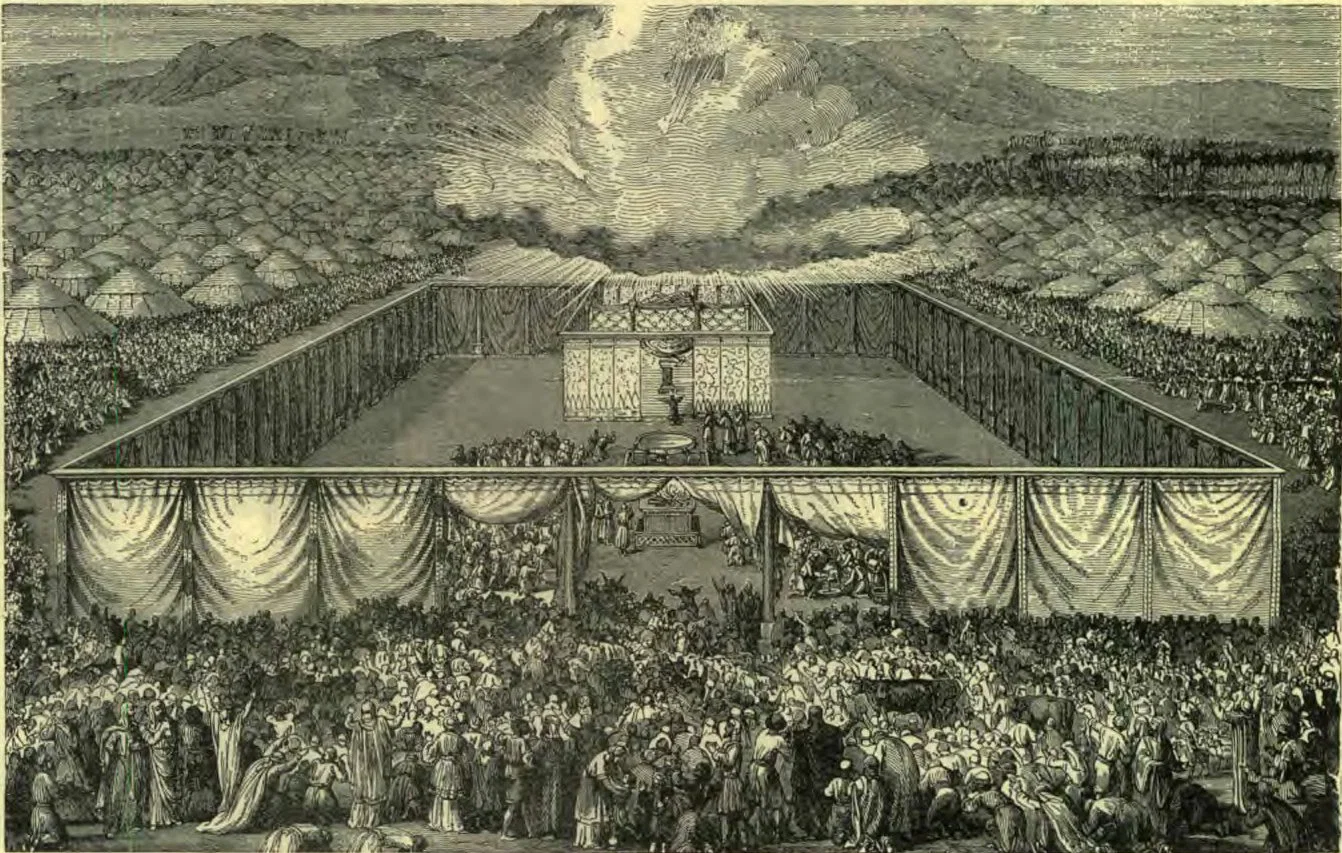
God is a God of mercy, and ever works with fallen man to save him. When man through sin had his mind darkened so that he could not comprehend the plan of salvation, God taught him through various object-lessons. Among these were the sanctuary and the offerings connected with it. Through this structure and its services, men could learn what Jesus Christ was to them.
THE GREAT DAY OF ATONEMENT.
The great plan of salvation was here taught them. In the services imposed upon them, they could learn the nature of forgiveness of sin, the judgment, and the final disposition of sin.
The tabernacle, with its golden furniture and sumptuous drapery, must have been a sight that was lovely to behold. Even the angels might have studied the outlines of thought, contained in its markings, with profit. Its cherubim, its curtains with figures of angels, all told of the glory and power of God. But it was “made with hands.” It was destined to grow old, and finally perish. It was a figure for the time being. Heb. 9 : 9. The greater and more perfect tabernacle was in heaven.
The service of the earthly tabernacle was interesting and instructive in all its parts. Each day the great sacrifice of God in giving his Son to die for the world (John 3 : 16) was impressed upon the people in the animal that was slain. But one day of the year was especially interesting. The tenth day of the seventh month was the climax of the sanctuary work each year. It was a day of great solemnity; for it represented the awful judgment to which all mankind must be called. 2 Cor. 5 : 10. This was the day when the high priest would go within the inner vail before the mercy-seat, and stand in the presence of the shekinah of the God of the heavens and the earth. Lev. 16 : 2; Heb. 9 : 7.
As we let the mind go back to the plain of Shinar, and see the priest entering the tabernacle court with his bullocks and goats, and the thousands of the children of Israel crowding around the tabernacle of the congregation, we cannot help feeling solemn. Everything is in exact order. The priests in their clean linen (Lev. 16 : 4, 5), the censer with the incense (verses 12, 13), the people bowing without the tabernacle, before the Lord, and afflicting their souls (Lev. 23 : 27), all denote that this is more than an ordinary occasion. We watch the great throng, and soon we see the work begin. The high priest offers his bullock for himself to make an atonement for his house. Then the two goats are brought before the door, and after casting lots, the one chosen for the Lord is slain. As the blood flows from the innocent animal, the people that have faith, see the blood of the Son of God offered for them. The formalist sees nothing but a formal service that keeps him from being cut off from Israel that year.
The blood is carried in before the mercy-seat, where God had promised to meet with his people. By this service, God had vouchsafed to remove the sins accumulated there during the year. As the high priest comes forth, the sound of affliction may be heard throughout the great multitude. The scapegoat stands at the door ready to receive the sentence of condemnation, when Israel’s sins are laid upon his head. By a man appointed, he is taken away into the wilderness, where he meets the destruction that guilty Israel merited.
But in all this figure a real work is typified. The heavenly sanctuary is to be purified with better sacrifices than that of animals. Heb. 9 : 23. That purifying work is the real day of atonement, of which the earthly service, year after year, was only a shadow, or type. It began at the end of the twenty-three hundred days of Dan. 8 : 14, which was the tenth day of the seventh month (Jewish sacred time, corresponding to our twenty-second of October) of 1844. For now more than half a century our High Priest has thus been officiating before God’s great mercy-seat in heaven. The blood of the Lord’s offering (Jesus Christ) that was shed on Calvary nearly nineteen hundred years ago for us, has now, in the end of the world (Heb. 9 : 26), been carried once for all within the vail. The great scapegoat (Satan) stands without, awaiting his final sentence, and the reception of the sins of all who have confessed their guilt. When our High Priest comes forth, Satan will go to the very destruction to which our sins would take us if we did not confess and forsake them, and where all go with Satan who do not accept Christ as their Saviour. (See Rom. 6 : 23.)
Like Israel of old, there are at the present day also two classes who profess to believe this. With one class it is a theory. They hope to be saved, but they fail to afflict their souls now. They look forward to the future to do this work. The other class are earnestly seeking God, and have put away their sins, looking for the return of their High Priest to cleanse sin from the universe of God, and give them an eternal rest. Reader, to which class do you belong? May the Lord help us to be among those who are making ready and looking for the return of our blessed Lord. Heb. 9 : 28. We are in the great day of atonement. This is not a work that will be repeated every year. It is once for all. Let every child, and every youth, and every maiden, as well as every young man and every young woman, and those that are older still, whoever read these lines,—let them seek the Lord, and be at one with him. This is the at-one-ment.
J. H. DURLAND.

Rest in the Lord and Wait Patiently

“REST in the Lord; wait patiently for him.” In Hebrew, Be silent to God, and let him mold thee. Keep still, and he will mold thee in the right shape.—Martin Luther.

The Surest Way to Shame Sinners

THE surest way to make sinners feel ashamed of themselves is to live a most exemplary Christian life before them.

Satan Stirs Trouble Where Christ Dwells

It is a favorable indication that Christ is in the house or the church whenever the devil is trying to make a fuss.

LESSON 13.—THE JUDGMENT MESSAGE (CONCLUDED).

March 30, 1895.
MEMORY VERSES.—Rev. 15:2, 3; 5:13.

REVIEW QUESTIONS.

1. WHERE is the sanctuary located?
2. How may we learn about it?
3. By what means can we learn in regard to the work of Christ as our high priest?
4. In what apartment does he now minister?
5. By what providential circumstances did the Lord lead his people to study the subject of the sanctuary?
6. What were they brought to see in regard to the law of God?
SUGGESTIONS FOR STUDY.—1. Study carefully the references under questions 1–12, and notice whether the subject is the origin and nature of the first angel's message. 2. Questions 13–15 bear upon the third angel's message. 3. Questions 16–21 explain the second angel's message. 4. Questions 22–30, with their references, set forth the glorious triumph of the three-fold message which God has ordained to prepare a people for the coming and kingdom of his dear Son.
1. What power did they find had sought to change the law and the Sabbath? Dan. 7:25; 2 Thess. 2:3, 4. (See note .)
2. When they found that the papacy was the power in question, what did they do?—They rejected the papal sabbath, and began to keep the Sabbath of the Lord, and to teach it to others.
3. When they did this, what message did they proclaim? Rev. 14:9–12.
4. What is the rule of judgment in the court of heaven? Rom. 2:12, 13; Eccl. 12:13, 14.
5. To what, then, is it eminently proper to call the attention of the people at this time? (See note .)
6. Where only can we see the law in all its fulness and perfection?—In Jesus Christ. (See note .)
7. Then in order to present the law of God correctly, what must we do?—Preach Jesus Christ and him crucified. 1 Cor. 2:2.
8. In giving the first angel's message, what must we preach? Rev. 14:6.
9. Of what, then, does the judgment message form a part?—The gospel.
10. What appeal is made in it concerning our worship? Verse 7.
11. If we truly worship God, what worship is excluded?—All false worship.
12. What is the highest form of worship?—Obedience.
13. Against what are we warned in the third angel's message? Verse 9.
14. What is threatened against those who do not heed the warning? Verses 10, 11.
15. Of what does this unmingled wrath consist? Rev. 15:1.
16. By what symbol is a divided church represented in the last days? Rev. 14:8. (See note .)
17. What causes her fall? (See note .)
18. What description does Paul give of her condition? 2 Tim. 3:1–5.
19. How bad does Babylon finally become? Rev. 18:1, 2.
20. What relation will she then sustain to earthly governments? Verse 3. (See note .)
21. Why are God's people called out of her? Verses 4–8.
22. What is said of the people brought out under the last message? Rev. 14:12.
23. What great event immediately follows? Verse 14.
24. To whom does he bring deliverance and salvation? Dan. 12:1.
25. Where do they reign with Christ during the thousand years? Rev. 4:1–5; 7:9; 19:1; 20:4, 6.
26. In what work will they engage? Rev. 20:4.
27. What will take place at the close of that period? Verses 5, 7–9.
28. Where will the saints finally reign forever? Rev. 5:9, 10; Dan. 7:27.
29. What must first take place? Ps. 37:9–11, 34.
30. What anthem of praise and victory will then be heard? Rev. 15:2, 3; 5:13.

NOTES.

Continue reading: A LESSON FROM ZACCHEUS