The Youth’s Instructor, Vol. 38, No. 29.

SOMETHING FOR THEE

The Youth’s Instructor

Jul 16, 1890

S. D. A. Publishing Association · Battle Creek, Mich. · Jul 16, 1890

SOMETHING FOR THEE.
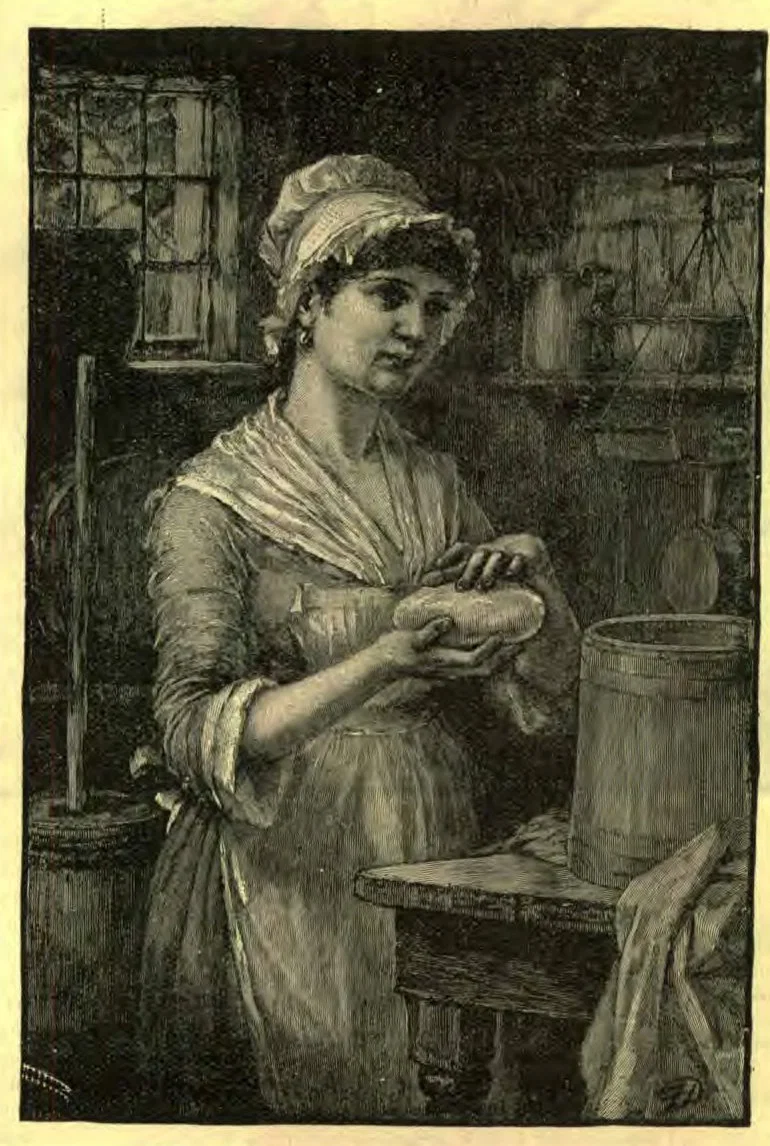
ALICE BARBER was sitting on the woodpile with the dish-pan in one hand, and the corner of her apron in the other. Her eyes were red and swollen, and the tears made rivers down her nut-brown face. She looked dejected and forlorn.
“Heigho!” called Marcus Noel, as he saw her through the fence. “What’s the matter? Got the blues?”
Marcus was the farm-hand on the next place, and he had just driven his team through the alley.
“Well,” sobbed Alice, emphatically, “I think you wouldn’t be so cheerful if you only had half the trouble I have.”
“Let’s compare troubles and see,” said Marcus, with a laugh.
“Why,” said Alice, still sobbing, “you know I can’t have any chance like other girls. Here’s grandma sick and helpless; somebody has to take care of her, and of course there’s no one to do it except me. I’ve got to stay here from morning till night, and from night till morning. I can’t go to school. I can’t go into society. I can’t do anything but just drudge around, wash dishes, get dinner, get supper, get breakfast, feed chickens, strain the milk, and go over the same monotonous round from one year’s end to another, and I don’t see but that it is always going to be just so. I’m getting old, too, Marcus. Why, I’ll be fifteen in September. Just think of it, and I haven’t been to school for two years, ever since the accident.
“And ever since papa died, mother has to be always away from home nursing, to get the ‘wherewithal’ for us. I used to think I would do something great and good, and help lots of people. I wanted so much to be a school-teacher, like Miss Scott, and be polite and ladylike, but there is no use of thinking of anything of the kind. I’ll just have to drudge on forever and ever!”
“Alice,” said Marcus, “what does the catechism say is the object of man’s life?”
“To glorify God, and to enjoy him forever,” said Alice.
“And what does it mean?”
“Oh, I suppose it means to go to church, and sing hymns, and pray, and praise the Lord as they do in heaven. I don’t know I’m sure,” said Alice.
“Do you see that little flower in the crack of the rock?” asked Marcus.
“Yes,” said Alice, looking dolefully at the gay plant. “Well that little flower is glorifying God. It is not withering up just because it is not a great damask rose in somebody’s front yard. It is pouring out its sweet praises from the place where God bade it bloom. It is doing something good and beautiful for God, and teaching us the same lesson of humility and love that Jesus did in his life. Who knows but that God bade it bloom right there in that little meager crack just to help you and me to-day, and through us to help others? Who knows but that it will do more than all the great roses in somebody’s front yard?”
“That’s very pretty,” said Alice, “but how does it help my case? I can’t do anything for God where I am, just washing dishes and drudging around forever and ever.”
“I see it in a very different light, Alice. You are just like that flower, or may be. God has put you in a hidden place, way down here in a cleft, with only a poor, crippled grandma to wait upon, and a few simple duties to do, missing the great garden and gardener’s attention. There’s no one to train you to look or act beautifully, in the sense the world calls beautiful, but there is everything to make you beautiful in Heaven’s eyes.
“How do you suppose Moses felt away off in Midian, taking care of a flock of sheep for his father-in-law? He had been in the court of the king, and was very learned, but God took him away from all his earthly teachers, to teach him something of heavenly wisdom. By and by he gave him the leadership of his people, and Moses found that his education had not been so badly neglected, after all; for God had taught him the very things he most needed to know, away off in the mountains with his sheep.
“Do you not know that the Bible says, whom the Lord loveth he chasteneth? I expect that God is giving you a better education after all than you could get from the schooling that you so crave. As for being great and doing great things, it seems to me, Alice, that you have no need to complain of not having an opportunity.”
“Why!” exclaimed Alice, “I don’t see what you mean.”
“Suppose Jesus were here on earth,” said Marcus. “What would you do for him if he should come to your home, weary and worn out?”
Alice’s eyes brightened. “I tell you, Marcus, I’d fix up the rooms just as nice as I could. I’d make up the bed in the spare room beautifully. I’d get him the nicest supper that I could. I’d pick a bouquet of flowers from the garden, and I’d gather some of our finest grapes, and I’d—just do all I could for him, for I do love him.”
“Yes, I believe you do, and Jesus would appreciate it all, but what does he say about ‘the least of these my brethren’?”
A flush swept over Alice’s face as she repeated the words, “Inasmuch as ye have done it unto the least of these my brethren, ye have done it unto me.”
“I think you have a great work to do for God,” said Marcus, “but I must go. I am glad I have had this talk with you, Alice; for I was in about the same kind of mood when we began. I thought it hard that I had to work on the farm instead of going to college, but God makes all things work together for good to those that love him. Do you know that hymn called ‘Something for Thee’? Let’s take that song for our song, and sing it whenever we feel that we want to do something great.” And Marcus softly sang,—
“Saviour, thy dying love thou gavest me, Nor would I aught withhold, dear Lord from thee. In love my soul would bow, my heart renew its vow, Some offering bring thee now, something for thee.”
“Good-by,” said Alice, “you have helped me ever so much.” Alice picked up the dish-pan, and went into the house.
“Where have you been so long?” asked grandma in a querulous tone.
“I’ve been talking with Marcus,” said Alice.
“You seem to have forgotten how lonely it is for me, when you stay out so long.”
“That’s so,” said Alice. “But the work is nearly done now, and I’ll come and read to you, and comb your hair, and tell you what Marcus has been telling me about a little flower in a crevice.”
By the time Alice had combed grandma’s hair, read several chapters from the Bible to her, rubbed her helpless side, and got her into a comfortable doze, it was time to strain the evening milk. When she came in again, her mother greeted her feebly; for she had come home from her place of nursing, with a sick headache. Alice was tired, but she cheerfully took up her task of caring for her sick mother. She stroked her throbbing brow, and put cold water on her weary eyes and forehead, until her mother’s eyelids drooped, and she fell asleep. How carefully Alice unbuttoned her shoes, and loosened her clothes, that she might rest! How sweet it all seemed to be doing it for Jesus and for love! It was late before Alice was through her work, but she took the lantern and found the little flower, and dug it out to put it into an empty pot and let it bloom on her window. And she asked God to help her to be like it, to be like Jesus, and take up her great work of ministering to others as he did when on earth, and do it as if it were indeed for him.
The next morning Mrs. Barber was better, but she felt too weak to go back to her patient. She watched her little daughter as she went about the house all day, singing softly the comforting words of the hymn.
“How precious Alice is growing!” said her mother to grandma. “I haven’t told her yet, but I do believe I can soon make an arrangement so that she can attend school again. And yet I almost dread to send her; for yesterday I saw a company of schoolgirls on the street in town, and they did act so bold and flirty that I felt glad in my heart that Alice was growing up in retirement; for I do value of all things her sweet modesty and innocence.”
“Yes,” said grandma, “and after all she is not so far behind in knowledge, for she is at her books every spare minute, and is gaining a good experience in life.”
“Are you talking of me?” asked Alice.
“Yes, but we didn’t say anything bad about you.”
Alice blushed with pleasure, and said, “O mamma, I’ve just been learning how to be contented in a crevice and bloom for God and grandma and you. All my irksome duties seem so different from what they did, for now I do them heartily as unto the Lord, and I know that he takes everything,—washing dishes, or sweeping, or anything else,—as something for him. Do you think, mamma, that I could make the house look any nicer if Jesus really were coming to-night?”
Alice had trimmed the table with flowers, and everything in the humble home was in good order.
“I don’t think you could,” said mamma. Alice went out with a beaming face to gather a plate of fresh grapes, and soon Mrs. Barber heard her singing among the vines,—
“In love my soul would bow, My heart renew its vow. Some offering bring thee now, Something for thee.”
“God bless the child,” she said, with a sudden burst of tears. “If she keeps on as she has begun, she won’t always be set to bloom in a crevice; Heaven has a great garden for lowly and loving souls.”
FANNIE BOLTON.

BELIEVE GOOD THINGS OF GOD.

WHEN in the storm it seems to thee That He who rules the raging sea Is sleeping—still, with bended knee, Believe good things of God.
When thou hast sought in vain to find The silvery thread of love entwined With life's oft-tangled web—resigned, Believe good things of God.
And should He smite thee till thy heart Is crushed beneath the bruising smart, Still, while the bitter tear-drops start, Believe good things of God.
'T is true thou canst not understand The dealings of thy Father's hand; But, trusting what his love has planned, Believe good things of God.
He loves thee! In that love confide, Unchanging, faithful, true, and tried; And let our joy or grief betide, Believe good things of God.
Thou canst not raise thy thoughts too high: As spreads above the earth the sky, So do His thoughts thy thoughts outvie; Believe good things of God.
In spite of what thy eyes behold, In spite of what thy fears have told Still to His gracious promise hold— Believe good things of God.
For know that what thou canst believe Thou shalt in his good time receive; Thou canst not half his love conceive— Believe good things of God.
—Sel.

ROUND THE WORLD.—19.

CALCUTTA AND ITS INHABITANTS.

Calcutta is rather unique in some of its characteristics. It is one of the most densely populated centers of commerce in all the East, yet within twenty-five miles of its palaces, museums, and theaters are thick jungles, where tigers still abound.
There are a few fine streets built up with European stores, but when compared with the native quarters, they are very few indeed. There is no business or trade in which the Asiatic cannot underbid his Western opponent. The latter must needs keep up a large establishment, in a handsome building, which necessitates expense; he must live in a respectable house, and have many things that drain his pocket almost as fast as his customers fill it. But with the former a far different state of affairs exists. With three or four fellow-merchants, he rents, at a cost of eight cents per month, a wretched little hut made out of bamboo poles covered with cocoanut matting. Here he resides, and every day pays for his food the extravagant sum of two annas, which is equal to about four cents. His store is also of bamboo, matting, and mud, and at first sight one would hardly think it capable of containing stock to more than the amount of a few hundred dollars. But once inside, it is found to be a perfect labyrinth of shelves, pigeon-holes, and other nooks and corners, which are filled with the most costly merchandise, every space being utilized, from floor to ceiling. In the middle of the room, sitting on the floor, and almost entirely destitute of clothes, is the proprietor, having more the appearance of a beggar in South America than of any other character. And yet if the truth were only known, he has gold enough hidden away to build him a palace, and clothe him like a king, should he desire it.
The Burra Bazaar is a long, crooked, narrow street. I do not think there is a single brick building on it, but for all that it is the richest place in Calcutta, and probably in all the East. The traveler sees everything displayed for sale, from the finest Cashmeres and gems of untold value to the coarsest of hardware. A stranger is spotted at once, and he will generally find it to his advantage to offer about one fourth of the price asked him, and even then he may pay too much. One man came to the door of our carriage with a pair of very handsome peacock feather fire-screens, and in lusty tones called out,—
“Three rupees, master, three rupees.”
“Give you half a rupee,” I answered, never dreaming that he would take it.
“All right, me sell them to Sahib for that much.”
These are not only characteristics of the Hindu, but apply alike to all the Asiatics, from the Parsee fire-worshiper, Mohammedan, and Afghan, to the Celestial.
In little shanties eighteen or twenty feet square are often seen twenty or thirty shoemakers all seated on the mud floor, busily stitching and hammering away. How they can exist in such a place is a puzzle to any civilized mind. The streets are crowded all day long, and many of them are so narrow that it takes all the skill of a driver well used to the place to pass another vehicle. In this narrowness there is to them economy. They say, “English build streets big, broad, sun shines down hot in them, Englishmen have to buy umbrella to keep heat off. We build narrow street, shade all the time, no ‘solar hat’ needed.”
The Hindus love education, and are among the keenest mathematicians in the world. In all the government offices, banks, and business, they are employed as accountants and book-keepers; while as judges, lawyers, and doctors, they excel all over the country.
There is a vast difference between the Asiatics and the South Africans. They are very proud of their pedigree as a nation, and will argue with great eloquence against Christianity, which, however, by its influence has to some extent broken down their customs, although “caste” remains much the same as ever.
It is considered a disgrace if a Hindu girl is not married by the age of twelve, and some of them are brides to men of seventy at half that age. The house of a baboo, or native gentleman, is called a zenana, and the same name is also applied to his wife, who is always kept within, and screened from all human gaze, save that of her nearest relatives. She is permitted to visit other zenanas, but on such occasions she is carried through the streets in a covered palanquin.
The modes of conveyance are rather curious. Such a thing as a hack is unknown, the nearest thing to it in point of appearance being what is called a gharry. None of these have any glass in the windows, merely a Venetian blind, which is pulled up when the sun is hot. A palanquin looks like a box about six feet long, three broad, and two and a half in height. At either end is a pole sticking out, which is placed on the shoulders of the four men who usually carry them. These go along at a slow jog trot, which they will keep up for a considerable distance.
There are no street sprinklers, but in their places men fill a goat skin with water, place it on their back, having it gathered up at the neck so that they can give the water some force, and run along the road distributing it. Much labor might be saved, but this class of laborers receive so little for their day's toil that Europeans think it is the cheaper way.
P. T. M.

“I FORGOT IT.”

A SUCCESSFUL business man says there were two things which he learned when he was eighteen, which were ever afterwards of great use to him; namely, “Never to lose anything, and never to forget anything.”
An old lawyer sent him with an important paper, with certain instructions what to do with it. “But suppose I lose it,” inquired the young man, “what shall I do, then?”
“You must not do it.”
“I don’t mean to,” said the young man, “but suppose I should happen to?”
“But I say you must not happen to; I shall make no provision for such an occurrence. You must not lose it!”
This put a new train of thought into the young man’s mind, and he found that if he was determined to do a thing, he could do it. He made such a provision against every contingency, that he never lost anything. He found this equally true about forgetting. If a certain matter of importance was to be remembered, he pinned it down on his mind, fastened it there, and made it stay. He used to say: “When a man tells me that he forgot to do something, I tell him he might as well have said, ‘I do not care enough about your business to take the trouble to think about it again.’”
I once had an intelligent young man in my employment who deemed it sufficient excuse for neglecting any important task to say, “I forgot it.” I told him that would not answer. If he was sufficiently interested, he would be careful to remember. It was because he did not care enough, that he forgot it. I drilled him with this truth. He worked for me three years, and during the last of the three, he was utterly changed in this respect. He did not forget a thing. His forgetting, he found, was a lazy, careless habit of the mind, which he cured.—Selected.

A Boy's Character Matters More Than He Thinks

It is the greatest delusion in the world for a boy to get the idea that his life is of no consequence, and that the character of it will not be noticed. A manly, truthful boy will shine in any community. A boy may possess as much of a noble character as a man. He may so speak and live the truth that there shall be no discount on his word.

Overcoming Sin by Cultivating Opposite Principles

SIN is to be overcome, not so much by maintaining a direct opposition to it, as by cultivating opposite principles.—Fuller.

LITTLE SERVANTS.

“Oh, what an untidy room! Skip about, little ones, and set it in order.”
“I don’t like to tidy rooms,” said Elsie, with a pucker on her pretty forehead, as she turned the pieces of her dissected map this way and that.
“I think it must be ever so nice to keep plenty of servants,” said Ruth.
“Yes, indeed,” said Bessie, “just like Mrs. Marshall.”
Elsie brought a pout to her lips to keep company with the pucker in her forehead, and looked as doleful as a little girl whose face seemed made rather for smiles than frowns could look.
“Do you think you would be happier with nothing to do?” asked mamma.
“Yes, I’m sure I should,” said Elsie.
“And I,” said Ruth.
“But,” said Bessie thoughtfully, “I don’t know. Mrs. Marshall never looks half so nice and pleasant as mamma, and she says her servants bother her all the time. Do you think they’d bother you, mamma, if you kept them?”
“I don’t know, dear. I never tried keeping more than one, except these little bits of ones here,” pinching Elsie’s cheeks, and giving Ruth’s head a pat; “and as they are not always very willing little servants, perhaps they bother me.”
“It’s a shame,” said Bessie, running to kiss her mother. “I do love to do things for you, mamma. Hurry, girls; let’s see how quick we can be!”
And the little maids flew about until the room was in good order.
“But,” said Elsie, as mamma settled herself to some sewing, and the three gathered around her for a talk, “I was reading the other day about the little king of Spain—he’s only a baby, you know, mamma, and yet he’s a king! And he has ever and ever so many servants—all for just himself.”
“I once knew some little girls who kept a great many servants.”
“Tell us about them, please, mamma. How old were they?”
“Well, about as old as Elsie and Ruth and Bessie.”
“How many did they have?”
“You can count up as I go on. There were two bright-looking ones, always dressed alike, in blue, brown, or gray. Their duty was to keep on the watch for what ought to be done.”
“Didn’t they ever do anything themselves?”
“Not much but that. It seemed to keep them busy if they attended to their duties; but sometimes they were negligent, and then of course the work of all the other servants was thrown into confusion.”
“I’m sure it was little enough to do,” said Bessie.
“Then there were two more, whose business it was to listen to what their little mistress’s mother or teachers told them, and let them know what it was.”
“It seems to me,” said Ruth, laughing, “they must have been a lazy set, so many to do so little. Any more, mamma?”
“Two more, always dressed in red, who told what the others heard.”
“It took a long time to get to it, I think,” said Bessie.
“When these had settled upon anything to be done,” went on mamma, “there were a pair of lively little fellows, always wearing dark, stout clothing, who carried the little girls to where their work was to be done.”
“Oh, oh,” laughed Elsie, “what a queer set you are telling us of, mamma? Were the little girls lame?”
“I hope they did their work well when they got to it, after all that fuss,” said Ruth.
“They surely ought to have done so,” mamma said, “for they had no less than ten little servants to do for them.”
“Now, mamma, do tell us what you mean,” said Elsie.
“I mean,” said mamma, “that little Blue Eyes and Brown Eyes and Gray Eyes ought always to be on the lookout for anything to be done for those whom they love.”
“Oh, I see! And ears to listen!” cried Bessie, greatly amused at mamma’s fancy.
“And dear little lips,” said mamma, kissing the pair which chanced to be nearest, “which can not only talk about duties to be done, but can lighten and brighten every duty for themselves and for others by their smiles and merry chatter.”
“And feet to walk and run with,” said Bessie.
“And fingers. Dear me, just think of all the servants,” said Elsie. “I should think they would quarrel once in a while.”
“Yes,” said Bessie, “supposing the eyes saw something to do, and the ears heard somebody tell about it, and the feet shouldn’t want to go to it, and the hands shouldn’t want to do it?”
“That would depend on what kind of little mistress they had,” said mamma. “If she wanted to do right, she would be sure to keep all her little servants in good order. And they need a good deal of training.”
“Yes, I guess they do,” said little Ruth, holding up her chubby hands. “They have to learn to put on a thimble, and to thread a needle, and to sew.”
“And to sweep, and dust, and pick up things,” said Bessie.
“And to write, and make figures, and play on the piano.”
“And there are things they have to learn not to do,” said mamma, with a significant smile; “not to meddle with things that don’t belong to them, not to idle when they ought to be busy, not to do carelessly or negligently the work which ought to be done well.”
“Oh, dear,” said Bessie, with a little sigh, “so many things to do, and so many things not to do.”
“Yes, so many,” said mamma. “But if the heart which moves all these little servants is a loving, faithful heart, always striving to do faithfully whatever comes in its way, there need be no fear of its not succeeding. For the Lord, who is the master of all hearts, has promised to have very tender care of the little ones who look to him for help, and will quickly answer their first cry.—Sydney Dayre.

VACATION DAYS.

THE school-bell rings with a cheerful sound, To hasten the slow, late comer; “To-morrow we’ll play.” It seems to say: “Hurrah for the first vacation day! Hurrah for the merry summer!”
The faithful bell, now the school is done, Must pause in its daily swinging; Does it miss the noise Of the girls and boys, And long to echo vacation joys With a peal of its wildest ringing?
Soon, over the country far and wide, There are ripples of happy laughter; For the children know Where the berries grow, Where the purling streams thro’ the meadows flow, And the hurrying brooks speed after.
They know where the mountains lift their heads, By the great sky-curtain bounded; And their voices leap To the craggy steep, And wake the echoes from out their sleep, With shouts that are thrice resounded.
They know where the sea lies blue and calm In the bright midsummer weather; And they love to stand On the shining sand, Where the tide rolls up,—and then, hand in hand. To plunge in the wave together.
They love to loiter in leafy woods, And list to the squirrel’s scolding, As they climb to a seat Near his safe retreat, Or fall on a couch all spicy sweet, Of feathery ferns unfolding.
But, by and by, in the autumn days, Ere the bee has deserted the clover, When the sound of the bell Shall rise and swell, Will the little folks laugh—now who can tell— To hear that vacation is over? —St. Nicholas.

A TRUE COON STORY.

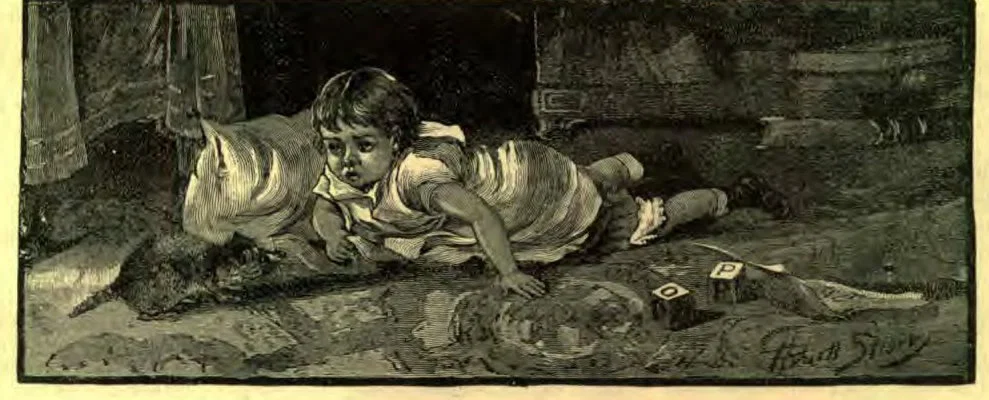
Willie lay on the floor crying. Nothing special was the matter; he had only been having his afternoon nap, and he had waked up cross, as three-year-old boys often do. He would be all right when he was awake enough. Nobody paid much attention to his crying a little at such times; they were all used to it.
The door opened, and some one came in. Something soft was put on the floor by his side, and then his father spoke: “Look there, Willie.”
Willie stopped crying, and looked up. Something stood there on the floor looking at him,—a little coon! Willie thought it was a kitten, and said, “Kitty!”
“No,” said his father, “Coony.”
“Coony!” said Willie, and from that time that was the new pet’s name, which he soon learned to know as well as you do yours.
Willie’s father took him on his knee, and told him where he found Coony. He was coming home through the woods, when he saw a coon come out of a hollow tree a little way off. He hurried to the tree, and reached into the hole, and there were two baby coons, just big enough to walk. So he brought one home to Willie.
How pleased Willie was with his pet, for he had no kitten! His little dog had been bitten by a rattlesnake, and died not long before. Coony seemed pleased with his new home, and ate milk like a kitten. He looked a good deal like a kitten, too, except that his tail was striped in regular rings of brown and black. He became greatly attached to Willie, and followed him around all summer. Wherever Willie was, out in the middle of the road, making dirt piles, in the garden, pulling off the flowers before they were fairly budded, or down by the dangerous mill, where he wasn’t allowed to go at all, Coony was close at his heels. If at any time his pet was missing, Willie’s call, “Coony! Coony!” would bring him very quickly.
One day in the fall, when the flies were very troublesome, Willie was taking his nap, and his mother set her plate of fly-paper down on the floor, that the flies might have a better chance at it. It wouldn’t do to try that when Willie was awake, of course. She never thought of Coony, and the first she knew, he had lapped all the water off the fly-paper! Poor little fellow! It was poison, and very soon he was sick enough, and before Willie awoke, Coony was dead!
Willie woke up quite happy, and soon called for Coony. Then his mother had to tell him just what had happened.
Poor Willie! He just lay down on the floor and cried, and I do not blame him either.
So we leave him where we found him,—lying on the floor and crying!—Our Little Ones.
Continue reading: THE LOTUS OF EGYPT