The Youth’s Instructor, Vol. 30, No. 5.

LIFE IN NORWAY

The Youth’s Instructor

Feb 1, 1882

S. D. A. Publishing Association · Battle Creek, Mich. · Feb 1, 1882

LIFE IN NORWAY.
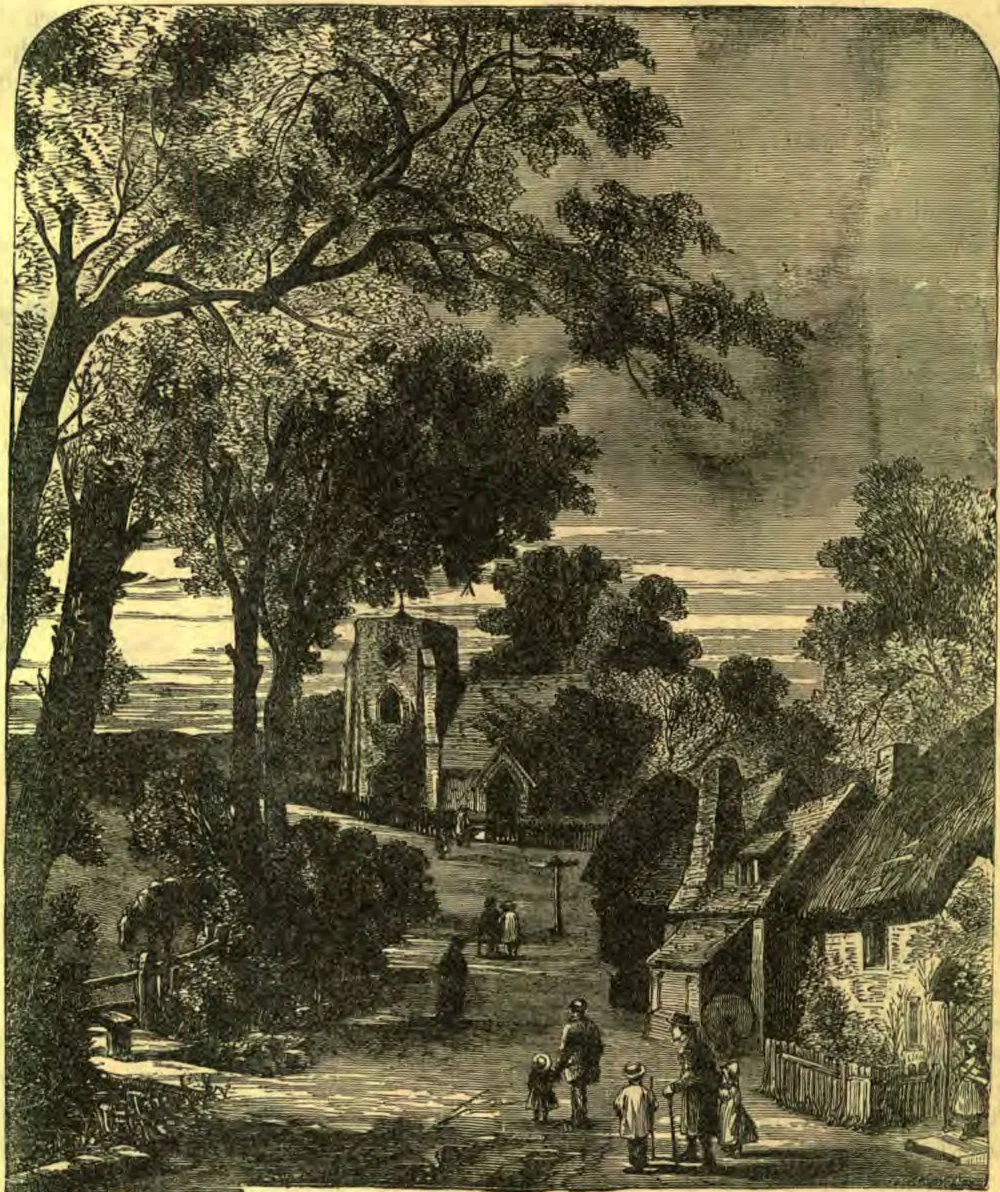
THERE is something patriarchal still lingering about rural life in Norway and Sweden. Almost primeval simplicity reigns over that northern land,—almost primeval solitude and stillness. You pass out from the gate of the town, and as if by magic, the scene changes to a wild, woodland landscape. Around you are forests of fir. Overhead hang the long, fan-like branches, trailing with moss, and heavy with red and blue cones. Under foot is a carpet of leaves; and the air is warm and balmy. On a stone bridge you cross a little silver stream, and come at once into a pleasant and sunny land of farms. Wooden fences divide the adjoining fields. Along the road are gates, which are opened by troops of children. The peasants take off their hats as you pass, and cry, “God bless you.”
The houses in the villages and smaller towns are built of hewn timber, and for the most part painted red. The floors of the taverns are strewn with the fragrant tips of fir boughs. In many villages there are no taverns, and the peasants take turns in receiving travelers. The thrifty house-wife shows you into the best chamber, the walls of which are hung round with rude pictures of Bible scenes; and brings you her heavy silver spoons,—an heirloom,—to dip the curdled milk from the pan. She sets before you eaten cakes baked some months before or rye bread with anise-seed and coriander in it, or perhaps a little pine bark.
Meanwhile the sturdy husband has brought his horses from the plow, and harnessed them to your carriage; and as soon as you are refreshed and rested, he will carry you to the next village. Along the way you meet groups of peasant-women, traveling homeward or townward in pursuit of work. They walk barefoot, carrying in their hands their wooden shoes.
Frequent along the roadside are the village churches, each in its own little garden of Gethsemane. In the parish register great events are doubtless recorded. Some old king was christened or buried in that church; and a little sexton, with a rusty key, shows you the baptismal font or the coffin. In the churchyard are a few flowers and much green grass, and daily the shadow of the church spire, with its tapering finger, counts the graves. The tombstones are flat, and large, and low, and perhaps sunken, like the roofs of old houses. On some are armorial bearings; on others only the initials of the tenants, with a date, as on the roofs of old Dutch cottages. They all sleep with their heads to the westward.
Near the churchyard gate stands a poor-box, fastened to a post by iron bands, and secured by a padlock, with a sloping wooden roof to keep off the rain. If it be Sunday, the peasants sit on the steps and con their psalm-books. Others are coming down the road with their beloved pastor, who talks to them of holy things from beneath his broad-brimmed hat. He leads them to the Good Shepherd and to the pleasant pastures of the heavenly land. He is their patriarch, and like Melchisedek, both priest and king, though he has no other throne than the church pulpit. The women carry psalm-books in their hands, wrapped in silk handkerchiefs, and listen devoutly to the good man’s words.
In these northern lands there is no long and lingering spring, unfolding leaf and blossom one by one; no long and lingering autumn, pompous with many-colored leaves and the glow of the Indian summer. But winter and summer pass into each other in a wonderful way. The quail has hardly ceased piping in the corn, when winter from the folds of trailing clouds sows broadcast over the land, snow, icicles, and rattling hail. The days wane apace. Erelong the sun hardly rises above the horizon, or does not rise at all. The moon and the stars shine through the day; only, at noon, they are pale and wan, and in the southern sky a red, fiery glow like sunset burns along the horizon, and then goes out. And pleasantly under the silver moon, and under the silent, solemn stars, ring the steel shoes of the skaters on the frozen sea, and voices, and the sound of bells.
And again, in a day, as it were, the glad, leafy summer, full of blossoms and the song of nightingales, is come. In every village there is a May-pole fifty feet high, with wreaths and roses and ribbons streaming in the wind, and a noisy weather-cock on top, to tell the village whither the wind goeth and whence it cometh. The sun does not set till ten o’clock at night; and the children are at play in the streets an hour later. The windows are all open, and you may sit and read till midnight without a candle. How beautiful is the summer night, which is not night, but a sunless yet unclouded day, descending upon earth with dews and shadows, and refreshing coolness! How beautiful the long mild twilight, which like a silver clasp unites to-day with yesterday! How beautiful the silent hour, when Morning and Evening thus sit together, hand in hand, beneath the starless sky of midnight! From the church tower the bell tolls the hour, with a soft, musical chime; and the watchman, whose watch-tower is the belfry, blows a blast from his horn for each stroke of the hammer, and four times, to the four corners of the heavens, in a sonorous voice he chants:—
“Ho! watchman, ho! Twelve is the clock! God keep our town from fire and brand, And hostile hand! Twelve is the clock!”
From his place in the belfry he can see the sun all night long; and farther north the village priest stands at his door in the warm midnight, and lights his pipe with a common burning-glass; and as he looks out into the still churchyard, he says in his heart, “How quietly they rest, all the departed!”

THE NORMANS IN ENGLAND.

While William of Normandy was careful to hold vast tracts of land as his own in England, he used great wisdom in parcelling out land to barons and knights, exacting of them that they should implicitly obey his bidding. By this means he had sixty thousand knights, who at his summons would rally immediately as soldiers under the royal standard.
Having thus established himself in England, he sought to add to his power and to increase his means of defense by parcelling out some of his land to barons all along the lines of Wales. In addition to this, he promised these frontier barons all the land they should take from the Welsh. He sent men all through the kingdom to spy out the land, houses, and villages, and to write a description of them in a book before him. These records he would look over, and decide to which of his Norman friends he would give certain parcels. As he thus passed judgment from the records of the book, it obtained the title of “Doom’s-day Book.”
To protect the kingdom from the Scots, and to have a firm stand-point from which to war upon the English barons who were refugees in Scotland, the Normans, under Rufus, the successor of William, the Conqueror, constructed a great wooden castle upon the river Tyne, from which originated the name “Newcastle upon Tyne.” This wooden structure was replaced by one of stone, which is still standing. This was constructed by Henry II., in the year 1172.
To add still greater wealth to his kingdom, William brought over from Normandy a vast number of Jewish traders. These had no right in lands, but were protected in special quarters of the chief towns of England. The Jewish quarters were called “Jewries.” The bonds which were made out for the protection of these traders were deposited for safe keeping in a chamber of the royal palace at Westminster: this from their Hebrew name of “starrs” was called “The Star Chamber.”
The Jews were at that time the capitalists of Europe. They exacted heavy usury for their gold and silver, yet their loans gave such an impetus to the industries of England as was unknown before.
Much of their loans was used in the construction of churches; and the Normans, with funds so obtained, constructed cathedrals all over the kingdom. Many of these are still standing, and among them is the Cathedral of Winchester, Hampshire County. This cathedral was commenced in 1079, but was not completed until the sixteenth century. It is a cruciform structure of pure Norman architecture, and the interior is almost equal to that of York Minster. It was the great hoarding place of William’s wealth, and contains the tomb of William Rufus, the successor of the conqueror. It was also the place of sepulcher of many Saxon kings.
With all his wealth, bravery, cleverness and grandeur, the time came that William the Conqueror must die. His horse took fright from the flames of a small town in France which he had ordered destroyed. He was thrown violently to the ground, and was carried to the Abbey of St. Gervas, near Rouen, where he died, much to the relief of those whom he had so cruelly wronged and oppressed. J. N. LOUGHBOROUGH.

THE HISTORY LESSON.

“Oh! ho! hum!” yawned Rufus, and he stretched himself on the sofa at full length, and then spoke: “I say, Louise, have you got your lesson? I don't begin to know mine; it's an awful lesson!”
Louise was in one of the easy chairs, book in hand, an amused smile on her face, and she laughed outright as Rufus spoke.
“Almost,” she said, in answer to his question. “What a queer man the Emperor Joseph was!”
“Queer? I don't know. Why?”
“Oh, I think it was fun to travel as he did, not letting people know who he was, and surprising them.”
Seven-year-old Stevie left his blocks, and came and hung on his sister's chair.
“How could he do it?” he asked her.
“He dressed in plain clothes and rode on alone; and stopped at common-looking hotels, and ate sausages for dinner. Once he offered to be the godfather of a child who lived in a dreadful little hut; they seemed to like him, and decided that he should be their child's godfather, if he would come the next day. So he came—but it was in his elegant dress, with his sword flashing by his side, and the Emperor's crown on his head. Another time he took supper with a very poor man, who had ten children of his own, but who had adopted a poor orphan. They didn't know they were eating supper with the Emperor, and they did not find it out until the next day, when he sent a present of money to each of the eleven children. I should have just enjoyed doing such things; it must have been real fun. Still, he wasn't very happy; he tried to make better laws, but the people didn't like them; I guess he was better at planning than at doing, for he said himself that they ought to put over his grave, ‘Here lies a man who, with the best intentions, never carried out a single plan.’”
“Look here, Louise,” said Rufus, rising on one elbow, “where did you find all that?”
“Why, in our history lesson, of course.”
“I haven't seen a word of it.”
“Why, Rufus Smythe! then you haven't half studied your lesson; it is all there.”
“It isn't so nice as my lesson,” declared Stevie. “Mine is about a man that the people didn't know who he was, and he met a funeral, and he stopped it and spoke to the dead man, and he got right up, and was alive and well. Your Emperor Joseph couldn't do that.”
“No,” said Louise, stooping to kiss Stevie. “Your story is a great deal the nicest; it is about the greatest King who ever lived.”—The Pansy.

LIKE A TREE.

In many respects a person's character is like a tree. The strength and solidity of a tree depend a great deal upon its roots. Some trees have a long, central root called the tap-root, running down into the earth, and other roots extending out on the sides. Such trees are set so firmly in the ground that it is very hard to remove them. They stand against the severest storms and most violent winds. The true tap-root of character is faith in God,—a believing that there is a God who has made us, who watches over us, and who will, at last, call us to give an account of our lives, and will reward or punish us according as they have been good or bad. The roots of a tree draw food from the soil and suck up the juices that make the sap, which flows to all the branches and leaves, causing them to grow in strength and beauty. So the roots of character gather food from all the influences around us, and bring them in to help our growth.
The branches of a tree spread themselves out in the air on all sides, and upon them a multitude of leaves unfold themselves, making the tree very beautiful. They do more than this. The under side of every leaf is covered with open pores, like little mouths, which drink in the air and the sunlight; and these help in the growth of the tree. So character divides itself into many branches on the same trunk, and through the open mouths of feelings, affections, appetites, inclinations, and dispositions, it gathers the elements that make it what it is.
Many trees bear beautiful blossoms, and so do many characters. Smiles and kind words, gentle manners and helpful services make any one's character beautiful. But the best thing about a tree, after all, is the fruit it bears. Its fruit is both food and medicine, and makes it more valuable than anything else can. True, some trees seem to bear no fruit but their own stout bodies and branches that are cut up into timber and fire-wood; but that makes them useful, which is, perhaps, the truest kind of fruitfulness.
Will you read or repeat the first Psalm, and notice what kind of man it is that David says shall be like a tree planted by the rivers of water, that bringeth forth his fruit in his season?—The Little Star.

THE ECHO-BOY.

A little boy once went home to his mother and said: “Mother, sister and I went out into the garden, and we were calling about, and there was some boy mocking us.”
“What do you mean, Johnny?” said his mother.
“Why,” said the child, “I was calling out ‘Ho!’ and this boy said ‘Ho!’ So I said to him, ‘Who are you?’ and he answered, ‘Who are you?’ I said, ‘What is your name?’ He said, ‘What is your name?’ I said to him, ‘Why don’t you show yourself?’ He said, ‘Show yourself?’ And I jumped over the ditch, and went into the wood, and I could not find him, and I came back, and said, ‘If you don’t come out, I will punch your head.’ And he said, ‘I will punch your head.’”
Then his mother said, “Ah, Johnny, if you had said, ‘I love you,’ he would have said, ‘I love you.’ If you had said, ‘Your voice is sweet,’ he would have said, ‘Your voice is sweet.’ Whatever you said to him he would have said back to you.” And the mother said, “Now, Johnny, all through your life, whatever you say to others, they will, by-and-by, say back to you;” and she took her Bible and read him that text of Scripture, “With what measure ye mete it shall be measured to you again.”—Selected.

THE NEW YEAR.

A MERRY time is the New Year's time, When the snow lies white and still Over the meadows and valleys fair, And over the sloping hills; When the sound of sleigh-bells fills the air,— A cheering sound to hear,— And voices of friends with greeting kind, To welcome the glad New Year.
A precious time is the New Year's time, As we count our treasures o'er,— Blessings our Father in mercy sends From his exhaustless store; Blessings and comforts we cannot count, He sendeth us far and near; Then gratefully, children, thank the Lord, As you welcome the glad New Year.

NEW-TESTAMENT HISTORY.

LESSON 67.—PARABLE OF THE UNJUST STEWARD, AND OTHER TEACHINGS.

“Then Peter said unto him, Lord, speakest thou this parable unto us, or even to all? And the Lord said, Who then is that faithful and wise steward, whom his lord shall make ruler over his household, to give them their portion of meat in due season? Blessed is that servant, whom his lord when he cometh shall find so doing. Of a truth I say unto you, that he will make him ruler over all that he hath. But and if that servant say in his heart, My lord delayeth his coming; and shall begin to beat the menservants and maidens, and to eat and drink and to be drunken; the lord of that servant will come in a day when he looketh not for him, and at an hour when he is not aware, and will cut him in sunder, and will appoint him his portion with the unbelievers. And that servant which knew his lord’s will, and prepared not himself, neither did according to his will, shall be beaten with many stripes. But he that knew not, and did commit things worthy of stripes, shall be beaten with few stripes. For unto whomsoever much is given, of him shall be much required; and to whom men have committed much, of him they will ask the more.
“I am come to send fire on the earth; and what will I, if it be already kindled? but I have a baptism to be baptized with; and how am I straightened till it be accomplished! Suppose ye that I am come to give peace on earth? I tell you, Nay; but rather division: for from henceforth there shall be five in one house divided, three against two, and two against three. The father shall be divided against the son, and the son against the father; and the mother against the daughter, and the daughter against the mother; the mother-in-law against her daughter-in-law, and the daughter-in-law against her mother-in-law.
“And he said also to the people, When ye see a cloud rise out of the west, straightway ye say, There cometh a shower; and so it is. And when ye see the south wind blow, ye say, There will be heat; and it cometh to pass. Ye hypocrites, ye can discern the face of the sky and of the earth; but how is it that ye do not discern this time? Yea, and why even of yourselves judge ye not what is right?
“When thou goest with thine adversary to the magistrate, as thou art in the way, give diligence that thou mayest be delivered from him; lest he hale thee to the judge, and the judge deliver thee to the officer, and the officer cast thee into prison. I tell thee, thou shalt not depart thence, till thou hast paid the very last mite.
“There were present at that season some that told him of the Galileans, whose blood Pilate had mingled with their sacrifices. And Jesus answered and said unto them, Suppose ye that these Galileans were sinners above all the Galileans, because they suffered such things. I tell you, Nay; but except ye repent, ye shall all likewise perish. Or those eighteen, upon whom the tower in Siloam fell, and slew them, think ye that they were sinners above all men that dwelt in Jerusalem? I tell you, Nay; but, except ye repent, ye shall all likewise perish.
“He spake also this parable: A certain man had a fig tree planted in his vineyard; and he came and sought fruit thereon, and found none. Then said he unto the dresser of his vineyard, Behold, these three years I come seeking fruit on this fig-tree, and find none: cut it down; why cumbereth it the ground? And he answering said unto him, Lord, let it alone this year also, till I shall dig about it, and dung it; and if it bear fruit, well; and if not, then after that, thou shalt cut it down.”

QUESTIONS.

1. What question did Peter ask? Luke 12:41.
2. To what did the Lord call Peter’s attention? Verse 42.
3. What promise was made to the faithful servant? Verses 43, 44.
4. How was the unfaithful servant described? Verse 45.
5. What will be the fate of such a servant? Verse 46.
6. How does our Lord show that the degree of punishment will be determined by the light rejected, as well as by the deeds done? Verses 47, 48.
7. What did Jesus then say concerning his mission upon earth? Verses 49–51.
8. What illustrations did he give? Verses 52, 53.
9. Are we to understand by this that our Lord approves of division and discord?
10. What did he say about their acuteness in observing the operations of nature?
11. What would this same acuteness of observation have enabled them to discern, if it had been turned upon spiritual things and the signs of their times?
12. What instruction did our Lord give concerning the early settlement of difficulties? Verses 58, 59.
13. What event was brought to our Saviour’s notice by some who were present at this time? Luke 13:1.
14. What remark did Jesus make upon it? Verses 2, 3.
15. What other instance did he give to show that men who meet calamities in this life are not always preeminently sinful? Verses 4, 5.
16. By what figure did our Lord show the necessity for Christians to be fruitful in good works?
17. What did the master of the vineyard say to the dresser of his vineyard about the fig-tree that bore no fruit?
18. What reply did the gardener make? Verses 8, 9.
19. Who are meant by the vines and trees of this parable?
20. Who is the dresser of the vineyard?
21. Who is the master of the vineyard?
22. What is meant by the digging about the tree, etc.?

NOTES.

Whom his Lord.—This word does not refer to God, but to the lord, or master, of the servant.
Meat in due season.—The word meat included, when the Bible was translated, all kinds of food requisite to support and nourish life. In due season may mean not only at the accustomed times, but also as they needed it; i. e., the food should be of such nature and kind as the time of year, the state of the weather, and the health of the household required. So the stewards of God’s flock should feed their charge from the Book of Life, nourishment suited to the wants and conditions of each at all seasons.
I am come to send fire on the earth; and what will I if it be already kindled?—Some commentators think that the fire here mentioned signifies the higher spiritual element of life which Jesus came to introduce into this earth,—the fire which quickens all that is akin to it, and destroys all that is opposed. Those who hold this opinion understand the clause which follows to mean, “What should I desire more, if this spiritual element is already awakened?” Others, however, think he refers to the fires of persecution, which the church should suffer, and which were even then kindling against him. The latter interpret the second clause in various ways. It may mean, however, “If the truths which I have taught, have already pricked men’s hearts to desperation, what further labor remains for me?” The answer may be expressed in his next words.
But I have a baptism, etc.—Persons suffering afflictions are often described as being sunk in the floods, and plunged in deep waters. This is the evident meaning of this phrase; it undoubtedly refers to Christ’s suffering and death, which was to usher in the fiery persecutions of the people of God.
How am I straitened, etc.—Some think that this means, “How do I earnestly desire that it were passed.” Others think that he implied that until after his decease, he was straitened in his teaching—was obliged to impart much of his instruction in parables, and to postpone much which would afterward be revealed. This view might make his words in verses 49 and 50 partially answer Peter’s question in verse 41.
But rather division.—The design of his coming was not to bring about division,—discord and contention,—for he was the Prince of Peace; but such was men’s opposition to the truth, that this would be one of the effects of his teaching.
How is it that ye do not discern this time?—You see a cloud rise, and predict a shower; a south wind, and expect heat. These are regular events. So you see my miracles; you hear my preaching; you have the predictions of me in the prophets; why do ye not, in like manner, infer that this is the time when the Messiah should appear?—Barnes.
Agree with thine adversary, etc.—The word adversary, as here used, means a creditor, a man who has a just claim upon us. While you are in the way with him; that is, while you are going to the court, before the trial takes place, it is your duty, if possible, to come to an agreement.—Ibid.
The Galileans, whose blood, etc.—We learn from Josephus, that the Galileans, (people who lived in Galilee) were very rebellious, and much disposed to stir up seditions against the Romans. It appears, also, that Pilate and Herod had a quarrel with each other. It is thought that the Galileans excited a tumult in the temple and that Pilate took occasion to come suddenly upon them and show his opposition to them and Herod by slaying them. This occurred while they were sacrificing in the temple, and their blood was mingled with the blood of the animals they were offering.
The lesson taught in verses 2 to 5 seems to be that those upon whom heavy judgments fall in this world are not the worst of men. This is not a world of retribution. Often the most wicked are suffered to prosper here, and their punishment is reserved for another world; while the righteous are called to suffer much, and appear to be under the sore displeasure of God.—Ibid.

SCENES IN THE LIFE OF CHRIST.

LESSON 54.—REVIEW.

  1. When the people whom Jesus had fed by the miracle at Bethsaida, found that he had gone over to the west side of the sea, what did they do?
  2. For what reason did Jesus tell them they had sought him?
  3. What words of wisdom did he speak to them?
  4. For what cause did many of the followers of Jesus leave him at this time?
  5. What did Peter reply when Jesus asked the disciples if they also would go away?
  6. What question was asked of Jesus by the scribes and Pharisees who came to him from Jerusalem?
  7. By what question did he answer them?
  8. In what way did he say they had broken the direct commands of God?
  9. What words of Isaiah did he repeat to describe the condition of these proud Pharisees?
  10. As Jesus came into the coasts of Tyre and Sidon, who came crying after him?
  11. What did this woman beseech Jesus to do for her?
  12. What did he finally say to her, as she still followed him, begging for help?
  13. Give her apt reply.
  14. What was the reward of her great faith?
  15. What route did Jesus take to return to the Sea of Galilee?—He probably went east from Tyre and Sidon, crossed the Jordan, and passing through Decapolis, a region of country on the east of the Jordan, came to the sea. Mark 7:31.
  16. On which side of the sea, then, did he heal the deaf and dumb man?
  17. What did the people who heard of this miracle say?
  18. What did the multitude do when they saw him heal the sick, the lame, and the blind?
  19. Tell about the miracle by which he again fed the people.
  20. When he had sent away the multitude, where did Jesus go?
  21. Where was Magdala?
  22. How did some of the scribes and Pharisees try to tempt Jesus about this time?
  23. How did he answer them?
  24. Where did Jesus and his disciples take ship and go, soon after this?
  25. In what words did Jesus warn his disciples against the false doctrines of the Pharisees?
  26. How did they misunderstand him?
  27. Of what miracles did he remind him?
  28. Tell how Jesus healed the blind man at Bethsaida.
  29. Where did Jesus go from Bethsaida?
  30. Of what did he and his disciples talk by the way?
  31. How did he teach that we must be willing to deny ourselves, and if necessary, suffer even death itself, in order to gain eternal life?
  32. What did he say should be the reward of those who are ashamed to own Christ?
  33. How did he refer to his transfiguration, which took place a few days afterward?

ELLA'S SELF-DENIAL.

I WANT to tell the children a true story about little Ella, and I hope you may all learn a lesson from it. She is a little motherless girl, who was adopted, when a babe, by a kind doctor of L——. She knows no other father or mother than the doctor and his wife, who love her very dearly. A short time before Christmas she told her papa that she wished she could have a new doll for a Christmas present.
The doctor was called to visit a poor sick man, who lived two or three miles out in the country, and had a little girl about Ella's age. While there, he asked the little girl, whose name was Lily, what present she expected “Santa Claus” would bring her. Her mother replied for her, “We wanted to get her a new doll, as she never has had one;” “but,” added she, “her papa is sick now, and we shall not be able to buy her one this time.”
That night the doctor took Ella in his arms and told her about poor Lily, who had never owned even one little doll in all her life. Ella thought of her four old dollies lying in the cradle, but they were small and the best one she had played with a whole year. She wanted a large new dollie very much; but after thinking seriously for a few moments, she told her papa that if he would buy a new doll for Lily, she would play with her old dolls another year. So down to the store he went, and bought a nice doll, and Ella's mamma very kindly dressed it for the little girl.
The doctor told Ella she might go with him the next day to carry the doll herself and give it to Lily. I will not stop to tell you how the bright eyes danced as Lily clasped the beautiful doll in her arms and was told by her little friend that it was all her own to keep always. As Ella arose to go away with her papa, she turned to Lily and said, “You must play with your dolly, and take all the comfort with it you can.”
“Dear unselfish child! she shall be well repaid for this sacrifice,” thought the doctor.
In the town where Ella lived there was bustle and excitement, for it was Christmas Eve, and many were on their way to the church where stood the Christmas Tree in all its glory; the good doctor, with his wife and little Ella, were among the number. On entering the church, the first thing that attracted Ella's attention was a splendid doll, almost as large as a real live baby. “I wonder,” said she, “what little girl will have that lovely doll.” Soon the presents were passed to those whose names were marked on them, and what was her surprise when the beautiful wax doll was found to be marked Ella M——, and passed over to her. Her bright eyes sparkled with joy, as she took the precious gift in her arms, and looking up to the doctor, said, “O papa, I saw it hanging on the tree, but never once thought it was for me.”
“My dear child,” said the doctor, “if you had been selfish, and not given the poor little girl your doll, you would never have had such a nice one as this.”
Remember, children, that sacrifices are never lost; and although they may not always be rewarded as soon as Ella's was, yet sooner or later they will bring their own returns.
MRS. R. WEATHERLY.

THE GREAT THIRST-LAND.

We take the following from a recently published work descriptive of Southern Africa, entitled, “The Great Thirst-Land:” —
“The sufferings endured on account of the drought were at times almost terrific. The throats of the oxen were so parched that they could not low. The dogs suffered even more than the cattle. Nor are the wild animals exempt from the plague of the land.
“When water becomes scarce in these thirsty plains, the whole of the wild animals that inhabit them, congregate round any pool that may be left, for with very few exceptions all have to drink once in twenty-four hours. The lions, which follow the game, thus are led to their drinking-places not only to assuage their thirst, but to satisfy their hunger.
“To watch one of these pools at night, as I did in the northern Massara country, is a grand sight, and one never to be forgotten. The naturalist and the sportsman can here see sights that will astonish them, and cause them to wonder at the wonderful instincts possessed by the animal kingdom.
“At such watering-places the small antelopes invariably drink first, the larger ones later on, and with them the zebras and buffaloes. After these come the giraffes, closely followed by the rhinoceros, and next the elephant, who never attempts to hide his approach,—conscious of his strength,—but trumpets forth a warning to all whom it may concern, that he is about to satisfy his thirst. The only animal that does not give place to the elephant is the rhinoceros; obstinate, headstrong, and stubborn, he may not court danger, but assuredly he does not avoid it. The elephant may drink by his side, but must not interfere with him, for he is quick to resent an insult, and I am told that when one of these battles takes place, the rhinoceros is invariably the victor. The elephant is large, of gigantic power, but the other is far more active, while the formidable horn that terminates his nose is a dreadful weapon when used with the force that he has the power to apply to it. I have been told on trustworthy authority that a rhinoceros in one of those blind fits of fury to which they are so subject, attacked a large wagon, inserted his horn between the spokes of the wheel, and instantly overturned it, scattering the contents far and wide, and injuring the vehicle to such an extent as to render it useless.
“The lion is not tied to time in drinking. After it feeds, it comes to water, but it never would dare to interfere with the rhinoceros or the elephant. Where the buffalo exists in numbers, it is the principal prey of the lion; in other localities the antelope and the zebra are its food.”

THE SEVEN WONDERS OF THE WORLD.

THESE were (1) the Pyramids; (2) the Temples and Hanging Gardens of Babylon; (3) the statue of Jupiter Olympus, formed of gold, seventy feet high; (4) the temple of Diana at Ephesus, 220 years in building, and supported by 127 marble columns, 60 feet high; (5) the Mausoleum of Halicarnassus, erected to Mausolus by his wife Artemisia 353 B. C.; (6) the Pharos, a lighthouse 450 feet high, at the harbor of Alexandria; (7) the Colossus at Rhodes, the image of Appollo, 105 Grecian feet in height, at the entrance of one of the harbors of Rhodes.—Sel.

The Power of a Right Life

THE man who lives aright, and is right, has more power in his silence than another has by his words. Character is like bells that ring out sweet music, and which, even when touched accidentally, resound with sweet melody.

Choose Ye This Day Whom Ye Will Serve

CHOOSE ye this day whom ye will serve.

LETTER BUDGET.

Here is a letter from Harry Coleman, of St. Johns, Mich.: “I am nine years old, but have no brothers or sisters. I have taken the INSTRUCTOR nearly a year. I save my papers, and am going to have them bound. I go to school, and read in the Third Reader. I have a new piano, and have taken one term of lessons. Wishing you all a Happy New Year, I will close.”
L. Kelly sends us the following interesting letter from Turner, Nebraska: “A Happy New Year to the YOUTH’S INSTRUCTOR family! I am fourteen years old, and it is one year to-day since I with my mother began keeping the seventh-day Sabbath. We do not know a member of your denomination or of any other seventh-day people besides our own friends, but we think it is the right day to keep. We lived in Iowa then, and were all alone in this faith; and now we are in Nebraska, and alone still. We study our lessons and answer the questions every Sabbath. We shall be readers of three of your papers soon. We think them the best Christian papers we ever read. May God’s blessings attend your every effort.”
Continue reading: A SLEIGH-RIDE