The Youth’s Instructor, Vol. 43, No. 40.

LEAVES IN THE TREE TOP

The Youth’s Instructor

Oct 3, 1895

S. D. A. Publishing Association · Battle Creek, Mich. · Oct 3, 1895

LEAVES IN THE TREE TOP.
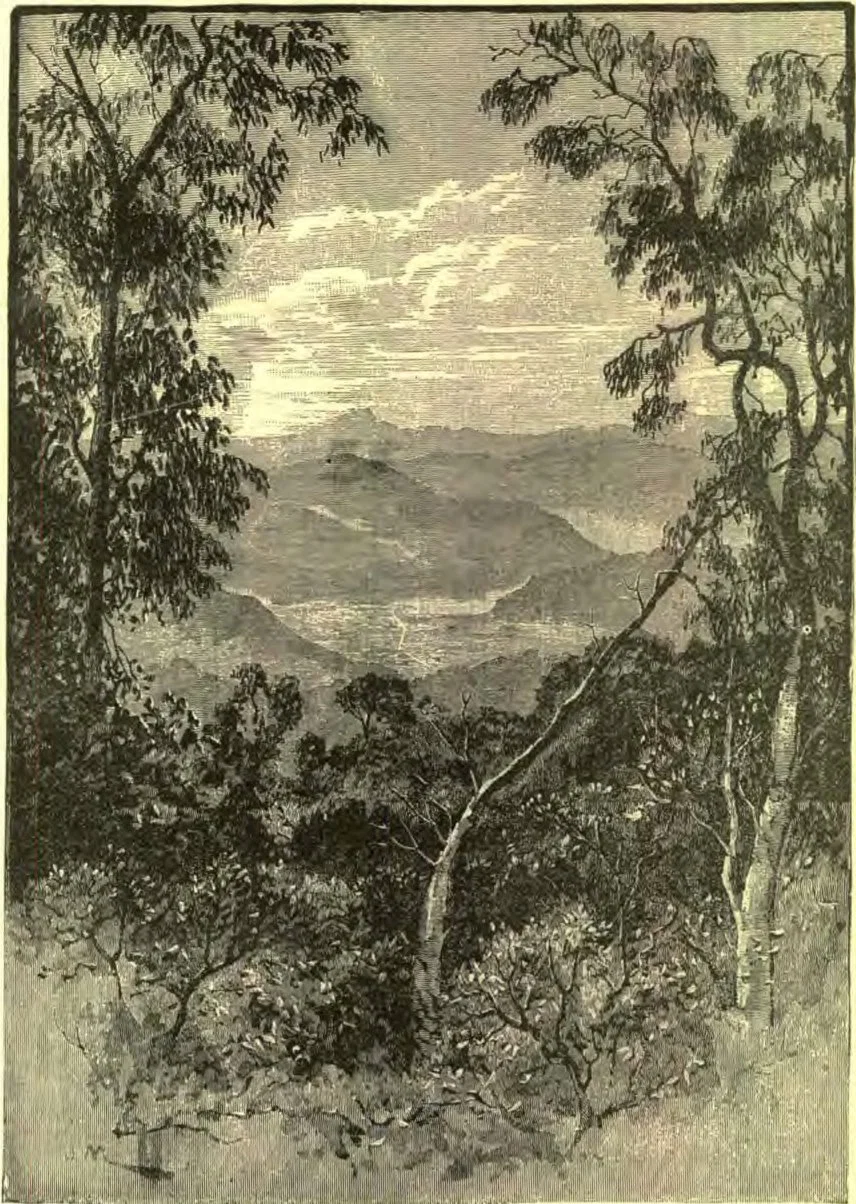
Murmuring leaves in the tree tops, Rustling and rippling all day, Whispering leaves in the poplars, O what are you telling, I pray?
Do soft, summer winds sweeping o'er you Breathe secrets mysterious and sweet? Do you, leaning each to the other, The wonderful story repeat?
Among you the sunbeams are show'ring Tremulous jewels of light; You sparkle with laughter till even, And rock in the breezes all night.
Dear little leaves in the tree top, Your mission on earth you fulfil; You belong to the joy of the summer, And are part of the infinite will.
You live your short life with rejoicing, And then, when the year has grown old, You go to your rest in the autumn In glory of crimson and gold.
May we be as joyful in duty, Though lofty our station, or low; And, passing through life's changeful journey, Shed blessings wherever we go.
And if God call us hence from our labor,— For naught earthly abides and endures,— Then, O beautiful leaves in the tree top, May our last days be lovely as yours!
VIOLA E. SMITH.

TRAINING CARRIER-PIGEONS.

De Witt C. Lockwood writes an account of the “Carrier-pigeons of Santa Catalina,” describing the rapid mail service established between the two places, in the St. Nicholas. He says: “It must be understood, however, that in certain pigeons, especially those known as the Belgian variety, the homing instinct is developed to a remarkable degree; and it is the birds’ intense love of home, and the almost unvarying certainty of their return thither after having been taken some distance away, and then released, which make them valuable as carriers. The methods used in training a pigeon for special service are not by any means similar, as many people seem to think, to those employed in teaching a dog to run after a stick or a white-spotted pony to dance the polka. A carrier’s education consists in conveying him away from home, and letting him go, when he simply flies back to the loft where he belongs. This sounds almost as thrilling as the story of the enterprising mouse that first ran up the clock, and than ran down again; and of course it conveys no idea of the immense amount of care and patience involved in the rearing and breeding of the birds—the special cultivation of those qualities which produce the best results, and so on.”
“In training the birds for Catalina, three or four were usually placed together in a pasteboard box, perforated with holes about the size of a two-bit piece — a quarter of a dollar. Then they were carried to a spot a mile or so from the loft, in a direct line for the coast and Catalina, and released. A few days later the same birds were taken a greater distance away, —say three or four miles from home,—and liberated. In this manner the several succeeding journeys were gradually lengthened until San Pedro, the seaport of Los Angeles, twenty-two miles distant, was reached. Then the pigeons were taken aboard the steamer, and set at liberty a few miles out at sea, increasing the distance upon the four occasions that followed, until at last the end of the route was reached, and the birds would fly, without fail, across the sea and over the land to their home. While these birds were taking their first lessons in geography, another set were being domesticated in Catalina, and later were taught by the same process to convey messages the other way—that is, from Los Angeles to Avalon.”
“The message, when sent by the Catalina carriers, is always written on sheets of tissue-paper four inches wide and ten inches long. Four of these slips will contain enough written matter to fill a column or more of an ordinary daily paper, by which it will be seen that the birds can carry a very considerable amount of correspondence. It may be interesting to know that during the Franco-German war, when large numbers of carrier-pigeons were employed with great success, the messages were printed by microphotography on fine waterproof films, by which method an almost incredible amount of correspondence could be forwarded by a single bird. According to a French newspaper, nearly two million despatches were carried by pigeons during the siege. The birds were taken out of Paris in balloons.”
“There are various methods of attaching the message. After folding the written slips together lengthwise in the middle, then over and over three or four times, the whole may be rolled up tightly into a drum-shaped pellet, secured with a bit of twine, and then tied to the bird’s leg; or else the narrow folded slips may be wound round and round the leg, exactly as you would apply a bandage to a sore finger. Sometimes the message is attached to the wing or tail feathers, or fastened about the body of the bird, but not always with the best results.”

Sin Is Not Too Strong for Omnipotence

Do you say sin is too strong for you? It is not too strong for Omnipotence that dwelleth in you. I don't want so much to be afraid of going to hell as to be afraid of sin, and then I need not be afraid of going to hell.—Rowland Hill.

BOOKS OF THE BIBLE.

MEANING OF THEIR NAMES.

Next in order after the first five books already spoken of, is the book of Joshua. It will be interesting to young readers,—to all, in fact,—to know that the book of Joshua is called, in the Greek, the book of Jesus, son of Nun. You have doubtless noticed that we are told in Heb. 4: 8 that “if Jesus had given them rest, then would he not afterward have spoken of another day.” Also in Acts 7: 45 we read, “Which also our fathers that came after brought in with Jesus into the possession of the Gentiles, whom God drave out before the face of our fathers, unto the days of David.” The one here mentioned as Jesus is simply the Joshua of the Old Testament, the successor of Moses. It is an interesting fact that the successor of Moses was named Jesus. Moses told the people, as stated in Deut. 18: 15: “The Lord thy God will raise up unto thee a Prophet from the midst of thee, of thy brethren, like unto me; unto him ye shall harken.” That Prophet was Jesus, born more than fourteen centuries later. And Jesus gives his people rest; he will bring them at last into his heavenly, eternal rest. He also gives them rest here. He says, “Come unto me, all ye that labor and are heavy laden, and I will give you rest.” Matt. 11: 28. It is true, however, that the Jesus who was the immediate successor of Moses was in a certain sense the person through whom the Lord gave the people rest; for we read in Joshua 23: 1: “And it came to pass, a long time after that the Lord had given rest unto Israel from all their enemies around about, that Joshua waxed old and stricken in age.” In our study of the Bible we so closely associate Moses with Jesus the Redeemer that it certainly is an interesting fact to notice that the next book after the books of Moses is the book of Jesus, “Joshua” in Hebrew and “Jesus” in Greek being the same name.
The next book, Judges, covers a period of three centuries. You will doubtless remember that it was the Lord’s design that his people should be ruled by judges. Deut. 16: 18. He did not intend that they should have an earthly king. The Lord himself would be their king. 1 Sam. 12: 12, 17. He told them when they were in the wilderness that when they should get into the promised land, they should not do as they did at that time—every man that which was right in his own eyes. Deut. 12: 8. But we read in the book of Judges that that was exactly what they did do under the rule of the judges. They did every man that which was right in his own eyes, and this is stated in a way to indicate that this was because they had no king. Judges 17: 6; 21: 25. The fact that the people failed to do that which the Lord intended they should do under the rule of the judges, and thus made it seem necessary for them to have a king, does not prove that God’s way was not the best; it only proves how much men fail to appreciate and use the blessings and favors that the Lord gives them.
The little book of Ruth follows next. While there is only one book in the Bible besides this that bears the name of a woman, these two instances are sufficient to show that in God’s plan neither sex has the exclusive right to prominence in his work. This is far different from the teachings of most heathen systems of religion on this point.
The books immediately following this are called the First and the Second book of Samuel. In the Greek version these are called First and Second Kings, and if you will examine the names as we have them in English, you will see that the same names are given them in our authorized version. The first book of Samuel is called not only by that name, but, as is stated in the title, it is “otherwise called, the first book of the Kings.” These four books give us the history of God’s people during the time when the monarchs, or kings, ruled over Israel and Judah. As God’s people abused the gracious privilege they had under the rule of the judges, which he himself had ordained, it seemed that on account of the hardness of their hearts they must have some more strict system of government. So it is with us; if we wickedly take advantage of the privileges God gives us, and use them in a careless way, or to our own selfish ends, it will be necessary to restrict our liberties, and bring us under regulations that are not so convenient as those God himself chose for us to have.
The books called First and Second Chronicles are perhaps not so interesting as other portions of the Bible. They seem to be made up so largely of genealogies and long names, hard to pronounce, that some who are reading the Bible through by course feel tempted to skip over these chapters as of no account; but surely the Bible being every part of it the word of God, these records must be inserted for some purpose. If we pass them by unnoticed, we will quite likely omit something that will be very necessary for us to know. If we were searching for gold, we would be willing to spend much time in excavating and digging through layers of earth and other mineral in order to get at the precious metal. We do not mean that any part of the Bible is like the earth in the illustration; but even if it were, we see that there is no part of the word of God to be passed over unread. There is one thing that must certainly impress itself very forcibly upon our minds in reading these genealogies. How many readers of the INSTRUCTOR can give the names of their ancestors farther back than their grandfather or great-grandfather? No doubt you would think it a wonderful advantage if you could give the names of your forefathers back for twenty or thirty generations. This is just what we find in the book of Chronicles concerning people who lived a few thousand years ago. Whatever we may claim in the way of modern improvements, advanced learning, etc., we find we are much behind the people of that age, who kept correct family records for centuries and even thousands of years. The books of Chronicles contain some very important church history, especially in reference to the disobedience of God’s professed people, and the result of the disobedience in the captivity of the people.
The books immediately following, Ezra and Nehemiah, give us the account of the restoration of the people—how they came back, after their captivity, from the land of Babylon to their own country, to rebuild the city of Jerusalem and the house of God that lay desolate.
The book of Esther is the other book that bears the name of a woman. One remarkable thing about this book is that the name of God is not mentioned in the entire ten chapters of the book. Neither is the Lord directly referred to in any verse; and yet there is perhaps no other portion of the sacred writings that shows so plainly the direct providence of God in looking after the welfare of his people in so many ways as this book does. This shows to us that the Lord can be praised and kept in mind and his name honored by us, though we may not all the time make repeated mention of his name. The planets and all the worlds on high move noiselessly in their course, and yet they plainly proclaim to us that God is their Maker, and that his constant care keeps them in their places. And so in this remarkable book of Esther the Lord is seen in his dealings with the nations. So we may recognize him in his dealings with us to-day, if we will only carefully consider how he has cared for us all our lives.
F. D. STARR.

“JUST AS I AM.”

At a mission service held at a seaside place by an earnest servant of God, this familiar hymn was given out to be sung. Before it was begun, the gentleman who was conducting the meeting urged very solemnly that none should join in singing the words without really meaning them.
Thus cautioned, an officer who was sitting in one of the rows cast his eye down the verses, and thinking them over, he came to the determination that he could not stand up and sing, “O Lamb of God, I come.” He had never really meant anything by it when he had sung it before, and decided not to sing a lie again.
A moment more, and the sudden blessed thought came, “I must come now!” He did not hesitate because his life had been careless before, or because his life might in future be one of difficulty or temptation. He just closed with the loving Saviour’s free offer of salvation, and trusted him for the rest. He sprang to his feet and sang, meaning it, “O Lamb of God, I come!”
And from that day that officer found the Lord Jesus true to his word, able to save him from his sins, to make him a new creature; the life which before had been careless and godless, was now one of happy and blessed service to the Saviour whom he loved; old things had passed away; all things had become new.
It may be the same with you. If you will but come to an earnest determination that, as Christ is a Saviour of sinners, he must be your Saviour; if you will but speak in truth to him, and tell him that you want him to save you, depend upon it there is no natural difficulty that can be too great for his saving grace.
Friendly Greetings.

THE PRICE OF CHRIST’S DEPARTURE.

CHRIST said that it was expedient that he should go away, because if he did not go, the Comforter would not come. The Spirit, the Holy Spirit, the one who stands over against those subtle elements in the human soul which we call the spiritual instinct or sentiment—this Holy Spirit comes to take the place of Christ, and crown us sons in the kingdom of God. This is infinitely better than that Christ had continued on the earth in his physical form. O throne of grace where He sits regnant who is my Brother! O Jesus, crowned not for thine own glory, but with power of love for our struggling spirits, thou art my Christ—my Brother—my Father’s Son!—Henry Ward Beecher.

THE BLUE AND THE GRAY.

The gathering of forty thousand of the G. A. R. at Louisville, Ky., during the week ending September 14, was a great occasion, marred only by a frightful accident, the bursting of a caisson, illustrating in a vivid manner the horrors of war which the G. A. R. recalled to memory. Many of the soldiers who wore the gray were also there, and both parties have related to each other the stories of their campaigns, rejoiced in a united country, and pledged their support to the old flag and what it represents. These reunions and the genuine friendliness which characterizes them are unmistakable evidences that we are and were, even during the war, one people. Slavery was a curse to the country. It came down to us from the colonial period; it was part of the legacy which we received from the mother country.
It grew with our growth and strengthened with our strength. Like many other evils, it began small, but grew to such proportions and fastened its roots so deeply into our political system that it seemed as if the destruction of slavery would involve the destruction of the republic. Some of our greatest statesmen, like Henry Clay, saw and deplored the evil, but could see no safe way out of it. The South is conservative; change is not pleasing to the people of that section of our country. For this reason slavery once entrenched in the customs of that people was hard to dislodge. The wisest men did not know what to do, but God knew that nothing but an armed conflict would accomplish what should be done. The war came, slavery was destroyed, and now, after thirty years of difficult readjustment of the relations of the master with the former slave, which necessarily followed the destruction of slavery by such violent means, the people of the North and South, one people in reality, are beginning to understand and appreciate each other. The southern people are accepting the new conditions brought about by the results of the war, and find them vastly to their advantage, and the North rejoices in their prosperity.
It is a fact that age sometimes has the effect to soften the heart and render people more sympathetic and friendly toward those for whom, in their younger days, they entertained a different feeling. The soldiers of the Blue and the Gray are experiencing some of this feeling. In one sense all of them are wearing the gray now; for age has put its mark upon the boys of ’61. At such a time of life, so soon to hear the last roll-call which will summon them all to the silent camp across the river, it is no time to cherish resentments or to fan to life a smoldering spark, if such there now be, of the hatred and strife of former days. It is a good time to cultivate a forgiving spirit, to bury forever the hatchet of sectional hate, and to labor together for the upbuilding of a united country. The reunion at Louisville will have that effect. All is now “quiet along the Potomac,” and God grant that it may thus continue.

INTERNATIONAL CONTESTS.

If the amount of space given to any one matter in the newspapers is an evidence of its importance, a perusal of the papers of the past week would indicate that yacht racing was the most important thing which was occurring in this country. Even the great question of finance has been obliged to stand aside and wait for further public discussion while two yachts tried their speed off New York harbor. Yachting is a very popular form of sporting and pleasure, and it is a clean, open air, and invigorating sport. Very few, however, have the means to take their recreation that way, though the number who can do so seems to be increasing. As a trial of skill in the art of boat building, and of seamanship to get all out of a boat that there is in her, it has a strong hold upon the people, especially so in England and the United States.
In 1851 the Royal Yacht squadron of England offered a grand cup for a prize to contest-
ing yachts in British waters. The cup was won by the American yacht “America.” Since then nine yachts have come to this country to regain the cup, but so far without success. This latest effort is also a failure. America still holds the cup, and though there is a little grumbling by Lord Dunraven, owner of the English yacht “Valkyrie III,” public opinion in both countries accords it to be a fair race. The English press say that they would rather be beaten by the United States than by any other country, and that no other country can do it. They also express the wish that the cup may remain in America until it is fairly won.
A contest upon the railroad has also taken place between the two countries. The English train ran from London to Aberdeen, a distance of five hundred and twenty-seven miles in five hundred and twenty minutes. This run was made in 1890. The railway officials of the New York Central Railroad decided to beat this record if possible, and September 11 they ran a train from New York City to Buffalo, a distance of four hundred and sixty-one and a half miles in four hundred and seven minutes. The train on the Central was nearly twice as heavy as the English train, and was run much of the way against a wind blowing thirty miles an hour, which must have had the effect to lessen the speed to a considerable degree. As the road-beds of England cannot be surpassed, the American engines must be superior. The people of the United States will now claim that they have the fastest ship of war, the “Columbia,” the fleetest yacht, and the most speedy railroad train in the world.
While these international contests seem to be a useless waste of energies which might be better directed, they are so much better than our former contests of “red artillery” with our “mother country,” that we can bear them with a considerable degree of complacency.

AN INTEROCEANIC RAILWAY.

Since the failure of the French ship canal across the Isthmus of Panama, another plan for transportation from ocean to ocean across the comparatively narrow belt of land which separates North from South America, has been suggested. Captain Eads projected a railway which would carry the largest ships across the isthmus, but the plan has never got beyond the paper period. Probably the death of Captain Eads caused the interest in his plans to cease. Another project, much favored in this country, is for a grand canal across the Isthmus of Nicaragua. A company has been formed, surveys made, and, we believe, a little work has been done; but there the matter stands for the present. There is a strong sentiment in this country that such a canal should be built, and that the government of the United States, as the greatest power in the West, and as the natural guardian of the interests of the feebler nations of this hemisphere, should control it. Perhaps the next United States Congress will give the matter some attention.
But while these plans, involving very difficult and expensive works, are under discussion, the Mexican government has built a railway across the Isthmus of Tehuantepec from the Gulf of Mexico to the Atlantic Ocean, which will for a time obviate the necessity of any canal at all. True, this railway will not carry ships, but it offers a shorter route for all northern vessels than the old Panama route, and though at the present time lighters will be used to transfer the cargoes from ship to rail, the plans when completed embrace good harbors at each end of the railway. This route is six hundred miles nearer San Francisco on the Pacific side than the proposed western terminus of the Nicaragua canal. From New Orleans to the Pacific coast it will always be a favorite route. The railway passes through a fertile and level country, well watered by several rivers. This land will be thrown open to settlement.
The Mexican government deserves much praise for this creditable work. It is entirely on Mexican soil, and it is owned and controlled by the Mexican government. Success to President Diaz and to the land of the Aztecs!

THE PASSING SEASON.

A few days ago, glancing out of our office window at the trees in the park, we noticed on some of the trees the red and yellow leaves, which are the first premonitions of the autumn. We could hardly believe it at first. It seemed but a few days since those same trees were bursting out in new leaf after a long and rigorous winter. But as spring succeeds winter, so autumn follows summer; and now the signs of the autumn are seen in the land. We are reminded of the words of the poet,—
“With what a glory comes and goes the year!”
And there always seems a peculiar glory in the autumn. If the spring is lovely and the summer beautiful, the autumn is glorious. More than loveliness, more than beauty, is the gorgeous glory that may be seen in—
“the autumn days, When to gold and scarlet turning, All the maple woods seem burning, And the distant hills are hidden By the purple haze.”
Nature is then at her loveliest, especially in our Eastern States, where the light green of the hardwood, and the red, purple, and yellow of various tints, all in natural patterns, are mingled with the darker hue of the evergreen, which comes down from the mountain slopes to clasp hands and mingle with the trees of varied hues. We have climbed a mountain in Vermont in October, and from its summit looked away a hundred miles upon such a scene of variegated beauty and wealth of color that it is indescribable, and must be seen to be appreciated. The invigorating exercise, the pure air, the beauties of nature, all made a day and a scene not to be forgotten. These beauties of nature should have the effect to lead us to love the God of nature.
A little girl, on seeing an apple-tree in full blossom, exclaimed: “See God’s big bouquet!” A beautiful thought; but in the autumn the whole country looks like a gorgeous picture, filled with lovely and beautiful designs from the hand of the master Artist.
M. E. K.

TALKS WITH BOYS AND GIRLS.—NO 5.

GAMES.

DEAR CHILDREN: This week we will have a little to say on games. Most all youth love games of some kind. Some become so infatuated with them that they neglect their work and their lessons to engage in their games. Of late years the mania for different kinds of games has become so great that men of inventive minds have turned their attention to inventing new games to supply the demands of the times. Enter any book store, and you will find a multitude of parlor games for old and young. Many of these are educational in their nature, but too many are calculated only to amuse.
While there are many new games coming into the market, and many that have had but a short life are dropping out of sight, there are a few old and tried games that still hold their places, although some of them are quite ancient. Among these are bat and ball, top-spinning, marbles, blind-man’s buff, pull-away, etc. The newer games, such as lawn-tennis, foot-ball, croquet, etc., do not entirely crowd out the games that our grandfathers enjoyed. This leads us to the consideration of an important question,—

WHAT IS THE OBJECT OF GAMES?

When we understand the true object, we may be better able to decide what games are hurtful in their tendencies, and why we should discard such altogether.
As every boy and every girl is given a body and mind to be developed so as to glorify the Creator, it is very important that both should be furnished with that training that will fit them for the work they should do. Either the body or the mind may be overworked by close and constant attention to any one line of work. A change, even for a short time, is restful, and strengthens both body and mind for their regular work. Children who are attending school and applying themselves closely to their studies can accomplish more during the day if they have an hour or two devoted to some game that will take their minds entirely from their studies, and give their bodies the exercise they need after hours of confinement. Sometimes fifteen minutes at ball and bat or blind-man’s buff gives new life to the student for the remaining hours of the day.
There are many games that in themselves might be very beneficial both mentally and physically, but which are surrounded by associations that destroy all the good that might be derived from them. Such games as are connected with gambling houses are of this class. Even when played by those who would scorn the idea of going to a place of gambling, they carry that spirit with them. The gambler’s expression, “I bet you,” is very common, although there may be no money risked on the game. Such association has a tendency to an education that is poisonous to the young mind, so we can be clear in avoiding all games that have a tendency to lead to betting.
There may be other games that are innocent in themselves, and which are not connected with gambling, that are not always safe. They may amuse and give exercise, and in that way be beneficial in resting the body and mind; but if they are only stimulating in their nature, and the mind becomes so taken up with them that studies and necessary work are neglected, they are detrimental, and should be given up. Such games are like intoxicating drinks that lead to drunkenness.
It is not necessary that a list of games be given in order that we may make the right choice. It is better to decide all these things from principle than by some other person’s judgment. If a game so infatuates that it absorbs the mind so as to take it away from your studies or work, it is time to consider carefully the advisability of giving it up.
Many boys and girls might get all the exercise they have in many of their games by running errands, waiting on the aged and feeble, and at the same time be more useful. The rule that will decide all these things is found in Col. 3: 23, 24. Please read it.
J. H. D.

SIN LEADS TO DEATH.

LIFE is made up of actions, either good or bad. Some may think that there are actions which are neither good nor bad; but as there is always a motive underlying everything we do, there is a line, though by us unseen, between the good and the evil. There is often good in very little things. If it were not so, there would be but little good in our lives; for they are all made up of very little events. It has been said that “trifles make the sum of human things,” and it is also true that little duties bravely borne make the sum of human duties.
Nor should we forget that it is not necessary for anything to be terribly bad, as the world looks at it, for it to be on the side of evil. What is not distinctively good tends to evil, and what tends to evil is evil itself. In our relations to whatever is wrong, the proper way is to keep as far from it as possible. Dallying round the edges of sin is a very dangerous practise, and if we do it we shall be in danger of repeating the experience of others who have done this, and have fallen through the power of temptation. The flitting moth thinks the candle a beautiful object, but a too close inspection proves it to be a very undesirable and dangerous acquaintance. So of sin; it may look very pleasing and attractive, but the sting of death is found within its pleasing features.
A gentleman once advertised for a coachman. Three applicants presented themselves. They were questioned as to their ability to drive near a precipice. Could they drive near, and still not drive off? One thought that he could drive within a foot of the edge; another, not to be outdone, was sure that he could run the wheels of the coach on one side within six inches of the edge! The third man declared that he would keep as far away from danger as possible! Said the gentleman, “You are the man that I want for my coachman.” Surely this was a wise decision. But no precipice is so dangerous as sin; for sin means eternal death; it is placing the soul which indulges in it in direct opposition to God; the sinner opposes himself against the Almighty.
Then why not leave sin at once and forever? God has made a way through Jesus Christ by which we can bid a final adieu to sin, not reluctantly, as though we love it, but joyfully, because we hate it, and we see something so much better,—the blood of Jesus Christ which cleanseth from sin, and his righteousness given to us and wrought in us by the operation of the Holy Spirit. Says an apostle, “For the time past of our life may suffice us to have wrought the will of the Gentiles.” Yes, why not? There is nothing desirable in sin; it is a partner with death. If we choose the first, we must have the last, for they are inseparably connected. So why not say the time past of sin suffices us, and thank God that it is past, and by the grace of our Lord Jesus Christ in whom is our life, live the new life of faith and freedom? If we will do it with all the heart, and look to the Saviour and trust his promises, it will be done. M. E. K.

FLATTERY

FLATTERY is a very common defect at the present time. Although the Bible speaks very positively against this evil, even those who are professing Christianity are practising it. Many young men and women fall into the habit of praising each other, not in terms that express the true qualities of the individual, but in terms that will be pleasing, and cause the flattered one to think more of the flatterer.
It is not wrong to speak encouragingly of the efforts and attainments of those who are seeking to reach a higher perfection of manhood or womanhood. A kind word at a time when discouragements are heavily bearing down upon the one that has been striving to develop the God-given faculties, may be the means of raising the wearied one from despondency, and helping him to make a success in life. A word of approval of some attainment already made may encourage the discouraged one to press on and reach the standard to which every young person should attain. This work is not flattery.
The true idea of flattery may be learned by a study of the Scriptures. In Ps. 78: 35-37 we read of its character: “And they remembered that God was their Rock, and the high God their Redeemer. Nevertheless they did flatter him with their mouth, and they lied unto him with their tongues. For their heart was not right with him, neither were they steadfast in his covenant.” Here it is stated that flattery is connected with lying. It is deceit. It is selfishness. Read Prov. 2: 16; 20: 19; Job 32: 21, 22. J. H. D.

A VALUABLE PEARL.

A FEW days ago a poor man in Pennsylvania by accident found what appears to be a very valuable pearl. It was taken from a black clam-shell, deep in the mud. The pearl is three quarters of an inch long, opal-shaped, and very beautiful. The finder showed the pearl to Tiffany, the great jeweler of New York City, and Mr. Tiffany offered him a good sum for it; but the lucky finder, thinking there is more in it than was offered him, declined to sell it, and is holding it for a larger sum.
One of the parables of Jesus was in regard to a man who was seeking goodly pearls, and of his experience in so doing. In that parable we are told of a “pearl of great price,” and one lesson to be drawn from this parable is that each of us may obtain such a pearl, but that it will take earnest effort,—yes, all that we have,—to secure it. But if it takes all, it is worth all it costs. Salvation!—who can estimate its worth? All the wealth of this world would not buy it. Jesus purchased it for us by his own precious blood, and he offers it to all who seek for it. To those who by patient continuance in well-doing seek for glory, honor, and immortality, he will render eternal life. Will not he who finds eternal life gain something of the greatest value? Seek and find. M. E. K.

LESSON 3.—THE GENUINE PRINCIPLE OF LIBERTY.

  • (October 19, 1895.)*
1. WHOM are we to serve? Matt. 4: 10.
2. What is the character of God? 1 John 4: 8, 16.
3. What is the character of the law of God? Gal. 5: 14; Rom. 13: 10.
4. What ought we to do? 1 John 4: 11.
5. Is it possible to love God and not love our brother also? Verses 20, 21.
6. To what will such love lead? Gal. 5: 13.
7. Will the motive that prompts such service be the hope of reward from man? Col. 3: 23, 24; Eph. 6: 5–8.
8. Does the Lord regard the person of the master as above the servant? Eph. 6: 9.
9. How did Job show his regard for the rights of his servants? Job 31: 13–15.
10. What proclamation did the Lord command Israel to make at the beginning of the year of jubilee? Lev. 25: 10.
11. What kind of liberty was this to be?—Universal liberty. (See note .)
12. Was God pleased with Israel when they failed to carry out this instruction? Jer. 34: 17.
13. What judgments were pronounced upon them because of their failure? Same text.
14. What does this show?—God’s displeasure at men’s disregard for the rights of others, and that his judgments come on account of these things.
15. How far is our love to extend? Matt. 5: 43, 44; Gal. 6: 10.
16. What will love do? Rom. 13: 10.
17. What is it declared to be? Verses 8, 10.
18. What result does the keeping of the law bring to the individual himself? Ps. 119: 44, 45. (See note .)
19. If all had perfect love, would not all enjoy perfect liberty?
20. Since the keeping of the law of God insures liberty both to the individual himself and also to his neighbor, what is this law most fittingly called? James 2: 12. (See note .)
21. As the law can be fulfilled only by love, what is the fundamental principle of true liberty for all men?

NOTES.

Continue reading: SABBATH-SCHOOL HINTS