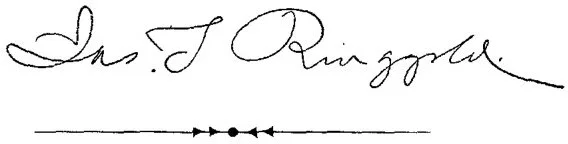
The “American party,” as it has just christened itself, has assembled fifty delegates, representing nine States and one territory, in convention at St. Louis, and has permanently organized for open political work. Of course its declaration of faith embodies a strong attack on the Democratic and Republican parties, both of which are denounced as “false to the doctrines and principles of equality and a standing menace to popular government.” Language of this sort is usually the accompaniment of the birth of a new political organization. Such a body must give some raison d’être. If the political future of the United States be safe in the hands of either of the two great parties who now contend for its mastery, the newcomer is an intruder, unnecessary and undesirable.
But our country has gotten along with substantially the same politics, and same party representatives of politics, for more than a century, and gotten along fairly well. Every candid man acknowledges that the purest patriotism is compatible with either the tendency to minimize Federal authority for which Democracy stands, or the disposition to rely rather on the government of Washington than on the States for the promotion of the general welfare and happiness of the people, which is the inspiring spirit of Republicanism. So long as the battle between these two great conceptions is honestly waged, the citizens are safe. Nor is there any serious danger that the pendulum will swing too far in either direction, while the people are true to themselves. Centralization reached its climax just after the civil war. A country which so triumphantly emerged from the unprecedented conditions of “reconstruction,” with its institutions substantially unimpaired, and throttled “Cæsarism” as it did secession, may count with confidence on its ability to take care of itself.
And the waging of this eternal war between the forces of local self-government and the forces of centralization to which Democracy and Republicanism are devoted is the one great business of Federal politics. All the important legitimate considerations which enter therein are fairly comprehended in this issue. Other matters are of detail—eddies on the surface, giving no indication of the general course of either stream, possessing but transient interest, passing and coming with no effect of permanent consequence on the progress of events.
If, then, the two great organizations really exhaust the possibilities of our national political life, why a new party? Is it gotten up to deal with a matter not legitimately within the scope of free American politics? Does it represent an un-American idea which it proposes to carry into effect by un-American methods? There is a hostility to “aliens” discernible in its platform which is strongly suggestive of this notion, and it appears to be held by some who profess to be cognizant of the facts. “The separation of Church and State” is among the things which are called for. But will the new party stand up manfully and sincerely for any such thing? Will it, for instance, denounce the Sunday laws, the employment of public chaplains, the exemption of church property from taxation, the reading of the Bible in the public schools, and all similar outward and visible signs of the inward and intimate union of Church and State which exists in this country to-day?
The States are the places to begin this work. Create a healthy rational public opinion in the respective States, so that their statutes and their customs may reflect the absolute and unqualified acceptance of the American doctrine of separation between Church and State, and the few instances where this principle is violated in the course of our Federal administration will soon disappear of themselves. A more sublime mission for any man or set of men to embark in could not well be conceived. I wish I could believe that there is a prospect of its being assumed by disinterested patriots in every county and township of the land. But I see no reason for believing that the St. Louis movement indicates anything of the sort.
One does not expect uniform scientific accuracy in the utterances of an orator whose main object is to “make a point” for or against some man or thing. Nor is the language of avowed eulogy to be sifted and criticised after the method applicable to the definitions of mathematics. And, finally, a bishop may fairly claim some license in the way of hyperbole, which would be generally denied to a mere layman. But these general propositions, like most other human words, are subject to some limitation.
I am moved to the above remark by the fact that at several law school commencements recently held, the chief speaker has seen fit to quote, with apparent or express approval, the famous assertion of good old Bishop Hooker to the effect that law “has her seat in the bosom of God.” Taken in connection with the occasions mentioned, this oft quoted statement is either meaningless, or utterly false, as well as absurd and blasphemous.
There is law which all Christian people regard as the expression of Deity’s will—it is made up of moral precepts569or a law enjoined on the race, and of physical processes, or a law observed and formulated by the men of science. All the operations of nature that we see going on daily around us, Christians refer to the Maker and Director of the universe. They also believe that His will has been expressed for their guidance, as well as in the course of the flying bullet, or the running of the rivers. But neither the moral nor the physical law is within the purview of a lecture course at a law school. And any other religious dogma has as much application and relevancy to the commencement exercises of such an institution as this statement of Bishop Hooker’s.
On the other hand, applied to the law which lawyers have to deal with, and which the students thus addressed have been investigating, the language of Bishop Hooker is preposterous and wicked. All of this law, from the inception of social development to the highest and most complex system of civilization, is the work of men’s hands, and of their hands alone. There is nothing whatsoever sacred, or divine anywhere at all in or about it. It arose from human necessity, just as clothing is adapted to our natural wants. But a suit of clothing may just as fairly and reverentially be said to owe its origin to Deity as any human law, “common” or “statute.”
“Government” is a machine, likewise, of human construction alone. It is a means or way devised by men for the enforcement and application of the common will known as “the law.” It has no sanctity, nor peculiar claim to unwilling respect, save in so far as it can coerce. No individual is under any obligation to surrender his conscience to its decrees. On the other hand, its action adds nothing whatever to an existing moral obligation. Right and wrong are matters of that law which has its seat in the bosom of Deity. Human law knows nothing, can, from its very nature and its origin, know nothing about either.
These fundamental truths cannot be repeated too often, or insisted upon too strenuously, while Bishop Hooker’s words are quoted and indorsed. It is treason to American institutions for any speaker to instill into the minds of our young men the subtle poison of this idea that there is something sacred about human law and human governmental machinery. Thus are they induced to receive the old conception of the divine right of kings in a new form, and one more pernicious and demoralizing than it ever assumed in the worst days of its practical application. For to believe in the divine mission of the community is a mental slavery infinitely more deplorable and hapless than to worship at one man’s feet, as the Heavenly-appointed ruler of our lives.
These young aspirants for the bar ought rightly to be told that the subject of their studies is not only destitute of any trace of divine authority, or sanction, or character, but that it is a piece of human patchwork, which, in its glaring inconsistencies, its false assumptions and ridiculous requirements, its cast-iron conservatism, its cumbrous methods, its lethargic movements, its extravagant cost, and in many other regards, is a standing reproach to those that made it, and the most serious reflection on human intelligence that can be found. The more intelligent among them discover all this before they come to receive their diplomas. What is the use of inflicting cant upon them?
Every young attorney should shake off all awe of this human legislation and practice, and recognizing its manifold imperfections and flaws, should make it a part of his life-work to reform it as much as he may. The opportunities to know where the evils lie, and to intelligently work for their mitigation, are given to lawyers as they are given to no other men in the land. It is unfortunate that those best qualified to help the progress of the race in this matter should be rather inclined to accept the situation as they find it, than to bestir themselves for the adoption of better things. The aim of the “commencement orator,” it seems to me, should be to counteract this tendency as much as possible, and to set the young practitioners hot upon the trail of abuses, with a zealous ambition to reform them.
At this writing it seems assured that the New Orleans bishopric of the Roman Catholic church, recently rendered vacant by death, will go to the celebrated Bishop Keane, erstwhile of the Catholic University at Washington. Public attention is thus called anew to the strange controversy which has for some time been going on in the Catholic church of this country between the “liberal” and what would be called in Europe the “ultramontane” wings of the priesthood. The Vatican has long taken a deep interest in her United States affairs. She seems at times to cherish a hope that, should her European influence gradually slip away from her, the loss will be more than compensated by accessions on this side of the water.
How to make the most of her chances here is the disputed problem with her leaders. Some years ago we had what was called the “Cahensley movement.” This resulted from a suggestion by a foreign prelate that immigrants to this country should be always served by a priest of their own nationality—thus preserving, as far as possible for the church, the distinctions of race prejudices and race customs which our naturalized citizens bring with them from their various native lands. The best thought of the Roman church prevailed against this innovation.570
But a little while afterwards the cry arose that teachings of a “broad” and liberal sort were undermining the strength of the church in the United States, and weakening the hold of the priesthood on the minds and hearts of their charges. This was the state of affairs which Cardinal Satolli was invested with the duty of inquiring into and reporting upon. One of the results of the cardinal’s inquiries was the removal of Bishop Keane from his place at the Washington University and his call to Rome, where, we are told, he was awarded a comfortable position on the “staff” of Pope Leo. It was generally supposed that this was the last to be seen of the too-liberal bishop in our country. Now, Satolli has gone back to Italy, and Bishop Keane returns to us, and is made the incumbent of one of the most important sees in the country. The change probably marks a reversal, or, at any rate, an important modification of the strict policy favored by Satolli. Roman diplomacy is always astute, and nowhere are the signs of the times more carefully studied than in the ancient palace on the banks of the Tiber. Concessions to the spirit of liberty that prevails in the United States are now in order. These may produce no rupture or schism in the church, but will they really strengthen it? Is there any alchemy of mortal mind or thought that can fuse together the doctrines of liberty and infallibility?
Why George Didn’t Go Fishing.
“HELLO, George; say, don’t you want to go fishing to-morrow?”
George Sellers, the person thus addressed, was a youth whom Father Time had just ushered into the ’teens. At the sound of a familiar voice he looked up from the paper he had been reading, upon the front porch of his home, and saw his young playmate, Fred Atkins, looking at him from the roadway a few rods distant.
“Yes,” he said, in reply to the query that had reached him, “I’d like to go well enough, but”—
“Well, come on and go,” said Fred. “My brother Will got home from college this morning, and we’re going to the lake to-morrow, and I know where there’s some fine fishing.”
“Well, I’d like to,” said George, rather slowly, “but to-morrow’s Sunday, you know, and my pa wouldn’t let me go.”
“Why, is that so? I thought he worked on Sunday himself,” was Fred’s reply.
“So he does; but he says I’ve got to keep Sunday, and that he would keep it if it wasn’t for losing his job. They had a meeting of some kind in town the other night that pa went to, and he says they’re going to have a law passed to make everybody keep Sunday; and then he’s going to keep it.”
“Can’t he keep Sunday if he wants to without having a law to make him do it?” queried Fred, in a tone of surprise.
“Well, he don’t think so, I guess,” answered George. “He says he can’t afford to lose his job, so he can’t keep Sunday till they have a law to make everybody stop work Sunday, so that nobody will lose their jobs.”
“What makes him think he ought to keep Sunday, anyway? Does he read it out of the Bible?”
“No; I never heard him read anything like that out of the Bible; but he said when he got home from that meeting he went to, that the man who spoke told them that Jesus Christ kept Sunday. He had a saw there like carpenters use, and he held it up and said it was the saw that Christ laid down every Saturday night.”
Fred laughed. “That’s a likely story; I don’t believe he had any saw that Christ used, any more’n he had a piece of Noah’s ark.”
“Well, I don’t know as he said that, exactly, but he571made pa think so, and a lot of others, I guess. It was the first time they had ever been to such a meeting.”
“How did he know that Christ worked on Saturday?” asked Fred. “Why,” he continued, after a moment’s pause, “I heard my Sunday-school teacher say that Christ’s parents were Jews, and if that’s so they must have kept Saturday and Christ must have kept it too.”
“Yes, that’s so,” commented George.
“What else did he say?”
“Oh, I don’t know,” said George, “I didn’t listen to all pa said about it. Oh yes,” he added, with a sudden recollection, “pa said he told them he never heard of anybody gettin’ poor on account of keepin’ Sunday.”
“Then I don’t see what he wants of a Sunday law, or what the people want of it, if folks who want to keep Sunday can get along all right without it,” observed Fred. “If the Lord wants people to keep Sunday can’t he take care of them when they do it?”
“I should think so,” said George; “ma says the Lord takes care of everybody, and if he takes care of people when they’re doing wrong, I should think he’d take care of them when they do as he wants them to.”
“If your pa believes this, what makes him afraid to begin keepin’ Sunday right now,” Fred ventured.
“I don’t know,” George answered, reflectively, “unless it’s because he isn’t sure God wants him or anyone to keep Sunday. He was lookin’ in the Bible the other evening, turnin’ over the leaves and hunting for something that he couldn’t find, and after a while he asked ma how the preachers knew that Sunday was the Sabbath, anyway. And ma she said she didn’t know, but she guessed it must be so if the preachers said so.”
“I’ve always thought,” observed Fred, “that the preachers knew a lot more about some things than they could get out of the Bible. I guess that’s one reason why I never cared much about goin’ to church. Well,” he added, as he turned to go, “I’m sorry you can’t go with us to-morrow, and as long as your pa can’t find anything in the Bible that says it’s wrong, I should think he might let you. I know the Bible says the seventh day is the Sabbath, but that’s Saturday and not Sunday, and nobody but Jews keep Saturday.”
“Yes,” they do,” replied George, quickly; “some Christians keep it; ma knows of some that do. There were some people in the town where she used to live that kept it. I don’t remember what she called them, but they weren’t Jews.”
“I wonder how they managed to live and not work on Saturday?” queried Fred, pausing, “Saturday’s the busiest day in the whole week.”
“That’s so; but they got along all right, and they were strict in keepin’ it, too, ma says.”
“And did they want a law to make other folks quit work on Saturday?”
“No; I guess no one ever heard of such a thing as that. They probably thought if the fourth commandment said to keep the seventh day, that was all they needed. And I should think,” added George, “that it would be, if it was the word of the Lord.”
“Yes; so should I,” said Fred. “Well, good bye, and if I were you I’d tell your pa he must find me a Bible text for keepin’ Sunday if he wanted me to keep it.”
“I’ll do it,” answered George. “Good bye.”
Coal Miners Shot Down.
By Editor
As we go to press the newspapers are full of the account of the shooting down of nearly one hundred unarmed Hungarian miners at Hazleton, Pa., by Sheriff Martin and thirty-eight deputies. It seems that the miners were marching along the highway from one mine to another when they were intercepted by the sheriff, who ordered the company to disperse, and upon refusing to do so, and showing signs of ignoring his word, orders were given to fire, which was done with the above results. It is reported that all but five of the dead and wounded were shot in the back, which would indicate that much of the firing was done after they had started to flee away. The particulars are too meager to express an opinion as to the merits of the case.
We believe in upholding the majesty of righteous laws at any cost, but at the same time we are free to say that our sympathies are with the struggling miners who through the greed of soulless corporations are in many cases reduced to starvation’s very door. It is occurrences like these, likely to happen any day, that are filling men’s hearts with fear, for they can see in them the precursor of a coming storm the like of which the world has never known. It is but a fulfillment of the prophecy of James 5.
The Object of Civil Government.
We have seen that all persons have rights; and that these rights are given each person by the Creator, and are unalienable.
We have seen also why it is that the Creator gives to each one these rights,—that it is because he has a purpose to be fulfilled in each member of the human family, and a claim upon each one, which would utterly fail if men were not left free to choose between good and evil. Only in this way can God receive what is due him, and man attain to the highest pinnacle of blessing.
But how are these rights to be preserved? How are the life and liberty of each one, which God has given them, to be protected from violence and destruction in this evil world?
Is each one to defend his own rights, using what force may be necessary to repel any invasion of them?
If it were left that way there would be no government at all. There would be no laws against crime, and each one would determine for himself what was a punishable offense and what punishment was deserved by the offender. And he would decide this, as individuals are so prone to do, not after calm reflection, but under the excitement and anger which the offense produced.
In addition to this, his rights would be defended by no power stronger than his own arm.
Such a state of things would be anarchy, worse than anything that we have seen or imagined.
To avoid this, men have formed civil governments; and by means of these, laws against crime are enacted by assemblies of chosen men; the person accused of wrongdoing is tried by men who can proceed in the matter with calmness and impartiality; sentence against the offender is executed without anger, haste, or barbarity; and the power of the whole people together is exercised to defend the rights of each individual.
The Declaration of Independence sets forth the purpose of civil government, in the declaration that “to preserve these [unalienable] rights, governments are instituted among men, deriving their just powers from the consent of the governed.”
Thus it is seen that the civil government exists for the benefit of the individuals who enter into it. But the natural tendency in governments is to reverse the proper order, and to hold that the individual exists for the benefit of the government.
When this is done, the rights of the individual, instead of being protected by the government, are sacrificed to the government. Human life and liberty, which the572Creator gave to man, and which no government can give him, are considered to be at the disposal of the government. This perverted state of things—this false conception of the purpose and province of civil government—has come to be the prevailing one all over the world.
Thomas Jefferson, who wrote the Declaration of Independence, said: “Our legislators are not sufficiently apprised of the rightful limits of their power, that their true office is to declare and enforce only our natural rights and duties, and to take none of them from us. . . . The idea is quite unfounded that on entering into society we give up any natural right.”
And when society, or the government, tries to compel us to give up some of our natural rights for the sake of its purposes, it is going contrary to God’s order, and our obedience must be to God rather than to it.
Civil government is not the greatest thing in the world. It is, as we have seen, only an instrument to serve something else; and that which it is designed to serve must be greater than it. And that greater thing is MAN.
Man is the most important thing in the world,—the crowning work of God’s creation. Man is made in God’s own image; to him alone, of all things in the world, is given this overwhelming honor.
The civil governments were made by man; but man himself is the work of the infinite God.
Man, it is true, seems but an insignificant thing,—a being of faults and weaknesses, appearing only for a moment, as it were, amidst earth’s myriad forms of life and then passing again into oblivion. And of himself he would be only this.
But ah, he is connected with the purposes of God, which reach throughout eternity! Can this be said of any civil government? No, indeed; earthly governments are but transient things; once dead, they have no future. But who can fathom the eternal purpose of Jehovah in the creation of man? To what heights is man, in the unfolding of that purpose, to attain in the eternal ages?
And that this life may afford the conditions suitable to man’s preparation for the future life, civil government has been instituted here by the ordinance of God. But it derives all its importance from the greater importance of man,—the importance of the human individual.
God deals with man individually; his eternal purpose relates to each individually; and in his view, which shows all things truly, no one individual is of more importance than another. He gave his only-begotten Son to save you, reader, as an individual,—not partly to save you and partly to save some one else, or many others, but wholly to save you, wholly to save each one by himself, of the human family.
And this reveals the estimate which God has put upon the individual,—a value which far transcends any that can belong to earthly governments.
Union College.
THE advertisement of this institution of learning has appeared in our columns for some little time, because we know whereof we speak when we say that it is in every way worthy of patronage. It affords facilities and opportunities that can be found in but few other schools, and those who contemplate taking a course of study should not fail to investigate its merits. The president, in response to an inquiry as to its prospects for the coming year, writes: “The outlook for Union College is very promising. Many young people are seeking ways to secure the benefits that come through a training such as this institution can give. Not a day passes without receiving letters from young men and women who are making arrangements to be present with us the coming year.” Besides the courses of study already arranged for, a new course for teachers has been prepared and is offered for entrance the coming year. This course supplies a need573that has long been felt and will meet with general favor. The college is open September 15, and is prepared to receive all who seek an education of the highest order.” Any one desiring information should address, N. W. Kauble, president, College View, Nebraska.
Step Out.
By W. E. C.
We cannot hope to make this department what it should be without the active coöperation of those for whom it is specially intended.
Abraham Lincoln was counted as a learned man, but it was not because he had read many books. The secret lay in the fact that he appropriated, digested and made his own personal knowledge that which he gleaned from the few books he actually perused. So, in this work, if we want to really master the underlying principles of religious liberty, so that we can turn them to account,—know how to apply them to specific cases, it is necessary that we make them a part of our being, and to do this one should read, discuss, ask questions, and then put his thoughts on paper. This will teach clearness of idea and exactness of expression.
Have an idea and then learn to state it clearly so that everybody will understand what you mean when they read your writings.
Some people have a reputation for being “deep writers”—and rather difficult to understand. In the majority of cases this lack of clearness is due to the same cause that makes it impossible to see an inch below the surface of the Missouri river—mud!
We speak thus plainly of this matter, for we want our young friends to understand that “writing for the press” is not such a wonderful thing. It’s simply having an idea and then expressing it in a clear and entertaining manner. This comes only by practice, and we therefore urge the readers of this department to lose no time in developing their talents along this line, and no subject is more fruitful with ideas and themes than that of religious liberty.
Let us hear from you. You will find in the SENTINEL a warm friend of every effort to rise from your present surroundings to something higher. W. E. C.
THE proper study for mankind is God.
The Reason Why.
THE Signs of the Times, in its issue of the 2nd inst., thus speaks of the interest of the people in working for the SENTINEL:—
“A brother in Waukon, Iowa, over seventy-five years of age, recently secured eight subscribers for the AMERICAN SENTINEL. Our older brethren are prone to deem themselves on the retired list, while there is still work that they can do. Here is an example for them. The SENTINEL is always full of that information for the want of which the people of the United States are being unwittingly led into the delusive web of Church and State union.”
This is only one of more than a score of similar instances where men and women passed their allotted span of life, did valiant service in securing subscriptions for the SENTINEL under our late special offer. Their hearts were bound up in the work, and they couldn’t help it.
Subscriber Praises the Sentinel's Advancing Witness
By Mrs. J. M. Abell
MRS. J. M. ABELL, of Elmhurst, Cal., in remitting for her subscription, writes: “I have watched every advancing step the SENTINEL has made from its first number, and more than once has my heart beat faster at its intrepid uplifting of truth and freedom as revealed in the Word.”
Subscription Club Praise for the American Sentinel
MR. L. E. HILDRETH, of Stoughton, Wis., in sending a club of twelve subscriptions to the SENTINEL, says: “The AMERICAN SENTINEL is one of the best antidotes I know of to administer to the average politician who finds himself in the bewildered condition incident to the button-holing Church and State lobbyists who besiege him in the halls of Congress.”
Praise for the American Sentinel from Minnesota Religious Liberty Agent
Eld. H. F. Phelps, of St. Paul, Minn., press agent of the International Religious Liberty Association, of that State, and who has done much to disseminate the principles of religious liberty among the people of the Northwest, writes saying: “I want to say for your encouragement that I have read the AMERICAN SENTINEL from its very first issue, and feel that I am in a condition to judge of its merits, when I say that the last is the very best—the best of the wine at the last of the feast. In the beginning I used to wonder if there was enough to the subject it treated to keep it running right along without becoming exhausted, but there seems to be no end. More and more and better and better is the story now. Long may it live and much good may it do.”
Young People's Department Praised for Teaching Religious Liberty
A WARM friend of the SENTINEL, from Nebraska, thus speaks of the Young People’s Department lately begun: “I am very sure this is a move in the right direction. Our children ought to know more of the fundamental principles of religious liberty than the most of them do, and the simple manner in which the subject matter is presented cannot fail to awaken an interest never before known; and more, I mistake greatly if those of older years are not among the most interested readers of this department.”
Card.
To all interested in carrying the gospel of Jesus Christ to the inhabitants of other lands and who desire to assist in supporting missionaries already placed and others who may engage in the work, the opportunity is given to make an offering to the Foreign Mission Board of the Seventh-day Adventist denomination.
Such donations should be sent to W. H. Edwards, the Treasurer of the Board, 1730 North Fifteenth Street, Philadelphia, Penn.
SEND FOR
LIST OF EXCELLENT BOOKS, slightly damaged, offered at half price. Address, PACIFIC PRESS PUBLISHING CO., 39 Bond St., New York.
TO OUR PATRONS:
By Editor
Write names plainly.
Remit by P. O. Money Order, or Express Order, or by Bank Draft on New York. Personal checks are not desired.
Make all Orders and Drafts payable to Pacific Press Publishing Co., not to the editor or any other individual.
We will receive Postage Stamps in small quantities and any kind of good money. Defaced coins will not be taken. If paper money or coin is sent, register the letter.
THE WHIRL of the CYCLONE CONTINUES.
The people are looking for a perfect washing machine. It is found only in the Cyclone, and it is so easy to demonstrate the fact to intending purchasers that agents for it are reaping a rich harvest. Write for terms and territory to Coon Bros., 18-20 Hanover St., Battle Creek, Mich.
The New Webster Dictionary and Complete Vest-Pocket Library
“I am surprised,” Says Prof. E. A. Sheldon, President of the State Normal School, Oswego, N.Y., “that so much that is valuable for one to know is brought into so small a compass and sold at so small a price.”
“I shall give this book a place in my vest pocket, a place that no other book thus far has had.”—C. C. Gaines, Pres. of Eastman Business College.
THE NEW Webster Dictionary AND Complete Vest-Pocket Library
is full of happy surprises. It successfully combines a Dictionary of 45,800 words; a complete Parliamentary Manual; Literary Guide, etc. Positively the only pocket dictionary giving the full pronunciation of words.
Over 300,000 copies sold.
192 Pages, 5⅝ x 2⅝ in., Weight, 2 ounces.
Should be owned by every Student, Business Man, and Person of Intelligence.
Cloth, 25 cents; Morocco, 50 cents; Extra Quality with Three Years’ Calendar, Perpetual Memorandum, and Safety Postage-Stamp Holder, 60 cents.
Address all orders to
PACIFIC PRESS PUBLISHING CO.,
39 Bond St., New York City.
UNION COLLEGE,
Founded in 1891 by the General Conference of Seventh-day Adventists, and located at College View, a suburb of the city of Lincoln, Nebraska.
The climate is healthy and the sanitary conditions excellent.
Purpose of the College.
This College was established not merely for the purpose of teaching the sciences, but also of giving instruction in the great principles of God’s Word, and the practical duties of every-day life.
Text Books.
The Bible holds the first place in the educational system, and only such text books are used as harmonize with the inspired Word.
Courses of Study.
The usual work in the classical, scientific and preparatory courses is done, and in addition special biblical courses are offered in English, German, Danish and Swedish. Those who cannot remain long in school will be permitted to select from the regular course such studies as they may be qualified to pursue.
Thorough instruction given in music, drawing, painting, stenography, book-keeping and commercial law.
Industrial Department.
An industrial department is connected with, and forms a part of, the regular college work. Each student has an opportunity of spending two hours daily in some useful physical labor under a competent instructor.
Employment for young men: Practical farming and gardening, use of tools, shoe making, tailoring, tent making, baking and dairying.
For young ladies: Domestic work, sewing, cooking, laundrying, flower culture, etc.