The Youth’s Instructor, Vol. 33, No. 17.

THE SAGE OF ROTTERDAM

The Youth’s Instructor

May 13, 1885

S. D. A. Publishing Association · Battle Creek, Mich. · May 13, 1885

THE SAGE OF ROTTERDAM.
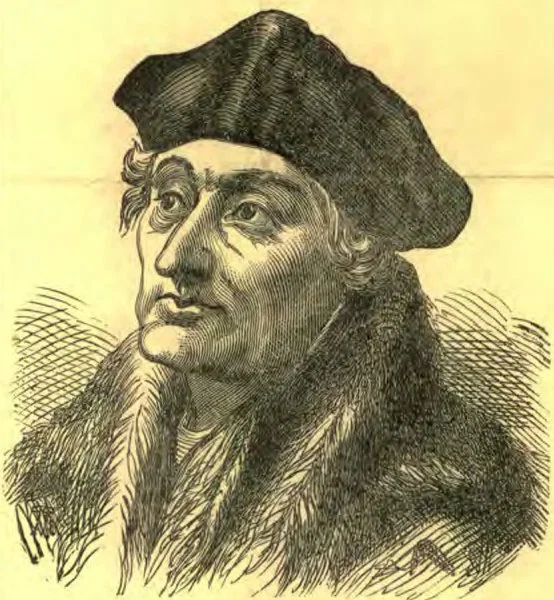
When Dr. Luther, in his work of reform, attacked the errors of the Romish church, and the corrupt example of the priests and monks, all Germany was shaken to its center. Many of the learned men adopted his views, and many others became his bitterest enemies.
There were two men who did more, perhaps, than any others in preparing the way for the work that Luther had to do. One of these was Reuchlin, a gray-haired doctor of divinity when Luther was a young man. The only Bible then in use was the Latin Vulgate, a work translated by the monks of Rome, and full of errors; and in all the land there were only a few copies of these. Reuchlin was a good Hebrew and Greek scholar, and did very much to get the study of these languages introduced into the universities. He was the first man to publish in Germany a Hebrew dictionary, so that the learned men could find out for themselves what the Old Testament taught, without having to take the word of the priests and the pope for it. He also wrote a Greek grammar that was a great improvement over the one then in use.
The other man was Erasmus, whose picture is shown on this page. His real name was Gerard; but, according to the fashion of the times, he translated it into Latin and Greek, calling himself Desiderius Erasmus.
The father of Erasmus, yielding to the urgent entreaties of his relatives, deserted the boy’s mother, and entered a monastery at Rome. So Erasmus never knew a father’s care. When he was about four years old, his father returned to Holland, and placed him in a school. He was a bright boy, witty and clever, and made rapid progress in his studies. One day, when he had done unusually well, his teacher embraced him, exclaiming with rapture, “This child will attain the highest pinnacle of learning.” The teacher’s words were literally fulfilled, and the child was known in after years as “the sage of Rotterdam.”
When he was thirteen years old, his mother died; and his father, bitterly repenting of his past course, and broken-hearted at the loss of his gentle Margaret, soon followed her. Erasmus was now thrown upon his own resources. His friends urged him to enter the cloister; but he had a great dislike for monastic life, probably remembering what sore trouble it had caused in his father’s family. However, he studied for awhile in several monasteries, and at length worked his way to Paris, where he entered the university. He studied incessantly, and at last graduated with high honors. Pupils from all quarters trooped to him for instruction, and he was recognized as the foremost writer and scholar of his time.
Princes were eager to have this illustrious young man at their courts; but to all their invitations he had a never-ending supply of excuses. He preferred a more quiet life, and got his living from the sale of his many writings.
He was a “fair little” man, whose half-closed blue eyes keenly observed all that was passing, on whose lips was ever a slight sarcastic smile, whose manner was timid and embarrassed, and whom it seemed that a puff of wind would blow down.” He was so afraid of dying that he took the most extraordinary care of his health, sparing no pains to remove from a place where a contagious disease was raging.
So you see he could not have made a very good reformer, because he did not have the courage to say always just what he thought. When people would ask him his opinion, he would give them an answer that could be taken both ways.
But he did some good with his pen. What Reuchlin did for the Old Testament, Erasmus did for the New, by writing a critical Greek text of the New Testament; for that part of the Bible, you will remember, was written in the Greek. “Would to God,” said he, as he finished writing it, “that this work may bear as much fruit to Christianity as it has cost me toil and application.”
This was his greatest work toward helping on the Reformation. Besides this book, he wrote countless works exposing the ignorance and vice of the monks. He was keen, witty, and bitingly sarcastic, and his words cut like a knife, when he chose to have them. But he stopped right here. He did not have Luther’s grand courage, and so was unfitted for any work of reform. He would not study theology for fear of finding out the truth and being condemned as a heretic. He studied every way to avoid bringing on him the frowns of the church of Rome. “A disadvantageous peace,” he was often heard to say, “is better than the most righteous war.”
Erasmus knew that he was a coward, and very freely owned it. “If the corrupted morals of Rome,” he wrote, “call for a prompt and vigorous remedy, that is no business of mine, nor of those who are like me. Let others aspire to martyrdom; I do not think myself worthy of such honor. I fear that if any disturbance should arise, I should imitate Peter in his fall.” And that is just what he did.
When the great storm-cloud of the Reformation burst, Erasmus trembled at the tempest which he himself had been such a great means of causing. About this time, King Henry VIII. asked Erasmus to write a pamphlet against Luther and the work of the reformers. Erasmus was flattered at this notice from the king of England, and basely deserting Luther, who had been his friend, he wrote a very bitter and sarcastic pamphlet. Luther was very much incensed at his course, and taking up his pen, wrote a reply that in the minds of all candid persons refuted every argument that Erasmus brought forth.
Erasmus knew that Luther had the better of the argument, but he would not own it. Luther’s reply so cut his pride that “he poured forth invectives with a broken voice and hoary hair.” His medium course, as such a course always does, brought down upon him the displeasure of both parties; while he attempted to please all, he pleased none. How much more noble he would have appeared had he, like Luther, stood firmly for the truth, regardless of what might come! W. E. L.

TWO SUBJECTS OF A KING.

“Amy, have you seen anything of my gold pen?” Edgar Trueman called, through his sister’s closed door.
It was Sabbath morning, and she had just finished dressing for church. She opened the door and looked out.
“Why, no, I have not,” she answered. “Have you lost it?”
“Of course I have, or I wouldn’t be looking for it,” he returned, crossly.
“Where did you have it last?”
“In my room.”
“Have you looked everywhere?”
“Just about,”—going down stairs. She followed him.
“May be it’s in the library,” she suggested. “Sometimes you write there, and leave the pen there.”
“I haven’t written there lately, and I never forgot and left my pen.”
Nevertheless, he went into the library, and searched diligently among his father’s pens, and even in his mother’s writing-desk.
“I believe it’s been stolen, Amy,” he said.
“Oh, impossible! No one has been in the house, and we all know that Mary is as honest as the day.”
He closed the writing-desk with a snap. “It’s very queer,” he said.
“When did you have it last?”
“Yesterday morning.”
“Oh, there’s the last bell for church, and you are not ready to go!” Amy cried, as the solemn tolling of the bell sounded on the still, morning air.
“I’m not going. I’m going to search this house through for my pen, before I go out of it for anything.”
“What! this morning?”
“Yes, this morning;” and he went up to his own room to look there again. He was still at work when the family came in from church.
“I am certain,” he said at dinner, “that it is stolen. Can you think of any one, mother, who was in my room yesterday, besides the family and Mary?”
“The plumber and his boy were there fixing the gas pipe,” returned Mrs. Trueman.
“Then the boy must have taken it,” cried Edgar.
“Don’t judge too hastily,” interposed his father.
“Who else? I am sure it is stolen, and we know Mary is honest.”
“Suppose you find he has taken it, what then?” Mr. Trueman asked.
“I’ll have him punished. Nevertheless, I’ll look again this afternoon, so as to be sure it is gone.”
Edgar wondered that his father said nothing about his absence from church that morning, as he was always very particular about his being there. He went to Sabbath-school that afternoon, and to church in the evening, but every moment between was spent in looking for the gold pen. He was up early the next morning, and before breakfast, visited the plumber’s. Just as the family were sitting down, he returned very triumphant, and with the pen.
“Just what I thought!” he announced. “The boy had taken it.”
“Poor boy!” said Mrs. Trueman. “Are you quite sure, Edgar?”
“Why, certainly I am. It was found in his pocket. He is a hardened thief, I think.”
“We’ll be careful who goes into the bedrooms after this,” said Mrs. Trueman.
“There’ll be no more danger from him,” Edgar replied, exultingly. “He’ll be sent up for a year or two.”
“Do you mean to say you had him arrested?” his father asked.
“On the spot.”
“Oh, Edgar!” cried Amy.
“Was that best?” his mother asked.
“Well, I thought so,” he replied.
“I wish to see you in the library before I go to the store,” said Mr. Trueman to Edgar, as they left the breakfast table.
Edgar followed him there almost directly. “Well, father?”
“Come in, my son, and sit down,” said his father. “I want to tell you a little story. There was once a very good king, who issued laws for the government of his people. The laws were few, only ten, in fact; but the man who kept them all would do his whole duty to the king and toward his neighbors. The first four of these laws related wholly to the subjects’ duty to their king; the other six related to their duty to each other. The first four were, with the exception of the first, rather long; but the six were short. Well, there were two youths, subjects of this king. One of them had been brought up to know these laws and to love the king; the other knew little of the laws and less of the king. Each disobeyed a law. The poor, ignorant youth broke one which related to his fellow-subject—the other youth; and this youth broke one which related only to the king. This second one, the subject who had been brought up to love the king, never gave a thought to the law he had broken, but thought only of having his fellow-subject punished for the harm done to him—”
“Father, I understand what you mean. The plumber’s boy and I are the subjects. What have I done to the King?”
“Have you been too careless even to know? What did you do yesterday?”
“Why—why, I looked for my pen almost all day.”
“You broke one of the Lord’s most important commandments,—‘In it thou shalt not do any work.’ Instead of obeying that, and keeping the day holy, you worked all day. You just as much broke the fourth commandment, as he broke the eighth. You sinned more against God than this boy sinned against you. The boy stole a pen from you; you stole a day from God. You seek to have him punished, forgetting all your own sin.”
“Then you think I have done wrong in having him arrested?”
“You have been too hasty. You wish to punish him; are you willing to be thus punished for what you have done? In the Lord’s sight it must be as great a sin to break one commandment as another. He must regard you as guilty as he does the plumber boy; but the plumber boy, for his sin, must have all his prospects in life ruined, while you will go free.”
“What shall I do, father?” Edgar asked.
“I shall leave you to think that out by yourself,” he replied, as he took up his hat and went out.
That evening Edgar again sought his father in the library.
“I have forgiven him as I wish to be forgiven, father,” he said.
“I am glad to hear it, Edgar.”
“It was his first offense, and he promises it shall be his last,” he continued. “Mr. Potts will trust him, and take him back on trial. He will come to Sabbath-school with me next Sabbath, and, father, I wish you would talk to him. I’ll ask him around here some evening this week, if you will.”
“I should like to. We may be able to do something for him. Never forget that God requires us to forgive those who trespass against us, if we wish him to forgive us our trespasses against him.”—Christian at Work.

CALL TO THE FLOWERS.

O DAFFODIL, open your balmy buds In ruffles of vivid gold; For softly the sweet rain-spirits sigh For your blossoms to unfold; O bravest bloom of the flow'ry throng, The morn is here, though the night was long.
The cascade's silvery trumpet calls, O violet sweet, awake! 'Neath your wind-built tent of dead, brown leaves, Your long, deep slumber break; In a bower of your own bright leaves arise, With your chalice as blue as the summer skies.
O cowslip, lift your sunny head From under its leafy hood; The mellow music of south winds blows In the depths of the budding wood; And the breezy haunts of the bluebirds ring With the first rejoicing songs of spring.
The beautiful May will soon be here; The maples soon will burn With scarlet bloom, where the shadbush shows O'er shady banks of fern; Then, darlings, awake from your winter dreams, To the call of the wind, the rain, and the streams.
—Selected.

CHUNG WAH.

He is a bright little ten-year-old, who lives in a town away off west. You know by his name that he is Chinese. Let me tell you about him.
He is in the A class in Number Two, and in the school room his yellow face is almost always bright with soap-suds and joy, for he is a wonderfully happy boy, and smiles all the time he is happy. His little black eyes look like apple-seeds, and snap whenever he winks. He wears great, flapping, brown pantaloons, which are covered to the knee by his pink calico aprons; but on Wednesday, when he speaks his piece, he has on a white apron so stiffly starched that it rustles and cracks like paper. His low, cloth shoes have no heels, but long, pointed, turned-up toes. Chung Wah is very quick at his lessons, and neat in his slatework, so that when visitors come in, his slate is one of the first the teacher shows them.
He has always loved to study, but last May, when the days commenced to be warm and bright, he must have grown a little tired of school, for, alas! a great many times he was seen on the street the whole day long. When questioned the next morning, he told the teacher, “My fadder send me to school, an’ I no come.” I suppose he liked to pitch horseshoes with the other boys down in Chinatown—none of them had to go to school—or to follow old Sam Lee round the town as he gathered up the clothes for the wash-house. At any rate, he played truant many days, until his teacher sent him upstairs for the school superintendent to talk with him. Still the truancy was repeated, and he gave no excuse only, “I no likee come dat day.” At last, one morning the superintendent whipped him for truancy, and poor little Chung Wah went down stairs with both fists in his eyes, and a very sore heart.
That very afternoon, just before the tardy bell rang, who should walk into the superintendent’s room but Chung Wah, his face still downcast and troubled! He held a preserve-jar, covered with Chinese characters, in one hand, and in the other a bright silk handkerchief such as are sold in the Chinese shops. With an awkward little nod, just as if he were going to speak a piece in school, he said, “My fadder gib ’em to you. He say you heap good man. He likee you beat me ebly day I no go to school.”
Brave little Mongolian! Do you think you white boys and girls could have carried such a hard message as that so honestly?
Somehow, after he had said the words, the lump in his throat seemed to grow easier, and, although the superintendent said some words not very comforting,—“Well, Chung Wah, tell your father I will punish you when you are truant from school,”—yet when the boy went down stairs this time, his face beamed as though it had never known a tear, and his little black cue bobbed merrily behind him.
A good many months have passed since then, and he has never deserved another whipping. I do not believe he will. His teacher says he has a wise father, and if there were more fathers like him, there would be more good boys in school; but I say, “Brave little Chung Wah!” The boy who can tell the truth when it is so hard to tell it has a clean side to his heart, though his face may be very yellow.—Selected.

QUARTZ

HAVE you ever noticed how very hard some pebbles and rocks are? Their variations in size, color, and form are almost infinite. Two just alike would be a natural curiosity indeed, unless they were shaped by art.
The white fragment which I hold in my hand, has many qualities in common with others in my cabinet made up of specimens gathered from field and roadside by school-children. It is intensely hard,—so hard, indeed, that if I try to cut or scratch its surface with a knife, it leaves a dark line like that from a lead pencil. One of its sides, where broken off, has a pearly, almost glassy luster; and its sharp, broken edge scratches glass so deeply that it readily breaks to the line. If I strike this pebble sharp, quick blows with steel, it gives off flashes of electrical light. If, with a similar piece, I rub it briskly in a dark room, the same effect is produced. If rubbed vigorously on a woolen cloth, it acts as a magnet, drawing to itself iron filings, or bits of steel. What can it be? It is the commonest substance beneath our feet; for one-half of the earth's crust is made of quartz, so scientific men tell us.
As water occurs in various forms,—ice, snow, rain, vapor, so does quartz; and though rarely quite pure, the quality of great hardness is always present, with more or less of the light-producing or electrical power described. Quartz rocks, more than any others, yield gold. Even the sands and gravel yielding gold dust and nuggets of gold, are broken and worn remnants of ancient rocks of this class.
Sand, wherever found, in the dimpled brook, on the beach laved by the limpid waves of the lake, on the burning face of the desert, or the shore of the majestic ocean, is of this substance. It is also the chief ingredient of glass.
Besides sandstone, composed almost wholly of quartz, and granite, of which it forms nearly half, one author names eight other kinds of rock in which it is abundant. These include a large portion of the boulders, or large rounded stones strewn upon the surface of northern Europe, Canada, and portions of the United States. Quartz nearly pure occurs in masses somewhat like alum in appearance, or in beautiful crystals, varying much in size, form, and coloring. Three or six sided crystals, reflecting beautiful white light, are very abundant. These you will often find lining rock cavities.
The “pebble” of which choice spectacles are made, is cut from pure native quartz, found in the form of large crystals, faultlessly transparent. Other substances which combine with quartz give it great variety of colors, and even of names. An opaque variety of black, dull red, or yellow, is known as jasper. Another form, less common, but better known, is flint, from which were made the Indian arrow-heads now occasionally turned up by the plow. The electric light is not more beautiful than the sparks given off by striking flint with steel.
Quartz often assumes the form of translucent or half-transparent pebbles, varying in color from milky white to blue, green, yellow, brown, or even black. In this form it is known as chalcedony. Of the chrysoprase, an apple-green variety of chalcedony, it is said that a piece of sufficient size for mounting in a ring, is worth from fifty to a hundred dollars.
The agate, another form of quartz, and one very common in mineral collections from the West, is often very curious in its structure, including layers, one within another, of chalcedony, amethyst, common quartz, jasper, and flint.
In the coming springtime, hundreds of light-hearted boys and girls will ramble over hill and woodland, seeking the companionship of birds and flowers, the embodiments of joy and beauty. In our holiday rambles, we shall never think less of living things for having noticed the pebbles in the brook or for having examined the unsightly piles of rock in out-of-the-way places. For while the first class speaks of things that are passing away, the other teaches lessons of endurance; and they bring to mind the wonderful city, whose walls are of jasper and amethyst.
GEO. R. AVERY.

FAITHFUL IN LITTLE.

There came to the freight-house quite early one morning, Two youths who were looking for work. Said one, “I’m intelligent, apt, sir, and surely I’m fitted quite well for a clerk.” The truckers were wheeling their carts up the alleys. Said the youth, “That is low work to do; It is fit for coarse fellows.” “Well, yes,” said the master; “But it’s all I can offer to you.”
The youth turned away with a haughty “Good morning,” And passed through the great creaking gate. “And now,” said the master, addressing the other, “I suppose you won’t handle the freight.” “Indeed, sir, I will. ’Tis the best that is offered; It is work that is honest and true. I despise not small sources, great rivers flow from them.” “Very well,” said the master, “you’ll do.”
The honest young fellow worked faithfully, truly, Was manly, and gentle, and true; The truckers all liked his frank cheer and bright nature, And nodded, “Young fellow, you’ll do.” “You see,” said the master, as higher he raised him, “Promotion is not due to luck: I can tell very nearly just what a man’s made of By the way that he handles his truck.”
“And whate’er a man says of himself goes for little; His words never make him my clerk; But I put him at trucking, right down at the bottom, And his future’s foretold by his work.” And step after step rose the honest young fellow, Doing well all the work at his hand; And his fortunes increased, he was temperate and godly, Well honored was he in the land.
So whatever shirks tell you of fortune or witchery, A poor thing to lean on is luck. Be faithful in little. Promotion won’t fail you, Even though you begin with a truck. All over the earth, if you look, you will see it, Naught ever is won by a shirk; But the highest ambition has hope of fulfillment To the one who has courage to work.
Oh, gather great thoughts, my brave lads and sweet lasses, And banish the thoughts low and coarse; For remember the river can never rise higher Than the fount at the river’s own source. And do with your might all the work that is given; Success is forever for such. Be faithful in little, and here and hereafter, You’ll surely be masters of much.
FANNIE BOLTON.

A LITTLE TALK WITH BOYS.

When I meet you everywhere, boys,—on the street, in the cars, on the boat, at your homes, or at school,—I see a great many things in you to admire. You are earnest, you are merry, you are full of happy life, you are quick at your lessons, you are patriotic, you are brave, and you are ready to study out all the great and curious things in this wonderful world of ours.
But very often I find one great thing lacking in you. You are not quite gentlemanly enough. There are so many little actions which help to make a true gentleman, and which I do not see in you.
Sometimes when mother or sister comes into the room where you are sitting in the most comfortable chair, you do not spring up and say, “Take this seat, mother,” or, “Sit here, Annie,” but you sit still and enjoy it yourself. Sometimes you push past your mother or sister, in the door-way from one room to another, instead of stepping aside politely for them to pass first. Perhaps you say “the governor,” in speaking of your father; and when he comes home at night, you forget to say, “Good evening, sir.” Sometimes when mother has been shopping, and passes you on the corner, carrying a parcel, you do not step up and say, “Let me carry that for you, mother,” but keep on playing with the other boys. Sometimes when mother or sister is doing something for you, you call out, “Come, hurry up!” just as if you were speaking to one of your boy companions. Sometimes when you are rushing out to play, and meet a lady friend of mother's just coming in at the door, you do not lift your cap from your head, nor wait a moment till she has passed in.
Such “little” things, do you say? Yes, to be sure; but it is these very little acts—these gentle acts—which make gentlemen. I think the word gentleman is a beautiful word. First, man, and that means everything strong and brave and noble; and then gentle, and that means full of these little, kind, thoughtful acts of which I have been speaking. A gentleman! Every boy may become one if he will. Whenever I see a gentlemanly boy, I feel so glad and proud! I met one the other day, and I have been happier ever since.—Selected.

A WRITING LESSON.

The eminent Dr. Potts, when a clerk in Philadelphia, took a bill to a Quaker, and had signed the receipt with one of those hieroglyphics sometimes seen on bank notes. The Quaker, taking up the paper, said blandly,—
“Friend, what is that at the bottom?”
“This, sir, is my name.”
“What is thy name?”
“William S. Potts.”
“Well, William, will thee please to write it down here plainly, so that a witness in court would know it?”
William learned a lesson that day, and ever afterward he wrote his name so that it could be read. Would that some of our good friends could fall in with such a Quaker.

Good Language and Good Manners

“Good language and good manners are intimately connected with good morals, and are indicative of the thorough good breeding of mind and heart. Once let the habit of using slang become fixed, and it is exceedingly difficult to eradicate.

THE IDEAL SABBATH-SCHOOL TEACHER.

The ideal Sabbath-school teacher is a true Christian. He has the love of God shed abroad in his heart. He is an earnest follower of Christ. His practical life is consistent with his profession. He is an every-day Christian.
He loves the souls of men, and realizes their danger. He is in conscious sympathy with the mission of the Son of God, who came into the world “to seek and to save that which was lost.” This is the motive that inspires his labors in the school.
He suffers nothing of a trivial character to interrupt his attendance. He will meet his class, if possible, every Sabbath. To do this, he will make many sacrifices, if need be; sacrifices of preference, of recreation, of convenience; and even if he is away from home on business, he will hasten back, if possible, before the Sabbath. He knows how repeated absences on his part will dishearten, disorganize, and at last break up his class.
He is in his place in the school in good time. The scholars require his example and prompting to encourage and instruct them in a proper participation in the opening services. Besides that, the spirit of promptness on his part will be felt, and impart a tone to the class which is very helpful to the great end in view.
He will take great pains to prepare beforehand the lesson for the day. His teaching is not perfunctory. He does not just go through a routine of questions in a book and receive such answers as the scholars may chance to give, but is ready to explain and enforce the teachings of Holy Scripture. To this end he resorts to such commentaries, Bible dictionaries, and other helps, as will enable him to communicate important information to his class.
He will strive, also, to enter into the spirit of the lesson. Otherwise he will not succeed in gaining the earnest attention of his class. If he is not interested, he will not interest them.
For this reason he will make it a point to pray for light and grace, that he may not only understand the text in the letter of it, but also enter into the spirit. No teacher ought ever to appear at the head of his class without special, earnest prayer before he leaves his room, that the Spirit of God may assist him in the duties of that day. No work for the Master is well done that is not done in prayer.
He will cultivate a personal concern for the salvation of each scholar in his class. He will pray for each by name. He will, if possible, show them attention outside of the class and during the week. If one is absent at any time, he will know the cause of it before the next Sabbath. He will study human nature, and especially the disposition of each one of his scholars, so that he may wisely adapt his efforts, and avoid such imprudent means as may do harm rather than good. But he will, as occasion may serve, urge upon each one a present acceptance of Christ. Especially will he take advantage of times of awakening in the church to lead them to the cross.
He will be careful to instruct them in the duties of the Christian life, as well as in the doctrines of salvation. They must be solemnly guarded against a mere formal service of God,—a mere affectation of the Christian life. They must learn that religion is the paramount object, that it is all-pervading in its claims, and demands the consecration of soul and body to God.
At the same time he will be careful to let them know that it is Christ alone who can save from sin. If he be indeed a converted man himself, he will cause them to see that the adorable Saviour is all in all, the chiefest among ten thousand, and altogether lovely.
A school having such teachers will be the means of saving many souls.—Selected.

IN TEHERAN.

It is many times interesting to know the customs of heathen foreigners, although sometimes they are so disgusting and senseless as to excite only feelings of contempt. But so long as foolish and ridiculous fashions are not confined to the heathen, but many times crop out in our own civilized country, we should be as charitable as possible for those who know no better way. Of the Persians, the Interior says:—
“One of the most common sights in the streets of Teheran is a man seated on the pavement against a wall, while a barber shaves the crown of his head. The barber’s trade is one of the most important in Persia. The customs enjoined by the Koran, or religious law, make it indispensable that barbers should abound in this country. The Koran makes it honorable for a man to wear a beard, but commands the shaving of the head. There are two great sects among the Mohammedans—the Sheas and the Sunnies. The latter are all Turks, and they shave the whole crown, excepting the tuft in the center, by which the archangel may draw them out of the grave. But the Persians are Sheas, and they shave the center of the head, from the forehead to the neck, leaving a long curl on each side. It is curious to see even little boys with their heads thus polished. The Persians consider it a great disgrace to lose their side curls. As they all wear turbans, or black, conical caps of Astrakhan lambskin, no one would suspect the head to be shaved, until the cap is taken off. Then, indeed, the appearance of the head is exceedingly grotesque.
“It is evident that the care of the hair is a very important question in Persia. But that is not all. One rarely sees a gray beard or gray locks in Teheran. Even the most venerable men have dark or red hair. The reason is because all, from the highest to the lowest, dye their hair. This is done first with henna, which gives it a reddish tint. Many prefer to leave it thus. But others add to the henna a second stain or indigo, and the combination of the two colors imparts to the hair a dark-brown hue. The tails and manes of horses are sometimes tinged with henna. Those of the royal stables are dyed a beautiful rose color.
“The use of red for curtains, awnings, and umbrellas, is forbidden. It is a color reserved, in such places, for the palace and the king alone. There are other remarkable restrictions in every Persian city. No Christian is allowed to enter one of the public baths. These baths are on the plan of what are called Turkish baths in America. The women bathe in the morning, and the men in the afternoon. After the bath, the bathers lounge in an outer room, and gossip and smoke. For the women, especially, the weekly visit to the bath is like resorting to a woman’s club. They take their sewing and embroidery, and after the bath sit for hours chatting, sewing, and smoking the water pipe. When the woman returns home from the bath, she is full of the gossip of the neighborhood, and has plenty to talk about for a week to come. In Turkey, all sects can visit the bath, but the Persians allow no one to bathe with them but the faithful followers of the Prophet.”

IMPORTANT BIBLE SUBJECTS.

LESSON 44.—INHERITANCE OF THE SAINTS.

REVIEW.

[NOTE TO THE STUDENT.—Do not consider the lesson learned until you can give at least the substance of every text, with the correct reference for each. The references in black letters indicate those texts that should be committed to memory. A little diligent application each day will enable you to do this.]
1. On what occasion did the Lord first appear to Abraham?
2. What promise did the Lord then make to him?
3. How many people were to be blessed through Abraham?
4. Prove that when this promise is fulfilled, all the people in the world will be keeping the law of God.
5. Then to what time does this promise have reference? Matt. 6:10.
6. When did the Lord next appear to Abraham?
7. Where do you find this circumstance recorded?
8. What did the Lord then say he would give to Abraham?
9. How much land was included in this promise?
10. To whom besides Abraham was it to be given?
11. Give the references which speak of the number of Abraham’s descendants.
12. How long were they to possess the land?
13. On what conditions was this promise based?
14. What was the character of Abraham? Gen. 26:5.
15. Did he, then, fulfill the conditions of the promise?
16. And was the promise fulfilled to him?
17. What reason have we to suppose that it will ever be fulfilled to him?”
Continue reading: A YOUNG ROMAN'S SACRIFICE