Your ShelfYour Projects

The American Sentinel, Vol. 6, No. 40.

Religion in Public Schools as Church-State Union
Earlier text: Religion in Public Schools as Church-State Union

Count Tolstoi on American Liberty.

UNDER the heading, “The Secret of American Liberty,” the New York Ledger last year gave utterance to the following comments on the characteristics of the principles of the American political system:—
No one has hitherto credited Count Tolstoi, the great Russian novelist, with a specially exhaustive study of American history. Yet he made a remark the other day which shows that no other European since Henri de Tocqueville has more distinctly recognized the peculiar merit of our institutions. “In the United States,” he told an American visitor, “you have the best of all governments, because you scarcely know that you have any government at all.” It is true, if we reflect upon it, that outside of the seaboard cities, where merchants feel the arm of the Federal Executive exerted through the custom-houses: the average citizen is never brought into direct contact with the Federal Government, except through the post-office machinery. Even with the State Government, he is drawn into immediate and conscious relations chiefly through the higher courts of law. To this day, as in the early epoch of New England history, it is the unit of social organization, the local government of the county, township, and municipality, with which the average citizen is most intimately and constantly concerned. Nowhere else in the world—for Englishmen, from whom we inherited the blessing, have in a large measure lost it—is the habit of local self-rule so universal and inveterate as it is in the United States.
In this habit lies the safeguard of a personal liberty inseparable from public order, the secret of our exemption from reactionary conspiracies on the one hand and from anarchic revolutions on the other. It is the absence of this habit which makes republican government in France unsatisfactory and unstable—unsatisfactory because the present French Republic is more intensely centralized than many monarchies, and unstable because the people hold the rulers of the moment accountable for shortcomings rooted in the national character. When the French communes, arrondissements, and departments acquire the functions of local self-help and self-control, which are exercised in this country by townships, counties, and States, free institutions will, for the first time, be impregnably established, for then Frenchmen will have learned to govern themselves.
Count Tolstoi perceives, what is overlooked by too many European liberals, that to confer parliamentary government upon a people before it has shown itself capable of managing the affairs of a township, is to begin at the wrong end. But, it may be said, if you give a nation a parliament, that parliament will have the good sense to encourage local self-government. Such is not the lesson of history. France has had a parliament for a century, yet the traces of local self-rule are now few and faint, compared with what they were under the Bourbons. So, too, the British Parliament, until the recent reaction which led to the establishment of county councils, had long been encroaching on local liberties. The framers of our own Federal Constitution discerned the tendencies of a national Assembly toward centralization and absorption, and provided barriers against them; but for which our own habits of self-government might have been gradually extinguished.
Every day we have evidence of the truth of the statement made by Professor Gervinus, the great German critic and writer, in his “Introduction to the history of the Nineteenth Century,” in the following words:—
Roger Williams founded, in 1636, a small, new society in Rhode Island, upon the principles of entire liberty of conscience, and the uncontrolled power of the majority in secular concerns. . . . The theories of freedom in Church and State taught in the schools of philosophy in Europe, were here brought into practice in the government of a small community. It was prophesied that the democratic attempts to obtain universal suffrage, a general elective franchise, annual parliaments, entire religious freedom, and the Miltonian right of schism, would be of short duration. But these institutions have not only maintained themselves here, but have spread over the whole Union. They have superseded the aristocratic commencements of Carolina and New York, the high-church party in Virginia, the theocracy in Massachusetts, and the monarchy throughout America; they have given laws to one quarter of the globe; and, dreaded for their moral influence, they stand in the background of every democratic struggle in Europe.
Some of the more notable examples of the truth of this are in the great Constitutions of the world which have been recently formed; and what Professor Gervinus calls “their moral influence,” not so easily seen, has been felt by every nation of the civilized world. The Independent Patriot remarks on this point that “the Constitution of the United States has been largely copied in Brazil, in Australia, and followed to some extent in Japan. How far the principles of liberty that document contains may yet go in the political world we may not now know; but if we will compare the condition of the political world when that instrument was framed, with its condition now, we may see something of the effects produced upon the race by its presentation.”

The Safe Legislation Is No Legislation

THE safe legislation is no legislation. —Evening Sun.

The State Cannot Teach Religion Without a Creed

BEFORE the State can teach religion it must have a religion to teach. But the State being not a single individual but an aggregation of individuals, it can have a religion only in the sense of having a creed which it fosters.

Mr. Crafts and the Sunday Rest Question

MR. CRAFTS has never disavowed that famous sentiment concerning Sunday: “Take the religion out and you take the rest out,” yet he has the temerity to assert that he is laboring only for a civil rest day

Mint Designs for Coins and the Motto In God We Trust

“THE director of the United States mint,” says the United Presbyterian, “was instructed by the late Congress to secure new designs for our silver coins. It was thought that these designs, particularly those on the dollar, could be easily improved. But, although a prize of five hundred dollars was to be paid for each design accepted, all of those offered were rejected by the committee. If at any future time these designs should be changed, we hope the words, ‘In God we trust,’ will be allowed to remain.”
About the only objection to these words on our coins is that it is a bit of sentimentalism, or rather of religious cant, which, in the very nature of the case, can not be true of the Nation, and is certainly not true of more than a small number of the individuals who compose the Nation.

Church and State in Iowa.

A WAR BETWEEN THE METHODIST CONFERENCE AND THE GOVERNOR.

THE Methodist Episcopal Conference recently held at Des Moines, Iowa, passed, among others, the following resolution:—
We protest against the policy of special executive clemency towards the violators of the prohibitory law, and respectfully suggest that it is the sworn duty of our chief executive to enforce said law rather than to wink at its violation and then insist upon its repeal because it is not enforced.
In a speech at Tipton, Iowa, September 26, the Governor noticed this, and very fittingly remarked:
If it is true, I am both in morals and in law guilty of the commission of a high crime, for which I should be impeached and consigned to a felon’s cell, instead of occupying the position of chief magistrate of a great State. It cannot, therefore, be expected that any degree of deference for the profession in which these reverend gentlemen are engaged can close my lips when a charge so serious is made against me.
Further along in his speech the Governor said:—
I fully recognize the individual rights of these gentlemen to mix politics with religion if they so elect. I cannot, however, help reminding them that there is a very strong aversion in the ordinary American breast to the mixing of politics and religion. So strong, indeed, that in the fundamental laws of most, if not all the States of this Union, they will find express provisions completely divorcing the Church from the State.
I think I can safely say that so far as worldly people are concerned they do not believe that our politics and religion can be mixed without converting the entire mixture into politics alone in a very short time. I want to say farther that those who attempt to do this will sooner or later learn that their churches have become political instead of religious organizations and that they must thereafter be content to wield such influences over the consciences of men as other political organizations are able to do, and no greater or better.
From this it is evident that the only result of this religious conference passing such a resolution is a war between the Church and the State. Let it be observed also, that in this war the Church is the attacking party. By passing this resolution it is attempting to dictate how the State should be run in regard to civil affairs, and the only logical inference is that had it the power it would step into the executive shoes and run the State. But this is, in embryo, simply Church and State united; that is, both the ecclesiastical and the civil power vested in one body. The “respectful suggestion” to the Governor by this Iowa Methodist Conference is simply a mild threat that if he does not run things about as they want them run he may hereafter feel the lash of the Church and hear the thunders of her excommunication, and worse than all—lose his office. But in all this they are

NOT FOLLOWING THEIR PATTERN.

Christ did not come protesting against the policy of the Roman Government under which he lived, and send up “respectful suggestions” to Caesar that he should do his “sworn duty.” He did not come to run the Government, but to call sinners to repentance and show all the way of life. His work was not to regenerate mankind through the power of law, but to lift up the fallen through faith in him; and this work he committed to his followers.
However much good a church may have done, or however free it may have been from attempts to ally itself with worldly powers and unite Church and State, there can be no evading the fact that when it begins to dabble in politics and dictate to civil authorities how they should conduct themselves in civil affairs it steps outside the pale of its rightful domain, and lays itself open to the charge of attempting to marry itself to the State. Its legitimate work lies in another line.
W. A. COLCORD.

A Sham Closure.

WITH the foregoing title the following appeared in the editorial columns of the Chicago Tribune, September 9:—
The Chicago Herald calls attention to the fact that the pretended closed Sunday at the Philadelphia Exposition was a sham. It says:—
“The Exhibition was indeed apparently closed, and it was actually closed to the common people. But it was open by official consent and connivance to officials and their families and friends. So well known was this fact in Philadelphia that the thoughtful who, out of mistaken belief, had favored the closed Sunday, freely declared that if another Exhibition were held there it should be open to all the people.”
There is no doubt that our contemporary is correct in its statement. It is generally admitted that thousands of the persons named enjoyed a nice, quiet inspection of everything within the gates on Sunday, but the artisans were locked out.
The Herald and Tribune together would not make and indorse such a statement if there were no ground for it. And so it is clearly seen that when an institution is not enshrined in the heart, means will be found to evade it, either openly or under cover.

Defends His Vote Against the Sunday Ordinance.

It will be remembered that the City Council of Bradford, Pennsylvania, last July voted adversely upon a proposed Sunday ordinance for which certain of its citizens had petitioned, alleging that the proposed ordinance was unnecessary, as the State Sunday law of 1794 covered the same ground. They also stated in their report that that law was a dead letter, and that it was their belief that such a law belonged to the Dark Ages and should never have been enacted in the great commonwealth settled by William Penn and his Quaker friends. Not long afterward Mr. Crafts visited the place. In his lecture there he characterized the attitude of the City Council toward the law of 1794 as “anarchy,” and remarked that over in Chicago “they hang anarchists.” Referring to this statement, Mr. John P. Zane, a member of the City Council, in the Bradford Era, of September 1, says:—
Inferentially Mr. Crafts’s method of purifying the morals of this city is to hang the members of the select branch of the Councils. It is true this is a thorough way to silence an opponent, but the “world moves for all that,” and moves onward and upward to a better and higher civilization. I plead guilty to voting to kill the Sunday observance ordinance. I never have, and hope I never may, vote to punish or inconvenience any one who differs from my religious or political views. I have always, in my humble way, contributed to all the various churches in the places where I have lived. I believe in every one worshiping according to the dictates of his own conscience, and am willing to assist him in the opportunity of doing so. I consider the Sunday law of 1794 a relic of the Dark Ages, and in the present it is simply instrumental in religious persecution. No one is any better or happier for its existence, and good people of the Seventh-day Baptists, have suffered wrong by its enforcement.

Congressional Amendment to Close World's Fair on Sundays

A NATIONAL REFORM organ publishes the following from “a gentleman who has had a wide experience in national legislative matters”:—
Those who are opposed to the opening of the World’s Fair at Chicago on Sundays have a splendid opportunity to get a law enacted by Congress this winter positively prohibiting the opening of the gates to visitors on Sunday, if they are energetic enough in embracing it. Under ordinary conditions it might have been very difficult to have persuaded Congress to legislate upon the subject, but all difficulty will be removed when the World’s Fair management makes its application for a loan of $5,000,000 from the Government. When the bill for that purpose comes before Congress it will be easy to offer an amendment thereto making the loan contingent upon the closing of the Fair on Sundays. If this be done and all of those opposed to opening the Exposition on Sundays will take the trouble to make their wishes known to their Senators and Representatives, the amendment will certainly become a law and there will be no doubt in anybody’s mind about the closing of the Exposition on the Sabbath. If this opportunity be not taken advantage of the Board of Managers of the Fair will, in my opinion, sanction the opening of the Fair on Sundays. This opinion is based upon the actions of members of the Board. Attempt after attempt has been made to get the members of the Board to commit themselves on this question, and there has been such unanimity in their replies to the effect that there was plenty of time and that they would not decide the question until just before the time for the opening of the Exposition, that I have come to the conclusion that they fully intend that it shall be open on Sundays, but do not care to so announce until it shall be too late to prevent it by Congressional legislation, which is the only way it can be prevented.
There is little doubt that every possible effort will be made to secure from the Fifty-second Congress some substantial recognition of Sunday sacredness, a recognition that will serve as a precedent for all that is demanded by the American Sabbath Union and kindred organizations. The question is no longer, shall the Fair be closed? but shall the Government of the United States commit itself to the support of a religious institution?

Baptist Association of Austin Proposes Sunday Protection Alliance

THE Baptist Association of Austin, Texas, at their recent meeting adopted the following resolution:—
Resolved, That we should organize in connection with all Christians of any or no name, to protect, by our influence and votes, the Lord's day, or Christian Sabbath, against the influences at work for its destruction.
An association must think that the “Christian Sabbath” is desperately in need of help, when it is willing to organize with Christians of any or no name. The “mixed multitude” that went out of Egypt with the children of Israel presents to the mind the picture of a motley crowd; but it is left within the limits of the imagination; just what kind of an organization could be effected out of all Christians of any or NO NAME is quite difficult to imagine. It certainly would make a good crowd in which to develop bigotry and intolerance equal to that of the twelfth century. For when principle can be so far sacrificed that men are ready to confederate with everybody regardless of what they believe, it is hard to tell to just what ends they will go. It is evidently true that the Austin Association is quite out of harmony with many of the rest of their Baptist brethren. As a people the Baptists have a record for a firmer stand for principle than would be indicated by the foregoing resolution.

The Rule of Wholesome Conduct Is Freedom

THE rule of wholesome conduct is freedom.— Evening Sun.

PACIFIC HEALTH JOURNAL

And Temperance Advocate.
A thirty-two page monthly magazine, devoted to the dissemination of true temperance principles, and instruction in the art of preserving health. It is emphatically

A JOURNAL FOR THE PEOPLE,

Containing what everybody wants to know, and is thoroughly practical. Its range of subjects is unlimited, embracing everything that in any way affects the health. Its articles being short and pointed, it is specially adapted to farmers, mechanics, and house-keepers, who have but little leisure for reading. It is just the journal that every family needs, and may be read with profit by all.

PRICE, $1.00 PER YEAR,

or with the 300-page premium book—“Practical Manual of Hygiene and Temperance,” containing household and cooking recipes—post-paid $1.40.
Address, PACIFIC HEALTH JOURNAL, Oakland, California.

SIBERIA AND THE NIHILISTS.

Why Kennan Went to Siberia.
By WILLIAM JACKSON ARMSTRONG.
This is one of the most INTENSELY INTERESTING and thoroughly reliable contributions to literature on Russia and the Nihilists ever published.
Everybody should read this book, because no one can be intelligent upon the subject of which it treats without familiarity with its contents.
160 PAGES, PAPER COVERS, 25 CENTS, POST-PAID.
PACIFIC PRESS PUB. CO., NEW YORK. Or Oakland, California.

Safety Pencil Pocket.

Neat, cheap, serviceable.
A small investment will prevent the loss of a valuable pen or pencil.
PRICES:
No. 1. Russia leather, for 2 pens - - 10¢.
No. 2. “ “ 3 “ - - 15¢.
Sent by mail on receipt of price. We guarantee these pockets superior in every particular to similar styles formerly sold and still offered at much higher prices.
Address, Pacific Press Pub. Co., 43 Bond Street, New Yo

ROMANISM AND CIVIL LIBERTY

BY HON. WILLIAM JACKSON ARMSTRONG.
Is the title of a number of the Sentinel Library which contains a verbatim report of a powerful lecture delivered by this well known speaker, in Oakland, California.
Price, 4 cents.
Address, Pacific Press Pub. Co.,
43 BOND STREET, NEW YORK.

DO YOU USE A FOUNTAIN PEN?

Then you need the COMBINED INK BOTTLE AND PEN FILLER, consisting of a bottle holding ink sufficient to fill a pen 8 or 10 times, with a Patent Rubber Cork and Filler, all inclosed in a neat wooden case with a screw top, making the safest, most complete, compact, and convenient article for the use of traveling men and others now extant. Weighs when filled with ink less than three ounces.
Imitation Rose-wood case, 25c.
Real Box-wood, " 50c.
Sent post-paid on receipt of price.
Address,
PACIFIC PRESS PUB. CO.,
43 Bond Street, New York.
Or Oakland, Cal.

Evening Line by the Picturesque Hudson.

STEAMERS BALDWIN AND ROMER.

To Kingston, and the Catskill Mountains, leaving New York daily, except Sundays, at 4:00 P. M., from pier 46, foot of West 10th street; and Rondout, daily, except Saturday, at 6:00 P. M. Saturday steamer leaves New York at 1:00 P. M. These Steamers are under the management of, and sailed by, their owners. Comfort and safety assured, comfortable staterooms, excellent meals, and an opportunity to view the grandest river scenery in the world, in the setting sun, and by moonlight.

PENSIONS

The Disability Bill Is a Law.
SOLDIERS DISABLED SINCE THE WAR ARE ENTITLED.
Dependent widows and parents now dependent whose sons died from effects of army service are included. If you wish your claim speedily and successfully prosecuted, address JAMES TANNER. Late Commissioner of Pensions, WASHINGTON, D.C.

The New Enlarged and Authorized Edition of that Remarkable Work,

THE CHRISTIAN'S SECRET OF A HAPPY LIFE.
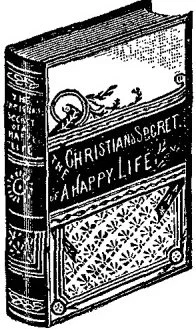
This Work, the demand for which has been so great as to wear out two sets of plates, has now been put in entirely new form. The book having become an accepted classic in devotional literature, it was thought wise to issue this new edition in a compact form, and in a variety of bindings. Occasion has also been taken by the author to thoroughly revise the whole work, besides adding considerable new matter.
Few Books of a Religious Character have been accorded such Hearty and Universal Indorsement.
“To commend this work would seem almost superfluous; and yet to young Christians who may not know it, we can not refrain from saying, Buy this book, and keep it with your Bible for constant study, until you have thoroughly mastered, in your own experience, the ‘secret’ of which it tells. It will transform the dark days of your life, as it has transformed those of thousands before you, into days of heavenly light.”—New York Evangelist.
“We have not for years read a book with more delight and profit. The author has a rich experience, and tells it in a plain and delightful manner.”—Christian Advocate.
“Handy Classic Edition,” 18mo, 292 pages, cloth, full gilt edges, — $ .85.
“Standard Edition,” 12mo, 240 pages, fine cloth, — .75.
PACIFIC PRESS PUB. CO.,
43 Bond Street, New York.

VIEWS OF NATIONAL REFORM.

A PACKAGE OF 13 TRACTS AGGREGATING 184 PAGES, DISCUSSING ALMOST EVERY PHASE OF THE NATIONAL REFORM MOVEMENT. FIFTEEN CENTS PER SINGLE PACKAGE; TEN PACKAGES, ONE DOLLAR, POST-PAID.
The following are the tracts in this package:—
PAGES.
  1. Religious Legislation, — 8
  2. Religious Liberty, — 8
  3. National Reform and the Right of Conscience — 16
  4. The American Papacy, — 16
  5. Bold and Base Avowal, — 16
  6. National Reform is Church and State, — 16
  7. Purity of National Religion, — 8
  8. The Salem Witchcraft, — 8
  9. What Think Ye of Christ? — 8
  10. The National Reformed Constitution and the American Hierarchy, — 24
  11. The Republic of Israel, — 8
  12. National Reformed Presbyterianism, — 32
  13. The National Reform Movement an Absurdity — 16
These tracts are of convenient size, printed upon good paper, and are put up in a neat package. There is nothing better to give, in small compass, a thorough understanding of the real nature of the National Reform movement. Every friend of religious liberty should have a number of these packages for distribution, and to loan to his friends and neighbors. There is nothing better for this purpose, and nothing cheaper. 15 cents per single package, post-paid; ten packages, $1.00.
Address,
PACIFIC PRESS,
43 Bond Street, New York.

DO YOU WANT THE BEST ATLAS PUBLISHED?

IF SO SEND TO US FOR
This Atlas contains thirty-three imperial quarto maps, 12 x 14 inches, and an index of 20,000 geographical names, so arranged as to show the latitude and longitude of each place named and the number of the map on which it will be found.
This Atlas is a most attractive volume, and is by far the cheapest fine Atlas ever published. Dr. A. T. Pierson, in Missionary Review, says of it:—
“In convenient folio form at the amazingly low price of one dollar. We recommend all students to procure a copy to place on their tables for constant reference. We have found it invaluable. It has a copious index by which easily and rapidly to find any city or town or district.”
We will send this Atlas prepaid to any address in the United States or Canada for $1.25.
Address, PACIFIC PRESS, 43 BOND STREET, NEW YORK.

Independent Rebukes Arena on Tennessee Sunday Law Case

Of an article in the October Arena (which we print on another page of this paper), the Independent says:—
Referring to the conviction of a Seventh-day Adventist in Tennessee for working on Sunday, the Arena said, and now repeats, that “the prejudice of the majority sustains the infamous law;” and that “the religious press is so dominated by bigotry and ancient prejudice that it is blind alike to the Golden Rule and the inexorable demands of justice.” The Arena has no right to make that statement. The Independent is sufficiently prominent among religious papers to be considered before one makes such a general charge. The Independent has followed that case all through the courts, and has again and again, and most emphatically, condemned the Tennessee law. That is the general view of leading religious papers in the North at least, and the Arena has spoken out of an ignorant prejudice, and with no effort to find out the facts.
Nevertheless, the Arena was right. The Independent has done all that it claims in regard to this case, but unfortunately it is not the religious press even of the North; it is simply one of a very few religious journals that have had the courage and the nobility to denounce the outrage perpetrated upon Mr. King. The religious journals of the country have for the most part ignored the case entirely; a few, and among them the Independent, have cried out against the injustice; but on the other hand some have even defended the law and its enforcement; for instance, of that part of Judge Hammond’s decision which says: “Malice, religious or otherwise, may dictate a prosecution, but . . . this fact never shields the law-breaker,” the Michigan Christian Advocate said:—
We respectfully advise our Adventist friends in Michigan, especially those who are unusually noisy on Sunday, to paste the above statement in some conspicuous place where they can see it often.
The Christian Advocate, of this city, did very little better in its notice of the case. The Independent and Examiner stand alone, we believe, in this city, and nearly so in the country, among religious papers in denouncing a law which makes possible persecution for conscience’ sake. The Arena has stated the matter none too strongly.

Sunday Carriage Accident at Marietta, Georgia

SUNDAY accidents are frequently cited as evidence of God's care for the day and of his wrath against those who “desecrate” it. But how about this one?
MARIETTA, Georgia, Sept. 28.—Yesterday evening Mrs. F. P. Reynolds, her sister, Mrs. Merritt, Miss Mattie Reynolds, and Miss Alma Kohlheim, a cousin, started from church in the family carriage drawn by two spirited horses and driven by a negro coachman. At a point just at the corporation limits the horses became frightened. This was at the top of a hill near the railroad. They soon became unmanageable. The driver was dragged over the dashboard. Mrs. Reynolds jumped out, but the others remained in the carriage, Miss Mattie, who was on the front seat, endeavoring to control the running horses. Half way down the hill the carriage struck a stump and was demolished, the occupants being thrown out. Miss Reynolds was thrown against the stump and her neck was broken. Mrs. Merritt received injuries upon the head from which she died in a few hours. Miss Kohlheim received probably fatal internal injuries.
Had this sad accident happened to a party of thoughtless young people on pleasure bent, it would have been made the text for numerous sermons on Sunday observance. The fact, however, is that accidents are no more frequent upon Sunday than upon any other day when an equal number of people are spending their time in some other than their accustomed way. All holidays are fruitful of casualties, and Sunday is no exception. The divine harmony of the universe gives no sign that Sunday is sacred; and it is significant that Providence and revelation are likewise silent upon the subject.

Second Ecumenical Methodist Council Meets in Washington

THE second Ecumenical Methodist Council met in Washington, D. C., on the 7th inst., and will continue in session until the 20th. It will be interesting to see what action the Council takes upon the religio-political questions now before the nations of the world.

Spying Methods Behind the Civil Sabbath Crusade

It seems that the great apostle of the “civil Sabbath,” with the religion in it, who has traversed this country from the lakes to the gulf, and from ocean to ocean, telling people how Sunday is violated in some of our great cities, has eminent example for the spying methods which he has confessedly followed. According to the Westminster Review, of July, 1830, the Bishop of London pursued similar methods sixty-one years ago.

National Reformers and Their Misrepresented Methods

THE Christian Nation thinks, or says, at least, that we misrepresent National Reformers and their methods. That our contemporary thinks thus is not strange, since, as Shakespeare puts it—
Men’s faults do seldom to themselves appear. Their own transgressions partially they smother. Oh! how are they rapt in with infamies, That from their own misdeeds askance their eyes.
Or, as the Scriptures of truth more tersely express it, “There is a way which seemeth right unto a man; but the end thereof are the ways of death.” Did National Reformers themselves see the hideous deformities of their own system, and realize the innate wickedness of their scheme, they would, we are persuaded, no longer be National Reformers. Christ said to his disciples: “The time cometh, that whosoever killeth you will think that he doeth God service.” This is exactly the case of these so-called reformers; their principles kill the spirit of the gospel, and yet in promulgating them they think that they are honoring Christ.

Stanford University Trustee Criticizes Consent of the Governed

IN a short speech at the formal opening of the Leland Stanford, Jr., University, at Palo Alto, California, on the 1st inst., James McM. Shafter, one of the trustees of the new University, said, as reported by the San Francisco Chronicle, that—
There was one thing which he hoped to see taught in this institution. He was sorry to see embodied in our national Constitution the sophism that Government derives its power from the consent of the governed, and hoped that the error of this assertion would be impressed upon the students.
This places Mr. Shafter right in line with the American Sabbath Union and the National Reform Association, the latter of which, especially, has for its object the subversion of the Constitution. The former is, however, not much behind in this evil work; for in a Sunday convention held in Sedalia, Missouri, in 1889, for the purpose of organizing a State auxiliary to the American Sabbath Union, Rev. W. D. Gray, subsequently elected Secretary of the organization, said:—
I do not believe that governments derive their just powers from the consent of the governed, and so the object of this movement is an effort to change that feature in our fundamental law.
It will be a source of encouragement to men holding such sentiments to know that they at last have a University in America that is likely to espouse their cause and teach their un-American and despotic theories of government.

Request for Religious Liberty Lecture at Seward Valley
SOME one has written a letter to Allen Moon, Secretary of the National Religious Liberty Lecture Bureau, 28 College Place, Chicago, from Seward Valley, Schoharie County, New York, desiring to arrange for a lecture at that place, but the individual failed to sign his name to the communication. If he will kindly furnish his name, Mr. Moon will be glad to correspond with him on the subject and arrange for a lecturer to visit the place if possible.

You have reached the end of this edition.

The American Sentinel · Oct 15, 1891