The Youth’s Instructor, Vol. 31, No. 1.

NEW YEAR THOUGHTS

The Youth’s Instructor

Jan 3, 1883

S. D. A. Publishing Association · Battle Creek, Mich. · Jan 3, 1883

NEW YEAR THOUGHTS.
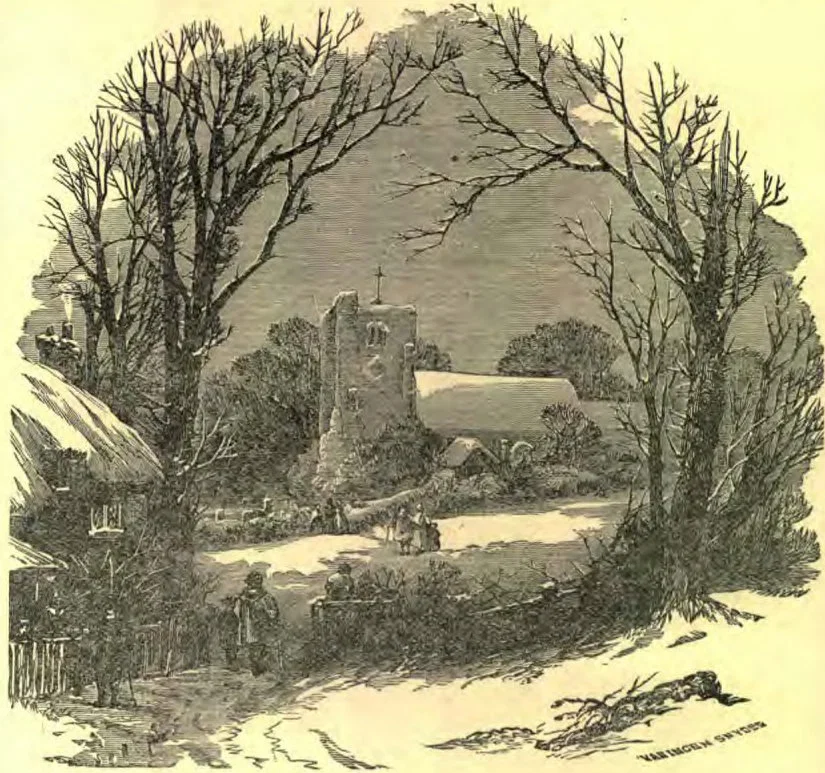
One year ago we joyously welcomed the new year, and while we hoped it might be a bright and happy one, many of us, no doubt, earnestly longed to draw aside the veil which hid the future, and see just what it would bring us of joy or sorrow, of good or ill. But our wishing did no good; we have lived the year hour by hour and day by day, and taken its gifts as they came; and now the old year from which we hoped so much is dead, and we must needs turn from our sorrowing, to welcome a bright new comer.
As we turn over the leaves of our life-book for the past year, we see many blots and stains. Probably few of us have fully carried out the resolutions we made one year ago. Some, as they see how many mistakes they have made, will feel like counting the old year an utter failure, and starting out all anew for the coming year. Others, less hopeful, will be so discouraged at their poor success that they will feel it of no use at all to make efforts for the future. But there is one view of the matter which is often overlooked, yet it may encourage all who have any desire to do better the coming year. Though we may not have made a wise improvement of the past, there may still be lessons which we can learn from its failures. Too often, resolutions to do right are made in a general sort of way, without any definite idea of what we mean to overcome, only that we intend to live a better life on the whole. Now this is all right so far as it goes, only it is not thorough enough.
What would we think of a farmer who should go about his work each morning with no plan in his mind for the day, only to do as much as possible before night-fall? He would be likely to wander about his farm doing whatever he came to first, a little of this and a little of that. Do you think he would be apt to harvest so good a crop as his neighbor, who plans each day's labor the night before? So we should sit down at the beginning of this new year, and having learned our weakest points by recalling the mistakes of the past, resolve that during the new year we will make special effort on these very things, and thus by the help of God make them our strongest points.
Another new year lies before us. It is a copy-book, fresh and clean, in which no line has yet been written; it is a garden-bed wherein no seed has yet been sown; a rough-hewn block of marble, yet untouched by sculptor's hand, from which may yet look forth a fair and beautiful form. We can make of it what we will. We know not how many more such years it may be ours to live; their keeping is in God's hand, ours the duty to improve them. Even had we the assurance of a long life, ere we felt our work half-done, we should see the goal in sight. But we believe that our time is even shorter than this,—that “he that shall come will come, and will not tarry.” So much the more is the need of our making a wise improvement of every passing hour, each fleeting year. Character cannot be formed in a moment; and if we expect to stand approved before the Son of God when he shall “come in the clouds of heaven, and all the holy angels with him,” we must lose no time, but quietly, determinedly, and steadily go about the work of conquering sin. May God help us all for the new year!
“Then greet the dawn of the New Year morn, And welcome its duties too, And not in vain; for heart and brain We all have a work to do. Awake, awake, and your slumbers break, In the chill and frosty dawning,— In the frost and rime of the winter time, To the light of the New Year's morning!” E. B. G.

LITTLE MARY'S FAITH.

A TRUE STORY.
GERTRUDE laid aside the paper in which she had been reading of a family that had been discovered in great destitution, and very near starvation. Looking up to her grandmother, she said, “It must be a terrible thing to have nothing to eat and to fear that one must die of starvation.”
“Indeed it is, my dear child,” replied the grandmother, laying her hand on the golden curls. “It is a terrible thing.”
“But nobody ever knows anything about that here,” said the child.
“Not now,” replied the old lady, “but I remember the time when starvation stared us in the face.”
“Oh, grandmother!” cried Gertrude. “Do tell me about it. I did not suppose anything so dreadful ever happened.”
“Sit down, Gertie,” said the grandmother, “and I will tell you of something that happened here in this very place where we now live, sixty-five years ago. I lived here then, not in this nice house, but in a log cabin. My father came here and bought this farm when it was a wilderness. He built a log house, and made a clearing; and then he married my mother, and brought her here. Year by year he cut away the forest, burned off the brush, dug out the stumps, enlarged his fields, and planted and harvested his crops. I was the oldest of three children, and I think we were a very happy family, though things were rough about us, and we all had to work as hard as we could.
I was ten years old in 1816, a year never to be forgotten by those who lived through it. Though the spring was cold, the farmers put in their seed; but there was never such a summer known. It was so cold that even the grass did not grow, and nothing of all that was planted yielded a harvest except the rye, and that was very poor. But another affliction, still more terrible, fell on us in the autumn. A malignant fever, they called it spotted fever, swept through the country, and thousands died. It came here, and took away my father and little brother, leaving my poor mother alone to provide for me and my little sister Mary, in that year of famine. Our neighbors could not help us, for the famine and pestilence had entered every house. There was then no great West with its grain-fields. There was no easy means of transportation, and food became very high and scarce. Mother sold the cattle, and procured corn enough to keep us through the winter. The spring came, warm and beautiful, but we saw with terror that our corn could not hold out till the early vegetables would give us food. For weeks my mother gave us our daily portion of bread, always reserving the smallest piece herself, and we ate silently, thinking that even this might fail. One morning she scraped the barrel, and baked a little cake which, with tears, she divided among us. Then she fell on her knees, and said, ‘Father in heaven, thou seest our distress. Remember the widow and orphans according to thy word, and send us bread.’ She rose up, and went about her work, but her face was so pale and full of anguish that I ran out into the thicket, which then covered the ground where the orchard now stands, and sat down on a fallen tree to cry. I had not been there long when my sister came and said, ‘Come, Susie, let us get some oven-wood.’
“What do we want of oven-wood?” said I, ‘we have nothing to bake.’
“She looked at me as if astonished, and replied, ‘Mother asked God to give us bread, and I know he will.’”
“‘How do you know?’ I said. You see I was not like my sweet sister, who was laid away to rest so many years ago.
“‘I heard mother read it,’ she replied. ‘He said, “Ask and you shall receive.” I know he will give us bread. Mother must bake it before we can have any dinner. Let us get the oven-wood.’”
“‘We filled our arms with the dry sticks that were lying about, and carried them into the house. Mary said, “Mother, here is the oven-wood.””
“‘Mother looked surprised, and said, “The oven-wood?””
“‘Yes, mother,’ said Mary. ‘You know God will send us meal, and you must have the oven hot. Here is the wood.’”
“‘Mother stooped down, and kissed the face of my little sister, and then, without a word, began to make a fire in the oven. You see, we baked our bread in brick ovens that were heated by a fire inside, in those days. The fire was beginning to burn briskly, when the door-latch was raised by the leather string that hung on the outside, and Uncle John came in. He lived fifteen miles from us, and the roads were so bad that we had not thought he would come to us. It was a glad surprise, and when he had kissed us all, he said, looking at the fire in the oven, “I hope you are comfortable, but I felt so worried about you last night that I could not sleep, so I started early this morning. I have brought you a bag of meal, and some other things.’”
“‘Mother burst into tears, and pointing to the oven, she said, “We have not a spoonful of anything to eat in the house. My little Mary said we must heat the oven, for the Lord would send us meal. Surely, he has sent you, my brother. Blessed be his name!””
“‘Our kind uncle had brought some maple sugar that he had just made, and that day our dinner was a feast never to be forgotten. We had corn-bread and sugar, all we wanted. You do not know what that means to a hungry child that has not been satisfied for weeks. I have heard a child complaining when she had an abundance, because she fancied something different. She does not know how sweet the plainest food would be if she were really hungry.’”
Gertrude blushed; “I think I will never complain any more,” she said. “But do you really believe that the Lord sent your Uncle John to bring you that food?”
“Indeed, I do believe the Lord sent him,” she replied; “and from that day, I have learned to know that he never disappoints any one who trusts him as my little sister did. I have told you this true story, my dear child, hoping it may help you to appreciate the blessings you enjoy, and if trouble ever comes on you, that it may teach you to trust in God.”—The Little Star.

SABBATH CHIMES.

THERE'S music in the morning air, A holy voice and sweet, Far calling to the house of prayer The humblest peasant's feet. From hill and vale and distant moor, Long as the chime is heard, Each cottage sends its tenants poor For God's enriching word.
The warrior from his armed tent, The seaman from his tide, Far as the Sabbath chimes are sent In Christian nations wide,— Thousands and tens of thousands bring Their sorrows to His shrine, And taste the never-failing spring Of Jesus' love divine!
If, at an earthly chime, the tread Of million, million feet Approach where'er the Gospel's read In God's own temple seat, How blessed the sight, from death's dark sleep To see God's saints arise; And countless hosts of angels keep The Sabbath of the skies!
—Charles Swain.

THE FIRST GREAT COMMANDMENT

Written for the Instructor.

THE FIRST GREAT COMMANDMENT.

You will remember, my dear young friends, that we had recently in our Sabbath-school lessons the account of a Jewish lawyer’s asking our Saviour which was the great commandment in the law, and that Jesus replied to him, “Thou shalt love the Lord thy God with all thy heart and with all thy soul and with all thy mind. This is the first and great commandment.”
Now, when you learned this lesson, did you not feel in your heart that you did not and could not love the Lord as much as that? No doubt some of you felt so. Well, we cannot expect to love any one of whom we know almost nothing. The Bible tells us, “Acquaint thyself with Him, and be at peace.”
Were you to hear much about the benevolent deeds of some good man,—of his life spent in making others good and happy; how he had faced death by fire and by water to save the perishing,—would you not begin to feel great respect and interest in such a person? Suppose he were to come into your own neighborhood. You continually hear about his relieving sorrow, and bestowing the best of gifts upon old and young. Every day he sends you choice presents, and you find that in various unseen ways he has planned circumstances for your best good. Do you think it would be very hard to love such a person? You find that everything he does is most excellent and kind, and while he has great wisdom and love, he possesses inexhaustible wealth with which to carry out all his wise and kind plans. As his good acts are repeated to you and to others every day for many years, don’t you think you would learn to prize and to love him “with all your heart and with all your soul and with all your mind”? Truly and thoroughly “acquaint thyself” with God, and you cannot help loving him.
To aid you in learning something of his excellencies, let us from time to time consider some of his works as seen in nature. We will see if we cannot recognize a wise and kind Creator in the formation of plants, animals, etc.; and as we view the handiwork of God, will you not ask him to open your hearts not only to see but to feel his goodness. If you really desire this, he will answer your prayer. M. E. STEWARD.

WHAT WILL THE NEW YEAR BRING?

WILL the New Year bring greetings Blithesome and gay? Long looked for meetings, Joy’s sunny days! Father, we know not! Coming joys show not! Hear our entreatings— Show thou the way!
Will the New Year bring weeping— Sorrows increase? Will the New Year bring sleeping— Quiet release? Father, most tender, We can surrender All to thy keeping— Grant us thy peace!
—Selected.

WINGS SOME DAY.

PASSENGERS on board one of the many ferry boats that are constantly plying between the opposite shores of the Mersey may occasionally see, on warm, bright days, a poor, crippled boy, whose body has grown to almost a man's size, but whose limbs, withered and helpless, are still those of a child. He is a poor pitiable object.
He wheels himself about in a small carriage, similar to those the boys use in play; and while the little boat threads its way among the ships of all nations that are anchored in the river, he adds not a little to the pleasure of the sail by playing, on his concertina, airs that show no mean degree of musical skill.
The few pennies that he always receives, but does not ask for, are never grudgingly bestowed, and are given not more in pay for the music, than for the simple honesty that shines in the boy's blue eyes.
One so helpless, it would seem, could be only a burden to those who loved him—could certainly do nothing toward fulfilling the command, “Bear ye one another's burdens.” Is it so? And is there no service of love for the lame boy, no work for him in the vineyard? The question was answered one day.
“Walter,” said a gentleman, who had often met him, “how is it, when you cannot walk, that your shoes get so worn out?”
A blush came over the boy's pale face; but after hesitating a moment, he said,—
“My mother has younger children, sir; and while she is out washing, I amuse them by creeping about on the floor and playing with them.”
“Poor boy!” said a lady standing near, not loud enough, as she thought, to be overheard, “what a life to lead! what has he in all the future to look forward to?
The tear that started in his eye, and the bright smile that chased it away, showed that he did hear her. As she passed by him to step on shore, he said, in a low voice, but with a smile that went to her heart,—
“I'm looking forward to have wings some day, lady!”
Happy Walter! Poor cripple, and dependent on charity, yet doing, in his measure, the Master's will, and patiently waiting for the future! He shall, by-and-by, “mount up with wings as eagles, shall run and not be weary, shall walk and not faint.”—Selected.

HAPPY EVERY DAY.

SIDNEY SMITH cut the following from a newspaper and preserved it for himself: “When you rise in the morning, form the resolution to make the day a happy one to some fellow-creature. It is easily done,—a left-off garment to the man who needs it, a kind word to the sorrowful, an encouraging expression to the striving,—trifles in themselves light as air,—will do it at least for twenty-four hours. And if you are young, depend upon it, it will tell when you are old; and if you are old, rest assured it will send you gently and happily down the stream of time to eternity. If you send one person, only one, happily through each day, that is three hundred and sixty-five in the course of the year. If you live only forty years after you commence that course of medicine, you have made fourteen thousand six hundred beings happy, at all events, for a time.”

SCENES IN THE LIFE OF CHRIST.

LESSON 102.—JESUS IN THE GARDEN.

“When Jesus had spoken these words, he went forth with his disciples over the brook Kedron, where was a garden, into which he entered, and his disciples.” The brook Kedron is on the east side of Jerusalem, and runs through a deep hollow called the ‘Valley of Jehoshaphat. On the other side of the valley is the Mount of Olives. The garden of Gethsemane must have been on the lower slope of this mountain, near the valley.
Soon after Jesus and his disciples came into this garden, Jesus said to them, “Sit ye here, while I go and pray yonder.” He took with him Peter, and James, and John; and when they had gone away by themselves, Jesus began to be very sad, and said to them, “My soul is exceeding sorrowful, even unto death; tarry ye here and watch with me.” After saying this, he went a little farther on, and falling on his face, prayed most earnestly, saying, “Father, if it be possible, let this cup pass from me; nevertheless, not as I will, but as thou wilt.” While he was praying, there came an angel and strengthened him; for his agony was so great, that he sweat “as it were great drops of blood, falling down to the ground.”
At length, he returned to the three disciples whom he had left a little way behind him, and found them asleep. Then he said to Peter, “What, could ye not watch with me one hour? Watch and pray, that ye enter not into temptation: the spirit indeed is willing; but the flesh is weak.” When he had thus spoken, he went away and prayed the second time, saying, “O my Father, if this cup may not pass away from me, except I drink it, thy will be done.” Then he came again to his disciples, and found them asleep; for their eyes were heavy. Without reproving them, he went away and prayed the third time, speaking the same words as before. On returning to his disciples after this prayer, he said to them, “Sleep on now, and take your rest: behold, the hour is at hand, and the Son of man is betrayed into the hands of sinners.”
It must be remembered that, earlier in the evening, Judas Iscariot, one of the twelve disciples, had gone forth from them to betray his Lord. Having agreed with the chief priests and Pharisees for a certain sum of money, and having received from them a band of men and officers, he came with lanterns and torches and weapons, seeking for Jesus. Since Jesus so often visited this garden with his disciples, Judas knew where he would be likely to find him, and had come directly to the place. He entered the garden with his armed men, just as Jesus was talking to his disciples, and saying, “Rise, let us be going: behold, he is at hand that doth betray me.”
Now Judas had given the officers and soldiers a token, saying, “Whomsoever I shall kiss, that same is he; hold him fast.” So he immediately went up to Jesus, and said, “Hail, Master; and kissed him.” Then Jesus said unto him, “Judas, betrayest thou the Son of Man with a kiss?”
“Jesus therefore, knowing all things that should come upon him, went forth, and said unto them, Whom seek ye? They answered him, Jesus of Nazareth. Jesus said unto them, I am he. And Judas also, which betrayed him, stood with them. As soon then as he had said unto them, I am he, they went backward, and fell to the ground. Then asked he them again, Whom seek ye? And they said, Jesus of Nazareth. Jesus answered, I have told you that I am he: if therefore ye seek me, let these go their way; that the saying might be fulfilled, which he spake, Of them which thou gavest me have I lost none.” Then they came and laid hands on Jesus, and took him. And when his disciples saw what would follow, they said, “Lord, shall we smite with the sword?” “Simon Peter having a sword drew it, and smote the high priest’s servant, and cut off his right ear. The servant’s name was Malchus. Then said Jesus unto Peter, Put up the sword into the sheath: the cup which my Father hath given me, shall I not drink it?” “Thinkest thou that I cannot pray to my Father, and he shall presently give me more than twelve legions of angels? But how then shall the scriptures be fulfilled, that thus it must be?”
Then the officers and soldiers took Jesus and bound him, and led him away to Annas, first, who was father-in-law to Caiaphas the high priest. Then the disciples forsook their Lord and fled.

QUESTIONS.

  1. When Jesus had spoken these words, where did he go with his disciples? John 18 : 1.
  2. What is meant by “these words”? John 17.
  3. Where is the brook Kedron?
  4. What rises on the other side of the Valley of Jehoshaphat?
  5. Where must the garden of Gethsemane have been situated?
  6. What did Jesus say to the disciples soon after they came into the garden? Matt. 26 : 36.
  7. Which of the disciples did he take apart from the rest?
  8. When they had gone away by themselves, how did Jesus begin to appear?
  9. What did he say to them? Verse 38.
  10. After saying this, what did he do?
  11. What did he say in his prayer? Verse 39.
  12. How great was the agony which Jesus suffered Luke 22 : 44.
  13. How was he sustained in this hour of severe trial? Verse 43.
  14. In what condition did he find the disciples when he returned to them?
  15. What did he say to Peter? Matt. 26 : 40, 41.
  16. When he had thus spoken, what did he do? Verse 42.
  17. Describe his second return to his disciples.
  18. Describe his third season of prayer.
  19. What did he say to his disciples when he returned to them the third time? Verse 45.
  20. What had Judas done earlier in the evening?
  21. What agreement did he make with the priests and Pharisees?
  22. With what did they furnish him?
  23. Describe their approach to the garden.
  24. How did Judas know where to find his Lord? John 18 : 2.
  25. What was Jesus doing when this band of armed men entered the garden? Mark 14 : 43.
  26. What token had Judas given the officers and soldiers? Matt. 26 : 48 ; Mark 14 : 44.
  27. When they came into the garden, what did Judas immediately do?
  28. What did Jesus say to him?
  29. How did Jesus conduct himself toward his enemies? John 18 : 4.
  30. What happened to the soldiers as soon as Jesus had said, “I am he”?
  31. When they had recovered, what question did he repeat to them?
  32. What conversation followed?
  33. What scripture was thus fulfilled?
  34. What did they then do to Jesus?
  35. What question did the disciples ask when they saw what was going to take place? Luke 22 : 49.
  36. What rash act did Peter perform? John 18 : 10.
  37. What did Jesus then say to Peter?
  38. What did he say about the help he might receive by merely asking for it?
  1. Why did he not ask for this help?
  2. What insulting treatment did Jesus then suffer at the hands of the officers and soldiers? John 18 : 12.
  3. What did the disciples do? Matt. 26 : 56.

NEW-TESTAMENT HISTORY.

LESSON 116.—REVIEW ON THE BOOK OF GENESIS.

1. Describe the work of creation week.
2. Describe the garden of Eden.
3. Tell how man was driven from the garden.
4. What led to the murder of Abel?
5. How did the Lord expostulate with Cain?
6. Give the genealogy of the antediluvian patriarchs.
7. How many of them were cotemporary with Adam?
8. How long was Methuselah cotemporary with Adam?
9. How long with Noah?
10. By what cause was the flood brought upon the earth?
11. How was Noah otherwise employed while building the ark? 1 Peter 3:18-20; 2 Peter 2:5.
12. What promises were made to Noah after the flood?
13. When the people had again become numerous, how did they show their pride and lack of faith in God?
14. How were they defeated in their project?
15. Describe the family of Abraham, and tell how he was called of the Lord.
16. Why did God choose this man before all others? Gen. 18:19.
17. What promises were made him?
18. How did Abraham and his wife Sarah show their lack of faith in these promises?
19. To what severe test was his faith finally put?
20. What did he believe God was able to do? Heb. 11:17-19.
21. Who will be accounted as being of the seed of Abraham, and heirs of the promises made him? Gal. 3:29.
22. What circumstances led to the banishment of Jacob from his father's house?
23. What trials must have reminded him of the sorrows that he had brought upon others?
24. Give a brief account of his escape from Laban.
25. Describe his anxiety and suffering at the brook Jabbok, and his meeting with Esau.
26. By what train of circumstances was Joseph brought into captivity?
27. How was he afterward brought into the highest place of power next to the king?
28. What special honors were conferred upon him?
29. Describe the first visit of his brethren to Egypt.
30. Describe their second visit.
31. Tell how Jacob and all his family came to dwell in Egypt.
32. Describe the death and burial of Jacob.
33. Describe the last days of Joseph.
34. What did he prophesy just before his death?
35. What oath did he require of his brethren?

GENERAL SUMMARY OF S. S. REPORTS

For Quarter Ending Sept. 30, 1882.
Names of States Names of State Secretaries No. Schools reported Membership Average Attendance No. Members Enrolled Dropped from Record Number Under 14 Number Over 20 Church Members Number of Classes Number of Members in Primary Division Intermediate Division Senior Division Keep Complete Records Number of Instructors Taken Contributions Received Amount Sent State Association Amount State Sent General Association
Alabama C. O. Taylor
California Mrs. G. D. Ballou 26 978 713 165 116 327 428 439 124 267 151 334 20 603 $121.49 $13.10 $5.90
Colorado 10 300 198 26 14 105 155 150 38 105 59 124 10 97 7.17
Dakota Niels C. Kier. 25 636 451 64 36 226 277 291 76 146 120 251 19 333 40.70 3.48 40
Indiana Leanna Morrell 32 720 583 56 43 224 319 348 92 223 209 276 24 259 23.39 3.15 32
Illinois Lizzie S. Campbell 27 956 504 91 75 353 397 381 107 279 170 178 21 339 27.16 5.20 50
Iowa Mrs. P. A. Holly 24 649 421 67 39 268 315 366 70 159 141 256 210 12.57 2.07
Kansas Mrs. Clara A. Gibbs
Kentucky Lulu Osborne 54 1659 1297 219 150 528 919 1339 262 499 351 923 46 1179 167.96 14.35 2.00
Michigan Eva Bell Giles
Missouri D. T. Jones
Maine Mrs. A. K. Hersum 10 234 158 3 15 92 118 100 33 51 38 69 3 93 12.90 1.10 15
Minnesota E. S. Babcock 48 1194 685 114 82 433 582 640 168 322 170 536 40 489 84.07 7.87 82
New York Mrs. N. J. Walsworth 17 318 228 72 207 194 49 50 95 145 14 140 11.60 1.35 86
North Pacific R. D. Benham 6 170 116 33 19 69 74 75 21 72 41 57 6 88 17.40 57 10
Nevada J. W. Allen 2 57 37 14 38 35 6 14 12 24 58
New England Mrs. E. D. Robinson 21 458 307 65 36 125 264 249 62 101 55 282 19 363 51.21 5.92 1.00
Nebraska Mrs. Mary Clausen 19 536 384 48 48 209 212 274 62 162 113 232 16 189 20.66 4.04 39
Ohio Verna Null 25 503 373 28 32 160 265 283 75 138 74 257 23 267 49.73 2.67 92
Pennsylvania Mrs. F. C. Oviatt 13 338 212 22 25 114 186 117 41 153 49 220 12 140 26.60 2.50 25
Tennessee & Va Mattie Moore 5 118 84 14 14 38 52 47 10 16 16 42 2 36 1.75
Texas Mrs. Susie O. King 7 229 158 24 26 98 109 104 90 80 28 89 6 100 12.80 90 11
Vermont Ann E. Smith 11 285 153 20 17 89 123 169 33 59 41 178 8 119 13.46 1.10 11
Wisconsin Mrs. Nellie Taylor 43 857 573 61 58 214 177 214 425 252 159 369 15 327 44.22 3.65 36
Upper Columbia Mrs. M. O. Beck 6 146 91 17 9 56 23 59 12 47 37 32 5 42 2.00 20
Totals 426 11341 7656 1137 854 3809 5240 5874 1866 3197 2129 4903 319 5470 $748.84 $72.63 $14.19
EVA BELL GILES, Secretary General Association.

SARAH'S RESOLVE.

Sarah had been to Sabbath-school, where, I am sorry to tell you, she had not behaved well. Sarah had a new hat, and instead of making a better child of her, it made her vain and foolish. She had whispered and played with Clara Smith, and they had compared their ribbons and dresses. But, worst of all, she had acted in an unkind and cruel manner towards a poor little girl who was not so well dressed as others of the class.
The teacher noticed Sarah's conduct with great sorrow, and tried very hard to get her attention on the lesson. She was explaining this beautiful passage to the class, “So many as received him, to them gave he power to become the sons of God, even to them that believed on his name;” and when she saw Sarah and others so inattentive to her teaching and so disrespectful and disobedient to her, there were tears in her eyes.
There was a hush among the children when they saw this, and when school was out, they went to their homes with a feeling of shame and regret. That afternoon Sarah was very quiet and thoughtful. She did not talk about the dress nor the faults of the other children, as she generally did.
“Mother,” she said, “who pays our Sabbath-school teacher?”
“Nobody pays her,” was the reply.
“Then why does she teach us?” asked the little girl.
“Because she loves you, and wants to do you good, my dear child.”
Sarah sat awhile thinking. “My teacher loves me, and wants to do me good, and yet I plague and vex her till she cries. It is too bad; too mean! If we behaved so in the week-day school, we should be sent home in disgrace, and we might as well be sent home, for we should never learn anything, if we were so careless and inattentive.”
“Mother,” she said, getting her Bible, “I am going to learn my lesson for next Sabbath. If our teacher does not have any other pay for all her trouble, I am going to try to pay her by being a good girl.”
“That is just what you ought to do, my dear,” replied the mother; “and this is a resolve I hope you never will forget. You can make your kind teacher’s work very pleasant to her, if you are attentive and obedient, and she will feel herself well repaid for all her labor if she sees her scholars improving in knowledge and goodness; but if you are careless and disobedient, she may be so grieved and discouraged that she will give up her work.”
Sarah did learn her lesson, and the next Sabbath she not only recited perfectly, but she was quiet and respectful; and she was a happy child as she noticed the glow of pleasure and hope on the face of her teacher. Will not all our little friends try to make their teachers happy?—The Myrtle.

ROTTEN-HEARTED

Down in our cellar is a large box of apples. A week ago we picked them over and took out all the rotten ones. What was our surprise yesterday to find half of those we had supposed sound were rotten also. A little examination of some that were only specked with rot disclosed the secret. The disease which spoiled the apple began at the core. The apple was nearly destroyed before anything on the outside showed the evil at work. They were rotten-hearted.
Every boy and girl who lives where there is an orchard knows all about these rotten-hearted apples. How nice and fair they look on the outside, and we put them away to use when we would like to set our best fruit before some favored friend, or to keep till late in the spring. How it mortifies us when our friend cuts his knife through one of them, remarking, “What a fine looking apple!” and finds only an uneatable portion.
Rotten-hearted apples are disagreeable things, but there is a rotten-heartedness that is very much worse in every respect. Some of these same boys and girls who are ready to cry out against rotten-hearted apples, are cherishing thoughts and cultivating habits which will just as surely ruin their future lives as the little concealed speck is destroying their apples.
The boy who told a lie yesterday to save himself from punishment has a rotten place in his heart, that if not cured before it grows larger, will by-and-by increase till all his character is tainted; and the girl who deceives her mother, is really rotten-hearted. A great many boys and girls who are pleasant and gracious to meet, have some little sin which is hiding away in their hearts. Some day it will come out where people will see it, and then they will be as surprised as we were when we saw our spoiled apples.
The only way for us to keep sound hearts and characters is to be careful of the first little sin. When the apples begin to rot at the core, nothing can cure them; but when we find little sins that we are cherishing, we can break away from them and ask Christ to cure them, and he can make us pure-hearted.—Selected.

ROBERT'S CERTIFICATE.

“Have you a recommendation?”
“Yes, sir.”
Robert had been seeking a situation for almost a week; and now that he had at last met with something that promised success, he was as nervous as a boy can be. His hand went down in his jacket pocket,—a handkerchief, a strap, but no recommendation. He emptied another pocket and another and another without success. “Ah, there it is, I suppose; you have dropped it on the floor,” said the gentleman who was standing by, waiting, as a bit of paper fluttered to the floor.
“No, sir; that's only my pledge,” Robert answered, stooping to pick up the paper.
“Your pledge?”
“Yes, sir. My temperance pledge.”
“May I see it?”
Robert handed it to him, and continued his search for the missing paper, growing more nervous as the search proceeded.
“Never mind, my boy. I don't need any further reference,” said the gentleman, after reading the pledge. “I am willing to trust a boy who puts his name to a promise like this. That boy is his own reference.”—Royal Board.

Those Who Come Nearest Heaven and Fall

NONE sink so far into hell as those that come nearest heaven, because they fall from the greatest height. None will have such a sad parting from Christ as those who went half-way with him, and then left him.

THE NEW YEAR.

Little children, don't you hear Some one knocking at your door? Don't you know the glad New Year Comes to you and me once more,—
Comes with treasures ever new Spread out at our waiting feet? High resolves and purpose true Round our lives to music sweet.
How shall we receive this guest? How improve the gifts he bears? We must join at his behest Earnest deeds with fervent prayers.
Ours to choose the thorns or flowers. If our duty, we but mind Spend aright the priceless hours, Life and beauty then we'll find.
Let us, then, the portals fling, Heaping high the liberal cheer; Let us laugh, and shout, and sing,— Welcome! Welcome, glad New Year!
—Elizabeth A. Davis.
Continue reading: FIRST RIPE FRUIT