Your ShelfYour Projects

Signs of the Times, Vol. 40, No. 7.

The Pursuit of Happiness
Earlier text: The Pursuit of Happiness

Thanksgiving Hymn

By Mrs. M. Sollars
I thank Thee, my Father, for all of Thy care, And breathe forth my praise in this spirit of prayer. I thank Thee for all that is lovely and dear, For things that are helpful, and words of good cheer.
I thank Thee for peace like a river, that flows, Which the world can not give, and never once knows; For Faith, Hope, and Love,—these wonderful three Multiply more and more, until perfect in Thee.
For crosses which keep my eyes turning away Toward the beautiful land of the glorified day. O, make me most truly a sower of seed, Guided ever and on as Thy Spirit may lead.
And this for my service will richly repay,— Thy blessed "Well done" at the close of the day. And the rapturous greeting on yonder bright shore From the saved and redeemed will be joy ever- more.
Ballard, Washington.

Be Cheerful

Drop a word of cheer and kindness— Just a flash and it is gone; But there's half a hundred ripples Circling on and on and on, Bearing hope and joy and comfort On each splashing, dashing wave, Till you would not guess the volume, Of the one kind word you gave. —Selected.

George Washington and Liberty

It has come to be a splendid custom in this country to appropriately commemorate the birthdays of some of the nation's great men. The great value of this sort of thing lies in the fact that it keeps before us the worthy principles for which those men stood while living.
George Washington is fondly spoken of as the "Father of his country," and in saying this about him the mind turns instinctively to the foundation principles for which he stood. The world was still in the throes of a mighty struggle for freedom. Some mighty battles had been fought, and some great victories had been won; but there was still wanting the decisive and positive action that would place liberty where it belonged. The crowning touch and the solidifying work of some great souls must place upon the statue of freedom the eternal truth that "all men are created equal; that they are endowed by their Creator with certain unalienable rights; that among these are life, liberty, and the pursuit of happiness."
It was not contended by Washington and his colaborers that all men were equal in height, or in strength, or in any of their capacities or natural abilities; but they were all equal in their right to their life and their liberty and their pursuit of happiness. Each individual's right to his freedom was inalienable. To "secure" these rights that inherently belong to men, is the purpose of governments. This great principle for which Washington and his fellows stood, should be oft repeated, that we may not lose sight of it. Governments were not for the purpose of granting rights to men; but they were to secure to men the rights that they already possessed — rights that were inalienable.
For centuries the world had been battling the notion that kings were divinely appointed. In fact it had been a cherished notion of the mighty rulers of the great empires of Babylon, of Medo-Persia, of Greece, and of Rome that they were themselves semidivine. Their mightiest rulers possessed great natural abilities and were usually great military leaders. It was asserted that these men were sent to earth from among the gods, and so divine honors were demanded for them. When Caesar died, a great comet — commonly supposed now to be the one known as Halley's — appeared in the heavens. The populace were told with awestruck accents that it was the chariot of the gods that had been sent to convey the soul of Caesar to his appointed place with them.
With such notions in the minds of men it is easy to see how rulers would spread the idea that they must rule, not only in the matters that were between men and men, but they must also rule in matters that were between the individual and God. In other words, the ruler must control the worship of the individual as well as his civil relation to the state.
But Washington and those with him stood for complete emancipation. They stood for absolute freedom, and they were keen enough to see that unless the individual had freedom to worship or not to worship, he did not enjoy full liberty. The following is a letter written by Washington, Aug. 4, 1789, to the Ephrata Community, and voices clearly his sentiments on the subject of religious freedom:
"If I had had the least idea of any difficulty resulting from the Constitution adopted by the convention of which I had the honor to be president when it was formed, so as to endanger the rights of any religious denomination, then I never should have attached my name to that instrument. If I had any idea that the general government was so administered that the liberty of conscience was endangered, I pray you be assured that no man would be more willing than myself to revise and alter that part of it, so as to avoid all religious persecution. You can, without any doubt, remember that I have often expressed as my opinion, that every man who conducts himself as a good citizen is accountable alone to God for his religious faith, and should be protected in worshiping God according to the dictates of his conscience."
("American Communities," by Hinds, p. 21.)
It will be observed that Washington says he had often expressed the conviction that the individual is accountable alone to God for his religious faith. Then this was not a statement that he had dashed off carelessly, but it was one that was so deeply woven into his life that he had frequently repeated it.
Holding such convictions as this on the subject of freedom, Washington did his part in establishing this as the first great nation of the world that did not have a state religion. This was indeed "a new order of things," and a reversal of the sentiments of the past. The great nations of antiquity — Assyria, Egypt, Babylon, and on through to Rome — had each their national deities and their prescribed forms of worshiping the gods. The nation which had the most powerful god, was supposed to be the strongest and most successful. Hence, many of the wars of ancient times were for the express purpose of testing the efficacy and power of their national gods. The ruler was both king and "pontifex maximus." He ruled in the religion of the individual as well as in purely civil affairs. To fail to acknowledge the gods as prescribed by the state, was disloyalty and treason.
The breaking away from all such rubbish of sentiment and government constitutes some of the most interesting incidents of history. The work was the result of the intellectual awakening that sprang from the Reformation which cast off the darkness of the Middle Ages. America was the first and only power to bring the great doctrines of freedom to their logical perfection, and establish a state without having as its heart

The Law of God—Its Perfection and Immutability

1. How many divine lawgivers do we have? "There is one Lawgiver, who is able to save and to destroy." James 4: 12.
2. How stable is the character of this Lawgiver? "For I am the Lord, I change not." Mal. 3: 6. "Every good gift and every perfect gift is from above, and cometh down from the Father of lights, with whom is no variableness, neither shadow of turning." James 1: 17.
3. What characterizes all the works of this great Lawgiver? "He hath showed His people the power of His works, that He may give them the heritage of the heathen. The works of His hands are verity and judgment; all His commandments are sure. They stand fast forever and ever, and are done in truth and uprightness." Ps. 111: 6-8.
4. What is said of the perfection of His law which is spoken of in the foregoing text as His sure commandments that are to "stand fast for ever and ever"? "The law of the Lord is perfect, converting the soul." Ps. 19: 7.
5. What was the teaching of Christ concerning the immutability of the law? "Think not that I am come to destroy the law, or the prophets: I am not come to destroy, but to fulfil. For verily I say unto you, Till heaven and earth pass, one jot or one tittle shall in no wise pass from the law, till all be fulfilled." Matt. 5: 17, 18.
6. In what words does He again speak of the enduring character of God's law? "It is easier for heaven and earth to pass, than one tittle of the law to fail." Luke 16: 17.
7. What admonition is given which shows the divine meaning of fulfilling law? "Bear ye one another's burdens, and so fulfil the law of Christ." Gal. 6: 2. NOTE.—Moral law enjoins moral obligation, and the only way in which it is possible for it to be fulfilled, is for it to be obeyed. And, in the very nature of things, a law that is of universal moral application must be eternal, for fundamental moral principles are absolutely unchangeable. One precept of God's moral law says, "Thou shalt not kill." This is the statement of an everlasting moral obligation. There never has been a time when it was right to kill, and there never can be a time when it will be right to kill. The same may be said concerning the moral precept against stealing, and every one of the other commandments of the Decalogue.
and core a state church. The influence that this new nation exerted, was a mighty uplift to the cause of freedom. And while state religions were retained by the various nations of the Old World, yet there has been a spirit of religious liberty that has suppressed much of the intolerance of former days.
Washington and his times marked an epoch in the history of the world; the principles for which he stood can not be cherished too dearly. T.

Prevailing Through God

WHEN Jacob sought by himself and his mother to work out God's plans for him, it meant years of exile and a vast amount of trouble. But when he came to God, as he did on that night by the river Jabbok, and left it all with Him, how quickly all difficulties passed! (See Genesis 32.) He then truly prevailed over his brother Esau; for God touched the heart of the man who had been seeking revenge for years. And when Jacob—now Israel—met the changed brother the next morning, he saw Esau's face as it were the face of God. Instead of the malignity and revenge of a demon clouding it, the divine light of kindness and forgiveness shone therefrom. How much better to leave our troubles with God!

What the World Needs

THE following is from a secular paper, the Wall Street Journal, but it is a needed sermon for all that:
"What America needs more than railway extension, and Western irrigation, and a low tariff, and a bigger wheat crop, and a merchant marine, and a new navy, is a revival of piety, the kind mother and father used to have—piety that counted it good business to stop for daily family prayer before breakfast, right in the middle of harvest; that quit field work a half hour earlier Thursday night, so as to get the chores done and go to prayer-meeting; that borrowed money to pay the preacher's salary, and prayed fervently in secret for the salvation of the rich man who looked with scorn on such unbusinesslike behavior.
"That's what we need now to clean this country of the filth of graft, and of greed, petty and big; of worship of fine houses and big lands and high office and grand social functions. What is this thing we are worshiping but a vain repetition of what decayed nations fell down and worshiped just before their light went out? Read the history of Rome in decay, and you'll find luxury there that could lay a big dollar over our little doughnut that looks so large to us. Great wealth never made a nation substantial nor honorable. There is nothing on earth that looks good that is so dangerous for a man or a nation to handle as quick, easy, big money. If you do resist its deadly influence the chances are that it will get your son. *It takes greater and finer heroism to dare to be poor in America than to charge an earthworks in Manchuria."
RUINS AT EPHESUS
RUINS AT EPHESUS

Sealed by His Spirit

Chapter 1, Verses 13, 14, A.R.V.

(NOTE.— There is a great, threefold view in the first chapter of Ephesians, in the marvelous sentence beginning with verse 3 and ending with verse 14. We have, first, God's great plan concerning man before sin entered, that plan to be perfected in Christ Jesus, which carries us forward to verse 6; secondly, that plan as worked out under new conditions, but by the same power and love and grace, in the sacrifice of our Lord; and, thirdly, God's active agency in the development of character, verses 13, 14.)

Questioning the Text

1. What did we hear in connection with the revelation of Christ to us?
"In whom ye also, having heard the word of the truth, the gospel of your salvation." Verse 13. Note 1.
2. What did this gospel lead us to do?
"In whom, having also believed." Verse 13. Note 2.
3. In what did that belief result?
"Ye were sealed with the Holy Spirit of promise." Verse 13. Note 3.
4. What is this Spirit of promise?
"Which is an earnest of our inheritance." Verse 14. Note 4.
5. Unto what does it look forward?
"Unto the redemption of God's own possession, unto the praise of His glory." Verse 14. Note 5.

Notes

1. "In whom"— that is, in Christ. "Also trusted," in our Common Version, is not in the original. "Ye also" is the subject of a verb which occurs later,— "are sealed." The participial clause, however, brings in a thought in the beginning of the verse which is worthy of our note,— "having heard the word of the truth;" and "the word of the truth" he declares to be "the gospel of your salvation." That is what the positive side of God's truth always is to His children. We read in Ps. 119:142, "Thy righteousness is an everlasting righteousness, and Thy law is truth." But all God's truth is not comprehended in His law as such. Our text declares that the gospel is truth. All the great positive, living facts of God's Word are truth. The truth differs from fact in this, that facts are mere dead things, statements of things that are so, or have been so; but truth is always living, and God's truth throbs with His life. The psalmist has expressed it: "The sum of Thy Word is truth." It includes both God's law and gospel. The law reveals to us sin; the gospel takes away the sin and writes in our heart the holy law, so that it no longer condemns us, but becomes a witness of the righteousness which we receive through the gospel. Therefore Paul was not ashamed of the gospel of Christ, because that in it was revealed the righteousness of God. Rom. 1:16.
2. "In whom, having also believed."— Bible belief, or living belief, is not mere assent to a proposition. There are thousands who assent to facts; that is not Bible belief. The belief which is effective is that which brings living union with Christ. The apostle has expressed it in another place thus: "With the heart man believeth unto righteousness." It doesn't stop short of appropriating the righteousness which God gives us through Jesus Christ. It doesn't stop short of the righteousness which He wishes developed in our lives. It doesn't stop short of a faithful, dutiful, commandment-keeping heart, a heart that could say with the psalmist, "O how love I Thy law! It is my meditation all the day" (Ps. 119:97); or with the "beloved disciple," "For this is the love of God, that we keep His commandments: and His commandments are not grievous" (1 John 5:3). Such is true Bible belief, of faith.
3. "Ye were sealed with the Holy Spirit of promise."— Belief brings the Spirit of God. In fact, it is the Spirit of God that is the operating power of the Most High, in every process of conversion and regeneration. It is the Spirit of God that broods over the sinner as it did over the waste of darkness in the beginning. Gen. 1:2. It is the Spirit that presses home upon the sinner the fact that he is a sinner, that enables him to see himself as God's law reveals him, which presses upon his heart, as it did that of the apostle Paul, that "the law is spiritual," but he is "carnal, sold under sin." It is the Spirit that brings to his mind the word of the gospel, that there is hope in the Lord Jesus Christ. And finally, it is that Spirit that writes upon his heart God's law, and thus seals the soul as one of the family of God. It gives assurance to the child of God, because it changes his heart from hatred of God's law to the love of God's law. "Old things are passed away; behold, all things are become new." He does not see the law as an avenging sword hung over his head, but as a blessed guide, a monitor; and the Spirit writing that law within his heart brings him the twofold witness of the law without and the law within, revealing to him that he is truly a child of God. And thus the Word gives twofold witness: "The Spirit Himself beareth witness with our spirit, that we are children of God: and if children, then heirs; heirs of God, and joint-heirs with Christ." A seal is that which makes an impression, or stamp. It is used in official documents as a testimony that the one who sealed it has acknowledged and legalized the document to which it is attached. So it is that God stamps those children who yield themselves to Him as His own, placing upon them His own character.
4. "Earnest of our inheritance."— "Earnest" means pledge. It is a not uncommon thing for men to pay earnest or pledge money; for instance, a drover purchases cattle of the farmers and does not pay all the price until the cattle are delivered on a certain day, but he pays a portion of that money to bind the bargain. That is earnest money. It binds both parties: it binds the drover to take the cattle and pay the rest of the money when the farmer delivers them, and it also binds the farmer to hold those cattle for the drover, and prevents his selling them to any one else. It is, in fact, a part payment, sometimes called "caution money." It is a deposit in pledge of full payment. So God gives His Holy Spirit to His children a pledge of the glorious fulfilment at the end.
5. "Unto the redemption of God's own possession."— "The purchased possession," in the Common Version. The word originally means a making to remain over and above, preservation, preservation for one's self, acquisition, a thing acquired, or a possession; used here collectively for the people possessed; as the circumcision for those circumcised (Phil. 3:2), the election for those chosen (Rom. 11:7). "God's own possession," in the Revised Version, is simply an insertion of "God's own" for the sake of clearness. (See Vincent's "Word Studies.") So the "earnest" money of God— the Holy Spirit— is given to His children to assure them that they are God's own possession, and that the inheritance, the glorious eternal life which lies before, will be theirs. Trouble may intervene; God remains the same. Death may cut one off temporarily; but the inheritance waits, and the One who has given the Spirit, and has promised the inheritance, has broken the power of the grave, and will bring all His children home. They are His own possession. He counts them, tho their graves number millions, as still alive, because in His purpose they are alive, and will live when the Lord Jesus shall come the second time.
"Unto the praise of His glory."— Three times we have this expression, almost in the same words: the first in its application to God's plan (verses 3-6)— "to the praise of the glory of His grace;" the second in the working out of that plan despite of sin,— "unto the praise of His glory;" and the third the development of character in each individual by the power of the Spirit,— "unto the praise of His glory." So it all shall be. All the efforts of the enemy of all righteousness to thwart God's plan shall in the end redound to His glory. That is His purpose that He has predestinated. He invites all to fall in with His purpose, the pleasure of His will. He has not predestinated death; He has predestinated character and life. If we will yield to His Word, the character will be ours, the inheritance ours, the consummation of the work of the Spirit ours; and we shall be "to the praise of the glory of His grace" throughout all eternity.

Love One Another

"THIS is My commandment, That ye love one another, as I have loved you." — Jesus

Three Calls

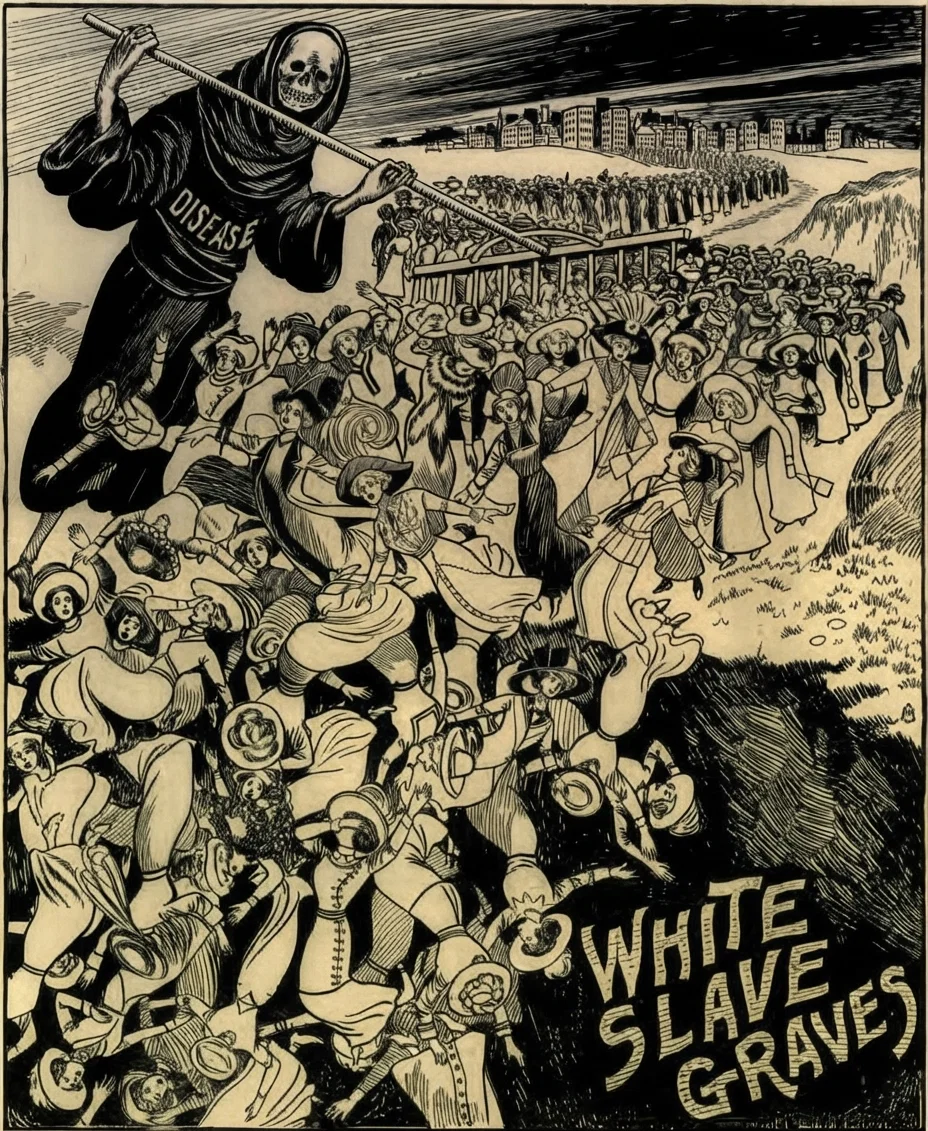
WANTED—fifteen hundred—for San Francisco! Fifteen hundred what?—Slaves. Slaves? O, no! This is the land of liberty. There is no slavery in the United States. "Sweet land of liberty, of thee I sing." The blot of slavery was wiped off the face of our country over fifty years ago.
The man, woman, or child with a colored skin is just as free as the birds to go north, south, east, or west. He may choose his occupation, and build his home where he will, protected by the law of the land. Thank God for this. Yet I repeat, Fifteen hundred slaves are wanted for San Francisco during the Panama Exposition.
Where are they coming from?
David Livingstone gave his life to open up Africa to missions and to legitimate trade, that he might stop the terrible traffic in human flesh.
Henry Stanley took up the work when the martyr dropped at his post, and carried it forward nobly.

Not from Africa

Africa will not furnish the slaves for San Francisco. It is emancipated. No slave-trader approaches its once unhappy shore. To what distant and unfortunate harbor is the black slave-ship, manned with hard, brutal-faced men, going?
Is it a far-away isle of the sea that is to contribute unpaid and unwilling workers for shops and kitchens of the great city? The idea is preposterous.
But listen, fathers and mothers who are living in the past of thirty or forty years ago. God has said the wickedness of the last days shall be as it was in Noah’s time, when He had to destroy the evil works of man by water. Attention, while I tell you of these slave-traders.

The Agents of These Slave-Hunters

They “that go down into the pit.” Ps. 28:1. Thousands and thousands a year.
Not fierce, bloodthirsty men with the traces of long years of vice written on every feature, but pleasant, companionable young men with suave manners and oily tongues. Women, yes, women, "wolves in sheep’s clothing," are also in this work, well-dressed, refined and pleasing in appearance.
No trace of the criminal is to be seen. Yet if our prison doors could be opened wide, thieves and murderers let go free, and these slave catchers take their places, our land would be the gainer thereby, our homes would be safer.
Again you ask, with incredulous stare and uninterested ear, of that call for fifteen hundred slaves.
We are used to sensational stories and all sorts of advertisements.
But, fathers and mothers, awake before it is too late, and save your daughters.

White Skins Rather than Black

It is white skins, and not black, you are called to save—not far-away unfortunates, but your own flesh and blood, that is crying out for protection from not the old-time slavery of kitchen and field—that were paradise compared with this most damnable slavery, which only man possessed by the spirits of demons could have invented.
It is the child of our neighbor, my daughter and yours, that, unconscious of danger, in innocence and girlish joy and freedom, call for the protection of loyal American citizens, and do not get it. They need more watchful care than it is possible for the fathers and mothers, unaided by the laws of the land, to give them.
Fifteen hundred girls—sweet, pure, and innocent—wanted for slaves in houses of prostitution in 1915 for the Panama Exposition! That’s plain English.
This poisonous plant has been nourished and screened till it has more roots than a banian-tree; and it is time that it be exposed in all its heinousness to the world, and that even "polite ears" hear the shrieks of despair and screams for help that go up unheeded from our daughters.
It is time—yes, high time—that the parents claim the protection of every patriotic—yea, of every decent—citizen of the United States for our young girls.
In years past, this illicit and infamous trade in souls was, to an extent, carried on by willing persons.
Ofttimes, unfortunates who had listened to flattery and false promises of marriage, and yielded themselves into the hands of unprincipled men, finding their fair names gone, and failing to get the needful help and encouragement to start again to win the respect and regard of their friends, have entered a career of shame, sometimes to be rescued later, but usually to live the short life of the prostitute, and be buried with the unknown.
Again, others, who for lack of proper home training were too lazy to work for an honest living, have flaunted their Babylonian garments, the price of their shame, in the face of the world, selling themselves, body and soul, for a mess of pottage. But they were free to go or stay, as they chose.

Kidnaped and Forever Lost

Times have changed. Evil men and seducers have "waxed worse and worse."
Instead of being led into evil, it is slavery. The ingenuity of man—and woman—is taxed to find new and effective ways of kidnapping girls, not to put in shop, kitchen, or field, to toil for their master, but to be imprisoned in a dark underground cell—called a bull pen—to be a helpless and hopeless victim of debased man.
Don’t read this with a blush, in a whisper; but shout it as a warning in the ears of the nation—that white slaves pure and virtuous—loved daughters, helpless orphans—are hopelessly lost, tortured in underground bull pens, where mourning fathers and mothers can never find them. According to the report of the Federal Commission, over five hundred girls disappeared in a few months in the one state of California, and could not be traced.
An honest girl, working to support her family, answered a call for a stenographer to a distant city. She was kindly(?) met at the boat, and conveyed, in a closed hack, to a house of ill fame. By some accident, she saw where she was, before the door was closed on her, and made a dash for liberty.
She found her way, crying, back to the boat, was kindly cared for, and returned to her home. But what of the other girls upon whom those barred doors have closed before they have had a glimpse of the character of the house they have entered?

Stolen in the Open Street

An automobile stopped on a street, picked up a girl, and disappeared.
Could it be followed?—No. The girl was not missed for hours. The only trace of her was that a little boy had seen her lifted into the machine and taken out of sight rapidly.
Advertisements with great inducements lure girls to the cities, where they are met at the trains, and carried away in closed hacks to their prisons.
Women well-dressed, but who have long ago bidden adieu to all womanly virtue, go out looking for girls for restaurants, hotels, stores, millinery or dressmaking shops, offering good wages, and their easy victims are never heard from again. After waiting weeks for the promised letter, the father goes to the great city in search of his little girl.

The Father Searches in Vain

Does he find her? He has no clue. He returns saddened and discouraged, and all wonder why she does not write to the loved ones waiting at home. It is a shadow in the home, but none realize the blackness of the tragedy enacted.
Our boys do not escape. What is their part? There must be patrons for this nefarious business. Young men must be seduced, and become the frequenters and supporters of this evil. Their hearts must be hardened and blackened, that they shall have no mercy for their pitiful victims.
But this is not all. Young men desire easy work and good pay, and this hellish business of capturing young girls for the White Slave Trade furnishes it. It would be almost an endless task to write of those things of which we know. But of the thousands that never come to the light of day—what of them?
Surely they cry to God and man for help. Good men have made law after law for the abatement of the "Red Light" evil, but it increases in extent and in enormity.
Words can not describe the tragedy of it. I would that words could be traced in living fire that would arouse California and sister states to take measures to wipe out and to exterminate this monster evil.
Iowa—thanks be to God—has solved the problem.
Will California arise en masse and call for her legislature to pass the "Red Light Injunction and Abatement Bill" during its present session?
Will men and women circulate petitions demanding the enactment of that law? Hold meetings, and educate the people regarding this danger, and work to have a clean state and save our sons and daughters?

Catholic Activity and Advancement

The English Catholic Directory for 1913 shows that there are 12,968,814 Catholics in the British Empire, and that they made a gain during 1912 of 392,589. The intense missionary activity of the Catholic Church in these times is very remarkable. Their successes are quite as remarkable. These successes are largely due in many parts of the world to the fact that much that is called Protestantism has ceased to be such in fact. As the resistance to the Papacy becomes less and less pronounced by the leading Protestant churches, the increase of that church will become more and more rapid, until it will finally seem to be sweeping everything before it. Nothing but unbounded faith in the God of the Bible will enable the individual to stand up against the aggressions of the papal power as they will be seen in the world in the very near future.
The world is rapidly ripening for great international concentration. The spirit of war, and of social unrest, and such kindred topics, are being made the occasion for many a speech and newspaper article demanding an international tribunal with an international head. All the traditions of the past in regard to the right of the Papacy to stand as the head of this world, will be set in active operation again. All the arrogance of the past will be seen, and men will be led to think that the only thing that can save the world from the destructions of war and anarchy will be the papal arm of power and absolute supremacy. There will be a furious rush on the part of the whole world to place the pope at the head of things. Just how long it will take to bring this about, or the manner of its coming, it is not in our province to discuss. But we are sure that it will be brought about very, very soon. The logic of events and of happenings in the world would seem to demand it; and then the prophets of the Bible have made it clear beyond a peradventure that the papal power is to be fully restored and given world-wide dominion. Do not cast this off as something unworthy of consideration, but think and watch.

The Outrage of Tipping

The tipping system is an outrage on the general public, and it is made more so by the people who have more money than they know what to do with. For instance, it is said that waiters and head waiters were astonished when, in a hotel in Philadelphia, one of them got a $25.00 fee; but a woman from New York says that it is not uncommon for a head waiter to get $100, and $25.00 and $50.00 tips are so frequent as to be almost common. Those who give the tips, of course, are bound to get good service, while others who are equally worthy, pay for their food in the same way, but are deprived of the service which belongs to them. It ought to be prohibited by law.

The Pope’s Lawsuit Over a Legacy

In a despatch to the New York “World” from Rome, January 4, mention is made of a lawsuit of exceptional interest, tried before a civil court, the plaintiff of which was Pope Pius X. Cardinal Tripepi, a very wealthy prelate who died in 1906, left his entire fortune to “the pope,” without specifying him by name, and under the Italian law the pope could not inherit such a legacy without paying the legacy duty; but the relatives of the late cardinal contend that the legacy was not left to the pope as a private individual, but as the head of the Holy See. The Roman court took the same view, and declared that in order to benefit by the will, the Holy See must demand the legal authorization of the government within a period of six months, or otherwise all right to the legacy will lapse; and the law officers of the Vatican have given notice of an appeal against this decision. One of the weak things in the appeal, however, is that the Vatican lawyers contend that under the law of guarantees of 1870 full civil rights were bestowed on the pope as a personality, and therefore he does not require any special authorization; but the Vatican has never recognized the law of guarantees officially, and therefore the pope can not invoke it. And according to the Italian government, the Vatican is an intruder in the “eternal city,” and by recognizing the legality of Rome tribunals, the Vatican must also recognize the sovereignty of Victor Emmanuel, in whose name the law is administered. It looks like a pretty big tie-up all around. It may be set down, however, for an altogether probable fact, that there will be some way of getting around the attitude which the pope has assumed during the last forty-three years.

Strangling a Republic

The Awful Incubus of Debt

The following from the New York “World” touches a great and vital question which burdens the world at the present time:
“A new republic seems to stand about as much chance in the world as a poor and honest competitor of one of our American trusts. China discovers that the price of liberty and recognition is not eternal vigilance but a foreign loan. It has refused the loan thus far, and a London newspaper, speaking for the money power, says that the time has arrived to ‘terminate the present amateur régime,’ and that ‘disruptive foreign action’ is imminent.
“It was something like ‘disruptive foreign action’ that Standard Oil resorted to when it wanted to put a rival out of business. There was a time in our history when we objected seriously to the coercion and enslavement of new and struggling republics. Now, thanks to the dollar diplomacy, . . . we are leading spirits in the enterprise.”
Great national debts press heavily upon the peoples of the nation. Increasing taxes and tariffs bring increasing cost of living, increased cost of living increases discontent; and constant, persistent discontent breeds revolution, lawlessness, anarchy. Wars have been fermented to involve nations in debt for the benefit of the “invisible empire,” the money power. The debt incubus is a curse everywhere, in nation, in state, in municipality, in corporations, in individual life. It is yielding to the temptation in credit offered, that has enabled men to pile up vast sums of money, as has been done in these days. It is to this that the prophecy in James 5 points,—to the riches that are “heaped together” in the last days; and it is the greed behind the heaping up of these riches which will recoil at last upon the money power, and bring them the woes predicted by the prophet. We plead with our readers everywhere to shun debt as they would shun the plague.
Continue reading: High Society