Your ShelfYour Projects

Signs of the Times, Vol. 22, No. 41.

Assurance in Trial
Earlier text: Assurance in Trial

A LESSON FROM GOD'S CHOSEN PEOPLE.

BY MRS. E. G. WHITE.
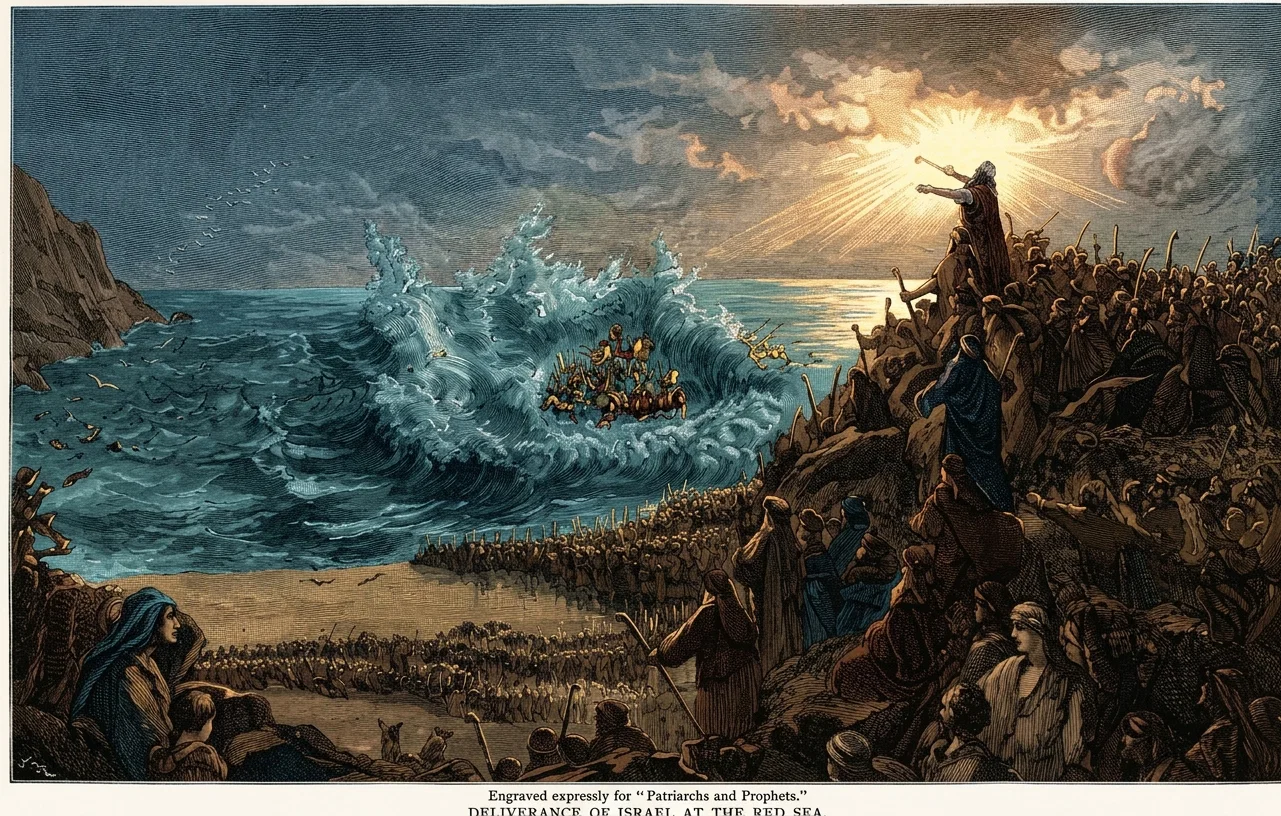
God chose Israel as his people, and gave them gracious promises on condition of obedience. He faithfully performed his promises. He demonstrated his power in their deliverance from Egypt; he opened them a path in the Red Sea, and caused them to pass safely over, while their enemies, in pursuit, perished beneath its waters. He subdued the nations before them; he guided them with his counsel; he enriched them with his bounties.
The mixed multitude who came up from Egypt with Israel were continually departing from God, and making themselves a snare to his people. God saw that Israel would, in their future intercourse with other nations, be in danger of following their example; and he provided for this. His law was to be read and explained to them as a nation; his dealings toward them were to be repeated; the warnings, the reproofs and counsels which the Lord gave them, were to be presented before them. His law was proclaimed from Mount Sinai, that all might hear. Point by point, it was explained to meet the minds of both the learned and the ignorant. It was necessary that all should become intelligent in regard to its binding claims, especially in reference to the Sabbath and intermarriage with other nations. It was proclaimed, that the children of Israel, whose ideas had become confused in their association with idolaters in Egypt, might be reminded of its terms, and understand what constitutes the true worship of Jehovah.
Engraved expressly for "Patriarchs and Prophets." DELIVERANCE OF ISRAEL AT THE RED SEA.
The Sabbath and marriage were instituted in Eden, when man was upright and innocent before God. They were established when the foundations of the earth were laid, when the morning stars sang together and all the sons of God shouted for joy. But men broke the rules which God gave respecting these institutions, and brought upon themselves condemnation and woe.
When the law was spoken, the Lord, the Creator of heaven and earth, stood by the side of his Son, enshrouded in the fire and the smoke on the mount. It was not here that the law was first given; but it was proclaimed, that the children of Israel, whose ideas had become confused in their association with idolaters in Egypt, might be reminded of its terms, and understand what constitutes the true worship of Jehovah.
What condescension was this, that the infinite God should stand side by side with his Son, while the law, which is the foundation of his government, was given. He would give his people an intelligent knowledge of his will. He does not command men to obey him when they do not understand what he requires. Here was displayed his wisdom, power, and love. Man was so dear to the Creator of the world that he spoke to him through Jesus Christ, with an audible voice, giving unmistakable evidence of his presence and majesty.
But we have on this occasion an illustration of the power of temptation upon men. Satan with his host stood in the midst of the armies of Israel to exercise his influence over the people of God's choice. He tempted them, and many yielded to his suggestions; for while the holy law of God was still sounding in their ears; while the glory of God was displayed before their eyes, and God himself was guiding, guarding and sustaining them by his miraculous power, the children of Israel rebelled against him, and imitated the practices they had witnessed in Egypt. They turned their faces again toward Egypt; they turned from God to idols.
The Lord in his dealings with Israel always magnified his law before them, and promised them rich blessings if they would keep his precepts. And when he permitted their enemies to triumph over them, it was because he wanted them to draw nigh unto him, and find in him their friend and refuge. Their ingratitude and rebellion; their contempt of God's restrictions and reproofs; their persecution of those whom God sent to save them from utter degradation and ruin; their relapse into idolatry; their hardness and impenitence of heart in following a course Satan chose for them, rather than the way of obedience in the path of truth and true holiness, brought misery upon themselves. When in the grief and bitterness of bondage, suffering under the cruel tyranny of the heathen, they called upon God, he heard and pitied them. He did not cast them off. He did not permit them to become extinct. He wrought for them again and again, as only God could, that he might bring them into a closer relationship with himself.
This has been the history of God's people since the fall of Adam. The church has turned from his law, and followed fables of human devising. Frequently his requirements have been made a matter of convenience, and men have obeyed or disobeyed, as business or inclination dictated. But the Lord means what he says, and men can not set aside his law with impunity. He will not pass over any transgression more lightly now than he did in the day when he pronounced judgment against Adam.
Our Saviour, too, raised his voice in protest against those who regard the divine commandment with carelessness or indifference. He declared: "Whosoever therefore shall break one of these least commandments, and shall teach men so, he shall be called the least in the kingdom of heaven: but whosoever shall do and teach them, the same shall be called great in the kingdom of heaven."
And yet God, instead of destroying a sinful race, has given his Son to die for them. His own people have been changeable and rebellious, and he has been obliged to withhold great blessings which he longed to bestow, because they chose their own way instead of his. But he is ever ready to hear their prayers, pardon their transgressions, and do them good, when, with contrition of soul, they return to him. The Saviour also is full of compassion and love. He never spurns the truly penitent, however great their guilt. But he requires strict obedience. "Sin is the transgression of the law;" and Jesus died, the just for the unjust, the innocent for the guilty, that the honor of God's law might be preserved, and yet man be restored to the favor of heaven. By repentance, faith, and obedience, he may perfect a righteous character, and, through the merits of Christ, become a son of God.

"CHRISTIAN ENDEAVOR" AND "CHRISTIAN CITIZENSHIP."

BY W. N. GLENN.
CHRISTIAN endeavor is a most worthy endeavor, and the masses of the Y. P. S. C. E. are no doubt honestly and earnestly endeavoring to do Christian work. But unwittingly they are being manipulated by their elders and leaders for political purposes. A National Reform journal says:—
The seventh plank in our Christian Endeavor is, 'Our Christian Citizenship Plank—Our Country for Christ, but as a society no entangling political alliances.'
Inasmuch as the Christian citizenship movement, which the Christian Endeavor Society has espoused, is an effort to promote the cause of Christ through political reform, to establish his supremacy by means of politics, those who indorse the movement must logically enter the arena of politics. If entitled to vote, they must, to be consistent, vote and work with the party that upholds the principles sustained by the movement. To say that as a society there must be "no entangling political alliances," while the society urges its members into the entangling alliances of politics, is simply evading the issue. The apostle Paul thus speaks of the individual Christian's course: "No man that warreth entangleth himself with the affairs of this life; that he may please Him who hath chosen him to be a soldier."
The man who, more than any other individual, has given impetus to the present phase of the Christian citizenship cause is Professor Herron. He sounded the note in person from ocean to ocean, and received a marked indorsement by the ministry, especially by those who are actively engaged as guides of the Christian Endeavor Society. Professor Herron's slogan is a Christian state; his cure-all for existing evils throughout the land is a union of church and state. Of all the champions of the National Reform combination's schemes Professor Herron is the only one who has openly advocated them under a plea for church and state union. Others persistently refuse to admit that such a union will be the result of their clamor for the enforcement of religious dogma by civil law. In this respect Professor Herron is the most consistent of them all.
A very significant sign of the times is the fact that notwithstanding Professor Herron's open declaration for church and state union, he has had far more extended indorsement and patronage from the ministry than any other National Reformer. When in California, he received an almost unanimous support from the ministry, and institutes were formed for the purpose of further inculcating his theories of Christian citizenship. And, as before stated, those who took a leading part in the advocacy of these principles are recognized leaders of the Christian Endeavor Society.
In order that the reader may understand the drift of Professor Herron's Christian citizenship, or church and state teaching, we append an extract from one of his addresses delivered in this city:—
There has never been a great revolution seeming to break with the past and make a new order of things, from which there has not been a terrible recoil sooner or later. The revolutionized nation or civilization has had to return and connect itself with the good substance of the evil forms from which it revoluted. The religious revolution which we call the Reformation was a universal loss as well as a gain, and we are already beginning to see that the future power of the church is involved in our finding some way to reunite our broken fragments, our discordant sects of Christendom, in the true and universal church. The Catholic Church was, after all, a spiritual splendor, and was historic with institutions which Protestantism can not afford to have done away.
In this utterance we have a key-note of the now popular Christian citizenship cry. And if the masses of the Christian Endeavor Society, especially the younger ones whose aim is purely Christian work, would pause a moment and reflect, they might realize to some extent the advantage that is being taken of their organization to make it practically an auxiliary of a most unholy purpose. One of the first things that the National Reform combination seeks to establish throughout the nation is compulsory Sunday observance, which is Rome's insignia of the authority of the church.
As the logical fruits of the Sunday law are imprisonment, handcuffs, chain-gangs, etc., as already manifested in nine states of the Union, we naturally suppose that one of the "institutions which Protestantism can not afford to have done away" would be something akin to the Inquisition. At least, it is plainly to be seen that this Christian citizenship work, to whose support the Christian Endeavor Society is being inveigled by designing manipulators, is a work for making the people of this nation speak as an image to the papal theory of church and state union. While the rank and file of the Endeavorers, especially the sisters, aim only to do legitimate Christian work, the machinery of the organization and the voting element is fast being turned by its leaders into an engine of religious tyranny.
Such is the power of the deceptions in vogue in these last days. The work of the great adversary is to deceive the whole world (Rev. 12:9), and such is his power to deceive, through false prophets, that he would deceive, if possible, the very elect (Matt. 24:24). Just before the coming of the Lord he will work "with all power and signs and lying wonders, and with all deceivableness of unrighteousness in them that perish; because they received not the love of the truth, that they might be saved." 2 Thess. 2:9, 10. The "love of the truth" includes the love of God's law; for David says, "Thy law is the truth." The reason, then, that the Christian Endeavor workers are susceptible to the Christian citizenship delusion is because they ignore a part of God's law. They accept Rome's interpretation of it, namely, that the first day of the week is the Sabbath; an interpretation which has also been accepted by the Congress of the United States. Thus they reject that important part of the law which is God's special sign between him and his people; and they accept that substitute which Rome holds up as her special sign of authority. Having rejected one point of the law, they are consequently "guilty of all." James 2:10. Hence we see how easily the Christian Endeavor masses may be unwittingly led to accept Professor Herron's theory of returning to that condition from which the Reformation was a revolution. How naturally, too, will they step into the political road as the most feasible way of return, for the entire machinery of Rome's "spiritual splendor" never was anything but a great religio-political structure.

PAUL A BOND-SLAVE OF CHRIST.

IN speaking of Paul and his relation to Christ, Dr. P. J. Mahaffy says:—
He was proud to call himself the slave of Jesus Christ, and he used the right metaphor when he called the unrighteous the slaves of sin. Among the many cognate metaphors which he uses, I shall conclude by noting one which has for me peculiar interest. At the close of his Epistle to the Galatians, he says: "Henceforth let no man trouble me; for I bear in my body the marks of the Lord Jesus." What does this mean? Let me translate it for the reader more literally. "For I bear in my body the brand of my Master, Jesus Christ." The word Kyrios, rightly translated Lord, means in this connection the legal owner or possessor; the husband of the wife, the father of the child, the patron of his freedman. Stigmata is the common word for the brand or mark with which masters marked slaves, especially those who had run away, or showed signs of so doing.
But there is much more to be said than this. In the very numerous records (on fragments of marble) of manumissions found at Delphi, and at other shrines in Greece, we have learned the legal process by which a slave gained his own liberty. He did not bring the master his earnings, and obtain his freedom with his receipt for the money. He went to the temple of the god, and there paid in his money to the priests. They then, with this money, bought the slave from his master, on the part of the god. He became for the rest of his life a slave of the god, which meant, practically, freedom subject to certain periodical religious duties. If at any future time his master or his master's heirs reclaimed him, he had the record of the transaction in the temple.
But on one point these documents are silent. If he traveled, if he were far from home, and was seized as a runaway slave, what security could he have? I believe St. Paul gives us the solution. When liberated at the temple, the priest, if he desired it, branded him with the stigmata of his new master, Apollo. Now St. Paul's words acquire a new and striking application. He had been the slave of sin, but he had been purchased by Christ, and his new liberty consisted in his being the slave of Christ. Henceforth, he says, let no man attempt to reclaim me; I have been marked on my body with the brand of my new Master, Jesus Christ. Probably he referred to the many scars he bore of his persecutions. They were evidence, not only that he had served his new Master, but had endured suffering in that service.

Love Hides Its Good Deeds

Put a seal upon your lips and forget what you have done. After you have been kind, after love has stolen forth into the world and done its beautiful work, go back into the shade again, and say nothing about it. Love hides even from itself.—Professor Drummond.

Beholding Christ, Not Self

ONE earnest gaze upon Christ is worth a thousand scrutinies of self. The man who beholds the cross, and, beholding it, weeps, can not be really blind nor perilously self-ignorant.

THE PRICE OF TRUTH.

BY C. A. WATKINS.
"Buy the truth, and sell it not." Prov. 23:23. While the value of truth is past estimate, and no special or limited price is placed upon it, it is within the reach of all; and, tho persons vary, it comes to all the same; and, while all may have it, the price must be paid.
God says, "Buy the truth." But will we pay the price? Heaven itself has purchased truth at infinite price: The Lord has given the life of his Only Begotten, the greatest sacrifice ever offered. The most costly price ever paid was paid to ransom a sin-cursed world, and bring it back to truth. So Christ bought us for truth and in truth. We are to buy the truth. But what is truth? "Thy word is truth." John 17:17. God's word is his power to save. Rom. 1:17.
But the price must be paid. If we choose God's word, we reject the fables of men. The two have no fellowship with each other. The Saviour prayed, "Sanctify them through thy truth; thy word is truth." John 17:17. He prayed not that his disciples should be taken out of the world, but that they should be kept from the evil, or sanctified, set apart through faith, from the ways and evils of the world. This he said should be done by the truth. This is giving up all to God; and this is the cost of truth to every one who receives it.
The martyrs of old loved God unto death. They chose the truth, and were separated from the world, hated by all men, called heretics and demons, torn from friends and loved ones, burned at the stake, and tortured in the most cruel manner; yet they praised the Lord amidst the flames, and died rejoicing in the truth, so dearly purchased for them, and for which they gave all. Yet they esteemed not the cost to them too high. They gladly paid the price, and took the truth.
To-day God says to us, "Buy the truth." It is the same eternal truth he offers us that he offered the martyrs of old, pointing out present danger, present duty, and present promise. But what is its cost to us? Those who receive it must pay the price,—all they have and are. God's word is not changed. In no way has it compromised with the fallen world. The doctrines of men it still condemns; for they will not approve of its searching truths, but seek to destroy its very influence in the world. Those who buy it will be despised of men, rejected by loved ones, scorned by the world; yea, they may be imprisoned, set to work in chain-gangs with the low and base, or suffer even death. But is the price too much?—It is to some. Many refuse to lose a few paltry dollars in business, for the truth's sake. The pleadings of a worldly companion, or the scorns of a would-be Christian teacher, turn many to darkness and ruin. The price they think too much.
Many love the truth at sight, they purchase it forthwith, but never consider the cost. When trials come, friends desert, loved ones condemn, false teachers scorn them, and the law convicts them; they sell the truth for naught. They find the price too high. Its sanctifying influence they can not endure. Satan sifts them as wheat. To pay the price means to give all, but it also means peace, joy unspeakable, and eternal life through Christ; but to choose the world and the easy, man-made theories of salvation means misery, trouble, and death. There is offered to the world a cheap salvation, an easy way to glory, man-made doctrines, and pleasing fables, smooth ways, popular notions, to purchase which makes friends, fame, and honor. Pride, selfishness, and all its sins are uncondemned. Well hath the word declared, "There is a way that seemeth right unto a man; but the end thereof are the ways of death." Prov. 16:25.
The truth will cost a price; it is none too great; for with it comes eternal salvation. While "all that will live godly in Christ Jesus shall suffer persecution" (2 Tim. 3:12), yet "if we suffer, we shall also reign with him" (chap. 2:12). It pays to buy the truth, let it cost what it may. The tribulation here is not to be compared with the glory that shall be revealed.
Norfolk, Va.

Washington in the Wilderness

CHAPTERS IN UNITED STATES HISTORY.* NO. 2.

Washington in the Wilderness.

Claims to the Valley of Ohio—Governor Dinwiddie's Messenger—The Incursions of the French—Washington's Journey—Crossing the Alleghanies—The Half King—At Venango—Fort Le Bœuf—Canoeing on French Creek—A Treacherous Guide—The Perils of the Frozen Alleghany—The End of the Enterprise.
IN the middle of the last century the people of the American colonies were seriously alarmed. They claimed as theirs the vast region which lay west of the Alleghanies. The French of Canada laid claim to the same broad domain, and were preparing to move southward from the great lakes, to take possession of it. A war for the ownership of the valley of the Ohio was about to take place, a fierce struggle that would have momentous consequence on the history of this country. We have already described the first event caused by this coming conflict, the convention at Albany. We have now to describe a second, in which another of the heroes of American independence took the leading part.
On Oct. 31, 1753, there left the small town of Williamsburg, Va., a young man, yet unknown to fame, but who was destined to make the world ring with the story of his deeds. The name of this man was George Washington. He was then just twenty-one years of age. Yet five years before he had begun active life as a surveyor on the Virginia frontier, and, at nineteen, had entered upon his military life as major of militia. Since then the death of his brother had left him manager of a large plantation. He was, therefore, already an active man of business, had gained some military experience, and was familiar with adventure in the wilds. This was the man whom Governor Dinwiddie, of Virginia, chose to undertake a journey of peril and hardship, and one whose successful prosecution would need not only the boldness and endurance of youth, but the judgment and discretion of older years.
There was war in the air. The French were encroaching on lands which the English held to belong to them. The English were encroaching on lands which the French held to belong to them. Both were encroaching on lands which the Indians held to belong to them. It was a triangular claim, in which the Indians had the right, but their rivals had the power, and the old possessors of the land were much in the position of the corn between the upper and nether millstones.
The English were pushing slowly westward toward the Alleghanies, and had sent their pioneers into the valley of the Ohio. The French, having advantage of extensive water ways, had gone much farther inland. They had made their way in canoes from the St. Lawrence River to Lake Champlain, which they claimed as theirs. They had traversed the great lakes, had reached the Mississippi, and sailed down it to its mouth. It was all theirs, with all affluents. The vast valley of the Ohio particularly was theirs, and they were now in motion to take possession of this imperial domain, in despite of rival claims.
They were not forced to make long journeys overland. It was only fifteen miles from Lake Erie to the head waters of French Creek. The waters of this stream ran into the Alleghany River, which, in its turn, became one of the makers of the Ohio. An easy waterway thus lay before the French, and they were about to avail themselves of it. They had already built a fort near the source of French Creek. They had a station at Venango, where this creek joined the Alleghany. A party of French and Indians had made their way to where Pittsburg now stands, and seized there some English traders, whom they took as prisoners to Presque Isle, in Lake Erie. They were becoming decidedly aggressive, and if the English proposed to sustain their claim it was time for them to act.
Tidings of these movements came to the ears of Governor Dinwiddie. He wrote a letter to the French commander at Venango, asking what he was doing there, and bidding him to leave that region, which, by God's will and his Britannic majesty's right, belonged to the great British Empire. And, in seeking a messenger to convey this epistle, he settled on Major George Washington as the man for the occasion. He had been in the wilderness; he had met the Indians in their villages; he had military training; he had courage, dignity, and judgment. He was the one man needed.
Washington, young, hardy, and vigorous, fond of adventure, and full of youthful ardor, willingly undertook the mission, and, leaving Williamsburg with the governor's letter, made his way through the thin settlements of Virginia to Fredericksburg, where he was joined by two companions, one of them an Indian interpreter, the other a Dutchman, named Van Braam, from whom he had already taken fencing lessons, and whom he now wanted as French interpreter. He reached the outpost of civilization at the mouth of the Will's Creek, on the Potomac. Here was the cabin of Christopher Gist, a man already famous as an explorer, and who was to act as guide and aid to the party. Four other men also joined them here, two being Indian traders, and here packhorses for the journey were procured.
Four hundred miles of wilderness still lay before them, much of it over rugged mountains, with no paths but the narrow and difficult Indian trails, much of it through dense forests, crossed by swollen streams, chilled by the coming winter, while on the mountain summits snow already lay ankle deep. Day by day the party of adventurers pressed onward, now wading through the soft, new-fallen snow, now crossing the streams on rafts of logs, or fording them where practicable, now passing for miles under the dense shadows of the primeval forest. They at length reached the Monongahela at the mouth of Turtle Creek, and, following this stream, in ten days after leaving Gist's cabin, came to its junction with the Alleghany, where the two streams meet to form the Ohio, that great stream, the command of which was to be fought for in nine years of war.
This locality seemed to the eyes of Washington a most favorable one for a fort, since, from its command of three important streams, it would give control of the whole surrounding region. It was the point where Fort Duquesne soon afterward rose, and the site of the subsequent great city of Pittsburg, but as yet an unbroken wilderness. Twenty miles further brought them to the Indian village of Logstown. Here Washington found an Oneida chief, to whom he gave a string of wampum and some tobacco, and asked him to send for the Seneca chief, Tanacharison (half king), then absent at the hunt.
This important personage among the dusky warriors had been to the French forts, had asked them what they meant by presuming to take possession of Indian soil, and had threatened them with the wrath of the tribes if they persisted.
"Fathers, both you and the English are white," he said; "we live in a country between; therefore, the land belongs to neither one nor the other. The Great Being above allowed it to be a place of residence for us; so, fathers, I desire you to withdraw, as I have done our brothers, the English; for I will keep you at arm's length. Our brothers, the English, have heard this, and I now come to tell it to you; for I am not afraid to discharge you off this land."
The Half King was seeking to drive the wolves from the sheep-cote. The French commandant heard him with contempt, and bluntly answered: "I tell you, down the river I will go."
Tanacharison, having heard the French ultimatum, now wished to know what the English had in view. Washington, whose first purpose was to win the aid of the Indians, told him that he had come to warn the French off the land of his Indian friends. He wanted a guide to lead him to the French fort, still 120 miles away, and when there he would do what his red friend had done, bid the intruders to depart.
This statement pleased the chiefs. The English were evidently their friends. In the simplicity of their hearts they imagined the newcomers had no purpose but that of peaceful trade. Days of waiting and ceremony passed, and then the Half King and two other chiefs, with a hunter of noted skill, volunteered to go with the party as guides. The journey was resumed. The route now to be traversed was one of terrible hardship. Winter was upon the travelers; rain and snow fell almost unceasingly; the forest proved nearly impassable. At their first camp, a place called by the unpleasantly suggestive name of Mutheringtown, some corn and dried beef were procured. Further on, the Indian hunter shot two bucks. At length, after days of severe toil, the French outposts of Venango were reached. It was an Indian village, with the French flag flying over one of the huts.
Captain Joncaire, the French commandant, treated Washington with civility, and invited him to supper, where, over their cups, the officers boasted the French would soon possess the Ohio. The English could raise two men to their one, they admitted, but they were too slow to keep the French from doing what they pleased. While this was going on Joncaire was cunningly trying to rob Washington of his Indian companions, whom he plied with drink and promises. In this treacherous scheme he failed. The chiefs were not to be cajoled, and were ready to set out with the party when the journey was resumed.
The route now lay up French Creek to Fort Le Bœuf, on the head waters of that stream. It was a wearisome journey, but at length, on December 12, the fort was reached. The journey thither had consumed forty-two days.
Here Washington found himself in different company from that of the half-breed Joncaire. The fort was commanded by M. de St. Pierre, an elderly man of true French courtesy, cordial in tone, hospitable in manner, ready to do everything for his visitor except to comply with Governor Dinwiddie's peremptory order. It was his duty to obey orders, not to discuss treaties. He was there under instructions, and there meant to stay.
This and more to the same effect he wrote to the governor of Virginia, and gave in a sealed letter to the governor's envoy. It was courteous in tone, but it clearly indicated that the French had no thought of withdrawing.
Meanwhile Washington was making excellent use of his eyes. The fort, in all its details, was photographed upon his brain. He counted the boats in the river. There were fifty bark canoes, and a large number of pine-tree dugouts, while many more were constructing. The French evidently intended to move in force in the spring.
The letter delivered and the reply received, Washington was prepared to return. But snow was now falling fast, and it was decided to return to Venango by canoe, while sending the horses through the forests with the baggage. St. Pierre continued civil. He supplied liquors and provisions for the canoe. But like Joncaire, he sought secretly to win over the Indians. The Half King was well worth winning, and each of the chiefs was offered the present of a gun if he would stay until the next day. Liquor was also given. The Indians stayed, but Washington stayed too. Finally, finding that the chiefs were not to be won over to the French cause, St. Pierre ceased his efforts, and the party got away, Washington and Gist in one canoe, the chiefs in another.
It was no easy passage, even with the advantage of a water route. The channel was obstructed by rocks and floating logs; here were shallows; there, dangerous currents. Ice, too, gave them trouble, and they were obliged to carry the canoe for some distance overland. They met on their way, French canoes, some of which, to the satisfaction of the English, met with disaster. One, loaded with lead and powder, went to the bottom. Another, with its load of wine and brandy, was upset, and its contents floated away. The adventurers at length reached Venango, where they found that the horses had arrived, but in a pitiable condition from the hardships of their route.
The worst of the journey still lay before them. The winter frost had rendered the river impassable. It was necessary to proceed on foot, through the cold and snow, which now lay deep. Washington, with his guide and interpreter, clad in Indian walking costume, set out, followed by the horses with their drivers. But the horses were so exhausted that, after three days' journey, Washington and Gist decided to push on alone, leaving the remainder to follow as they could. Equipped with gun and knapsack, the explorers pushed forward, leaving the path they had followed and taking a straight trail through the woods, which would bring them to the Alleghany some miles above the Ohio.
Their journey proved to be one of peril and adventure. They met an Indian who volunteered to guide them, and who relieved the weary explorer of the weight of his knapsack. He wished to carry his gun also, which Washington refused to yield, whereupon the savage grew surly. He told them that there were Ottawa Indians in the forest, who might take their scalps if they lay out at night, and pressed them to push on to his cabin, where they would be safe. But after a few miles the Indian fell behind, and, on looking back, they saw that he was aiming at them with his gun. The next moment the piece was discharged.
Fortunately neither were hurt, and Gist quickly aimed at the Indian, who was loading again behind the shelter of a large oak.
"Do not shoot," said Washington, "we had best not kill the man, but must take care of him."
They permitted him to finish loading, asking if he was lost and had fired as a signal; but they gave him no further opportunity to play the traitor, and, after a few miles farther, bade him make a fire at a little run, saying that they would sleep there, advising him to go on to his cabin. The savage, glad enough to escape with a whole skin, set out at once, and the explorers, after going some distance, again made a fire, took a short rest, and then took once more to the route and traveled all night.
The next night they reached the Alleghany. They had hoped to cross on the ice, but at a short distance from the shore the ice was broken and sweeping rapidly past. They slept on the snow-covered banks that night, and the next morning found the same prospect before them. Nothing remained but to build a raft, and as they had but a single hatchet between them, the work took all day long. As they did not care to spend the second night at that dreary spot, they launched the raft at sunset and pushed from shore. The journey proved full of peril. Before the stream was half crossed they were so jammed in the floating ice that it seemed as if the raft could not hold together. The current was sweeping it onward, and Washington tried to stop it by the aid of his setting pole. It was a dangerous effort. The ice was driven against the pole so violently as to sweep him from his feet and hurl him into the water ten feet deep. He would inevitably have perished had he not fallen near enough to grasp the raft, on which with some difficulty he scrambled.
It proved impossible to reach either shore, and they were forced to spring from the raft to an island, past which the current was sweeping them. Here they were forced to stay without shelter during the remainder of that bleak night, the cold momentarily increasing. Mr. Gist had his hands and feet frozen, a disaster which Washington, tho soaking wet from his fall, escaped. When morning dawned they were glad to perceive that the portion of the stream which they had still to cross had frozen during the night. They hastened to the shore, and the same day reached the trading post, which had been just formed near the locality where Braddock was soon to meet his celebrated defeat.
This ended their perils. When Gist had recovered they set out again, crossed the Alleghanies, and in due time reached the cabin of the guide at Will's Creek. From there Washington proceeded alone, and reached Williamsburg on January 16, after an absence of eleven weeks, during which he had journeyed through the wintry wilderness for 1,100 miles.
What followed a few words will tell. Dinwiddie, finding that the French disdained his command, sent a party to the Ohio forks to build a fort. But this was hardly begun before it was captured by the French, who completed it and gave it the name of Fort Duquesne. Washington, advancing with a supporting force, met a French detachment in the woods, which he attacked and defeated. It was the opening contest in what was to be a long and destructive war.

Doubt and the Power of Prayer

To DOUBT the reality of God hearing prayer is like the raw apprentice doubting the power of the chisel to evolve beauty out of the marble, or the young musician doubting the effectiveness of the harp because his unskilled fingers can not woo sweet harmonies from its strings. The laws of prayer are as reliable as the multiplication table, or the principle of gravitation. "Ye ask, and receive not, because ye ask amiss."
—Spurgeon.

Virtue Must Be Exercised

I CAN not praise a fugitive and cloistered virtue unexercised, that never sallies out and meets her adversary, but thinks of the race where that immortal garland is to be run for not without dust and heat.—Milton.

Prayer When Indisposed

We never need prayer so much as when we are indisposed for it.—R. Cameron.
Continue reading: THE PROGRESS OF THE SUNDAY CAUSE