The Youth’s Instructor, Vol. 33, No. 35.

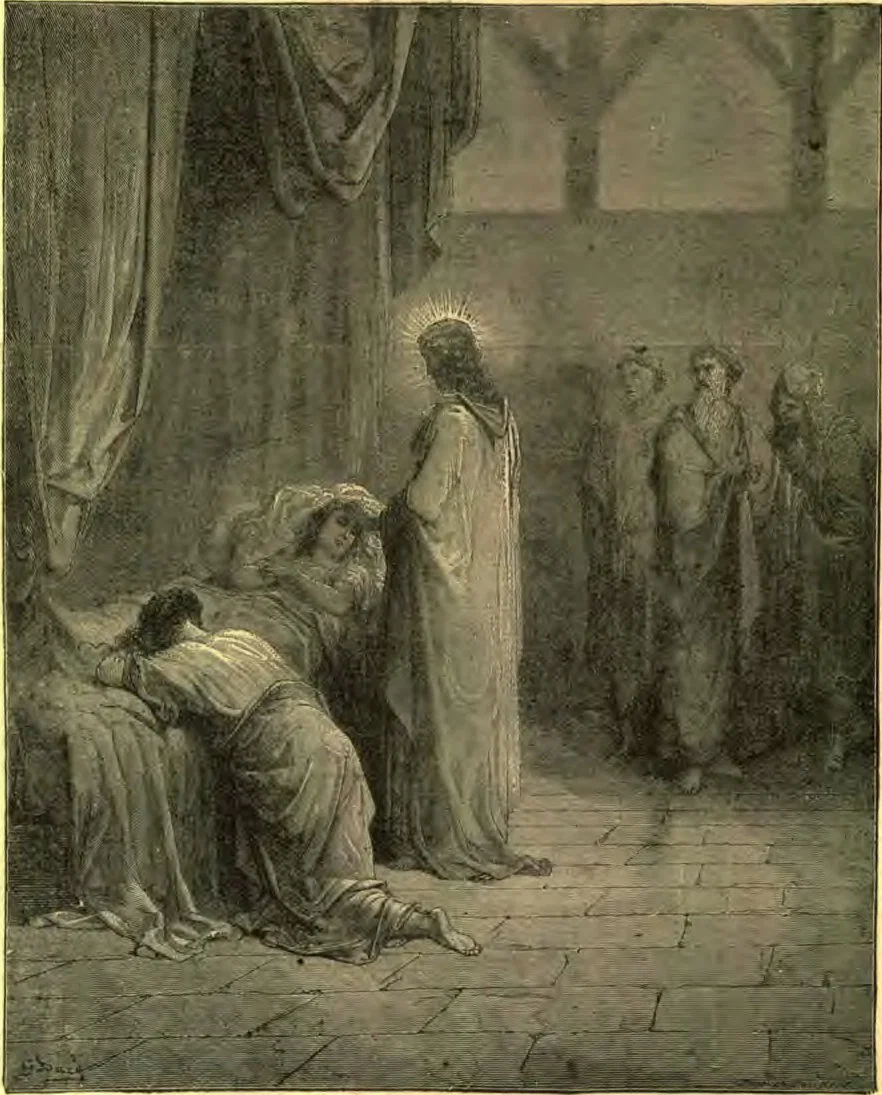
THE HEALING OF THE DAUGHTER OF JAIRUS
Earlier text: THE HEALING OF THE DAUGHTER OF JAIRUS

WATER-MELON SEEDS.

A CHINESE gentleman is proud of his long and pointed nails, which sometimes are allowed to grow an inch beyond the tip of the finger. They mark him as belonging to the aristocracy, who do no manual labor. Besides this distinguishing mark, he finds them useful in cracking water-melon seeds and extracting their atom of kernel.
The Chinese consider the seeds a delicacy. No feast is without them. Every wayside inn places them before its customers. If two friends meet to drink tea, the cup is accompanied by a plate of melon-seeds. A child spends his one “cash” for them, as our boys do their penny for candy.—Selected.

ALL HAVE WORK TO DO.

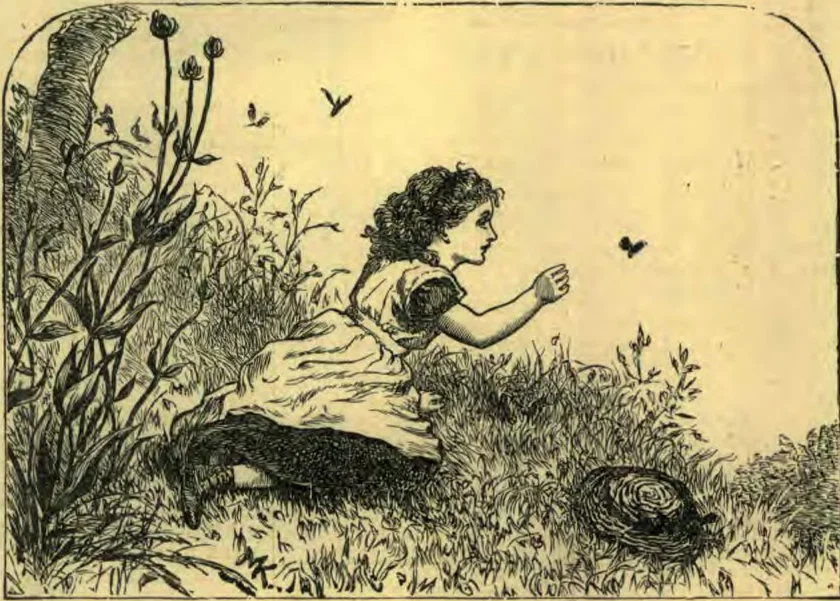
A CHILD went wandering through a wood Upon a summer day; She hoped to meet some pretty thing To join her in her play.
A honey-bee went humming by— “Stay, little bee!” she cried, “Oh, do come back and play with me.” And thus the bee replied:—
“I cannot stay, I must away, And gather in my store; For winter drear will soon be here, When I can work no more.”
She heard a pigeon cooing soft, High on a bough above— “Come down, and play awhile with me, My pretty, gentle dove.”
“I cannot come and play with thee, For I must guard my nest, And keep my sleeping children warm Beneath my downy breast.”
She saw a squirrel gathering nuts Upon a tall beech tree— “I love to see you bound and leap; Come down, and play with me.”
“I dare not play, I must away, And quickly homeward hie; Were I to stay, my little ones For want of food must die.”
She came unto a stream that leaped Between its rocky banks— “Stay, pretty stream, and play with me, And you shall have my thanks.”
The stream replied, while in the pool A moment it stood still, “I cannot play, I must away, And drive the village mill.”
The child sat down upon a stone, And hung her little head; She wept awhile, and sobbed awhile, Then to herself she said, “The stream, the squirrel, dove, and bee Have all got work to do; I must not play my hours away— I must be busy too.”

A FAMOUS TEA PARTY.

THIS tea party was held years and years ago. The people did not meet in somebody’s glowing parlors, and have a pleasant chat while sipping their tea; no, indeed! they had far different business to attend to. This party was held out doors, and at night. Strangest of all, nobody even had a drink of the tea. This was how it happened.
It was in the early days of our country’s history, before America had a president or a congress, but was ruled by governors appointed by the king of England. The governor did not always rule to please the people, and England often asked them to do things which they thought were unjust. The English needed a great deal of money to support the king and all his courtiers, besides carrying on the business of their government, and they thought they could get part of the money out of the Americans, or colonists, as they were then called.
There were a good many things, in those early days, that the colonists could not get or could not make in this country, such as tea, glass, paper, etc.; so they had to send over to England or some other place for them. The English thought that since these things could not be had in America, the colonists would be willing to pay a small sum of money on every pound of these articles, aside from their real cost, for the sake of having them to use. This extra money, called a tax, was to help support England.
The Americans, however, thought differently. They said England had no right to tax the colonists without asking them anything about it, and that they would not pay it. Then England took away the tax on everything but tea. They thought the colonists liked that so well that they would not mind paying a little for the sake of having tea to drink. But here they were very much mistaken. They were not so well acquainted with the Americans as they would have been if a wide ocean had not separated the two people. The colonists could very well pay the tax so far as money was concerned; for it was small. But if they paid tax on one thing, no doubt they would soon have to pay it on many other things. So they thought it wise not to begin to pay taxes at all; and they told the English so.
This made business very bad for England. The East India Tea Company, which had a great deal to do with the English government, found it hard work to sell all their tea; and soon they had seventeen million pounds packed in their English store-houses. The government lent them a million and a half dollars, so that they could go on and do business. Then they set their wits to work to find a way for disposing of the tea. They arranged the prices, so that, even with the tax, tea would be cheaper in America than it was in England. Then the East India tea ships sailed for America with their cargoes. But I think they could not have understood the colonists very well, or they would never have done such a foolish thing.
When the Americans heard of it, they were very much excited. They called town meetings, and talked the matter over and over again. Indeed they would not drink taxed tea, they said; and the ladies all agreed with them. They cheerfully gathered clover blossoms and sage, which they made into fragrant drinks, and really I don’t believe they suffered any from the change.
At last the prow of one tea ship foamed through the waters, and anchored in the harbor at Boston. A town meeting was at once called, and the people said the tea should be sent back in the same ship, and that no tax would be paid on it. Then they set watch over it, so that it could not be landed unless the people knew about it.
Pretty soon two more tea ships arrived. They were anchored beside the others, and the same watch set over them. The excitement was increasing. In just twenty days from the time the first ship entered the harbor, the collector would try to gather up the taxes. On the twentieth day another meeting was held in the old South Church in Boston. It was no longer a town meeting. The people came from all the country around. They would not allow the tea to be landed, and the governor placed war ships in the bay so that they could not sail back to London. Almost all day the people waited, hoping the governor would let the ships go back. Toward evening a messenger came, saying that the governor would not grant a pass. “Then,” said Samuel Adams, “we can do nothing to save the country.” In the silence that followed, some one cried out, “Hurrah for Griffin’s wharf!”
Out of the church poured the people, down the crooked streets of Boston, and toward the sea. Twenty young men, dressed as Indians, and with their faces covered with paint, so that no one could tell who they were, went on board the vessels, and in sight of all the people standing on the shore, tore open the chests, and poured the tea out into the silent waters of the harbor. Then, in the cold starlight of that winter night, the people quietly returned to their homes, and the famous tea party was over.
But the matter did not end here. There was sore trouble with England, and finally a long and bitter war, that gave to you and me the freedom we now enjoy in our own glorious America. W. E. L.

“I AM.”

LITTLE Pierre began to go to school when he was six years old. He learned so rapidly that it was only a few weeks before his teacher said to him one morning, during the opening exercises:—
“Come here, Pierre, and look on my Bible. I think you can read this verse; it looks as if it were meant for you.”
The little fellow did his best, and hesitatingly read, “I am that bread of life.”
Miss Sheldon told him those were the words of Jesus; that just as we need bread to keep us from being hungry and starving to death, so we need Christ’s love and favor to keep us from suffering.
The school was reading in the Gospel of John, and each morning after that, when they came to a similar verse, Miss Sheldon would say, “There is another verse for Pierre,” until the child had not only read, but learned seven verses or parts of verses, which the scholars called “Pierre’s I Am’s.”
There was another little verse in the tenth chapter, which he liked very much; and the teacher said, “because that was so grand, they would always recite it last.”
Are there not many little boys and girls who would be glad to know those “I Am’s” that fell from the lips of Jesus when he was upon earth? Who will learn them and repeat them every day?
“I am that bread of life.”
“I am the light of the world.”
“I am the door of the sheep.”
“I am the good shepherd.”
“I am the resurrection and the life.”
“I am the way, the truth, and the life.”
“I am the true vine.”
“I and my Father are one.”—Selected.

A GENTLEMAN.

LET no boy think he is to be made a gentleman by the clothes he wears, the horse he rides, the stick he carries, the dog that trots after him, the house he lives in, or the money he spends. Not one of all these things do it; and yet every boy may be a gentleman. He may wear an old hat, cheap clothes, live in a poor house, and spend but little money. But how? By being true, manly, and honorable; by keeping himself neat and respectable; by being civil and courteous; by respecting himself and respecting others; and finally, and above all, by fearing God.

Letter Budget.

Bertha Reed writes from Fulton Co., Ind. She says: “I have many times wanted to write a letter for the Budget. I am nine years old. I go to Sabbath-school. My teacher gave me two cards. I went to camp-meeting last fall. I have one sister, eighteen years old, but I have no brother.”
Your letter is quite welcome, Bertha. Will you not write again sometime?
Here is a letter from Montgomery Co., Kan., written by Mary Davis. She says: “I am twelve years old to-day. I keep the Sabbath with my parents, sisters, and brothers. We take the INSTRUCTOR, and like it much. We got four subscribers for it last spring. I wrote a letter to the Budget last summer, but it did not get printed. I hope you will print this. I want to gain a home in the new earth.”
Thanks for your subscribers. Did you receive a prize?
Emerson Van Dorn sends a printed letter from Woodbury Co., Iowa. He says: “As I have not seen a letter from this place, I thought I would write one. I am trying to be a good boy, so that I may meet Jesus when he comes to gather his children home. I want to hear it said to me, ‘Well done!’ Pray for me. I am twelve years old.”
To have the “well done” said to us, will require that we shall do well. Are you trying in Jesus’ strength to do his will?
Olive B. Hagle, a little girl eight years old, writes from Shiawassee Co., Mich. She says: “We came to this place this summer from Memphis, Mich. There are no other Sabbath-keepers here. My uncle lives with us. He has begun to keep the Sabbath since we came here. We go six miles to meeting and Sabbath-school every Sabbath. I learn my lessons in Book No. 3. I have a nice teacher. I love to read the INSTRUCTOR. I am trying to be a good girl. I send my love to all.”
We admire your perseverance in going so far to school, Olive. Such an effort will bring its own reward.
Eddie L. Smith, of Walworth Co., Wis., writes: “Dear INSTRUCTOR, as I have taken you about two months, I thought I would write you a letter. I have one brother. I am nine years old. Ours is the only family of Sabbath-keepers about here, so we do not have any Sabbath-school. We have Bible Readings every Sabbath. I like to read. I have read the ‘Story of the Bible’ once, and partly through again. I get up early in the morning to read. A friend came out here last week to see me, and we had fine times playing in the sand and gathering apples. I like to help my father in the harvest-field, but he thinks I can help him more when I grow larger. I would like to see the INSTRUCTOR family together, to see how large a family it would make. I hope to meet them all in heaven.”
The INSTRUCTOR family to-day stands more than thirteen thousand. A larger family than you have ever yet seen! But, oh, solemn thought! how many of them will be gathered in the harvest home? Only he that hath a pure heart!

You have reached the end of this edition.

The Youth’s Instructor · Sep 16, 1885