The Youth’s Instructor, Vol. 30, No. 36.

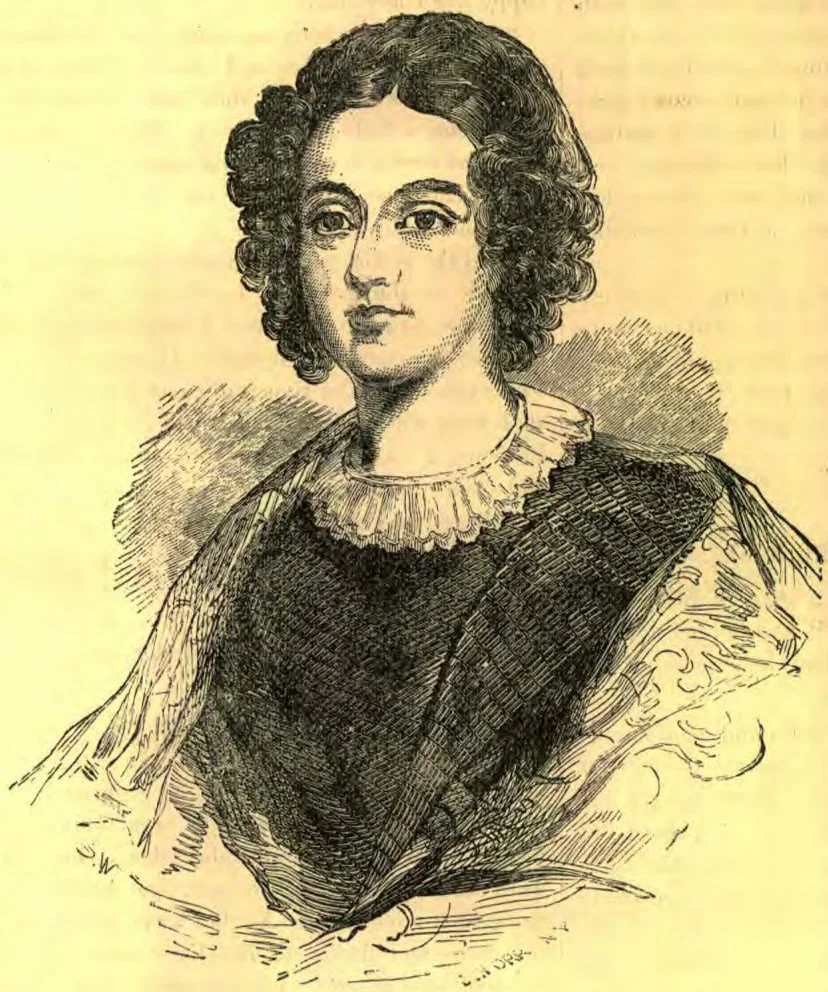
MRS. ANN H. JUDSON

The Youth’s Instructor

Sep 6, 1882

S. D. A. Publishing Association · Battle Creek, Mich. · Sep 6, 1882

MRS. ANN H. JUDSON.

ANN HAZELTINE, the daughter of John and Rebecca Hazeltine, was born in the town of Bradford, Massachusetts, in the year 1789. The house where she lived with her parents is still standing, and is visited with much interest as the home of the first American lady who went to Asia as a missionary.
When a mere child, Ann was remarkable for her strong, clear, and active mind, as well as her tender conscience; and, as she grew older, she did not disappoint the hopes of her parents and friends. When quite young, she became an earnest Christian. She was a very studious girl, and obtained a thorough education at the academy in her native town. In 1810 she became acquainted with Mr. Adoniram Judson, a young graduate of Brown University, where he had taken the honors of his class. He had been for two years teaching a private school in Plymouth, but shortly before this he had become much interested in the subject of religion, which led him to enter as a student at the Andover theological seminary, where, to use his own words, he went, “not as a professor of religion, and a candidate for the ministry, but as a person deeply in earnest to learn the truth.” He was naturally of a very zealous disposition, and when he became satisfied of the truth, was anxious to carry it at once to those who sat in darkness. It was while attending a meeting held in Bradford, in the interest of foreign missions, that he first met Miss. Hazeltine.
This chance meeting led to an intimate acquaintance, and two years later, in February, 1812, Ann Hazeltine sailed for India as the wife of Mr. Judson, who was leaving his native land to become a missionary to the heathen. Naturally possessed of remarkable strength of character, trained from early childhood to habits of earnest piety, and thoroughly imbued with the spirit of love and sacrifice, she was a worthy and fitting helpmeet for the zealous young missionary, so glad and anxious to relinquish all his bright earthly prospects, if he might but labor in the cause of his Master.
Owing to various hindrances, it was more than a year before they reached their destination, Rangoon, in Burmah. They set themselves with great earnestness to the learning of the Burmese language, and that without grammar, dictionary, or help of teachers who could speak English. Mrs. Judson learned to speak the language sooner than her husband, but his habits of thorough and deep study enabled him to become a master of the language, and in a few years he was able to translate and publish the New Testament and parts of the Old, as well as other books to help in their work with the natives.
Mrs. Judson was not naturally strong, and her earnest and untiring work in the mission, together with the unhealthfulness of the climate, proved too hard for her. In 1821 her continued ill health made it seem best for her to return to the United States for a short time, but her husband remained at his post of duty. While in this country, her efforts among the people for the help of the mission were very constant, and probably resulted in more real good than would her personal labor in Burmah during the same time. It was then that she wrote and published the little book called, “History of the Burman Mission,” which aroused so great an interest in the subject. In the spring of 1823, though still far from enjoying good health, she returned to her field of labor, accompanied by another missionary and his wife, who were sent there to help in the work.
Things now began to look very hopeful for the mission; but soon after Mrs. Judson’s return, the English made war on Burmah, and all foreigners in the country were arrested by the Burmese authorities. Mr. Judson was taken from his dwelling, thrown into the “death prison” with all the other white foreigners. His wife, being a woman, was allowed to remain in her own house, but was guarded by ten ruffianly men. After a little time, by sending presents to the governor of the town, she obtained her liberty, and was finally allowed to visit her husband in prison. She found him and his fellow-prisoners suffering terribly, not only from their chains, but from filth and suffocation. The brave woman now went to the king and officers of the government to plead for at least some mercy in the treatment of the prisoners, and they were finally placed in an open shed in the prison inclosure. There, though far from comfortable, their condition was much improved, especially after Mrs. Judson had obtained permission to bring them mats and food.
She now began to work for their release by appealing to the queen, who had treated her kindly before their misfortunes. But the queen now refused to interfere; the hardships of the prisoners were increased, and the good woman was refused the privilege of visiting them. The officers of the government were sent to the house to take their money and all other things of value. She succeeded in hiding some silver money, but the rest they took, with almost everything else in the house, though she finally persuaded them to leave the books, medicines, and wearing apparel.
Again the faithful wife, by her presents and her earnest pleadings, obtained partial relief for the prisoners; and almost every day for a year and a half she walked two miles to the prison, usually with her baby in his arms, besides carrying food, and in other ways administering to the comfort of the sufferers. But for her efforts they must all have perished. One morning she found them all gone, and the jailer refused to tell her where. She learned in some way that they had been removed to another place, six miles distant, where they were to be executed. She was told that it was of no use to follow, but taking her child in her arms, she started out. She found the prisoners chained two and two, and almost dead from fatigue and suffering, but she in some way obtained relief for them. Mrs. Judson is said to have been a beautiful woman, and to have had great power of language, and even those cruel heathen officers found it hard to resist her appeals.
At last the Burman king was forced to ask conditions of peace of the English, and the prisoners were released and allowed to seek protection with the British army. Here they were very kindly treated, and everything possible done for their comfort and the restoration of their health. The sufferings endured by both Mr. Judson and his faithful wife during the time of his imprisonment are too terrible to relate. They were reduced almost literally to skin and bone, and a few weeks more of such treatment must have ended their lives. If possible, Mrs. Judson’s mental suffering had been more severe than that of her husband, and, too, her physical strength was less than his. Soon after their release, though they were then comfortably situated, and things beginning to look favorable for their work, the devoted woman sickened and died, and was buried there in a strange land. She was worn out by her sufferings and privations; and when relief had once come to her beloved husband, her life went out like a flickering candle.
But “she being dead yet speaketh.” Through all time the story of her noble life will serve to make others strong to do their duty; and in that glad day which is so soon to dawn, she, with all who have suffered for Christ’s sake, will receive a rich and abundant reward.
E. B.

THOU BLITHE LITTLE BEE.

Thou blithe little bee, in thy trappings of velvet, Thus flying alone yet so briskly away, What mission of pleasure or duty has called thee To wander abroad on this sunshiny day?
“I fly and I seek through the meadows and gardens Where flowers are blooming,” the cheerful bee said; “I must hasten to gather the stores of sweet pollen To make into wax, into honey, and bread.”
“The hours pass quickly, fair weather is fleeting, The summer is gracious, but never will wait; The hive must be filled ere the blossoms have withered; If autumn o’ertakes us, ’t will then be too late.”
Ah, true is thy teaching, thou brave, busy worker; No summer will tarry for thee or for me. I also must hasten my harvest to gather; And away on thy mission, thou blithe little bee.
—M. E. N. Hathaway

THE PREACHING ROSE.

One lovely June morning a troop of little folks surrounded Jim, the gardener, and begged so much for one of his moss-roses that he was obliged to consider what was to be done.
“I tell you what, young ladies and gentlemen,” said Jim, “this moss-rose is a special favorite of the rector’s, and I can’t cut it. There isn’t a day but that he looks at it when it is in bloom; but I’ll cut one flower if any of you will take it to him, and ask him why he calls this the ‘preaching rose.’”
Only one held up her hand for the flower; and the gardener severed the beautiful blossom from the parent stem. The little girl hastened with her treasure to the rector’s door.
“Come in, little maid,” said a voice from within. “What have you in your hand, little woman! I hope you have not been cutting the roses near the house.”
“No, sir; the gardener gave me this one because I promised to ask you why you call it the ‘preaching rose.’”
“Well, my child, I’m glad that Jim gave it to you, and that you did not cut it; and I am pleased that he sent you to ask me this question. And may the rose do you as much good as it has done me.
“One summer morning, just like this, I was walking with my dear father in the garden, and he, stopping at that tree, said to me, ‘Joseph, you saw me in the pulpit on Sabbath; and some day I hope you will be a preacher yourself. God has a multitude of preachers in the world whose voices people do not hear. Now, look at this rose-bush. If the wonderful lilies of the field and even the little grass-blades teach God’s great truths, how much more such beautiful flowers as this!’
“Then my good father cut a beautiful flower, put it into a basket with some tea and sugar, and went off to see a dying girl. The girl thanked him kindly for the tea and sugar; but her eyes sparkled when she saw the rose, and she said, ‘Oh! I’m glad to see this rose, for God made it; and when I look at it, I think how good he is to give such beautiful things to such sinners as we are.’
“Well, Florence, I never saw this sick girl again alive; but her mother told me that many a time during her last hours she looked at the flower and said, ‘How beautiful God and his promised land must be!’ And so the blossom preached to her, and helped to make her happy up to her last breath.
“Even then, my child, the rose had not done preaching; for it kept saying to me, ‘With what small things you can give pleasure. Use them; do not wait until you have greater.’ And so I began to do this. I gave away some strawberries out of my own bed, and some apples off my own tree, and some flowers out of my own garden; and thus I grew up loving to do good and a happy life I have had.
“And now look here, my child,” said the rector, as he opened a drawer, and showed Florence an old faded flower; “when that girl’s mother died, she left me a little paper parcel. When I opened it, it was found to contain this rose and the message, ‘The rose with which you helped to make my child’s death-bed happy.’”
Then the rector put Florence’s blooming rose by the side of the few dead leaves, and said, “My dear little girl, the old rose is a preacher still—an old preacher, now, like myself. It says, ‘Do good while you can. The time will come for you to die, as I have died. Work while it is day.’ And so, Florence, I have often taken flowers to sick-beds, and tried to win men, women, and children to God by telling them of his exceeding beauty and of his wondrous love in the gift of his only Son to die for us. And you, little maid, be a rose bearer yourself through the world, and you, too, shall be one of the preachers of God.”—Children’s Banner.

WISHING

Do you know, children, that, as soon as people have grown up, they begin to wish they were young again? They remember that, when they were children, they had no care, and hardly anything to trouble them. As they have grown older, the cares and duties of life have come and increased; and so they wish themselves back to the time when they were so happy.
But, while grown-up people are wishing they were children again, the children are wishing they were grown up, and could do as they want to. They think that they would be happier if they were older and free to go where they pleased and do as they had a mind to. This is a great mistake, and nearly all children make it. There is no better time than youth, nor one so full of true pleasure and happiness. You who are young will never find a time when you can become more like Jesus than now, when you can be happier in the love of all that is good and true.
When I was thirteen years old, my poor widowed mother had to let me go and live with strangers. This was the best she could do for me. It was hard for her and me; and I thought the time long before I should be of age and act freely for myself, and, as I imagined, be happy. But, looking back to those years of restraint and confinement to labor, I can see that they were the sunniest of my life, notwithstanding I was sometimes ill-treated and oppressed. There was more sunshine than cloud, and less care than labor. My heart was light in spite of my loss of home and parent's care. I feared God, and reverenced his house and people. My young associates were all moral and inclined to do right. Our pastimes and pleasures were simple and uncorrupting. But all wished they were older, and looked forward to the time when they should be “free,” and have no one to control them. Nearly all of them lived to become men and women, and have care, greater labor, and sorrow. The most of them are among the dead; and soon, if the resurrection day does not come, they all will be asleep in the dust. They were all young once, and wished they were older. They were all older, and wished they were younger.
Children, I tell you these things for your profit. You will never be happier in the things of earth than you are to-day. Be contented and happy now by giving your hearts to the Lord Jesus Christ, and trusting him for all the future.—Young Pilgrim.

ONLY A CRACK.

“Can you see it?”
“Where?”
“That little crack stretching across the ice ahead! Look out, Tommy!”
“Nonsense!” says Tommy, skating over that thin little line of danger, “Only a crack!”
It is lengthening, though—widening!
“Look out, Tommy!” is the warning again sounded to the returning skater.
“Shut up!” says the offended Tommy, pushing on; but the ice does not “shut up” at all. It yields, opens, and lets Tommy into an Arctic bath!
“H-e-l-p-p-p-p!” is the cry ringing out all over the pond. “Fetch a board there!” “Throw him the end of your comforter!” “Get a rope!” “Quick, quick!” are the excited outcries on either hand.
At last Tommy is pulled out, his hands purple, his lips white, his teeth chattering. A minute more and he would have been stretched out on the bottom of the pond! What a serious risk he ran!
“Only a crack!”
That is the trouble with Frank Peters. He takes, now and then, a glass of beer.
“Shut up!” he says, to mother, father, Sabbath-school teacher, and all the time the crack is opening, widening, a gap to-day—and it may be a grave to-morrow! Look out!—Sel.

FIRST WRONG STEP.

The young man who ruined himself by robbing the post-office in Chicago, where he was clerk, confessed his crime after his arrest, and said, “The greater part of the money was taken in small sums. After robbing the first letter, all fear and compunction of conscience were gone, and in a little while it became impossible for me to pass a money-package through my hands without stealing it.”
What a solemn and awful warning is this to not take the first wrong step. That step taken, the next is easy, the next is easier, and you are fairly on the road to ruin. Struggle manfully, struggle prayerfully, struggle as for your life, against the first temptation, the first false step, the first sinful act. Yield the first outpost to the great enemy of your soul, and you run the fearful hazard that you will be lost.—S. S. Visitor.

Gratitude Is the Music of the Heart

GRATITUDE is the music of the heart when its chords are swept by kindness.

SCENES IN THE LIFE OF CHRIST.

LESSON 85.—THE KING THAT COMETH IN THE NAME OF THE LORD.

The next day after Jesus was anointed by Mary at the house of Simon the leper, he started on his way to Jerusalem. Now there were a great many people who had come up to Jerusalem to attend the Feast of the Passover, and when they heard that Jesus was coming, they went out to meet him, bearing branches of palm-trees, as it was the custom to do when people went out to meet a conqueror.
When Jesus had come on his way to Bethphage, a half mile or more from Bethany, Jesus told two of his disciples to go over to the village, and bring him a colt that they would find tied there. He said, “If any man say unto you, Why do ye this, say, ‘The Lord hath need of him.’” When they reached the place, they found a young ass tied without, by a door, in a place where two roads met. As they were untying him, some of the men who stood there said, “What do ye, loosing the colt?” but on hearing that the Lord had need of him, they raised no further objection. When the colt was brought to Jesus, they first cast their garments upon the animal’s back, and then set Jesus upon him. Thus was fulfilled the prophecy found in Zech. 9 : 9.
Many of the people spread their garments in the way, while others cut down branches of trees, and laid them in the path for the colt to walk upon. When they had come to the descent of the Mount of Olives, the disciples, and all the multitude of people that went before and followed after him, began to rejoice and praise God for all the mighty works which they had seen, saying with a loud voice, “Blessed be the King that cometh in the name of the Lord; peace in heaven, and glory in the highest.”
The disciples did not think while they were doing these things, that they were fulfilling what the prophets had written about Jesus, but afterward it all came to mind.
It was the raising of Lazarus from the dead that had given Jesus such fame, and had brought so many people out to see him. The Pharisees were greatly displeased, and said among themselves, “Perceive ye how ye prevail nothing! behold: the world is gone after him.” Some of the Pharisees who were among the multitude said, “Master, rebuke thy disciples.” But Jesus said, “I tell you that, if these should hold their peace, the stones would immediately cry out.”
“And when he was come near, he beheld the city, and wept over it, saying, If thou hadst known, even thou, at least in this thy day, the things which belong unto thy peace! but now they are hid from thine eyes. For the days shall come upon thee, that thine enemies shall cast a trench about thee, and compass thee round, and keep thee in on every side, and shall lay thee even with the ground, and thy children within thee; and they shall not leave in thee one stone upon another; because thou knewest not the time of thy visitation.”
“And when he was come into Jerusalem, all the city was moved, saying, Who is this? And the multitude said, This is Jesus the prophet of Nazareth of Galilee.”

QUESTIONS.

1. When did Jesus leave Bethany, and complete his journey to Jerusalem? John 12 : 12.
2. What had caused a great many people to assemble at Jerusalem?
3. What did they do when they heard that Jesus was coming?
4. In what way did they know him as they went out to meet him?
5. When Jesus had come on his way, as far as Bethphage, what did he ask two of his disciples to do? Matt. 21 ; Mark 11 ; Luke 19 : 29, 30.
6. What reply did he tell them to make if any man should say, “Why do ye this?”
7. When they had gone over to the village, where did they find the colt?
8. As they were untying the colt, what was said to them by some of the men who were standing by?
9. What made these men willing to let the colt go?
10. What was done when the animal had been brought to Jesus?
11. What did the people spread in the way?
12. Why did they do this?—To honor the Lord.
13. What took place when they came to the descent of the Mount of Olives near Jerusalem?
14. For what did the people praise God in a loud voice?
15. What did they say in their song of praise?
16. When the disciples were doing these things, did they realize that they were fulfilling what the prophets had written?
17. What had given Jesus such fame, and brought so many people out to see him?
18. How did the Pharisees feel when they heard these songs of praise?
19. What did they say among themselves?
20. What petition was raised by some of the Pharisees who were among the multitude?
21. How did Jesus answer them?
22. What did Jesus do as he came near, and looked down upon Jerusalem? Luke 19 : 41.
23. What did he say? Verse 42.
24. How did he foretell the destruction of Jerusalem? Verses 43, 44.
25. Why was this to be done?
26. What effect was produced as Jesus and the vast company that was with him came into Jerusalem? Matt. 21 : 10.
27. What did the people of the city cry out?
28. How did the multitude answer them?

NEW-TESTAMENT HISTORY.

LESSON 98.—“A LITTLE WHILE, AND YE SHALL NOT SEE ME.”

“THESE things have I spoken unto you, that ye should not be offended. They shall put you out of the synagogues: yea, the time cometh, that whosoever killeth you, will think that he doeth God service. And these things will they do unto you, because they have not known the Father, nor me. But these things have I told you, that when the time shall come, ye may remember that I told you of them. And these things I said not unto you at the beginning, because I was with you. But now I go my way to him that sent me; and none of you asketh me, Whither goest thou? But because I have said these things unto you, sorrow hath filled your heart. Nevertheless, I tell you the truth; It is expedient for you that I go away: for if I go not away, the Comforter will not come unto you; but if I depart, I will send him unto you. And when he is come, he will reprove the world of sin, and of righteousness, and of judgment: of sin because they believe not on me; of righteousness, because I go to my Father, and ye see me no more; of judgment, because the prince of this world is judged. I have yet many things to say unto you, but ye cannot bear them now. Howbeit when he, the Spirit of truth, is come, he will guide you into all truth; for he shall not speak of himself: but whatsoever he shall hear, that shall he speak; and he will shew you things to come. He shall glorify me; for he shall receive of mine, and shall shew it unto you.
“All things that the Father hath are mine; therefore said I, that he shall take of mine, and shall shew it unto you. A little while, and ye shall not see me; and again, a little while, and ye shall see me, because I go to the Father. Then said some of his disciples among themselves, What is this that he saith unto us, A little while, and ye shall not see me; and again, a little while, and ye shall see me; and, Because I go to the Father? They said therefore, What is this that he saith, A little while? we cannot tell what he saith. Now Jesus knew that they were desirous to ask him, and said unto them, Do ye inquire among yourselves of that I said, A little while, and ye shall not see me; and again, a little while, and ye shall see me? Verily, verily, I say unto you, That ye shall weep and lament, but the world shall rejoice; and ye shall be sorrowful, but your sorrow shall be turned into joy. A woman when she is in travail hath sorrow, because her hour is come; but as soon as she is delivered of the child, she remembereth no more the anguish, for joy that a man is born into the world. And ye now therefore have sorrow; but I will see you again, and your heart shall rejoice, and your joy no man taketh from you. And in that day ye shall ask me nothing. Verily, verily, I say unto you, Whatsoever ye shall ask the Father in my name, he will give it you. Hitherto have ye asked nothing in my name; ask, and ye shall receive, that your joy may be full. These things have I spoken unto you in proverbs; but the time cometh, when I shall no more speak unto you in proverbs, but I shall shew you plainly of the Father. At that day ye shall ask in my name; and I say not unto you, that I will pray the Father for you; for the Father himself loveth you, because ye have loved me, and have believed that I came out from God.
“I came forth from the Father, and am come into the world; again, I leave the world, and go to the Father. His disciples said unto him, Lo, now speakest thou plainly, and speakest no proverb. Now are we sure that thou knowest all things, and needest not that any man should ask thee; by this we believe that thou camest forth from God. Jesus answered them, Do ye now believe? Behold, the hour cometh, yea, is now come, that ye shall be scattered, every man to his own, and shall leave me alone; and yet I am not alone, because the Father is with me. These things I have spoken unto you, that in me ye might have peace. In the world ye shall have tribulation; but be of good cheer; I have overcome the world.”

QUESTIONS.

1. Why did Jesus speak so plainly of the hatred and persecution which his disciples were to suffer? John 16: 1.
2. In what sense is offended to be understood here? —In the sense of “discouraged” or “disheartened.”
3. What more did he say about this persecution?
4. How would these words of Jesus help the disciples to meet the persecutions, when they should come?
5. Why had he not spoken of these things before?
6. What filled the hearts of the disciples with sorrow?
7. Why was it expedient for the disciples that Christ should go away?
8. What are some of the offices of the Holy Spirit as a reprover?
9. Why could not Jesus say more to his disciples than he did?
10. What did he say about the operations of the Holy Spirit as a teacher? Verse 13.
11. How would the Holy Spirit glorify Jesus?
12. What did Jesus say about the intimate relation existing between himself and the Father? Verse 15.
13. What saying of Jesus perplexed the disciples?
14. How did they talk about it among themselves? Verses 17, 18.
15. What question did Jesus ask them?
16. What did he say about the experiences that they were to have? Verses 20, 22.
17. What did he teach them about asking favors? Verses 23, 24.
18. What did he say about his manner of speaking to them?
19. What promise of intercession did Jesus give? Verse 26.
20. For what special reason will the Father love the disciples of Jesus? Verse 27.
21. How did Jesus then explain the saying which the disciples had not been able to understand?
22. What did the disciples say about this explanation?
23. In what was their faith confirmed? Verse 30.
24. What was it that so strengthened their faith? —It was probably the evidence that Jesus knew their thoughts.
25. What did he say about their leaving him alone?
26. If properly heeded, what will the words of this discourse enable Christians to secure? Verse 33.
27. What must we expect from the world?
28. What thought should cheer and encourage us?

Rewards of Sabbath-School Teaching

THE intellectual activity promoted by Bible study compensates the teacher for his labor and self-sacrifice. This study neutralizes the materializing effects of business and worldly care. Sabbath-school teaching pays in the intellectual habits it induces.
The teacher is also rewarded in the gratitude of the parents whose children he instructs.
The success of the scholar, too, will bring many hours of satisfaction to the teacher in his declining years.

WHAT CAME OF MINDING.

Two little boys with scowling faces stood before their mamma. She had told them she did not think it best for them to visit Neddie Tucker that day, so they began to pout and behave in a very naughty manner.
“Now,” said Mrs. Gray, “I am going out for a ride. Be good boys, and amuse yourselves until I come back.”
“What shall we do?” whined Harry.
“Play with the soldiers,” answered mamma.
“They are nearly all broken,” cried both the boys.
“Then put your cut-up pictures together.”
“Three of the pieces are lost.”
“Play with your building blocks, or your tops, or swing in the hammock, or roll your hoops in the garden.”
“We are tired of all those.”
“Then,” said mamma, “I don’t see anything for you to do but to be my good boys.”
“The clouds vanished from Charlie’s face, and throwing his arms around his mother’s neck, he exclaimed, “Yes, mamma, I will be your good boy.”
Not so with Harry. As soon as the carriage drove away, he began, to fret, and at last said to his brother, “Let’s go over to Neddie’s.”
Charlie opened his blue eyes very wide as he replied, “Why, Harry! Mamma said we could not go.”
“Never mind; she will never know if we do go. Come on, Charlie, I am going.”
Charlie looked very sober. “No,” he said firmly, “whatever you may do, I shall mind mamma.”
Harry’s hand was on the gate. At that moment he paused to draw his handkerchief from his pocket, and with it came a small Sabbath-school card, on which was printed in pretty letters, “Children, obey your parents in the Lord, for this is right.” Harry put the card back in his pocket, and drew a long breath. “I came pretty near being naughty,” he said.
Half an hour later, Grandpa Gray drove up in his great farm-wagon, and called to the boys: “I am glad you are here, for I can’t stop three minutes. I have come to take you up to the farm to stay two weeks. I met your mother on the way, and she says you may go. Now fly around, for I am in a hurry.”
“Aren’t you glad you didn’t disobey mamma?” whispered Charlie to his brother, after Grandma Gray had tucked them up in bed that night.
“I guess I am,” replied Harry, earnestly. “And I am going to always remember that verse, whenever I am tempted to do what papa or mamma would not be pleased with.”—Kind Words.

Be Faithful and Obey Like Jesus

Like Jesus be faithful, like Jesus obey. Oh! yield not to wrong, but do right all the day.

LETTER BUDGET.

CHARLIE SMITH, of St. Albans, Vt., writes that he is a little boy, and is in the third-reader class at school. He keeps the Sabbath, and takes the INSTRUCTOR, which he likes to read very much. He hopes to be good, and meet us all in heaven.
SARAH FERGUSON writes from Correctonville, Iowa, that she goes to Sabbath-school with her father and mother. She is in a class with four girls, and learns her lessons. She is ten years old. Her father has taken the INSTRUCTOR about ten years, and Sarah likes to read it very much.
MAY HOWELL, writes from Mt. Ayr, Iowa, that they have a small Sabbath-school there, though some of the members have to go eight or nine miles to get to it. It has been so muddy there that they could not meet very often. Six of the members take the INSTRUCTOR, and all like it.
ESTHER VESSEY says: “We left our home in Minnesota, and came out to Dakota to live. There are no Sabbath-keepers here, but we keep the Sabbath. We have taken the INSTRUCTOR seven years. It comes in my little brother’s name now. I hope the INSTRUCTOR family will pray for us.”
CHARLIE HALL, living in Cedar Mill, Oregon, writes: “We live about seven miles from Portland. We go to Beaverton, about three miles from here, to Sabbath-school almost every Sabbath. My father is superintendent. I am thirteen years old, and have two brothers and one sister. My brothers’ ages are eleven and six, and my sister’s is four. We all like the INSTRUCTOR better than any small paper we have ever seen.”
Continue reading: THE CHILDREN'S HARVEST SONG