The Youth’s Instructor, Vol. 31, No. 2.

EVA’S NEW YEAR

The Youth’s Instructor

Jan 10, 1883

S. D. A. Publishing Association · Battle Creek, Mich. · Jan 10, 1883

EVA’S NEW YEAR.
Eva stood in the bay-window, looking out at the wintry landscape. Lawn, garden, and the far-away hills lay cold and gray in the twilight, fast deepening into night,—the last night of the old year.
“It will be just like all the other new years,” sighed Eva, pressing her cheek against the glass, and looking wistfully into the shadows beyond; “just like all the others, beginning with so many good resolutions, as I have done so often before—and how soon I have broken them! There will be the same tiresome lessons, and I shall forget to help mother, and Tom will tease, and I shall get angry and—O dear!—” and some slow tears stole down Eva’s cheek.
Perhaps Cousin Margaret, in the bright fire-lighted parlor, half guessed what kept Eva so quiet at the window; anyhow she came gently to her side, saying in her sweet way,—
“Ring out the old, ring in the new, Ring happy bells across the snow; The year is going; let him go.”
“Ah, yes, Cousin Margaret,” said Eva, slipping her hand into her cousin’s, “if one could only ‘ring out’ some old things with the old year. Everything seems just as it did last year. I resolved to be so much better, to do so many things, and here I am about to begin another year, it seems, just in the same place.”
“We all have much to regret, dear Eva, when we look back over a year’s life. But while we must grieve over so many lost hours, do not let us waste the little remaining to us in vain sorrow. Let us look forward, too. For, ‘if any man be in Christ, he is a new creature; old things are passed away; behold, all things are become new.’ Let us take this for a New Year’s verse, Eva, and try in Christ, not alone in our resolutions, to make this a new year indeed.”
The bell rang just then, and there was company to see Cousin Margaret; so Eva gave her a kiss, and ran away.
On New Year’s morning Eva was awakened by a loud “Happy New Year! Happy New Year!” shouted by Tom through the halls, up-stairs and down, till every one was well awake.
“If it is New Year, you needn’t wake everybody up so soon,” was just on the end of Eva’s tongue; but like a flash came the thought, “A new creature.” “How cross I am,” thought Eva, “and on New Year’s day, too!” So she called back merrily, “Happy New Year!” Before Eva left her room, she knelt and earnestly prayed that in Christ she might be made a new creature indeed.
“You have turned over one of your new leaves, haven’t you?” was Tom’s greeting as Eva appeared in the dining-room; for one of her great faults was tardiness at the breakfast-hour.
“Yes,” answered Eva brightly; “it’s New Year, you know.”
Now it seemed a very small thing for Eva to answer Tom pleasantly; but mother, who knew what a tease Tom was, and how very quick was Eva’s temper, knew too that those few words sweetly spoken were a little victory on the girl’s part.
After breakfast, when Eva had finished her morning duties and was snugly settled in the library with such an interesting book, one of her New Year gifts, little Lulu came in with her new book, and began to beg sister to “tell the pishures.”
“O I can’t,” said Eva; “look at them by yourself.”
“But there’s stories ’bout ’em; tell me,” urged Lulu.
“Go away,” began Eva; then she remembered it was one of her old ways to send Lulu off thus. “Oh!” she sighed, “it’s so hard to be new;” but she put aside her book, and taking Lulu on her lap, showed her pictures and read stories until the baby-sister fell asleep. Mother looked in once, and said, “I am so glad you have her, Eva.”
Just as Eva was about to return to her book, Tom’s voice was heard loudly from up-stairs, “O Eva, do lend me a strap off your skates. I’m in a hurry, and mine is broken.”
Now Eva had a great aversion to lending, especially to Tom, who never was very careful of his own or others’ possessions, and Eva was particularly proud and careful of her skates.
“I wonder if all the new must be done by me,” she thought, as she walked slowly to the door before answering Tom; but in that short space she recollected that it was something new for Tom to stop long enough to ask, he was too apt to help himself, and ask pardon afterward. “Yes, Tom,” she called out bravely, “but please be careful.”
“Oh, to be sure! Thank ’ee;” and soon he was off, banging the doors after him.
“Eva!” called mother’s voice this time. The girl rose with a frown.
“It does seem as if nobody wanted me to read a line; it’s too bad, and New Year, too!”
Eva went up-stairs with anything but amiable feelings.
“Eva,” said mother, as the young girl entered, “Will you please direct these notes for me, and inclose the New Year cards? You can see to whom they are to go, and select the cards yourself. I must dress for callers.”
Now Eva wrote a neat, pretty hand, and always felt pleased when any of the family called upon her services with the pen; but now she did so want to go on with the book. But she sat down to the writing-desk, while her mother proceeded with her toilet.
“Miss Hannah Selwin!” exclaimed Eva, as she took up the note nearest her. “Well, mother, I don’t believe she ever got a New Year’s card from anybody before.”
“Very likely,” said mother, quietly; “that is a very good reason why she should have one now.”
Eva said nothing, but she found that nearly all the notes she was to direct were to persons who, like Miss Hannah, were poor and lonely, and not likely to have a single Happy New Year greeting.
“Mother thinks about everybody, and how selfish I was, not to want to come when she called me,” said Eva’s quickened conscience; and aloud she said, “Can I do anything else to help you, mother?”
“Nothing just now; you have helped me very much;” and her mother bent and kissed Eva in such a gentle way that somehow the young girl felt as if mother must have known something about the struggle between the old and the new.
When the happy, merry dinner was over, and the family were gathered in the parlor, Eva had occasion to return to the dining-room for a drink of water. Here she found Ellen, the housemaid, clearing the table, apparently in a great hurry.
“What makes you in such haste, Ellen?” asked Eva, smiling at the girl’s rapid movements.
“Ah, Miss Eva, it’s a few friends at me mother’s the night, and it’s in a bother I am to get off.”
Eva looked at the clock. It was nearly an hour before she had to get ready for a festival the family were going to attend that evening. She thought of the gay circle she had left in the parlor. What was it to her if Ellen could not get off? It was but her usual work she had to do. “How selfish, how hard-hearted my old ways are!” thought Eva; then she said, “Lend me a big apron, Ellen; I’ll wipe the dishes for you.”
“Arrah now, it’s too kind of you, but I’ll thank you kindly, Miss Eva.”
The dishes were soon finished, and, followed by Ellen’s Irish blessings, Eva sought the parlor again, just as father called out, “Time to get ready, all who are going to the festival.” Eva was tired when they returned, but she noticed that mother sat down rather wearily too, so she said, “Mother, I’ll put Lulu to bed; you sit still.”
“Thank you, dear,” said mother; “I am very tired.”
“Has it been a Happy New Year, Eva?” said Cousin Margaret, as she kissed Eva good-night.
“O yes; but it’s so hard to do new things, Cousin Margaret. I do want to be a new creature. And I have tried to-day to put away some old things; but it was a fight every time, even in such simple things as reading to Lulu.”
“And it will be a fight always, Eva, between the old and the new nature. But every time we gain a victory, it weakens the strength of some old habit of sin. It is only by looking unto Jesus every hour, every moment, that we shall become new creatures. And every little deed of love and self-denial (and I have seen some such deeds in your life to-day), no matter how small, will brighten and strengthen our life and that of others through this new year.”—Illustrated Christian Weekly.

THE SOUND OF THE SEA.

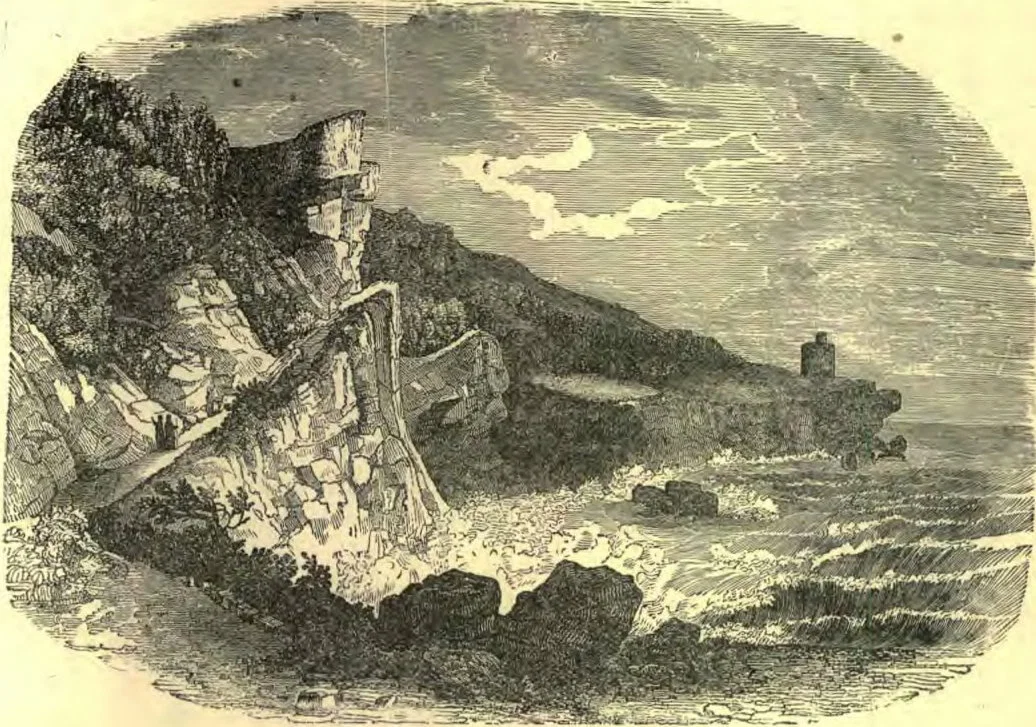
Thou art sounding on, thou mighty sea, Forever and the same; The ancient rocks yet ring to thee, Those thunders naught can tame.
Thou still art swelling on, thou deep, Through many an olden clime, Thy billowy anthem, ne’er to sleep Until the close of time.
Thou liftest up thy solemn voice To every wind and sky, And all our earth’s green shores rejoice In that one harmony.
It feels the noontide calm profound, The sunset’s heaven of gold; And the still midnight hears the sound, Even as first it rolled.
Let there be silence, deep and strange, Where sceptred cities rolled! Thou speak’st of One who doth not change— So may our hearts repose. —Mrs. Hemans.

THESE LONG EVENINGS.

WHAT are the young people who read this doing these long winter evenings? Do you know that many great men and women owe their success in life to the winter evenings of their youth? When young, they spent what little pocket-money they had, for books. They kept one of these on the shelf or table, where they might snatch it up whenever sitting by the fire to warm, or waiting for dinner; then when the sun was down, and the chores for the night were done, they managed to spend one or two hours in reading, before going to bed. Many of them could only go to school a few weeks in the year, and some of them not at all. They had to work hard from early morning, and wore patched clothes; yet while their companions coasted, and skated, and listened to their story-telling neighbors, they stuck to their books, and little by little, evening by evening, and winter by winter, they added to their stock of knowledge.
Do you look at the lives of these men, and wish that you might stand where they do now? They left their path behind them, and have made it smoother than they found it. You can read the lives of many of them, and thus be encouraged to strive yourself. Through their books you can talk with them, and learn their best and choicest thoughts. You can imagine yourself going with them through all parts of your own land, learning its history and viewing all its most beautiful sights. For a few cents saved up and invested in books, you can even visit foreign lands, and learn the customs of their inhabitants much better than by going yourself. Things of marvelous worth, and beauty, and wonder, which they spent years in digging out from stones, from plants, from stars, and from all parts of the vast workshop of God, you can learn in a few weeks from their writings. All these things you can enjoy without leaving your father's fireside, and even though you cannot go to school. Are they not worth the trifling sacrifice they cost?
The sun is now setting later and later every day. Soon another summer, with its long days of work, will be here. Every summer and winter, as they chase each other away, bring the youth who read these pages, nearer manhood and womanhood. Then there will not be hours enough in the day to do the work which will lie before you. Youth gives you these hours of leisure. Will you not fill each as it passes, with earnest, continued striving for those things that will make your life a source of pride to your parents, and an honor to your Maker? C. H. G.

Small Neglects Breed Great Evils

The greatest evils of life have had their rise from something which was thought to be of too little importance to be attended to.

MENDING AND ITS LESSONS.

“O dear,” sighed Meta, “if it were not for this continual mending, I might accomplish something; but I no sooner take up a book or a bit of fancy work than this detestable basket of mending appears before me with such persistence that the book must be laid aside and the fancy work put by until this is disposed of. Really, I wonder if it is cultivating one’s mind to be always mending stockings and garments.”
“Meta, dear,” said Aunt Nettie, who had just entered, “I fear something besides socks and garments needs mending; to judge from your voice, there is a long rent in your patience.”
“O, I presume so,” replied Meta; “I’m always having to mend that; it’s next to impossible to keep it whole. But, dear me, auntie, how can I help it? One doesn’t like to be always at work upon the old; it would be a comfort once in a while to take up something new.”
“Yes, dear, but the rents must be closed and the torn pieces mended, and some one must do it. Isn’t it better to go about it cheerfully, and in the meantime see if you cannot learn something from this very mending which you so dislike?”
“It may be,” came doubtfully from Meta, “but if there is anything to be learned from this old basket, I wish you would show me, for I must own I see very little.”
“Well, then, let me take the basket as a type of yourself. To begin with, there is a temper that you say needs mending often; it is harder to mend than the clothing, too, and how ugly the stitches look; make them ever so fine the darning will show, and you know that darns and patches spoil the beauty of any article. Couldn’t you be a little more careful in the use of it, and not let it get torn so often?”
“I suspect your habits need a few stitches, too. Were it not for one habit, this work would not accumulate as it does. Never put off till to-morrow, Meta, what may as well be done to-day. Then some little careless ways you have could be repaired. A few stitches in your memory, too, would save your friends a good deal of annoyance sometimes. Our habits and manners, which tend to make us agreeable or disagreeable to others, can be nicely mended, only it takes time. It is like making over a dress; it’s more work, and takes longer to make than a new one, because it must be ripped and cleansed, and oh, how much time we spend in undoing deeds that we’ve done, before we can be fairly at work upon what we want to do. I’ve sometimes thought it would take a great deal of pressing to take the wrinkles out of some of us. But then the dress pays if the material is good, and orderly habits and polished manners are charming if the heart be good and true.”
“This is, after all, the main thing, the others are trimmings, and no amount of refinement can atone for an imperfect character.”
“So whatever else you fail to do, whatever needs mending, keep your heart with all diligence, and guard your character that it remain complete and spotless.”—Selected.

Silent Work of Great Forces

ALL great forces work quietly. The light, the frost, gravitation, electricity—the great natural powers—all work silently. Great effects, great disturbances, great revolutions, follow the action of these forces; but they act noiselessly.

SWEET SIGHTS AND SOUNDS.

WHAT do you think is the fairest sight That ever mine eyes did see? Was it the light that shines from far, From evening’s beautiful glowing star, Like a silver thread o’er the sea?
What do you think is the sweetest sound That ever greeted mine ear? Was it the song of a happy bird Whose voice in the willow-tree I heard In the morning of the year?
A fairer sight is a youthful face, With the light of goodness full; And a heart in the bloom and joy of youth, Loving the heavenly way of truth, And swayed by its golden rule.
And sweeter than songs of summer birds Is the sound of a gentle voice Whispering comfort in sorrow’s ear, Speaking ever brave words of cheer, Bidding the hopeless rejoice.
This is beauty that never shall fade, Music that never shall cease; The Saviour bends from his throne of light, And smiles to see this beautiful sight, While angels join their strains of delight, With the song of a heart at peace.
—S. S. Advocate.

NEW-TESTAMENT HISTORY.

Lesson 117.—Review: The Exodus and the Wilderness.

1. Why were the Israelites ill-treated in Egypt after the death of Joseph?
2. What did they have to suffer?
3. Tell how God raised up a man to deliver them.
4. How did he have to learn a lesson of humility before God could use him?
5. Give a brief account of the plagues that were inflicted upon the Egyptians.
6. Describe the institution of the Passover.
7. Describe the flight of the Israelites, and their passage through the Red Sea.
8. What miracle was wrought for them at the waters of Marah?
9. What promise was given them there?
10. What circumstances led to the giving of the manna?
11. What miracle attended the giving of the manna?
12. What purpose was served by this miracle?
13. Describe the battle at Rephidim.
14. Tell how water was brought from the rock to supply the entire camp of Israel.
15. Describe Jethro’s visit to Moses.
16. Tell how the Lord made a covenant with his people. Ex. 19.
17. Tell how the commandments were given from Mt. Sinai.
18. How were the people affected by hearing the voice of God?
19. How did they renew their covenant?
20. How was the covenant afterwards ratified? Ex. 24.
21. In what form were the commandments given into the hands of Moses?
22. What caused him to break the tables?
23. How did Moses quell the worship of idols in the camp?
24. How were the tables renewed to them?
25. Of what did the Lord show Moses a pattern in the mountain?
26. What instructions did the Lord give him?
27. Give a brief description of the tabernacle.
28. Describe the ark of the covenant.
29. What holy vessels were placed in the first apartment of the sanctuary?
30. Describe the court of the tabernacle.
31. What holy vessels were placed in it?
32. When and how was the tabernacle, with its holy vessels, removed from place to place?
33. How long did the children of Israel remain at Mt. Sinai?
34. What did they celebrate just before journeying from that place?
35. Give a brief account of what happened at Taberah, Kibroth-hattaavah, and Hazeroth?
36. Why were the people condemned to wander forty years in the wilderness?
37. Who alone were to go into the Holy Land?
38. Describe the rebellion of Korah, Dathan, and Abiram.
39. Why were Moses and Aaron forbidden to enter the Land of Promise?
40. Describe the death and burial of each.
41. What conquests did Moses make before his death?
42. Tell how Balaam was foiled in his attempt to curse Israel.

SCENES IN THE LIFE OF CHRIST.

LESSON 103.—JESUS TAKEN BEFORE ANNAS AND CAIAPHAS.

Annas had formerly been high priest, and is supposed to have had much influence among the people. But he seems to have sent Jesus at once to Caiaphas, who was the high priest that year. So they led him away, bound, to the house of Caiaphas, where the members of the Jewish Council were already assembling. Peter and John followed afar off, and when they came to the place, John went in, for he was acquainted with the high priest; but Peter stood without at the door. Finally John went out and spoke to the damsel that kept the door, and gained admission for Peter.
All the largest and grandest of the eastern houses are built on four sides of an open space within, called the court. On one side of the house there is an arched passage-way leading from the street into the court. This arched passage is closed by heavy gates, or doors. It was at such a place, no doubt, that Peter stood until John prevailed on the one who guarded the door, to let him in. In the middle of the court, the officers and soldiers kindled a fire of coals; and Peter stood with the rest as they gathered around the fire to warm themselves. As he was doing so, one of the maids of the high priest, looking upon him earnestly, said, “Thou wast with Jesus of Nazareth.” But he denied before them all, saying, “Woman, I know him not.” Then he went out into the porch or passage-way; and while he was standing there, the cock crew.
It was now probably not very long after midnight, and the Jews could not legally condemn Jesus to death before morning; for it was expressly unlawful for them to pass a sentence of death in the night. But the high priest began to question Jesus about his disciples and his doctrine. Jesus, in answering, said, “I spake openly to the world; I ever taught in the synagogue and in the temple, whither the Jews always resort; and in secret have I said nothing. Why asketh thou me? ask them that heard me; they know what I said.”
When Jesus had thus spoken, one of the officers who stood by, struck him with the palm of his hand, saying, “Answerest thou the high priest so?” Jesus quietly replied, “If I have spoken evil, bear witness of the evil; but if good, why smitest thou me?”
While these things were going on, Peter still stood by the fire warming himself. “And after a little while another saw him, and said, Thou art also of them. And Peter said, Man, I am not. And about the space of one hour after, another confidently affirmed, saying, Of a truth this fellow also was with him; for he is a Galilean. And Peter said, Man, I know not what thou sayest. And immediately, while he thus spake, the cock crew. And the Lord turned, and looked upon Peter.” “And Peter called to mind word that Jesus said unto him, Before the cock crew twice, thou shalt deny me thrice.” “And Peter went out and wept bitterly.”
“Now the chief priests, and elders, and all the council, sought false witness against Jesus, to put him to death; but found none: yea though many false witnesses came, yet found they none. At the last came two false witnesses, and said, This fellow said, I am able to destroy the temple of God, and to build it in three days.” But in many points these witnesses contradicted one another; so their testimony was of no value.
Then the high priest rose up, and said unto Jesus, “Answerest thou nothing! what is it which these witness against thee?” When Jesus made no reply, the high priest cried out, saying, “I adjure thee by the living God, that thou tell us whether thou be the Christ, the Son of God.” Jesus then replied, saying, “Thou hast said; nevertheless I say unto you, Hereafter shall ye see the Son of man sitting on the right hand of power, and coming in the clouds of heaven.” When the high priest heard this, he said, “He hath spoken blasphemy; what further need have we of witnesses?” Then the men that guarded Jesus began to mock him, and to spit in his face, and to buffet him; and others smote him with the palms of their hands, saying, “Prophesy unto us, thou Christ, Who is he that smote thee?”

QUESTIONS.

  1. What office had Annas formerly held?
  2. How is he supposed to have been regarded by the people?
  3. What did he do with Jesus?
  4. Who were already assembled at the house of Caiaphas?
  5. Who followed afar off? John 18:15.
  6. What did they do when they came to the high priest’s house?
  7. How did Peter finally gain admission?
  8. How are all the largest and grandest of the eastern houses built?
  9. What do they have on one side?
  10. How is this passage closed?
  11. Where did the officers and soldiers kindle a fire? Verse 18.
  12. Who stood and warmed himself with the rest?
  13. While he was doing so, what did one of the maids of the high priest say to him? Mark 14:66, 67.
  14. How did Peter reply?
  15. What did he afterward do?
  16. What did he hear as he stood there in the porch?
  17. About what time of night must it have been when this occurred?
  18. Why could not the Jews condemn Jesus to death before morning?
  19. How did the high priest begin to examine Jesus? John 18:19.
  20. How did Jesus answer these questions?
  21. When Jesus had thus spoken, how was he treated by one of the officers?
  22. How did Jesus receive this insult? Verse 23.
  23. What was Peter still doing while these things were going on?
  24. What happened after a little while? Luke 22:58.
  25. How was he again questioned about an hour afterward?
  26. How did he reply?
  27. What happened while he was speaking?
  28. What did Jesus then do?
  29. Of what was Peter reminded?
  30. How did he then manifest his sorrow for what he had done?
  31. How did the chief priests and all the council try to convict Jesus? Matt 26:59.
  32. How were they foiled in their attempts? Verse 60; Mark 14:56.
  33. Who came at last? Matt. 26:60.
  34. What destroyed the value of their testimony? Mark 14:59.
  35. What did the high priest then do?
  36. What did he say when Jesus refused to answer his question?
  37. Give our Lord’s answer to this question. Matt. 26:64.
  38. How did the high priest try to show his indignation?
  39. What did he say?
  40. How was Jesus then treated by those who were guarding him?
  41. What did they say as they smote him with the palms of their hands?

HOW TO SECURE PUNCTUALITY.

H. Clay Trumbull, editor of the S. S. Times, in speaking of the work of a faithful and successful Sabbath-school superintendent, now gone to his rest, says:—
“Punctuality was made prominent by Mr. Haven as a duty of those who belonged to his Sabbath-school. He had little hope of securing a good school without the faithful attendance of its members. In this particular, as in every other, he sought to cultivate assiduously the habit desired. He did not depend on his exhortations to punctuality. He trained both teachers and scholars to a sense of its importance and desirableness. A close record of the attendance of each member of the school was preserved, and its leading facts were statedly made public. Lists of those who had been present every Sabbath, and again, of those present at least forty Sabbaths in the year, were printed annually; and persons who deserved special mention for their fidelity in attendance were sure to receive it, year by year. A class feeling on the subject was fostered and so strong did this class sense of responsibility become in the school that on at least one occasion four of the boys in a class took their fifth classmate in hand for his frequent non-attendance. They said to him, ‘The others of us are always here. You stay away so often that you keep our class record down below the average. Now you’ve got to do one of two things—either come regularly to Sabbath-school or quit this class. We shall be glad to have you stay with us; but we can’t have you keep us back, if you will be always behind.’ No rewards were offered for punctuality; but the prominence given to well-doing in this line proved the highest stimulus to all.”

HOW WE BECAME FREE.

Perhaps you will think this is an odd little picture, and that there is not much about it to interest you,—only a boy plowing and a man on horseback talking to him. But when I have told you a little story, perhaps you will see more in the picture.
Many years ago our fore-fathers left England and came to America, which was then all one great forest. They landed at different places along the coast, and made themselves homes in the wilderness. Some of them came that they might find a place to worship God as they thought right. You were told a few weeks ago about one colony of them, who came over in the Mayflower, and settled at Plymouth, and how they kept their first Thanksgiving. Others came because they thought there would be more chance for poor men in a new country where land could be had for nothing.
Though so far away from England, these colonists were still British subjects, and had to do just as the king of England said. At first they were so few and weak that he paid little attention to them; but after a while they began to prosper, and to clear large farms, and build villages and cities. Then the king sent men to rule over them, and to make them pay taxes to help him carry on wars, and enable him to live in luxury. These governors were many of them very cruel and unjust, and by the consent and wish of the king of England, they troubled and harassed the colonists in every way they could think of.
Finally the people would stand it no longer, and made up their minds to have a government of their own, and be independent of England. This of course led to a war with the British, who were not at all willing to give up their rule over the colonists. Now the British had large, standing armies all ready for war, and plenty of money to help them, while the colonists had only themselves and very poor weapons. When it was decided to try to raise an army to fight the English, messengers were sent all through the colonists to rouse the men for war. There was no time to lose, and men left their work just where it was,—their corn half hoed, the plow in the furrow,—and bidding their families a hasty good-bye, started off “to whip the British.” In the picture, the messenger has just come to the boy who is plowing in the field, and he will away to the house to tell his father and brothers.
Well, it was a longer and harder struggle than either the British or the Americans had supposed it would be. The colonists had many hardships to endure, and often suffered from cold and hunger; but the thought that they were fighting for their homes and the liberty of their dear ones made them very brave and daring. At last, after eight years, the British were driven away, and the men still living could go home to their families once more. What a happy time that must have been, when fathers, husbands, and brothers came marching home with the glad news, “The British are beaten, and we are free!”
Ever since then we have been a free nation. But while we enjoy the blessings of liberty, we must not forget that our fore-fathers fought and bled and died to gain us this freedom. If you will read the history of the Revolutionary War when you are older, you will learn many more things than I have room to tell you here. E. B. G.

TIDE-MARKS

It was low tide when we left Bristol; and the great gray rocks stood up bare and grim above the water; but high up on all their sides was a black line that seemed hardly dry, though it was far above the water.
“What makes that black mark on the rocks?” I asked of my friend.
“Oh! that is the hightide mark,” she replied.
“Every day, when the tide comes in, the water rises until it reaches that line, and in a great many years, it has worn the stone until the mark is cut into the rock.”
“Oh!” thought I, “that is all, is it?” Well, I have seen a great many people that carry tide-marks on their faces. Right in front of me was a pretty little girl, with delicate features and pleasant blue eyes. But she had some queer little marks on her forehead; and I wondered how they came to be there; until presently her mother said:—
“Draw down the blind now, Carrie; the sun shines right in baby’s face.”
“I want to look out,” said Carrie, in a very peevish voice.
But her mother insisted; and Carrie drew the blind, and turned her face away from the window. Oh, dear me! what a face it was. The blue eyes were full of frowns instead of smiles; the pleasant lips were drawn up in an ugly pout, and the queer marks on the forehead had deepened into actual wrinkles.
“Poor little girl!” I thought. How bad you will feel when you grow up, to have your face marked all over with tide-marks of passion! for these evil tempers leave their marks just as surely as the ocean does; and I have seen many a face stamped so deeply with self-will and covetousness that it must carry the marks to the grave!” Take care, children, and whenever you give way to bad temper, remember the “tide-marks.”—London Children’s Friend.

THE TWO ANCHORS.

Two ships were about leaving an English port. The captain of one of them purchased, just before sailing, a new anchor, polished and beautiful. A passenger of the other ship, seeing the bright instrument as it was going aboard, said to his captain, “Why don’t you purchase one, too?” His reply was, “It is very handsome, but I would not trust it; the iron in it is poor.”
The ships remained in sight of each other most of the way across to America. One day toward evening, when they were near Newfoundland, a fearful storm came up. The water was shallow, and both the ships cast their anchors. For hours they rode in safety amid the raging of the storm. But at last, near midnight, there was a sudden crash. The new and handsome-looking anchor had broken into pieces, and the ship was at the mercy of the tempest. Only three lives of all on board were saved. The old anchor of the other ship held firmly, and when the storm was over, she went on her way in safety.
In the Christian voyage to the heavenly shore, there is but one safe anchor. It is the anchor of faith in Jesus. Many persons look around to find other anchors to which to trust their safety. When the day of trial comes, not one of these will hold, and those who trust in them will be bitterly disappointed.

Pleasantness and Kindness Within the Home

If all were as willing to be pleasant and as anxious to please in their own homes as they are in the company of their neighbors, they would have happier homes.
Continue reading: WAITING FOR PAPA