The Youth’s Instructor, Vol. 32, No. 36.

GEORGE STEPHENSON

The Youth’s Instructor

Sep 3, 1884

S. D. A. Publishing Association · Battle Creek, Mich. · Sep 3, 1884

GEORGE STEPHENSON

Written for the INSTRUCTOR.

GEORGE STEPHENSON.

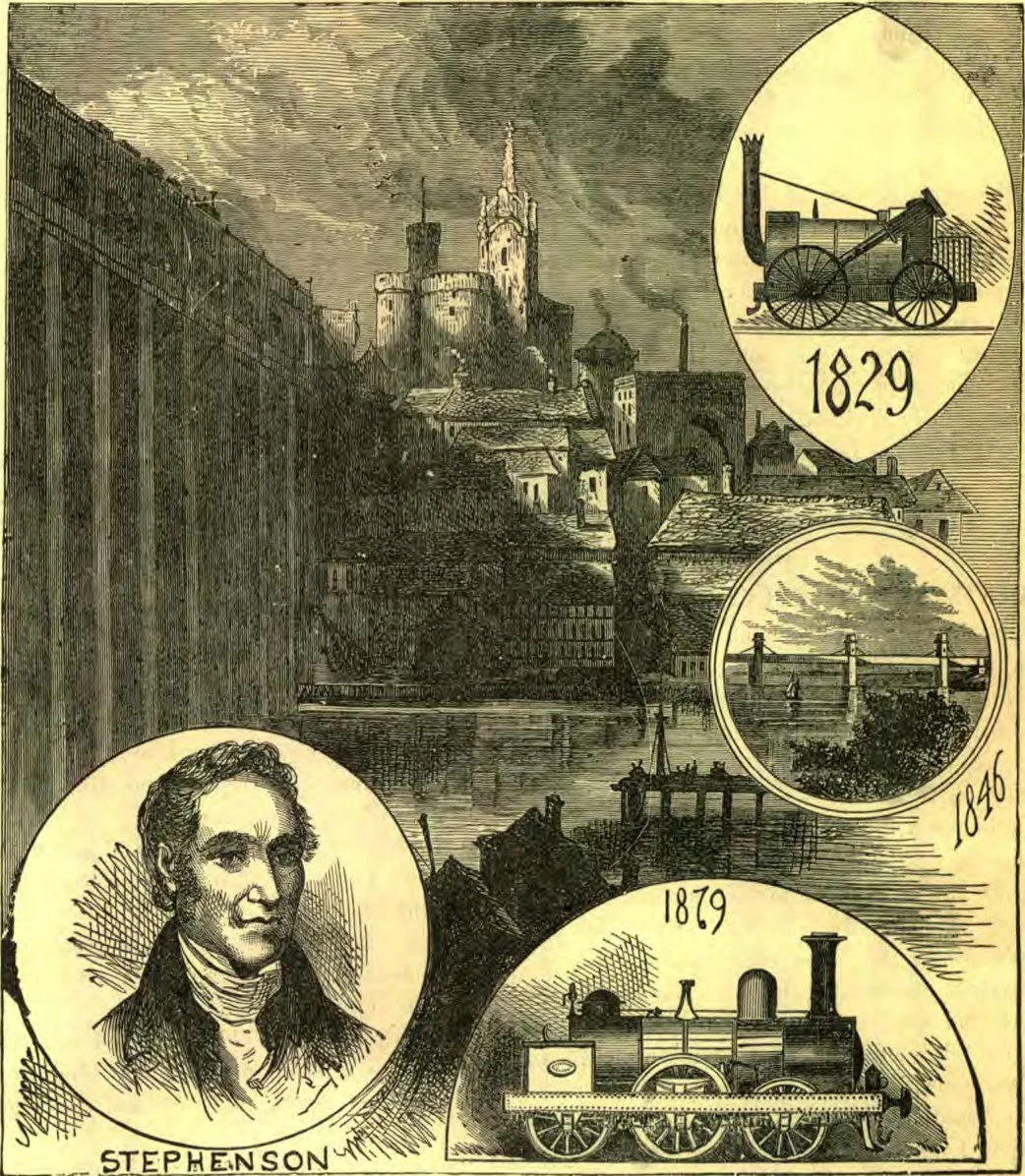
Among the foremost in the long list of the names of men noted for their scientific and mechanical achievements, stands the name at the head of this article. In all the civilized world, wherever the use of steam is known, his name is also known and honored. He was of exceedingly humble origin, and possessed equally meager facilities for acquiring an education; and developing the grand genius with which nature had endowed him. But by his industry and indomitable perseverance, he rose to the noble and exalted position which in after years he held among his fellow-men in the world of science and mechanical invention.
George Stephenson, the founder of the railway system of Great Britain, and perfecter of the locomotive engine, was born in Wylam, Northumberland, June 9, 1781, and died at Tapton Park, near Chesterfield, Derbyshire, Aug. 12, 1848.
His father was a worthy and industrious man. He was fireman of the pumping engine at Wylam colliery, but with his utmost exertions was barely able to provide food and clothing for his family, much less to send them to school.
Of the early years of young Stephenson’s life, we learn that it was in this state of things that he was reared until the age of eighteen,—ignorant even of the letters of the alphabet. At the age of nine years, he was employed at two pence a day to look after the cows of a neighbor, and to do other kinds of service on a farm. It was, however, his highest ambition to follow his father’s occupation; and at the age of fourteen, being known as a steady and intelligent boy, and showing considerable taste for mechanics, as evinced in the construction of miniature engines and windmills, he was appointed assistant fireman at the Dewley Burn colliery, whither his family had removed. Thus he was employed, in one position and another, for several years, until he had, by his perseverance, acquired so complete a knowledge of the engine that he was able to take it to pieces, and to make any ordinary repairs.
At the age of eighteen he began his studies, and within two years, by attending small night schools, and by other means, he was able to read, write, and cipher with tolerable ease. In 1802 he was married, but became a widower within two years.
Thus his early years were spent in the struggle with poverty and privation; but amid it all we see him gradually rising, until, in 1812, he found his first good fortune in being appointed by his employers as engine-wright at Killingsworth, at a salary of £100 a year. With this event his mechanical genius seemed to take a fresh start, and to assume tangible form in the various mechanical appliances which he invented, and in his improvements on those already invented.
From this time until its close, the history of his life is full of the deepest interest. Success was the reward of his labors. That which most deeply interested him was the construction of an efficient and economical locomotive steam engine; and after a careful examination of all the machines within his reach, he commenced, and in 1814 completed, an engine,—the first one with smooth wheels,—which worked successfully on the Killingsworth railway, and proved the best yet constructed, although by no means satisfactory to the inventor.
Although Mr. Stephenson was not the original inventor of the steam engine, by his genius and skill it was brought to a state of comparative perfection, and made a practical machine for the various needs of mechanical industry.
Various other useful devices were the result of his inventive genius, among which were a miner’s safety lamp and an improved “rail” and “chair” for railroads.
Our space will not permit us to speak further of the many interesting facts connected with his life and career—his many achievements, his successes in spite of the opposition of ignorance and superstition; but amid it all he triumphed, and to-day his name is a household word, honored throughout the world.
Of the closing years of his life, we learn that they were passed in comfort and peace, and that he was beloved by his neighbors of every degree and condition; and that in his conduct, as well as in his person and manners, he presented the true ideal of an English gentleman. On several occasions the honors of knighthood were tendered him, but respectfully declined. A memoir of his life was published in London, in 1856, by Samuel Smiles.
J. W. B.

THE TAPESTRY-WEAVERS.

LET us take to our hearts a lesson— No lesson can braver be— From the ways of the tapestry-weavers On the other side of the sea.
Above their heads the pattern hangs, They study it with care; The while their fingers deftly work, Their eyes are fastened there.
They tell this curious thing, besides, Of the patient, plodding weaver: He works on the wrong side evermore, But works for the right side ever.
It is only when the weaving stops, And the web is loosed and turned, That he sees his real handiwork— That his marvelous skill is learned.
Ah, the sight of its delicate beauty, How it pays him for all his cost! No rarer, daintier work than his Was ever done by frost.
Then the master bringeth him golden hire, And giveth him praise as well; And how happy the heart of the weaver is No tongue but his own can tell.
The years of man are the looms of God, Let down from the place of the sun, Wherein we are weaving alway, Till the mystic web is done.
Weaving blindly, but weaving surely, Each for himself his fate; We may not see how the right side looks— We can only weave and wait.
But looking above for the pattern, No weaver hath need to fear; Only let him look clear into heaven— The perfect Pattern is there.
If he keeps the face of the Saviour Forever and always in sight, His toil shall be sweeter than honey, His weaving is sure to be right.
And when his task is ended, And the web is turned and shown, He shall hear the voice of the Master, It shall say to him, “Well done!”
And the white-winged angels of heaven, To bear him thence, shall come down, And God shall give him gold for his hire— Not coin, but a shining crown!
—Anson G. Chester, in Scribner’s.

INCIDENTS IN THE LIFE OF CYRUS THE GREAT

Written for the Instructor.

INCIDENTS IN THE LIFE OF CYRUS THE GREAT.

Cyrus the Great was brought up at the court of Persia, where his father was king.
History tells us that he lived on the plainest diet, bread and cresses, and his drink was pure water; so that he became a strong, rugged man. It is also said that he was the wisest and most magnanimous king mentioned in profane history, and that he was kind and gentle to all. When he was quite young, he went to visit his grandfather, Astyages, king of Media. While there, he one day performed the office of cupbearer, and his grandfather commended him on his manner of offering the cup, etc., and said, “Nobody can serve me with a better grace; but you forgot to taste the wine.”
“No,” said Cyrus, “it is not through forgetfulness that I omitted that ceremony, but because I apprehended there was poison in the liquor.”
“Poison! How could you think so?” exclaimed the king.
“Yes, poison,” replied Cyrus; “for not long ago, at an entertainment, you gave to the lords of your court, after they had drunk a little of that liquor, I perceived their heads were turned. They sung, made a noise, and talked they did not know what. You yourself seemed to have forgotten that you were king, and that they were subjects. And when you would have danced, you could not stand upon your legs.”
“Why,” said the king, “how is it at your father’s, when he drinks?”
“Why,” said Cyrus, “when he has drunk, his thirst is quenched, and that is all.”
We are told that, after fighting great battles and conquering their enemies, the Persian soldiers would feast on bread and cresses. By this simple manner of living, they obtained great physical advantage over their enemies. But after establishing the great kingdom of Medo-Persia, Cyrus gave way to the voluptuousness and luxuries of the times. He died at the age of seventy years. Thus ended the life of a remarkable man—one mentioned by name by God before he was born.
J. R. CALKINS.

A SAD SCENE

Written for the INSTRUCTOR.

A SAD SCENE.

“Please, ma’am, give me a penny?”
I mentally thought, “What a sweet voice,” and turned quickly to see who my petitioner might be.
What a sight! A little girl scarce six years old, dressed in dirty rags, and with hair uncombed, and feet quite bare! Not a very interesting picture, surely; but under all this repulsiveness there was a degree of childish simplicity and sincerity that took away the first feeling of disgust, and filled my heart with pity.
Her thin, pale face and deformed body told more plainly than words, that, although a child, she was not a stranger to grief and suffering; and her pleading eyes had such an eager, hungry look that I could not refuse her request.
Wishing to learn something of her history, I said, “Tell me why you stand here and beg? You have a home, have n't you? why don’t you go there?”
“If you please, ma’am, father is dead, and mother can’t sew now; so we have nothing to eat.”
“Where does your mother live?” I asked.
“Down there,” she replied, pointing to a dark alley; “will you go see her?”
“If you will show me the way;” and following her, I soon found myself in a low, damp basement, with cold, bare walls.
In the farther corner of the room, on an old mattress, with a bundle of rags for a pillow, lay the poor, sick mother.
Going up to her, I told her how I had met her child on the street; and by a few kind words, I gradually won her confidence, and she began to talk to me.
“I have not always been, as you see me to-day, lady. The child of rich, indulgent parents, I was brought up without a care, or scarcely a sorrow. Every whim was gratified; but I was willful, and did not follow the wishes of my parents, and so they turned me away from them.”
“I do not need to tell you of the sorrow and misery of the years that have followed since then; the bitter results are before you. My husband is dead, and I have worked early and late to support my child, until I can work no longer.”
“I have no wish to live now, but for my poor child; may God pity her! I don’t know but she will have to die on the street.”
As I sat and listened to a tale of sorrow such as my ears had never heard before, I thought that I would give worlds for the power to alleviate the poor woman’s sufferings; but the most that I could do was to speak a few words of comfort, and to point her to the “Great Comforter.”
And there are many hundreds of just such cases as this, that one sees here in New York.
Hard indeed must be the heart of him who can pass through some of the streets of this city, and witness, unmoved, the tokens of sin and misery that are on every side. Human beings are met that have sunk so low that all traces of the likeness of their Creator are effaced; and I am forced sometimes to ask myself, “Can it be that they have souls?”
Truly, the wages of sin is death, and we can hope for no better things than this until He shall come who will destroy sin, and restore the earth to its Eden purity.
If the children who read the INSTRUCTOR could see some of the sights that we witness here every day, it would make them more grateful than ever for good homes, kind friends, and Christian influence. CLARIBEL STEVENS.

Foreign Travel: From Romania Through Milan and Strasburg

FOREIGN TRAVEL.—NO. 16.

FROM ROMANIA THROUGH MILAN AND STRASBURG.

[By some mishap, the last part of No. 16 of this series was set up with No. 15, and the mistake was not discovered until the paper had gone to press. If, at the close of this article, our readers will turn to the paragraph in No. 15 beginning, “The valley of the Danube,” etc., and read from there on, they will be enabled to keep up the connection.—Ed.]
The valley of the Danube is a fine country, containing excellent soil, and it is of large extent. The Danube is a great river, rolling down toward the sea. It reminds me of our mighty western rivers. Where we were, the banks were not very high, and it looked as if there would be a mighty overflow should the old river get excited, and pour out its floods.
We noticed here one thing which we never saw elsewhere. In the bottoms, which were quite low, there were many trees, standing here and there. The tops of the most of them were cut out, leaving only the large lower limbs, eight or ten feet long. In these limbs, small stacks of hay or fodder were piled to a considerable height. The people could in this way secure their haystacks against the elements.
We left Roumania, feeling grateful that our lot was cast in the newer West rather than in these old countries of the orient. Whether the readers of the INSTRUCTOR realize it or not, they have great occasion for thankfulness to God that their homes are in the United States of America.
Our return journey to Venice lay over the same route that we traveled in going, so that there was nothing new or remarkable to explain. We left the famous city of Venice, with its water highways, in the forenoon; and in six or seven hours we reached Milan, passing westward through the famous plains of Lombardy, past beautiful scenery and important towns. For a great part of the way the country was very level, and the almost never-ending rows of mulberry trees, with their climbing grape vines, and the cultivated fields, gave evidence of material prosperity. This is one of the richest districts in the world. It has a fertile soil, a lovely climate, and the finest of fruits. Here the armies of many ages and periods have struggled to gain possession of it.
While waiting for the train in Milan, we took time to visit the great cathedral here, which the people of that city consider the eighth wonder of the world. And it is not surprising that they do feel some degree of pride in the possession of such a magnificent building. It was begun by Visconti, in A. D. 1386. It is the largest cathedral in the world excepting two,—one, St. Peter’s, in Rome; and the other at Seville, in Spain. It is 677 feet long on the inside, and 183 wide. The nave is 155 feet in height; the dome, 220 feet. The tower is 360 feet in height above the pavement, and is ascended by 494 steps. This vast edifice is built in the form of a cross, with double aisles and a transept flanked with aisles. The interior is supported by 52 pillars, 12 feet in diameter, the summits of which are adorned with canopied niches containing statues. The marble pavement is laid in mosaic work. The ceiling is skillfully painted, so that one would think it perforated stone work.
It is built in gothic style, and the roof is adorned with 98 gothic turrets. The exterior of the building is adorned by over 2,000 statues in marble. Every one of the turrets has a statue on top of it. It presents a very imposing appearance. It strikes one with astonishment to think of the labor which the erection of such a building must have cost. This was built in what we call the Dark Ages; but it would seem that in the erection of magnificent buildings, the people were fully equal to the present age, with all its boasted knowledge and science.
The view from the cathedral tower is very fine. One can easily see all the prominent buildings of this large city. The people walking along the pavements did not seem to be more than two feet high. It made one almost shudder to look down from that dizzy height upon them. Spread out before us, as far as the eye could reach, lay the plains of Lombardy, with their villages and endless rows of mulberry trees, vineyards, and cultivated fields. In the distance, toward the north, rose the snow-capped Alps, height above height, presenting a beautiful picture of mountain scenery; and toward the south-west, the Apennine range could be distinctly seen. But few countries in the world are more beautiful than Northern Italy.
On the north side of the cathedral, the gallery of Victor Emmanuel forms a prominent point of interest. This gallery cost $1,500,000. It contains 2,000 gas jets. There is a large circle of these in the dome, which afford a brilliant illumination. These are lighted by a small engine set in motion by clock work; it is all done in one and a half minutes. This often attracts a large number of spectators. The gallery contains the finest statuary of eminent Italians, and many other objects of interest which we had not the time to examine.
Our return through Switzerland was over the St. Gothard route, the same that we described in a former article. We passed northward from Bâle, up the Rhine valley to Strassburg, some eighty miles from Bâle. The country is very pleasant and well cultivated, and raises such crops as are usually seen in temperate climates. Villages are often passed; fruit trees and vineyards abound. Both men and women were seen diligently working in the fields, hoeing, spading, and plowing. The farms looked very neat and tidy.
Strassburg is the capital of Alsace and German Lorraine. It contains nearly 110,000 inhabitants, and is situated about two miles from the River Rhine. Alsace and Lorraine have formerly belonged to the Germans; but in the great wars of the French king, Louis XIV., they were conquered by the French, and remained under their control until the late war, when the Prussians gained possession of them.
Strassburg was founded by the Romans, near the commencement of the Christian era. It is a prominent point between Germany, France, and Switzerland, and it has for many centuries been a very important city. When it was a German city, before it was taken by the French, it was one of the most prosperous free cities of the empire, enjoying the proud distinction of having its banner borne second to the imperial eagle. The city was seized by Louis XIV., Sept. 30, 1687, in time of peace. He had previously conquered the rest of Alsace in the thirty years’ war. The French held it till 1871, when the Germans once more gained possession of it.
It is a place of great strategical importance. Several miles away from the city, and surrounding it in every direction, large earth works have been thrown up. They are so arranged as to afford shelter for a large number of troops. An invading army would have to pass between these; and while the fire from many cannons could be concentrated upon them, and the city’s defenders could have protection, their soldiers were exposed in the open field. Between these outer works and the city there are other works which add greatly to the power of defense.
The city itself is not particularly inviting, the streets being narrow, and the houses generally uninviting. Most of them were built long ago, and are therefore not as attractive as newer cities.
The principal object of interest in the city is the cathedral. Besides this, there are some statues, fountains, etc., which are of interest. There is a university here, of many years’ standing. It has been quite famous, and still enjoys quite a high reputation. The principal business of the city is brewing, tanning, and engine building.
The present cathedral structure dates from the 12th to the 15th centuries, different portions being built at different times. Indeed, there are some objects of interest in it that go back before the time of Charlemagne, in the 8th century. It is quite a famous edifice, though the exterior is not as imposing as some others. The spire is very fine, being built of open stone work to the top, and it is octagonal in form. The visitor ascends 330 steps to the platform on which the tower of open stone work rests. It is 216 feet from the street to the top of the platform, and the tower is 249 feet more, making in all 465 feet. There are only three others higher in Europe. Many visitors content themselves with going to the top of the platform, from which an excellent view can be obtained. We went up the tower as far as we were allowed to go without a special permit from the mayor of the city.
During the great bombardment by the Prussians in 1870, the tower suffered from the cannon balls and shells. Here and there pieces of the stone work were knocked out. These have mostly been replaced since the war. From this dizzy height, a splendid view could be obtained of the Rhine valley, with its fertile fields, smiling landscapes, vineyards, and villages. The Black Forest was plainly visible; and in the dim distance, the dark, fir-covered mountains raised their lofty heads in silent grandeur. It was interesting to gaze down upon the tops of the houses, and the pedestrians in the streets. They looked like pigmies, almost, so far were they below us. UNCLE IDE.

SEPTEMBER

SEPTEMBER waves his golden-rod Along the lanes and hollows, And saunters round the sunny fields, A-playing with the swallows.
The corn has listened for his step; The maples blush to greet him; And gay, coquetting sumac dons Her velvet cloak to meet him.
Come to the hearth, O merry prince! With flaming knot and ember; For all your tricks of frosty eves, We love your ways, September!
—Ellen Mackay Hutchinson.

IMPORTANT BIBLE SUBJECTS.

LESSON 10.—THE RESURRECTION.

[NOTE TO THE STUDENT.—Do not consider the lesson learned until you can give at least the substance of every text, with the correct reference for each. The references in black letters indicate those texts that should be committed to memory. A little diligent application each day will enable you to do this.]
“If a man die, shall he live again? all the days of my appointed time will I wait, till my change come. Thou shalt call, and I will answer thee: thou wilt have a desire to the work of thine hands.” Job 14:14, 15.
“If I wait, the grave is mine house: I have made my bed in the darkness.” Job 17:13.
“Marvel not at this: for the hour is coming, in the which all that are in the graves shall hear his voice, and shall come forth; they that have done good, unto the resurrection of life; and they that have done evil, unto the resurrection of damnation.” John 5:28, 29.
“For if the dead rise not, then is not Christ raised: and if Christ be not raised, your faith is vain; ye are yet in your sins. Then they also which are fallen asleep in Christ are perished.” 1 Cor. 15:16–18.
“If after the manner of men I have fought with beasts at Ephesus, what advantageth it me, if the dead rise not? let us eat and drink; for to-morrow we die.” 1 Cor. 15:32.

QUESTIONS.

1. What question did Job ask concerning death? Job 14:14.
2. Until what event did he say he would wait?
3. In what place did he say he would wait for this change? Job 17:13.
4. When does this change come? 1 Cor. 15:51–54.
5. What did Job say the Lord would do? Job 14:15.
6. When does the Lord thus call for his people? Ps. 50:3, 4.
7. From what place does he call them? John 5:28, 29.
8. Then when is it that the saints are changed to immortality?
9. How did Paul regard whatever earthly possessions he might gain? Phil. 3:7, 8.
10. What was he willing to undergo? Verse 10.
11. Why did he so willingly suffer these hardships? Verse 11.
12. Did he have any other incentive to labor and suffer except the promised resurrection of the dead? 1 Cor. 15:32.
13. What fact gives us assurance that the dead will be raised? 1 Cor. 15:12, 13.
14. How strong an array of evidence have we that Christ was raised from the dead? 1 Cor. 15:3–8.
15. If we say that there is no resurrection, what do we virtually deny? 1 Cor. 15:16.
16. Why did Paul say that his sufferings for Christ were to no profit if the dead rise not? 1 Cor. 15:18.
17. What is the meaning of “perish”?
18. Then what must be the condition of those who have fallen asleep in Jesus?
19. By whom will they be rescued from this condition? 1 Cor. 15:22.

NOTES.

“For if the dead rise not, then is not Christ raised; . . . then they also which are fallen asleep in Christ are perished.” Among the definitions that Webster gives to “perish,” are these: “To pass away; to come to nothing; to be blotted from existence.” This, then, would be the case with the dead, if there were no resurrection. The resurrection of the dead is simply the changing of the dead from their present state to one of vitality. If there were no resurrection, the dead would always remain in just the condition in which they are now. We must conclude, therefore, in view of Paul’s words quoted above, that the dead are temporarily blotted from existence, from which condition they will be rescued by the resurrection.

GOD SEETH.

WHEN a great Grecian artist was fashioning an image for the temple, he was diligently carving the back part of the goddess, and one said to him, “You need not finish that part of the statue, because it is to be built in the wall.” He replied, “The gods can see into the wall.” He had a right idea of what is due to God. That part of religion which no man can see ought to be as perfect as if it were to be observed by all. The Day shall declare it. When Christ shall come, everything shall be made known and published before the universe. Therefore see to it that it be fit to be thus made known.

Sabbath School Notes in the Review

☞ For additional notes, see the S. S. department in the Review for Sept. 2.

AS WE HOPE TO BE FORGIVEN.

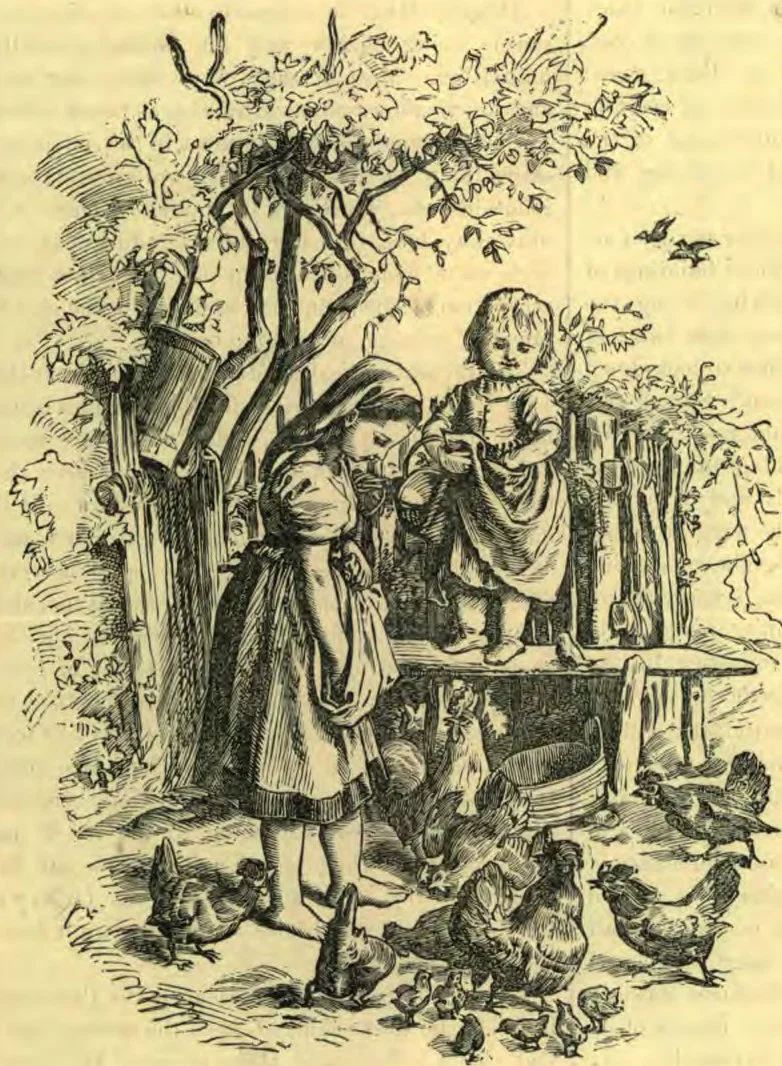
“I’ll never forgive her—never!” said Effie to herself, as she rather spitefully threw down the corn to the chickens; “she’s just as mean as she can be.”
By and by the last grain of corn had been gobbled up by a great hungry rooster that seemed never to have had enough to eat. Then Effie turned and walked slowly toward the house, leading her little sister along by the hand. How quickly the sunshine goes out of the sky and the brightness fades from everything, when we cherish hatred in the heart! The sun was as bright as ever, and the air was soft and warm, but to Effie it seemed as if dark clouds covered the sky, and the light breezes made her almost shiver.
Mamma noticed the clouded face when Effie appeared at the kitchen door; but she said nothing, well knowing that sooner or later she would tell her all her troubles.
“Here, Effie,” said her mother, “take this pan of grapes and skin them. Be very careful to do it well, for I want to make them into jelly.”
Effie took the grapes, and sat down on a low stool by the window-sill to look them over. By and by her mother drew a low chair up beside her, and sat down to look over another panful.
“What makes my little girl look so troubled?” she at length asked.
For a little, Effie did not answer, but worked away faster than ever. She did not feel quite sure what mamma would think. At last she said, rather hesitatingly, “I think Daisy is just as mean as she can be, and I won’t ever like her any more, so there!” And she hastily brushed away the great tears that would well up in her eyes in spite of her.
“Why!” said her mamma, in a surprised tone, “I thought you and Daisy were the best of friends. How does it happen that you are so angry with her?”
Down slid the pan of grapes to the floor, and Effie sobbed her troubles out with her head on her mother’s knee.
“You know we had a playhouse under the big oak tree in the meadow,” said Effie, as she grew a little calmer, “and Daisy had a lot of pretty, broken dishes for our tea-set. Well, yesterday, when we were playing keep house, a great, brown worm dropped right down into my lap. I screamed, and jumped up, and hit a board that knocked down all the dishes and smashed ’em up.
“Then Daisy got mad, and said I did it on purpose. I told her I didn’t mean to; but she wouldn’t believe me. And she broke my dolly’s head. Oh, dear! I never will like her again—never!” and here Effie’s sobs broke out afresh.
Her mother wisely waited till her anger had cooled off a little, and then she quietly said, “Go and get your Bible, my dear, and turn to the thirteenth chapter of first Corinthians, and read the fourth verse.”
When Effie had found it, and read, her mother told her that charity meant love; and then she talked to her about God and his great love for us, and how he was always ready to forgive us when we had done wrong. Then she said that we ought to be just as ready to forgive those who had done wrong to us, as God was to forgive us when we had done wrong to him.
Effie sat very still for a long time, and at last she said, “If you’re willing, I will go over to Daisy’s, and carry her a bunch of grapes.”
“I think it would be a very good plan,” her mother replied, glad to see that she was willing to make up friends again.
So in the afternoon Effie started out; but imagine how surprised she was when she met Daisy at the gate, holding in her arms a doll just like the one she had broken.
“I hope you will forgive me, Effie,” began Daisy, as soon as she had caught sight of her friend; “I’m sorry I was so angry with you, and here’s another dolly in place of the one I broke.”
“Oh!” said Effie, “you needn’t mind about that, and you didn’t need to get another doll. It was wrong for me to get angry too, and I hope you’ll forgive me;” then she gave her the grapes.
“Come in, and play awhile,” she added; and the two little girls went arm in arm up the steps.
“What made you so willing to forgive me?” asked Daisy, as they entered the door.
“Because,” said Effie, “I must be willing to forgive everybody if I want Jesus to forgive me.”
W. E. L.

Letter Budget.

Such clouds of letters wing their way to the “Budget” that we cannot print them all. We are glad to receive every one, and we want you to continue to write, and to try to make your letters as interesting as you can, for a double purpose,—that you may improve in letter-writing, and that you may make an entertaining “Budget.” For a time, at least, we shall have to print those letters most interesting, and merely give the names of the other writers.
Besides what letters we have received since the first of June, we have a good many written in April and May; and as these have been waiting their turn so long, we will give the names of the writers till June, and start out anew. Here are the names: Carrie Ritchie, Mabel V. Sanders, Lillie Farrand, Lillie C. Hersey, Lillie M. Sluyter, H. J. Rogers, Eva Brown, Lucy Siple, Lizzie Hayward, Geo. and Albert Siple, John B. Rohrabaugh, Gilbert Winn, Bertie Irwin, Minnie O. Hart, and W. O. Bristow. We say to each one of these, May the Lord bless you and help you to gain victories over every temptation.
Valentine Ferrell, of Morrison Co., Minn., writes: “I have four brothers and two sisters. One sister and two brothers live at home. I am twelve years old. We all keep the Sabbath. There is no church here, but we have a small Sabbath-school. When I have read my YOUTH’S INSTRUCTORS, I send them away to my friends. I want to be a good boy, so I can meet the INSTRUCTOR family in the kingdom of God.”
Arthur J. Weeks writes from Macomb Co., Mich. He says: “I go to Sabbath-school, and study in Book No. 2. I go to day school, and read in the Third Reader. I have two brothers,—Edgar, thirteen, and Henry, six years old. I have a sister. Her name is Rubie, and she is ten years old. I am eight years old. My papa is not at home much of the time. He is away teaching others how to do right. I am trying to be a good boy, that I may meet you in the new earth. I send love to all the INSTRUCTOR family.”
Here is a letter from Fifeshire Co., Scotland, written by Grace Morris. She says: “A kind lady sends me this paper, and I like it very much. I have been much interested in Uncle Ide’s ‘Foreign Travels,’ especially that which he wrote about Glasgow. It is vacation just now, but in another week our school will be in again. I go to Sabbath-school, and it is having a vacation too, and does not go in again until the first week in September. When it closed, we had a picnic to the Hill of Beath. It was a beautiful day, and we had a very nice time. I am twelve years old.”

Errata: Correction to Eddystone Article in Instructor

ERRATA.—In the INSTRUCTOR, No. 32, Aug. 6, article “Eddystone,” first paragraph, read six or seven hundred feet instead of miles.

WHAT IS IT MAKES A LADY?

WHAT is it makes a lady! Asked my little girl of me, One sunny summer morning, As she stood beside my knee; And I told her that it is not Fine dress nor shining gold, Nor all the bright and flashing gems The caves of ocean hold;
But it is a gentle temper, And thoughts of peace and love, And a mind that seeks in all things Some goodness from above; That seeks another’s comfort Before it seeks its own, And strives to live on earth the life That is in heaven known.
It is this that makes a lady, And not being rich or poor: For kind thoughts, kind words, and acts Make the lady, I am sure. So think of this, my darling, And to the truth be true, And soon will love and kindness A lady make of you.

You have reached the end of this edition.

The Youth’s Instructor · Sep 3, 1884