The Youth’s Instructor, Vol. 30, No. 52.

THE CITY IN THE SEA

The Youth’s Instructor

Dec 27, 1882

S. D. A. Publishing Association · Battle Creek, Mich. · Dec 27, 1882

THE CITY IN THE SEA.
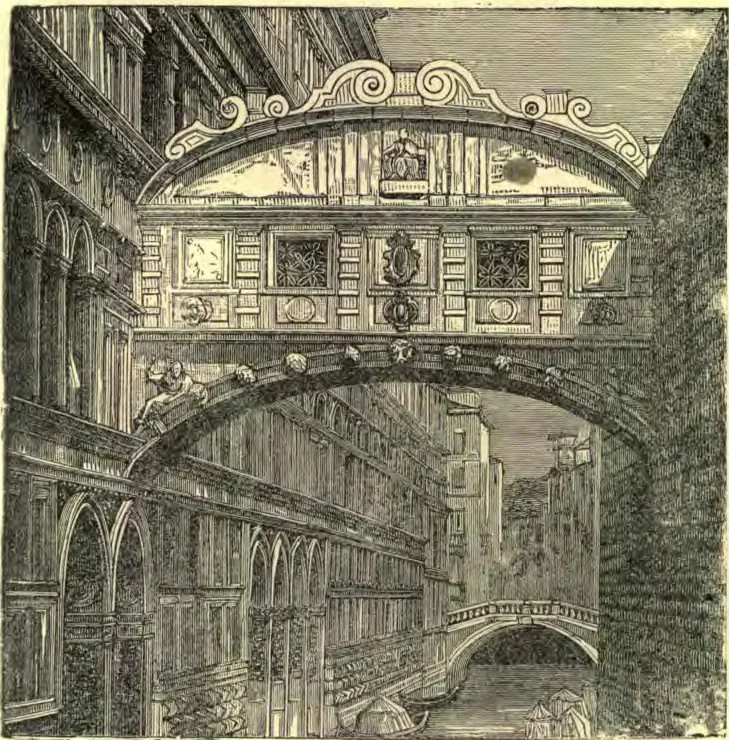
ABOUT four hundred fifty years after Christ, the people living in Venetia, a province in the northern part of Italy, were so harassed by their enemies from the north, that they fled from their country and took refuge on a large group of islands in the Adriatic Sea, a few miles from the shore. There they continued to dwell, and in course of time built on these islands the magnificent city of Venice. These islands were originally about eighty in number, but have since been cut through by canals until there are now some one hundred fourteen of them. They lie so close together that the channels between, form, as it were, streets of water, so that the people go about the city in boats instead of carriages. The city is divided into two parts by what is called the Grand Canal, which is two miles long and from 160 to 230 feet broad, and passes through the city in the form of the letter S. The smaller canals are from eight to twenty feet in width. The houses are built so close to the water that their foundation walls help to form the sides of the canals, and the boats can come up to the very doors. The houses are built of stone, and are three or four stories high. The first story, which is only two or three feet above the surface of the water, is used as a cellar, while the people live in the stories above. The finest houses and many palaces and churches are built along the Grand Canal. Many of these grand palaces, once the houses of proud old families, are now used as hotels or places of business. The houses of Venice are very substantially built, and though there is scarcely one that has stood less than three hundred years, they still look as though they might stand for hundreds of years to come.
The boats in which the people go about the city are called gondolas, and the men who paddle them around, gondoliers. If you were to go to Venice, instead of being taken from the depot in a cab or hack, a gondola would meet you there, and take you to any place in the city at the rate of five cents an hour. The gondolas are by an ancient law of the city all painted black, and are long and narrow, with a little cabin in the center large enough to hold four passengers. The gondolier stands up at the front of the boat while paddling, and entertains his passengers by telling them stories about the sights they pass, and by singing them songs in his native language.
You must not get the idea, however, that one cannot go about the city of Venice except by water. There are many narrow streets on the islands, which cross the canals by arched bridges. Of course there are some houses which face these inland streets, but it is thought much nicer to live in houses that face the water. The Grand Canal is crossed by only three bridges. One of these, the Rialto, is much the finest. It is almost as wide as it is long, and is divided into five strips, or sections; the two outside ones are occupied by shops, and three are left for footways. There is no need for driveways; for there is not a horse in all Venice, except the four bronze ones in St. Mark's Square. The principal gateway of the city is guarded by two huge marble statues of a winged-lion, which was the emblem of the ancient Republic of Venice.
St. Mark's Square is the finest portion of the city. This square is an open court 540 feet long by 246 wide, and is paved with smooth blocks of granite. It is surrounded by magnificent buildings of white marble. One side is occupied by St. Mark's Cathedral, the finest church edifice in Venice. It resembles in many respects the church of St. Sophia, as built by Justinian at Constantinople. In one corner stands a clock-tower, three hundred feet high, which can be seen from all parts of the city. On another side of the square stands the old City Hall, while on the side opposite to it, is the new City Hall and the City Library. On the fourth side, opposite the Cathedral, is the Doge's palace, “a more than royal house, since it is richer than the palaces of kings.” (When Venice was a republic, the chief officer of the government was called the Doge as ours is, the President.) In this palace are the council chamber and court room where prisoners were tried and condemned. Just back of this palace, and separated from it by a narrow canal, is the prison where convicts were confined and executed. Leading from the palace to the prison is the famous bridge seen in the picture, known as the “Bridge of Sighs.” It is a covered bridge built wholly of white marble, highly ornamented. The sides are of open sculptured work, which admits light and air. The interior of the bridge is divided into two passages, separated from each other by a close wall. Thus prisoners could be carried back and forth from the court room to the prison without being seen even by one another.
Venice has a strange and eventful history, and thrilling stories are told of the terrible secrets and dark deeds of the old palace and prison. The many weary feet and aching hearts which have passed the portals of this bridge, bearing the sentence of torture and death, or even worse, life-long imprisonment in the dark, damp dungeons below, may well have given its name, the Bridge of Sighs. Lord Byron, in one of his poems, has paid a fitting tribute to Venice and the Bridge of Sighs:—
“I stood in Venice on the Bridge of Sighs, A palace and a prison on each hand, I saw from out the waves, her structures rise, As by the stroke of the enchanter's wand, A thousand years their cloudy wings expand Around me, and a dying glory smiles O'er the far times when many a subject land Looked to the winged lion's marble piles, Where Venice sat in state, throned on her hundred isles.” E. B. G.
THE CHRISTMAS-TIME.

The merry Christmas, with its generous boards, Its fire-lit hearths and gifts, and blazing trees, The pleasant voices uttering gentle words, Its genial mirth attuned to sweet accords, Its holy memories. The fairest season of the passing year,— The merry, merry Christmas-time is here.
The sumacs by the brook have lost their red; The mill-wheel in the ice stands dumb and still, The leaves have fallen, and the birds have fled, The flowers we loved in summer, all are dead; And wintry winds blow chill: Yet something makes this dreariness less drear,— The merry, merry Christmas-time is here.
Since last the panes were hoar with Christmas frost, Unto our lives some changes have been given; Some of our barks have labored, tempest-tossed, Some of us have loved, and some have lost, To some sweet rest been given; So, humanly, we mingle smile and tear, When merry Christmas-time is drawing near.
—Selected.

BELIEVING, NOT FEELING.

“ONLY a step to Jesus— Why not come and say: ‘Gladly to Thee, my Saviour, I give myself away’?”
“Have you done that, dearie?”
Bessie was singing the words softly to herself as she sat on the piazza in the twilight of the summer evening.
“Why, that’s just what troubles me, auntie,” whispered the young girl, as Aunt Margaret came near and asked the question.
“What troubles you, Bessie?” She passed her arm around and drew her closer.
“That about giving yourself away to the Saviour, Aunt Margaret. I’ve done it a great many times, for I really want to belong to him, but somehow it don’t seem to make much difference.”
Bessie was shy, little given to showing her feelings or speaking of herself. The quiet beauty of the hour had probably drawn her to express herself, and Aunt Margaret was glad to encourage her. Her mother had died a year before, since which time the sensitive girl had had few to interest themselves in her until this aunt had come to have charge of the house.
“I don’t quite understand you, dear. It surely ought to make a great deal of difference in any one to go to Christ in complete giving up of self. He promises his love and pardon and peace to all who do this, and the having of all these must mean a great deal.”
“But auntie, how can I know if I have all these?”
“Do you believe that Christ tells the truth, dear?”
“Why, to be sure I do, ma’am. What a strange thing to ask me!”
“Well, Bessie, he says: ‘Him that cometh to me I will in no wise cast out.’ If you believe in his word, you know he will give you all these if you come to him—you know it because he says it.”
“But,” Bessie still looked anxious and unsatisfied, “I have tried it, Aunt Margaret, and it must be that I don’t do it right, for I feel just the same after it as I did before.” Aunt Margaret smiled.
“Ah, you poor little thing, is that where you have been stumbling? Listen, Bessie—there are many, many texts in the Bible which invite and urge us to come to the Saviour. We are told to come boldly, to come now, to come with all our sins and sorrows upon us. And we are promised that all our needs shall be supplied from out of the riches of his grace. But there is not one word about our feeling as if we were accepted. We are told only to believe we are, and if we believe it, we know it, don’t we?”
Bessie looked thoughtful.
“I see, auntie. But if it were only something we could see and take right hold of, it would seem more real, wouldn’t it?”
“Bessie, if your father should come home and say to your brother Herbert: ‘I have given to you to-day a section of western land; the papers are in my safe, and it is legally yours’—would he know whether it was his or not?”
“Oh, yes, he would be sure of it if papa said so.”
“But what if Herbert should say: ‘I don’t feel as if it were mine, father, because you haven’t put it in my hand so I can see it and touch it’!”
“I know what you mean now, Aunt Margaret.”
“My darling girl,” she went on tenderly, “believe in all the dear Lord says, because he says it. He loves you, and in return for the gift of your trusting heart he promises you all the blessings which come of his loving care and guidance through life, and all the treasures of his kingdom in glory hereafter. Go to him in full assurance that when you give yourself to him, he accepts you entirely. Fix your heart on this belief as on a solid rock, and I think you will find ere long in your own happy experience the truth of his precious promise to keep them in perfect peace whose minds are staid on him.”—His Jewels.

OUTSIDE VS. INSIDE.

“I wish I was dead! I’m poor, and ugly, and deformed, and unhappy, and—”
“Alice!” a gentle hand was placed on her shoulder, but Alice, absorbed in her gloomy thoughts, gazed vacantly out of the window.
“Alice,” repeated the soft voice, “Alice, why will you persist in making yourself so miserable?”
The young girl turned, and said, almost fiercely, “We read to-day in our class, ‘A thing of beauty is a joy forever.’ The girls looked at me,—you need not shake your head, Miss Evans, I know they did. How could they help it? I put it to you, yourself, Am I a thing of beauty, that I should be a joy, either to myself or others?”
“Come into my room a few minutes, Alice; I have something to show you,” was the only answer her teacher gave, as she opened the door, near her.
Alice slowly limped after, thinking bitterly:—
“Yes, that is always the way,—evading the question. She knows that I am unlovable as well as unlovely.”
Miss Evans was standing by her desk, on which was a small, rough box.
“I have just received a letter and a package, from a friend who lives in a far-off land. This is her picture, taken years ago.”
The simple morocco case she handed Alice was old and faded; the corners were rubbed, the hinges broken, and the velvet lining dingy. The face that looked forth from it was not beautiful, but so gentle and loving that you were attracted to it at once. Alice gazed in silence, then said:—
“How you must value it! I wonder, Miss Evans, you don’t have it put in a new case. I should think you would get a handsome gold medallion for it.”
“I can’t afford to, but would not if I could. I like it best as it is. This is the case she gave it to me in. No gold or jewels or coloring could make me care more for the precious face within. It is that, not the outside case, I value. See, here is her letter.”
Alice laughed; for the letter had been weeks, and even months, on its way; and had traveled in all sorts of conveyances, from a camel’s back to steamer and railroad car. The envelope was an indescribable color, covered with odd-looking stamps, and bore numerous marks of the dirty fingers of various mail-carriers, and had evidently even made the acquaintance of a gutter, or some such place.
“Pretty well soiled, isn’t it?” said Miss Evans; “but never mind, the contents are clean; we won’t care for the outside. I’ll read you what she says.”
Alice sat spell-bound, as her teacher read sparkling descriptions of what were to her unknown lands. “I suppose,” said she, when it closed, “you will keep that letter always. Who would suppose so much was hidden under that dirty envelope?”
“Appearances are deceitful. What would you suppose was in that rough box?”
If you had not told me that it had came from foreign parts, I should have said slate-pencils, or chalk, or something equally valuable.”
“What do you think of this?” and Miss Evans held up what looked like a piece of rough stone.
“I shouldn’t think that was worth sending so far.”
“It is a valuable specimen for our geological cabinet. Look here.”
She turned it over, and lo! the other side was exquisitely polished.
“You would not suppose it was capable of so much beauty, would you? And here is a specimen of wood, the same way.”
“Look at this piece of moss; it must have fallen in; it was never intended to travel so far,” cried Alice, taking up what looked like a dried weed, about an inch square.
“Lay it in that basin of water, while we examine the rest.”
“An odd pebble! What a queer thing to send! Why, Miss Evans, I’ll pick you up a basketful on the beach in five minutes.”
“I should be happy to accept them, if they are like this. That is a diamond. I did not read you that part of the letter where she says, ‘I send you a diamond in the rough. It costs less to transport, there is less danger of its being stolen, as few would suspect its value, and you can have it cut to suit your own fancy.’ Ah! Alice, under the unsightly outside lies a jewel fit to sparkle in a king’s crown. Now hand me the basin.”
Alice turned to do so, but instantly uttered a cry of surprise.
“O Miss Evans, look at the bit of weed! It has expanded, and filled the whole basin with a beautiful green plant!”
“Yes; that is the rose of Jericho, or resurrection plant. When you take it out of the water, it will contract as stiffly as ever.”
“Will wonders ever cease?” said Alice.
“No, my dear; not till this mortal shall put on immortality. God has hidden many of his best treasures under a rough outside. But he seeth not as man seeth, and he knoweth his own jewels.”
There was a long silence, then Alice said, softly, “Dear Miss Evans, I see what you would teach me by all this. I will try and profit by it.”
Do all who read this, read the lesson also?—
Young Reaper.

CHRISTMAS

CHRISTMAS, merry Christmas, so happy, glad, and free, Has come again to greet us, with gifts and pleasantry, Although its age is told by eighteen eighty-two, It comes to us as young, and fresh, as festive and as true, As when announced on Judah’s plain, Amid the holy, shining train.
Glory to God on high, and peace on earth to man! Was sweetly sung by the heavenly choir, when Christmas first began; And as the gentle accents rolled, along the vaults of Heaven; The choicest gift man ever knew was unto him then given. “For unto you a Christ is born,” The angels said that Christmas morn.
“His name is called the Wonderful, the mighty Prince of peace, The everlasting Father—to all he brings release: Of the increase of his government, and peace there is no end, He’ll surely sit on David’s throne, and justice will extend To all the nations far and near, Who bow to him, his name revere.”
The wise men, guided by the star, the promised child soon found, His form was wrapped in swaddling clothes, his bed was near the ground, A manger was the only place the people then would give To the Saviour of mankind, when first on earth he lived,— He who had left his home on high, For sinful man to bleed and die.
Now who will bring a Christmas gift this bright and happy morn, Of a broken, contrite heart to the Saviour of mankind? Are there any of the youthful band who read these pages o’er, Who will begin to serve him now, and love him evermore? Will yield their all into his care, And for a home in heaven prepare?
C. S. BERRY.

SCENES IN THE LIFE OF CHRIST.

LESSON 101.—OUR SAVIOUR'S LAST DISCOURSE BEFORE HIS CRUCIFIXION.

After the supper was all over, Jesus had a long talk with his disciples. He tried to comfort, encourage, and strengthen them, so that they might be prepared to meet the trials that were just before them. Some of the things which he said to them are recorded in the fourteenth, fifteenth, sixteenth, and seventeenth chapters of St. John's Gospel. He said, “Let not your heart be troubled; ye believe in God, believe also in me. In my Father's house are many mansions; if it were not so, I would have told you. I go to prepare a place for you. And if I go and prepare a place for you, I will come again and receive you unto myself; that where I am, there ye may be also.”
When Philip asked how they might find the way to those heavenly mansions, Jesus said, “I am the way, the truth, and the life.” He encouraged them to come to him in prayer, saying, “If ye shall ask anything in my name, I will do it.” Of course, if we should ask for anything that is not good for us to have, he would not be likely to grant it; but if we ask in faith, and with right motives, he may give us something far better than we ask.
Then he said, “If ye love me, keep my commandments. And I will pray the Father, and he shall give you another Comforter, that he may abide with you forever; even the Spirit of truth; whom the world cannot receive, because it seeth him not, neither knoweth him; but ye know him; for he dwelleth with you, and shall be in you.” He told them that he would soon have to leave them; but that they should not be comfortless; for if they would be obedient, they should have the Holy Spirit to be with them forever.
By a beautiful figure, Jesus showed how necessary it is that we should love him continually, in order that we may have help from him to do right. He compared himself to a vine, his disciples to the branches, and his Father to a husbandman. He said, “Abide in me, and I in you. As the branch cannot bear fruit of itself, except it abide in the vine; no more can ye, except ye abide in me.”
Then said Jesus, “If ye keep my commandments, ye shall abide in my love; even as I have kept my Father's commandments, and abide in his love. . . . This is my commandment, That ye love one another, as I have loved you. Greater love hath no man than this, that a man lay down his life for his friends. Ye are my friends, if ye do whatsoever I command you.” “If the world hate you, ye know that it hated me before it hated you. If ye were of the world, the world would love his own; but because ye are not of the world, but I have chosen you out of the world, therefore the world hateth you.”
At the close of his discourse, our Lord made a most touching and earnest prayer. He asked the Father to accept him and glorify him. He said, “I have glorified thee on the earth; I have finished the work which thou gavest me to do.” Then he prayed for his disciples, that they might be one, and that they might be kept from the evil.
After praying for the disciples that already believed on him, he said, “Neither pray I for these alone, but for them also who shall believe on me through their word; that they all may be one; as thou, Father, art in me, and I in thee, that they also may be one in us; that the world may believe that thou hast sent me.” “Father, I will that they also, whom thou hast given me, be with me where I am; that they may behold my glory, which thou hast given me; for thou lovedst me before the foundation of the world.”

QUESTIONS.

1. On the evening of the Passover, what did Jesus do, after the supper was entirely past?
2. In this talk, what did he try to do for his disciples?
3. In what chapters are some of these sayings recorded?
4. What did he say to them about being troubled? John 14:1.
5. For what purpose did he say he was going from them? Verse 2.
6. What did he promise to do for them? Verse 3.
7. What reply did Jesus make when Philip asked him how they might find the way to those heavenly mansions? Verse 6.
8. How did Jesus encourage his disciples to come to him in prayer? Verse 14.
9. What must we expect if we ask for anything that it is not good for us to have?
10. How did he say we ought to show our love for him? Verse 15.
11. What did he say he would pray his Father to do? Verse 16.
12. Who is this Comforter? Verses 17, 26.
13. Who alone can receive this Spirit?
14. What did Jesus say about those that love him, and about the love they will receive? Verse 21.
15. What did he say they should have if they were obedient?
16. What lesson did Jesus teach by a beautiful figure?
17. To what did he compare himself, his disciples, and his Father? John 15:1, 2.
18. What admonition did he then give them? Verse 4.
19. What did he say to show the importance of heeding this admonition?
20. How did Jesus say his disciples should be able to abide in his love? Verse 10.
21. What commandment did he especially impress upon them? Verse 12.
22. What is the greatest love that any one can manifest? Verse 13.
23. How can we best show that we are the friends of Jesus?
24. What have we to comfort us when people hate us without a cause? Verse 18.
25. Why is it that people of the world often hate true Christians? Verse 19.
26. What did our Lord do at the close of his discourse? John 17:1.
27. What favor did he ask of his Father?
28. What did he say he had done? Verse 4.
29. In praying for his disciples, what favors did he ask for them? Verses 11, 15.
30. After praying for the disciples that already believed on him, what did he say? Verse 20.
31. What petition did he make for those who should afterward believe on him? Verse 21.
32. Why did he seem to feel so anxious that this petition should be granted? Verse 23.
33. What further request did he make? Verse 24.
Continue reading: NEW-TESTAMENT HISTORY