THE Dallas News of the 21st of March last, gives an account of a spicy discussion in the Lower House of the Texas legislature, touching a vital point as follows:—
At the conclusion of the prayer, Mr. McLemore offered the following:—
WHEREAS, the prayer which appears in the house journal this morning is an unjust and unwarrantable reflection on certain members, therefore be it
Resolved, that the portion of the prayer which reads, “O, God, open the eyes of those who have allowed the love of money to be balanced against virtue that they may see that purity is above rubies and that in their hands is placed the power to save those against whom the false standard of society has closed the churches and all avenues of reformation,” be expunged from the journals of this house.
Mr. Sebastian moved to table the resolution.
The house refused to table by a vote of 39 to 63. Mr. Dills offered a substitute that the entire prayer be expunged from the journals, and hereafter the prayers of the chaplain be not printed in the journals.
At the end of an hour and ten minutes this matter was disposed of.
Mr. Rowell spoke indignantly against being accused of placing money above virtue. It referred to the vote of members against the bill making an appropriation to establish the home for fallen women, and insisted it was out of place for the chaplain to criticise members and their motives in his prayers.
Mr. Davis questioned the right of an opponent of the fallen women's bill to conclude that the prayer was directed specially in his behalf. It might be construed from his reading of it to mean that advocates of the bill were aimed at. The gentleman, anyway, has no right to object to being the special object of prayer. “Almost every member needs to be made the object of special prayer. The real question at issue is whether this body shall instruct the chaplain how he shall invoke the throne of grace. Now, I ask what individual member can feel that he is persecuted by the chaplain, unless he appreciates that he loves money more than virtue?”
Mr. Fagan, of Lamar, contended that the printing of the prayers in the journals is an innovation. It had no precedent in this country. He was opposed to all tendencies toward uniting Church and State and to the jumble of prayers and records, mixing up house action with chaplain criticisms on such action. No one can say it is not a direct thrust at members who opposed the appropriation for the fallen women's home. I am opposed to such attempts of the chaplain to dictate to this house. It seems to me the prayer is capable of no other construction than that these poor, heathen members of the house opposed to the fallen women measure place money above virtue. That is an insult to members. This prayer ought to be stricken out and in future should not be printed in the journals.
Mr. Turner.—Dr. Pennington is here in the house, and since he is attacked it is nothing more than right and just, if he wishes, and he does wish it, that he be given an opportunity to express himself. He is debarred any explanation unless the house grants him the privilege, and I move he be granted the privilege.
Mr. Fields.—The whole affair is unprecedented and I object to it.
The Speaker.—I have informed the chaplain, when he asked me for permission to explain, that I could recognize no one but a member, but it is competent for the house to grant him the privilege.
Mr. Peck.—The chaplain ought to have the right to explain. When the gentlemen who voted against the fallen women's bill hear the chaplain explain they will be perfectly satisfied. The tendency of such resolutions is to muzzle the chaplain. He has made no personal allusion to the motives of any member. He may have used words as members do that he would not use on reflection and there should be forbearance for him as well as for members.
Mr. Graham.—Why may he not put his explanation upon the journals?
The motion to give the chaplain his turn was adopted.
Chaplain Pennington.—I have no explanation to make. I simply wish to say that I had no individual member in my mind and meant to cast no reflection, but that I had in my mind the great importance of virtue and the salvation of souls in comparison with the love of money. You will remember in the debate on the bill it was said that the reclamation was the work of the Christian people and preachers and I wished only to say that the false standards of society prevented the preacher from engaging in the work. You know I could not go into those dens under the ideas which govern and control society. On mature reflection I might change my language somewhat. I meant simply that consideration of the cost of the good work might deprive a great many of being reclaimed. I meant to reflect on no member. They are all patriotic, honest and honorable gentlemen, but if I have not the right to pray that members' eyes be opened, then I must have my prayers dictated. I thank you for your attention. [Applause].
Mr. Alston.—When a chaplain comes here and offers up prayer proposing merely to please the members of this body, we should have no chaplain. Without prayer and much prayer you are gone and gone forever. There is nothing that transpires here that does not need prayer and more prayer. To-day there are members criticizing the prayer who are steeped in vice and folly and need prayer. There are members who oppose the prayers of the chaplain who would not dare to let in the sunshine upon their daily transgressions.
The Speaker.—The gentleman must avoid personal reflections.
Mr. Alston.—I am not personating any member. Mr. Dill disclaimed any desire to reflect upon the chaplain in this matter or any other. He indorsed him as a godly man, and earnest Christian gentleman, but objected to printing prayers in the journals.
The previous question closed the debate and the resolution and substitute were both rejected.
The chaplain's statement that if he have not the right to pray that members' eyes be opened then his prayers must be dictated, forces from one who has ever given such matters sufficient thought, the very pertinent inquiry, Why not? As he is paid by the State to pray for its lawmakers, why has not the State the right to dictate, through its representatives assembled, for whom the prayers are to be offered—as to how the chaplain shall pray? True, it divests the petitions of the real essence of prayer, extracting from them every element of virtue, and reduces them to empty utterances of a State-paid functionary, whose hollow deliverances of man-pleasing eulogies are offered for a stipulated sum and called prayer. But what matters that? It is the State's prayers. It has paid for them, and certainly the man who accepts the job of offering them for what the State proposes to give, is not the one to object to whatever the State might require him to pray, so long as he holds on to the job and receives the pay. And this illustrates, not only the injustice of imposing a tax on people to pay for such prayers when they do not believe in them, but also shows the mock that is made of such sacred things. It is a parody upon religion. Chaplain Pennington is simply an employé of the State, as are all State chaplains. It is a principle well understood everywhere that the employé is subject to the dictation of the employer as to his work, and it would be an impeachment of Dr. Pennington's common sense and intelligence to say that he does not understand this as well as anybody. Then, in accepting of this employment and receiving the pay for it, he but accepted of the dictation on the part of his employer with it. Why, then, should not the State dictate his prayers? Again we ask, why not?
“When a chaplain comes here and offers up prayer, proposing merely to please the members of this body, we should have no chaplain,” says Mr. Alston, in defense of the chaplain. Mr. Alston has exactly the correct idea of the work of a minister in this respect as regards a minister of Christ and his gospel, but not when he is a minister of the State. When he is simply and only a minister of Christ, a freeman indeed, hampered by no State salary and State supervision, he can, and must, if he does his duty, pray without reference to pleasing or displeasing anybody save his Master whom he is serving. But when he is a minister of the State—hired by it and a beneficiary of it—why, then, what else is to be expected than that he should pray to suit its representatives? And if he does not, why should they not demand it? Again the ever present and sometimes troublesome interrogatory presents itself—Why not?
We have no inclination to undertake the unquestionably difficult task of proving that the moral status of some of Mr. Alston's colleagues is not as he represents it, and that therefore his remark to them, “Without prayer and much prayer, you are gone and gone forever,” may be strictly true and not bad advice to them, but the question is then, are they and he going to depend on praying by proxy, and it State paid at that, with which there is a remote possibility that the five dollars per prayer has something to do? Yet that is just what this chaplain system encourages in people.
Mr. Fagan sees, in such things as the printing of the chaplain's prayers in the journals, “tendencies toward uniting Church and State” to which he is opposed. It were immeasurably better157that he and all others should go to the root of the matter and see these “tendencies” in the offering of these prayers by State support, and not alone in their publication in its journals; that the whole system of State chaplaincies, and their maintenance by State support, is a flagrant violation of the American principle of complete separation between the Church and the State. It is not merely a mild suggestion of “tendencies toward uniting Church and State,” but a positive proof of the existence of relics of the system yet remaining. And this is the thing to protest against, and not merely the publication of the prayers, as “tendencies” in that direction. Let us be glad that this much is seen by one of the members, but why not take a deeper view of the matter and go to the beginning of it. A tree is never killed by merely picking the green leaves from its boughs, but must be struck at the roots. So in this matter. Why not be consistent here? Why not?
W. A. McCutchen.
Atlanta, Ga.
Tweedledee and Tweedledum.
By C. A. Wyman
To the majority of the citizens of the United States there seems little or nothing to fear from the attitude of Catholics towards the free institutions of our country. The masses observe with amazement the change that has apparently taken place in the removal of church censure by which Catholics have been, in a great measure, deterred from sending their children to the public schools. Knowing what Rome has uttered and attempted in reference to these institutions in the past, it would seem as if there were now a mighty concession towards the final acceptance of the features of our school system in the education of Catholic children. To the student of history and prophecy this “now you see it” and “now you don’t see it” policy of Rome brings no deception. One might as well think the leopard could change its spots as to believe that the Church of Rome has changed its principles. Well has Bishop Ireland said that—
the most farseeing liberal mind in the world to-day is that of Leo. The most gentle and generous heart is his. Neither Catholics nor Protestants of America know him sufficiently. It is the duty of all to study him.
These lullaby statements of this Jesuitical priest are uttered to allay the fears and soothe the troubled minds that have felt alarm at the settled principles that have issued from the Vatican. Pius IX. said that—
public schools open to all children for the education of the young should be under the control of the Romish Church and should not be subject to the civil power nor made to conform to the opinions of the ages.
And the greatest organ of Romanism in this country, the Catholic Review, says the right of the State to foist upon its citizens a school system without consulting their religious convictions on the one hand, and their rights as citizens on the other, is one that must be rejected totally—always denied and thoroughly pounded as long as it asserts itself. And farther, in reference to the province of the State in education says:—
Its assumption of the right to tax a powerful minority to support a school system which it will not use must be resisted.
All this has seemingly been set aside by a stroke of pen policy to soothe the ruffled elements that were scurrying to the defense of our justly popular free institutions of learning. Monsignor Satolli, in deciding the right of Catholic parents as to allowing their children the privilege of public schools, without incurring the censure of the church, has successfully hoodwinked the masses, and to that extent that leading journals have said:—
The effect of this decision will be revolutionary, as far as the parochial school is concerned. It marks an epoch—the epoch of decline in the history of sectarian common school education. Indeed, it is the beginning of the end of parochial schools.
Thus the old tattered rag of charity for Rome’s incursions receives a goodly patch and is drawn so easily over the prostrate figure with the hydra head. Let none be deceived. This apparent concession is only the “possum” state of the animal and the danger signal to those who put no trust in the arm of flesh, but rely upon the sure Word. C. A. WYMAN.
Right to Work on Sunday.
The Case of Seventh-day Adventists Continued.—An Interview with Their Counsel.
The case of the State vs. Isaac Baker, the Seventh-day Adventist who is charged with violating the Sunday law, was continued Tuesday morning on motion of the counsel for the defense, Mr. Jas. T. Ringgold, of the Baltimore Bar. The State made no opposition to the continuance, the ground upon which it was asked being that the law points involved were precisely the same as those in the case of John W. Judefind recently convicted at Chestertown on the same charge, and a brother of the same communion. Mr. Ringgold was seen at the Arlington Hotel by a reporter of this paper and asked to explain the extraordinary interest in the Seventh-day Adventist trials which had led to his appearing as counsel in behalf of these cases. Mr. Ringgold spoke substantially as follows:—
“I represent an organization known as the International Religious Liberty Association which has recently undertaken to test the constitutionality of all American laws which in the belief of its members represent a union of Church and State. The Sunday laws are by no means the only survivals among us of this English system, but they are by far the most conspicuous and dangerous to American liberty. Heretofore the resistance offered to them has been passive rather than active. It has come chiefly from our Hebrew fellow-citizens and from some who expressly repudiate all religious belief and obligation. It is only recently that a body of believers has undertaken to oppose these laws, because they are Christian believers, and as such find that not only is their civil liberty abridged by Sunday laws, but that they are constrained thereby to a line of conduct which their belief as Christians teaches them is wrong. These people are known as the Seventh-day Adventists, and the International Religious Liberty Association has espoused their cause most gladly and proposes to fight their battles to the utmost wherever they may be attacked.
CHRISTIANITY AND RELIGIOUS EQUALITY.
“It seems to me that results more important than the decision of any trial, or any number of trials, for breaches of the Sunday law are likely to grow out of this position taken by the Seventh-day Adventists, and their faithful adherence to it. One of the most important of these results will be forcing of American people to consider the extent to which religious dogmas are embodied in the governmental system of every State. This will be followed, as I hope and believe, because I believe in the American people, by eradication of all traces of such dogmas in the fundamental law of the States and also in the statutes. Another result will be to concentrate the minds of all Christian people upon the teaching of the Founder of Christianity, that no union between His Church and the State is possible. This ought to lead all who profess and call themselves Christians to strenuously oppose not merely union with the State of other churches than their own, but even more strenuously, if possible, the union of their own church with the State, leading, as they must perceive, to the total destruction of its character as a Christian Church.
“Without going into the question of the dogmatic teaching of the Seventh-day Adventists, I may say that they are the only Christian communion of which I am aware, which adheres rigidly to this all-important teaching of the Founder of Christianity. You will understand then that while they deprecate Sunday laws as embodying recognition by the State of a religious doctrine held by other people, they would not accept Saturday laws of like character from any State, and would not accept them for the very reason that from a Seventh-day Adventist standpoint all such laws would identify their church with the State and thereby destroy its Christian character. To find the professors of a clearly defined religious faith even declining a State preference for their religion over another is a remarkable experience and has given me an interest in this extraordinary people which deepens the more I know and see of them.
HOW THE SUNDAY LAW EMBODIES THE UNION OF CHURCH AND STATE.
“It is a fact, strange as it may seem, that every one of our State constitutions contains a more or less explicit inhibition on any preference by the State of one religious belief over another and any recognition by the State of any religious dogma, and that in spite of all this the early Sunday law cases dared to sustain these statutes upon the express ground that the Christian religion was to be preferred above all others, and that these laws embodied a recognition by the State of the Christian religion as the right religion, and the repudiation by the State of all other religions as wrong religions. It was only after a number of years and repeated efforts that the courts were driven from this untenable position, and of late they have retreated to what is known as the holiday theory of these laws, claiming that they are ‘police regulations.’ This position, however, is, if anything, more untenable than the other. A holiday law enforced by a penalty would certainly never be passed outside of bedlam. Moreover nearly all Sunday laws contain a prohibition of play as well as work, so that the State under the holiday theory says to the citizen in the Sunday law, ‘You must be cheerful and enjoy yourself on Sunday, and to encourage you to do so I will forbid you to attend to your regular occupation, and fine you if you undertake to amuse yourself.’ The only158parallel to this holiday theory of Sunday laws is found in Nicholas Nickleby, where Mr. Squeers, finding one of his pupils depressed, moistens his right hand, takes a fresh grip on his rattan, and observes, ‘Cheerfulness and contentment must be kept up. Moggs, come here.’ The language of the Sunday laws no less than their provisions, shows conclusively that they are religious dogmas incorporated into the statutes, and nothing else whatever. Take the section under which Mr. Baker has been prosecuted; you will see that it describes the day as ‘The Lord’s day.’ Now this phrase embodies several propositions which belong solely to the domain of religion, and the use of this phrase involves a preference by the State in the matter of religion, and the enforcement of a law based upon this conception of the day, constrains the citizen in a matter of religion. For instance, these are all religious questions, and religious questions only—first, whether there is or is not a Lord; second, whether there is or is not such a day as the ‘Lord’s day;’ third, whether any special line of conduct is obligatory upon men upon that day as distinguished from other days; fourth, the most important of all to my client, the plainly religious question, What is the ‘Lord’s day’? All these things lie embodied in this section of our Sunday law and stamp it with the character of religious legislation in direct defiance of the provisions of our bill of rights.
“I will go further and say that the advocates of Sunday laws—I mean the extreme fanatical advocates of such laws—recognize them in their own minds as embodying the union of their Church with the State, and care for them in no other aspect whatever. With many of these people it is a case of shameless, intellectual dishonesty, which is, in my humble judgment, one of the greatest crimes being committed against the human soul. When they pretend that they attach the slightest value to Sunday laws in their holiday aspect they are guilty of false pretenses and are urging arguments in which they take not the slightest interest themselves, which have not the slightest weight in influencing their position, because they believe that these arguments will address themselves with some force to other people. All history past and present shows that this is true.
“You must bear in mind that our American Sunday laws all have their origin in the established Church of Brownism, which was set up in this country by the Pilgrim Fathers. The Brownists were the sect of a sect, being the offshoot of the Puritan school of ecclesiastics in the English Church. Men of their extreme views passed the first Sunday laws to which our colonial acts are to be referred. The first of these laws in England was not directed against work at all, but against travel. The second of them was not directed against work at all, but against sports and pastimes. It was only after a number of years that it dawned upon the English Puritans that work on what they called the Sabbath ought to be punished as well as play. If we come down to present times we shall find those who are chiefly active in instigating prosecutions under our Sunday laws pay more attention to pastimes and pleasures of other people than they do to other work on Sunday. For instance, they are far more excited and inflamed by a Sunday excursion than they are by the work on Monday’s newspapers, which is all done on Sunday. They are more offended by a game of baseball in the suburbs than by the running of horse cars in the midst of the city. In fact, I think there are good grounds for the position that if the extreme advocates of Sunday laws were given their choice whether to dispense with the prohibition of play or the prohibition of work, they would prefer to have the play forbidden and have the work go on.
THE QUESTION NOT OF DOCTRINE, BUT OF THE STATE’S RIGHT TO ENFORCE DOCTRINE.
“I would like to add that the Seventh-day Adventists desire no more recognition of their particular faith at the hands of the court than they do at the hands of the legislature—that is to say, they do not ask or expect any court to declare as between them and other denominations the question of what is the Sabbath, nor would they recognize the decision of any court upon that question. The point is that to compel them to appeal to the court on the strength of their particular religious belief is to infringe upon their rights of conscience, because they are responsible to no court for that belief, and no court has the right either to ask them what it may be or to decide between it and other religions. While they claim, and rightly claim to be the champions of religious equality for all the people, and claim, and rightly claim that their cause is really the cause of every Church which claims to be Christian and wishes to keep so by keeping free from contact with civil power, yet it does happen that the Brownist dogma embodied in the Sunday law presses upon them with greater hardship than upon our Hebrew fellow-citizens and others, because it not only compels them to be idle on one day at the command of the civil power in addition to the day which they observe, not as one of idleness but one of devotion to duties of religion, but it also demands of them an outward compliance with a religious doctrine which they believe to be expressly contradictory to the Scriptures and to true Christian belief. And this constraint is laid upon them without the slightest reference to any social aspect of their conduct upon Sunday or the question of whether anybody else is in any way interfered with by it. Surely the ultimate verdict of the American people will be that it is a cruel and wanton proceeding for the State not only to embody in her statutes a religious dogma but to use the police power to enforce an outward deference to that dogma by citizens who believe such deference to be sinful, and for the State to do this when it is not demanded by any social consideration whatever.
NOT NECESSARY AS A POLICE MEASURE.
“Allow me one word more. It is absolutely false that there is any difference whatever in the police conditions required on Sunday and the police conditions required on any other day. It is absolutely false as well as insulting to all pious persons to pretend that they do not discharge the duties of private and public devotion on other days as well as Sundays. Prayer meetings, revivals, church gatherings of every sort are constantly held on week days, and nobody claims that they are not quite as satisfactory to those who hold them as similar proceedings on Sundays. And I will say also that it is absolutely false to pretend that any different police conditions are required for the peaceable and orderly conducting of a religious meeting from the police conditions which are required for the similar holding of any other kind of meeting. The right of the people peaceably to assemble for religious or any other purposes at all times will be protected by the police independent of Sunday laws. If, therefore, all such laws were repealed the people who hold religious exercises upon Sunday would be no more disturbed than they now are. And as these laws are evidently not passed either for holiday or police purposes, it follows once more that they are religious dogmas embodied in American statutes, and nothing more or less. This is the view which, if possible, the International Religious Liberty Association will finally see adopted by the American courts.”—Centerville (Md.) Record, May 6, 1893.
The Government Surrendered to Roman Catholicism.
By A. Smith
It is a subject too well understood to need elucidation in this connection, that the Roman Catholic Church is exerting her utmost power to obtain control of our Government. This, however, she could never succeed in accomplishing single-handed or by direct attempt; but Protestantism, so-called, under the guise of a National Reform organization with its numerous allies, losing sight of proper methods of evangelization, has itself eagerly sought to obtain control of the Government (the very thing she detests in the Romish Church) in the interests, and for the enforcement by national authority of the so-called Christian Sabbath or Sunday, an institution which she has received as a heritage from Rome.
Seeing in that church a possible ally of great power on the question of Sunday observance, she has made overtures of a union on that basis, has been accepted, and they have become consolidated. In that act she has surrendered herself to Catholicism, has ceased to be Protestant, and is become an ally of the Roman Catholic Church. In other words, the daughters have become reconciled to the mother. Rev. 17:5. This Pago-papal-protestantism having obtained control of the Government in the year 1892, Rome will be quite content to stand aside and smilingly view the genuflections of the so-called Protestant multitudes to the tinsel-bedecked image of herself, and to see them all receive and wear a badge of her authority, knowing, according to her own tenets, that such adoration is equivalent to worship of herself. The following quotation is a brief statement of Roman Catholic doctrine upon this point:—
Question, What is the doctrine of the church with regard to pictures or images of Christ and his saints?
Answer, . . . That there is a relative honor due to them, by reason of the persons whom they represent.
Q. What do you mean by this relative honor?
A. By a relative honor I mean an honor which is given to a thing, not for any intrinsic excellence or dignity in the thing itself, but only for the relation which it has to something else, which it represents or brings to our remembrance.—Catholic Christian, pages 230, 231.
All the people of this land are very soon to be brought to the point of deciding as to whether they will surrender loyalty to the Constitution as our fathers framed it, and to the law of God, or maintain their159integrity and suffer the loss of property, of personal liberty, and it may be, consignment to the dungeon, to the chain-gang, or to torture for a time until the Son of God, descending in his glory, will have set the captives free. Thus the Word of God declares:—
And all that dwell upon the earth shall worship him, [the ten horned beast or papal Rome] whose names are not written in the Book of Life of the Lamb slain from the foundation of the world.
And he [the the two horned beast, or the United States Government] had power to give life unto the image of the beast, that the image of the beast should both speak and cause that as many as would not worship the image of the beast should be killed. And he caused all, both small and great, rich and poor, free and bond, to receive a mark [of the ten horned beast. See Rev. 14:9.] in their right hand [the symbol of labor] or in their foreheads [seat of their minds]. And that no man might buy or sell, save he that had the mark, or the name of the beast, or the number of his name. Rev. 13:8, 15-17.
But the issue is not doubtful, for from the Isle of Patmos John in prophetic vision declares: “And I saw, as it were, a sea of glass mingled with fire; and them that had gotten the victory over the beast and over his image and over his mark and over the number of his name, stand on the sea of glass having the harps of God.”
A. SMITH.
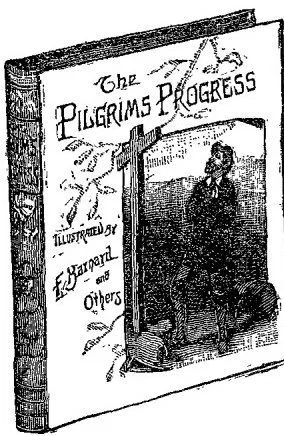
THE PILGRIM'S PROGRESS
By John Bunyan.
Royal Octavo Edition in large type, and contains over 100 illustrations, 50 of which are full page. Cloth, with side stamp in ink and gold, $1.00.
PACIFIC PRESS PUBLISHING COMPANY. 12th & Castro Streets, OAKLAND, CAL. 43 Bond Street, NEW YORK.
THE BATTLE CREEK SANITARIUM HEALTH FOODS.
For more than sixteen years the Battle Creek Sanitarium has maintained a Health Food Department, at first for the benefit of its patients and patrons, later, and for more than a dozen years, with increased facilities, to supply the general public. Within the last year More Than 150 Tons of the following named foods have been manufactured and sold:—
Oatmeal Biscuit, Rye Wafers,
Medium Oatmeal Crackers,
Fruit Crackers, Carbon Crackers,
Plain Oatmeal Crackers,
No. 1 Graham Crackers, Avenola,
No. 2 Graham Crackers, Granola,
Plain Graham Crackers (Dyspeptic),
Wheat Granola, White Crackers,
Whole Wheat Wafers,
Gluten Food, No. 1, Gluten Wafers,
Gluten Food, No. 2, Infants’ Food.
Granola, The Gem of Health Foods.
Our Granola, which has now been manufactured by us for nearly seventeen years, is unquestionably the finest health food ever devised, and is greatly superior to any of the numerous imitations to which its success has given rise.
TO THE PUBLIC:
This certifies that the Battle Creek Sanitarium Health Foods, manufactured by the Sanitarium under the name of the Sanitarium Food Company, are made under my direction and supervision, and that Granola and the other special foods manufactured by this company, are not made or sold by any other firm or person except their duly authorized agents. J. H. KELLOGG, M. D.
Our goods are shipped to every part of the world—to Australia, New Zealand, India, Persia, and other foreign countries, as well as to all parts of the United States; and in every instance they have demonstrated their wonderful keeping properties. The following are a few of the hundreds of testimonials received from persons who have for years made use of our foods.
MICHIGAN.
I have for three years used the “Health Foods” in my family, and can heartily recommend them, both for purity and health-giving properties. C. F. PORTER, D. D. S.
INDIANA.
Your “Health Foods” are the wonder of the nineteenth century. I have used Granola but a short time, but have already experienced relief from indigestion and acid, or flatulent dyspepsia. I also find the Zwiebach nourishing and toothsome. D. M. KAUFFMAN.
I have personally tested your excellent food known as Granola. It is highly pleasing to the taste, easy of digestion, and the most nutritive cereal production with which I am acquainted. DR. R. W. BULA.
NEW YORK.
Your Granola is the best selling invalid food I have ever handled. I have already sold nearly two thousand pounds. A. J. BROUGHTON.
CONNECTICUT.
We have used your “Health Foods” in our family for three years and can not get along without them. Having been troubled with dyspepsia and chronic inflammation of the stomach, I found that your Granola, Avenola, Wheatena, and Gluten are the only foods that I can eat with safety. WM. M. MERWIN.
OHIO.
Our baby is a testimonial to Sanitarium food. She is ten months old, weighs twenty-eight pounds, and is as ruddy and healthy a specimen as can be seen. She has actually gained flesh while cutting her last two teeth. Her flesh is firm and sound, and she is very strong.
MINNESOTA.
We have twins, and the little fellows are thriving nicely. The food agrees with them perfectly, and I have recommended it to many who are bringing up babies “by hand.” D. W. McCOURT.
We are constantly improving our foods, and adding to our list as the result of experimental researches conducted in the Sanitarium Laboratory of Hygiene and our Experimental Kitchen. For the latest descriptive circular and price list, address,
SANITARIUM HEALTH FOOD CO., . . . . BATTLE CREEK, MICH.
Political Efforts for Religious Uniformity Oppose the Gospel
ALL political efforts for uniformity are antagonistic to the gospel. A prominent man has recently stated that unity of religion is essential to the existence of a nation. That is what the Czar of Russia thinks, and the result is the most cruel and oppressive tyranny. That idea, which is seizing the most enlightened nations at the present day, is the foundation of the Inquisition. Christ desires unity, but he does not try to force it, because the unity which is essential is the unity of growth into Christ, and growth can not be forced. The religion of Jesus is love, and force kills love. Where there is no love there is no righteousness; and therefore since “righteousness exalteth a nation,” it is evident that the surest way to debase a nation is to attempt to produce perfect uniformity in matters of religion by means of law.—Truth, London.
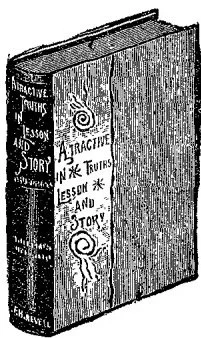
ATTRACTIVE TRUTHS IN LESSON AND STORY.
A series of outline lessons with illustrative stories and Scripture verses for the use of those who are inexperienced in teaching the young. It is suitable for use in children's meetings and for home teaching. Cloth, $1.25.
CIVIL GOVERNMENT AND RELIGION
By Alonzo T. Jones
In English, German, Danish, and Swedish.
BY. A. T. JONES.
Scriptural, Logical, Plain, and Forcible.
THIS IMPORTANT WORK SHOWS CLEARLY THE RELATION THAT SHOULD EXIST BETWEEN CHURCH AND STATE AT THE PRESENT TIME, AS PROVEN BY THE BIBLE, AND THE HISTORY OF THE PAST TWENTY-FIVE CENTURIES.
CIVIL GOVERNMENT AND RELIGION
Is a Pamphlet of 182 Large Octavo Pages, in English, Price, 25 cents; and in German, Danish, and Swedish, over 200 pages, Price, 35 cents, (Illustrated).
THOUSANDS OF COPIES
Should be placed in the hands of thinking people at once. It clearly defines what position American citizens should sustain toward the efforts now on foot to secure Religious Legislation. Address,