Your ShelfYour Projects

Signs of the Times, Vol. 32, No. 27

LOVE SUFFERS LONG
Earlier text: IN CHRIST

ACCEPTABLE OBEDIENCE.

ACCEPTABLE obedience to the Gospel of Christ and the law of God will constitute us the sons and daughters of the Almighty, now. There is no higher calling in this world, and it will result in our being called much higher in the world to come. Now, true and acceptable obedience to God must consist of three things, namely, promptness, cheerfulness, and exactness. If either of these characteristics are lacking, the obedience is defective.
No parent ought to be satisfied with the obedience of a child if that obedience is lacking in either of these particulars,—for instance, if a child is told to do a certain thing in a certain way, at a certain time. Now if the child does the thing cheerfully, in the way directed, but fails to do it at the time indicated, then it is not complete obedience, and that feature omitted many times will prove very serious. And if the obedience is promptly on time, but is not performed willingly, or with exactness, in either case it is sadly deficient. True obedience would be to do the right thing cheerfully, at the right time promptly, and in the right way exactly.
The Lord commands the children of men to “remember the Sabbath day to keep it holy. Six days shalt thou labor, and do all thy work; but the seventh day is the Sabbath of the Lord thy God, in it thou shalt not do any work.” To obey this command, the time—the seventh day—is so important that there is no obedience without it. The seventh day—all of it—is to be kept holy.
Man can not make a day holy; and if God has not made it holy, we can not keep it holy. The reader will observe that God does not say, “Remember the Sabbath day to make it holy,” but “to keep it holy.” Now if we knowingly and wilfully make choice of another day that God has never made holy, we are knowingly and wilfully disobedient. If we would obey God, then let us not think to offer Him a substitute for the day He has hallowed and enjoined. And if we would render prompt obedience, we must remember to make the necessary preparation on the sixth day, that we may keep the Sabbath day according to the commandment.
Then we should make the Sabbath a delight. Our obedience should be rendered in love, and with a joyful heart. “For this is the love of God, that we keep His commandments; and His commandments are not grievous;” 1 John 5:3. If our obedience is grievous to us, then it is defective and not pleasing to God.
And last of all, but not least, we should study to know how to employ the sacred hours with conscientious exactness. They should not be wasted in idleness. To keep the Sabbath in an idle manner is the Sabbath of horses and oxen. To pass it in a jovial, pleasure seeking manner is the Sabbath of the golden calf, when the people sat down to eat and drink, and rose again to play. To keep it in surfeiting and wantonness is the Sabbath of Satan, the devil’s holiday. Jesus said it was lawful to do good on the Sabbath day. Works of necessity, mercy, charity, or love, are proper.
Furthermore, we should delight our souls in the worship of God, and in the earnest study of His Word. Whatever we may do for our spiritual growth, and upbuilding, or for the salvation or edification of our fellow-men, would be to the glory of God, and in harmony with the letter, spirit, and object of His great Sabbath law. And let us remember to do all of God’s commandments in the letter and spirit of truth, for only in this way can we render acceptable obedience to God.
H. A. ST. JOHN.

The Fear of God Drives Out Other Fears

The fear of God turns other fears out of doors; there is no room for them where this great fear is; and, being greater than they all, yet it disturbs not as they do; yea, it brings as great quiet as they brought trouble.—Leighton.

The Importance of Faithful Everyday Work

“Be conscious of the importance of your work; God esteems it more honorable and important than any other, and so it is. If you feel this, you will act accordingly; and others will be so impressed.”

OUR GREAT TREASURE-HOUSE

BY MRS. E. G. WHITE

THE BIBLE TO BE UNDERSTOOD BY ALL.

The Bible, with its precious gems of truth, was not written for the scholar alone. On the contrary, it was designed for the common people. The poor man needs it as much as the rich man, the unlearned as much as the learned. It is a great mistake for ministers to give people the impression that they can not understand the teachings of the Word of God, and should be content with the interpretation given by those whose business it is to proclaim the Word of God. Ministers who thus educate the people are themselves in error. To him who loves the truth, the Word of God is as a light shining in a dark place, pointing out the path so plainly that the wayfaring man, tho a fool, need not err therein.
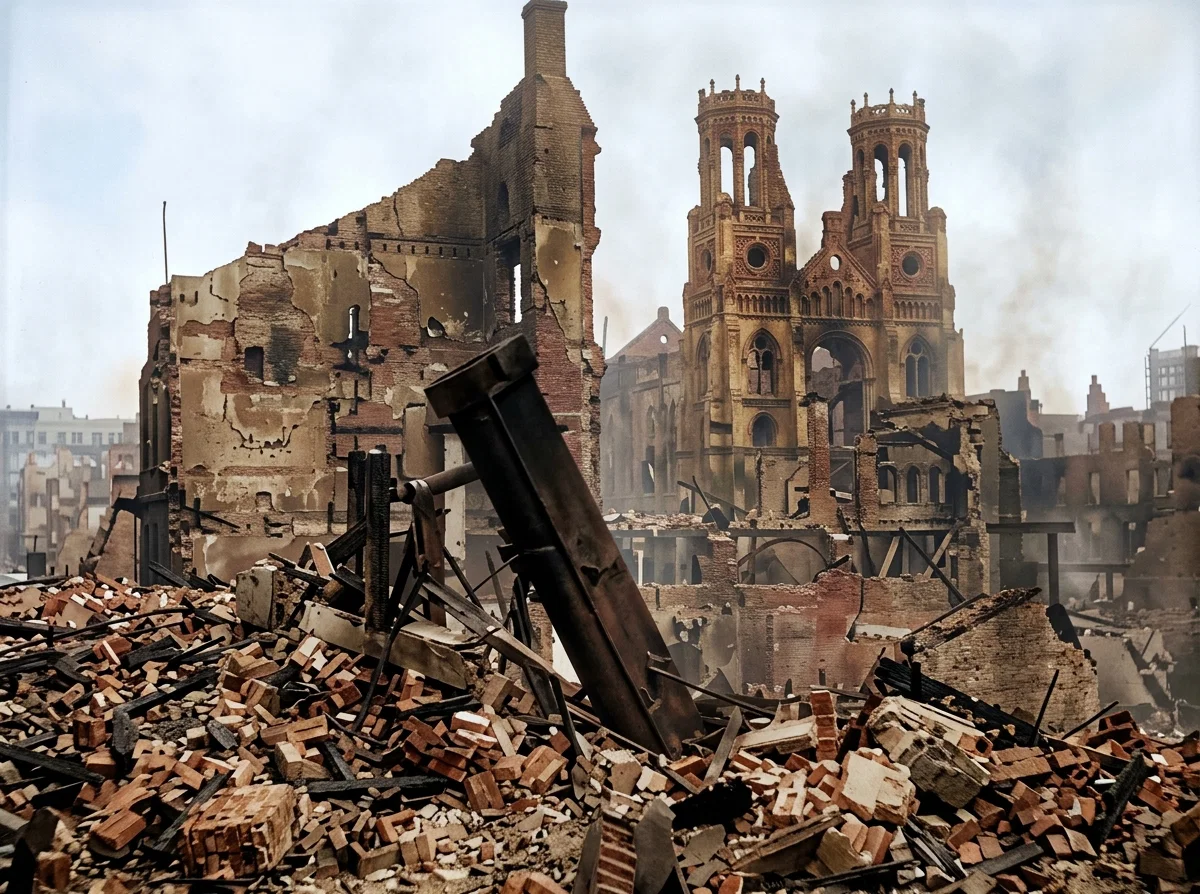
The Hall of Justice, San Francisco, on Kearney Street, between Clay and Washington Streets, facing Portsmouth Square. Note the skeleton dome.
The uneducated man, in earnest desire of soul, may in humility and simplicity reap from the Bible far greater consolation than the more highly educated man. He may never be able to present the same evidences of the inspiration of the Word that a learned man could, but he can bear in his life a testimony that will have greater power than any other testimony in convincing men and women of the power of the truths of God's Word.

A Sure Guide.

It is God's purpose that the poor and uneducated shall have, in His Word, a sure guide in the path of righteousness. If they are sincere, and desire earnestly to know the will of God, they will not be left in darkness. It is the privilege of every one to understand the Word of God for himself. The great truths necessary for salvation are made as clear as noonday; and none need mistake and lose their way except those who follow their own judgment instead of the plainly revealed will of God. A single text has proved in the past, and will prove in the future, to be a savor of life unto life to many a soul. As men diligently search, the Bible opens new treasures of truth, which are as bright jewels to the mind.
If the unlearned are not capable of understanding the Bible, then the mission of Christ to our world was useless; for He says, “The Spirit of the Lord is upon Me, because He hath anointed Me to preach the Gospel to the poor; He hath sent Me to heal the broken-hearted, to preach deliverance to the captives, and recovering of sight to the blind, to set at liberty them that are bruised.”
The command to search the Scriptures, Christ addressed not only to the scribes and Pharisees, but to the great multitude of the common people, who crowded about Him. If the Bible is not to be understood by every class of people, whether they be rich or poor, what would be the need of the Saviour's charge to search the Scriptures? What profit would there be in searching that which could never be understood? What would be the consistency of this command, if the searching of the Scriptures would not dispel the clouds of error, or lead to an understanding of the revealed will of God?
Let every one who has been blessed with reasoning faculties take up the Bible and search its pages, that he may understand the will of God concerning him. In this Book divine instruction is given to all. The Bible is addressed to every one—to every class of society, to those of every clime and age. Every one should read the Bible for himself. Do not depend on the minister to read it for you. The Bible is God's Word to you. And Christ has made this Word so plain that in reading it, no one need misunderstand. Let the humble cottager read and understand the Word given by the wisest Teacher the world has ever known, and among kings, governors, statesmen, there is none greater than He.

The ROYAL LAW

BY F. C. GILBERT.
(A Hebrew Christian.)

VII. THE LAW IN CHRIST; CHRIST IN THE LAW.

Sin not only brought misery into the world but it also enslaved the human race. Man was bound; he was brought into bondage, and needed emancipation. 2 Peter 2:19. He lost his home; he lost his life; he lost his mind. Sin changed man’s whole condition; he lost his normal state; he became natural; he became carnal. 1 Cor. 2:14; Rom. 7:14.

The New Man Christ Jesus.

Having gotten into this state, which was practically a species of insanity, before he could obey the will of God and meet the requirements of God, he must have a new mind. Of the carnal mind we read: “For to be carnally minded is death; but to be spiritually minded is life and peace. Because the carnal mind is enmity against God; for it is not subject to the law of God, neither indeed can be.” Rom. 8:6, 7. While the same God was Ruler, with the same law as it existed before the fall of man, there must be a different man with a different mind in order to please the same God. Hence we read: “And so it is written, The first man Adam was made a living soul; the last Adam was made a quickening spirit. Howbeit that was not first which is spiritual, but that which is natural; and afterward that which is spiritual. The first man is of the earth, earthy; the second Man is the Lord from heaven.” 1 Cor. 15:45–47. Jesus Christ, the Son of God, became the Son of Man, but He was the new man, the spiritual man, the new creation. So of Him we read: “And the angel answered and said unto her, The Holy Ghost shall come upon thee, and the power of the Highest shall overshadow thee; therefore also that holy thing which shall be born of thee shall be called the Son of God.” Luke 1:35.
Temple El Emanuel, the great Jewish Synagogue, where Rabbi Voorsanger presided. In the ruins of this temple the Supreme Court held its first-sitting after the fire. A suggestion of the justice of the old God-given Hebrew laws.

The Will and Pleasure of God.

While the patriarchs, prophets, priests, and kings saw Him by faith all through the Old Testament, different persons at different times had been commanded of God to write concerning His personal appearing and His work. So in Ps. 40:6–8, we have the following utterance: “Sacrifice and offering Thou didst not desire; Mine ears hast Thou opened; burnt-offering and sin-offering hast Thou not required. Then said I, Lo, I come; in the volume of the book it is written of Me, I delight to do Thy will, O My God; yea, Thy law is within My heart.”
This the writer to the Hebrews plainly says refers to Christ. Heb. 10:5–7. Therefore His coming into the world was to do the will of God. We are told, however, that this will is the law of God. It is furthermore stated by the Saviour Himself, that His great mission in the world was to always do those things which pleased God. John 8:29. But the prophet Isaiah declared what it was that pleased God: “The Lord is well pleased for His righteousness’ sake; He will magnify the law, and make it honorable.” Chapter 42:21. Then the great reason why God sent Jesus into the world was that Jesus might perform God’s will. The reason the Saviour says He came into the world was to please God. But God tells us that His will is His law; and the Saviour declares that that which pleases God is obedience to His commandments. “If ye keep My commandments, ye shall abide in My love; even as I have kept My Father’s commandments, and abide in His love.” John 15:10. Therefore the pleasure of God and the will of God are one and the same thing; and both are declared to be the law of Jehovah.
The wise man tells us that out of the heart are the issues of life. Prov. 4:23. But in the heart of Christ was the law of God. Then the one vital issue of the life of Jesus our Lord was to reveal to men in living, daily acts what the law of God really is. The law of God was in the Lord Jesus Christ. He was the law lived out in the flesh.

God Revealing His Law.

This was the third exhibition of God’s law since Creation. First, God gave it to man orally in the Garden of Eden. Man lost the knowledge of the law and the law itself on account of sin. Again, God gave His law amid the thunders of Sinai, and handed it over to men on two tables of stone. Again man lost the knowledge of God’s law. The third time God gave His law to man. Neither orally as at Creation, nor in words as at Sinai, but in the living personality of His own dear Son. He, Jesus, was the living law. He was God’s law lived in human flesh. He was manifested to take away sin, which is “the transgression of the law.” 1 John 3:5, 4. What men could not understand by what they heard from father to son, what they could not understand from the lips of their teachers, they were to see lived out in the flesh of man, the Man Christ Jesus.
The law being spiritual, it was necessary for the man who should keep that law to be spiritual likewise; for only a spiritual being could obey a spiritual law. Consequently Jesus Christ was born of the Spirit. So that in order for any man to obey God and to keep His law, it was and is necessary that the individual shall be born again. John 3:1–7. He must have a new mind, he must have a new life, he must become a new creature. “Therefore if any man be in Christ, he is a new creature; old things are passed away; behold, all things are become new.” 2 Cor. 5:17.

Christ in the Law.

While it is true that the law was in Christ, it is equally true that Christ is in the law. This was the desire of God for man all through the ages, that Jesus Christ, the Son of God, the Saviour of men, should be seen in God’s law. Not that the law was merely so many words or precepts, but that they were truths which, in order to be obeyed and lived out, must furnish divine and regenerating power. It is a living law, potent with the very life of Deity. If rightly comprehended, by the new man with the new mind, every command would teach the soul the need of Christ to obey its injunction.

The Law a Mirror.

As was noticed in article five, the law of God is compared to a looking-glass. James 1:23. When the individual stands before the mirror and sees his defects, if there are spots of uncleanness, the glass tells him to obtain soap and water, remove those stains, and come back to see the condition of himself. In the first place the glass says unclean, unclean. After the water and the soap have been applied, the same mirror says the spot has been removed; you are clean. Even so it is with the law, with Jesus Christ. That law says we have sinned; we have come short of God’s glory; we are unclean. Rom. 3:9, 19, 23; Isa. 64:6. We feel our need of soap and water. Hence we read: “But who may abide the day of His coming? and who shall stand when He appeareth? for He is like a refiner’s fire, and like fullers’ soap.” Mal. 3:2. “Jesus answered and said unto her, If thou knewest the gift of God, and who it is that saith to thee, Give Me to drink; thou wouldest have asked of Him, and He would have given thee living water.” John 4:10. Then Jesus Christ is our soap and our water. We go to Him, and, bless God, He cleanses us from all our sins.
After we are all cleansed, we again return to God’s great mirror, and now that same law which condemned us before declares we are approved of God. “There is therefore no condemnation to them which are in Christ Jesus, who walk not after the flesh, but after the Spirit. For the law of the Spirit of life in Christ Jesus hath made me free from the law of sin and death. For what the law could not do, in that it was weak through the flesh, God sending His own Son in the likeness of sinful flesh, and for sin, condemned sin in the flesh; that the righteousness of the law might be fulfilled in us, who walk not after the flesh, but after the Spirit.” Rom. 8:1–4.
Not only was the law of God in the heart of Christ, but the life and character of Christ is in the law. The very traits of character that the Bible gives to Jesus the Son of God are the same as the attributes given to the law:

South Lancaster, Mass

The Law of God. The Character of Christ.
1. Love, Ps. 119:97. Rom. 8:35, 39.
2. Truth, Ps. 119:142. John 14:6.
3. Delight, Rom. 7:22. Isa. 42:1.
4. Perfect, Ps. 19:7. Heb. 2:10.
5. Sure, Ps. 19:7. Heb. 7:22.
6. Righteous, Ps. 19:9. 1 John 2:1.
7. Eternal, Ps. 119:89. 1 John 1:15.
8. Spiritual, Rom. 7:14. 1 Cor. 15:45, 46.
9. Peace, Ps. 119:165. Eph. 2:14.
10. Holy, Rom. 7:12. Acts 4:27.
11. Unchangeable, Ps. 89:34. Heb. 13:8.
12. Liberty, James 2:10–12. 2 Cor. 3:17.
13. Good, Rom. 7:12. John 10:11, 14.
14. Just, Rom. 7:12. Acts 3:14.
See also “Practical Lessons,” Chapter 11, and Explanatory Notes.
Then to love Christ is to love the law; to do the precepts contained in the law is to have that new heart which loves Jesus. “If ye love Me, keep My commandments.” John 14:15.

South Lancaster, Mass

Question Corner

1844.—Pentecost.

Why was Pentecost kept after Christ’s resurrection, when it was a part of the ceremonial law, which was done away at the cross? N. B.
As the sacrifice of Christ was the fulfilment of the Passover, as His resurrection was of the wave offering; so that Pentecost of Acts 2 was of the feast of weeks, the feast of first-fruits. See Lev. 23:4, 5, 11, 15–17. The type was there met in antitype.

1845.—Resurrection, Angel, Spirit. Acts 23:8.

Explain Acts 23:8, the point of angel and spirit and resurrection. N. B.
It is a mere statement as to the belief on a certain point between the two great Jewish sects. The Sadducees were the “higher critics,” the religious skeptics and infidels of their time. They professedly held the books of Moses and rejected the later prophets. They did not see that Moses taught the doctrine of the resurrection, hence they believed in none. So also they did not believe in the existence of angels, spirit beings. By “both,” the apostle evidently classed “angel” and “spirit” together, as other intelligent beings than man. The other one of the both was the resurrection. There is no reference in this to the spirit or soul of man.

1846.—“Never See Death.” John 8:51.

Does not John 8:51 teach the immortality of the soul? N. B.
Not at all. If the soul were immortal, it would never taste death, whether it kept Christ’s sayings or not. Jesus bases continuation of life on the keeping of His Word. See John 3:36: “He that believeth on the Son hath eternal life; but he that obeyeth not the Son shall not see life, but the wrath of God abideth on him.” The thought of John 8:51 is that the obedient, faithful child of God will not die the death of the sinner. He may sleep in Jesus, but he “shall not be hurt of the second death.”

1847.—In and Out of the Body. 2 Cor. 12:2.

Please explain who the “man” is. 2 Cor. 12:2. What does “in” and “out of the body” mean? N. B.
The man was Paul. Paul declares in other words that he did not know whether he was actually caught up bodily to God, or whether he merely saw a vision. “In the body,” here as in every-day life; out of the body, caught up to heaven in the spiritual body. Paul did not know. Do we? The other question you ask was answered not long ago.

1848.—Meats Clean and Unclean.

Please explain 1 Tim. 4:1–5. M. L., C. P. U., AND OTHERS.
The text reads as follows in the American Standard Revised Version:
“But the Spirit saith expressly, that in later times some shall fall away from the faith, giving heed to seducing spirits and doctrines of demons, through the hypocrisy of men that speak lies, branded in their own conscience as with a hot iron; forbidding to marry, and commanding to abstain from meats, which God created to be received with thanksgiving by them that believe and know the truth. For every creature of God is good, and nothing is to be rejected, if it be received with thanksgiving; for it is sanctified through the Word of God and prayer.”
Note the following points in the study:
1. It is not a last-day text, as many affirm. It refers to later times than the apostle’s day. “Later seasons” (Rotherham); “subsequent seasons” (Emphatic Diaglott). The word husteros rendered “later,” is in Matt. 21:29 rendered properly “afterward.” The apostasy began even in Paul’s time. See 2 Thess. 2:7; Acts 20:29, 30. And everything mentioned in this scripture has been manifest in the apostasy through the Dark Ages.
2. Those who are thus led astray are those who fall away from the faith, who make salvation to depend on schemes of men rather than by the faith of Jesus Christ.
3. They yield to seducing spirits and doctrines of demons, various phases of Spiritism, manifest in the various forms of pretended communication with the dead.
4. These things will be taught through hardened hypocrites, who have departed from the faith.
5. Among the things they teach is not counsel not to marry, or more care and deliberation and prayer as to so important a step, but marriage is forbidden by them. Witness various free-love cults and the celibacy of priests.
6. They command to abstain from meats. This does not necessarily mean flesh meats; but food of any kind. “Foods,” Rotherham has it. Our English word meat formerly applied to food of any kind. It is a perfectly understood command when the English farmer tells his man, John, feed the horses their meat—that is, hay and grain. We use it of the kernel of the nut. The Greek word is bromatos, food of any kind. See Matt. 14:15; John 4:34. The command to abstain from food, then, is the enjoining of arbitrary fasts from foods of any kind.
7. We can well believe that God would have us receive with thanksgiving all food that is good for us. He has told us in Leviticus 11 and Deuteronomy 14 some kinds that are not good, that are unclean. These scriptures do not make these prohibited beasts unclean or clean; they are so in the very nature of the case, and this the Lord tells the people whom He would have holy like Himself. Lev. 11:44, 45.
8. “Every creature” is limited by explicit instruction elsewhere, just as “every day” in Ex. 16:4 is limited. “Every creature” does not include beasts which infinite wisdom has declared unfit for food, else snakes and worms and cormorants and buzzards are good. “Every day” did not include the Sabbath day. Nothing of all God has given for food is to be rejected if needed.
9. These are two things necessary to make the food what it ought to be: (1) It should be “sanctified” [separated, set apart] through the Word of God.” Surely that will exclude that which God has declared to be unclean and abomination; He declared this not as arbitrary law, but as vital fact. (2) It should be received with thanksgiving and prayer; and true prayer always seeks to know God’s way in order that God may be glorified. 1 Cor. 10:31.

1849.—“Whatsoever Thy Soul Desireth.”

Kindly explain Deut. 14:26. A. C. M.
The whole text and context presumes that God’s people are faithful, earnest, loyal, devoted. They would not, therefore, lust after the things He forbade, as recorded in this very chapter. The whatsoever is limited by their presumed loyalty to God’s specific prohibition. As to the “strong drink,” it may be said that Israel knew nothing of distilled liquors; and God forbade drunkenness. See Deut. 29:18–20; Proverbs 23.

1850.—What Kind of Darkness? Rev. 16:10.

Please explain Rev. 16:10, 11. Does the darkness refer to literal darkness, as in the plagues of Egypt? or does it refer to the time when the people and kingdoms who have been deceived by the beast shall turn against the beast? Rev. 17:16, 17. L.
We see no reason why these plagues should not be regarded as literal. The physical darkness is but the outer symbol of the black darkness which comes by rejecting light. It includes every kind of darkness which men have invited by rejecting God. Rev. 17:16 brings additional calamity, tho not necessarily darkness.

1851.—Easing Souls in Sin. Eze. 13:18–23.

Will you please explain Eze. 13:18–23? A SUBSCRIBER.
The passage is the Lord’s condemnation under striking figures of those who are easing the consciences of souls in sin, and seducing others to sin. The root of the matter is given in verses 19, 22, 23. “Pillows to the armholes,” or “elbows,” or “joints of the hands,” doubtless refers to customs with which we are not well acquainted.

1852.—Is the Soul Deathless? J. W. P.

It depends on the way you use the term. If by “soul” you mean “life,” as it is used in Matt. 16:25, 26, of course life is deathless, as death is lifeless, an assertion which would be gratuitous and tautological. If by soul is meant the whole man, as in Gen. 2:7, “and man became a living soul,” it is not true; for the man died. “The soul that sinneth, it shall die.” Eze. 18:4, 20. This is also true where the soul is used of mind and faculties. “Bless the Lord, O my soul.”

Saloon-Keeper Supervisor Boasts of Saloon Lineage

“Whose Glory Is in Their Shame.”—Boosting is generally deemed foolish, even when one has something apparently worth the while; but to boast of being a saloon-keeper, and of saloon-keeping lineage, is something rarely heard of. As a rule, men in that business, when outside of their immediate environment, would rather not have their business known. A noted exception, however, is that of a San Francisco supervisor. A correspondent of the Palo Alto Citizen reports a discussion in the board of the saloon-license question, from which we cull this item:
Supervisor McGushlin, who was strenuously opposed to high license, stated in making his speech against it, that he was a saloon-keeper, and that his father was a saloon-keeper before him, and he was proud of it. He went on to say further that in his opinion they “should be lenient with saloon-keepers in this matter because of the fact that every man in the room owes his election to the saloon-keepers.”
It is a sorry prospect, morally, for a city when the saloon element can wield sufficient influence to choose administrative officers. It had been demonstrated, even to the minds of the saloon-elected supervisors and mayor, that the saloon could not be tolerated during the recent crisis, yet as soon as matters begin to settle, they install the wicked thing again as a necessity—to their own future political prospects.
“WHATSOEVER things are true, whatsoever things are honest, whatsoever things are just, whatsoever things are pure, whatsoever things are lovely, whatsoever things are of good report; if there be any virtue, and if there be any praise, think on these things.”

You have reached the end of this edition.

Signs of the Times · Jul 11, 1906