ADAM and his wife hid themselves from the presence of the Lord God amongst the trees of the garden. “Your iniquities have separated between you and your God, and your sins have made Him hide His face from you.” Isa. 59:2, margin.
“To him that overcometh will I grant to sit with Me in My throne, even as I also overcame, and am set down with My Father in His throne.”
“And He that sat upon the throne said, Behold, I make all things new.” “I saw a new heaven and a new earth; for the first heaven and the first earth were passed away.” “There shall be no more curse; but the throne of God and of the Lamb shall be in it; and His servants shall serve Him.” “Behold, the tabernacle of God is with men, and He will dwell with them, and they shall be His people.” “God Himself shall be with them, and their God.” “They shall see His face; and His name shall be in their foreheads.”
Thus reads the record, the two witnesses to God's truth and the facts of human history to the end. Man was, is not, yet may be and abide, in the actual presence of God. Man saw, sees not, and yet may see, His face and live. Tho there be “one God and Father of all, who is above all, and through all, and in you all,” still the Creator was and is no part of the creature, nor ever will be.
“The invisible things of Him from the creation of the world are clearly seen, being understood by the things that are made, even His eternal power and Godhead.” He speaks, and it is; breathes, and it lives; radiates His ceaseless activity and power, but retains all He is without loss or lesion. He reveals what He is by what He does, and still Himself continues the same throughout eternity. Giving doth not impoverish, nor withholding His hand enrich, the eternal God. No friction, no waste, no want. Furthermore, “we can do nothing against the truth, but for the truth.” O, the mystery!
Of His crowning creation we read that the first Adam was made “upright.” Moment by moment God gave him power to overcome everywhere, at all times, in every experience.
The wise man says (Eccl. 7:29), “God hath made man upright,” literally Israel, “he will rule as God.” An Israelite, an overcomer, God made him to be and remain, that humanity and the Lord God might dwell face to face in the same perfect home, united in heart and life, always. What God did, and planned for man to do, by no possibility could be better. The very law of God's own being permeated and connected with Himself, man, made in His own image, so that he, man, might be a prince with God and “rule as God.”
“But they have sought out many inventions.” From love of God to love of self; from Godlike prince to servile slave; from plenty to penury; from priceless peace with God to direful death and destruction; a change from the love of the law of God to the love of a brief life lived in the face of self and Satan, the prince of “inventions,”—these be fruits of human inventions against the plan, the purpose, the law of God, ordained unto life.
Your “iniquities” have separated. “Your sins have made Him hide His face from you.” God's foreordained plan will prevail. His Word shall not return unto Him void. The law of life remains the same—supreme love to God, and love of thy brother man as if he were thyself. “He that overcometh shall inherit all things; and I will be his God, and he shall be My son.”
Still to the overcomer runs the assurance that “God so loved the world, that He gave His only-begotten Son, that whosoever believeth in Him should not perish”—might not suffer complete separation from the source of life in lawlessness—but “live by means of Him” (Syriac) in lawfulness. “We [sons of God] know that, when He shall appear, we shall be like Him; for we shall see Him as He is.”
Mark well: “I delight to do Thy will, O my God; yea, Thy law is within my heart.” “O how love I Thy law! it is my meditation all the day.” “Give me understanding, and I shall keep Thy law; yea, I shall observe it with my whole heart.” “I will never forget Thy precepts; for with them Thou hast quickened me.” “Thy law do I love.” Delight in the law is the mark of discipleship, Christian rectitude. “Let Israel hope in the Lord; and He shall redeem Israel from all his iniquities.” “Unto you first, God having raised up His Son Jesus, sent Him to bless you, in turning away every one of you from his iniquities.” “Blessed are they whose iniquities are forgiven, and whose sins are covered. Blessed is the man to whom the Lord will not impute sin” (transgression of the law, lawlessness). “I will be merciful to their unrighteousness, and their sins and their iniquities will I remember no more.” “I will put My laws into their hearts and in their minds will I write them; and their sins and iniquities I will remember no more.” “Who gave Himself for us, that He might redeem us from all iniquity.” “The remnant of Israel shall not do iniquity, nor speak lies.”
But “his iniquities shall take the wicked himself, and he shall be holden by the cords of his sins.” “Thou hast hid Thy face from us, and hast consumed us, by the hand of our iniquities” (margin).
This is our lesson: In all ages, iniquity and sin, transgression of God's law, at the last bring death and destruction—complete separation from God. So in all ages, love of God and love of His law shown in the keeping of it all through Christ, delivers from iniquity and sin, and restores to Paradise and life eternal in the presence of the Lord God, face to face. There is no other name under heaven nor any other way given, that can give liberty to the captive. M. S. BABCOCK.
TEMPORAL POWER OF THE PAPACY
By C. E. Milton
Current Arguments for the Return of the Temporal Power.
As one may readily imagine, the current arguments in favor of the return of the temporal power of the Papacy are those that emanate from Catholic sources; and therefore in the main they are but a repetition of the arguments that have long been in vogue in the Catholic Church. They were largely formulated by Thomas Aquinas whose theology is the basis of almost all Catholic teaching. The old saying which we repeat so often that “the church never changes” is a truth easily susceptible of verification here at Rome. In fact one who is now a teacher of truth, while a professor in the Catholic seminary, objected to some of the teachings of the church as being out of harmony with the spirit of the times. To which the head of the seminary responded that “the church is founded on God, and as God never changes, so the church never changes.” It is from all testimony clearly evident that their position remains always practically the same, and differs only in the statement of it.
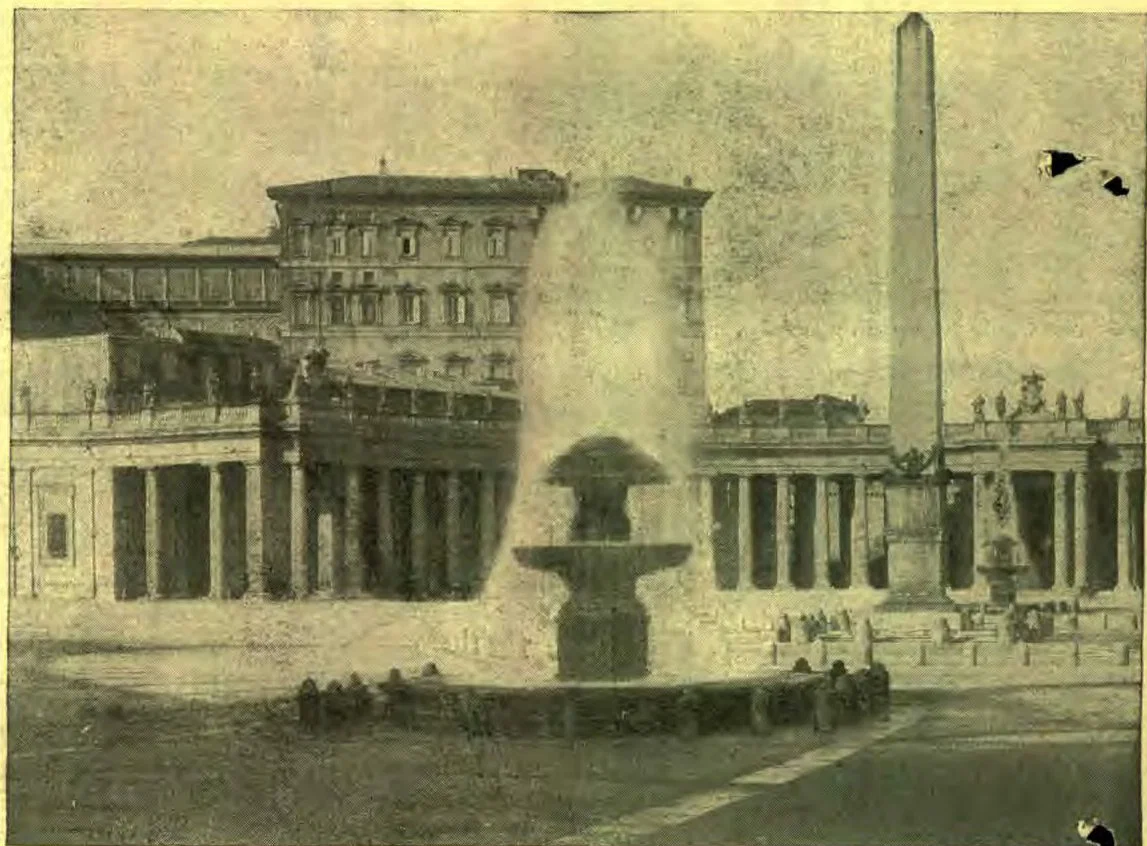
Plaza and Fountain in the Vatican.
The Main Arguments.
The main arguments employed by the church to sustain its claims to the temporal power may be reduced to a few statements:
1. The Catholic Church claims to have received from God the commission and the authority to teach men the right way to live. As they are invested with the authority to teach individuals, they claim that this authority extends itself over the state likewise, for a state is only a collection of individuals. Therefore to exert this authority it is necessary that the church should occupy a position which is independent of the state. If the church were subject to the state it could not exert its authority over the state; for the teacher must occupy a position superior to the one taught; or otherwise, there could be no discipline and consequently no progress. Then it would follow that one could not have a discipline without some punishment attached, and some authority to enforce such punishment when the case should demand it. Consequently, the church claims that it must occupy a position in society where it is subject to no government, and yet have secured to itself at the same time the power to make laws for the furtherance of its God-given work, and also the authority to see that its commands are obeyed. Therefore, Catholics claim that they are entitled to a government of their own where they can be independent to do the work assigned them according to the best interests of the church.
2. The church is a regularly constituted institution, established in the midst of society by God. As every society has the right to make laws for the furtherance and protection of its interests, the Catholics claim such a right for their church. Therefore, they also insist that by the nature of the case they are entitled to a position where they can protect their own interests, and where they can deal decisively with such as are trying to break down their institutions. Thus persecution is simply their attempt to stamp out the enemies of their society and those that are plotting against the best interests of their church.
3. The moral capability of the pope to rule. As the pope is the vicar of Christ on earth, and has been appointed by God to rule the church, why should not such a person be also a splendid ruler for the state? And after all the state that has a good moral basis is more sure to succeed than the one which is irreligious and corrupt. As the pope is morality personified, according to the Catholic conception, his rule would certainly be preferable to that of kings and emperors who often make no pretensions to religion.
Perhaps these statements may suffice to give the general underlying principles, which form the basis of the arguments for the return of the temporal power. These principles are manipulated and woven together according to the necessity of the case; but the Catholic position always remains the same. C. E. MILTON.
[The next article will consider some of the Arguments against the Restoration of the Temporal Power.]
A HYMN OF PRAISE.
By L. D. Santee
I thank Thee, O Most High,
For that most wondrous, grand, and glad existence,
That home beyond the sky.
'Tis shrouded by the veil of cloud and distance,
But O, 'tis drawing nigh;
And waiting hearts repeat the thrilling story,
That Jesus, in the sky,
Will come to give His children life and glory.
I thank Thee, gracious Lord,
For all the promises Thy love has given,
For Thy unfailing Word,
Which tells us that our feet shall rest in heaven;
And while time's surges roll,
And wrathful winds lift high the heaving billow,
Sweet peace pervades the soul,
E'en tho' the head may press affliction's pillow.
We have not long to wait,
Not long to bear life's burdens and its crosses,
For soon the “pearly gate”
Will recompense us for the toils and losses,
And starry crowns shall glow,
And hands redeemed shall clasp in joyous meeting;
And friends of long ago,
Shall then embrace in glad, ecstatic greeting.
4. In what does the sowing and growth of the good seed result?
“The good seed are the children of the kingdom.” Matt. 13 : 38.
5. Who sows the evil seed?
“His enemy came and sowed;” “the enemy that sowed them is the devil.” Verses 25, 39.
6. What is the evil seed called? and in what does it result?
“His enemy came and sowed tares among the wheat.” “The tares are the children of the wicked one; the enemy that sowed them is the devil.” Verses 25, 38, 39.
7. Will the evil be rooted out from among the good?
“Nay; lest while ye gather up the tares, ye root up also the wheat with them.” Verse 29.
8. How long will these two classes exist together?
“Let both grow together until the harvest.” Verse 30.
9. What is the harvest?
“The harvest is the end of the world [age.]” Verse 39.
10. Who are the reapers?
“The reapers are the angels.” Same verse.
11. What became of those represented by the tares?
“As therefore the tares are gathered and burned in the fire; so shall it be in the end of this world. The Son of Man shall send forth His angels, and they shall gather out of His kingdom all things that offend, and them which do iniquity; and shall cast them into a furnace of fire; there shall be wailing and gnashing of teeth.” Verses 40-42.
12. How will it be with the “children of the kingdom?”
“Then shall the righteous shine forth as the sun in the kingdom of their Father.” Verse 43.
Byron's Bible and Tributes from Artists and Poets
I CAN easily conceive why the Bible was one of the four volumes which always lay on Byron’s table; and it would be easy to fill a lecture with the testimonies, written or unwritten, which painters, sculptors, orators, and poets have rendered to the most thought-suggesting Book in the world.—Hamilton.
ACCEPTABLE OBEDIENCE.
By H. A. St. John
ACCEPTABLE obedience to the Gospel of Christ and the law of God will constitute us the sons and daughters of the Almighty, now. There is no higher calling in this world, and it will result in our being called much higher in the world to come. Now, true and acceptable obedience to God must consist of three things, namely, promptness, cheerfulness, and exactness. If either of these characteristics are lacking, the obedience is defective.
No parent ought to be satisfied with the obedience of a child if that obedience is lacking in either of these particulars,—for instance, if a child is told to do a certain thing in a certain way, at a certain time. Now if the child does the thing cheerfully, in the way directed, but fails to do it at the time indicated, then it is not complete obedience, and that feature omitted many times will prove very serious. And if the obedience is promptly on time, but is not performed willingly, or with exactness, in either case it is sadly deficient. True obedience would be to do the right thing cheerfully, at the right time promptly, and in the right way exactly.
The Lord commands the children of men to “remember the Sabbath day to keep it holy. Six days shalt thou labor, and do all thy work; but the seventh day is the Sabbath of the Lord thy God, in it thou shalt not do any work.” To obey this command, the time—the seventh day—is so important that there is no obedience without it. The seventh day—all of it—is to be kept holy.
Man can not make a day holy; and if God has not made it holy, we can not keep it holy. The reader will observe that God does not say, “Remember the Sabbath day to make it holy,” but “to keep it holy.” Now if we knowingly and wilfully make choice of another day that God has never made holy, we are knowingly and wilfully disobedient. If we would obey God, then let us not think to offer Him a substitute for the day He has hallowed and enjoined. And if we would render prompt obedience, we must remember to make the necessary preparation on the sixth day, that we may keep the Sabbath day according to the commandment.
Then we should make the Sabbath a delight. Our obedience should be rendered in love, and with a joyful heart. “For this is the love of God, that we keep His commandments; and His commandments are not grievous;” 1 John 5:3. If our obedience is grievous to us, then it is defective and not pleasing to God.
And last of all, but not least, we should study to know how to employ the sacred hours with conscientious exactness. They should not be wasted in idleness. To keep the Sabbath in an idle manner is the Sabbath of horses and oxen. To pass it in a jovial, pleasure seeking manner is the Sabbath of the golden calf, when the people sat down to eat and drink, and rose again to play. To keep it in surfeiting and wantonness is the Sabbath of Satan, the devil’s holiday. Jesus said it was lawful to do good on the Sabbath day. Works of necessity, mercy, charity, or love, are proper.
Furthermore, we should delight our souls in the worship of God, and in the earnest study of His Word. Whatever we may do for our spiritual growth, and upbuilding, or for the salvation or edification of our fellow-men, would be to the glory of God, and in harmony with the letter, spirit, and object of His great Sabbath law. And let us remember to do all of God’s commandments in the letter and spirit of truth, for only in this way can we render acceptable obedience to God.
H. A. ST. JOHN.
The Fear of God Drives Out Other Fears
The fear of God turns other fears out of doors; there is no room for them where this great fear is; and, being greater than they all, yet it disturbs not as they do; yea, it brings as great quiet as they brought trouble.—Leighton.
The Importance of Faithful Work
“Be conscious of the importance of your work; God esteems it more honorable and important than any other, and so it is. If you feel this, you will act accordingly; and others will be so impressed.”
OUR GREAT TREASURE-HOUSE
By Ellen G. White
BY MRS. E. G. WHITE
THE BIBLE TO BE UNDERSTOOD BY ALL.
The Bible, with its precious gems of truth, was not written for the scholar alone. On the contrary, it was designed for the common people. The poor man needs it as much as the rich man, the unlearned as much as the learned. It is a great mistake for ministers to give people the impression that they can not understand the teachings of the Word of God, and should be content with the interpretation given by those whose business it is to proclaim the Word of God. Ministers who thus educate the people are themselves in error. To him who loves the truth, the Word of God is as a light shining in a dark place, pointing out the path so plainly that the wayfaring man, tho a fool, need not err therein.
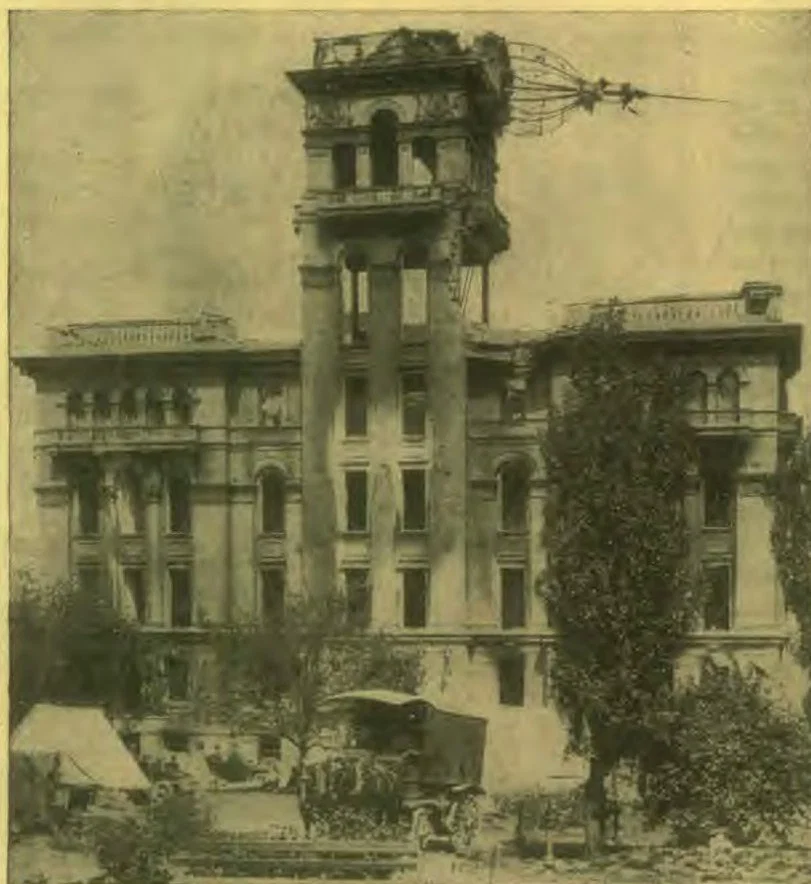
The Hall of Justice, San Francisco, on Kearney Street, between Clay and Washington Streets, facing Portsmouth Square. Note the skeleton dome.
The uneducated man, in earnest desire of soul, may in humility and simplicity reap from the Bible far greater consolation than the more highly educated man. He may never be able to present the same evidences of the inspiration of the Word that a learned man could, but he can bear in his life a testimony that will have greater power than any other testimony in convincing men and women of the power of the truths of God’s Word.
A Sure Guide.
It is God’s purpose that the poor and uneducated shall have, in His Word, a sure guide in the path of righteousness. If they are sincere, and desire earnestly to know the will of God, they will not be left in darkness. It is the privilege of every one to understand the Word of God for himself. The great truths necessary for salvation are made as clear as noonday; and none need mistake and lose their way except those who follow their own judgment instead of the plainly revealed will of God. A single text has proved in the past, and will prove in the future, to be a savor of life unto life to many a soul. As men diligently search, the Bible opens new treasures of truth, which are as bright jewels to the mind.
If the unlearned are not capable of understanding the Bible, then the mission of Christ to our world was useless; for He says, “The Spirit of the Lord is upon Me, because He hath anointed Me to preach the Gospel to the poor; He hath sent Me to heal the broken-hearted, to preach deliverance to the captives, and recovering of sight to the blind, to set at liberty them that are bruised.”
The command to search the Scriptures, Christ addressed not only to the scribes and Pharisees, but to the great multitude of the common people, who crowded about Him. If the Bible is not to be understood by every class of people, whether they be rich or poor, what would be the need of the Saviour’s charge to search the Scriptures? What profit would there be in searching that which could never be understood? What would be the consistency of this command, if the searching of the Scriptures would not dispel the clouds of error, or lead to an understanding of the revealed will of God?
Let every one who has been blessed with reasoning faculties take up the Bible and search its pages, that he may understand the will of God concerning him. In this Book divine instruction is given to all. The Bible is addressed to every one—to every class of society, to those of every clime and age. Every one should read the Bible for himself. Do not depend on the minister to read it for you. The Bible is God’s Word to you. And Christ has made this Word so plain that in reading it, no one need misunderstand. Let the humble cottager read and understand the Word given by the wisest Teacher the world has ever known, and among kings, governors, statesmen, there is none greater than He.
The ROYAL LAW
By F. C. Gilbert
BY F. C. GILBERT.
(A Hebrew Christian.)
VII. THE LAW IN CHRIST; CHRIST IN THE LAW.
Sin not only brought misery into the world but it also enslaved the human race. Man was bound; he was brought into bondage, and needed emancipation. 2 Peter 2:19. He lost his home; he lost his life; he lost his mind. Sin changed man’s whole condition; he lost his normal state; he became natural; he became carnal. 1 Cor. 2:14; Rom. 7:14.
The New Man Christ Jesus.
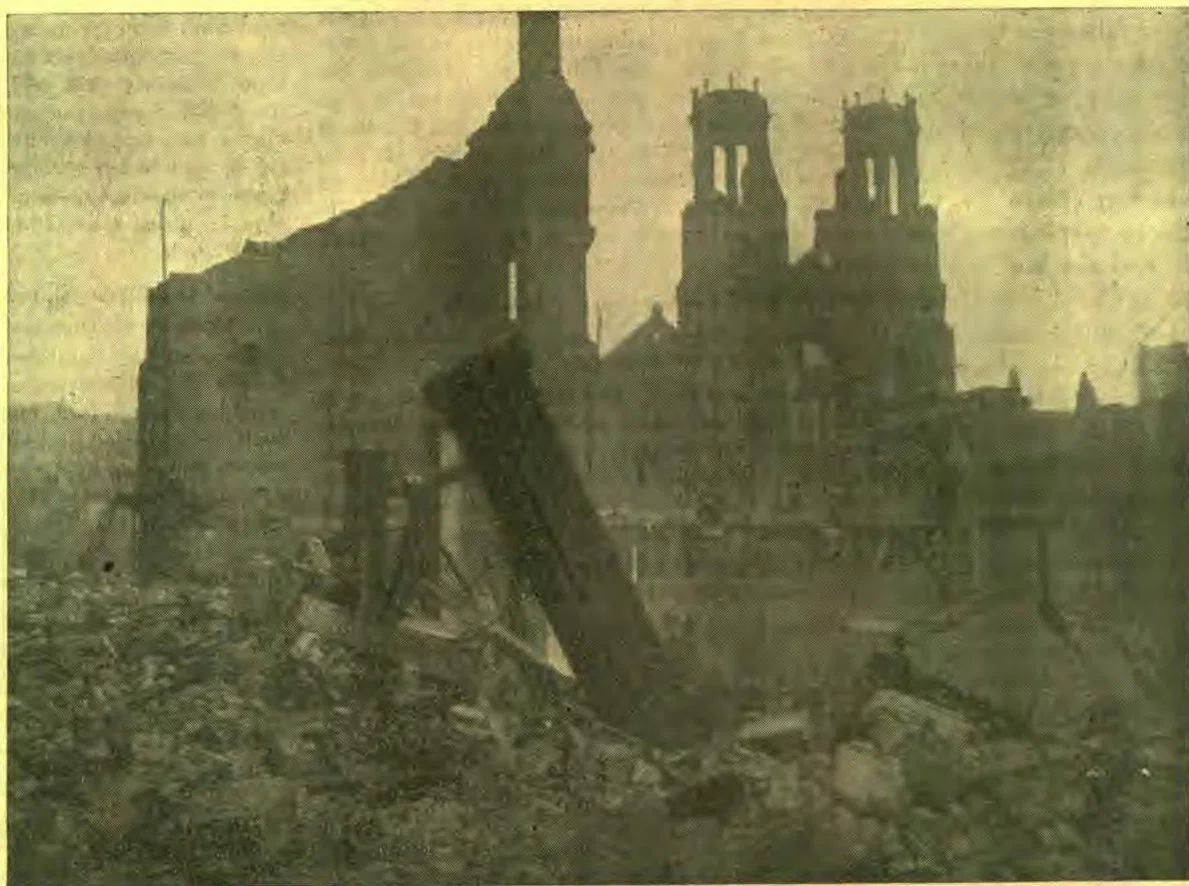
Temple El Emanuel, the great Jewish Synagogue, where Rabbi Voorsanger presided. In the ruins of this temple the Supreme Court held its first-sitting after the fire. A suggestion of the justice of the old God-given Hebrew laws.
Having gotten into this state, which was practically a species of insanity, before he could obey the will of God and meet the requirements of God, he must have a new mind. Of the carnal mind we read: “For to be carnally minded is death; but to be spiritually minded is life and peace. Because the carnal mind is enmity against God; for it is not subject to the law of God, neither indeed can be.” Rom. 8:6, 7. While the same God was Ruler, with the same law as it existed before the fall of man, there must be a different man with a different mind in order to please the same God. Hence we read: “And so it is written, The first man Adam was made a living soul; the last Adam was made a quickening spirit. Howbeit that was not first which is spiritual, but that which is natural; and afterward that which is spiritual. The first man is of the earth, earthy; the second Man is the Lord from heaven.” 1 Cor. 15:45–47. Jesus Christ, the Son of God, became the Son of Man, but He was the new man, the spiritual man, the new creation. So of Him we read: “And the angel answered and said unto her, The Holy Ghost shall come upon thee, and the power of the Highest shall overshadow thee; therefore also that holy thing which shall be born of thee shall be called the Son of God.” Luke 1:35.
The Will and Pleasure of God.
While the patriarchs, prophets, priests, and kings saw Him by faith all through the Old Testament, different persons at different times had been commanded of God to write concerning His personal appearing and His work. So in Ps. 40:6–8, we have the following utterance: “Sacrifice and offering Thou didst not desire; Mine ears hast Thou opened; burnt-offering and sin-offering hast Thou not required. Then said I, Lo, I come; in the volume of the book it is written of Me, I delight to do Thy will, O My God; yea, Thy law is within My heart.”
This the writer to the Hebrews plainly says refers to Christ. Heb. 10:5–7. Therefore His coming into the world was to do the will of God. We are told, however, that this will is the law of God. It is furthermore stated by the Saviour Himself, that His great mission in the world was to always do those things which pleased God. John 8:29. But the prophet
Isaiah declared what it was that pleased God: “The Lord is well pleased for His righteousness’ sake; He will magnify the law, and make it honorable.” Chapter 42:21. Then the great reason why God sent Jesus into the world was that Jesus might perform God’s will. The reason the Saviour says He came into the world was to please God. But God tells us that His will is His law; and the Saviour declares that that which pleases God is obedience to His commandments. “If ye keep My commandments, ye shall abide in My love; even as I have kept My Father’s commandments, and abide in His love.” John 15:10. Therefore the pleasure of God and the will of God are one and the same thing; and both are declared to be the law of Jehovah.
The wise man tells us that out of the heart are the issues of life. Prov. 4:23. But in the heart of Christ was the law of God. Then the one vital issue of the life of Jesus our Lord was to reveal to men in living, daily acts what the law of God really is. The law of God was in the Lord Jesus Christ. He was the law lived out in the flesh.
God Revealing His Law.
This was the third exhibition of God’s law since Creation. First, God gave it to man orally in the Garden of Eden. Man lost the knowledge of the law and the law itself on account of sin. Again, God gave His law amid the thunders of Sinai, and handed it over to men on two tables of stone. Again man lost the knowledge of God’s law. The third time God gave His law to man. Neither orally as at Creation, nor in words as at Sinai, but in the living personality of His own dear Son. He, Jesus, was the living law. He was God’s law lived in human flesh. He was manifested to take away sin, which is “the transgression of the law.” 1 John 3:5, 4. What men could not understand by what they heard from father to son, what they could not understand from the lips of their teachers, they were to see lived out in the flesh of man, the Man Christ Jesus.
The law being spiritual, it was necessary for the man who should keep that law to be spiritual likewise; for only a spiritual being could obey a spiritual law. Consequently Jesus Christ was born of the Spirit. So that in order for any man to obey God and to keep His law, it was and is necessary that the individual shall be born again. John 3:1–7. He must have a new mind, he must have a new life, he must become a new creature. “Therefore if any man be in Christ, he is a new creature; old things are passed away; behold, all things are become new.” 2 Cor. 5:17.
Christ in the Law.
While it is true that the law was in Christ, it is equally true that Christ is in the law. This was the desire of God for man all through the ages, that Jesus Christ, the Son of God, the Saviour of men, should be seen in God’s law. Not that the law was merely so many words or precepts, but that they were truths which, in order to be obeyed and lived out, must furnish divine and regenerating power. It is a living law, potent with the very life of Deity. If rightly comprehended, by the new man with the new mind, every command would teach the soul the need of Christ to obey its injunction.
The Law a Mirror.
As was noticed in article five, the law of God is compared to a looking-glass. James 1:23. When the individual stands before the mirror and sees his defects, if there are spots of uncleanness, the glass tells him to obtain soap and water, remove those stains, and come back to see the condition of himself. In the first place the glass says unclean, unclean. After the water and the soap have been applied, the same mirror says the spot has been removed; you are clean. Even so it is with the law, with Jesus Christ. That law says we have sinned; we have come short of God’s glory; we are unclean. Rom. 3:9, 19, 23; Isa. 64:6. We feel our need of soap and water. Hence we read: “But who may abide the day of His coming? and who shall stand when He appeareth? for He is like a refiner’s fire, and like fullers’ soap.” Mal. 3:2. “Jesus answered and said unto her, If thou knewest the gift of God, and who it is that saith to thee, Give Me to drink; thou wouldest have asked of Him, and He would have given thee living water.” John 4:10. Then Jesus Christ is our soap and our water. We go to Him, and, bless God, He cleanses us from all our sins.
After we are all cleansed, we again return to God’s great mirror, and now that same law which condemned us before declares we are approved of God. “There is therefore no condemnation to them which are in Christ Jesus, who walk not after the flesh, but after the Spirit. For the law of the Spirit of life in Christ Jesus hath made me free from the law of sin and death. For what the law could not do, in that it was weak through the flesh, God sending His own Son in the likeness of sinful flesh, and for sin, condemned sin in the flesh; that the righteousness of the law might be fulfilled in us, who walk not after the flesh, but after the Spirit.” Rom. 8:1–4.
Not only was the law of God in the heart of Christ, but the life and character of Christ is in the law. The very traits of character that the Bible gives to Jesus the Son of God are the same as the attributes given to the law:
See also “Practical Lessons,” Chapter 11, and Explanatory Notes.
Then to love Christ is to love the law; to do the precepts contained in the law is to have that new heart which loves Jesus. “If ye love Me, keep My commandments.” John 14:15.