The Youth’s Instructor, Vol. 43, No. 6.

THE YOSEMITE VALLEY

The Youth’s Instructor

Feb 7, 1895

S. D. A. Publishing Association · Battle Creek, Mich. · Feb 7, 1895

THE YOSEMITE VALLEY.

PART I.—THE VALLEY PROPER.
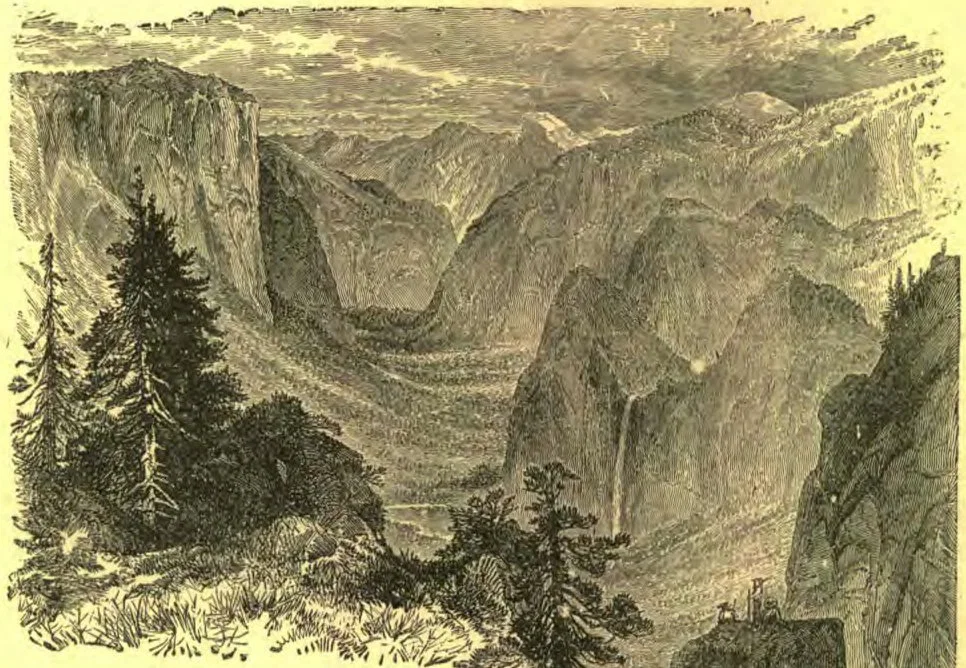
The word “Yosemite” means “a full-grown grizzly bear,” and was originally the name of an Indian chief. The Indians called the valley “Ah-wa-nee.” The Yosemite Valley with its surroundings is the wonderland of California, situated in the very heart of the Sierras.
VALLEY.
VALLEY.
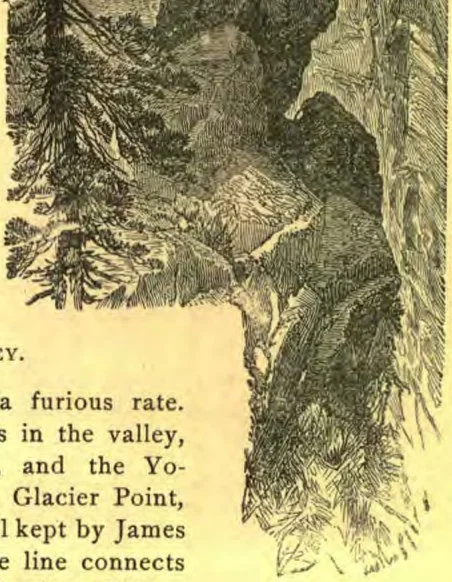
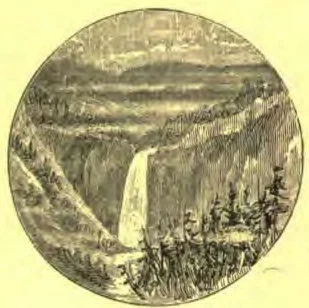
SCENES IN YOSEMITE VALLEY.
It was given by Congress to the state of California in 1864, to be “held for public use, resort, and recreation,” to be also “inalienable for all time,” with the condition that portions of the valley might be leased, the income arising from such leases to be expended “in the preservation and improvement of the property or the roads leading thereto.” The grant is managed by commissioners appointed by the governor of the state.
The entire valley is about ten miles in length, varying in width from half a mile to three miles. Its elevation above the sea level is four thousand and sixty feet. The Yosemite Grant is twelve miles long, with an average width of about four miles.
The walls of the valley run nearly due east and west, forming a sort of gorge, in places at least. It is thought that this valley was made by glacial action. It was first entered by a white man in 1848. The first body of white men to penetrate into its interior was the Mariposa Battalion, engaged to scour the mountains in a fight with the Indians. This battalion was commanded by Major Savage. They came through by what is now called Wawona. The valley was discovered in May, 1851. The Merced River runs through it, and it is a grand sight to go up Coulterville road and look down upon the river, dashing along with its mantle of foam, over huge rocks and fallen trees, at a furious rate.
There are three hotels in the valley,—the Stoneman, Snow’s, and the Yosemite Falls hotels. On Glacier Point, above the valley, is a hotel kept by James McCauley. A telephone line connects this hotel with the main business houses of the valley. The Yosemite Falls Hotel is in the center of the valley. The Guardian’s office is about one fourth of a mile down the river from the Yosemite Falls Hotel. Near the Guardian’s office is the school-house, and farther down the river is the chapel, open to any denomination. The Stoneman Hotel is about a mile up the river from the Yosemite Falls Hotel, and is considered the best hotel in the valley.
The Snow’s Hotel has a painful romance attached to it. The man who owned the hotel was named Snow. His wife mysteriously disappeared, and he could not find her. Finally he became insane, and wandered off. The people who lived in the valley would not take the furniture out of the house. When we were in the valley, we went up on the porch, not knowing these facts at the time. A tree had fallen down and knocked a part of the porch in. Looking in through the window, we could see various articles of furniture as they were when their owner left them.
There is a small printing-office in the valley near the Guardian’s office.
The camping-grounds are good, and everywhere there is good feed for horses. Thimbleberries, gooseberries, and strawberries grow wild, and are gathered by the tourists, and plenty of trout are found in the river. Oak and pine trees grow in abundance in the valley, also many varieties of flowers and ferns.
There are eight thousand four hundred and eighty acres in the valley, of which three thousand are meadowlands.
DOULY GRAY.

Scylla and Charybdis.

The whirlpools of Scylla and Charybdis are situated in the Strait of Messina, between Sicily and Italian Apulia. Although dangerous to the mariner of the ancient world, they are not very formidable in the present day. The whirlpool of Scylla lies at the base of the cliffs on which stands the village of Scylla. The circling waters have worn the cliffs into caves, which in heavy seas emit sounds like the barking of a dog. Charybdis is near the port of Messina, nine sea miles from Scylla, and according to Signor Spallanzani, is five hundred feet deep. The old danger of sailing between them has recently been explained by M. Keller, an engineer, who shows that the currents in the strait depend both on the tide and wind. The currents are strong because the tide is low in the Ionian Sea when it is high in the Tyrrhenian Sea, and vice versa, and whirlpools, more or less energetic, are formed at various points of the strait. Between Scylla and Charybdis there is still danger to sailing vessels.

LITTLE THINGS.

If any little word of mine May make a life the brighter, If any little song of mine May make a heart the lighter, God help me speak the little word, And take my bit of singing, And drop it in some lonely vale, To set the echoes ringing.
If any little love of mine May make a life the sweeter, If any little care of mine May make a friend's the fleeter, If any lift of mine may ease The burden of another, God give me love, and care, and strength To help my toiling brother.
— Mrs. M. P. A. Crozier.

THE WORLD’S DEBT TO ASTRONOMY.

ASTRONOMY is more intimately connected with the history of mankind than any other science. While chemistry, physics, and we might say all sciences which pertain to things on the earth, are comparatively modern, we find that contemplative men engaged in the study of the celestial motions even before the commencement of authentic history. The earliest navigators of whom we know must have been aware that the earth was round. This fact was certainly understood by the ancient Greeks and Egyptians, almost as well as it is at the present day. True, they did not know that the earth revolved on its axis, but thought that the heavens and all that in them is, performed a daily revolution around our globe, which was, therefore, the center of the universe. It was the cynosure, or the constellation of the Little Bear, by which the sailors used to guide their ships before the discovery of the mariner’s compass. Thus we see both a practical and contemplative side to astronomy through all history. The world owes two debts to that science: one for its practical uses, and the other for the ideas it has afforded us of the immensity of creation.
The practical uses of astronomy are of two kinds: one relates to geography; the other to times, seasons, and chronology. Every navigator who sails long out of sight of land must be something of an astronomer. His compass tells him where are east, west, north, and south; but it gives him no information as to where on the wide ocean he may be, or whither the currents may be carrying him. Even with the swiftest modern steamers it is not safe to trust to the compass in crossing the Atlantic. Not only the navigator, but the surveyor in the western wilds, must depend on astronomical observations to learn his exact position on the earth’s surface, or the latitude and longitude of the camp which he occupies. He is led to do this because the earth is round, and the direction of the plumb-line not exactly the same at any two places. It is true that a considerable distance on the earth’s surface will seem very small in its effect on the position of a star. Suppose there were two stars in the heavens, the one in the zenith of the place where you now stand, and the other in the zenith of a place a mile away. To the best eye unaided by a telescope, those two stars would look like a single one. But let the two places be five miles apart, and the eye could see that there were two of them. A good telescope could distinguish between two stars corresponding to places not more than a hundred feet apart. The most exact measurements can determine even distances ranging from thirty to sixty feet. If a skilful astronomical observer should mount a telescope on your premises, and determine his latitude by observations on two or three evenings, and then you should try to trick him by taking up the instrument, and putting it at another point,—one hundred feet north or south,—he would find out that something was wrong by a single night’s work.
We cannot measure across oceans from island to island. Up to the present time, we have not even measured across the continent, from New York to San Francisco, in the most precise way. Without astronomy we could scarcely make an accurate map of the United States, except at enormous labor and expense, and even then we could not be sure of its correctness. But the practical astronomer being able to determine his latitude and longitude within fifty yards, the position of all principal points in all great cities of the country are known, and can be laid down on maps. The world has always had to depend on astronomy for all its knowledge concerning times and seasons. The changes of the moon gave us the first month, and the year completes its round as the earth travels in its orbit. The results of astronomical observations are condensed for us into almanacs, which are now in such universal use that we never think of their astronomical origin. At some of the principal observatories of the country astronomical observations are made on every clear night, for the express purpose of regulating an astronomical clock with the greatest exactness. Every day at noon a telegraphic signal is sent to various parts of the country, so that all operators and railway men who hear that signal can set their clocks at noon within two or three seconds. People who live near railway stations can thus get their time from them, and so exact time is diffused into every household of the land, which is at all near a railway station, without the trouble of watching the sun. Thus, too, increased exactness is given to the time on all our railroads, increased safety is obtained, and great loss of time saved to every one.—Professor Newcomb, in the Chautauquan.

Court Rules Dawn Timing Decides Locomotive Negligence Case

APROPOS to the value of astronomy, the Scientific American relates a case in which the Court of Common Pleas in Philadelphia recently decided the question when day begins and darkness vanishes in the morning solely upon the authority of astronomical experts. A young woman had been knocked down by a locomotive on the Reading Road while she was walking over a crossing at Norristown at 6:30 o’clock in the morning of Feb. 14, 1893. The engine did not display a light, nor did it signal with whistle or bell. The company claimed that it was not negligent, because at that hour dawn was breaking, and no light was needed; and the entire case rested on whether or not it was daylight when the accident occurred.
The sun rose on the day of the accident at 6:54 o’clock. Several astronomers and other experts testified that half an hour before sunrise it is as dark as at any time of night. From that time until sunrise light comes so slowly that the point of half-light is reached only seven minutes before sunrise. During the last seven minutes before the sun-up, light comes very rapidly until the full day breaks. The plaintiff’s lawyer claimed, therefore, that at the time of the accident, twenty-four minutes before sunrise, it was pitch dark. The jury rendered a verdict of twenty-five thousand dollars in her favor.

The Gastograph: An Instrument for Recording Stomach Motions

An instrument known as the “Gastograph” has been constructed for the purpose of recording the motions in the stomach of a patient under treatment, the movements of the food while it is undergoing chemical action being carefully and minutely recorded by means of electricity.

French Physicians Link Pork Consumption to Cancer

THE researches of two French physicians—Verneuil and Roux—incline them to regard pork as a frequent cause of cancer. Verneuil has observed that the Israelites, who eat no pork, are always refractory to cancer.

Air Frozen at Two Hundred Ninety-Six Degrees Below Zero

AIR can be frozen at two hundred and ninety-six degrees below zero.

BEGINNING OF GREEK ART.

WE will briefly notice, first, who the Greeks were, and when and where they lived.
Tracing backward to the very source of their existence, we discover they were the offshoot of Javan, a son of Japheth, one of the three heads into which the human family was divided after the flood.
At this very early period we can say nothing of their prominence, but we may well conjecture that the conditions of nature which then surrounded them were favorable and conducive to the development which, later, commanded the attention of the world.
Leaving this “probable” period, let us behold the first dawn of positive Greek history, which, as early as nine centuries before Christ, was already apparent on the skies of time.
About twenty-one thousand square miles comprise the mountainous peninsula of Greece, whose southern, eastern, and western sides are perpetually bathed by the water of the Greek Mediterranean. The capital is Athens, the center of eloquence, philosophy, art, and science.
Physical surroundings to a great extent mark, shape, and make our mental status, and thus it was exemplified in the case of the Grecians. Blessed with a climate which the ancients considered the gift of the gods, an atmosphere—to quote Euripides—“mild and clement,” they lived a good deal out-of-doors, enjoying the healthful and invigorating breezes of the pure air of heaven. Temperate in his diet, natural and free in his dress, the body was wholly unfettered, the mind free to indulge in the aerial realm of boundless idealism.
Again: Greece was not only a land of mountains, but also of sea-coasts, and this afforded the Greeks an excuse for being seamen. It is said that of a population of nine hundred thousand, in 1840, thirty thousand were sailors, with four thousand boats.
They were merchants, travelers, pirates, courtiers, and adventurers. This was a means considered by Taine to quicken and sharpen the intellect to a marked degree. There are in every man what are called “ideas.” Of these the Greeks were full. Their ideas were only of the beautiful and the symmetrical, and with a skill as subtle as their thought, they produced fac-similes at which centuries have looked with gaping wonder.
Dædalus is said to have been the first in plastic art; but tradition says the art originally came from heaven, and was introduced into Greece by this man. He worked in wood, and his pictures were so natural that it was said by an old writer, “One must chain his pictures, lest they run away.”
Glaucus was the first to work in metal, and Melas in marble, 576 B. C. The second period of Greek art began about the beginning of the sixth century before Christ, and extended up to the time of Pericles. Art was chiefly confined to the service of religion, hence the chief works were gods and the attendant articles.
Lovers of precision and order, their works at this period betrayed great formality and stiffness. Even the drapery and hair had to submit to geometrical order. Little by little, this formality gave way to naturalness. Not many works have survived this period, and those that have are architectural in point of importance. “A colossal statue of Apollo, British Museum; athletic statue, Naples Museum; Minerva, in Villa Albim in Rome; Minerva, Dresden; Minerva as champion in strong action, at Naples; Minerva from Herculaneum; the Barberini Muse, Glyptothek at Munich, etc.” are among the splendid souvenirs of this time. P. GIDDINGS.

GROWTH OF INDUSTRIAL LIFE.

2.— COMMUTATION.

THE villein, or yardling,—the holder of thirty acres or so of the old English manor,—paid for his holding a certain fixed price, its amount being rendered in work. Usually it was expressed in the account-books of the bailiff in the form of a list of tasks to be performed yearly, though sometimes it was specified in money. We read in the records that A does two days’ work every week on the land of the lord, that he sows three acres to wheat at the proper season, that he helps five days in harvest, and that he furnishes two oxen in plowing-time. Even where a sum of money was named instead, the payment was made in work.
No one in this state of society could be in want, and no one could amass wealth. Equality was natural and easy enough where no one could either rise above or fall below his station. But progress in civilization was thus impossible, for inequality is necessary to all progress. Progress means the division and multiplication of employments; when every one does the same thing, that thing must be to look after his animal needs. If mankind acquires learning and culture and more refined conditions of living, a part of the people must be fed by the other part. The smaller the fraction of the whole people that must get food for all, the greater is the number who are free to do something else. We to-day can have teachers and doctors and lawyers, artists and authors and musicians, merchants, and mechanics and miners, railroads and steamships and telegraphs, because more men can be fed by one farmer than in past centuries. Inequality, though, does not necessarily mean injustice; for the farmer who feeds, shares in the product of those who are fed. Inequality is an evil only when a class of people live upon the work of others without rendering anything to the world in return; or, what has the same effect, when a class of men arises who appropriate more wealth than they are able to use to the profit of all.
Two things made advanced civilization possible, by increasing the production of food and by increasing the kinds of employment. One of these things was the growth of a free farming class, the other was the growth of a free labor class. It was from the villeins that the free landholders arose.
There was around the manor a large amount of waste land. This the lord’s bailiff would rent out, as population increased, to those who had no land. The working of the lord’s land being already provided for, these new tenants paid a rent in grain.
It was soon found that those who worked for themselves and paid the rent in grain were more profitable than those who worked out their rent. They were interested in making all their work count for something, as men usually are who work for themselves. And as the only reason the lord wished his land worked was the fact that he wanted the products it would bring, he began to rent out that land which previously had been worked for him, taking, in the place of the work, a grain rent.
At first the villeins looked down upon the new rent-payers as a lower order of society; but their freedom brought them such prosperity that the villeins themselves desired to pay their rent in products of the soil or in money and not in work; though most of them still did work for the lord at harvest and at other busy seasons. But in the course of a century or two the villeins became freeholders paying a rent which corresponded very much to our tax. They were really owners of the land on which they worked; for they could not be turned off from their land, and the land which the father held the son inherited, generation after generation.
These free tenants were the most solid element among the English people during a portion of her history,—the great yeoman class, from whom Cromwell recruited his army,—the class which, under his leadership, subdued England and asserted the rights of the people, while they put all Europe in awe. After the Stuarts came back to the throne, the yeomanry declined, and passed away by one of those same resistless movements of what might be called the “soul of history,” which brought it forth.
C. B. MORRILL.

THE EASTERN QUESTION.

PART I.— FIRST BEGINNINGS.

In the study of what is now called the Eastern Question, it will be well to go away back, and trace all the important steps down to the present, if we really wish to get an intelligent understanding of it. Suppose we go back to Bethlehem and Jerusalem, about nineteen hundred years ago, when the Saviour of mankind was born, crucified, and then laid in “Joseph’s new tomb.” The Jews who crucified him had a knowledge of the true God and the Old Testament scriptures; but all the other nations were worshipers of imaginary false gods, and idols.
The Romans ruled over all nations then, so the Jews were subject to them also. Those of the Jews and all others who believed that Jesus was the Son of God, or the Christ, were called Christians from that time forward; but they were very few compared with what are called pagans, or heathen. About three hundred years after the crucifixion of Christ, Constantine, the great Roman emperor, pretended to believe in Christ. This angered a great many Romans. They treated him very ungraciously because he would not revere Jupiter, Mars, and a host of other deities, so that, although this was not his only reason for doing so, he moved the capital from Rome to Byzantium, and called it Constantinople. He made laws that no one but Christians should hold important offices in the government, and thus, we say, he united church and state.
The Christians had their most important churches then at Jerusalem, at Antioch in Syria, at Alexandria in Egypt, and at Rome; and one time Constantine called all the bishops of these and other churches together, and had them make a religious creed,—that is, write a list of their beliefs concerning religion,—and he made them sign it. Then Christianity became a state religion, or what is now known as the Roman Catholic Church.
Rome was not such a magnificent place after Constantinople became the capital; and it was not very many years before the Teutonic barbarians of the north invaded that part of the empire, and subdued it. Then it was divided into many small kingdoms; but the eastern part of the kingdom remained the same for more than a thousand years longer.
Many of those barbarous people pretended to believe on Christ also, and were baptized; but they did not understand what it meant to be disciples of Christ. They kept their heathenish ideas and religious ceremonies, and the Christian church became very corrupt, and not at all as it had been in the beginning. The people had begun to think the most religious thing they could do was to visit the tomb of Christ, or the Holy Sepulcher, at Jerusalem, as if they did not know Christ had risen and ascended on high. So they made long, weary pilgrimages thither.
Now if you will get your map of Asia and find Arabia, you will see it is surrounded by deserts, which then inclosed a very powerful tribe or race of people called Arabs, or Saracens. They belonged to the same race as the Hebrews, or Jews,—the Semitic. In 570 A. D. Mohammed, the great prophet of the Saracens, was born. He established an altogether different religion among them than that of Christianity. It had a good deal of the Jewish religious element in it, gotten probably from those Jews who had found refuge there from persecution in other countries. This strange religion was disseminated principally by the sword; for Mohammed taught that the joys of paradise were secured by fighting the enemies of their strange new faith. They went off into other countries preaching and fighting. They conquered northern Africa, Persia, Egypt, and Syria; so you see they obtained possession of the holy places of Jerusalem. They tried to get Constantinople, too; but it was saved through the use of a compound called “Greek Fire.”
LORETTA REISMAN.

Using the Key of Sorrow to Help Others

EVERY stroke of sorrow that issues into light and joy, is God putting into your hand the key of that sorrow, to unlock it for all the poor souls whom you may see approaching it through all your future life. It is a noble thing to take that key, and use it.—Phillips Brooks.

THE CYCLONE'S PATH.

[The following thoughts were suggested by crossing the path of the last summer's cyclone, a few weeks ago. The forest was completely leveled and the lake entirely dried up, and mud from its bottom was spread out over the fields.— W. B.]
THE lurid lightnings cleave the sky, And deafening peals of thunder roar; And angry clouds mount up on high; And twist and twirl and flash and fly; While men and women vainly cry, The deadly cyclone passes by,— The village is no more.
It leaps, and skips a field of rye, And then like lightning passes on. It takes one sip—the lake is dry! But leaves a farm-house standing by; And none can ever tell us why, Or where the lake has gone.
The demon's work seems just begun; The city fair, in slumber sweet, Lies in its path. The clock strikes one; The space that lay between is run; A whirl! a crash! the work is done— Its ruin is complete!
Like demons from another world Armed with the thunders of their wrath, And flaming banners now unfurled, It arched, and wreathed, and writhed, and curled, And loaded freight-cars mid air hurled; While barns and mansions whisked and whirled Along its deadly path.
It sweeps the everlasting hills; With swift destruction hand in hand, It levels forests, houses, mills; It sports with rivers, creeks, and rills. A thousand graves it quickly fills, And desolates the land.
It strikes old ocean's briny deep— A maelstrom and a tidal wave Combined; while men securely sleep, It whirls, it spins, it takes a leap. Boats, ships, and towns, with one grand sweep, Are piled in one promiscuous heap, And find a watery grave.
WILLIAM BRICKEY.

BEWARE OF IMITATIONS.

Association with learned men is esteemed by some more highly than communion with the God of heaven. The statements of learned men are thought of more value than the highest wisdom revealed in the word of God. But while infidelity is proudly lifting up its head, Heaven looks down upon the vanity and nothingness of human reasoning; for man in and of himself is vanity. All the merit, all the moral dignity, of men, has been theirs simply in and through the merits of Jesus Christ. What, then, are the speculations of the greatest minds of the greatest men that have ever lived? Yet men place their human reasonings before the revealed will of God, and present to the world that which they claim is higher wisdom than the wisdom of the Eternal. In their vain imaginations, they would bring down the economy of heaven to suit their own inclinations and desires.
The great God has a law by which to govern his kingdom, and those who trample upon that law will one day find that they are amenable to its statutes. The remedy for transgression is not to be found in declaring that the law is abolished. To abolish the law would be to dishonor it, and to cast contempt upon the Lawgiver. The only escape for the transgressor of law is found in the Lord Jesus Christ; for through the grace and atonement of the only begotten Son of God, the sinner may be saved and the law vindicated. The men who parade before the world as wonderful specimens of greatness, and at the same time trample down the revealed will of God, robe man with honor, and talk of the perfection of nature. They paint a very fine picture, but it is an illusion, a flattering deception; for they walk in the sparks of their own kindling.
Those who present a doctrine contrary to that of the Bible, are led by the great apostate who was cast out of the courts of God. Of him before his fall, it was written, “Thou sealest up the sum, full of wisdom, and perfect in beauty. Thou hast been in Eden the garden of God; every precious stone was thy covering. . . . Thou art the anointed cherub that covereth; and I have set thee so: thou wast upon the holy mountain of God; thou hast walked up and down in the midst of the stones of fire. Thou wast perfect in thy ways from the day that thou wast created, till iniquity was found in thee. . . . Thine heart was lifted up because of thy beauty, thou hast corrupted thy wisdom by reason of thy brightness: I will cast thee to the ground, I will lay thee before kings, that they may behold thee. . . . I will bring thee to ashes upon the earth in the sight of all them that behold thee. All they that know thee among the people shall be astonished at thee: thou shalt be a terror, and never shalt thou be any more.”
With such a leader,—an angel expelled from heaven,—these supposed wise men of earth may fabricate bewitching theories with which to infatuate the minds of men. Paul said to the Galatians, “Who hath bewitched you, that ye should not obey the truth?” Satan has a masterly mind, and he has his chosen agents by which he works to exalt men, and clothe them with honor above God. But God is clothed with power; he is able to take those who are dead in trespasses and sins, and by the operation of the Spirit which raised Jesus from the dead, transform the human character, bringing back to the soul the lost image of God. Those who believe in Jesus Christ are changed from being rebels against the law of God into obedient servants and subjects of his kingdom. They are born again, regenerated, sanctified through the truth. This power of God the skeptic will not admit, and he refuses all evidence until it is brought under the domain of his finite faculties. He even dares to set aside the law of God, and prescribe the limit of Jehovah’s power. But God has said, “I will destroy the wisdom of the wise, and will bring to nothing the understanding of the prudent. Where is the wise? where is the scribe? where is the disputer of this world? hath not God made foolish the wisdom of this world? For after that in the wisdom of God the world by wisdom knew not God, it pleased God by the foolishness of preaching to save them that believe. For the Jews require a sign, and the Greeks seek after wisdom: but we preach Christ crucified, unto the Jews a stumbling-block, and unto the Greeks foolishness: but unto them which are called, both Jews and Greeks, Christ the power of God, and the wisdom of God.”
MRS. E. G. WHITE.

Judging a Man's Religion by His Walk

You can judge a man's religion By his walk from day to day; When he's dead, you have to judge him By what other people say. — Selected.

Diligence Sharpens the Tools of Perfection

THE expectations of life depend upon diligence; the mechanic that would perfect his work must first sharpen his tools.—Confucius.

The Object of Education

To develop in each individual all the perfection of which he is susceptible, is the object of education.—Kant.

Making Everyday Acts Religious Through Right Spirit

One can make the most common act of life a religious one, if he do it in a right spirit.

Efforts to Do Good Rewarded

If our efforts to do good to others are spurned, they, not we, are the losers.

“THERE IS PLENTY OF TIME YET.”

It was the day before the Sabbath. A veteran minister of the gospel sat in his study, and thought over his discourse for to-morrow. He was conscious of his office, as a messenger of God. He felt the solemn and blessed responsibility to preach to dying sinners the words of life and peace from God, and his whole soul was stirred with the important question: “How can I best win souls for the Master; how can I best arouse the indifferent and the evil, and warn them most effectively to flee from the wrath to come?”
It is immaterial whether he fell asleep over his meditations, or whether he had a vision in his wakeful mood; suffice it that this was the scene which seemed to develop before his mind, and these were the words he seemed to hear:—
It appeared to him as if he were in the midst of a number of evil spirits, who had assembled to consider the question, by what means the souls of men could best and quickest be destroyed. How different was this from his own dearly-cherished work! He shuddered, but could not refrain from listening to their discussion. One evil spirit after another came to the front, with his plan, while one who seemed to be chairman, or umpire, gave the decisions.
“I will go and tell the people that there is no God,” shouted one.
“You may save yourself that trouble,” said the presiding spirit; “they know better than that. Earth, sea, and heaven tell them a far greater truth.”
“I will tell them that there will be no final judgment,” said another.
“That, too, will be in vain,” was the reply; “for man has a conscience, and he cannot suppress its voice altogether. Whatever you may tell him, he knows very well in the innermost recesses of his soul that he will have to render an account to God sooner or later.”
A third one arose: “I will teach men that they can enter heaven by virtue of their good works.”
“No; that will not do; for no one will seriously believe that, either,” retorted the other. “Man feels that a law transgressed cannot be thus easily satisfied nor fulfilled. His good works do not even satisfy himself, and so he knows only too well they will not answer before God.”
“I know what is better than that,” now spoke up a fourth one. “I shall choose a more shrewd way. I will tell them that there is a God, as well as a heaven and a hell; and I will even let them believe that there is but one way to reach the one and shun the other. I will give them the whole truth, and mingle with it only one single little lie. I shall tell them: ‘There is plenty of time yet, and no one need be in a hurry about it. Later on in life will be time enough to make thorough work of repentance and conversion; but now all have plenty of time yet.’”
“You have spoken well,” said the ruling spirit, with an approving smile. “Go, and you will succeed; for in that way you can draw countless millions down to perdition.”
The good old parson was suddenly startled, and arose from the seat by his desk, while the dream vanished. The next morning he went and preached on the danger of delay with a power beyond anything he had ever experienced before.
Would to God that all might take heed to the warning and profit by the lesson, and delay no longer, but begin from this very day,—yes, from this very hour,—to make sure work for eternity.
A. K.

“ALL THAT GLITTERS IS NOT GOLD.”

“ALL that glitters is not gold” Is an adage true, though old; As you journey on life's way, Hopeful, youthful mariner, Full of life and mirthful glee, Let your journey joyful be, Though the future may unfold: “All that glitters is not gold.”
Yes, we may be surrounded By many true friends here, And many earthly pleasures Which seem to bring us cheer; But if the shadows gather, And all earth's joys seem cold, We find a deeper refuge In brighter gleams than gold.
We cannot trust in riches, We know they often fail; We cannot trust earth's honor, It never can prevail. We want a firmer basis; Oft by sorrow we are told That there are better riches— “All that glitters is not gold.”
There is a pearl most precious, To brighten every life; It gives sweet peace and comfort, Though tossed with danger rife; It gives a true possession Within the heavenly fold, Where we'll find that trust in Heaven Is far better than in gold.
MRS. PAULINA M. ALWAY-ANDERSON.
Continue reading: LESSON 8.—THE HEAVENLY SANCTUARY (CONTINUED)