The Annual Meetings in Russia

6%

Review and Herald Publishing Association · Takoma Park Station, Washington, D. C. · Dec 17, 1908

FromReview and Herald, Vol. 85, No. 51.

Read the full edition

The Annual Meetings in Russia

J. T. BOETTCHER
The first three quarters of 1908 have brought many blessings to our union conference. We could plainly see the hand of God in the message during our visit to the four annual meetings held this fall,—in the Caucasian and South Russian conferences and in the East and West Russian missions.
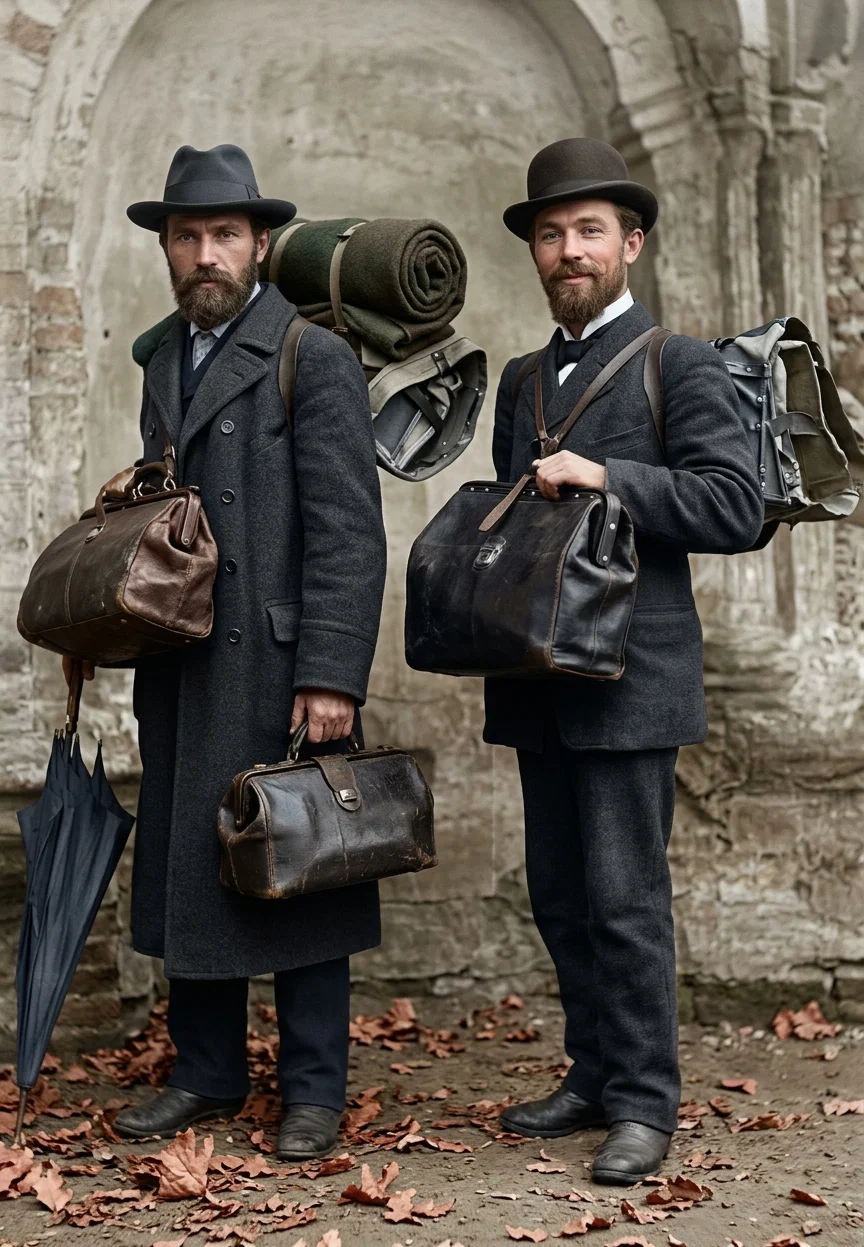
As we presented before our brethren the greatness of the work entrusted to them, they all felt the responsibility resting upon them to carry the truth to the one hundred fifty million inhabitants of the Russian empire. When they looked at the tremendous task before them, it seemed to them that they had hardly made a beginning. This was vividly expressed when whole congregations, with broken-hearted contrition, rededicated themselves to the cause of God. The spirit of labor came upon many souls, and men and women offered to dedicate themselves to the circulationof our literature, in spite of the many obstacles they must meet, and the unpleasant circumstances they must overcome. The accompanying illustration shows two of our colporteurs as they appear when going forth from hamlet to hamlet. Their accommodations are frequently meager. They carry their house, their bed, their kitchen, and their books with them, and they must often lie down to rest where night overtakes them. The angels of heaven are going before us, and preparing the way for the third angel’s message. In one place (near Mt. Ararat) one hundred fifty Christian people have been keeping the Sabbath for a number of years. Thirty of these have united with us, and the others are to be more thoroughly instructed in the truth, and we hope they will also take their stand.
Thousands of immigrants are rushing into Siberia. There they have no schools, no churches, and no social connections, but are hungry for the word of life. One of our young brethren living in this great field attended the East Russian meeting, and returned with one hundred fifty rubles’ worth of books, which he hoped to sell this winter. We have but one ordained minister for the seven million people in Siberia. He can scarcely answer the calls that come for him to organize new companies in this great land. We are trying to have some of our older Sabbath-keepers settle in Siberia, that they may strengthen our work there, and prove a blessing and a light to those who are coming into the country. From the present outlook, it seems to us that this will soon be a well-organized and self-supporting field. American tradesmen are taking advantage of the situation by importing and selling large numbers of farming implements; indeed, they themselves are personally upon the ground, and are rapidly amassing large fortunes.
Urgent calls also come from central Asia, where we have a good company upholding the banner of truth. With tears in their eyes, they plead for help. We could only assure them that the Russian Union Conference would do all in its power to send some worker to their assistance.
At the meeting in the South Russian Conference (at Alexandrovsk) it was our privilege to ordain our first Russian native minister. He received his preparation for the work in Friedensau. There he learned the German language, and became thoroughly acquainted with the principles of present truth. He then returned to Russia, where he has labored in various fields as a Bible worker and licentiate. Last year he worked in Sebastopol, in the Crimea, where the Lord richly blessed his efforts, and enabled him to raise up a good church.
TWO RUSSIAN COLORTOUREURS
We were glad to see the manner in which God opened the way for us to hold public meetings. Heretofore it has been difficult to secure permission to conduct lectures for the public. Indeed, at Alexandrovsk for a time it almost seemed that we would not be granted the right to hold our annual meeting. We appealed to Stolypin, and soon secured the necessary permission. Night after night hundreds of interested listeners eagerly devoured the word. The orthodox clergy, seeing what they had never expected to see, also attended the meetings, having equipped themselves beforehand with our literature, intending to combat the truth presented. In an open meeting they challenged us to a debate. We would not accept, as we had no permission from the government to deviate from the program that had been submitted to, and sanctioned by, the governor. Seeing they were defeated, the following Sunday they took up our points of faith in their meetings. This only created a greater desire to hear the truth. We could see this very plainly at the last meeting we held, when the whole congregation arose and expressed their heartfelt gratitude for having been privileged to listen to such wonderful truth. They then added, “Will you now leave us as sheep without a shepherd?” We left workers behind, to continue the meetings, and follow up the interest.
On the other hand, we as a people expressed our gratitude to Stolypin and to the czar, in a telegram, giving the vote of thanks passed by the conference for the permission to hold the meeting.
Urgent calls also came from every quarter of this conference for additional help, especially in the Russian language. We were glad to welcome a young student who had just come from Friedensau. He was at once listed among the workers, and will remain in Alexandrovsk.
The meeting in the West Russian Mission was conducted in the famous revolutionary center—Lodz. We were interested to see the care exercised by the government here in the transportation of the mails; about fifteen mounted soldiers, heavily armed, accompany the post to and from the trains. Soldiers guard the approaches to the post-office; the sidewalks surrounding it are fenced in from the public. When entering the post-office, one must leave his umbrella in charge of the soldier near the door. The policemen on the streets carry a saber on one side, and a repeating Winchester rifle on the other. Last Friday a strike was declared in one of the largest factories. At once the proprietors telephoned to the police headquarters. Immediately the police appeared upon the scene with a number of Cossacks, who seized the factory, and demanded that the strikers go to work, or submit to arrest. A number who refused to work were marched off to jail. No strikes are allowed in Lodz.
In the midst of this turmoil we are conducting meetings in a public hall, feeling that the hand of God is over us. The evening meetings are well attended by those not of our faith, although the pastors have taken great pains to warn the people against us. The West Russian Mission field has about fifteen million Poles, and about four million Jews. The Testimonies assure us that many Jews will yet embrace the truth. However, we have no worker among them, nor for these millions of Poles. We have sent a German worker to Warsaw, to work as best he can to get a foothold in that city. We hope and pray that all these fields may be supplied with earnest workers, and that means may come into the treasury for their support.
At every meeting we presented the great necessity of having a Russian school for the education of workers. We told the brethren of the help our American friends are rendering this enterprise. This brought tears of joy, and they also gave liberally of their meager earnings, hoping that the way may soon open for the erection of this school.
We are thankful to the Lord for the favorable outlook in this great field. The courage of the workers is good, and all are determined, in spite of difficulties, to press the battle on to victory.
Riga.