California still preserves her integrity as a commonwealth where the civil and religious rights of her citizens are maintained, in harmony with the constitutional guaranties of the state and nation. The legislature has concluded its labors without the enactment of a Sunday closing law, wisely deciding that while men differ in their convictions as to which day they ought to observe, the state well may leave to individual choice the question as to the day for such observance.
Thirty years ago, in California, the free exercise and enjoyment of religious profession and worship, without discrimination or preference, was made possible by the repeal of the then existing Sunday law. Previous to that time, at intervals, citizens had been subjected to severe penalties for engaging in innocent labor and legitimate business on the first day of the week. Ever since then every one has been free to worship God according to the dictates of his own conscience. Meantime, California has prospered as no other state in the Union has prospered, and population has increased phenomenally.
Moral Conditions
Moral conditions have not deteriorated in consequence of the liberty accorded in respect to Sunday observance. On the contrary, California has attained a higher standard of ethics than have states less mindful of the rights of citizens, and civil freedom has not led to moral turpitude. There has been a distinct improvement in society, and higher educational and social ideals have been attained than in most of the states from which this increase of population is derived by immigration.
Nevertheless, while the line of demarcation between church and state has been distinctly observed in recent years in California, mistaken advocates of state-enforced religion have arisen from time to time, demanding the enactment of laws in violation of natural rights, and for the compulsory observance of Sunday as a day of enforced idleness. Scarcely a session of the state legislature has been held without a renewal of the issue, and the session just ended has not been free from such controversy. That legislators swept into office by the extraordinary conditions which have prevailed during the last two years, many of them inexperienced hitherto in public affairs, should so readily have recognized the sectarian character of this demand for Sunday laws, and should refuse to enact such legislation, attests alike their patriotism and their intelligence.
Failed Through the Initiative
Despite the failure of an organized body of sectarians to secure the submission of a Sunday law to a vote of the people, by recourse to the initiative, last year in California, they caused to be introduced in both houses of the legislature the same measure, slightly altered in its terms, and falsely proclaimed as a labor measure. Notwithstanding the enfranchisement of women, only 13,713 signatures had been obtained on the initiative petitions, whereas 31,000 were requisite, and the campaign had convinced the advocates of the proposed law that its enactment could be accomplished only in disguise, inasmuch as less than two per cent of the voters in the state had signed their previous petitions. So they sought to hide their personal connection with the movement by not occupying any time at the public hearing early in the session, pressing forward instead the few members of trade-unions whom they had persuaded, contrary to the avowed policy of the State Federation of Labor, to advocate the measure.
The hypocrisy of this policy was patent to all, but it was ruthlessly exposed at the great hearing in the assembly chamber, where the opposing speakers were accorded an ovation, and the unanswerable arguments in opposition to such legislation were presented. Press comments of an entirely disinterested nature next day were to the effect that not only had the Sunday bill been slain, but a post mortem had been held over the remains. Even the sponsors for the bill in the legislature revealed the fact of their chagrin that their names had been drawn into so bootless a controversy.
Eleven Weekly Rest Bills Introduced
Altogether nine bills were introduced, intended to secure a weekly day of rest; but the substitution of entirely new bills for two of those originally filed, the enacting clause alone being preserved when they were amended, brought the total up to eleven distinct bills, and in only two instances were the bills submitted in the two houses exact duplicates. Of the entire number, only three bills referred distinctly to Sunday, the rest merely providing for more drastic enforcement of the custom of granting one day in seven to those working for wages; one of the amended bills sought to prohibit all persons from working more than six days in seven. Only in the distinct Sunday bills and in the more drastic of the committee substitutes were penalties provided, but in those measures fines of from $10 to $100 and imprisonment for thirty days were provided in all except the bill proposed by the Assembly Committee on Public Morals, which had a monetary penalty of from $25 to $500, and a possible sentence of thirty days’ imprisonment, attached to its provisions.11
None of the more radical measures ever had any real chance of enactment; but some of the less objectionable bills, on account of their assumed bearing on labor interests, were favored in some quarters, until it became fully apparent that all such legislation would constitute an unwarranted interference with personal rights of an inherent nature, and with existing guaranties, would be held unconstitutional if tested before any competent tribunal. As the prospect of the enactment of any Sunday bill into law became more and more discouraging, the friends of such legislation, who all the time had been the persistent advocates of drastic restrictions, while expressly lobbying in the interest of Sunday observance, reached a point where they were willing to make any necessary concession, if only they could secure some recognition of Sunday as a day of compulsory rest in California. They had sought in every possible way to distort the opposition of those who conscientiously observe the true Sabbath, into an endeavor to foster the liquor interests; but at last they themselves had reached such a critical position that they were willing to allow the sale of liquor all day Sunday, if only they could secure the closing of legitimate places of business and the compulsory cessation of honorable labor on that day. Thus shamefully did they abandon the pretense that their measure was devised in the interest of temperance, and their hypocrisy was instantly noted by the clear-headed legislators, who perceived that they had to deal with men of the most unscrupulous character, who were ready to sacrifice a principle to gain a political advantage in the interest of a religious institution. Some were quick to resent the attempt of such advocates to graft upon the statutes of California the spurious sabbath, adopted by an apostate church, tho nowhere established by divine mandate.
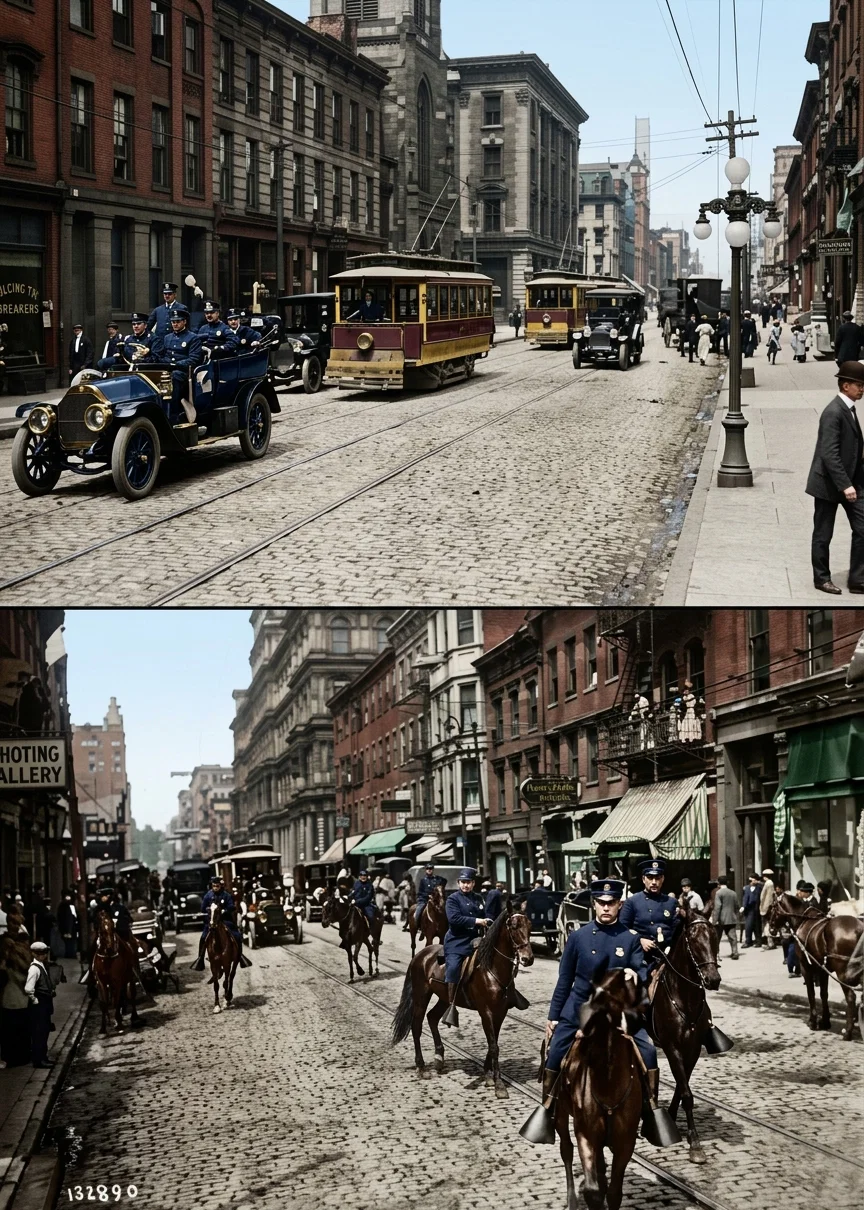
Photograph by Underwood & Underwood
Numerous exemptions had been proposed in the beginning, which would have invalidated the law, had there been no constitutional objection to its enactment; and a wave of popular protest arose, as the legislative session lengthened, and numerous memorials, remonstrating against the proposed invasion of individual prerogative, were filed in the legislature. These were printed in the journals of both houses, and came from the Seventh-day Adventists, the Seventh-day Baptists, the Jews, the Pacific Religious Liberty Association, the Western League for the Preservation of Civil Liberty, and numerous other associations of civil and religious character. Literature in abundance was scattered broadcast and distributed among the legislators. The protracted session, including a month’s recess, gave ample opportunity for newspaper comment, and the press abounded in splendid enunciation of the principles of liberty for which our state and national government was established. Meantime, the legislature, crowded with business, was engaged in committee hearings, many of them being held on Sunday; and the absurdity of making a penal offense of acts no whit more culpable than their own, was pressed to the attention of legislators. In fact, the last Sunday of the session was devoted to the frantic attempt of both houses to dispose of the numerous bills awaiting action, in view of the proposed adjournment next day at noon, both senate and assembly being convened for the regular transaction of business.
When it was proposed for the legislature to meet on Sunday, one of the senators who had been active in working for a Sunday law arose and said:
“‘Mr. President, Mr. President, I am horrified, I am shocked, I am grieved, I—I—I don’t know what to say. The very idea is abhorrent. What? the great senate of the great state of California going to meet on the sabbath to pass laws? Why, Mr. President, it is the worst thing I ever heard of in all my life; but if you say you are bound to do it, I guess I will have to be here too, for I have several bills pending that I am deeply interested in. All right, all right, all right, I—I—well, I’ll sit down.’ And then the senators fairly roared.”
Meantime, three of the rest day bills had been withdrawn, only one of the least offensive had been adopted by the assembly, without concurrence of the senate and consequently inoperative, and all the rest had either remained on file, without action, or had died in committee, where several had been sent by unanimous consent, to get rid of them.
So once more the God-given right of men to decide whom they will serve is left to the people of California. That future attempts will be made to secure the exaltation of the Sunday institution in California is probable, both on account of the mistaken zeal of erring men who are committed to the error of Sunday observance, and from the testimony of prophecy, which shows that for a time a seeming triumph of evil will be accomplished in the world, tho happily thereafter to give way to the eternal reign of righteousness. Let us hope that in that day, all who are becoming acquainted with the truth in these times of combat may be found alined on the side of the true Sabbath, and opposed to the heathen substitute for God’s lasting memorial. Meantime, let the friends of truth be ready to oppose most effectively any effort that may be put forth for the enactment of a Sunday law in California by recourse to the initiative. Among the memorials filed in protest against such legislation, at this session of the legislature, was one bearing the signatures of 68,559 male voters of California, the largest number, until that time, appearing on any memorial submitted to the California legislature since the admission of the state to the Union. The love of liberty is strong here, and every campaign only serves to strengthen the conviction that the observance of Sunday at all is wholly without authority of the Scriptures.