THE CIRCULATION

10%

Pacific Press Publishing Company · Oakland, California · Apr 29, 1903

FromSigns of the Times, Vol. 29, No. 17.

Read the full edition

THE CIRCULATION.

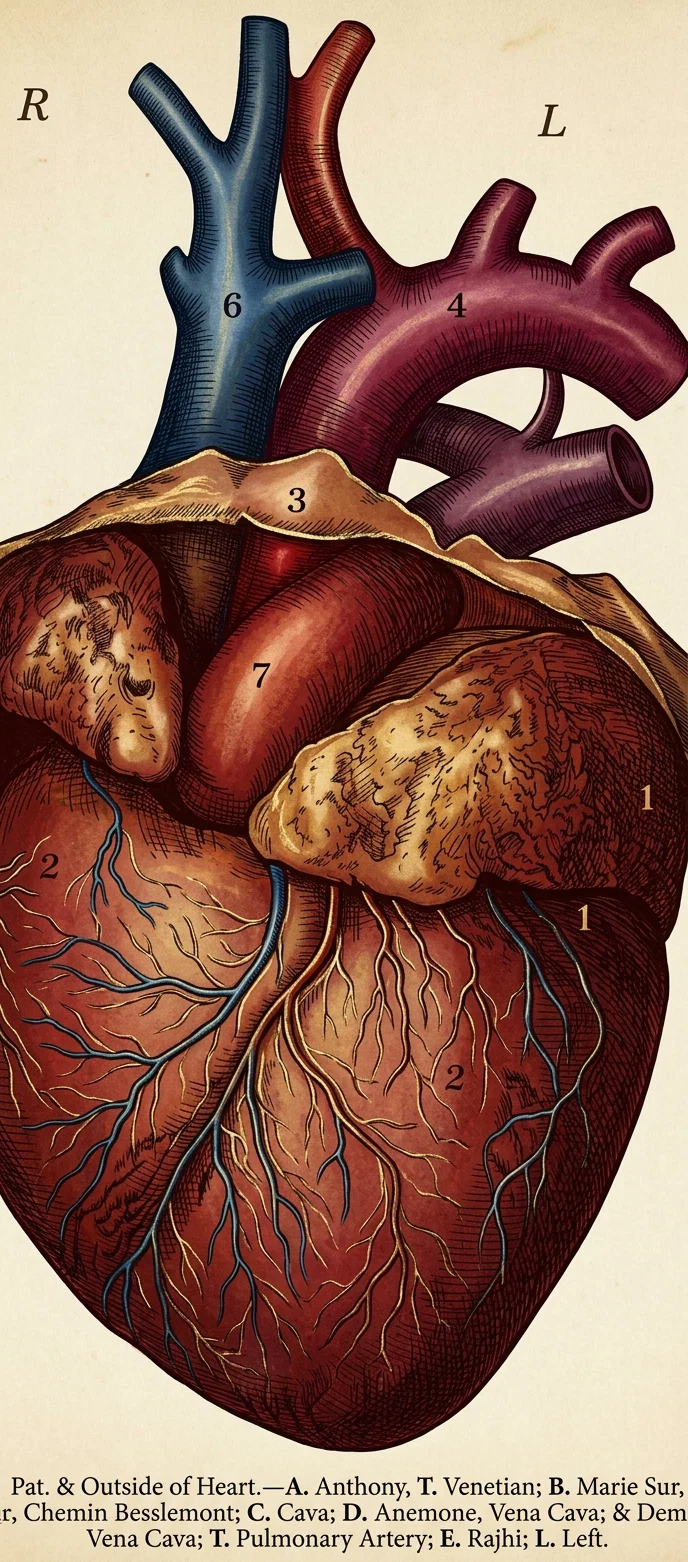
Blood is conveyed to every part of the body by means of tubes, an engine at the beginning of the circulatory system being the most active agent in propelling the current. The heart, situated at the left side of the chest, is the hardest working organ in the body. It is determined by physiologists that every time the heart beats it does a work equivalent to lifting three foot-pounds, or the amount of work required to lift one pound a foot high three times. Reckoning from this standpoint, we find that the heart, in beating seventy times a minute, would have to lift 210 foot-pounds every minute, and in an hour 12,600 foot-pounds, and in a day a little more than 150 foot-tons.
The heart walls are made of strong muscle, and the interior is divided into four chambers. The blood is received from the veins into the upper chamber on the right side; then it passes into the lower chamber or right ventricle, whence, by the contraction of this part of the heart, the blood current is forced out through the lungs. It then returns from these organs charged with a fresh supply of oxygen into the left upper chamber of the heart, and proceeds through the valves to the lower apartment, the left ventricle, from which, by a very strong muscular contraction, it is propelled throughout the body.
The structure of the heart is very interesting. It consists of a muscular tissue, the structure of which is peculiar to the organ, there being none like it in any other part of the body. This structure is bound together in all parts of the heart by connecting tissue. The part of the organ which does the most work naturally has the strongest muscle. To fortify and strengthen the organ still more, the inner chambers are covered by a large number of cords, or “heart strings.” These small pillars and posts are so arranged as to tie one part of the chamber to the other, fortifying its strength, and also running from the valves to the walls, so as greatly to strengthen these parts. The blood leaves the heart through one large artery, called the aorta; and from this it divides and subdivides until it runs into all the small arteries, and finally into the capillaries, which are found ramifying every tissue of the body except the cornea of the eye and a few other similar tissues; and these, because of their functions, do not allowthe presence of blood-vessels. The tissues of the arteries are elastic and have considerable contractile force which aids in the onward movement of the blood current.
The blood, after passing through the capillaries, is gathered up by the small veins, which flow together until they eventually come into two large veins, one from the head, neck, and arms, and one from the lower part of the body; and these enter the right side of the heart.
The circulation of the body is divided into three separate systems: The general system, which conveys blood to all parts of the body and brings it back; the pulmonary system, which takes the blood to and from the lungs, purifies it, and returns it freshly supplied with oxygen; and a third system, called the portal circulation. This latter gathers up the blood from all the abdominal organs except the kidneys, taking it from the stomach, intestines, pancreas, and spleen, and carries it through the portal vein till it enters the liver. Here it goes through a capillary system of blood-vessels, bringing it in contact with the liver cells, where important functions are performed. This blood is gathered up again after the liver has done its work, and taken back into the general circulation.
Thus this circulating system is shut off from the action of the heart by the intervention of a capillary system at both ends, making it more dependent on other forces. The action of the diaphragm, with the accompanying muscular movements, is very important for the maintenance of the portal circulation, and indirectly, for the regulation of a normal blood supply to the stomach, intestines, pancreas, and spleen. Proper chest expansion has much to do with pumping the blood from the circulation back to the heart.
By means of these perfect systems, every tissue in the body is ventilated, and every cell is supplied with food, drink, and oxygen; also the refuse of cell-work is carried away. When, through proper breathing, there is a normal quantity of oxygen given to the blood, and through abundant exercise and healthful conditions of the alimentary canal there is a free circulation and a full supply of food material, these renovating and renewing processes of the body go on in perfect order. But when these several conditions are not normal, there are always parts where there is poor work performed, and some of the chambers in the “temple of the body” are left unpurified, and like a cellar or back kitchen of the house, they become musty with mold and the accumulation of filth till the foundation of disease is laid.
Perhaps no place in the body is more subject to such a danger than the liver, being as it is, shut off by a separate circulation, and having to do a large part of the domestic cleaning for the house we live in. It often suffers from overwork; and when its supply of oxygen is scanty its functions are impeded and its great work of purification handicapped so that the body suffers, and disease within itself may generate. A. J. SANDERSON, M.D.