THE PITCAIRNERS’ REMOVAL TO NORFOLK ISLAND, AND THE SUBSEQUENT DISCONTENT OF A PORTION OF THEIR NUMBER.
NORFOLK ISLAND is located a little west of north of New Zealand, and nearly 1,200 miles directly east of New South Wales, Australia. The island is seven or eight miles long, with an average breadth of five or six miles, and has an elevation of something over 1,000 feet. It is mostly broken up into hills and valleys, the latter being extremely fertile. Here are found, growing side by side, nearly all the productions of both the temperate and the tropical zones.
On the lowlands there may be seen in the same inclosure, cocoa-nuts, pine-apples, figs, guavas, oranges, lemons, pomegranates, bananas, grapes, peaches, apples, quinces, strawberries, cabbages, peas, and beans. Cinnamon and other spices, with tobacco, arrowroot, red pepper, and sweet potatoes, are also cultivated. Wheat, barley, rye, and corn are grown on the higher lands. Pigeons, plovers, parrots, and paroquets abound on the island, yet no venomous reptile of any kind can be found there.
In the waters surrounding the place, are many kinds of edible fish, such as salmon, herring, schnapper, gar-fish, and mullet. There is said to be some danger in fishing from the rocks which stud the coast, on account of the sea’s sometimes rising suddenly to the height of eight or ten feet, and as quickly receding with great violence. A few Europeans have been washed away from these rocks while intently watching their lines, and have never been able to make the land again.
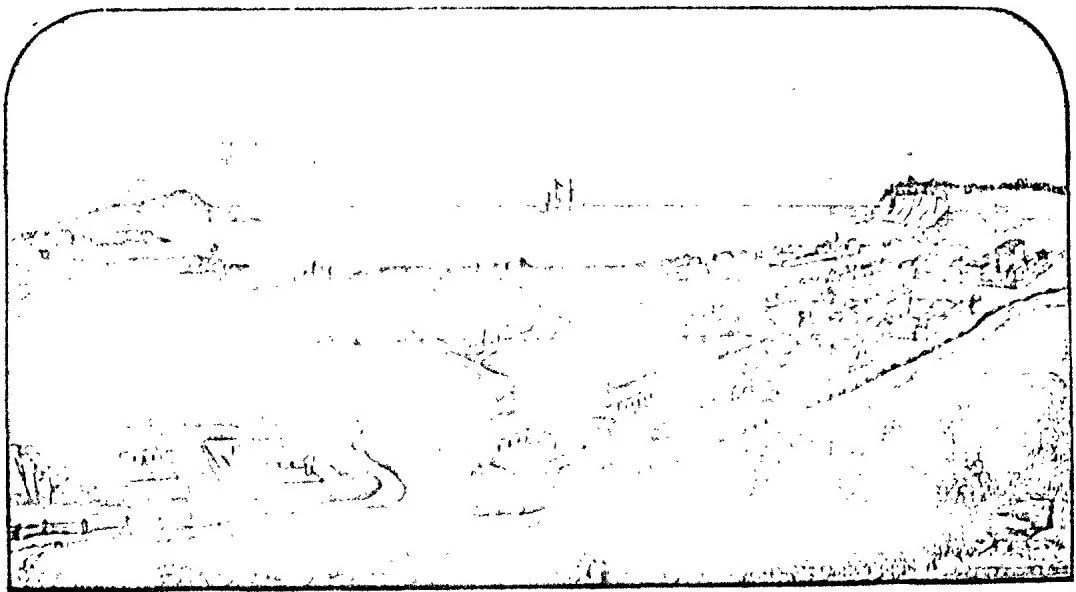
When the Pitcairners were removed to this island, they came into possession of numerous handsome edifices, built of stone, with store-houses, barns, etc., and a neat chapel, capable of holding 1,000 persons. In short, upon their arrival there they found 800 acres of land cleared and fenced (the work of convicts formerly occupying the place), eighty-one substantial buildings for various purposes, together with household furniture, artisans’ tools, and agricultural implements. Upon the farms were 2,000 sheep, 300 cattle, horses, pigs, and poultry. All this was generously bestowed upon the new-comers. The above engraving represents the island just as it appeared at the time of their arrival.
After the vote of August, 1855, to remove to Norfolk (as mentioned in last week’s article), the subject was continually agitated, and discussed over and over again until the month of May of the following year, when the ship “Morayshire” came to take them away. Seeing their friends and relatives getting ready to embark, the reluctance of those who had previously voted against removal, gave way, and the entire community, now numbering 191 souls, embarked, with all their movable property, for their new and untried home.
The voyage occupied thirty-one days. Upon landing at Norfolk, they were much delighted at their first sight of the horses there. Some of them hardly knew how to conceal their almost childish pleasure. But they were not long in learning the use of the creatures they saw. The day after their arrival, some of them secured the overseer’s horse, and took turns riding him about the island. Before they had ceased their sport, they had completely tired out the poor beast.
The majority of the new-comers soon settled down in their adopted home quite contented. Not so, however, with all of them. Two years after their arrival, sixteen of their number found means of transportation, and returned to their old home on Pitcairn, and five years later (1863) about thirty more followed their example. All the rest gave themselves up to the quiet pursuits of agriculture in their enlarged quarters. In 1870, the population of Norfolk was between 400 and 500 souls, the most of whom were the direct descendants of the mutineers of the “Bounty.” These maintained at that time the same simplicity of manners, and the same adherence to truth and uprightness, that had distinguished them while in Pitcairn.
While in California last year, the writer was told by one of the native Pitcairn Islanders that the population of Norfolk has now increased to 1,700, the most of whom have sprung from the old hardy and virtuous stock removed there from Pitcairn in 1856. With their rapidly increasing numbers, and present facilities for extensive intercourse with the world, it cannot be supposed that at this time the primitive simplicity of that people has been fully maintained; yet, while in Australia two years since, the writer was informed that even now the people of that island are considered models of morality, and he was advised to lose no time in trying to get the truth we hold before them, as it was surely thought they would readily accept it.
There is no doubt that they are even yet a remarkable people; and could the proper effort be put forth in season, it is quite evident that many of them would easily yield to the truth, and rejoice in it as fully as their relatives of Pitcairn Island.
Those who returned to Pitcairn, seemed extremely glad to get back to their old quarters again. They immediately re-adopted the rules by which the island had formerly been governed, and their days went by as before. In 1875 their number had increased to seventy-three, and in 1878, to ninety, of all ages. Sir Charles Dilke and others who have visited the island in late years, speak in the highest terms of their Christian integrity and generous hospitality.
From a certain cause, some restrictions have been placed upon those now landing at Pitcairn. No one is permitted to remain on the island any length of time without the unanimous consent of all its inhabitants. This insures peace and quietude to these humble lovers of simplicity and truth, and preserves them from the possible inroads of immorality, which otherwise might be the means of their spiritual destruction.
Although these people, after returning to Pitcairn, adhered to their Church of England forms of worship, they have never been allowed a regular pastor of that order. One of their number has, however, regularly attended to the reading of the church service, and has been recognized as their pastor. Perhaps the providence of God was in their being thus left without a regular minister of their church, as such sometimes do all in their power to keep their flocks from imbibing the pure truths of the Bible. At any rate, we shall feel so in this case, as we consider the wonderful change that has recently taken place in the minds of these islanders, and the singularly strange manner in which it was brought about.
It is well known to most of the world that the entire community on this fair spot have embraced the truths of the Third Angel’s Message. Indeed, this fact has called forth much comment and criticism from public men in various parts, and zealous efforts have been made to induce them to give up their newly received faith. How they will resist the persuasive appeals made to them by some, and stem the opposition offered them by others, remains to be seen. God is able to keep them, though left without encouragement from those of like faith. If it were an ordinary case, the chances would be greatly against them. If they should be left to become overwhelmed, after appealing to us as a people for help for themselves and their relatives of Norfolk Island, it is to be feared that some who have the means within their reach with which to help this people, will be found culpable in the day of God for neglecting a high duty to their fellow-men.
But the story of how these islanders heard the truth, and became acquainted with our work, will be reserved for a future article. J. O. CORLISS.