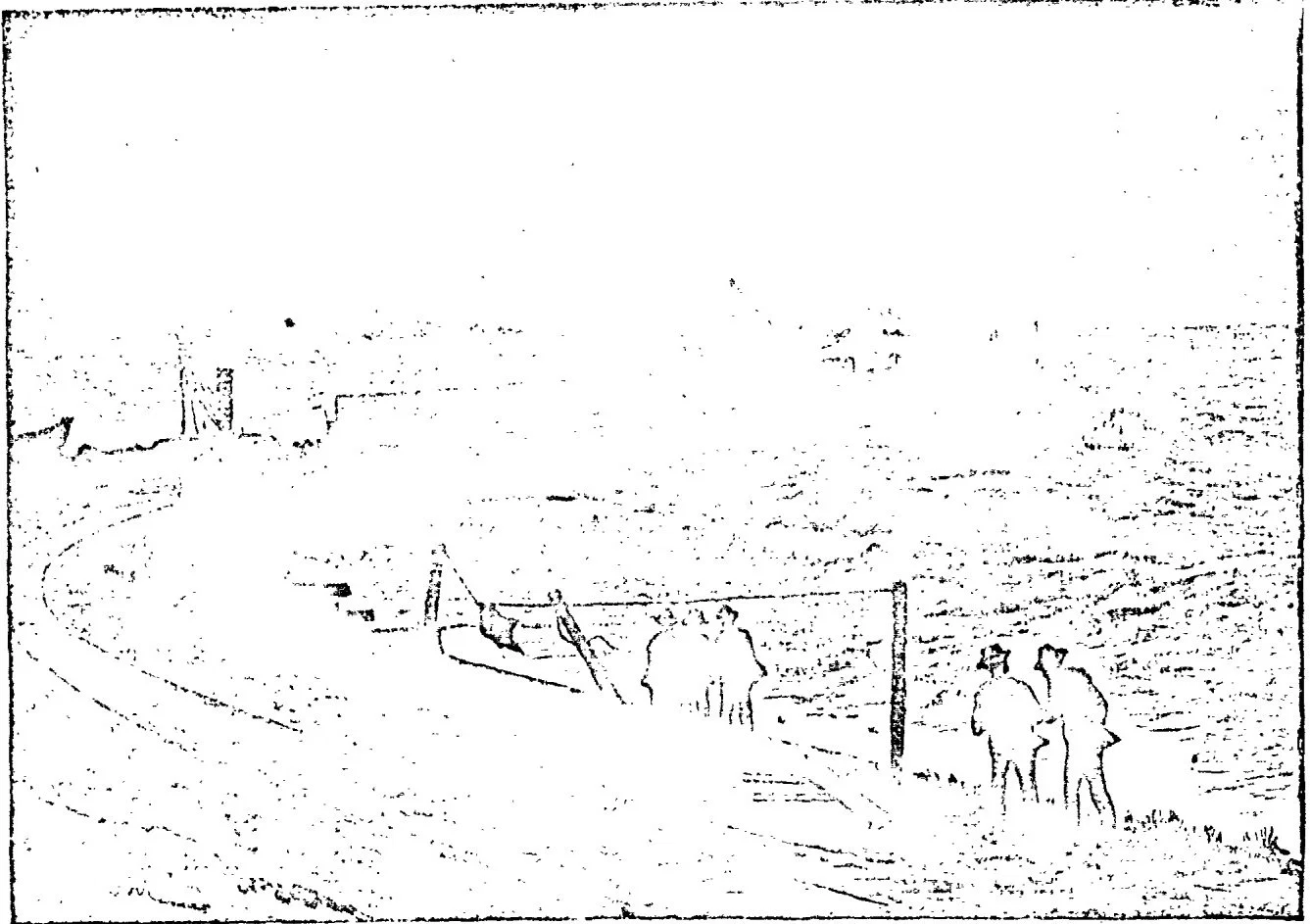
About 150 miles south of Auckland, on the west coast, is New Plymouth, a town of 2,000 or more inhabitants. It is situated near the ocean beach, and without a harbor of any description.
This place was formerly known as Taranaki, and was a frequent battle-ground during the early Maori wars. Until the long pier shown in the engraving was built, steamers were unable to approach nearer than within a quarter of a mile of the shore. Passengers and cargo were brought in surf-boats to within fifty yards or so of the shore, and were taken from there on the backs of strong men, through the surf, to the landing-place.
This was, at best, dangerous work, for the sea is often very rough at that exposed point, and in order to lessen the danger, the surf-boat was drawn out to the steamers and back, by means of a rope stretched from the shore to a strong pile in the ocean. Now, it is altogether different; the steamers land goods and passengers on the pier, which also serves as a breakwater, and they are readily conveyed from there into the town.
On the beach in that vicinity, there are unlimited quantities of iron-sand, from which has been taken the finest quality of iron. When the writer was in Auckland, in 1885, it was reported that a stock company had been formed, and that a large smelting establishment was to be erected, for the manufacture of iron from the sand of that part of the coast. Whether or not the enterprise was pushed forward to completion I have not heard.
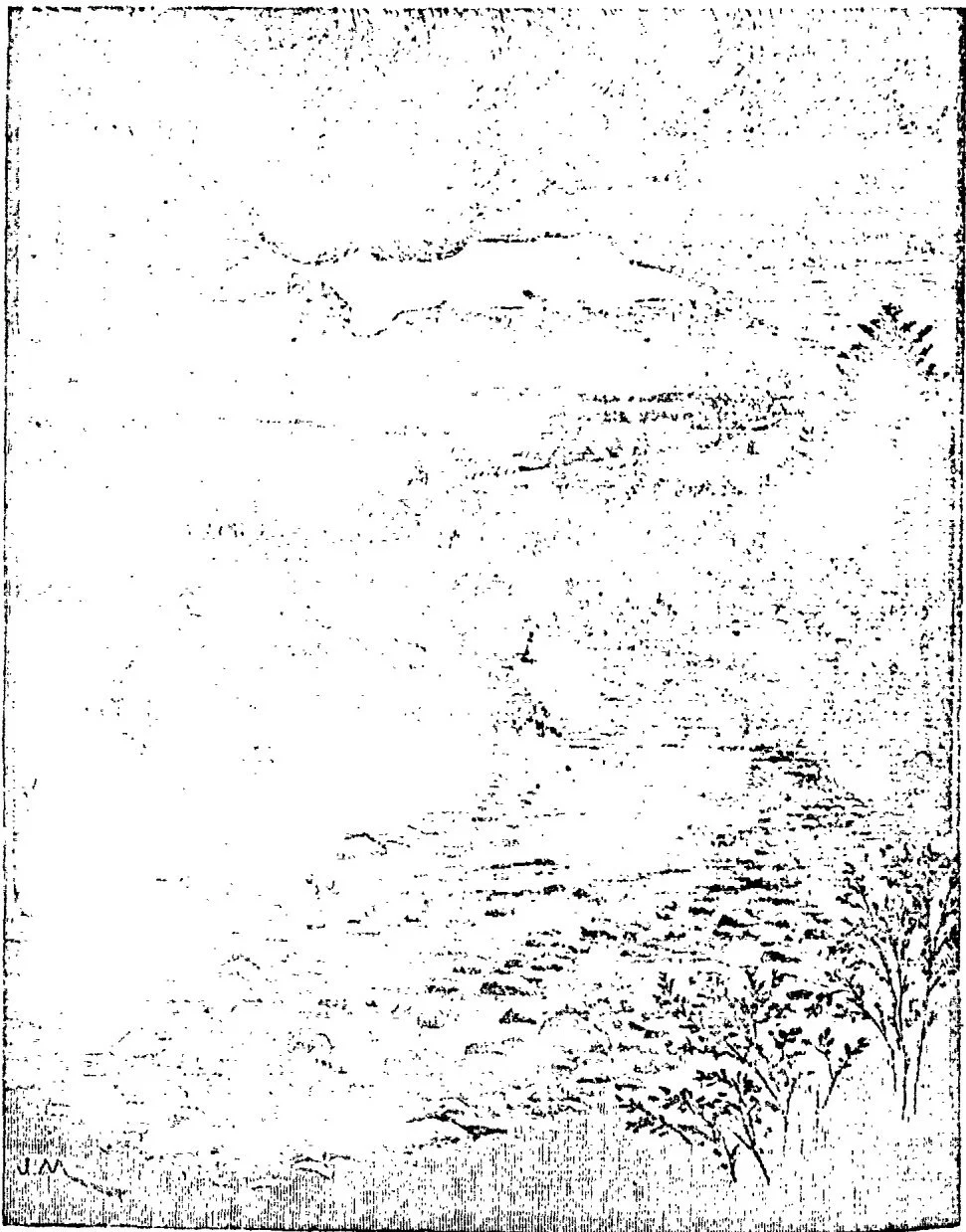
Passing down the east coast from Auckland to the Bay of Plenty, and landing in Tauranga harbor, one finds himself amidst the most picturesque scenery of the Southern Hemisphere. A ride of about forty miles over hill and vale to the south and east, brings one to the famous lake of Tarawera, and the scene of the volcanic outbreak of a little more than two years ago. Before the eruption of 1886, another small but beautiful lake, Rotomahana, was in the same district; but it disappeared during the upheaval, and was replaced by a group of active volcanic craters. (In the cut below is represented the volcano of Ruapehu, a short distance south of Tarawera, emitting clouds of smoke and steam, which obscure its summit.)
Before the calamity that spread desolation in this region, it was the resort of pleasure-seekers from far and near. The principal objects of interest, or at least those which elicited the most comment, were the celebrated pink and white terraces. These were on both sides of, and not far from, Lake Rotomahana, the waters of which were kept warm by the numerous boiling springs in various parts of the lake. The white terraces were a whitish-gray hill composed of several steps, each four or five feet high. Each terrace presented a broad and gently sloping surface, over which a thin sheet of water was always flowing. This water came from a boiling pool of about one fourth of an acre in extent, located at the top of the hill. As the water slowly washed down over the several terraces, it left a deposit of silica, so hard and rough that it would cut or tear the boots of those who presumed to walk over it.
A SCENE NEAR NEW PLYMOUTH, NEW ZEALAND.
The pink terraces on the opposite side of the lake were not so large, but they were unanimously voted more attractive than the white terraces. The surface of the pink terraces was soft and smooth, kept so by the deposit of transparent stone from the water that constantly trickled over it. The pools from which this water came were so arranged that the water from the largest, which was hot, flowed into a series of pools, each a little cooler than the preceding until near the bottom, the water was nearly cold. These were largely used for bathing purposes, and were very popular, on account of one's being able to find just the temperature he desired for a bath.
Besides these hot springs, numerous geysers were found in that region, shooting water and mud twenty feet or more in the air. One remarkable one had thrown up the clay around it, until its crater was in the top of a mound about four feet high. In this the soft mud would boil and sputter like a pot of thick oatmeal porridge over a slow fire.
But the beauty of these terraces and the surrounding scenery, was destined to pass away, and be followed by an era of desolation. On the night of the 9th of June, 1886, a half hour after midnight, and when all the inhabitants of that vicinity were wrapped in slumber, Mount Tarawera broke out as an active volcano, hurling ashes and red-hot stones in every direction, for miles around. An hour later Lake Rotomahana, with the surrounding pink and white terraces, was lifted on high, and quickly descended on the surrounding country, burying two native villages, and forcing the third bodily into Lake Tarawera, where it was completely swallowed up, with all its inhabitants. More than a hundred people were destroyed.
Coming as it did, without a single warning, and at a point where nothing of the kind had before been known, all were taken by surprise, and so scarcely any escaped. To the few English tourists and others who were there at the time, the occasion must have been a specially terrible one, as they found themselves hopelessly struggling amid the overwhelming shower of mud and ashes. But the scene has been so vividly described by another, that I will content myself with giving a short extract from his statement:—“Waking from sweet slumber with earth quaking and rumbling, hurriedly dressing while the quakings grow in vigor and the rumblings become more awesome; looking round and seeing the hilltops wrapped in densest clouds belching forth567a storm of vivid lightnings, and a thousand cannon; another crash and a shaking of the earth, that makes the mountains seem to reel from their bases, and up leaps a mighty column of flame just across the pool yonder, to all appearance only a few yards away; and now hurtling through the air and falling in showers on every side are masses of rock thrown by the Titanic hand that has cleft yon mountain as easily as a child would break a bit of clay. The storm grows as the night goes on. The air is thick and black with falling ashes; rock masses come faster and faster; a continuous roar of thunder runs around the mountain tops which encircle the doomed valley; the thunders are answered with still louder roars from the quaking, leaping, cracking, oscillating earth, on which are lying scores of human beings, many dead, and those living trying to avoid being covered with the falling ashes and mud showers, and heaps of falling rock; knowing no place of safety, and trembling in every nerve as the lurid lights flash over them, and the thunders roar above and below them; above them thousands of tons of fiery ashes, meeting with falling torrents of rain in mid air, and the whole coming down as seething, scalding mud, in masses that overwhelm hopelessly the house or group of human beings upon which they fall—how terrible the scene even to think of, and what a change awaits the eyes that live to see the blessed light struggle through the storm-tossed elements, and to become convinced that the night passed was not the end of all things! Where are the living? Who are the dead? Many days must elapse before that question can be answered. Some are swallowed up alive, dropped whole into the lava bed that underlies this beautiful but terrible place. Buildings are buried and all within them slain; roads and landmarks obliterated; creeks turned from their course; no homes; nothing but desolation and wailing, as the shivering few gradually begin to see each other.”
THE VOLCANO OF RUAPEHU, NEW ZEALAND.
Had the country been densely populated, the sacrifice of human life must have been appalling indeed, as but few in the immediate neighborhood of the eruption survived the disaster. To feel the earth trembling beneath one's feet, while in the very shadow of a mountain belching out showers of hot ashes and stones, must give a feeling of utter helplessness that one in ordinary circumstances cannot possibly appreciate. And yet there is a time spoken of in the word of God, when the wicked everywhere will have rained on them fire and brimstone, and a burning tempest. Ps. 11:6. The earth, too, will tremble beneath the feet of men, shaken by the most terrible earthquake ever known; every island will flee away, and the mountains will not be found. That day will be a day of wrath, of trouble, and distress; a day of darkness and gloominess and of desolation. In that day, silver and gold will be powerless to deliver any. All who shall be thus overtaken, must meet the Lord's wrath without any hope whatever.
And yet there are millions to-day, who, unless self-sacrificing believers of the truth can be found to send them the light, must come up to that time unprepared. But how will those feel at that time who knew, or at least had been taught, of that event, and yet did nothing to help others to a knowledge of the same facts? Of how much avail will their hoarded treasures be to them in that day! Those earthly savings, that might at one time have been instrumental in saving people, will then have lost their potency, and have become a cankered rust, to eat their flesh like fire. The gnawings of conscience will then, instead of prompting to noble deeds, only enhance the hopeless terror of those who have let precious opportunities for good pass unimproved. How insignificant then will appear all those earthly ambitions that were permitted to eclipse the occasional desires to assist in the work of God!
Could the rank and file of our people everywhere see the importance of doing something now, while it could be made to count, they would not only have the satisfaction of knowing that they were doing something for others, but they would be lifted above the seeming apathy that is now hovering over so many like a pall cloth. There are many who, unless they soon arise and shake off their indifference, will not be able to scent the danger for themselves, and so when the now smoldering embers of trouble shall suddenly break out, like the poor natives of the desolated district of New Zealand, they will then struggle in vain against their sad fate. But what will make this lot so hard to bear, will be the harrowing thought that it might have been altogether different, had they only yielded to the promptings of God's Spirit, when duty was so plainly pointed out to them.