The Everlasting Gospel

8%

Pacific Press Publishing Company · Oakland, California · Dec 19, 1895

FromSigns of the Times, Vol. 21, No. 50.

Read the full edition
The Everlasting Gospel.
BY BETA.
The great positive, all-comprehending truth of the message of Rev. 14:6-12 is the everlasting Gospel. It is so called because it is the same Gospel which God has given to the world in all ages. It is the proclamation of “the everlasting covenant” of mercy. It has known no change in its principles since it was proclaimed to fallen men in a polluted Paradise. It is the same glad tidings of peace and good will from a God of love, the loving notes of which have rung down through the ages. It has, on God’s part, for its basis the power of God’s life in his Spirit and word; for its standard, the eternal righteousness of God; for its Author, Jesus Christ; for its object, the regeneration and salvation of sinful man; for its motive, everlasting love; on man’s part, it demands simple faith, receiving the word, voluntary submission to God’s will. This in brief sums up the Gospel.
The apostle Paul declares that it is “the power of God unto salvation; . . . for therein is the righteousness of God revealed from faith to faith; as it is written, The just shall live by faith.” Rom. 1:16, 17. Again, in Col. 1:23-27 it is called “the Gospel,” “the word of God,”
“The Mystery” of God,
“Christ in you, the hope of glory.” The righteousness which he gives is the righteousness of God, embodied in his holy law and perfectly manifest in life in the character of our Lord Jesus Christ. This is evident from the fact that the law of God witnesses to the righteousness received by faith. Rom. 3:21, 22. The law testifies that the righteousness received by faith is real and genuine. It counts the child of faith as though he had never sinned. But it is obvious that the law can not witness to that which is contrary to itself; and it therefore follows that the righteousness of God’s law is the same as that received by faith. This is further evident from the fact that Christ kept his Father’s commandments (Ps. 40:7, 8; John 15:15), and it is by Christ’s “obedience” that believers are “made righteous” (Rom. 5:19).
There is no difference between righteousnesses in God. He is ever the same, holy, unchangeable. His law is therefore ever the same. And while man has sinned, and the law of God’s life has become death to him (Rom. 7:10; 4:15), yet in his great mercy God gives us freely, in the Gospel of Christ Jesus, his righteousness (Rom. 3:22), writes upon our hearts the law of life (Rom. 8:2; Jer. 31:33), and places within us his Holy Spirit (Eze. 36:26; Rom. 8:9, 10), that we may by the power of his life keep all his commandments and walk even as Christ walked (Eze. 36:27; Rom. 8:4; 1 John 2:6).
All this is in Christ Jesus for the sinner. All this will be given to the one who will submit to receive it, accept it, do it. It can be given in no other way. God demands willing service, supreme love. And love can not be compelled; it can not be forced. It must willingly, longingly be received from God, willingly, gladly, freely be rendered to him and his creatures as he has commanded; for love is obedient before it is sacrificing. “To obey is better than sacrifice.” “He that saith, I know him, and keepeth not his commandments, is a liar, and the truth is not in him.” This, in fact, is the real test to us as to whether we know God. “And hereby do we know that we know him, if we keep his commandments.” If there is nothing in our heart or will opposed to God’s law or what he has commanded, we may know that we are in harmony with him, that we know him. But if we refuse to keep even the smallest command, we should know by that that our hearts are yet carnal, whatever may be our feelings or profession.
The Gospel of Christ if received will make us like Christ. Like him will we say, “I delight to do thy will, O my God; yea, thy law is within my heart.” Like David, his great ancestor, will we say, “O how love I thy law! it is my meditation all the day.” We will have the “faith which worketh by love” (Gal. 5:6), the love that keeps all of God’s commandments (1 John 5:3).
The receivers of this everlasting Gospel will fear God as the only Being worthy of reverence. He will give glory to God, not to men. He will worship the Creator of “heaven, and earth, and the sea, and the fountains of waters,” with all that is implied. He will do all this in view of coming judgment, and in love for God, who has saved him from its terrors. He will see in the Creator the Recreator, the Redeemer, the Sanctifier, the Saviour; and he will realize in himself, “If any man be in Christ, he is a new creature.” Knowing this power he desires no other.
It is this in brief that this part of the message in Rev. 14:6, 7 reveals to us. It goes to all the world, entreating men to look and live; to turn, and not die; to eat and be satisfied. “Ho, every one that thirsteth, come ye to the waters, and he that hath no money; come ye, buy, and eat; yea, come, buy wine and milk without money and without price. . . . Incline your ear, and come unto me; hear, and your soul shall live. . . . Let the wicked forsake his way, and the unrighteous man his thoughts; and let him return unto the Lord, and he will have mercy upon him; and to our God, for he will abundantly pardon.” Isa. 55:1-7. Sinner, this invitation is to you; will you not accept it?
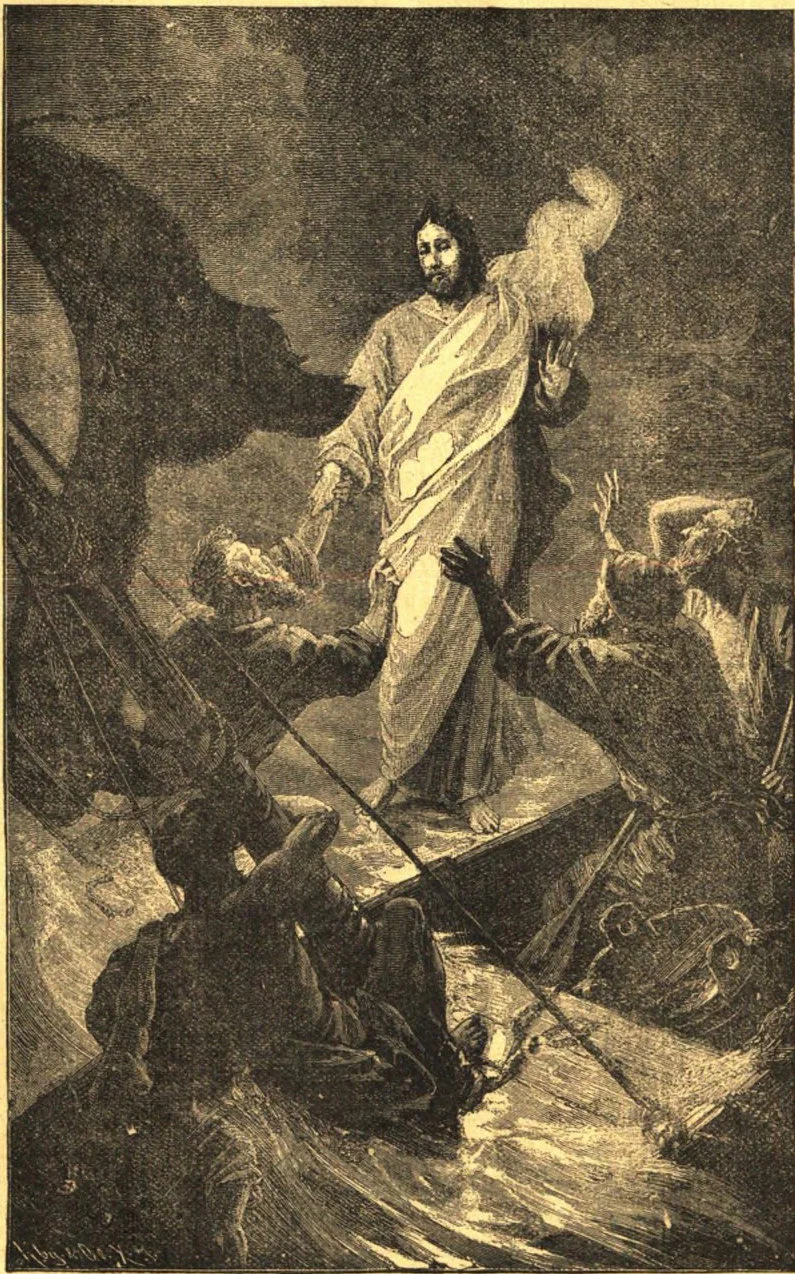
CHRIST'S POWER TO SAVE.