God’s message to the world at all times is the Gospel, glad tidings of salvation through our Lord Jesus Christ. Its principles are expressed in various ways, but the meaning is the same. For instance, Jesus is said to be “the way, the truth, and the life.” John 14:6. He is also said to be to us “wisdom, and righteousness, and sanctification, and redemption. 1 Cor. 1:30. But it is all the same in power, in object, in purpose, in ultimate result. On man’s part it is expressed by “repentance toward God, and faith toward our Lord Jesus Christ.” Acts 20:21. Sometimes the simple terms “believe,” “have faith,” “obey,” are used to express man’s part. They all mean the same thing, which is to submit absolutely and wholly to do God’s will, that he may work out in us his own righteousness and life, and that we may live forever. There is no other way of saving man than the Gospel way.
But connected with these great general truths, principles, facts, in different ages of the world, are truths applicable only to one period, tests which come only to one generation. The principle of faith, obedience, and righteousness is the same, but the test varies, and the test for that age or generation becomes a SPECIAL PRESENT TRUTH for that generation, which, if heeded, will prove salvation, if despised, it will prove destruction.
The coming of the deluge was a testing present truth to the generation which lived on the earth when the flood came. At that time the Lord said: “My Spirit shall never pronounce judgment on men unwarned. They are but flesh. Their days shall therefore yet be one hundred and twenty years.” Gen. 6:3, Boothroyd’s translation. The Lord then sent Noah, “a preacher of righteousness (2 Peter 2:5), and he “by faith . . . prepared an ark to the saving of his house; by the which he condemned the world, and became heir of the righteousness which is by faith” (Heb. 11:7). The righteousness which he preached was the same righteousness always revealed in the Gospel; his faith was the same faith; but the test was adapted to the time. The impending deluge was not a present truth in Enoch’s day, nor was it in Abraham’s; it was a present truth for Noah’s generation alone. He who truly believed the Gospel heeded Noah’s warning. He who did not believe, rejected the warning. But the heeding was life, the rejection was death.
It would not do for a man to say: “God did not require this of Seth or of Enoch; and I will go on in the good old way. If it was all right for them, I will risk it for myself.” Millions of those who perished doubtless reasoned in that way. Seth had his special tests of faith, so did Enoch, and the deluge was the special test of that generation. Noah believed, and his faith showed that others were justly condemned, for “God is no respecter of persons,” and his message was to all.
The present truth to Sodom that God would destroy it was given through Lot. He believed and lived; the people of Sodom despised it and died. Jonah preached a present truth to Nineveh, and it brought salvation because it was believed.
The faith of the Jews was tested by the present truth of the Gospel preached by John: “The kingdom of heaven is at hand,” or, as rendered by some, “The royal Majesty of Heaven has appeared.” The Christ of God was among them. “The fullness of time” had come. His coming had been predicted in the past, and the good of the preceding ages had believed it and lived. But in John’s day it was fulfilling, and the touchstone of genuine faith was the acceptance4of the fact proclaimed in John’s message.
And therefore it is written:—
“And all the people that heard him, and the publicans, justified God, being baptized with the baptism of John. But the Pharisees and lawyers rejected the counsel of God against themselves, being not baptized of him.” Luke 7:29, 30.
The time of visitation had come, and the Jews knew it not. Their faith, if faith it might be called, was in a dead past, locked in the tombs of the prophets. Trusting in the glory of the ages gone, lifted up by their own righteousness, they rejected the greatest of all prophets, and finally Him whose Spirit had spoken through all the servants of God. They had a dead belief and the outward forms of piety, but living faith was wanting, and the message of God designed to develop and confirm it they rejected.
“In the fullness of time God” raised up Martin Luther and contemporaneous reformers to bring to his again fallen and apostate church a message of righteousness. Some accepted it and were saved; the great mass rejected the message and went into greater darkness, even to the extent of putting to death those who, according to their best light, followed and preached Christ.
Even as in other ages, so in this. The fullness of time has come for God to again warn the world. Nearly three thousand years ago the Lord gave these messages by his prophets:—
“The Spirit of the Lord God is upon me; because the Lord hath anointed me to preach good tidings unto the meek; he hath sent me to bind up the broken-hearted, to proclaim liberty to the captives, and the opening of the prison to them that are bound; to proclaim the acceptable year of the Lord, and the day of vengeance of our God.” Isa. 61:1, 2.
“O thou that tellest good tidings to Zion, get thee up into the high mountain; O thou that tellest good tidings to Jerusalem, lift up thy voice with strength; lift it up, be not afraid; say unto the cities of Judah, Behold, your God! Behold, the Lord God will come with strong hand, and his arm shall rule for him; behold, his reward is with him, and his work before him.” Isa. 40:9, 10, margin.
“Blow ye the trumpet in Zion, and sound an alarm in my holy mountain; let all the inhabitants of the land tremble; for the day of the Lord cometh, for it is nigh at hand.” Joel 2:1.
The first part of the first prophecy was fulfilled by our Lord, as recorded in Luke 4:18, 19; but the latter part, to proclaim “the day of vengeance of our God,” Jesus left till a later period for fulfillment. That message must be given to the world. The second and third quotations above refer to an announcement to the church and world that Christ is coming the second time. Glad tidings it indeed is to those who love him, for then, and not till then, will he reward his people. Compare with Matt. 16:27, Rev. 22:12.
But that time this generation has reached. Many lines of prophecy proclaim that the kingdom of God is now nigh at hand. Many special signs in the social, political, religious, celestial, and terrestrial worlds, proclaim that Christ’s coming is near, even at the doors. Turn where we will, listen to what we will, even to the cry of peace and safety, and the Lord has marked these things as evidences that Christ is soon coming. And, consonant with all these indications, there has been going to the world for the last fifty years, in more or less uncertain tone, through the servants of God in various denominations, the message that Christ Jesus is soon coming. True, there have been false messages, fanatical claims, but these do not invalidate the true warnings God has given in his word; rather, they are the counterfeits which prove the existence of the genuine. Christ is coming; his coming is near; and God in his mercy is giving to the world the great threefold message of Rev. 14:6-12 to prepare men for that coming. Turn from the fear and laudation of men; “fear God and give glory to HIM.” Turn from all false traditionary worship and institutions of men; worship the great Creator. The great divided church by rejecting the message has fallen and turned to the nations of earth. But even here God does not leave his people; he protests against the false worship, and pleads with men to turn to him.
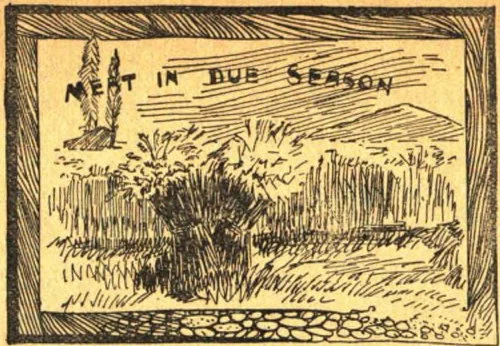
This message, which this paper seeks in a small way to develop, is God’s present truth for this day and generation. Dead faith will cling to the creeds of the past. Living faith will show its genuineness by accepting the truth for the present. The herald of the Gospel will proclaim it. The wise householder will give his household “meat in due season.” He will not in time of early vegetables give them those preserved from the year before, insisting that they are good now because they served their purpose then. He will not place upon his table the dry and moldy fruit of last year when the fresh fruits of the season are in market. So God requires that his ministers should be “men that have understanding of the times, to know what Israel ought to do,” who will not feed the house of God on the dry cobs of bygone ages, but on the food for the season, the present truth. See Matt. 24:45, 46.
Dare we neglect the message? Dare we slight the warning? Will you, reader, like the foolish virgin depend upon the oil for light that has been burned out in the past, or like the wise virgins who for present light took present supply? We have the examples of the antediluvians, the Sodomites, the unbelieving Jews, on the one hand; we have Noah, Lot, Jesus Christ, and his disciples on the other. Whose course will you follow? On the one hand is popularity, disappointment, despair, death; on the other, persecution mayhap, the blessed hope, Jesus Christ, and eternal life and bliss. Which will you choose?