The Testimony of the Scriptures Concerning Themselves
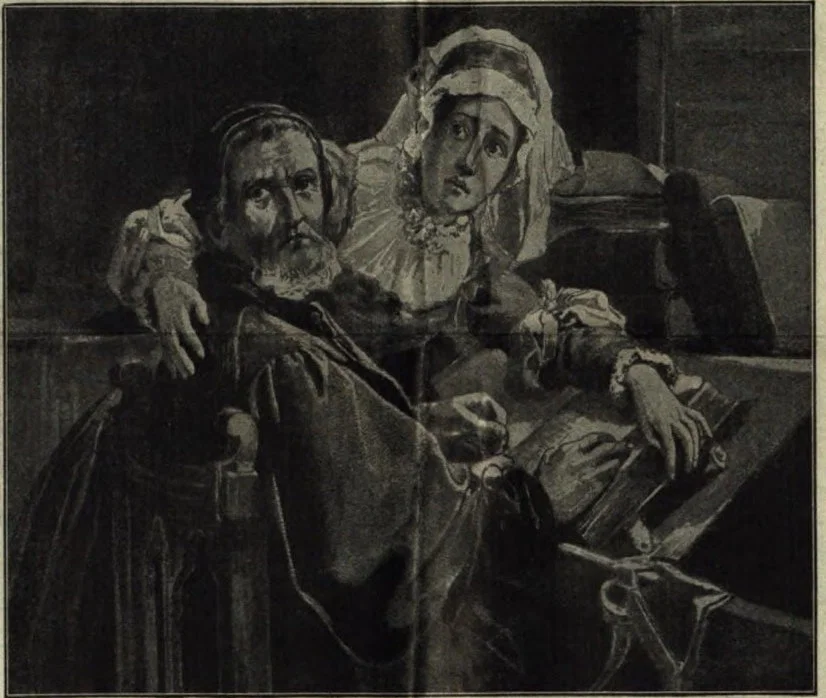
“GOD'S HOLY WORD WAS PRIZED WHEN 'TWAS UNSAFE TO READ IT”
The Word of God
1. How were the Scriptures given? “All Scripture is given by inspiration of God.”2 Tim. 3:16.
2. By whom were the men directed who thus spoke for God? “For the prophecy came not in old time by the will of man; but holy men of God spake as they were moved by the Holy Ghost.”2 Peter 1:21.
3. What specific instance is mentioned by Peter? “Men and brethren, this scripture must needs have been fulfilled, which the Holy Ghost by the mouth of David spake before concerning Judas, which was guide to them that took Jesus.”Acts 1:16.
4. How does David express this same truth? “The Spirit of the Lord spake by me, and his word was in my tongue.”2 Sam. 23:2.
5. Who therefore did the speaking through these men? “God, who at sundry times and in divers manners spake in time past unto the fathers by the prophets.”Heb. 1:1.
6. For what purpose were the Scriptures written? “For whatsoever things were written aforetime were written for our learning, that we through patience and comfort of the Scriptures might have hope.”Rom. 15:4.
7. For what is all Scripture profitable? “All Scripture is given by inspiration of God, and is profitable for doctrine, for reproof, for correction, for instruction in righteousness.”2 Tim. 3:16.
8. What was God’s design in thus giving the Scriptures? “That the man of God may be perfect, throughly furnished unto all good works.” Verse 17.
9. What is the character of God’s word? “Sanctify them through thy truth: thy word is truth.”John 17:17.
10. What test should therefore be applied to every professed teacher of truth? “To the law and to the testimony; if they speak not according to this word, it is because there is no light in them.”Isa. 8:20.
11. What does God design that his word shall be to us in this world of darkness, sin, and death? “Thy word is a lamp unto my feet, and a light unto my path.”Ps. 119:105.
12. How long will the word of God endure? “The grass withereth, the flower fadeth; but the word of our God shall stand forever.”Isa. 40:8. “Heaven and earth shall pass away, but my words shall not pass away.”Matt. 24:35.
Christ in All the Bible
13. Of whom did Christ say the Scriptures testify? “Search the Scriptures; for in them ye think ye have eternal life: and they are they which testify of me.”John 5:39.
14. Of whom did Moses and the prophets write? “Philip findeth Nathanael, and saith unto him, We have found him, of whom Moses in the law, and the prophets, did write, Jesus of Nazareth, the son of Joseph.”John 1:45.
15. From whose words did Christ say the disciples ought to have learned of his death and resurrection? “O fools, and slow of heart to believe all that the prophets have spoken: ought not Christ to have suffered those things, and to enter into his glory?”Luke 24:25, 26.
16. How did Christ make it clear to them that the Scriptures testify of him? “And beginning at Moses and all the prophets, he expounded unto them in all the Scriptures the things concerning himself.” Verse 27.
17. What did he say a little later to the eleven? “These are the words which I spake unto you, while I was yet with you, that all things must be fulfilled, which were written in the law of Moses, and in the prophets, and in the psalms, concerning me.” Verse 44.
Power in the Word
18. Through what agency did God create the heavens? “By the word of the Lord were the heavens made; and all the host of them by the breath of his mouth.”“For he spake, and it was done; he commanded, and it stood fast.”Ps. 33:6, 9.
19. By what does Christ uphold all things? “Upholding all things by the word of his power.”Heb. 1:3.
20. In what scripture is it shown that creative power is exercised through the word of God? “Let them praise the name of the Lord: for he commanded, and they were created.”Ps. 148:5.
21. What change is wrought in one who is in Christ? “Therefore if any man be in Christ, he is a new creature [‘there is a new creation,’ margin, R. V.]; old things have passed away; behold, all things are become new.”2 Cor. 5:17.
22. What is this new creation also called? “Jesus answered and said unto him, Verily, verily, I say unto thee, Except a man be born again, he cannot see the kingdom of God.”John 3:3.
23. Through what agency is this new creation, or new birth, accomplished? “Being born again, not of corruptible seed, but of incorruptible, by the word of God, which liveth and abideth forever.”1 Peter 1:23.
24. Why were the people astonished at Christ’s teaching? “And they were astonished at his doctrine: for his word was with power.”Luke 4:32.
The Life Giving Word
25. What is the nature of the word of God? “For the word of God is quick, and powerful, and sharper than any two-edged sword, piercing even to the dividing asunder of soul and spirit, and of the joints and marrow, and is a discerner of the thoughts and intents of the heart.”Heb. 4:12.
26. What did Christ declare his words to be? “It is the spirit that quickeneth; the flesh profiteth nothing: the words that I speak unto you, they are spirit, and they are life.”John 6:63.
27. What name is applied to Jesus as the revelation of the thought of God in the flesh? “In the beginning was the Word, and the Word was with God, and the Word was God.”John 1:1. “And he was clothed with a vesture dipped in blood: and his name is called The Word of God.”Rev. 19:13.
28. What was in the Word? “In him was life; and the life was the light of men.”John 1:4.
29. In assigning him his life work, what instruction did Jesus give to Peter? “Jesus saith unto him, Feed my sheep.”John 21:17.
30. What apostolic injunction indicates the way in which this instruction is to be obeyed? “I charge thee therefore before God, and the Lord Jesus Christ, who shall judge the quick and the dead at his appearing and his kingdom; Preach the word; be instant in season, out of season; reprove, rebuke, exhort with all long-suffering and doctrine.”2 Tim. 4:1, 2.
The Unity of God’s Word
As a skillful musician, when he would execute a long score by himself, takes up by turns the funeral flute, the shepherd’s pipe, the merry fife, or the trumpet that summons to battle; so did Almighty God, when he would make us hear his eternal word, choose out from among the old instruments which it seemed fit to him to inspire with the breath of his Spirit. He chose them before the foundation of the world, and separated them from their mothers’ womb.
Has the reader ever paid a visit to the astonishing organist who so charmingly elicits the tourist’s tears in the cathedral at Freiburg, as he touches one after another his wondrous keys, and greets your ear by turns with the march of warriors on the riverside, the voice of prayer sent up from the lake during the fury of the storm, or of thanksgiving when it is hushed to rest? All your senses are electrified, for you seem to have seen all, and to have heard all. Well, then, it was thus that the Lord God,4mighty in harmony, applied, as it were, the finger of his Spirit to the stops which he had chosen for the hour of his purpose and for the unity of his celestial hymn.
He had from eternity before him all the human stops which he required; his Creator’s eye embraces at a glance this range of keys stretching over threescore centuries; and when he would make known to our fallen world the everlasting counsel of his redemption, and the coming of the Son of God, he put his left hand on Enoch, the seventh man from Adam, and his right hand on John, the humble and sublime prisoner of Patmos. The celestial anthem, seven hundred years before the flood, began with these words, “Behold, the Lord cometh with ten thousand of his saints, to execute judgment upon all;” but already, in the mind of God, and in the eternal harmony of his work, the voice of John had answered to that of Enoch, and closed the hymn, three thousand years after him, with these words: “Behold, he cometh with clouds; and every eye shall see him, and they also which pierced him.” “Even so, come, Lord Jesus. . . . Amen.” And during this hymn of thirty centuries, the Spirit of God never ceased to breathe in all his messengers.
You see, then, it was sometimes the artless and sublime simplicity of John; sometimes the impassioned, elliptical, rousing, and logical energy of Paul; sometimes the fervor and solemnity of Peter; it was Isaiah’s magnificent and David’s lyrical poetry; it was the simple and majestic narratives of Moses, or the sententious and royal wisdom of Solomon,—yes, it was all this; it was Peter, it was Isaiah, it was Matthew, it was John, it was Moses; yet it was God.
“Are not all these which speak Galileans?” the people exclaimed on the day of Pentecost; yes, they are so; but the message that is on their lips comes from another country—it is from heaven. Listen to it; for tongues of fire have descended on their heads, and it is God that speaks to you by their mouths.—“The Plenary Inspiration of the Holy Scriptures,” by L. Gaussen, D. D., pages 50–53.